12 Military Victories That Came Down to Incredible Coincidences
Throughout history, the difference between victory and defeat has often hung by the thinnest of threads. While generals craft elaborate strategies and soldiers train for months, sometimes the most decisive factor is pure chance—a fog bank rolling in at the perfect moment, a messenger getting lost, or an enemy making a critical error at exactly the wrong time.
Here is a list of 12 military victories that were shaped by remarkable coincidences, proving that fortune truly does favor the bold.
The Miracle of the Marne

In September 1914, German forces were advancing toward Paris when French General Joseph Joffre needed every available soldier to mount a counterattack. The coincidence came in the form of Paris taxi drivers, who were recruited to transport reserve troops to the front lines.
Over 600 taxis carried about 6,000 soldiers to reinforce the French lines, helping to halt the German advance and save the capital. This improvised transportation system became legendary, though its actual military impact was smaller than the symbolic victory it represented.
Fog at the Battle of Trenton
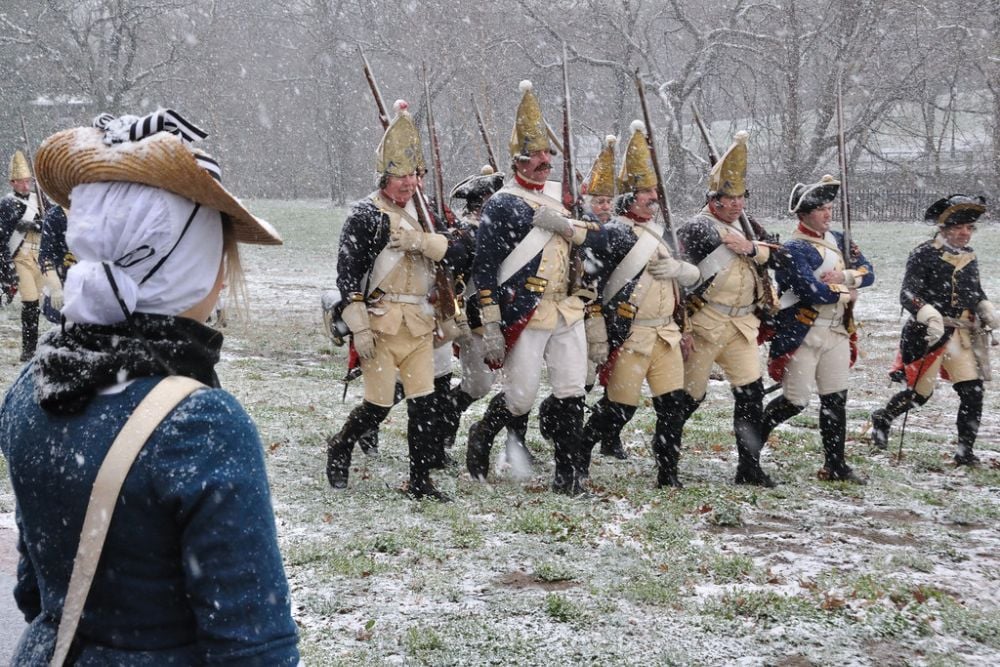
George Washington’s famous crossing of the Delaware River on December 25, 1776, succeeded partly due to an unexpected weather ally. A thick fog descended on Trenton just as the Continental Army approached, concealing their movements from Hessian sentries.
The German mercenaries, recovering from Christmas celebrations, were caught completely off guard when the Americans emerged from the mist. This victory revitalized the Revolutionary cause at its darkest hour and proved that sometimes Mother Nature picks sides.
The Lost Order at Antietam

The bloodiest single day in American military history might never have happened without an incredible stroke of luck for Union forces. A Confederate courier lost a copy of Robert E. Lee’s detailed battle plans, which were found wrapped around three cigars by Union soldiers.
The plans revealed that Lee had divided his army, giving General McClellan a golden opportunity to attack the separated Confederate forces. Though McClellan moved too cautiously to fully exploit this advantage, the battle still ended Lee’s first invasion of the North.
Typhoons Save Japan

In 1274 and again in 1281, Mongol fleets attempting to invade Japan were devastated by massive typhoons. These storms, which the Japanese called ‘kamikaze’ or ‘divine wind,’ arrived at precisely the moment when the Mongol forces were most vulnerable.
The first typhoon scattered Kublai Khan’s fleet just as they were establishing a beachhead, while the second destroyed an even larger invasion force of 4,400 ships. Without these meteorological interventions, Japanese history might have taken a completely different path.
The Miracle of Dunkirk

The evacuation of Allied forces from Dunkirk in 1940 succeeded against impossible odds partly due to an unusual stretch of calm weather. The English Channel, normally rough and dangerous, remained remarkably still for several days, allowing small civilian boats to ferry soldiers from the beaches to larger ships offshore.
Additionally, Hitler’s decision to halt his armored divisions just as they could have overrun the evacuation gave the Allies precious time to escape. Over 338,000 soldiers were saved in what Churchill called a ‘miracle of deliverance.’
Cortés and the Aztec Prophecy
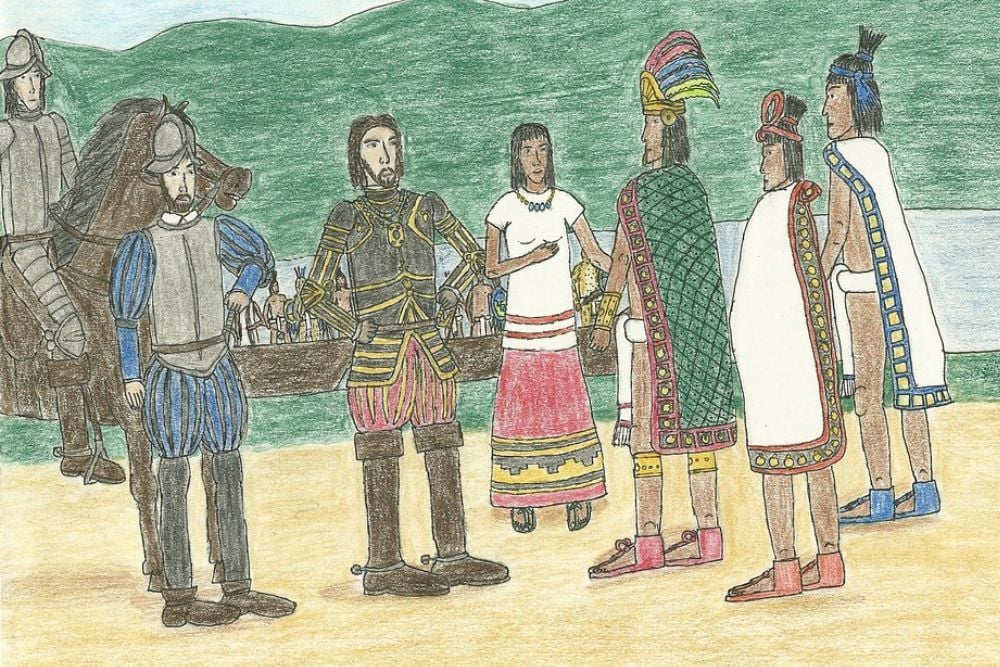
Hernán Cortés’s conquest of the Aztec Empire was aided by an extraordinary coincidence of timing and appearance. The Spanish conquistador arrived in 1519, the exact year that Aztec prophecy predicted the return of their god Quetzalcoatl.
Cortés’s fair skin and arrival from the east matched the prophecy’s description, causing Emperor Moctezuma to initially welcome him as a deity rather than resist him as an invader. This case of mistaken identity gave the Spanish crucial time to establish themselves before the Aztecs realized their mistake.
The Storm That Saved England

In 1588, the Spanish Armada seemed unstoppable as it sailed toward England with 130 ships carrying 30,000 men. However, a series of storms scattered the fleet just as it was preparing to land invasion forces.
The ‘Protestant Wind,’ as English propagandists called it, drove Spanish ships onto rocky coasts and prevented them from coordinating their attack. While English naval tactics also played a role, the weather proved to be Spain’s most devastating enemy, ending their hopes of Catholic conquest.
Hannibal’s Missed Opportunity

After his stunning victory at Cannae in 216 BCE, Hannibal had Rome at his mercy, but a coincidence of timing may have changed everything. Just as the Carthaginian general was deciding whether to march on the undefended city, his cavalry commander Maharbal reportedly urged immediate action, saying ‘You know how to win a victory, Hannibal, but you do not know how to use it.’
The delay allowed Rome to rally its defenses and gather new armies. Some historians argue that Hannibal’s hesitation at this crucial moment ultimately cost Carthage the war.
The Radar Flock

During the Battle of Britain in 1940, German bombers accidentally discovered a major weakness in British radar coverage. A flock of migrating birds created false signals on radar screens, masking the approach of a large Luftwaffe formation.
The Germans unknowingly exploited this natural phenomenon, achieving tactical surprise in several raids. However, they never realized what had happened and couldn’t replicate the effect, making it a one-time coincidence that briefly favored the attackers.
Alexander’s Divine Timing
Alexander the Great’s siege of Tyre in 332 BCE succeeded partly due to an extraordinary natural phenomenon. As his engineers built a causeway to the island fortress, a severe storm deposited massive amounts of sand and debris, effectively extending their artificial bridge.
The Tyrians interpreted this as divine intervention favoring the Macedonian king, undermining their morale just when they needed it most. This geological coincidence helped complete one of the most famous sieges in ancient history.
The Messenger’s Wrong Turn
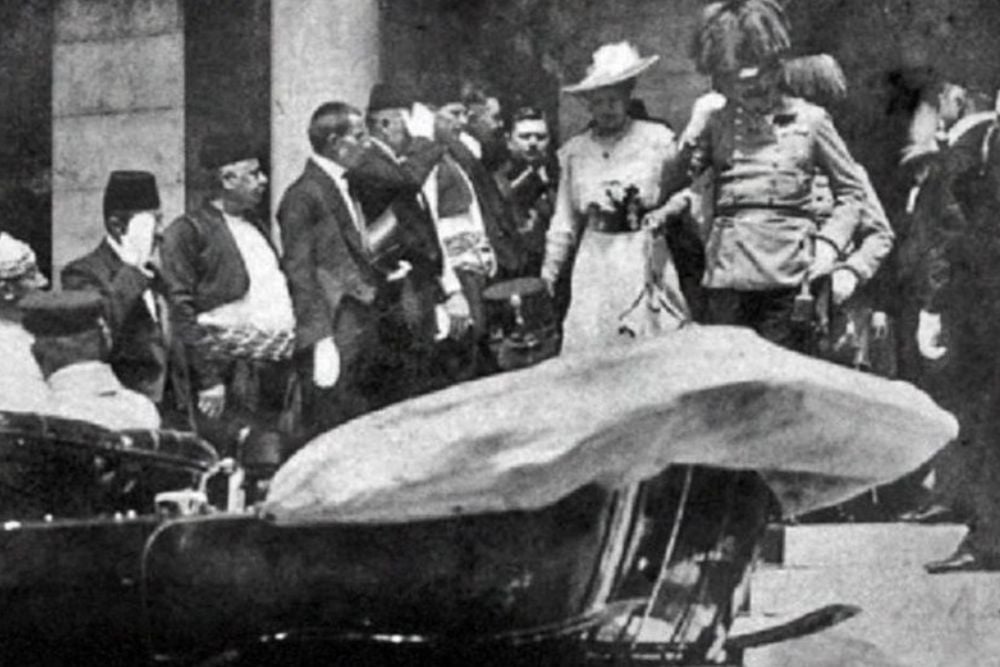
The assassination of Archduke Franz Ferdinand in Sarajevo on June 28, 1914, succeeded only because of a driver’s mistake. The original assassination attempt had failed when conspirator Gavrilo Princip’s bomb missed its target.
Later, the Archduke’s driver took a wrong turn and stopped directly in front of a café where Princip happened to be sitting. This incredible coincidence put the assassin within point-blank range of his target, triggering the chain of events that led to World War I.
Caesar’s Gallic Gamble
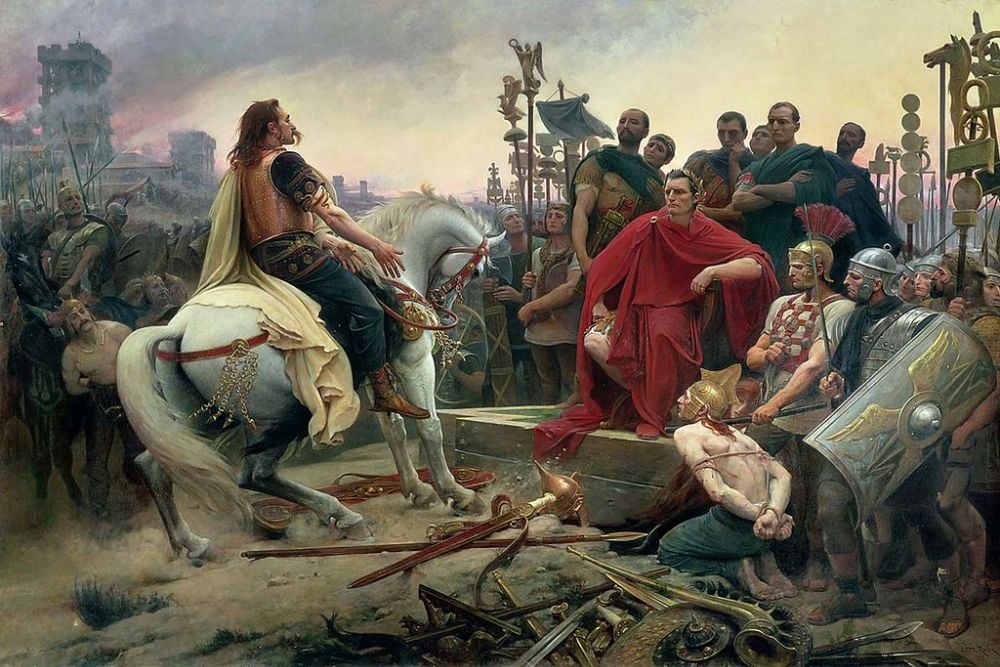
Julius Caesar’s conquest of Gaul was secured by a coincidence during the Battle of Alesia in 52 BCE. As Caesar’s forces besieged the hilltop fortress, a Gallic relief army arrived to trap the Romans between two forces.
At the crucial moment, Caesar’s cavalry unexpectedly returned from a foraging mission, appearing behind the Gallic relief force just as Caesar launched his final assault. This perfectly timed convergence of Roman forces created the illusion of a massive army, causing the Gauls to panic and flee.
When Luck Shaped History
These twelve examples remind us that even the most carefully planned military campaigns can turn on unexpected moments of chance. The fog that concealed Washington’s approach, the storm that scattered the Spanish Armada, and the wrong turn that put an assassin in the right place all demonstrate how coincidence can alter the course of nations.
While skill and strategy matter enormously in warfare, sometimes the most decisive factor is simply being in the right place at the right time. History’s greatest victories often belong as much to fortune as they do to the generals who claimed them.
More from Go2Tutors!

- The Romanov Crown Jewels and Their Tragic Fate
- 13 Historical Mysteries That Science Still Can’t Solve
- Famous Hoaxes That Fooled the World for Years
- 15 Child Stars with Tragic Adult Lives
- 16 Famous Jewelry Pieces in History
Like Go2Tutors’s content? Follow us on MSN.



