13 Rare Animals That Actually Glow
When you think about animals that glow, fireflies probably come to mind first. But the natural world has way more luminous surprises tucked into its corners than most people realize.
From the deepest ocean trenches to Australian caves, creatures have evolved the ability to produce their own light for reasons ranging from clever hunting tactics to straight-up survival. Some create light through chemical reactions in their bodies, while others absorb light and re-emit it in completely different colors.
The result is a living light show that makes even the fanciest special effects look ordinary. Here is a list of 13 rare animals that actually glow.
Cookiecutter Shark
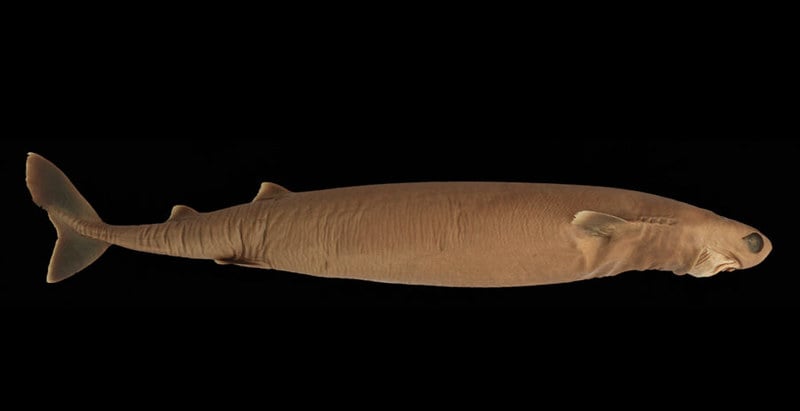
This small shark earned its name from the perfectly circular chunks of flesh it carves out of much larger prey. The cookiecutter shark produces the strongest bioluminescent glow known among all sharks, with its entire underside covered in tiny light-producing organs called photophores that emit a vivid green color.
The clever part is a dark collar around its throat that doesn’t glow, creating a silhouette that resembles a small fish when viewed from below. Larger predators approach what they think is an easy meal, and the cookiecutter suddenly strikes, latching on with suction-cup lips and spinning to remove a cookie-shaped plug of flesh.
Platypus

Scientists only discovered this peculiar trait in 2020 when researchers shined ultraviolet light on platypus specimens in a museum. Under UV light, these egg-laying mammals glow a striking cyan-green color, which was completely invisible under normal lighting conditions.
This is biofluorescence rather than bioluminescence, meaning the platypus absorbs UV light and re-emits it as visible light. Researchers aren’t entirely sure why platypuses have this ability, though one theory suggests it helps them avoid UV-sensitive predators in their river habitats where they hunt with their eyes closed.
Hawaiian Bobtail Squid

This tiny squid has struck up one of nature’s most sophisticated partnerships with glowing bacteria. Special organs on the underside of its body house colonies of bioluminescent bacteria called Vibrio fischeri, and the squid can control how much light escapes by opening and closing the cavities.
When hunting at night near the ocean surface, the squid adjusts its glow to match the moonlight filtering down from above, effectively erasing its shadow and becoming invisible to predators lurking below. The military actually studied this counter-illumination technique to improve aircraft camouflage.
Railroad Worm

Despite the name, railroad worms are actually beetle larvae found in South and Central America. They’re one of the extremely rare organisms that can produce light in two different colors simultaneously, with eleven pairs of greenish-yellow spots running down their bodies like illuminated train windows and a red glow on their heads.
The green lights warn predators that they’re toxic and not worth eating. The red headlamp is even more fascinating because most insects can’t see red light, which means the railroad worm can essentially use night vision goggles to spot prey that can’t see them coming.
Crystal Jellyfish

Found off the west coast of North America, the crystal jellyfish looks almost completely transparent in regular light but glows green when disturbed. This species became famous in scientific circles because researchers isolated a protein called green fluorescent protein from its body, a discovery that won the Nobel Prize in Chemistry in 2008.
GFP revolutionized biomedical research by allowing scientists to track biological processes inside living cells. The jellyfish produces its light through a rapid release of calcium that triggers a chemical reaction, creating flashes of blue light that get converted to green.
Lanternfish
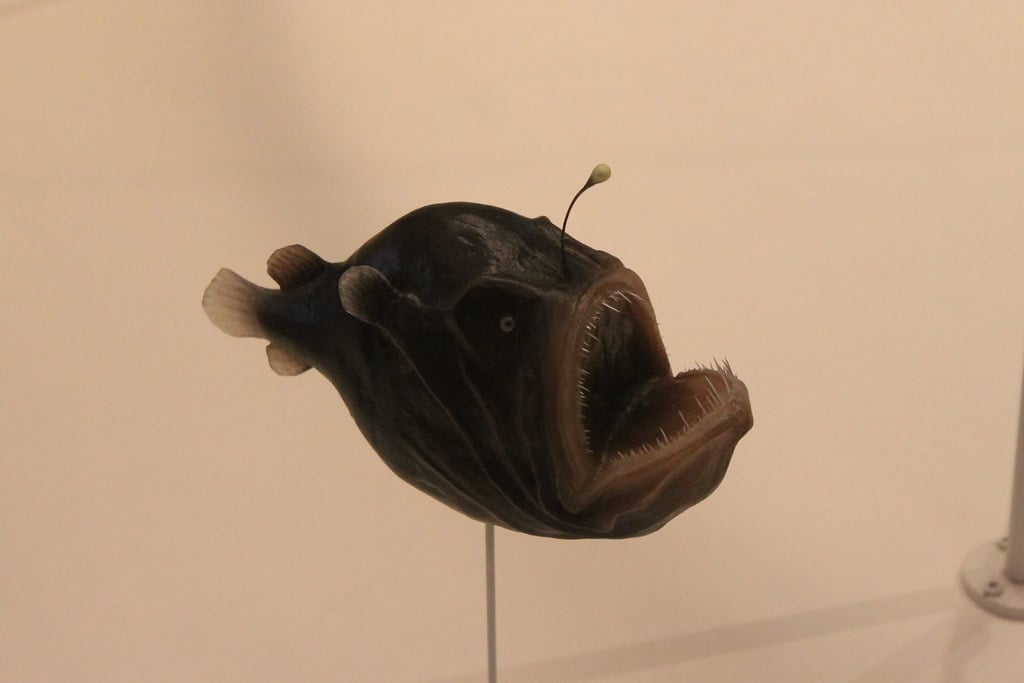
These small fish are absolute champions of the deep sea, with some scientists estimating they make up 65 percent of all deep-sea fish biomass. Their bodies are covered with distinct patterns of photophores that work like biological name tags, helping them identify their own species in the pitch-black depths.
Every night, billions of lanternfish participate in the largest animal migration on Earth, rising from deep water toward the surface to feed. Their belly lights match the faint glow filtering down from above, making them nearly invisible to predators attacking from below through that same counter-illumination trick.
Dragonfish

This deep-sea predator has evolved a superpower that most ocean creatures lack. While the majority of deep-sea animals can only see blue and green light, dragonfish possess the ability to produce and detect red bioluminescence.
Red light doesn’t penetrate far below the ocean surface, so most deep-sea creatures appear red as natural camouflage since they essentially become invisible in the darkness. But dragonfish carry specialized photophores beneath their eyes that emit red light, giving them a biological flashlight that illuminates prey without being detected.
It’s the underwater equivalent of having infrared night vision goggles.
Firefly Squid

Every spring in Toyama Bay off the coast of Japan, thousands of these three-inch squid create one of nature’s most spectacular light shows. Their bodies are covered with tiny photophores that flash in coordinated patterns, creating waves of electric blue light that ripple through the water.
The squid use this ability to communicate with potential mates, confuse predators, and attract prey. During mating season, so many firefly squid gather near the shore that the water looks like it’s filled with underwater stars, drawing tourists from around the world to witness the phenomenon.
Comb Jelly

These transparent, gelatinous creatures aren’t actually jellyfish despite the name. They move through water using eight rows of tiny hair-like structures called cilia that beat rhythmically, and when light hits these moving cilia, it refracts into shimmering rainbow colors.
Many comb jelly species can also produce genuine bioluminescent flashes of blue or green when disturbed. Scientists believe comb jellies may have been among the first animals on Earth to develop bioluminescence, making them living fossils of light.
Some species can even produce bioluminescent ink clouds when threatened, similar to how squid release regular ink.
Scorpion

Every scorpion species discovered so far exhibits biofluorescence when exposed to ultraviolet light, glowing a remarkable greenish color. This has puzzled scientists for decades because scorpions are nocturnal hunters, and it seems counterproductive for a predator to glow under moonlight, which contains UV rays.
One theory suggests the fluorescence actually helps scorpions detect UV light levels, allowing them to determine when it’s dark enough to safely emerge and hunt. Another idea is that it helps them communicate with other scorpions or serves as a warning to UV-sensitive predators.
Atolla Jellyfish

This deep-sea dweller has earned the nickname ‘alarm jellyfish’ for its unique defensive strategy. When a predator attacks, the atolla jellyfish doesn’t just produce light to startle or confuse.
Instead, it creates a spectacular rotating display of bioluminescent flashes that pulse around its bell like an emergency beacon. Scientists believe this light show is actually a cry for help, designed to attract even larger predators that might attack the atolla’s attacker, giving the jellyfish a chance to escape in the confusion.
It’s basically the underwater version of triggering a car alarm when someone tries to break in.
American Pocket Shark

This incredibly rare shark species was only discovered in 2010, and scientists have only found two specimens ever. Measuring just five to six inches long, these tiny sharks have specialized glands near their pectoral fins that can squirt a glowing cloud of bioluminescent fluid into the water.
Researchers believe this glowing cloud might attract small prey like krill or confuse predators long enough for the pocket shark to escape. The shark gets its name not from any size-related reason but from the small pocket-like openings near its fins where the light-producing glands are located.
Hawksbill Sea Turtle

Scientists stumbled onto this discovery completely by accident in 2015 while studying biofluorescent corals near the Solomon Islands. A hawksbill turtle swam past their cameras and appeared to transform into a bright red and green spaceship under the blue lights they were using.
This was the first time anyone had documented biofluorescence in reptiles. Researchers aren’t entirely sure if the glow comes from the turtle itself, from algae growing on its shell, or from a combination of both.
Either way, the turtle can apparently see its own fluorescence, which might help with species recognition or communication in the dim light of dawn and dusk.
From Ancient Myths to Modern Science
Humans have noticed glowing creatures for thousands of years, with ancient Samoan legends explaining mysterious wounds on fish as sacrifices and Aristotle writing about light from dead fish and damp wood in his texts. But it took until the 1800s and 1900s for scientists to understand the chemistry behind these living lights.
Today we know that bioluminescence has evolved independently at least 40 separate times across different species, proving that the ability to make light provides such a huge survival advantage that nature keeps reinventing it.
These glowing animals aren’t just beautiful curiosities but have led to major scientific breakthroughs, from Nobel Prize-winning proteins to new ways of studying diseases and developing better camouflage technology.
More from Go2Tutors!

- The Romanov Crown Jewels and Their Tragic Fate
- 17 Halloween Costumes Once Considered Taboo
- Famous Hoaxes That Fooled the World for Years
- 15 Child Stars with Tragic Adult Lives
- 16 Famous Jewelry Pieces in History
Like Go2Tutors’s content? Follow us on MSN.



