13 Words That Used to Mean the Opposite
Language is a slippery thing. Words we use every day without a second thought often start their lives meaning something completely different, and in some cases, they’ve done a complete about-face.
A word that once signified praise now delivers an insult, or vice versa. Linguists call this semantic reversal, and English is full of examples that would leave our ancestors scratching their heads at how we’ve twisted their vocabulary.
Here is a list of 13 words that have flipped their meanings over the centuries.
Nice
If someone in medieval England called you nice, you’d have every right to be offended. The word entered English from the Old French nice in the late 13th century, and it meant foolish, stupid, or ignorant.
From there it went on quite a journey, shifting to mean shy and reserved in the 1300s, then fastidious and precise in the 1500s, then refined and cultured in the 1700s. It wasn’t until the late 18th century that nice finally settled into its current meaning of pleasant and agreeable.
The transformation was so gradual and so complete that tracing its path requires a dictionary the size of a phone book.
Awful

Today awful means extremely bad, but it started its life as a word of high praise. In the 1300s, awful literally meant full of awe, describing something inspiring wonder, reverence, or even fear before powerful forces.
When the architect Christopher Wren showed off his design for St. Paul’s Cathedral, Queen Anne reportedly called it awful, artificial, and amusing, and she meant all three as compliments. By the early 1800s, the word had absorbed the negative aspects of awe and came to mean frightful or exceedingly bad.
The original positive sense survives only in the adverb awfully, which still sometimes means very much, as in awfully kind of you.
Terrific
Something terrific was once something you’d want to run away from. First documented in the 1660s, terrific comes from the same Latin root as terror and originally meant causing terror or frightening.
You might have described a violent storm or a dangerous animal as terrific, and nobody would have taken it as a compliment. By the mid-18th century, the word had begun to soften into a general intensifier meaning severe or great.
By the late 19th century it had crossed over entirely into positive territory. The flapper era of the 1920s seems to have cemented its modern meaning of excellent, much like how killer became slang for something great around the same time.
Silly
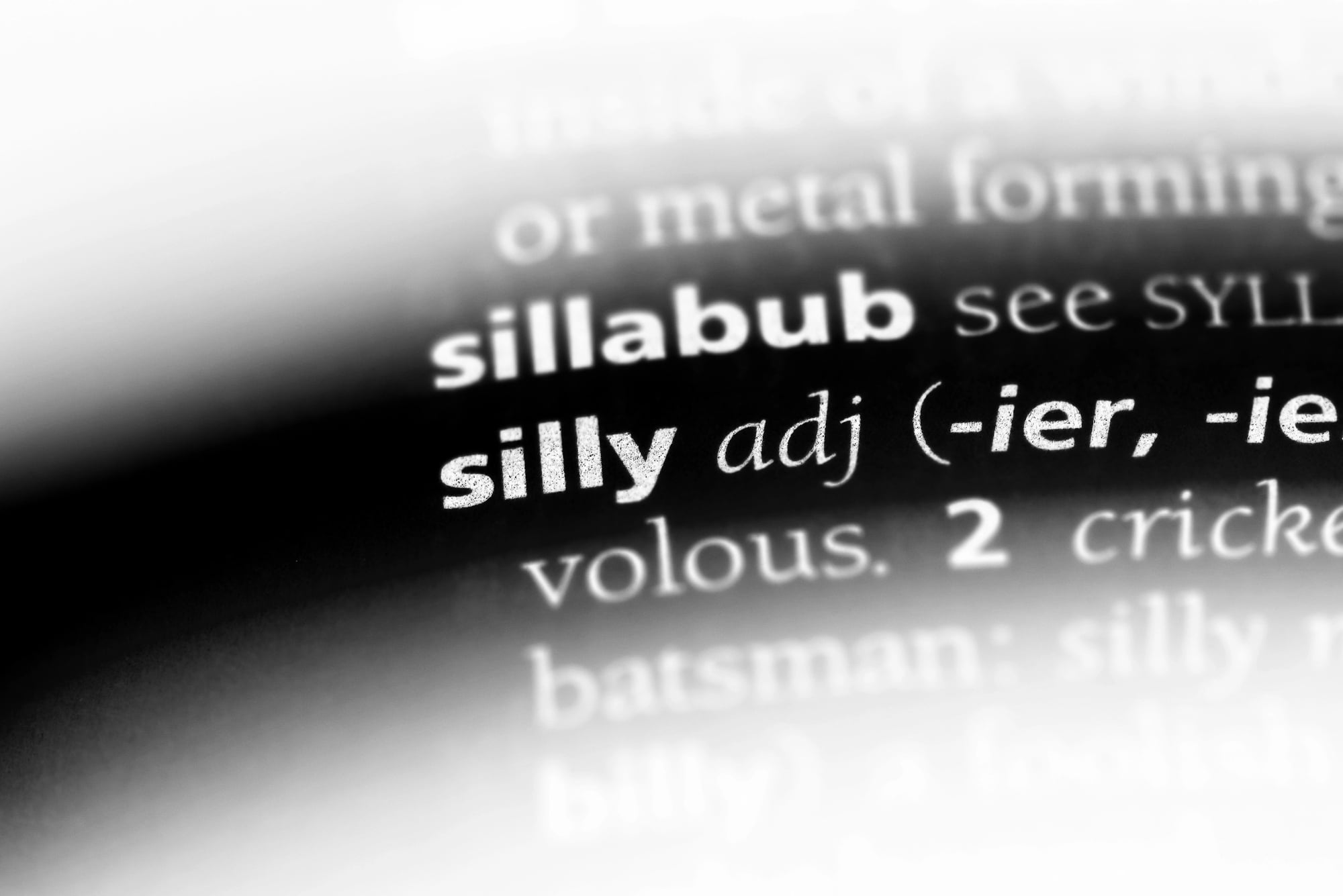
In Old English, the word that would become silly was spelled selig, and it meant blessed, happy, or fortunate. It was a term you might use to describe someone favored by God.
By the Middle Ages it had shifted to mean innocent or deserving of pity, which led to weak and vulnerable. From there it wasn’t a huge leap to unsophisticated and then to foolish, which is where it’s been stuck for several centuries now.
Interestingly, the word’s Germanic cousins retained the original positive meaning. The German selig and Dutch zalig still mean blessed or blissful, while English speakers use silly to describe putting on mismatched socks.
Egregious

When egregious first appeared in English in the 1530s, it meant distinguished, eminent, or excellent. The word comes from the Latin ex grege, meaning rising above the flock, and it was a genuine compliment.
But something strange happened over the next century. People began using egregious ironically to mock things that stood out for being exceptionally bad, and by the turn of the 1600s, the sarcastic usage had completely overtaken the original.
Shakespeare used it in the negative sense in Cymbeline. Today, you only ever hear egregious applied to errors, violations, or misconduct, and calling someone egregious would definitely not be taken well.
Artificial

This word once described the highest form of human craftsmanship. Artificial comes from the Latin artificialis, meaning made with skill, and in the 16th and 17th centuries, calling something artificial was a way of praising the artisan who made it.
When Queen Anne admired St. Paul’s Cathedral as artificial, she was complimenting the expertise and technique that went into its design. The Industrial Revolution changed everything.
As machines began producing goods that imitated handmade items, artificial shifted to mean synthetic or fake. Now it’s almost always negative, suggesting inauthenticity or something not quite as good as the real thing.
Naughty

A naughty person in the 14th century wasn’t a misbehaving child but someone who had nothing, who was needy and poor. The word comes from naught, meaning nothing, and originally described people at the bottom of society.
From there it evolved to mean wicked, evil, or morally corrupt, a sense Shakespeare used when he wrote of naughty persons in The Merchant of Venice. It wasn’t until the 1630s that the meaning softened to its current sense of mischievous or badly behaved, especially when applied to children.
The word has also picked up mildly suggestive connotations since the 1800s, but it’s a far cry from its origins describing the desperately poor.
Lewd

If you were called lewd in Old English, it simply meant you weren’t clergy. The word lǣwede described laypeople, the uneducated common folk as opposed to the learned class of priests and monks.
Over the centuries it descended through meanings like unlettered and coarse until by the late 1300s it had arrived at lustful and obscene, which is the only sense that survives today. The transformation reflects medieval attitudes about education and morality, with the assumption that those without religious learning were more prone to base behavior.
Chaucer was already using lewd in its negative sense, pairing it with learning to contrast the refined with the vulgar.
Brave

When brave first appeared in English around the 15th century, it meant showy, ostentatious, or splendidly dressed. You might have called someone brave if they were wearing particularly fine clothes, and the word carried hints of swagger and vanity rather than courage.
Italian and Spanish still use bravo and bravo in senses related to style and excellence. The meaning of courageous developed alongside the flashy sense, probably because people associated fine dress with confident self-presentation.
By the 17th century, brave had settled primarily on its modern meaning of showing courage or fearlessness, though traces of the original sense lingered in phrases like a brave display.
Nervous

In the 17th century, describing someone as nervous was actually a compliment. The word comes from the Latin nervosus, meaning sinewy or vigorous, and originally referred to someone with strong nerves, someone muscular and full of energy.
You might have called an athlete or a soldier nervous in praise of their physical power. Over time, the word shifted to refer to the nerves themselves, then to conditions affecting the nerves, and eventually to the emotional state of anxiety we associate with it today.
By the 19th century, nervous had completed its reversal from strong and vigorous to anxious and easily agitated.
Fond
Being fond of someone today is a warm feeling, but in the 14th century it meant something closer to being foolish or stupid about them. The word comes from the Middle English fonned, the past participle of fonnen, meaning to be foolish.
Someone who was fond had lost their senses, particularly due to affection or infatuation. You were fond of something the way you might be intoxicated by it, not in full command of your faculties.
The negative connotations gradually faded, and by the 16th century fond had shifted to mean affectionate and tender. The original sense of foolishness is preserved in the expression fond hope, meaning a hope that’s perhaps naive or unrealistic.
Sanguine

This word has twisted itself into near-opposite meanings depending on which language you speak. Sanguine comes from the Latin sanguis, meaning blood, and in medieval humoral theory, a sanguine temperament was one dominated by blood, which made a person ruddy-faced, passionate, and prone to anger.
In French, sanguin still suggests someone hot-tempered and quick to rage. But English took the word in a different direction entirely.
Because medieval physicians associated the sanguine temperament with courage and hopefulness, English sanguine came to mean cheerfully optimistic and confident. Today if you’re sanguine about something, you’re relaxed and hopeful about it, not about to fly into a rage.
Smart

In late Old English, if something was smart, it was painful. The word meant sharp or stinging, and it could describe a wound, a blow, or anything that hurt.
That meaning survives in the phrase that smarts, which we still use when something causes pain. The word shifted to describe people who were sharp in a different sense, people with quick wit and perhaps a stinging tongue.
From verbal sharpness it was a short hop to general intelligence, which is the dominant meaning today. Something that smarts used to hurt you. Now something smart is something clever, and calling someone smart is definitely not going to leave a mark.
The Moving Target of Meaning

Words don’t sit still. They drift with cultural currents, twist under the pressure of irony and sarcasm, and sometimes flip completely over the course of a few centuries.
The nice fool of medieval England would be baffled to hear the word used as bland praise, and the egregious scholar of the 1500s wouldn’t recognize the word applied only to failures and mistakes. Language belongs to its speakers, not to dictionaries, and we reshape it constantly whether we mean to or not.
The words we use confidently today might mean something entirely different to our great-grandchildren, and there’s a good chance we wouldn’t approve.
More from Go2Tutors!

- The Romanov Crown Jewels and Their Tragic Fate
- 13 Historical Mysteries That Science Still Can’t Solve
- Famous Hoaxes That Fooled the World for Years
- 15 Child Stars with Tragic Adult Lives
- 16 Famous Jewelry Pieces in History
Like Go2Tutors’s content? Follow us on MSN.



