15 Birds That Migrate Vast Distances
Every year, millions of birds embark on journeys that seem to defy the laws of physics and endurance. These feathered adventurers cross oceans, deserts, and mountain ranges without GPS or rest stops, relying on instincts honed over millions of years of evolution.
Their migrations represent some of nature’s most remarkable achievements, combining incredible navigation skills with physical endurance that would humble Olympic athletes. Here is a list of 15 birds that undertake truly mind-boggling migrations, pushing the boundaries of what seems physically possible for creatures that sometimes weigh less than a cell phone.
Arctic Tern

The undisputed champion of long-distance migration, Arctic Terns fly from the Arctic to the Antarctic and back again every year. This round-trip journey spans approximately 44,000 miles annually, equivalent to circling the entire planet twice.
These birds can live for 30 years, meaning some individuals will travel about 1.5 million miles in their lifetime—roughly the same as three trips to the moon and back.
Bar-tailed Godwit
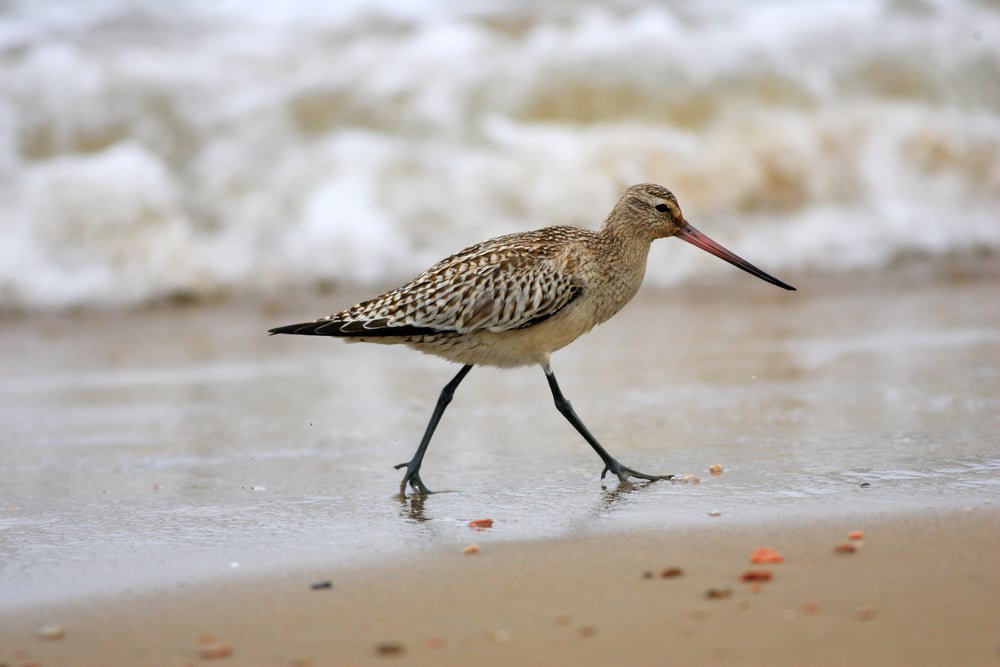
These remarkable shorebirds hold the record for the longest non-stop flight of any bird. They travel from Alaska to New Zealand without a single break for food or rest, covering about 7,000 miles in just eight days.
During this marathon journey, the godwits don’t sleep in the conventional sense—they rest one half of their brain at a time while the other half stays alert for navigation.
Ruby-throated Hummingbird

Despite weighing less than a penny, these tiny powerhouses cross the Gulf of Mexico in a single non-stop flight. They travel 500 miles over open water without any chance to rest or refuel, a journey made even more impressive by their size.
Before departure, they nearly double their body weight with fat stores, then burn through these reserves during their 20-hour flight—the equivalent of a human running at top speed for a full day without a break.
Great Knot

These Asian shorebirds undertake an impressive 10,000-mile journey from their breeding grounds in northeastern Siberia to wintering areas in Australia and Southeast Asia. What makes their migration particularly challenging is their route through the Yellow Sea, where rapid coastal development has destroyed many of their critical refueling habitats.
Despite these obstacles, Great Knots continue their epic journeys year after year.
Northern Wheatear

The Northern Wheatear might look unassuming, but this small songbird completes one of the most impressive migrations relative to its size. Birds from Alaska cross Asia and the entire African continent to reach sub-Saharan wintering grounds, while the European population crosses the Sahara Desert.
For Alaskan birds, this means a round-trip journey of 18,000 miles despite weighing just under an ounce—like a human circling the globe on foot three times.
Lesser Yellowlegs

These elegant wading birds make an extraordinary journey from the boreal forests of Canada and Alaska to the southern reaches of South America. Their migration spans over 6,000 miles and crosses multiple countries.
What’s remarkable is how these birds navigate through drastically different habitats—from northern forests to tropical wetlands—adapting to completely different environments with each seasonal shift.
Pectoral Sandpiper

Male Pectoral Sandpipers perform one of the most energetically demanding migrations known. They breed across the Arctic tundra, traveling between potential mates separated by hundreds of miles during a single breeding season.
After this exhausting breeding marathon, they journey to South America, often reaching Argentina and Chile. This combination of breeding-season movements and long-distance migration makes their annual travel log truly impressive.
Red Knot

These medium-sized shorebirds journey from the Canadian Arctic to the southern tip of South America, a distance of roughly 9,300 miles each way. During migration, they rely on specific stopover sites where they can replenish their fat reserves, with some birds nearly doubling their weight in just a few weeks.
At Delaware Bay, thousands gather to feast on horseshoe crab eggs—a critical refueling stop that’s timed with astronomical precision to match the crabs’ spawning season.
Swainson’s Hawk

These raptors undertake one of the longest migrations of any American hawk, traveling in spectacular flocks from North America to Argentina. The full round-trip covers over 12,000 miles annually.
Unlike many migrating birds that travel mainly at night, Swainson’s Hawks ride thermal air currents during daylight hours, sometimes ascending over a mile high to catch favorable winds that help carry them southward.
Barn Swallow
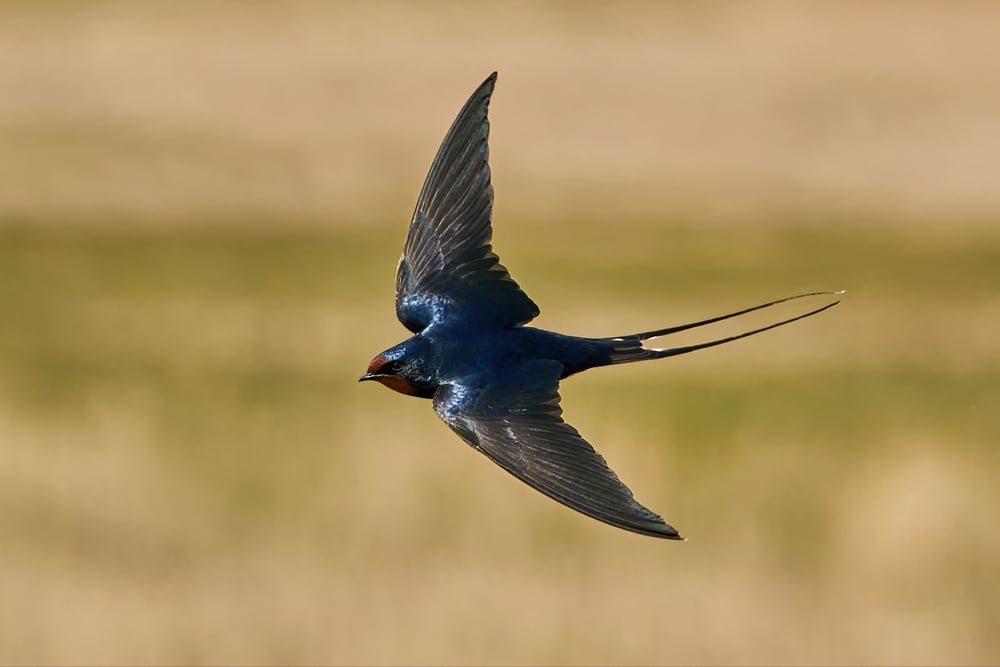
As the most widespread swallow species in the world, barn swallows are aerial acrobats that migrate between every continent except Antarctica. North American Barn Swallows travel to South America, while European populations cross the Sahara to reach South Africa—a journey of over 6,000 miles.
Barn swallows feed exclusively in flight, catching insects on the wing even during their long-distance travels, essentially dining while commuting across continents.
Northern Pintail

These elegant ducks undertake remarkable transoceanic migrations between continents. Some populations travel from Alaska to Hawaii—a non-stop flight over 2,000 miles of open ocean—while others connect breeding grounds in Siberia with wintering areas in Japan, Southeast Asia, and even India.
Their navigation abilities are so precise they return to the same small wetlands year after year, despite crossing vast featureless oceans.
Broad-winged Hawk
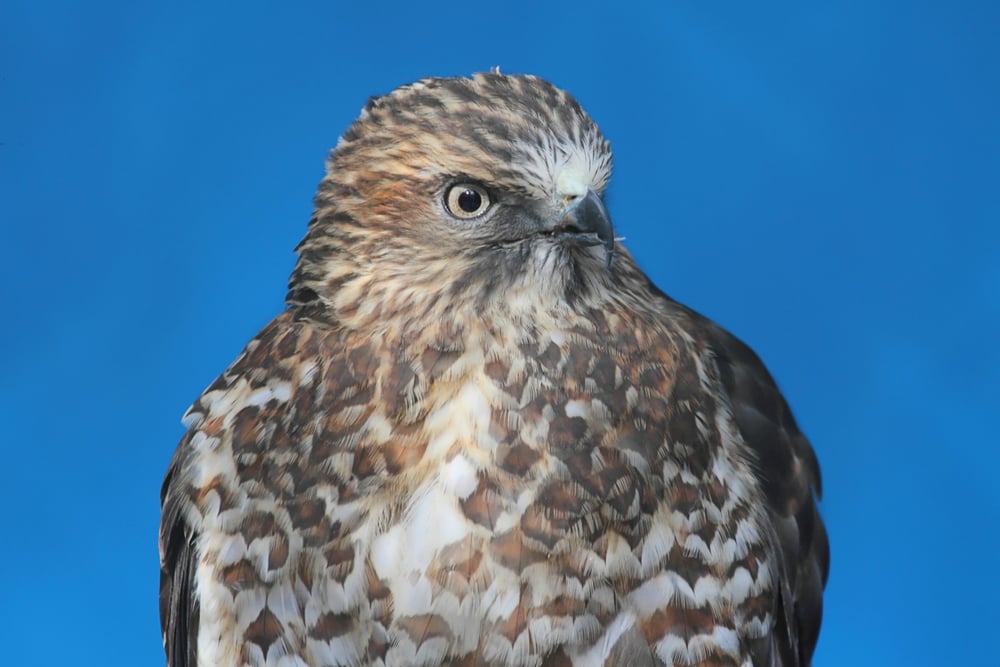
One of North America’s most dramatic migration spectacles involves these forest-dwelling hawks. In autumn, they gather in massive groups called ‘kettles’ that can contain thousands of birds spiraling upward on thermal currents.
After gaining altitude, they glide south toward Central and South America, covering up to 4,300 miles. Unlike many migrants that travel at night, Broad-winged Hawks rely entirely on daytime thermals, making their journey visible to awestruck observers below.
Blackpoll Warbler

This tiny songbird weighs less than half an ounce yet completes one of the most audacious migrations of any land bird. In fall, Blackpolls from Canada and Alaska fly out over the Atlantic Ocean from the northeastern United States and undertake a non-stop flight to South America.
This 1,700-mile transoceanic journey takes between 2-3 days of continuous flying, during which the birds remain awake and aloft over open water with no possibility of rest.
Short-tailed Shearwater
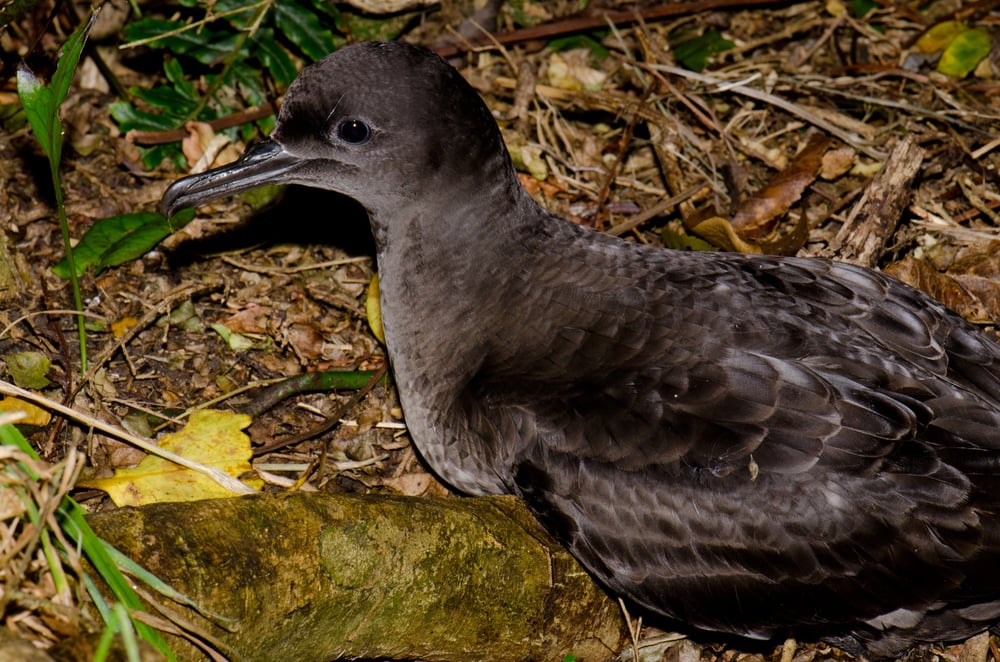
These seabirds undertake a remarkable figure-eight migration across the entire Pacific Ocean annually. Breeding in southern Australia, they travel up the western Pacific past Japan to the Arctic waters near Alaska, then return via the eastern Pacific along the Americas—a round-trip journey of over 18,000 miles.
They spend nearly all their lives at sea, touching land only during their brief breeding season, essentially living as nomads of the open ocean.
Lesser Black-backed Gull
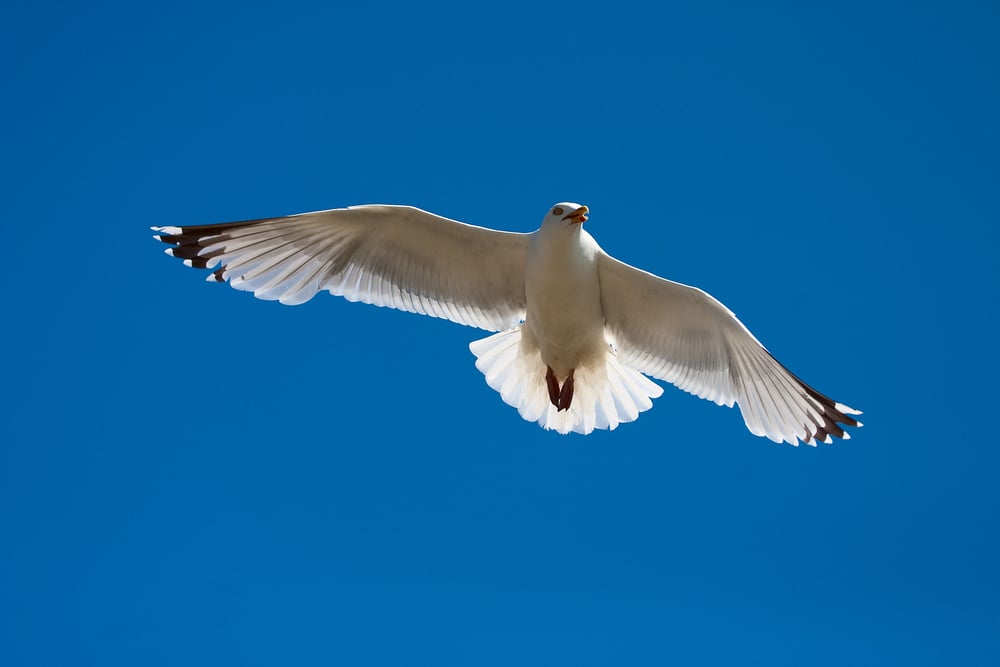
Once considered strictly European birds, these adaptable gulls now migrate between continents, with some individuals traveling between western Europe and eastern North America. Satellite tracking has revealed their astonishing navigational precision—birds often return to the exact same street corner or rooftop in coastal cities year after year.
This species has expanded its traditional routes dramatically in recent decades, demonstrating how migration patterns can evolve rapidly in response to changing conditions.
Winged Wonders of Persistence

These migratory marathons represent nature’s ultimate endurance events, completed by creatures most people barely notice in their daily lives. The fragility of these migration routes cannot be overstated—many depend on specific stopover sites that are rapidly disappearing due to human development and climate change.
What makes these journeys even more remarkable is that many are undertaken by birds hatched just months earlier, navigating routes they’ve never traveled before using a combination of innate programming, celestial cues, and Earth’s magnetic field. Each wingbeat of these incredible travelers connects distant ecosystems and reminds us of nature’s astounding capabilities.
Perhaps the most humbling aspect of these migrations isn’t just the astronomical distances covered, but the fact that these birds accomplish what would be impossible physical feats for humans using bodies that often weigh less than a smartphone—truly embodying the triumph of natural design over seemingly insurmountable challenges.
More from Go2Tutors!

- The Romanov Crown Jewels and Their Tragic Fate
- 13 Historical Mysteries That Science Still Can’t Solve
- Famous Hoaxes That Fooled the World for Years
- 15 Child Stars with Tragic Adult Lives
- 16 Famous Jewelry Pieces in History
Like Go2Tutors’s content? Follow us on MSN.



