15 Bizarre Internet Mysteries That Were Solved
The internet has always been a breeding ground for the unexplained. Strange videos appear without context, cryptic messages spread across forums, and bizarre phenomena capture the collective imagination of thousands of amateur detectives.
For years, these digital puzzles seemed unsolvable — until they weren’t. Some mysteries unraveled through sheer persistence, others through lucky breaks, and a few through the kind of detective work that would make Sherlock Holmes proud.
What makes these solved cases so fascinating isn’t just the answers themselves, but the journey people took to find them.
Cicada 3301
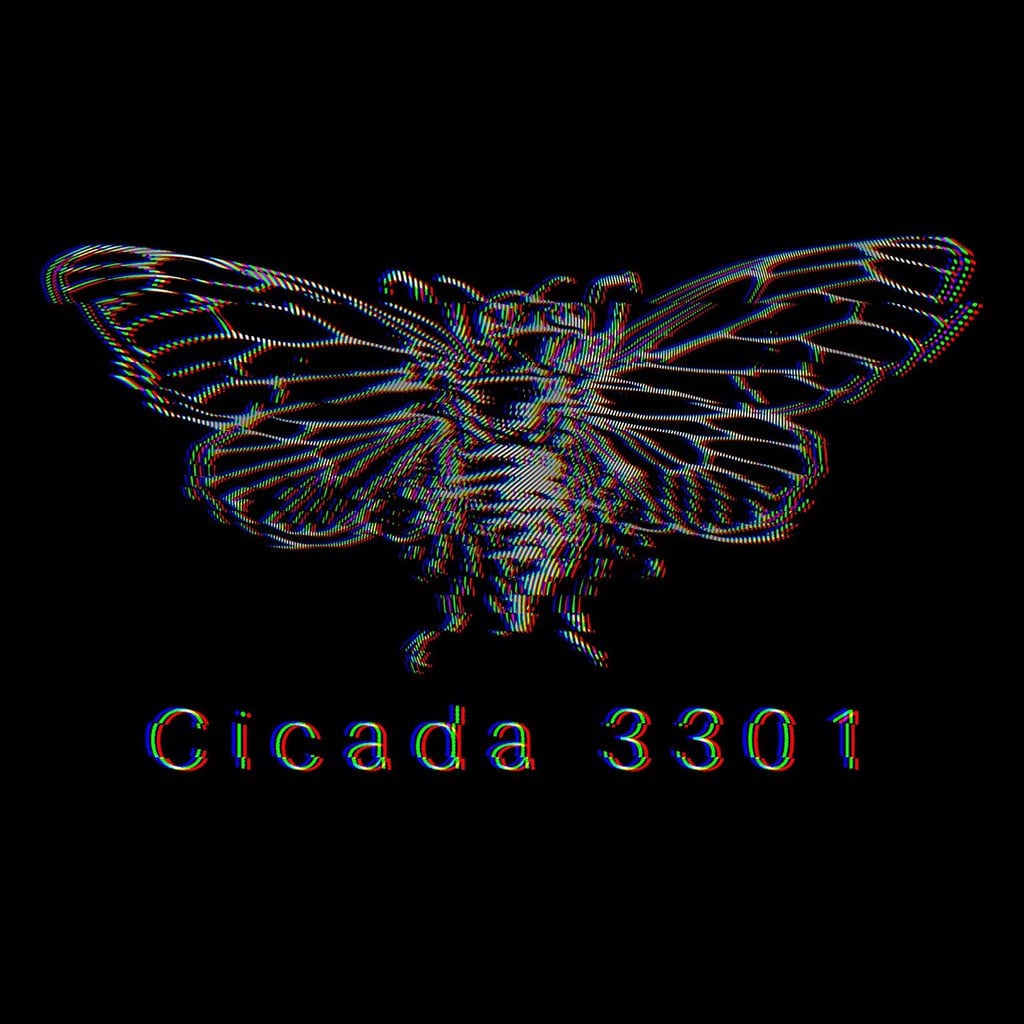
Cryptic puzzles started appearing online in 2012, featuring complex ciphers, steganography, and coordinates leading to physical locations around the world. The mysterious organization called itself Cicada 3301 and claimed to be recruiting “highly intelligent individuals.”
The puzzles were brutally difficult (requiring knowledge of ancient literature, programming, and advanced mathematics), but some people actually solved them and were invited to private forums that promptly went dark. Turns out the whole thing was likely a recruitment operation for either government intelligence agencies or high-level cryptocurrency projects — though the exact purpose remains murky even after former participants started talking.
Webdriver Torso

Someone had been uploading thousands of videos to YouTube consisting of nothing but colored rectangles and electronic beeps. The channel “Webdriver Torso” posted these bizarre clips every few minutes, 24 hours a day, for months.
The internet went wild with theories: secret government communications, alien contact, performance art commentary on digital surveillance. The mundane truth emerged when Google admitted the channel was theirs — it was simply an automated testing system for YouTube’s upload functionality.
Sometimes the most mysterious things have the most boring explanations, which (when you think about it) makes them even more mysterious in a way, because who expects a tech giant to accidentally create an internet legend while debugging video compression algorithms?
The Geedis Pin Mystery

A small enamel pin featuring a character called “Geedis” showed up at thrift stores and flea markets. The pin looked like official merchandise, but nobody could identify what Geedis was from.
The character had a distinctly 1980s fantasy aesthetic — like something that should have been part of a major toy line or cartoon series. Internet investigators spent years searching through old catalogs, contacting former toy company employees, and analyzing the pin’s manufacturing details.
The mystery deepened when other pins from the same series surfaced, depicting a fantasy world called “The Land of Ta.” Eventually, someone tracked down the original designer: a commercial artist who had created the characters for a small sticker company in the 1980s.
The pins were promotional items that had been largely forgotten until the internet rediscovered them decades later.
Max Headroom Broadcast Intrusion

In 1987, someone hijacked two Chicago television broadcasts, appearing on screen wearing a Max Headroom mask and delivering a bizarre, static-filled monologue. The intruder made cryptic references, quoted advertising slogans, and ended the second intrusion by being spanked with a flyswatter.
The incident became legendary among broadcast engineers and conspiracy theorists. The technical expertise required to override television signals suggested an inside job, but the FCC investigation went nowhere.
Despite decades of speculation and unofficial investigations by online communities, no one has ever claimed responsibility for the stunt, and the case remains officially unsolved — one of the most enduring mysteries in broadcast television history.
John Titor Time Traveler

Starting in 2000, someone claiming to be a time traveler from 2036 began posting on internet forums. “John Titor” shared detailed predictions about future events and explanations of time travel technology.
His story was remarkably consistent: he was a soldier sent back to retrieve an IBM 5100 computer needed to debug legacy systems in his timeline. Titor posted technical diagrams, answered questions about future history, and warned about an impending civil war.
When his predictions failed to materialize, interest waned. Years later, investigators discovered the posts originated from the Haber family in Florida.
Larry Haber, an entertainment lawyer, had been shopping around a John Titor book proposal before the first forum posts appeared. His brother, a computer programmer, had the technical knowledge to create the believable time travel explanations.
The whole thing was an elaborate marketing stunt for a science fiction franchise that never quite took off the way they hoped.
The Blonde Girl Crying Meme

A stock photo of a young blonde girl crying became one of the internet’s most popular reaction images. But nobody knew who she was or what she was originally crying about.
The photo appeared everywhere — forums, social media, meme compilations — but reverse image searches led nowhere. The mystery persisted for over a decade until someone finally tracked down the original photographer.
The image came from a 2002 stock photo shoot, and the “crying” girl was actually just squinting in bright sunlight. The photographer had tagged it incorrectly, and the internet had been misreading her expression for years.
Sometimes a squint becomes a cry, and a random moment becomes the face of sadness itself across millions of screens.
The Wyoming Incident

A disturbing video surfaced claiming to be a “hijacked” emergency broadcast from Wyoming, featuring grotesque imagery and unsettling audio. The clip was genuinely creepy enough to spawn years of investigation.
People analyzed the technical aspects, searched for evidence of actual broadcast interruptions in Wyoming, and tried to identify the source of the disturbing footage. The video’s realistic emergency broadcast formatting convinced many viewers it was genuine.
The creator eventually revealed himself: a film student who had crafted the entire thing as a horror project. He had studied real emergency broadcast protocols to make it convincing, then spread it online with a fake backstory.
The confession disappointed those who had hoped for a genuine paranormal event, but impressed others with the quality of the hoax.
A858DE45F56D9BC9

A Reddit user posted long strings of hexadecimal code with no explanation. The account, named after one of these hex strings, continued posting for years without any apparent pattern or purpose.
Cryptography enthusiasts attacked the codes with every technique they knew. Some claimed to find hidden messages, others insisted it was meaningless noise.
The posts became increasingly complex, featuring different encoding methods and what appeared to be deliberate obfuscation. The mystery ended when the user revealed it was a programming exercise — they had been practicing different encryption and encoding techniques by posting their experiments to Reddit.
The community had been trying to decode what was essentially someone’s homework assignments. The anticlimax felt appropriate for a mystery that had always seemed too abstract to have a satisfying resolution.
The Backrooms

Kane Pixels created a series of YouTube videos depicting the “Backrooms” — endless yellow office spaces supposedly accessed by “no-clipping” out of reality. The videos went viral, but their origin story was murky.
The Backrooms concept had existed on 4chan since 2019, but Pixels’ videos gave it a cinematic quality that captured mainstream attention. His footage looked genuinely found, with realistic camera work and subtle environmental storytelling that suggested a much larger mystery.
When Pixels revealed his filmmaking process, the technical achievement became even more impressive. A teenager working alone had created Hollywood-quality horror content using game engines and clever practical effects.
The mystery shifted from “what are the Backrooms” to “how did this kid make something so convincing.”
Pronunciation Manual

A YouTube channel called “Pronunciation Manual” posted videos demonstrating how to pronounce common words — except all the pronunciations were hilariously wrong. “Tiger” became “TOIG-err,” “Cake” became “Cah-kay.”
The videos were clearly satirical, but the creator maintained complete sincerity in their presentation. The channel gained a cult following, but the person behind it remained anonymous.
Their deadpan delivery and increasingly absurd pronunciations suggested sophisticated comedy writing, not amateur mistakes. The mystery dissolved when the creator revealed himself as an aspiring comedian testing material.
The character had been an experiment in deadpan absurdism — seeing how far he could push obviously wrong information while maintaining an educational tone. The revelation changed nothing about the videos’ entertainment value, but it confirmed what most viewers had suspected: sometimes the best mysteries are the ones where everyone’s in on the joke except the joke itself.
Markovian Parallax Denigrate

In 1996, a bizarre message appeared in a Usenet newsgroup: “Markovian Parallax Denigrate” followed by nonsensical text. The phrase became an early internet legend, spawning theories about everything from CIA codes to time travel experiments.
The message’s technical sophistication and cryptic nature convinced many it was either a test of some advanced system or a genuine encrypted communication. Academic researchers analyzed the text for hidden patterns, finding statistical anomalies that suggested deliberate construction rather than random noise.
The truth was more mundane but somehow more unsettling: it was one of the first documented cases of automated spam, generated by a primitive bot testing Usenet posting capabilities. The mystery wasn’t solved by brilliant cryptography, but by recognizing the early signs of the automated content that would eventually flood the internet.
The message was prophetic in ways its creator never intended.
Shaye Saint John

Disturbing videos featuring a character called Shaye Saint John — apparently a woman made of mannequin parts — appeared on early internet platforms. The videos were genuinely unsettling, featuring bizarre skits and surreal imagery.
The character’s origin remained mysterious for years. Was it art, mental illness, or something more sinister?
The videos’ production quality and consistent mythology suggested deliberate creation, but their disturbing content made them feel too raw to be purely fictional. The creator was eventually identified as Eric Fournier, a Los Angeles artist who had developed the character as multimedia performance art.
Fournier’s background in punk music and underground art explained the videos’ transgressive aesthetic. When he died in 2010, the character’s story ended, but the videos remained as documentation of one person’s commitment to maintaining an elaborate and deeply weird artistic persona.
The Wyoming Dinosaur

A Google Street View image from Wyoming showed what appeared to be a large dinosaur in a field. The image went viral, sparking debates about whether it was real, digital manipulation, or some kind of art installation.
Internet investigators analyzed the image’s metadata, searched satellite imagery of the area, and even contacted local residents. The dinosaur appeared consistent with the lighting and perspective of the surrounding landscape, making it difficult to dismiss as simple photo manipulation.
The explanation was charmingly mundane: it was a fiberglass dinosaur sculpture from a local business, captured at the perfect angle to look mysterious. The business owner was baffled by the sudden internet attention, having no idea their roadside attraction had become the subject of global speculation.
Boothworld Industries

Creepy voicemails started appearing online, featuring a man with a Southern accent offering “maintenance services” from “Boothworld Industries.” The calls were genuinely disturbing, with implicit threats delivered in a cheerful customer service tone.
People who called the number back reported even more unsettling interactions. The mystery deepened when investigation revealed the phone number had no official business registration, and the voice seemed to respond to specific details about callers’ lives.
The revelation was classic internet horror: it was a collaborative fiction project, with multiple people contributing to maintain the mystery. The original creator had handed the project off to others, who continued developing the character and mythology.
The scariest part was how seamlessly the collaboration worked — multiple people had sustained a single fictional identity well enough to convince thousands of listeners they were dealing with something genuinely threatening.
The Mystery Unravels Itself

These solved mysteries share something beyond their final revelations. Each one demonstrated the internet’s peculiar power to turn the mundane into the mythical, then strip away the myth to find something stranger underneath.
A stock photo becomes the face of universal sadness. A debugging system becomes evidence of alien contact.
A teenager’s homework becomes an international cryptographic challenge. What makes these stories satisfying isn’t really their solutions — it’s watching human curiosity transform random digital artifacts into genuine communities of investigation.
The mysteries were never just about finding answers. They were about the search itself, and the strange intimacy of strangers working together to understand something none of them had created.
More from Go2Tutors!

- The Romanov Crown Jewels and Their Tragic Fate
- 13 Historical Mysteries That Science Still Can’t Solve
- Famous Hoaxes That Fooled the World for Years
- 15 Child Stars with Tragic Adult Lives
- 16 Famous Jewelry Pieces in History
Like Go2Tutors’s content? Follow us on MSN.