15 Cool Headphone Design Breakthroughs
The world of headphones has transformed dramatically from those heavy 10-pound telephone operator headsets of the 1880s to today’s sleek, intelligent audio companions. What started as simple tools for communication have evolved into sophisticated devices that can filter your reality, adapt to your environment, and even charge themselves using sunlight.
Modern headphone design isn’t just about making things smaller or louder anymore. Engineers are reimagining how we experience sound itself, developing technologies that can isolate specific voices in crowded rooms, create three-dimensional audio spaces, and deliver crystal-clear music without ever touching your ears.
These breakthroughs represent decades of research finally reaching consumer hands.
Here is a list of 15 groundbreaking headphone design innovations that have redefined what’s possible in personal audio.
MEMS Speakers
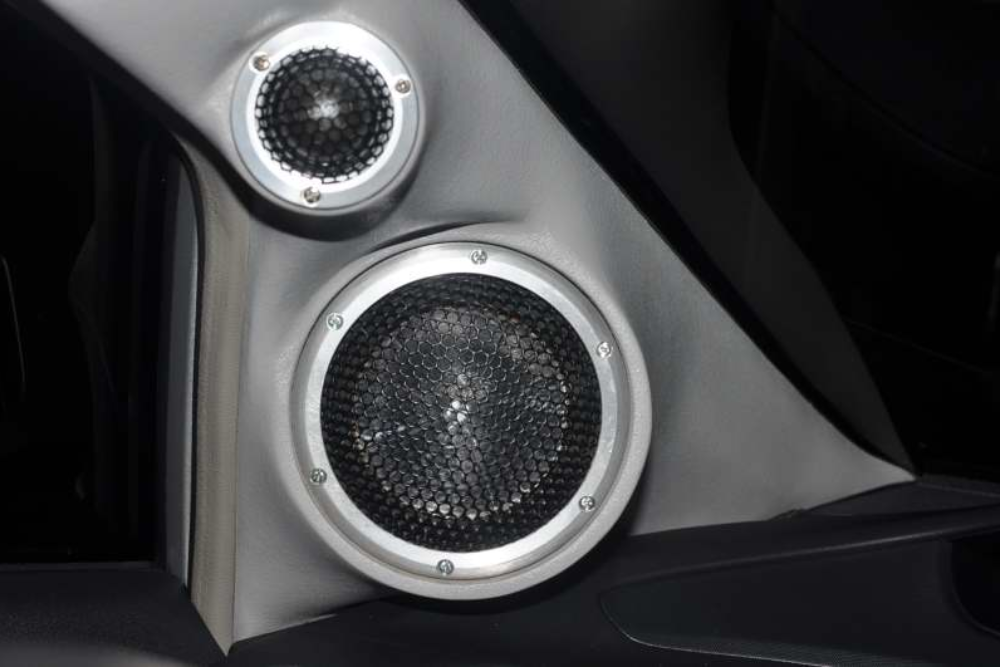
Think of MEMS speakers as the solid-state drives of the audio world. These Microelectromechanical Systems speakers are entirely different in form from traditional moving coil designs, offering significantly reduced mass, increased power efficiency, and high production yields with little part-to-part variance.
Unlike conventional drivers that rely on physical coils and magnets, MEMS speakers can be soldered directly onto circuit boards, making them incredibly reliable and precise.
Planar Magnetic Drivers

Planar magnetic drivers use a flat diaphragm rather than a typical cone or dome shaped membrane, with a conductor trace that allows it to react to the magnetic field produced by magnets on one or both sides. This design creates what many describe as a ‘plucked’ quality to music, with exceptional instrument separation that makes every element in a song distinct and clear.
Modern high-end dynamic driver headphones often have better ‘punch’ or ‘slam’, but planars excel at image clarity and distinction capabilities.
Active Noise Cancellation

BOSE founder developed the concept of active noise cancellation technology in 1978, leading to the birth of commercial noise-canceling headphones in 1989. Modern ANC systems use multiple microphones to detect environmental noise and generate opposite sound waves to cancel it out.
Adaptive ANC takes this further by continuously adjusting the noise cancellation for changes in your environment and any leakage around the padding, creating a bubble of silence that adapts in real-time.
Bone Conduction Technology

Bone conduction headphones allow you to hear music by vibrating on the bones of your face, specifically the jaw bones and temporal bones. Instead of sending sound through your ears, these headphones transmit vibrations directly through your skull to your inner ear.
This openness enables users to maintain awareness of ambient sounds, enhancing situational awareness—a feature not commonly found in traditional headphones.
Spatial Audio with Head Tracking

Spatial audio with dynamic head tracking places sounds virtually anywhere in a space, delivering an immersive, theater-like experience for content recorded in 5.1, 7.1, and Dolby Atmos. The technology uses motion sensors to track your head movements and adjusts the audio accordingly, making it feel like sound sources remain fixed in space even as you move.
The objective is to give you the sensation that audio content is playing in certain areas around you.
Electrostatic Drivers

Electrostatic drivers work by applying a static electrical charge to a thin film that floats between two perforated metal plates; when audio signals are applied across the plates, the entire film membrane moves back and forth due to electrical attraction and repulsion. Electrostatic drivers lack moving metal components, allowing them to reproduce virtually distortion-free sound.
The precision comes at a cost though – these drivers require external amplification and tend to be expensive.
Solar-Powered Charging

Solar power sources on the bands and cases of consumer and professional audio products are becoming more feasible as personal audio hardware moves towards lower-power applications. Companies like Exeger have developed photovoltaic cells specifically designed for headphones, used by brands like 3M and Urbanista.
Products released in the next two years may not need wired charging as often — instead, spending some time outdoors could extend your battery life as long as you need it to.
AI-Powered Audio Processing

Researchers are developing AI-powered headphones that can program ‘acoustic scenes in real time’. One example is target speech hearing, which lets headphone wearers choose a specific speaker in their environment to listen to just by looking at them, thus muting everything else.
These systems use neural networks small enough to be embedded directly on the headphones, cutting response time to the bare minimum for real-time processing.
Open-Ear Design Innovation

NTT Corporation has developed ANC technology for open-ear headphones that reduces ambient noise near the ears without covering them. Conventional open-ear headphones could only reduce sound below 1,000 Hz, but this new technology can reduce noise above 1,000 Hz, including sounds around 3,000 Hz that the human ear is most sensitive to.
This breakthrough allows the comfort of open-ear designs without sacrificing noise reduction.
Bluetooth LE Audio and Auracast
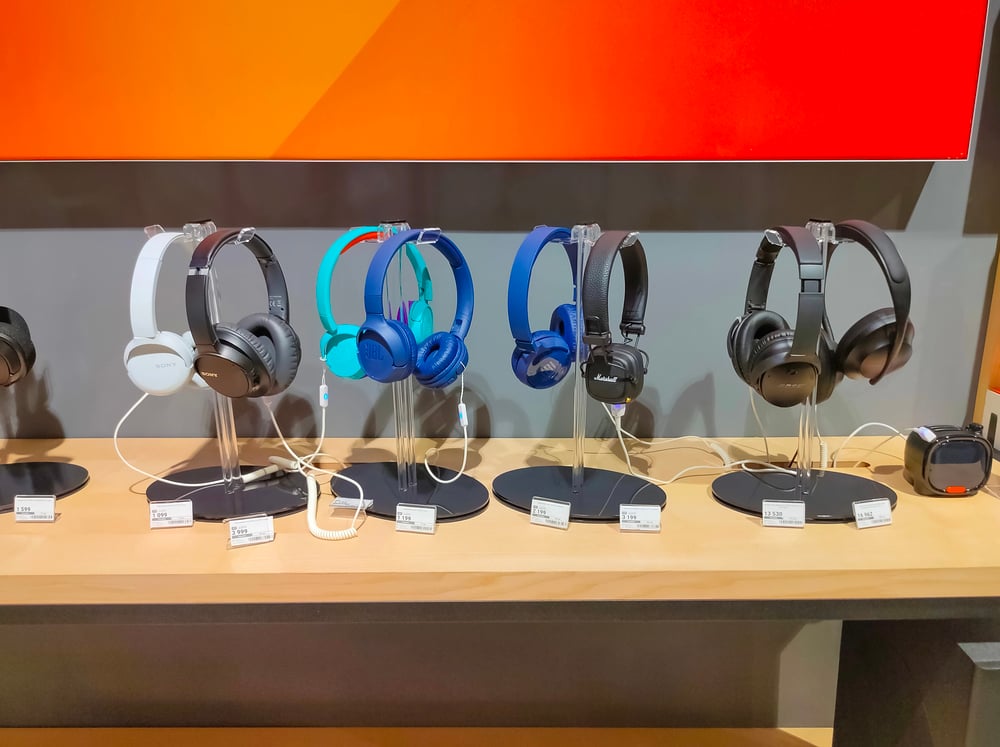
Bluetooth LE Audio features like Auracast are finally approaching the market after being promised in 2020. This technology enables multiple people to connect to the same audio source simultaneously, perfect for shared listening experiences.
By 2025, wireless headphones will become intrinsically linked with smart devices ensuring a seamless transition between devices and a more accessible user experience.
Hearing Aid Integration

Legal changes in the US in 2022, plus mergers and partnerships between headphone manufacturers and hearing aid companies, set the stage for earbuds to take over some duties for hearing assistive devices. Many over-the-counter hearing assistive devices look a lot like regular earbuds, and those needing hearing assistance can benefit from new features offered by earbuds.
This convergence makes hearing assistance more affordable and less stigmatized.
Foldable and Collapsible Mechanisms

Modern headphones feature ingenious folding mechanisms that maintain structural integrity while maximizing portability. The Human Headphones use a cleverly designed hinge system that clips to the ears, stable enough to do a handstand but gentle enough for day-long wear.
These designs accommodate different head shapes and sizes while solving the eternal problem of headphone storage and transport.
Adaptive EQ Technology

Adaptive EQ uses computational audio to continuously adjust frequency response based on the headphone fit and movement in real time. Each ear cup features sensors including optical, position, case-detect, accelerometer sensors to enable this real-time adaptation.
This means your headphones automatically optimize their sound signature for your specific ear shape and how you’re wearing them.
Hybrid Driver Systems

Hybrid drivers integrate two or more types of drivers into a single pair of earphones, with combinations including Dynamic Drivers, Balanced Armatures, Electrostatic, Planar, and Balanced Coiled Drivers. Hybrid drivers use two or more drivers to deliver a well-received sound signature, ensuring every sound frequency is well represented.
This approach combines the strengths of different driver technologies to create more complete sound reproduction.
Transparent and Awareness Modes

Transparency mode allows users to simultaneously listen to music while hearing the environment around them, ensuring everything including the user’s own voice sounds natural while audio plays perfectly. Aware mode blends ambient sound with your content, providing the best fidelity of both worlds.
These modes use sophisticated audio processing to mix external sounds with your music in natural-sounding ways.
The Sound of Tomorrow

These breakthroughs represent more than just technical achievements – they’re reshaping how we interact with the world around us. From MEMS speakers that never wear out to AI systems that can isolate a single voice in a crowded room, today’s headphone innovations are solving problems we didn’t even know we had.
The future includes seamless integration with smart devices, augmented reality, and AI-driven personalization that will revolutionize audio technology. As these technologies mature and become more affordable, the line between our digital and physical audio experiences will continue to blur, creating possibilities we’re only beginning to imagine.
More from Go2Tutors!

- The Romanov Crown Jewels and Their Tragic Fate
- 13 Historical Mysteries That Science Still Can’t Solve
- Famous Hoaxes That Fooled the World for Years
- 15 Child Stars with Tragic Adult Lives
- 16 Famous Jewelry Pieces in History
Like Go2Tutors’s content? Follow us on MSN.



