15 Dolphin Behaviors Observed by Scientists
Humans have long been captivated by dolphins’ intelligence, social complexity, and apparently happy disposition. These amazing marine mammals continue to astound scientists with behaviors that defy our comprehension of animal cognition, communication, and culture even after decades of study. Dolphins display a variety of behaviors that expand our understanding of what is feasible for non-human animals, from complex hunting strategies to apparent self-awareness. Here is a list of 15 dolphin behaviors that keep scientists interested and motivate current studies in behavioral ecology, animal cognition, and marine mammalogy.
Tool Usage

One of the most well-documented instances of tool use in wild dolphin populations is exhibited by bottlenose dolphins in Shark Bay, Australia. This behavior is still revealing new information. When searching for hidden meals on the rough seafloor, these dolphins meticulously cut off marine sponges and wear them on their beaks like protective gloves.
Dolphins must choose the right sponges, fit them over their rostrums, and keep them in place during prolonged hunting sessions in order to engage in this “sponging” habit. According to research, this method is nearly entirely passed on culturally from mother to daughter, resulting in different sponging lineages within the community.
Scientists are particularly interested in how this behavior represents cumulative cultural evolution—something once thought unique to humans—as newer generations appear to refine the technique beyond what their ancestors practiced.
Signature Whistles

Each dolphin develops its own unique whistle during its first year of life, functioning essentially as a name that stays with them throughout their lifetime. These signature whistles are so distinctive that researchers can identify individual dolphins by sound alone, even in large pods where visual identification would be impossible.
What makes this behavior especially intriguing to scientists is that dolphins use these whistles reciprocally—they can remember and reproduce the signature whistles of dolphins they haven’t encountered in over 20 years, demonstrating exceptional long-term social memory. Current research focuses on understanding the cognitive processes behind whistle development, how dolphins integrate signature recognition into their social dynamics, and whether these vocalizations contain embedded information beyond simple identification that humans haven’t yet decoded.
Like Go2Tutors’s content? Follow us on MSN.
Cooperative Hunting
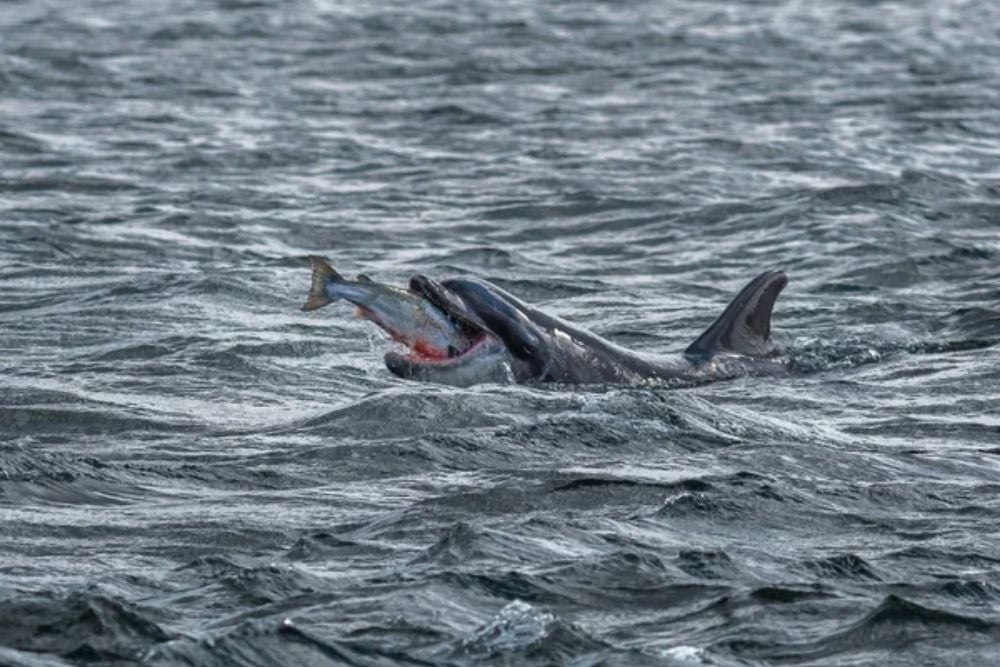
Dolphins display remarkably coordinated hunting strategies that suggest sophisticated planning and role specialization. In some populations, dolphins work together to herd fish into dense clusters, taking turns feeding while others maintain the formation.
Even more impressively, some groups coordinate with human fishermen in places like Brazil and Myanmar, responding to specific signals from the humans about when to drive fish toward waiting nets. The dolphins benefit by feeding on disoriented fish while the fishermen catch more than they would alone.
This mutualistic relationship has developed independently in multiple locations worldwide, without human training. Scientists continue studying these interactions to understand the cognitive mechanisms behind such cooperation, how these behaviors are learned and transmitted, and the decision-making processes that allow dolphins to assign and maintain specific roles during complex group hunts.
Mirror Self-Recognition

Dolphins are among the few animal species that can recognize themselves in mirrors, passing what’s known as the mirror self-recognition test—long considered a gold standard for self-awareness. When marked with temporary dye in areas they cannot normally see, dolphins will position themselves to view the marked area in a mirror, suggesting they understand the reflection represents themselves rather than another dolphin.
What continues to intrigue researchers is how this apparent self-awareness manifests in wild populations where mirrors don’t exist, and whether this ability connects to dolphins’ complex social cognition. Current studies employ advanced techniques like underwater mirrors and televisions displaying delayed footage to explore the extent of dolphin self-recognition and whether it extends to recognizing themselves in other types of representations beyond reflections.
Teaching Behaviors
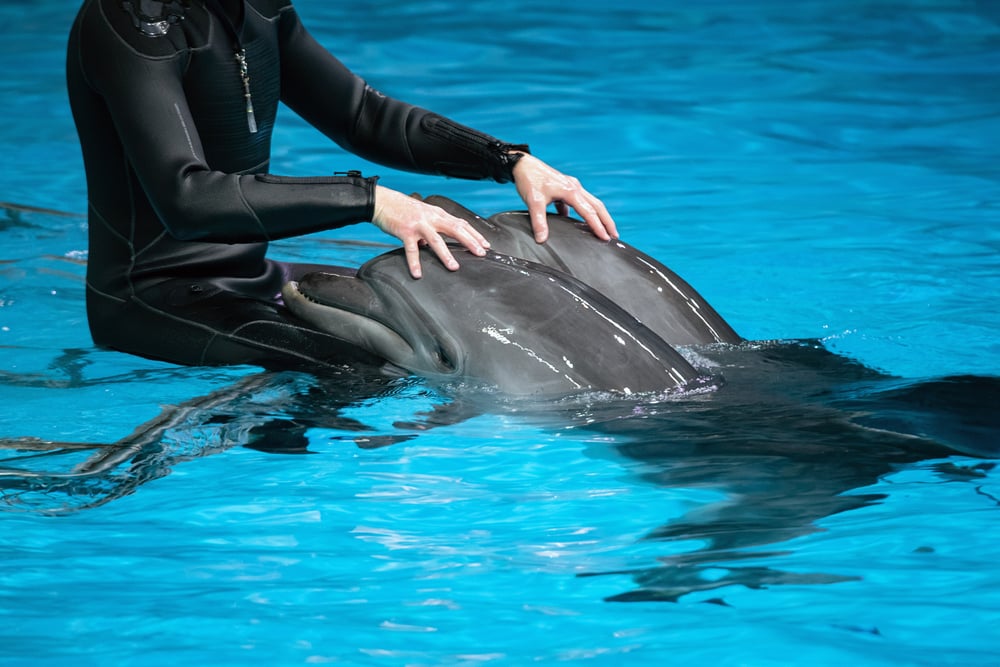
Dolphin mothers invest significant time teaching specific skills to their calves, going beyond the simple modeling seen in many species. They’ve been observed deliberately slowing down complex behaviors, creating learning opportunities, and even appearing to correct their young when they make mistakes.
In some cases, mothers will beach themselves temporarily while their calves watch, then encourage the calves to try this potentially risky behavior in a controlled manner. Scientists are particularly interested in how dolphin teaching compares to human pedagogical methods and whether dolphins adjust their teaching based on the apparent aptitude of their calves.
These questions touch on fundamental aspects of cognition, including theory of mind—whether dolphins can understand that others have different knowledge than themselves, a cognitive ability once thought unique to humans.
Like Go2Tutors’s content? Follow us on MSN.
Echolocation

While echolocation itself is well documented, scientists continue to study the remarkable precision and cognitive integration of this sensory system. Dolphins can detect objects the size of a pea from over 50 feet away, distinguish between objects made of different materials but identical in appearance, and even “see” inside other animals’ bodies, potentially detecting pregnancy or illness in other species.
Recent research suggests dolphins may create detailed three-dimensional acoustic representations of their environment that they can maintain and manipulate mentally—essentially creating a sonar-based mental map. Even more intriguing, dolphins appear able to transmit these acoustic images to other dolphins, possibly allowing them to share their echoic “view” of objects.
Scientists are now investigating whether dolphins have developed a form of acoustic communication that goes beyond simple signals to include representational information transfer.
Synchronized Swimming

During social interactions, dolphins often engage in precisely synchronized swimming, perfectly matching each other’s movements and breathing patterns with remarkable coordination. While appearing playful, this behavior likely serves critical social functions, including strengthening bonds, establishing hierarchies, and practicing coordination needed for hunting or defense.
Scientists are particularly interested in how dolphins achieve such perfect synchrony without verbal planning or visual cues, often accomplishing it while swimming so close they appear to touch without ever colliding. Current research examines whether dolphins use subtle acoustic signals, pressure wave detection, or anticipatory modeling of others’ movements to achieve this coordination.
Understanding the mechanisms behind dolphin synchrony could provide insights into the evolution of coordination in mammals and potentially inspire biomimetic applications in fields like robotics and autonomous vehicle coordination.
Cultural Transmission

Dolphins display clear evidence of cultural learning, where specific behaviors develop within certain populations and spread through social learning rather than genetic inheritance. Beyond tool use, researchers have documented unique feeding techniques that vary between populations separated by just a few miles of ocean.
In some areas, dolphins tail-slap to stun fish, while nearby groups might use entirely different techniques despite living in identical environments. Scientists are investigating how stable these cultural traditions remain over time, how quickly novel behaviors spread through populations, and whether certain individuals serve as important cultural vectors.
These questions touch on fundamental aspects of cultural evolution, which was once considered an exclusively human characteristic but is increasingly recognized in other highly social species like dolphins.
Like Go2Tutors’s content? Follow us on MSN.
Play Behaviors

Dolphins engage in extensive play throughout their lives, not just during youth like many mammals. They create bubble rings they can manipulate and pass to other dolphins, play with objects they find, and invent games without apparent survival benefit.
What continues to intrigue scientists is the self-motivated, innovative nature of this play and how it often incorporates objects and environmental features in creative ways. Dolphins have been observed creating and manipulating bubble rings purely for entertainment, detecting and riding pressure waves from distant boats, and even using marine life like pufferfish to induce altered states (though this remains controversial).
Researchers are investigating whether play serves as practice for serious behaviors, cognitive enrichment, or social bonding, and how it might relate to the evolution of innovation and creativity in highly intelligent species.
Problem-Solving Abilities

Dolphins display exceptional problem-solving abilities, figuring out novel situations without trial and error in ways that suggest abstract thinking. In captivity, they quickly understand experimental paradigms and sometimes even deceive researchers to obtain additional rewards or avoid tasks they find uninteresting.
In the wild, they navigate complex social politics and environmental challenges with solutions that suggest planning and insight rather than conditioned responses. Scientists are particularly interested in understanding the cognitive mechanisms behind these abilities—whether dolphins reason by analogy, understand cause-effect relationships across domains, or possess some form of mental modeling that allows them to simulate outcomes before acting.
These questions connect to fundamental issues in comparative cognition and the evolution of intelligence in mammals that followed an evolutionary path very different from primates.
Interspecies Socialization
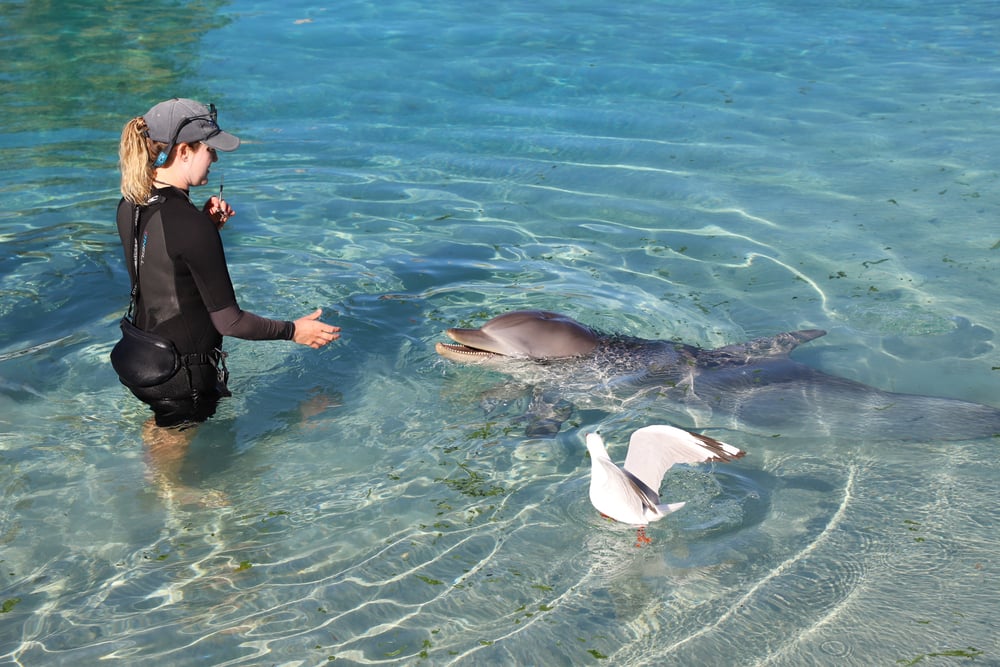
Dolphins regularly initiate interactions with other species, including humans, showing what appears to be genuine curiosity rather than just food-seeking behavior. They’ve been observed forming social bonds with whales, sea lions, and even dogs in ways that persist over time.
These cross-species interactions often involve behaviors like play, protective actions, and even apparent mourning when the other species’ members die. Scientists are studying whether these relationships represent true social bonds or opportunistic associations, and how dolphins navigate the presumably different social rules and communication systems of other species.
This research has implications for understanding the flexibility of social cognition and the evolutionary basis for cross-species empathy and cooperation, which may have played important roles in human evolution and the domestication of other species.
Like Go2Tutors’s content? Follow us on MSN.
Sleep Management

Dolphins have evolved the remarkable ability to sleep with only half their brain at a time, allowing them to continue swimming, breathing, and watching for predators while still obtaining necessary rest. During this unihemispheric slow-wave sleep, one eye remains open and one hemisphere of the brain shows wake-like activity while the other hemisphere sleeps.
Scientists continue to study how dolphins coordinate this split consciousness, what mechanisms regulate the switching between hemispheres, and whether the quality of rest differs from full-brain sleep seen in terrestrial mammals. This research has implications beyond marine mammalogy, potentially offering insights into sleep disorders in humans and the fundamental purpose of sleep itself.
Some research suggests dolphins may even have a form of conscious control over this process, raising fascinating questions about the nature of consciousness and self-regulation of physiological states.
Grief-Like Behaviors

Dolphins display behaviors that appear strikingly similar to grief when pod members die, sometimes carrying dead calves for days or even weeks after death. Other pod members often remain close to the grieving mother, seemingly providing social support during this period.
Scientists are carefully studying whether these behaviors represent actual emotional experiences comparable to human grief or are better explained as evolutionary adaptations without subjective emotional content. Research in this area must navigate the tension between anthropomorphism and the recognition that emotions evolved for adaptive purposes across many species.
Questions about dolphin grief connect to deeper issues of consciousness, emotional processing, and the evolution of social bonds strong enough to persist beyond death—all issues that inform our understanding of the evolution of human emotions and social structures.
Acoustic Mimicry

Dolphins possess impressive abilities for copying sounds that they detect, natural or constructed, with great fidelity. Dolphins can reproduce computer-generated tones, the vocalizations of other animals, and even crude simulations of human voice underwater. This reproduction is spontaneous, frequently with no reward or training, and suggests a spontaneous fascination with playing with voices.
Researchers question whether such reproduction is mere imitation or is goal-directed and communicative and whether it is part of more general abilities for learning to produce vocalizations rare in mammals. New findings suggest that dolphins may employ copying as a form of social bonding, with friends sharing and adopting certain vocal forms in order to become closer friends.
The neurology underlying this ability is poorly understood but may contain the keys to the evolution of vocal learning leading to human language.
Altruistic Behavior
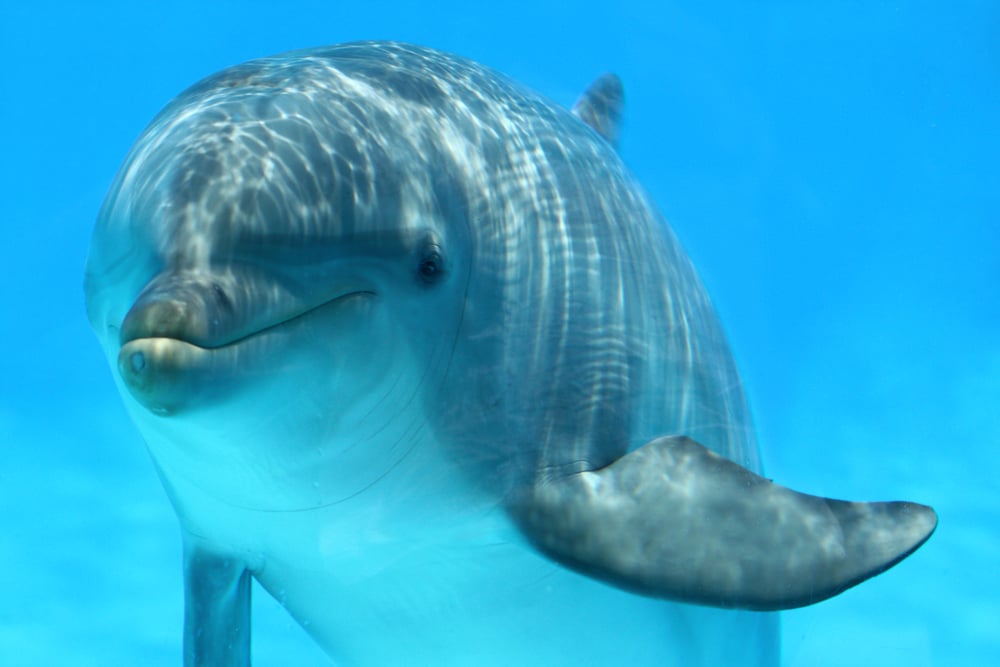
Dolphins routinely assist injured pod members, supporting them at the surface to breathe even when it compromises their own safety and feeding opportunities. This helping behavior extends beyond kin to unrelated pod members and occasionally even to other species, including humans in distress.
Scientists continue to study whether these behaviors represent true altruism, kin selection, reciprocal altruism, or byproducts of social bonding mechanisms. What makes this area particularly fascinating is that dolphin helping behavior often occurs in contexts where the helper receives no immediate benefit and sometimes incurs significant costs, challenging simplistic evolutionary explanations.
Research in this area connects to fundamental questions about the evolution of cooperation, the biological basis of empathy, and how social species navigate the tensions between individual survival and group benefit.
The Enduring Mystery of Dolphin Cognition

These fifteen behaviors represent just a fraction of what makes dolphins such compelling subjects for ongoing scientific research. What connects these diverse behaviors is how they collectively suggest a cognitive world that is both similar to and radically different from our own.
Dolphins evolved their remarkable intelligence along an evolutionary path distinct from primates, in an aquatic environment vastly different from the terrestrial world that shaped human cognition. This evolutionary convergence—where two distantly related species independently evolved complex cognition—offers a unique lens through which to examine fundamental questions about intelligence itself.
By continuing to study these fascinating marine mammals, scientists gain insights not just into dolphin behavior but into the very nature of the mind and the diverse forms intelligence can take when shaped by different evolutionary pressures and environments.
More from Go2Tutors!

- 18 Unexpectedly Valuable Collectibles You Might Have Lying Around
- 15 Things Every Teenager in the ’70s Did That Teens Today Wouldn’t Understand
- 15 Strange Things People Have Tried to Ban (And Failed)
- 15 Inventions That Were Immediately Banned After Being Created
- 20 Actors Who Were Almost Cast in Iconic Roles
Like Go2Tutors’s content? Follow us on MSN.