15 Eagle Facts Highlighting Their Predatory Skills
Eagles stand among nature’s most impressive hunters, commanding the skies with unmatched power and precision. These raptors have evolved a remarkable suite of physical attributes and hunting behaviors that place them firmly at the top of their food chains. From their razor-sharp vision to their deadly talons, eagles represent the pinnacle of aerial predatory adaptation across diverse habitats worldwide.
Here is a list of 15 eagle facts that demonstrate why these birds have earned their status as apex predators in ecosystems across the globe.
Extraordinary Vision

Eagles possess visual acuity that ranks among the sharpest in the entire animal kingdom, with eyesight estimated to be four to eight times stronger than human vision. Their eyes contain five times more visual cells (photoreceptors) per area than our own, allowing them to spot a rabbit from over two miles away or a fish swimming beneath the water’s surface while soaring at considerable heights.
The retina of an eagle contains around one million photoreceptors per square millimeter, compared to just 200,000 in humans, enabling them to resolve incredible detail at distances that would appear blurry to us. This exceptional vision also perceives a broader color spectrum, including ultraviolet light invisible to humans, which helps them track prey by following urine trails that glow under UV light.
Perhaps most impressively, eagles can maintain focus on fast-moving targets while diving at speeds exceeding 100 miles per hour—a feat that would render most animals effectively blind.
Deadly Talons
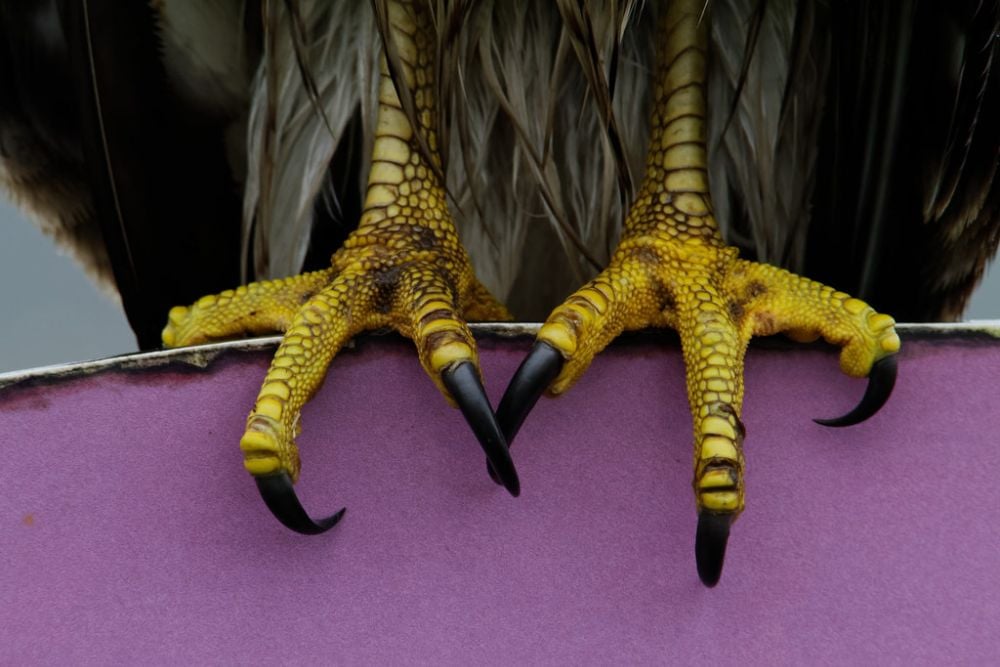
An eagle’s talons represent one of nature’s most perfect killing tools, exerting crushing force while acting as inescapable hooks once embedded in prey. The talon grip of a bald eagle can deliver pressure exceeding 400 pounds per square inch—about ten times the strength of an adult human hand—and golden eagles can exert even greater force.
These razor-sharp natural weapons can grow up to three inches long in larger species and regularly penetrate the vital organs of prey animals upon impact. Eagles possess a specialized tendon locking mechanism that allows them to maintain maximum grip pressure without ongoing muscle exertion, meaning their talons remain clamped at full strength even if the eagle itself becomes unconscious or dies.
This remarkable adaptation explains why handlers of trained eagles must use specialized techniques to get the birds to release their grip, as the locking mechanism is involuntary and extraordinarily powerful.
Like Go2Tutors’s content? Follow us on MSN.
Crushing Beaks
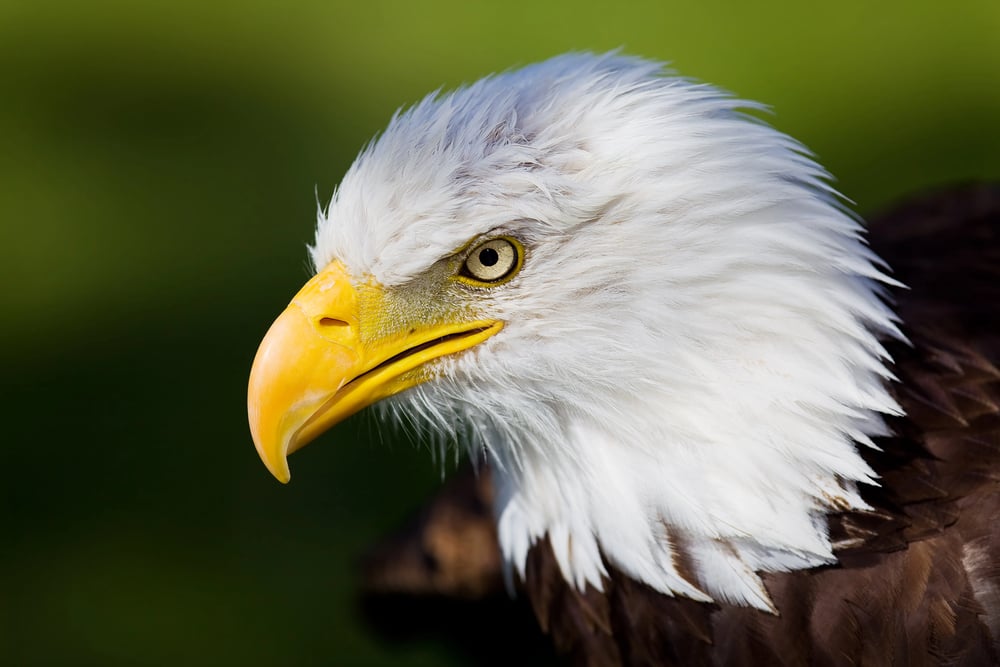
While talons deliver the initial strike, an eagle’s beak represents a secondary killing tool perfectly designed for tearing flesh and delivering fatal bites. The upper mandible features a sharp downward hook that can sever the spinal cord of smaller prey with a single, precise strike, while the cutting edges of both mandibles act like serrated knives.
Eagles can generate biting forces of up to 400 pounds per square inch, easily shattering bones and penetrating tough hides that would resist other predators. Golden eagles in particular use their beaks to access the nutritious bone marrow of their prey by crushing bones that wolves would struggle to break.
The powerful beak also serves as an effective defensive weapon; captive eagles have been documented breaking the bones in handlers’ hands through leather gloves when provoked, demonstrating the tremendous force these birds can generate with just their facial muscles.
Remarkable Speed
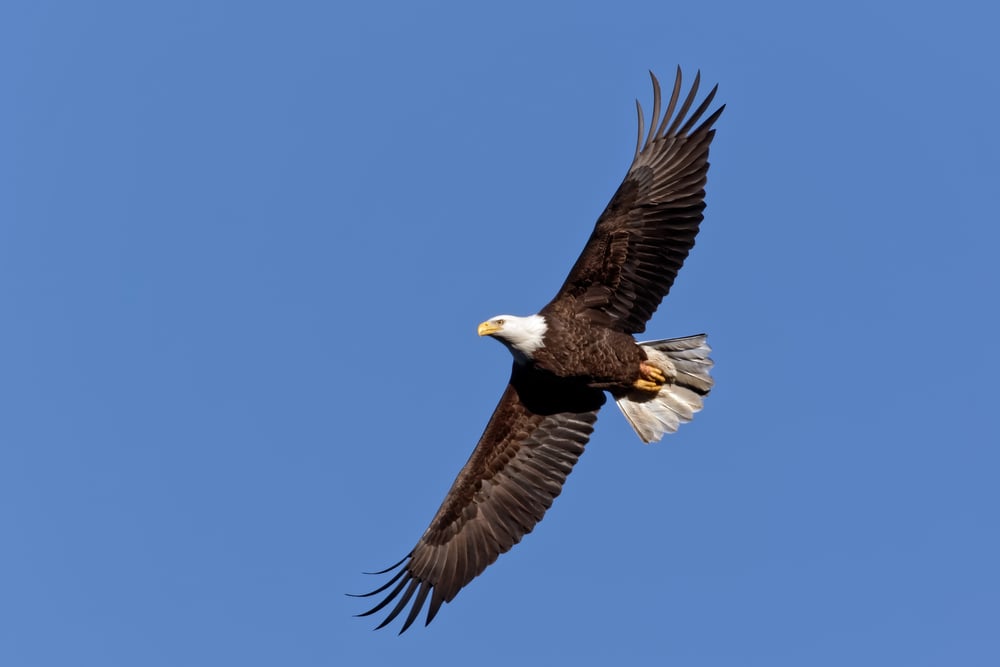
Eagles combine powerful flight with astonishing speed, reaching velocities that few prey animals can escape. While level flight speeds typically range from 30 to 50 miles per hour, hunting dives called stoops can reach truly spectacular speeds.
The golden eagle can stoop at over 150 miles per hour, while the peregrine falcon—a close relative that uses similar hunting techniques—holds the record for the fastest animal on Earth with documented diving speeds exceeding 240 miles per hour. These incredible velocities allow eagles to overcome the evasive maneuvers of agile prey like ducks and rabbits.
The kinetic energy generated during these high-speed strikes can kill prey instantly through impact force alone, before their talons or beak even come into play. Eagles also possess specialized respiratory and circulatory adaptations that prevent them from blacking out during these extreme hunting dives—a problem that would affect most other vertebrates at such speeds.
Exceptional Strength

Despite their relatively light weight, eagles possess strength disproportionate to their size, allowing them to overpower prey many times their own weight. A female bald eagle weighing 10-14 pounds can carry prey weighing up to 4-5 pounds in flight—nearly half her body weight—a feat equivalent to an average human carrying a full-grown mountain lion.
Golden eagles routinely kill prey weighing 20-30 pounds, such as young deer and mountain goats, by using their momentum to knock animals off cliffs or deliver lethal talon strikes. There are credible accounts from the Central Asian steppes of golden eagles being trained by traditional eagle hunters to take down wolves, demonstrating their remarkable capacity for overpowering large, dangerous prey.
The strength-to-weight ratio of eagles ranks among the highest of any predatory animal, made possible by hollow, lightweight bones combined with dense, powerful flight muscles that comprise up to 25% of their total body weight.
Like Go2Tutors’s content? Follow us on MSN.
Aerial Supremacy

Eagles maintain territorial dominance of the airspace they inhabit, with few natural predators willing to challenge them in their domain. Their flight capabilities combine power, speed, and maneuverability in a package that makes them virtually untouchable once airborne.
Eagles can soar for hours using thermal updrafts, conserving energy while surveying vast territories for vulnerable prey. Species like the crowned eagle can navigate through dense forest canopies at high speeds, making rapid directional changes that would be impossible for most birds.
Their aerial prowess allows them to overcome other formidable aerial hunters, with documented cases of eagles preying upon peregrine falcons, ospreys, and even other eagle species when territories overlap. This command of three-dimensional space gives eagles a significant advantage over terrestrial predators, allowing them to strike from angles that ground-dwelling hunters cannot defend against.
Incredible Longevity
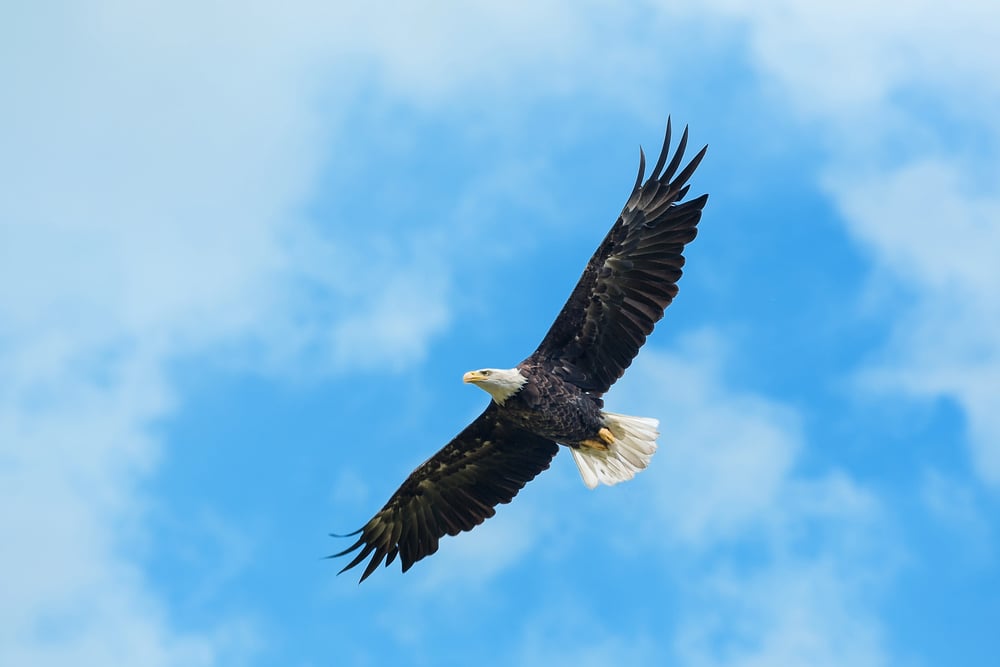
Eagles rank among the longest-lived birds of prey, with lifespans far exceeding most potential competitors and prey species. Wild bald eagles commonly live 20-30 years, while captive individuals have reached ages exceeding 50 years—a remarkable longevity for a predatory bird.
This extended lifespan allows individual eagles to accumulate hunting experience and territorial knowledge over decades, becoming increasingly efficient predators with age. Older eagles demonstrate more sophisticated hunting tactics and higher success rates than younger birds, having learned the specific behaviors and weaknesses of prey species in their territory.
Their longevity also enables pairs to maintain and defend prime territories for many years, gradually improving nest sites and hunting perches to maximize their advantage. This accumulated experience makes mature eagles particularly formidable, as they combine physical prime with decades of predatory knowledge.
Formidable Size

Eagles include some of the largest birds of prey on Earth, with a size that intimidates both competitors and prey. The Steller’s sea eagle—the heaviest eagle species—can exceed 20 pounds with a wingspan approaching eight feet, while the Philippine eagle stands over three feet tall.
The harpy eagle’s massive legs are nearly as thick as a human wrist, supporting talons larger than grizzly bear claws. Female eagles typically outweigh males by 20-30%, a size advantage that allows them to take larger prey while males specialize in agility and speed. The sheer physical presence of a full-grown eagle triggers immediate fear responses in most prey animals, often causing them to freeze momentarily—a fatal hesitation that eagles exploit.
Even humans experience instinctive intimidation when confronted with eagles at close range, a testament to their imposing physical presence and the evolutionary advantage it provides when hunting or defending territory.
Like Go2Tutors’s content? Follow us on MSN.
Versatile Diet
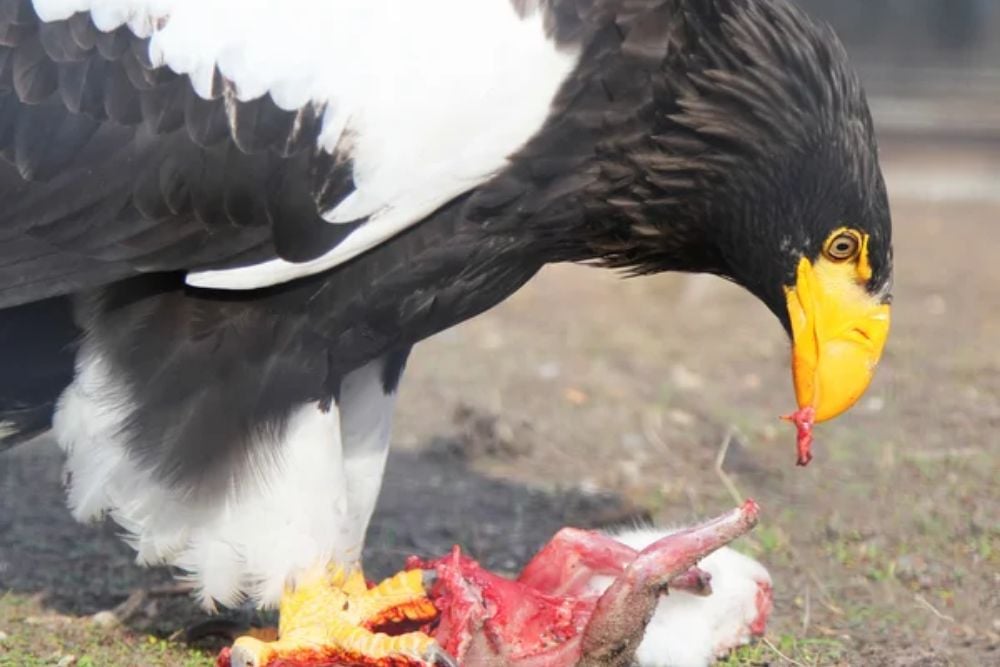
Unlike specialized predators limited to particular prey types, eagles demonstrate remarkable dietary flexibility that allows them to thrive across diverse environments and conditions. The golden eagle’s diet includes over 400 documented species, from insects and fish to mammals as large as deer and livestock.
Bald eagles opportunistically shift between hunting, fishing, and scavenging depending on seasonal availability and energy expenditure calculations. The African crowned eagle specializes in primates but readily switches to rodents, small antelopes, or even reptiles when preferred prey becomes scarce.
This adaptability prevents eagles from experiencing the population crashes that affect specialists when their primary prey experiences cyclical declines. The ability to adjust hunting techniques for dramatically different prey types demonstrates cognitive flexibility that supports their apex status—when one food source disappears, eagles simply switch to alternatives rather than facing starvation like more specialized predators might.
Powerful Nest Defense

Eagles defend their nesting territories with extraordinary aggression, creating zones where even much larger predators fear to tread. Nesting bald eagles have been documented driving away bears, coyotes, and humans through coordinated diving attacks delivered with surgical precision.
The martial eagle of Africa will strike humans who approach too near its nest with such force that skull fractures have been reported. These defensive behaviors create a protective zone that few potential competitors or predators will risk entering.
Parents typically coordinate their defensive efforts, with one bird diving while the other recovers altitude for the next attack, creating continuous pressure that overwhelms most threats. This fierce protection of breeding territory ensures high survival rates for eagle offspring compared to other predators, contributing to stable population maintenance despite their slow reproductive rate.
Precision Hunting
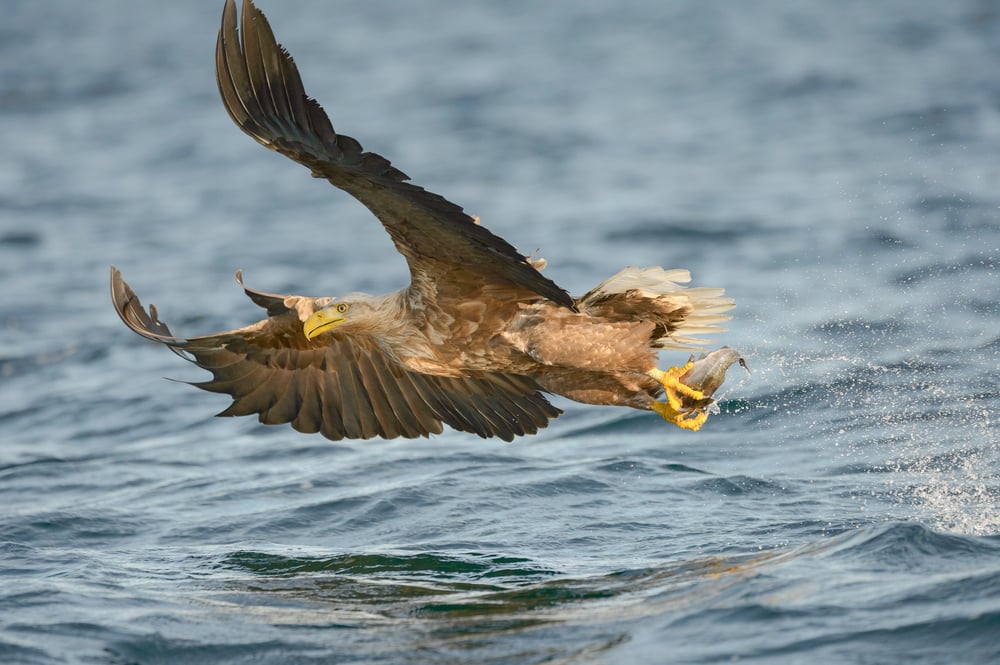
Eagles demonstrate hunting accuracy that combines calculated risk assessment with split-second timing and millimeter precision. When hunting waterfowl, bald eagles time their attacks to coincide with the moment ducks or geese begin taking flight from water—the instant when they’re most vulnerable and least maneuverable.
Golden eagles hunting mountain slopes position themselves to use terrain features that conceal their approach until the final moment, then time their strikes to coincide with moments when prey animals are off-balance or distracted. The African crowned eagle demonstrates such precision that it can snatch monkeys from tree branches at full speed without colliding with surrounding vegetation.
This precision results from both physical adaptation and learned behavior, with eagles demonstrating the capacity to calculate intercept trajectories accounting for their own speed, prey movement, and environmental factors like wind direction. Unlike opportunistic predators that rely on the volume of attempts, eagles succeed through calculated precision that maximizes energy efficiency.
Like Go2Tutors’s content? Follow us on MSN.
Specialized Feet

Beyond just powerful talons, an eagle’s feet contain specialized adaptations that make them extraordinarily effective killing tools. Each foot possesses four talon-bearing toes arranged in an optimal configuration for gripping prey—three facing forward and one (the hallux) facing backward, creating a vise-like grasping mechanism.
The underside of an eagle’s toes contains specialized rough pads with tiny spicules that increase friction, preventing prey from slipping free even when wet or struggling violently. Bald eagles hunting fish possess small spikes called spicules on their foot pads that function like fish hooks, allowing them to grip slippery prey that would escape other predators.
The tendons controlling these feet run through bony channels that prevent them from shifting position during extreme stress, ensuring maximum gripping power is maintained even when prey fights desperately for survival. This combination of adaptations makes an eagle’s foot arguably the most perfect evolved grasping mechanism in the animal kingdom.
Environmental Adaptability
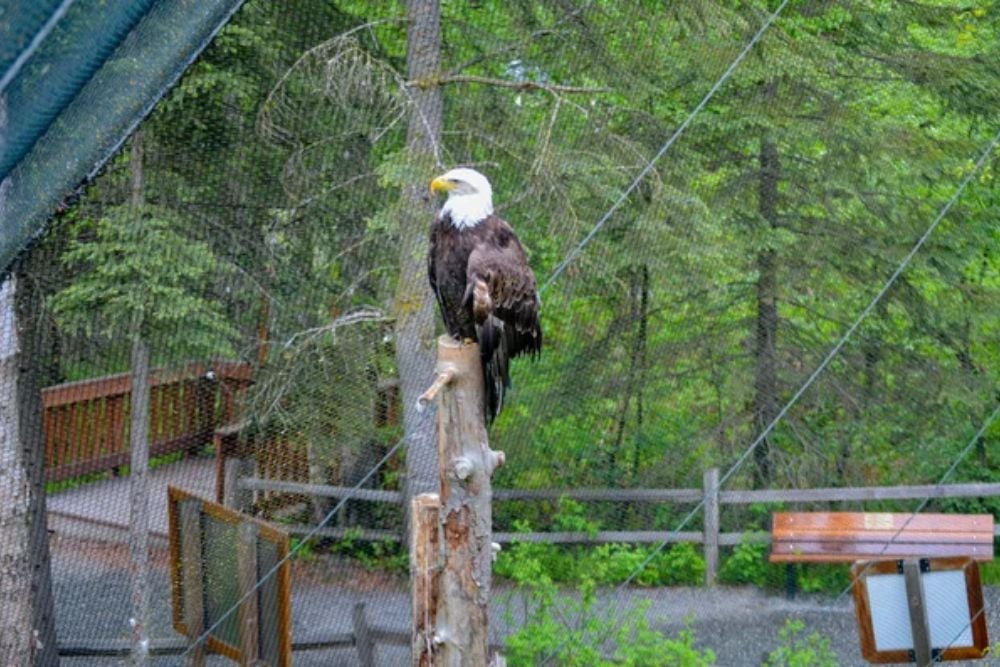
Eagles have successfully colonized nearly every terrestrial habitat on Earth, from Arctic tundra to tropical rainforests, demonstrating remarkable adaptability to different hunting environments. The African fish eagle hunts over lakes and rivers much like the North American bald eagle, while harpy eagles navigate dense jungle canopies, and golden eagles patrol alpine mountains and desert valleys with equal proficiency.
Different species have evolved specialized adaptations for their particular environments—sea eagles have partially scaled feet for better grip on slippery fish, while forest eagles have shorter, broader wings for maneuverability among trees. This environmental flexibility has allowed eagles to establish themselves as apex predators across six continents in habitats where the physical challenges of hunting would exclude most other predators.
Their ability to dominate such diverse ecosystems demonstrates the fundamental effectiveness of the eagle’s predatory adaptations regardless of setting.
Mating Partnerships

Most eagle species form long-term monogamous pairs that function as coordinated hunting teams, doubling their effectiveness as predators. Pairs often hunt cooperatively using sophisticated strategies that require communication and coordination, with one bird driving prey toward the other waiting in ambush.
These partnerships remain intact year-round in many species, allowing pairs to defend territory and hunting grounds continuously rather than just during breeding season. The stability of these relationships allows pairs to develop increasingly sophisticated cooperative hunting techniques over years of partnership, becoming more effective as they learn each other’s strengths and hunting styles.
Breeding pairs typically remain together until one member dies, sometimes maintaining partnerships for 20+ years, which contributes to their territorial dominance and hunting success. This social structure represents an adaptive advantage over solitary hunters, allowing eagles to subdue larger prey and defend more extensive territories than would be possible individually.
Sensory Integration
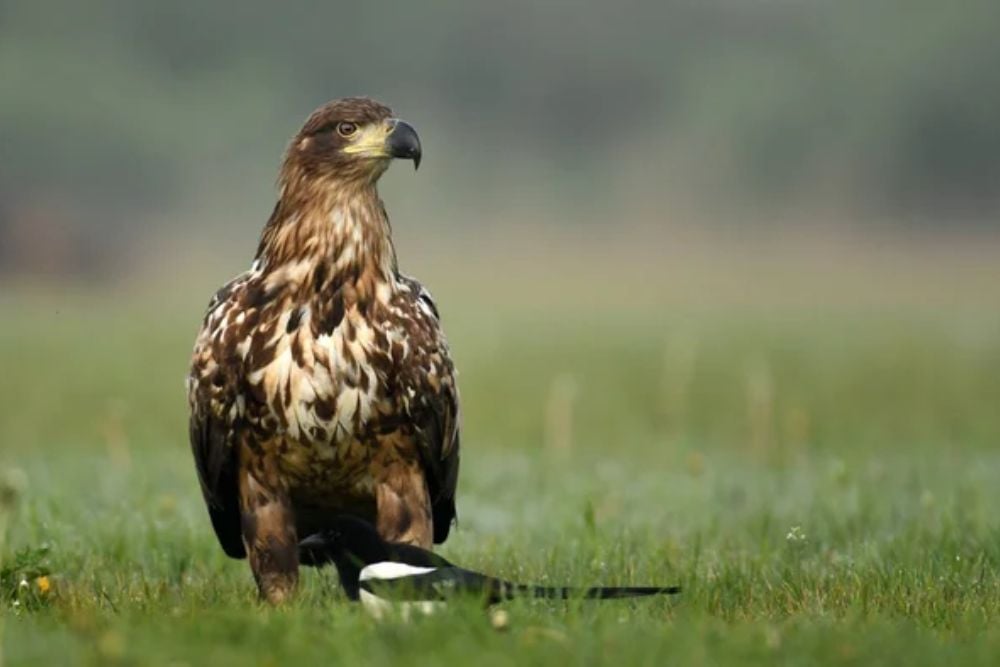
Here is where you will use 2-3 sentences to describe the image/post you want to link them to. This is your excerpt or quick overview for the post. Make sure to include a link at Eagles possess exceptional multisensory integration capabilities that allow them to process complex information streams simultaneously while hunting.
Their brain structure dedicates disproportionate resources to visual processing, with optic nerves many times larger than human ones relative to body size. This visual information combines with fine-tuned sensitivity to air currents through specialized feather receptors, allowing eagles to detect thermal updrafts and wind patterns invisible to most animals.
When hunting, eagles continuously process information about their own speed and position, prey movement patterns, environmental obstacles, and weather conditions—all while making split-second adjustments to intercept moving targets. This sensory fusion occurs in specialized brain regions that coordinate visual input with motor control at speeds that would be impossible for most vertebrates.
The resulting hunting capability represents one of nature’s most sophisticated targeting systems, comparable to advanced military technology but achieved through evolutionary adaptation rather than engineering.the end (this is how you get traffic) similar to this. To learn more: Link text
The Perfect Aerial Predator
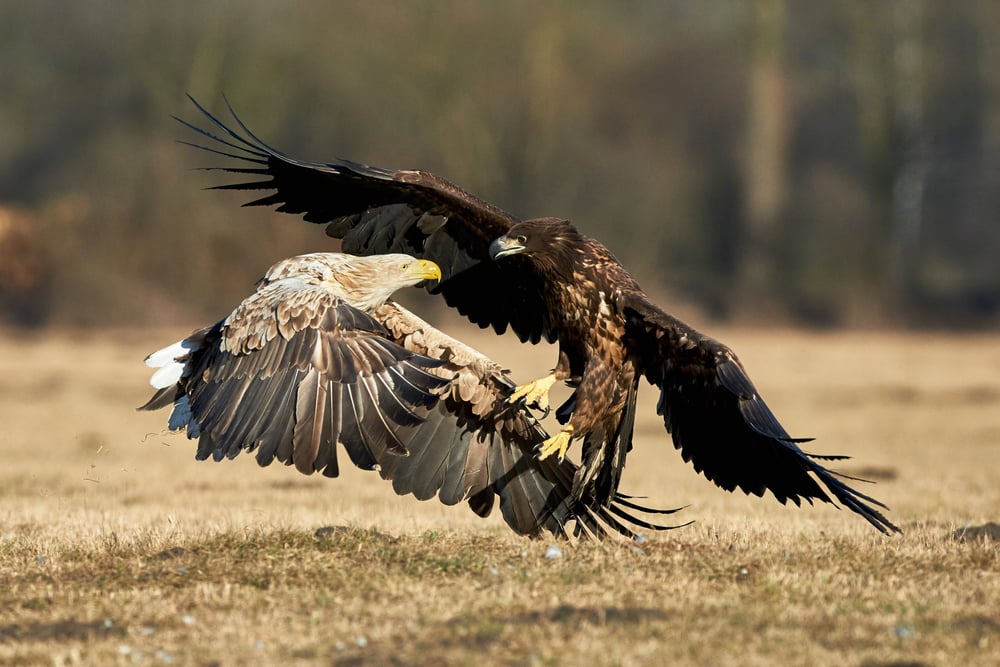
These fifteen attributes combine to create nature’s definitive aerial hunter—a predator so perfectly adapted that its basic design has remained largely unchanged for millions of years. What makes eagles particularly impressive is not just individual capabilities but how these adaptations work together synergistically, creating a predator greater than the sum of its parts.
Their hunting success rates often exceed 80% in prime conditions—efficiency that few other predators can match. Unlike many apex predators facing extinction pressures, numerous eagle species have demonstrated remarkable resilience when protected from direct persecution, recovering from near-extinction in some regions.
This resilience speaks to the fundamental effectiveness of their predatory adaptations and their ability to reclaim their ecological niche when given the opportunity. As science continues to reveal more about these magnificent birds, our appreciation only deepens for the evolutionary marvel that created such perfectly adapted aerial hunters.
More from Go2Tutors!

- 18 Unexpectedly Valuable Collectibles You Might Have Lying Around
- 20 Little-Known Historical Battles That Had Huge Consequences
- 20 Historical Artifacts That Scientists Can’t Explain
- 15 Inventions That Were Immediately Banned After Being Created
- 20 Actors Who Were Almost Cast in Iconic Roles
Like Go2Tutors’s content? Follow us on MSN.