15 Iconic Toys That Defined the 90s
The 90s were different when it came to toys. Maybe it was the perfect storm of Saturday morning cartoons, the rise of video games, and companies finally figuring out how to make plastic irresistible to kids.
Whatever the formula was, it worked. These weren’t just toys — they were cultural moments that shaped an entire generation’s childhood memories.
Tamagotchi

Your first taste of digital responsibility came in an egg-shaped device that beeped at the worst possible moments. Teachers confiscated them.
Parents banned them from dinner tables. Kids smuggled them into school anyway.
The Tamagotchi didn’t just simulate pet ownership — it weaponized guilt. That pixelated creature demanded food, attention, and cleaning at unpredictable intervals, turning children into anxious caretakers who checked their key chains every few minutes.
And when your digital pet inevitably died (usually during math class when you couldn’t feed it), the grief felt surprisingly real.
Beanie Babies
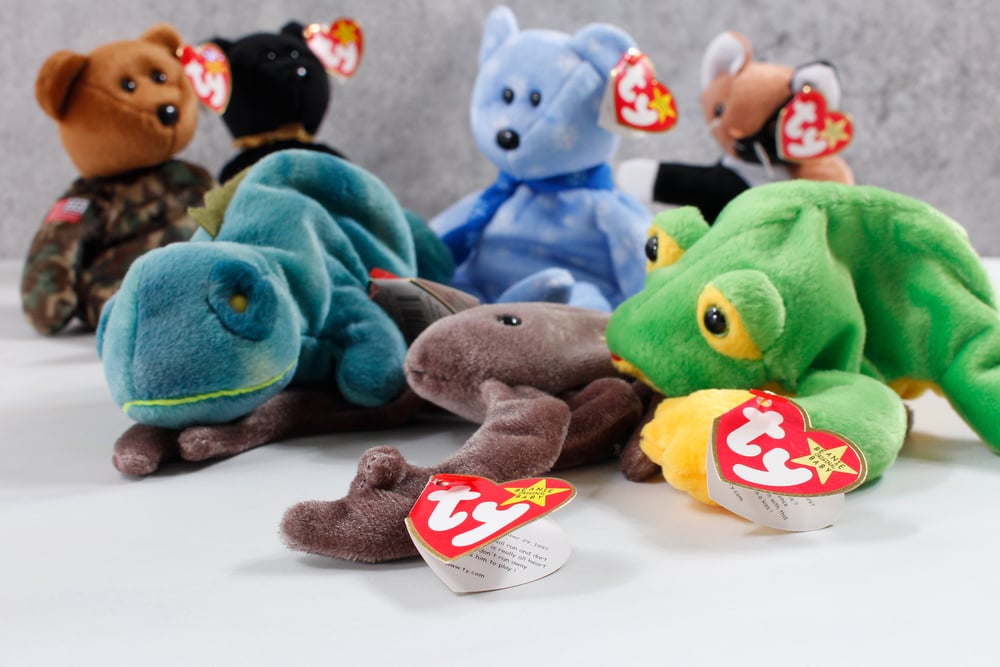
Collecting Beanie Babies was like watching adults lose their minds in real time, and somehow kids got swept up in the madness too. These weren’t just stuffed animals — they were tiny fabric stock certificates that parents treated with the reverence usually reserved for actual investments.
The genius (or perhaps the cruelty) lay in their artificial scarcity: limited editions, retirement announcements, and the promise that Princess the Bear might fund your college tuition someday (which, for the record, it absolutely would not). But watching grown-ups fight over a purple teddy bear at McDonald’s taught an entire generation about market speculation before they even knew what the stock market was.
Super Soaker

Water fights used to be polite affairs involving garden hoses and maybe a spray bottle if you were feeling fancy. Then Lonnie Johnson invented the Super Soaker and turned every backyard into a tactical battleground where neighborhood alliances shifted based on who had the biggest tank.
The Super Soaker didn’t just spray water — it launched it with the force and precision of a small cannon.
Suddenly, summer meant something entirely different. Kids spent allowance money on ammunition (which was just water, but felt like investing in superior firepower), and parents found themselves mediating conflicts that sounded suspiciously like actual military strategy sessions.
The arms race was real, and it was soaking wet.
Pogs

Pogs made absolutely no sense, which was precisely why they worked. The game itself — stacking cardboard discs and trying to flip them with a heavier disc called a slammer — was simple enough, but the real appeal had nothing to do with gameplay and everything to do with the strange social economy they created.
Schools banned them, which only made them more desirable. Kids traded them like currency, developing complex hierarchies based on rarity, artwork, and the mysterious quality that made certain pogs “good” and others worthless.
And then, as quickly as they arrived, they vanished — leaving behind boxes of colorful cardboard that parents would find years later and wonder what the fuss was about.
Furby

The Furby arrived like a small, furry ambassador from the uncanny valley. This electronic pet could “learn” English, respond to touch, and make sounds that fell somewhere between adorable and deeply unsettling, depending on your tolerance for artificial life forms that never quite slept.
What made Furbys particularly memorable wasn’t their technology (impressive for 1998) but their personality. They felt almost alive — not in a comforting way, but in the way that made you wonder if they were plotting something while you slept.
Parents found them creepy. Kids found them irresistible. And everyone agreed they were impossible to ignore once they started talking.
Game Boy

The Game Boy wasn’t the first handheld gaming device, but it was the first one that mattered. That chunky, gray rectangle with its green-tinted screen turned car rides, waiting rooms, and boring family gatherings into opportunities for portable adventure.
Tetris alone justified the entire purchase. But the Game Boy’s real achievement was making gaming personal and private in a way that home consoles couldn’t match.
You could play under the covers with a clip-on light, trade Pokémon with friends at lunch, or disappear into your own digital world whenever the real one got tedious. It was freedom in a form factor that fit in your backpack.
Tickle Me Elmo

Tickle Me Elmo turned Christmas shopping into a contact sport. This innocent-looking Sesame Street character had the audacity to giggle when squeezed, and somehow that simple feature created a consumer frenzy that made Black Friday look like a church bake sale.
The appeal was straightforward enough — kids loved Elmo, and this version responded to their attention with infectious laughter. But the cultural moment it created was anything but simple.
Parents camped outside toy stores, scalpers sold them for hundreds of dollars, and the phrase “Tickle Me Elmo” became shorthand for holiday retail madness. All because a red puppet could laugh.
Pokémon Cards

Pokémon cards arrived as a perfect storm of collecting, gaming, and playground economics that turned lunchtime into high-stakes trading sessions. These weren’t just cards — they were portable pieces of a universe that kids desperately wanted to inhabit, complete with creatures they could actually own (at least on paper).
The trading card game had rules, but most kids ignored them in favor of the more compelling activity of amassing collections and negotiating trades that would make Wall Street brokers proud. A holographic Charizard could buy social status and genuine respect from peers who might otherwise ignore you.
And the search for rare cards turned every pack opening into a miniature lottery drawing where the stakes felt impossibly high.
Giga Pet

The Giga Pet was Tamagotchi’s scrappier cousin — less refined, perhaps, but no less demanding of your constant attention and emotional investment. These digital creatures lived inside small plastic devices that clipped onto backpacks and demanded care at the most inconvenient moments possible.
Like the Tamagotchi, the Giga Pet transformed children into anxious caregivers who checked their devices compulsively and panicked when the batteries ran low. But there was something particularly ruthless about these digital animals — they seemed to sense when you were in the middle of something important and would choose that exact moment to require feeding or cleaning.
The guilt was real, even if the pet wasn’t.
Goosebumps Books

R.L. Stine understood something important about kids that many adults missed: they wanted to be scared, just not too scared. Goosebumps books hit that sweet spot between genuinely creepy and completely manageable, delivering chills that felt thrilling rather than traumatic.
Each book promised a complete horror experience in under 200 pages, with covers that were often more frightening than the actual stories inside. Kids collected them like trophies, trading favorites and debating which ones were truly scary versus merely weird.
The series turned reading into a social activity where the goal wasn’t just enjoyment but also proving you were brave enough to handle whatever R.L. Stine could dish out.
Yo-Yo
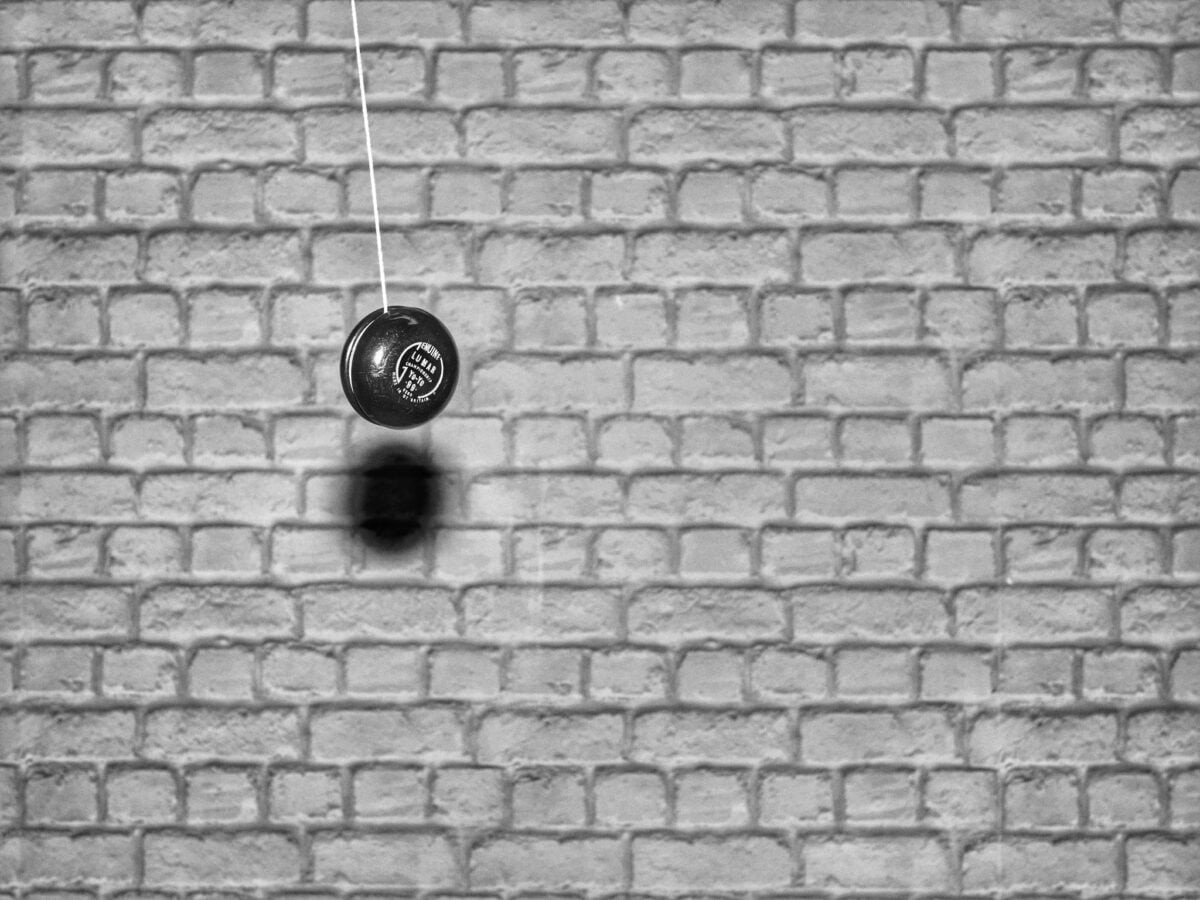
The yo-yo experienced a serious renaissance in the 90s, transforming from a simple toy into something approaching an art form. Companies like Yomega introduced high-tech features — orb bearings, clutch systems, and designs that made tricks possible that would have been unimaginable with the wooden yo-yos of previous generations.
Suddenly, yo-yo demonstrations appeared in school gyms, featuring performers who could make these spinning discs dance through the air with precision that bordered on magic. Kids who mastered even basic tricks like “Walk the Dog” or “Around the World” gained instant playground credibility.
The yo-yo proved that sometimes the simplest concepts — a disc on a string — could be elevated into something genuinely impressive.
Skip-It

Skip-It attached to your ankle and demanded that you jump over it repeatedly while it spun around your foot, counting each successful rotation with a satisfying click. The concept was brilliantly simple: turn jumping into a game with a built-in scoring system and a rhythmic soundtrack.
The toy created its own form of playground competition where kids would announce their high scores with the pride usually reserved for actual athletic achievements. And the commercial jingle — “Skip-It, Skip-It, oh so neat” — became permanently lodged in the brains of anyone who encountered it, creating a shared cultural reference that could instantly transport 90s kids back to their elementary school days.
Magic 8-Orb

The Magic 8-Orb offered something that kids desperately wanted: definitive answers to life’s most pressing questions, delivered by a mysterious sphere that claimed to know the future. The fact that it was obviously fake didn’t diminish its appeal — if anything, the transparent artifice made it more charming.
This black sphere became the ultimate arbitrator of childhood disputes and anxieties. Should you ask your crush to the school dance? Will it rain during recess? Is your teacher really as mean as she seems? The Magic 8-Orb provided responses that ranged from encouraging to noncommittal to downright discouraging, but always with the authority of an oracle who had seen it all before.
Slap Bracelets

Slap bracelets were genius in their simplicity — a strip of spring steel covered in fabric that would curl around your wrist when slapped against it. The satisfying snap of metal against skin, combined with the instant transformation from straight line to circular bracelet, created a sensory experience that was oddly addictive.
Schools banned them almost immediately, claiming they were dangerous (they probably weren’t) or disruptive (they definitely were). But that only added to their appeal.
Slap bracelets became contraband accessories that kids smuggled in and traded secretly, turning a simple piece of spring steel into a symbol of harmless rebellion against adult authority.
Lisa Frank Stickers

Lisa Frank stickers didn’t just decorate — they transformed ordinary school supplies into rainbow-colored fantasies populated by unicorns, dolphins, and creatures that existed nowhere in nature but everywhere in the imagination of 90s kids.
These weren’t subtle decorations. Lisa Frank specialized in neon colors that seemed to glow with their own internal light, featuring animals with expressions of perpetual joy set against backgrounds that looked like cotton candy explosions.
The stickers turned binders, folders, and bedroom walls into shrines to a very specific aesthetic that celebrated excess, sparkles, and the belief that more was always better than less.
The Endless Summer of Childhood

Looking back at these toys now, what strikes you most isn’t their individual appeal but what they represented collectively: a time when the boundary between imagination and reality felt more porous, when a piece of plastic could become a portal to another world, and when the simple act of play felt like the most important work you could possibly be doing. These weren’t just products — they were the raw materials of memory, the building blocks of a childhood that happened to unfold during one of the most creative decades in toy history.
More from Go2Tutors!

- The Romanov Crown Jewels and Their Tragic Fate
- 13 Historical Mysteries That Science Still Can’t Solve
- Famous Hoaxes That Fooled the World for Years
- 15 Child Stars with Tragic Adult Lives
- 16 Famous Jewelry Pieces in History
Like Go2Tutors’s content? Follow us on MSN.