15 Martial Arts with Rich History
Throughout human civilization, the need for self-defense and combat has shaped cultures across every continent. From ancient battlefields to modern training halls, martial arts have evolved into sophisticated systems that blend physical technique with philosophical depth. These fighting disciplines carry within them the stories of entire civilizations, preserving traditions that span thousands of years.
The following list explores 15 martial arts that stand out not just for their effectiveness, but for the remarkable historical journeys that brought them to life.
Wrestling

Wrestling holds the distinction of being humanity’s oldest combat sport, with evidence stretching back an incredible 15,000 years. Cave paintings in France show grappling figures from this ancient period, while more formal depictions appear in Egyptian tombs around 2000 BCE and Mesopotamian carvings from 3000 BCE. The sport was so fundamental to human culture that it appeared independently across multiple civilizations without any apparent connection. By the time of the Greeks, wrestling had become a major spectator sport with established rules, bracket-style competitions, and mentions in both the Iliad and the Odyssey. The techniques developed in ancient Greece and Rome formed the foundation for modern Greco-Roman wrestling, proving that some fighting methods are truly timeless.
Pankration
— Photo by bjoernd
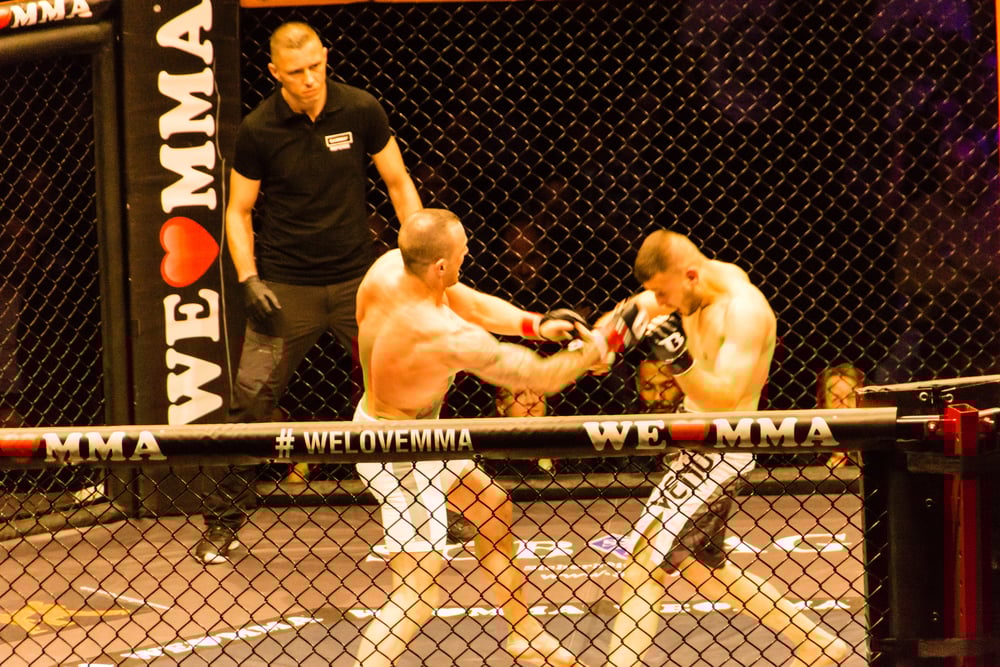
Ancient Greece gave birth to one of history’s most brutal and comprehensive martial arts around 2000 BCE. Pankration combined boxing with wrestling but also allowed kicking, and according to Greek mythology, was first used by Heracles to fight the Nemean Lion and by Theseus against the Minotaur. The name literally means ‘all strength’ in Greek, which perfectly captured its no-holds-barred philosophy. Contests were savage affairs involving battering, twisting of limbs, strangling, and ground fighting – techniques that sound remarkably similar to modern mixed martial arts. This ancient sport was essentially the original MMA, proving that the concept of combining multiple fighting styles is nothing new.
Kalaripayattu

India’s contribution to martial arts history centers on Kalaripayattu, often called the mother of all martial arts. While its exact origins are debated, historical evidence traces it back over 3,000 years to the Vedas, with practice confirmed since at least the 12th century in Kerala. According to legend, it was created by Parasurama, the sixth avatar of the Hindu deity Vishnu. The influence of Kalaripayattu extends far beyond India’s borders. Many believe it influenced Shaolin Kung Fu because Bodhi Dharma, a Buddhist monk and Kalaripayattu master, is often credited with teaching the first Shaolin monks techniques derived from this ancient Indian art. This connection illustrates how martial knowledge traveled along trade routes and religious paths.
Shuai Jiao
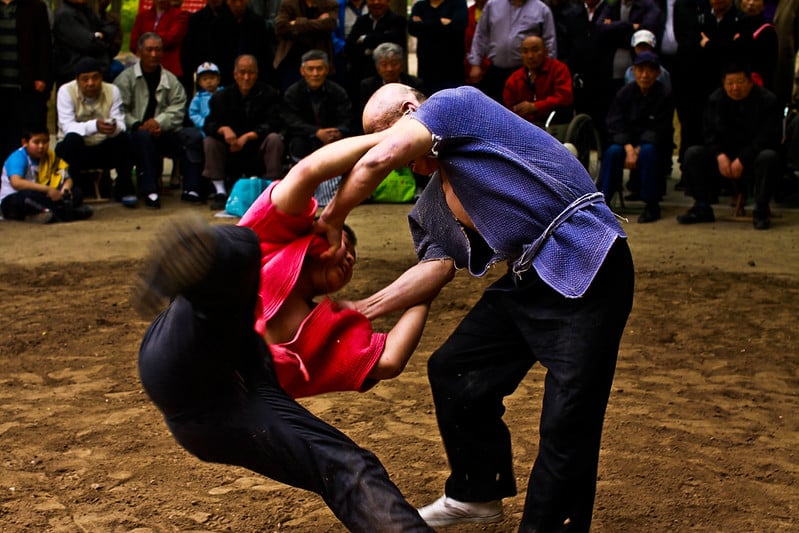
China’s oldest martial art, Shuai Jiao or Chinese wrestling, dates back to the Xia Dynasty thousands of years before the common era. This ancient grappling system predates most other organized fighting methods and forms the foundation of Chinese martial arts tradition. Unlike many modern combat sports, Shuai Jiao developed as a practical battlefield skill for warriors. The art emphasizes throws, trips, and takedowns using an opponent’s momentum against them. Its influence can be seen throughout Chinese martial arts, where the principles of leverage and timing that Shuai Jiao perfected became core elements of more famous styles like Kung Fu.
Boxing
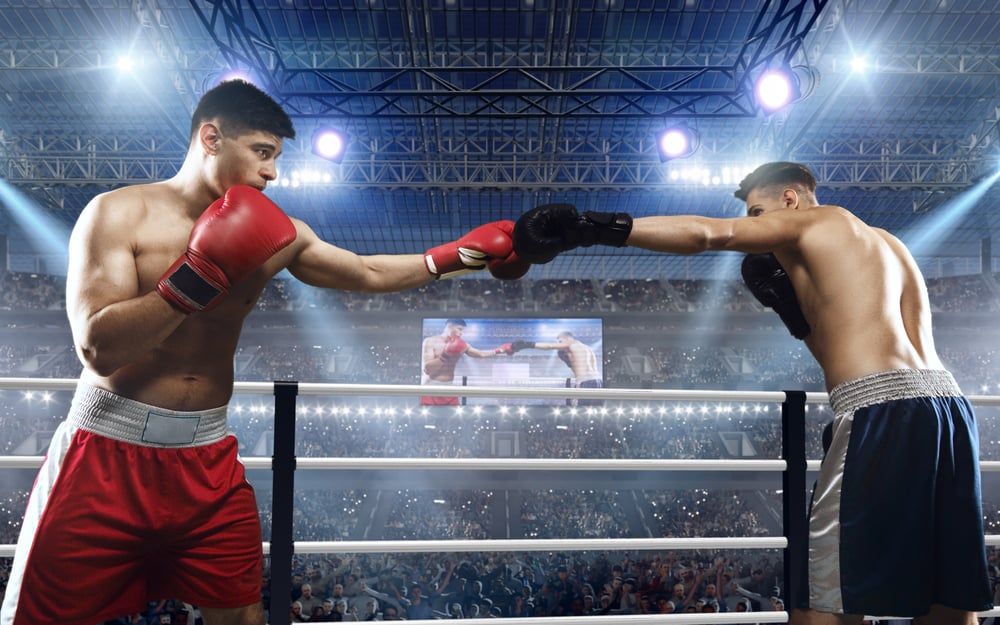
The sweet science has ancient roots that stretch back to at least 3000 BCE in Mesopotamia, though the earliest evidence of organized boxing with gloves comes from Minoan Crete around 1500 BCE. The sport gained formal structure when it was introduced to the Olympics in 688 BCE, complete with established rules and protective equipment. Modern boxing traces its lineage through Jack Broughton’s rules in the 18th century and reaches its current form with the Marquess of Queensberry Rules of 1867. Despite technological advances and rule changes, the fundamental art of using fists for combat remains remarkably unchanged from its ancient origins.
Taekkyon
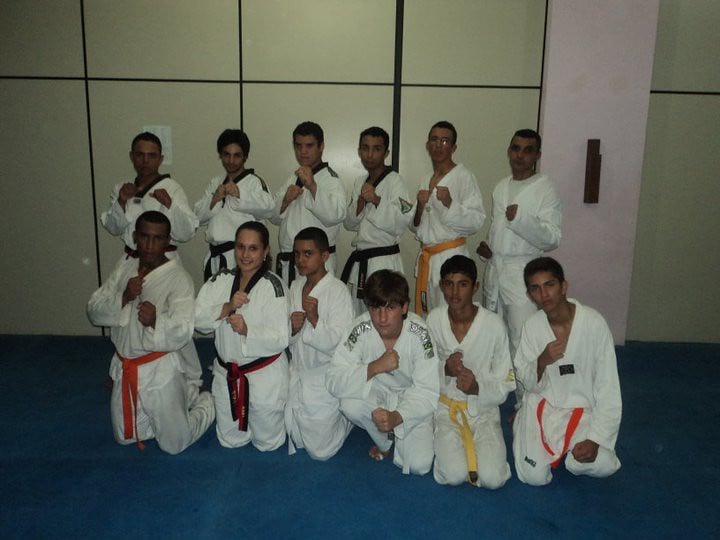
Korea’s martial arts heritage begins with Taekkyon, which has been traced back to around 50 BCE through tomb paintings from the Goguryeo Dynasty. These ancient artworks in the tombs of Muyongchong and Samsilchong show clear evidence of organized kicking techniques and combat training. The art gained widespread popularity among military personnel during the Goguryeo era. Taekkyon nearly vanished by the end of the 13th century, but its survival is attributed to Song Duk-ki (1893-1987), who preserved the art and passed it down to modern Koreans who re-popularized it by the mid-1980s. This preservation story highlights how individual dedication can save entire martial traditions from extinction.
Kung Fu

The legendary Shaolin Temple stands at the heart of Chinese martial arts history, with its fighting traditions developing over more than 1,500 years. The first abbot of Shaolin Monastery was Buddhabadra in 477 CE, and successive Chinese emperors authorized fighting monks to train in the temple. While the connection to Bodhidharma is largely folkloric, the temple’s role in preserving and developing combat techniques is historically verified. References to martial practice at Shaolin appear in various literary genres of the late Ming period, including warrior monk epitaphs, martial arts manuals, and military encyclopedias, though these sources refer to armed combat methods rather than any specific style. This documentation shows how martial arts were serious military subjects, not just spiritual practices.
Jujutsu

Japan’s ancient grappling art formed the foundation for numerous modern martial arts systems. The term jujutsu was coined in the 17th century and became a blanket term for various grappling-related disciplines practiced by the samurai class. The art’s core philosophy emphasized using an opponent’s force against them rather than meeting force with force. Jujutsu schools utilized all forms of grappling techniques including throws, takedowns, joint locks, chokeholds, and striking, often incorporating weapons training as well. This comprehensive approach to combat reflects the practical needs of feudal Japanese warriors who faced life-or-death encounters regularly.
Judo
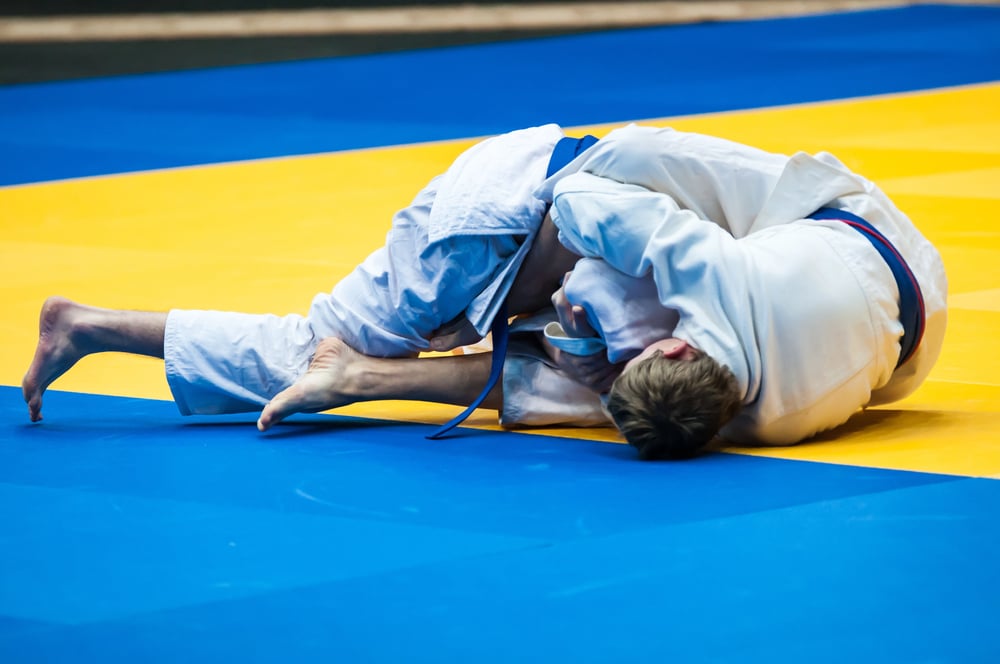
Modern judo emerged in 1882 when Jigoro Kano revolutionized traditional jujutsu by creating a systematic approach focused on education and physical development. Kano developed judo from several traditional jujutsu styles, emphasizing the principles of maximum efficiency and mutual welfare. His innovations transformed a battlefield art into a method for character building and sport. The founder of Judo frequently sent his top students to train with Aikido’s founder Morihei Ueshiba, showing the interconnected nature of Japanese martial arts development. Judo’s influence spread globally, becoming an Olympic sport and the parent art of Brazilian Jiu-Jitsu.
Karate
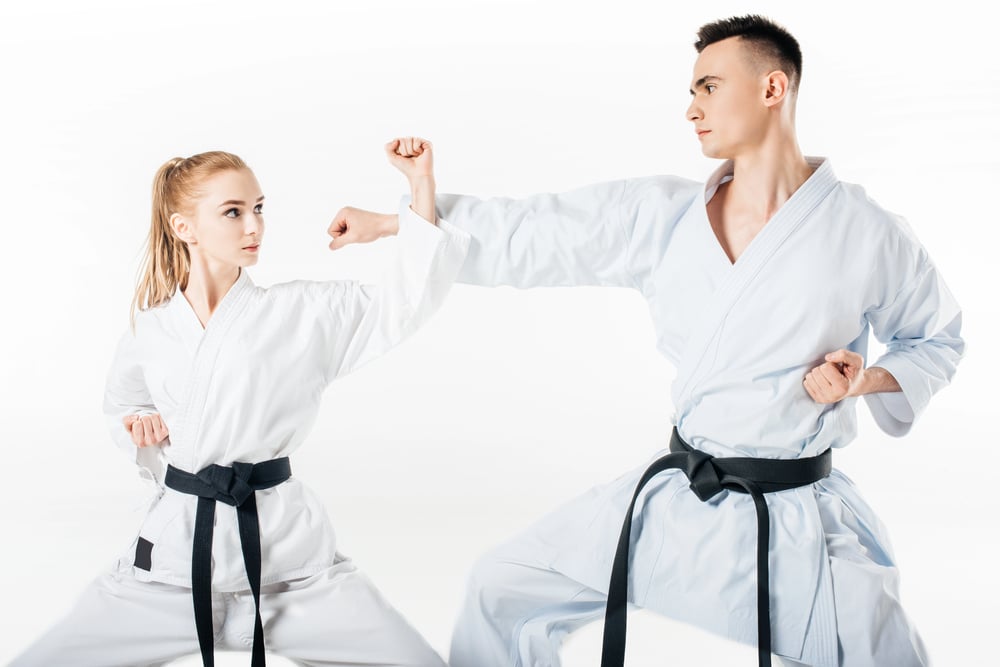
The island of Okinawa served as a cultural crossroads where Chinese, Japanese, and indigenous fighting methods merged to create karate. The art developed in isolation from mainland Japan but was influenced by various Chinese martial arts, creating a unique fusion that emphasized powerful strikes and blocks. The original Okinawan art was called ‘te’ and varied between different cities and schools. Karate didn’t reach the wider world until Gichin Funakoshi, an Okinawan master, traveled to Japan in the 1910s and developed his own style called Shotokan, which became the most popular form practiced today. This expansion transformed a regional fighting method into a global martial art.
Aikido

Morihei Ueshiba created Aikido in the early 20th century by synthesizing his mastery of various martial arts with spiritual philosophy. In 1942, Ueshiba began using the term aikido to describe his art, which was related to aiki-jujutsu but emphasized harmony and redirection over aggression. The art’s name translates to ‘the way of harmony of the spirit,’ reflecting its peaceful philosophy. Aikido spread internationally starting in 1951 when Minoru Mochizuki visited France to demonstrate the art to Judo practitioners, eventually reaching 140 countries worldwide. Unlike many martial arts, Aikido was designed as a non-competitive system focused on self-improvement rather than victory over opponents.
Brazilian Jiu-Jitsu

One of martial arts’ greatest success stories began in 1914 when Mitsuyo Maeda brought Judo to Brazil. Brazilian Jiu-Jitsu was developed around 1925 by Carlos, Oswaldo, Gastão Jr., and Hélio Gracie after Carlos learned from Maeda or one of his students. The Gracie family adapted the techniques to emphasize ground fighting and leverage-based techniques that allowed smaller practitioners to defeat larger opponents. BJJ gained international prominence when Royce Gracie won the first, second, and fourth Ultimate Fighting Championships in the 1990s, defeating larger opponents from various martial arts backgrounds. This proving ground demonstrated the effectiveness of ground fighting and revolutionized combat sports worldwide.
Muay Thai
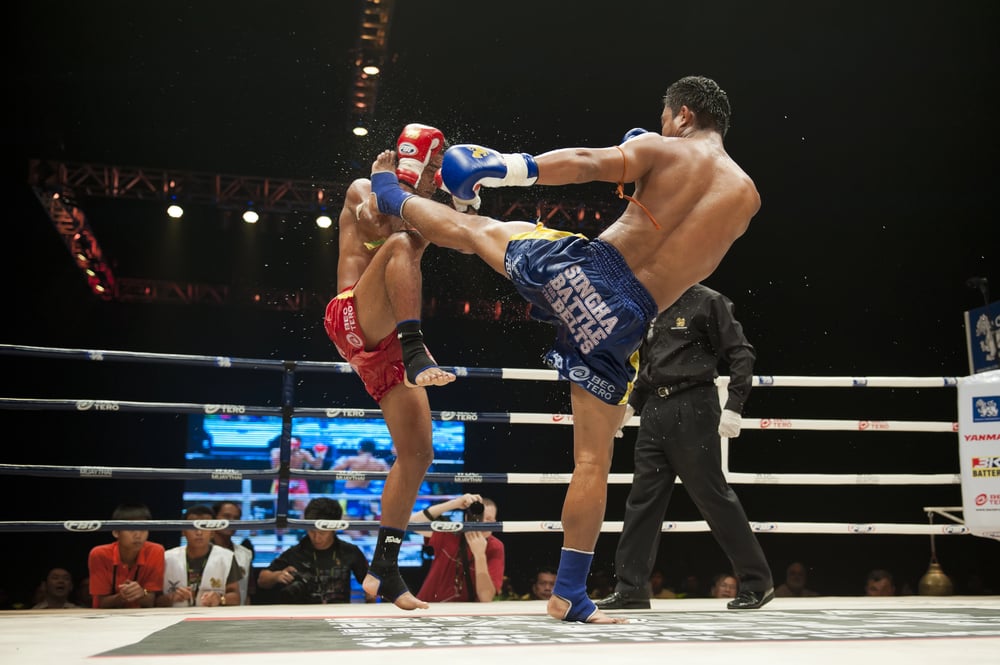
— Photo by macky_ch
Thailand’s national sport evolved from ancient battlefield techniques used by Siamese warriors. In the 1920s-30s, traditional muay boran (ancient boxing) was modernized with timed rounds, weight classes, and standardized rules under European influence, creating modern muay Thai. The art is famous for its use of eight limbs – fists, elbows, knees, and shins – in devastating combinations. Muay Thai originated out of necessity for close-quarters combat and self-defense, with techniques and tactics honed specifically for warfare before evolving into a popular spectator sport. The art remains deeply embedded in Thai culture, with traditional rituals and music still accompanying competitions.
Taekwondo

— Photo by galkin57
Modern Taekwondo emerged from Korea’s complex martial arts heritage following World War II. In 1955, General Choi called a meeting between Korean masters to unify the Korean martial arts, and in 1957, nine Korean training halls united under the name taekwondo, meaning ‘way of the foot and fist.’ The art combined influences from traditional Korean fighting methods, Japanese karate, and Chinese martial arts. Olympic-style taekwondo became an Olympic demonstration sport in 1988 and a full-medal sport in 2000, giving it global recognition and standardization. The art’s emphasis on high kicks and fast footwork makes it visually spectacular and has contributed to its widespread popularity.
Hapkido

Korean martial arts reached new sophistication with Hapkido, developed in the mid-20th century by Choi Yong-Sool after his return from Japan. In 1945, Choi traveled back to Korea after living in Japan with Sokaku Takeda, where he learned Dai Dong Yusool (daitō-ryū aiki-jūjutsu), which later became known as hapkido. The art incorporated elements from Taekwondo, Judo, and Aikido to create a comprehensive self-defense system. Hapkido emphasizes redirecting an opponent’s energy and encompasses joint locks, pressure points, throws, kicks, strikes, and weapon disarmament, making it particularly effective for smaller fighters against larger opponents. This versatility reflects the practical needs of modern self-defense situations.
The Enduring Legacy

These fifteen martial arts represent more than fighting techniques – they’re living museums of human ingenuity and cultural evolution. From wrestling’s prehistoric origins to Brazilian Jiu-Jitsu’s modern innovations, each art carries forward the wisdom of countless generations who faced the fundamental challenge of survival through combat. Today, as these traditions continue to evolve and influence each other, they remind us that the human quest for improvement, both physical and spiritual, remains as relevant as ever.
More from Go2Tutors!

- 16 Historical Figures Who Were Nothing Like You Think
- 12 Things Sold in the 80s That Are Now Illegal
- 15 VHS Tapes That Could Be Worth Thousands
- 17 Historical “What Ifs” That Would Have Changed Everything
- 18 TV Shows That Vanished Without a Finale
Like Go2Tutors’s content? Follow us on MSN.