15 Mind-Blowing Quantum Physics Facts
The universe operates on rules that make absolutely no sense to our everyday experience. At the smallest scales of reality, particles exist in multiple places at once, communicate instantly across vast distances, and refuse to have definite properties until someone bothers to look.
These aren’t philosophical puzzles or thought experiments — they’re measurable, repeatable phenomena that form the foundation of modern technology. Your smartphone, GPS, and the internet all depend on quantum mechanics working exactly as strangely as it does.
Superposition
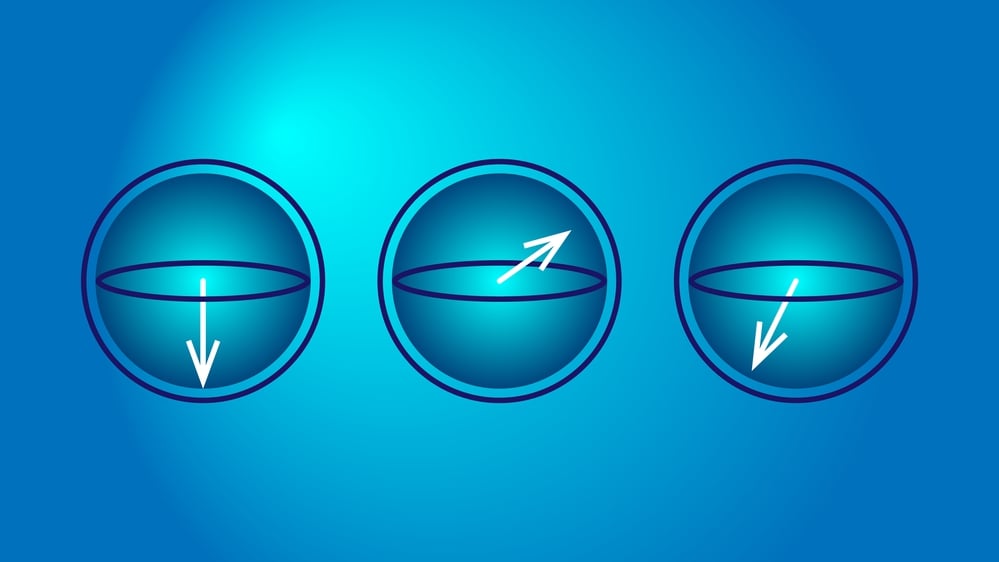
Particles don’t pick a side until forced to. An electron can spin clockwise and counterclockwise simultaneously.
A photon travels through multiple paths at once. This isn’t uncertainty about where something is — it’s the thing genuinely being in multiple states until measured.
Quantum Entanglement

Einstein called it “spooky action at a distance” and spent years trying to prove it wrong (he failed, which is saying something given that this was Einstein we’re talking about). When two particles become entangled, measuring one instantly determines the state of the other, regardless of how far apart they are.
Change the spin of one particle on Earth, and its entangled partner orbiting Jupiter responds immediately — not at light speed, but instantaneously. Space, as it turns out, is less of a barrier than we assumed.
Two particles that have danced together once carry something of each other forward, like former lovers who still flinch when the other gets hurt, no matter how many continents lie between them. The connection doesn’t weaken with distance or time — measure one particle’s spin in Tokyo and its partner in Los Angeles knows before the light from your measurement could even reach the next room.
This isn’t just romantic physics poetry. Quantum entanglement powers emerging technologies like quantum computing and quantum cryptography, turning Einstein’s discomfort into the backbone of future communication systems.
Wave-Particle Duality
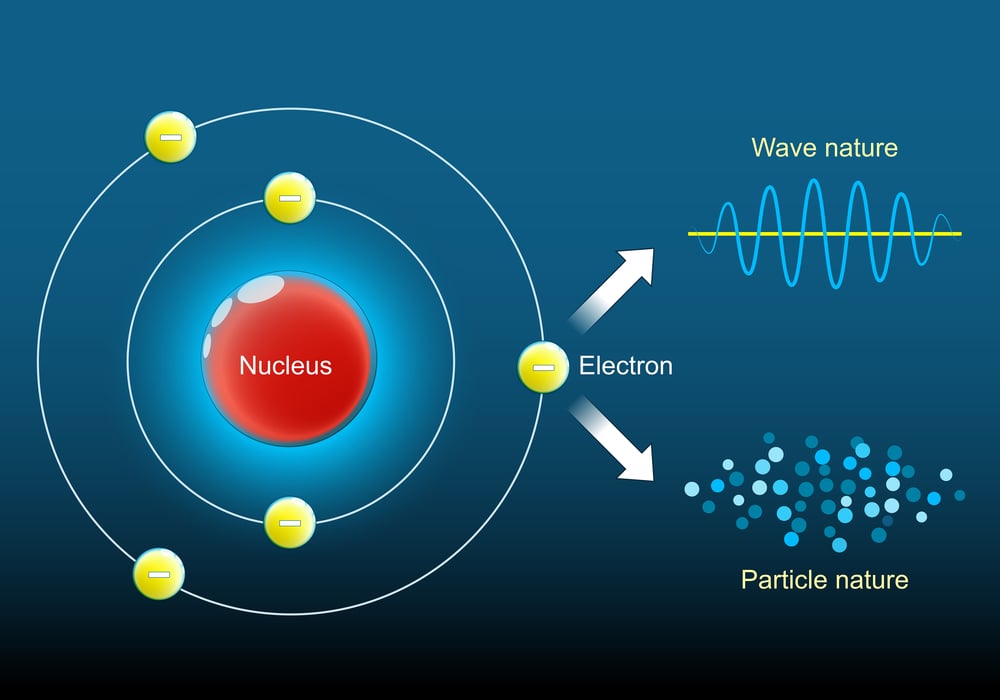
Light behaves like a wave when nobody’s watching and like a particle when someone is. This isn’t a figure of speech. In the famous double-slit experiment, photons create interference patterns when traveling through two slits simultaneously — classic wave behavior.
Add a detector to see which slit each photon passes through, and the wave pattern disappears. The photons start acting like particles instead.
The universe apparently cares whether you’re paying attention.
Heisenberg Uncertainty Principle
You cannot simultaneously know both the exact position and momentum of a particle. Not because measuring tools aren’t precise enough, but because the universe fundamentally doesn’t allow it.
The more precisely you determine where something is, the less you can know about where it’s going. This isn’t a technological limitation — it’s how reality works at the quantum level.
Quantum Tunneling
Sometimes things just appear on the other side of walls they shouldn’t be able to cross. If you roll an orb toward a hill, classical physics says it needs enough energy to go over the top.
In quantum mechanics, there’s a chance the orb just appears on the other side without ever having enough energy to climb over. This probability-defying trick happens constantly in the quantum world and makes possible everything from the fusion reactions powering the sun to the flash memory in your devices.
The barriers we think are solid turn out to be more like suggestions that particles occasionally choose to ignore. A particle hitting a wall doesn’t always bounce back — sometimes it just decides the wall isn’t really there and continues on its way, leaving physicists to work out the math behind what amounts to reality’s most persistent magic trick.
Even the sun depends on this rule-breaking behavior. The temperatures in the sun’s core aren’t actually high enough for hydrogen nuclei to overcome their electrical repulsion and fuse into helium.
But quantum tunneling lets them slip past that energy barrier anyway, keeping our star burning and life on Earth possible.
Observer Effect

Measurement changes reality at the quantum level. Before you measure a particle’s spin, it exists in a superposition of all possible spin states.
The act of measurement forces it to “choose” a specific state. This isn’t the measuring device disturbing the system — it’s consciousness or information interacting with quantum reality in ways that still make physicists uncomfortable.
Quantum Decoherence

Quantum weirdness doesn’t scale up to everyday objects because of decoherence. Large objects interact with too many other particles in their environment, causing their quantum states to become entangled with everything around them.
This constant interaction destroys the delicate quantum effects, leaving us with classical physics for anything bigger than microscopic particles. Your coffee cup isn’t in a superposition of multiple locations because it’s constantly bumping into air molecules, light photons, and cosmic radiation.
Double-Slit Experiment Results
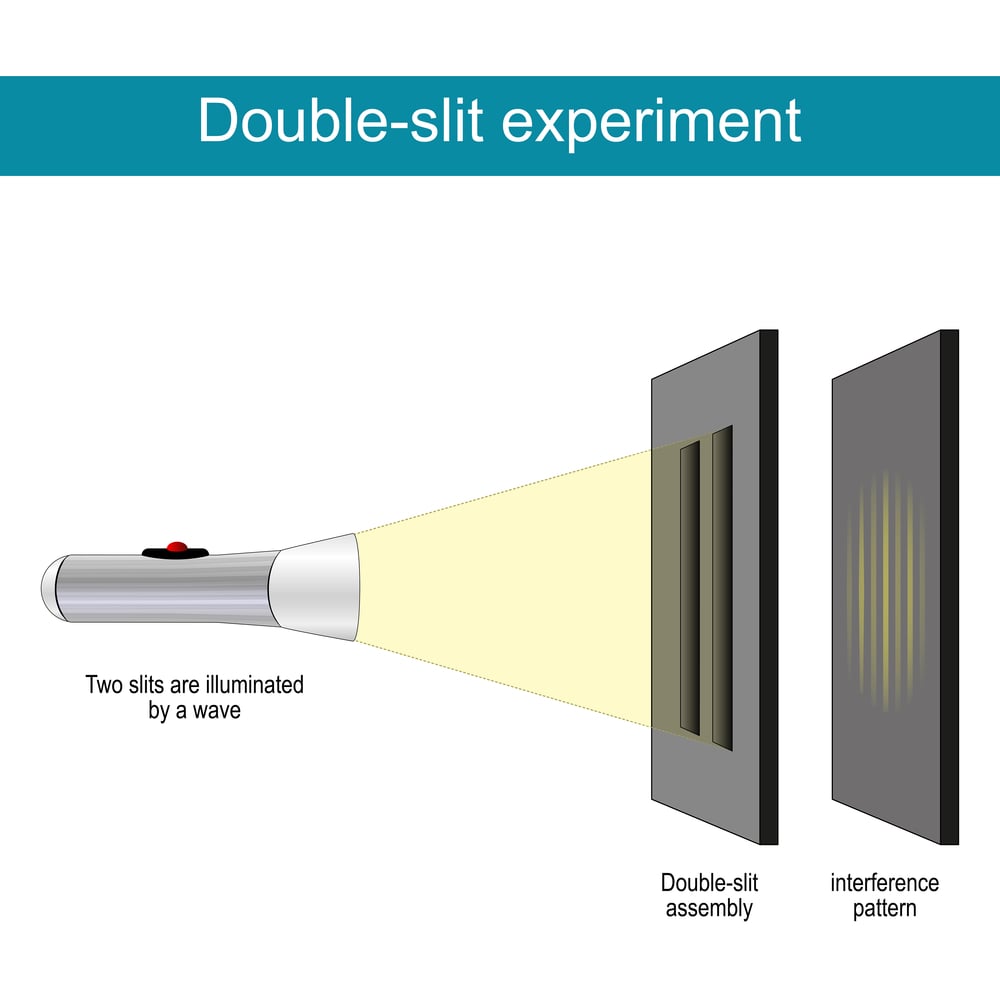
Individual particles create interference patterns when fired one at a time through two slits, proving each particle somehow goes through both slits simultaneously (but only when you’re not looking at which slit it uses, naturally, because the universe has a sense of humor about these things). Fire thousands of electrons through two slits one by one, and they build up a wave interference pattern on the detector screen — something only possible if each individual electron interfered with itself by traveling through both slits.
But place a detector at one of the slits to catch the electrons in the act, and the interference pattern vanishes completely. The electrons start behaving like normal particles, each going through one slit or the other, never both.
The mere possibility of knowing which path the electron took changes how it behaves, even if you don’t bother to check the detector results. So the electrons somehow “know” whether they’re being watched.
And they change their behavior accordingly, which is either the most profound insight into the nature of reality or the universe’s way of messing with physicists who think they’re clever.
Quantum Spin
Particles have an intrinsic property called spin that has nothing to do with actual spinning. An electron’s spin is a fundamental characteristic like mass or charge, but it behaves mathematically like angular momentum.
Here’s the truly bizarre part: if you rotate a spin-½ particle like an electron 360 degrees, it doesn’t return to its original state — you have to rotate it 720 degrees to get back where you started.
Many-Worlds Interpretation

Every quantum measurement splits the universe into multiple parallel realities. In one interpretation of quantum mechanics, when a particle’s wave function collapses into a specific state, the universe branches into separate timelines for each possible outcome.
There’s a version of reality where the particle spun up, another where it spun down, and you just happen to be in one of them. This means there are countless versions of yourself reading countless versions of this sentence in universes that differ only in the quantum coin flips happening in every atom around you.
Zero-Point Energy
Empty space isn’t actually empty — it’s buzzing with virtual particles popping in and out of existence. Even at absolute zero temperature, when all thermal motion stops, quantum fields continue fluctuating with zero-point energy.
These quantum fluctuations create measurable forces, like the Casimir effect, where two parallel metal plates in a vacuum experience an attractive force due to the virtual particles between them. The vacuum of space turns out to be one of the most energetic places in the universe, filled with particle pairs that borrow energy from the future, exist for impossibly brief moments, then disappear before the universe’s accounting department notices.
It’s like reality running on borrowed time at the smallest scales, with debts so short-term they never come due. This isn’t just theoretical bookkeeping.
The Casimir effect has been measured in laboratories, proving that “empty” space exerts real forces on real objects. And some theories suggest that zero-point energy could be harvested, though the engineering challenges remain somewhere between difficult and impossible.
Quantum Nonlocality
Local realism — the idea that objects are only influenced by their immediate surroundings — is wrong. Bell’s theorem and subsequent experiments have shown that quantum mechanics violates local realism in measurable ways.
Particles can be correlated in ways that cannot be explained by any local hidden variable theory, meaning the universe is fundamentally nonlocal at the quantum scale.
Schrödinger’s Cat Paradox

A thought experiment designed to show how ridiculous quantum mechanics becomes at larger scales accidentally became the most famous illustration of quantum superposition. Put a cat in a box with a quantum-triggered poison mechanism, and according to strict quantum mechanics, the cat exists in a superposition of alive and dead states until you open the box to check.
Schrödinger proposed this scenario to highlight what he saw as the absurd implications of quantum mechanics, but it ended up becoming the go-to metaphor for explaining quantum superposition instead.
Quantum Field Theory
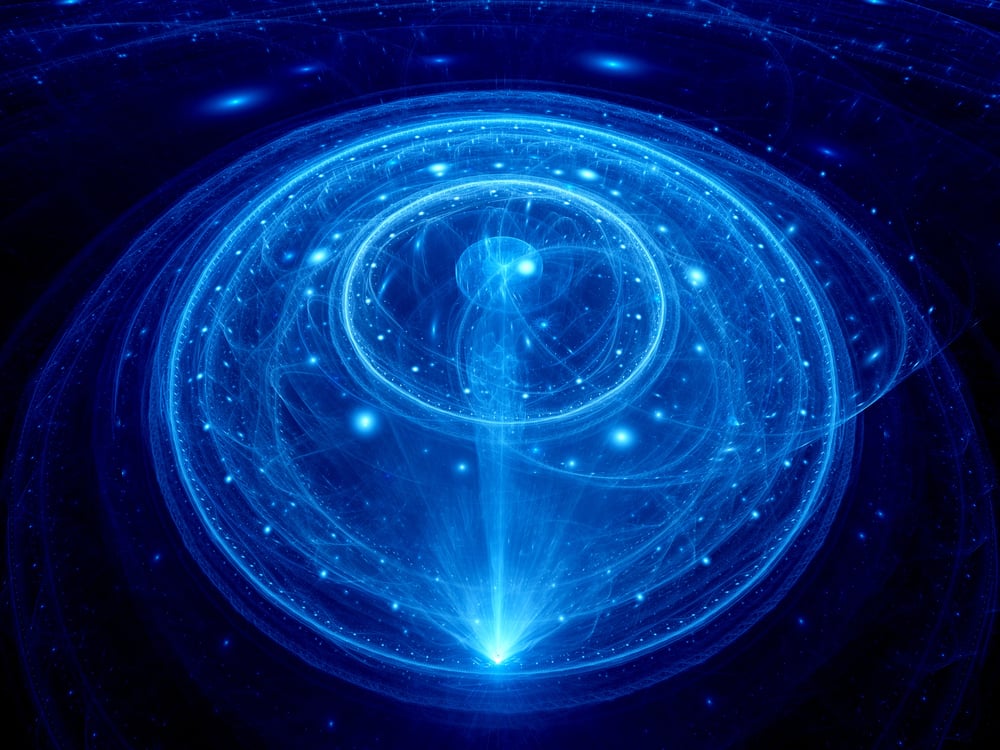
Particles aren’t actually particles — they’re excitations in underlying quantum fields that fill all of space. What we call an electron is really a ripple in the electron field, a photon is a vibration in the electromagnetic field, and so on.
The universe is less like a collection of tiny billiard orbs and more like an infinite ocean with different types of waves representing different particles.
Bell’s Theorem Violations
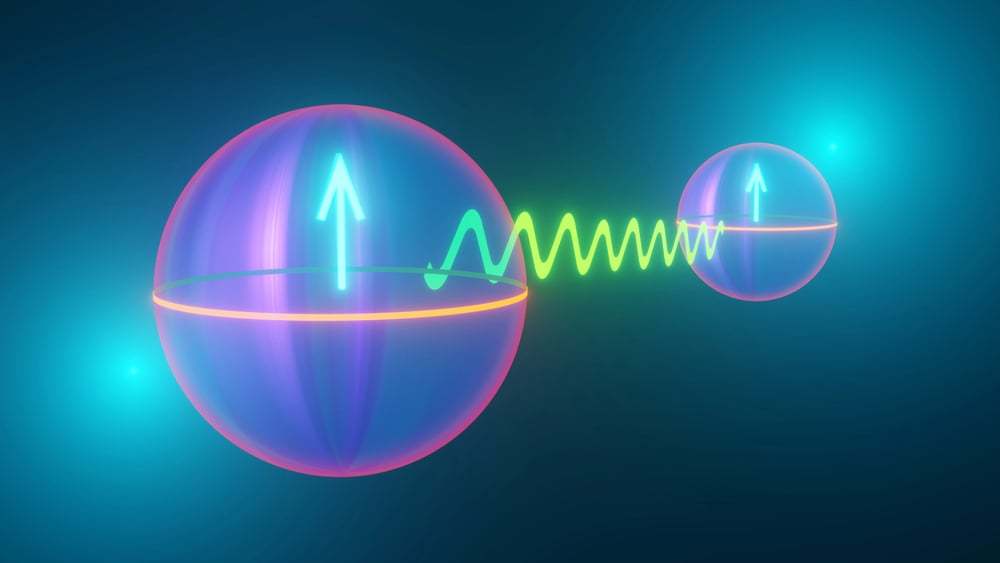
Experiments consistently violate Bell inequalities, proving that quantum mechanics cannot be explained by local hidden variables. The correlations between entangled particles are stronger than any classical theory allows, confirming that quantum mechanics is genuinely weird rather than just incomplete.
These violations have been demonstrated across increasingly large distances and with increasingly sophisticated methods, closing the loopholes that could have allowed classical explanations.
The Quantum Legacy We’re Living

These aren’t curiosities from the fringes of science — they’re the operating principles behind the technology that runs modern civilization. Every semiconductor, laser, MRI machine, and quantum computer depends on effects that Einstein called “spooky” and tried to disprove.
The weirdness of quantum mechanics isn’t a problem to be solved but a feature of reality to be harnessed, turning the universe’s strangest behaviors into humanity’s most powerful tools.
More from Go2Tutors!

- The Romanov Crown Jewels and Their Tragic Fate
- 13 Historical Mysteries That Science Still Can’t Solve
- Famous Hoaxes That Fooled the World for Years
- 15 Child Stars with Tragic Adult Lives
- 16 Famous Jewelry Pieces in History
Like Go2Tutors’s content? Follow us on MSN.