15 Most Dangerous Roads in the World
Some roads exist simply to get you from one place to another. Others feel like a test you didn’t sign up for.
Whether carved into cliffsides, buried under avalanche zones, or swallowed by jungle for half the year, the roads on this list share one thing: they demand your full attention, and they don’t forgive mistakes.
1. North Yungas Road, Bolivia

People call it the “Death Road,” and the name sticks for a reason. This narrow mountain track outside La Paz drops over 11,000 feet in just 40 miles.
For much of its history, it was Bolivia’s only route connecting the Amazon basin to the capital city, which meant trucks, buses, and motorcycles all squeezed past each other on a road barely wide enough for one vehicle. Crosses and memorials dot the edge of the cliff at regular intervals.
At some points there’s no barrier at all — just gravel, fog, and a thousand-foot drop. Thrill-seeking cyclists now ride it as a tourist activity, which says a lot about the kind of road it is.
2. Zoji La Pass, India
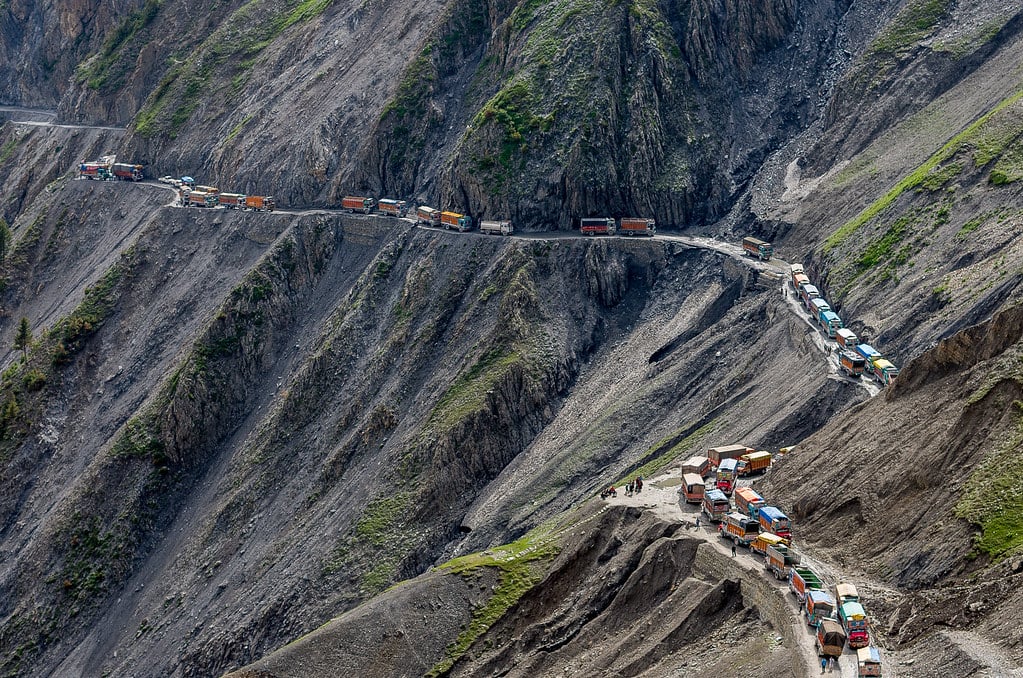
This high-altitude mountain pass in Jammu and Kashmir sits at nearly 11,600 feet and connects Srinagar to Leh. It stays open for a few months a year, typically from May to November, and during that window it becomes one of the most hectic stretches of road in the region.
The surface is perpetually wrecked — ice, mud, loose gravel, and potholes compete for space. Landslides are common.
And because it’s a critical supply route for remote Ladakhi communities, traffic doesn’t slow down regardless of conditions. The combination of altitude, narrow width, and constant pressure from military and commercial vehicles makes it a genuinely harrowing experience.
3. Guoliang Tunnel Road, China
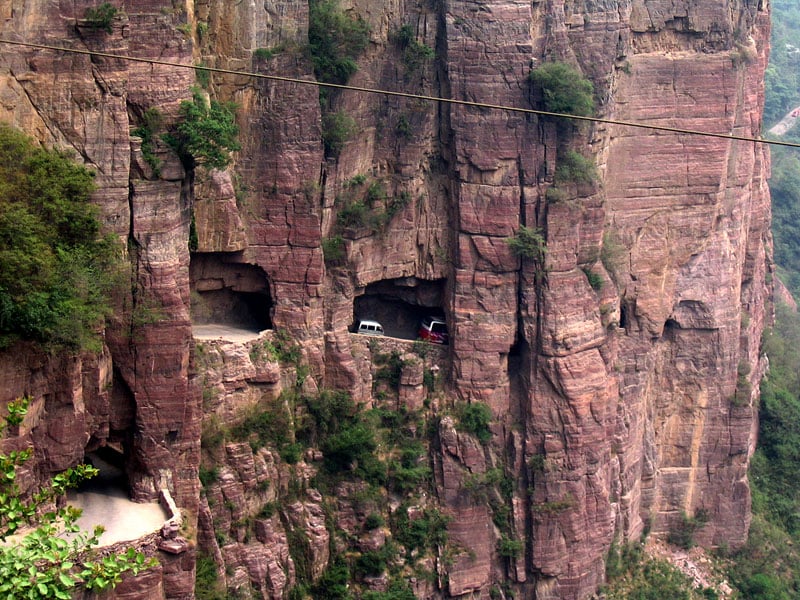
The villagers of Guoliang, tucked in the Taihang Mountains of Henan Province, built this road themselves. In the 1970s, cut off from the rest of China by sheer cliffs, they spent five years chiseling a tunnel directly through the rock by hand.
The result is a narrow passage with rough stone walls, uneven floors, and windows carved into the mountainside that offer vertiginous views of the valley below. It’s not technically a long road — just over a mile — but driving through feels like threading a needle in the dark.
One wrong move and you’re either scraping a stone wall or looking through a window that shouldn’t be there.
4. Fairy Meadows Road, Pakistan
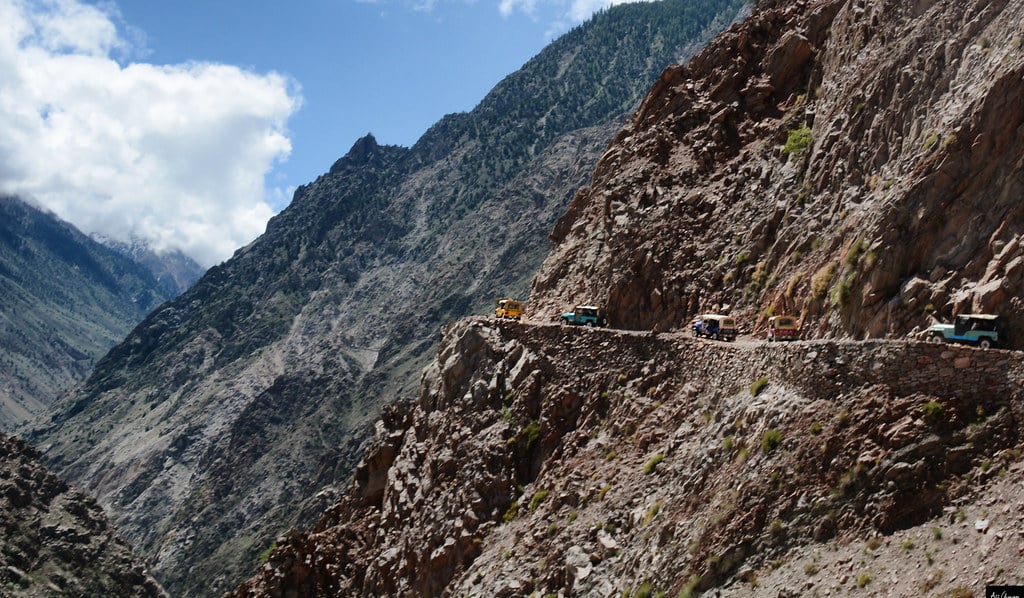
Getting to the base camp of Nanga Parbat, the world’s ninth-highest mountain, means driving this unpaved track in Gilgit-Baltistan. It’s only about six miles long, but it climbs steeply through mountain terrain with no guardrails, no barriers, and barely enough width for a single vehicle.
The drop on one side is steep enough that locals advise getting out and walking rather than riding in a jeep. Drivers who do make the trip regularly turn it into a white-knuckle performance of reversing, inching, and prayer.
The meadow at the top is genuinely beautiful. Getting there is another matter.
5. Taroko Gorge Road, Taiwan

Taiwan’s Suhua Highway follows the coast through Taroko Gorge, a stretch of marble cliffs that plunges directly into the Pacific Ocean. The scenery is stunning — the road less so.
Typhoons batter this coastline regularly, and landslides can close sections without warning. Rocks fall onto the road with enough frequency that helmets are sometimes required for motorcyclists.
Entire portions of the highway have been washed out by storms in recent years. The rebuilding effort goes on, but so does the cycle of typhoons and closures.
If you drive it, the ocean views are extraordinary. Just keep an eye on what’s above you.
6. Karakoram Highway, Pakistan And China
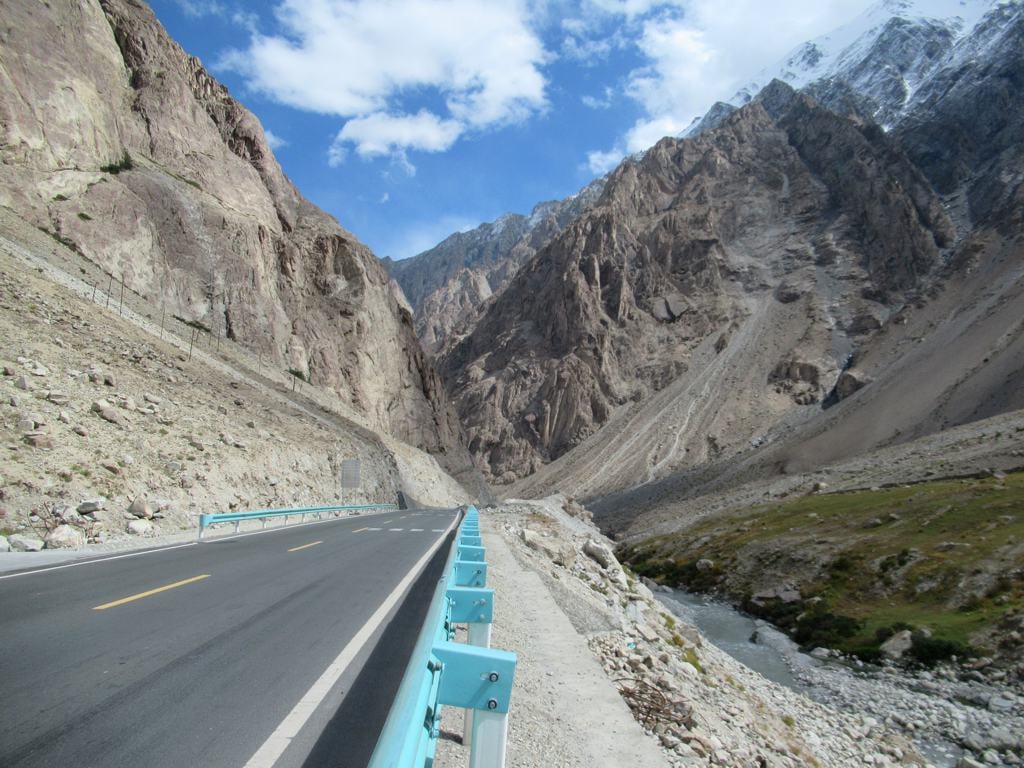
One of the highest paved roads in the world runs through the Karakoram mountain range, connecting Pakistan’s Gilgit-Baltistan region to China’s Xinjiang. It tops out near 15,000 feet.
The highway took over two decades to build and cost the lives of hundreds of workers. Today it remains treacherous — not because it’s unmaintained, but because the terrain itself is relentless.
Landslides bury sections. Flash floods wipe out bridges.
Altitude sickness hits drivers who ascend too fast. And the border regions add a layer of political complexity that can affect access without notice.
It’s an engineering achievement sitting on the edge of catastrophe at any given time.
7. Atlantic Ocean Road, Norway
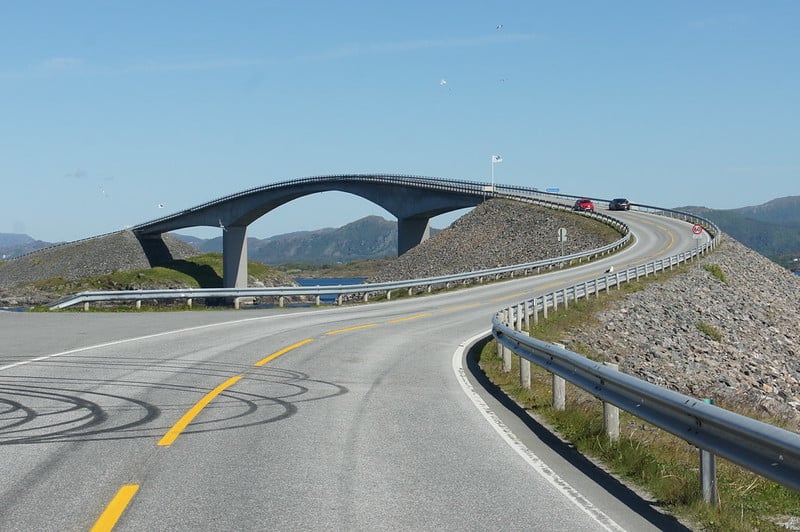
This one is different. It’s not a remote pass or a jungle trail.
The Atlantic Ocean Road in Norway is a proper national tourist route, and it’s considered one of the most beautiful drives in the world. But it earned its spot on this list honestly.
Eight bridges connect a series of small islands along the Norwegian coast, and the road crosses open water with waves regularly crashing over the barriers. During storms, the road closes entirely — when it’s open and weather rolls in, the experience of driving it becomes something closer to sailing.
The bridges arc dramatically upward and drop back down, and in rough conditions the spray makes it hard to see more than a few feet ahead.
8. Skippers Canyon Road, New Zealand
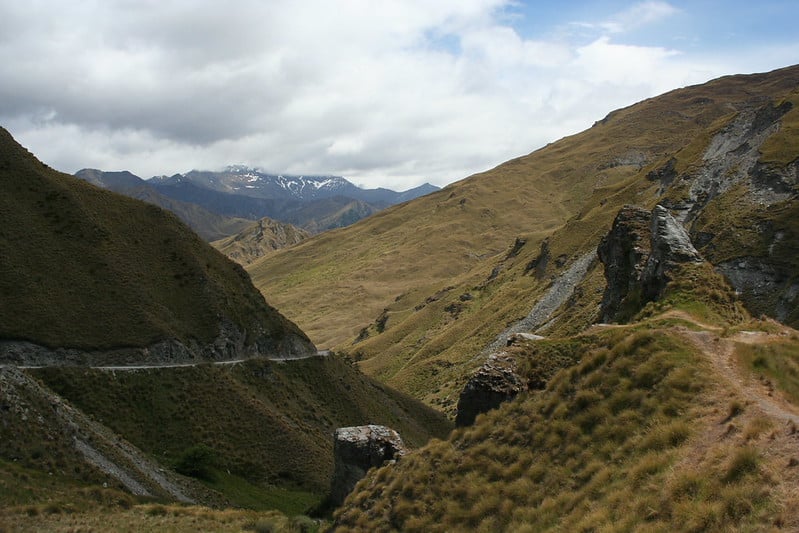
Rental car companies in Queenstown explicitly forbid their vehicles from being driven on Skippers Canyon Road. That policy tells you almost everything.
The road cuts through a historic gold-mining region in Otago and clings to the side of a canyon above the Shotover River. It’s unpaved, narrow enough that passing another vehicle requires someone to reverse to a wider point, and the drop to the river below is severe.
Tour operators take visitors through in specially equipped vehicles. The scenery is worth it — but this is one case where the prohibition in the fine print of your rental agreement exists for good reason.
9. Ruta 40, Argentina
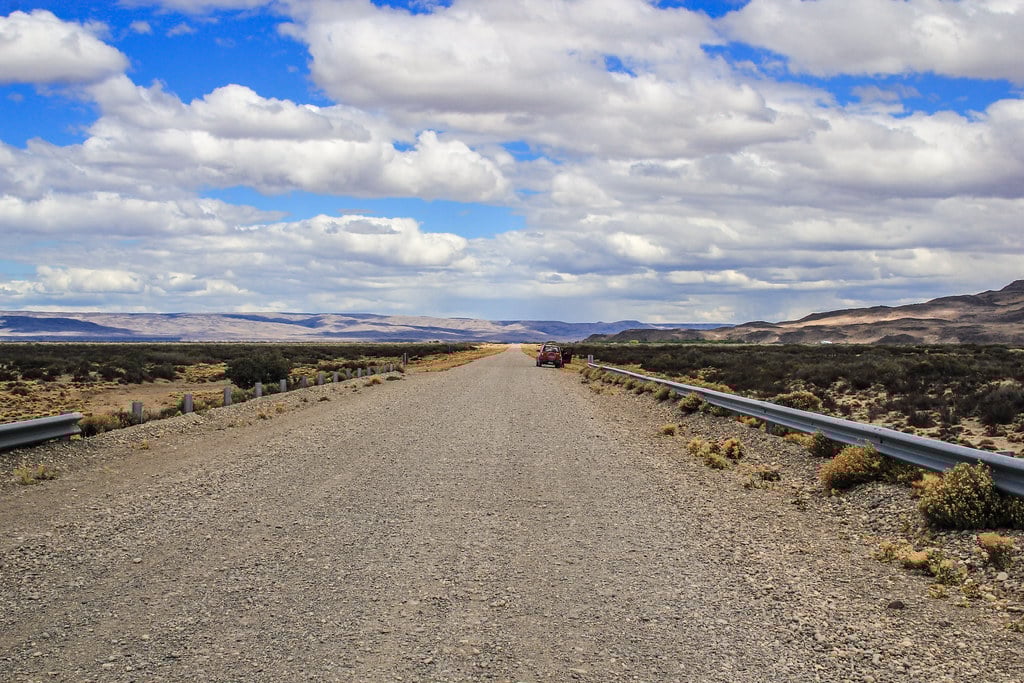
Argentina’s Route 40 runs nearly the entire length of the country along the Andes, from the border with Bolivia down to the southern tip of Patagonia — over 3,000 miles in total. Much of it is paved and manageable.
But large sections through Patagonia remain unpaved gravel, and the wind in that region is something else entirely. Gusts regularly reach 60 to 80 mph, enough to push a car sideways across the road.
Fuel stations are spaced so far apart that running out of gas is a real risk for drivers who don’t plan ahead. Isolation is the other constant: mechanical problems in some sections of Ruta 40 mean waiting hours for another vehicle to pass.
10. Stelvio Pass, Italy
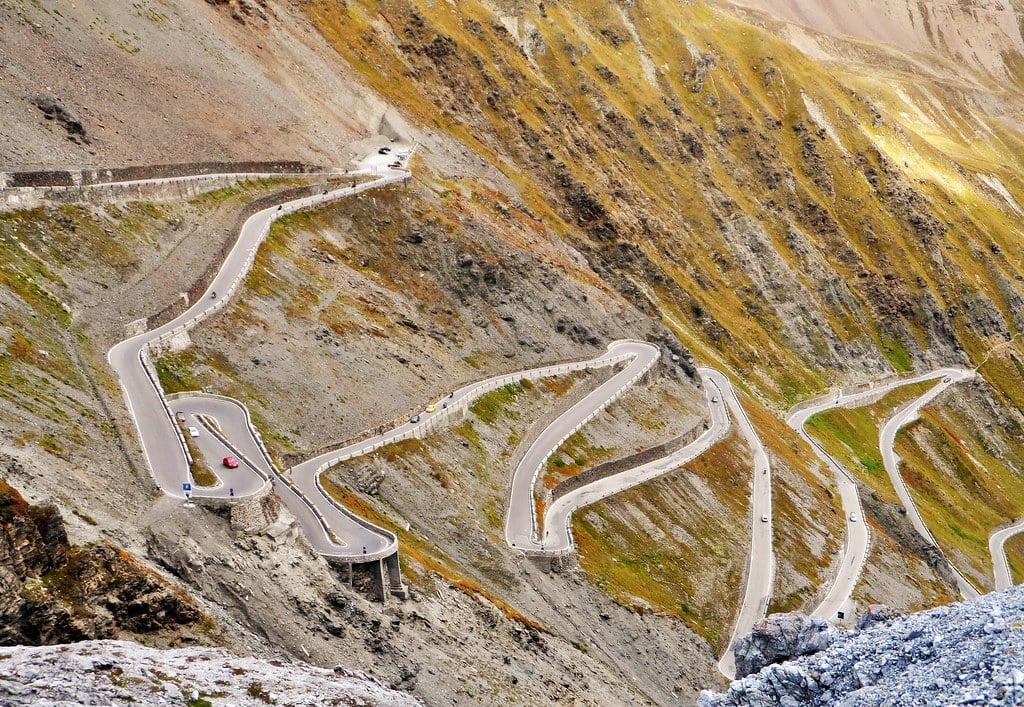
Italy’s Stelvio Pass in the Alps has 48 hairpin turns climbing to nearly 9,000 feet. It’s a popular destination for cyclists and sports car drivers, and in good weather it’s one of the most exhilarating drives in Europe.
But it earns its place here in the shoulder seasons when ice and snow coat the asphalt and the hairpin turns become something far less fun. The road is narrow even by Alpine standards, and the sheer number of switchbacks means you’re constantly doubling back on yourself while watching for oncoming traffic.
In fog — which rolls in fast up here — the experience changes from thrilling to deeply uncomfortable.
11. Trans-Siberian Highway, Russia
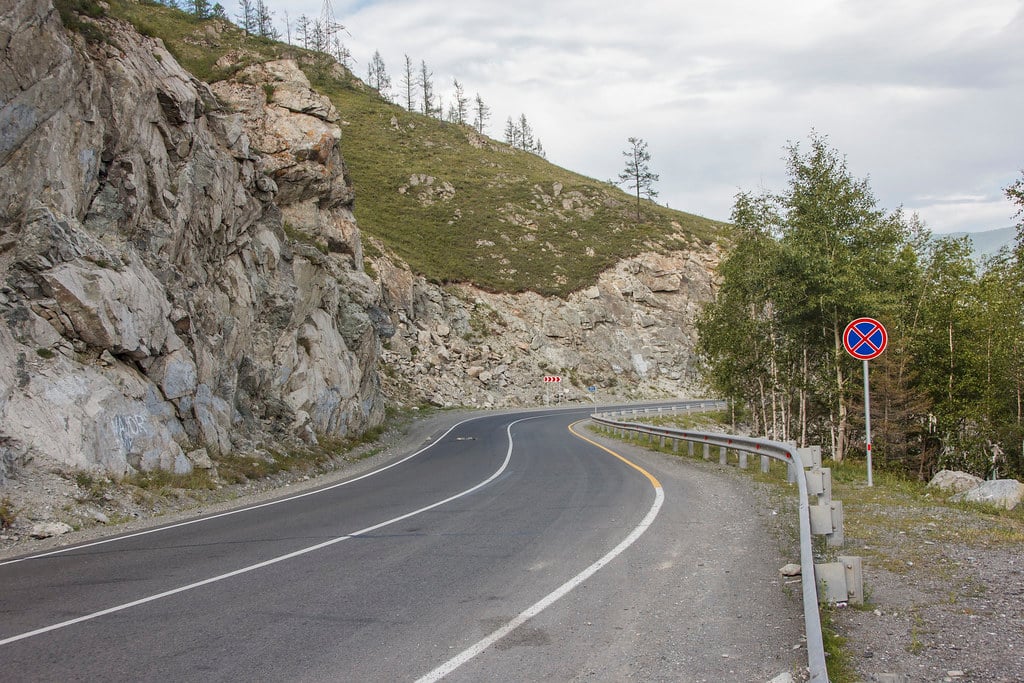
Russia calls the M58 highway connecting Moscow to Vladivostok a paved road. In places, that description is generous.
The highway crosses some of the most remote and inhospitable terrain in the world, including sections through Siberia that turn into deep mud rivers when the permafrost thaws in spring. Trucks have been known to sink axle-deep.
In winter, temperatures drop to -40°F or colder, and breakdowns in isolated stretches mean genuine danger. The road improved significantly in the 2000s and 2010s, and some sections are now in good condition.
But “some sections” is doing a lot of work in that sentence.
12. Dalton Highway, Alaska

Starting at Fairbanks, the Dalton Highway stretches 414 miles north to Prudhoe Bay, shadowing the Trans-Alaska Pipeline for nearly its whole run. Trucks roll along it constantly, hauling fuel and gear through every season.
Others take the trip just to see what lies beyond paved roads. Gravel makes up most of the surface, while loose stones kicked up by tires leave many windshields spiderwebbed – a problem so common some cover their headlights with taped-on plastic sheets first.
Only three tiny settlements dot the full journey, each offering little more than basics. Help does not come quickly here if something goes wrong.
Frozen sheets spread across the pavement when blizzards hit during colder months. Roadside pauses turn rough under swarms that bite without warning once warmth returns.
13. Col De Turini France

High up in the French Maritime Alps, this mountain road stands out as part of the Monte Carlo Rally – giving a clear hint about what driving here feels like. Not wide, often rising sharply, filled with sharp turns, it winds upward past thick woods toward elevations beyond 5,200 feet.
When winter arrives, ice coats the surface while snow piles up, making progress tough; visibility drops too, especially near the peak where fog rolls in frequently. Held each January, the race takes place when weather hits its worst.
Despite that, cars still push through. Driving here feels wild if you know how to handle sharp turns.
Yet every stretch demands attention because the lane narrows just enough to complicate overtaking. Each curve hangs over empty space, so mistakes don’t get forgiven easily.
14. Passage Du Gois France

When the sea pulls back, a path of hard-packed earth appears. This stretch, just under five kilometers long, links Noirmoutier to France’s western coast.
Water returns twice each day, creeping over the surface until only waves remain where tires once rolled. What was solid ground became submerged without warning.
Along its edges, soft mud gives way too, pulling anything stuck deeper. Shallow pools form first, then full coverage follows quickly.
Warnings line the path, telling drivers water is climbing higher. When timing goes wrong, help stands ready in towers spaced across the stretch.
Folks have gotten stuck here – some didn’t make it out. The pavement? Still solid under tires.
It’s not the road you need to fear. That comes from the sea.
15. Luxor-Al-Hurghada Road, Egypt

Out here, where sand meets sky in every direction, a straight stretch between Luxor and Hurghada hides risk beneath emptiness. Though no steep drops mark the route, crashes pile up more than anywhere else on Egypt’s map.
Mile after mile unfolds without change – just dust, heat haze, and an unbroken horizon. This very monotony dulls attention, lulls drivers into a kind of trance.
Fast movement becomes normal, even when signs say otherwise, with few patrols to respond. When someone tries passing another vehicle going fast, there’s barely time to react if something goes wrong.
Tourist buses rumble along it daily, sharing space with freight rigs moving through open stretches. After dark, things get harder – streetlights are rare, many headlights weak, shadows deep.
Mistakes grow bigger in those hours, amplified by isolation.
The Road Under Your Wheels

Strange how danger on a road often hides in quiet things. Not far from grand views, loneliness can grow thick.
Missing barriers leave little room for error. Storms arrive before anyone expects.
Drivers may race like rules do not matter here. Some paths push limits – of land shape, build skill, people’s dreams, and chance.
Links between towns appear where none should exist. Goods move through harsh spots because these routes allow it.
Journeys unfold unlike any seen elsewhere. What stays true no matter how high you climb?
A deep respect for the road. Those behind the wheel here longest have learned it through years, not theory.
More from Go2Tutors!

- The Romanov Crown Jewels and Their Tragic Fate
- 13 Historical Mysteries That Science Still Can’t Solve
- Famous Hoaxes That Fooled the World for Years
- 15 Child Stars with Tragic Adult Lives
- 16 Famous Jewelry Pieces in History
Like Go2Tutors’s content? Follow us on MSN.