Bizarre Items Owners Have Insured for Millions
Most people insure the obvious things. Your house burns down, you get a check.
Your car gets totaled, insurance covers it. But when you have millions riding on something as specific as your middle finger or the exact shade of your chest hair, ordinary coverage doesn’t cut it.
The world of high-value insurance policies extends far beyond property and vehicles. For some people, their most valuable asset walks around with them every day.
And when that asset happens to be attached to your body, you protect it the same way anyone else would protect their livelihood.
Betty Grable Started the Whole Thing

Back in the 1940s, actress Betty Grable insured her legs for a million dollars. That figure sounds quaint now, but adjusted for inflation, it represents serious money.
Her legs appeared in countless pinup photos during World War II, gracing the noses of bombers and the lockers of soldiers overseas. Grable understood something fundamental about her career: without those legs, the work dried up.
Studios knew it too. The policy protected everyone involved.
If she couldn’t walk across a set or pose for a photo shoot, the financial fallout would have been substantial. She started a trend that continues today, though the numbers have gotten considerably larger.
Mariah Carey Takes It to Another Level

Mariah Carey insured her voice for millions. That makes sense for a five-octave vocalist.
But she also insured her legs for a reported billion dollars. A billion. For legs.
Before you laugh, consider what those legs mean for her career. Concert tours, music videos, red carpet appearances—her physical presence contributes directly to her earning power.
If something happened that prevented her from performing or making public appearances, the financial impact would be catastrophic. The policy accounts for lost tour revenue, canceled endorsements, and diminished earning potential.
When you pull in hundreds of millions per tour, protecting that income stream becomes logical rather than excessive.
David Beckham’s Legs Cost More Than Most Houses

David Beckham reportedly insured his legs for somewhere between $70 million and $195 million, depending on which report you believe. Multiple companies had to split the coverage because the amount exceeded what any single insurer would handle.
For a professional athlete, this actually makes perfect sense. Beckham’s legs generated income not just from playing soccer but from endorsement deals with global brands.
One bad tackle could have ended his career and eliminated hundreds of millions in future earnings. The policy covered not just injury but also disfigurement.
Even after retirement, his image continues to generate revenue. Those legs had to stay marketable.
Bruce Springsteen Protected His Voice

Bruce Springsteen insured his vocal cords for $6 million during the height of his career in the 1980s. His voice drives everything—the albums, the concerts, the entire empire he built.
Springsteen’s voice has a distinctive rasp that fans recognize immediately. You can’t replace that.
If illness, injury, or nodules damaged his vocal cords, he couldn’t do what made him famous. The policy provided financial protection if his career ended prematurely.
He wasn’t being paranoid. Plenty of singers have lost their voices to polyps, nodules, or other medical conditions.
For someone who makes his living performing live, that risk is real and quantifiable.
Gordon Ramsay Insured His Taste Buds

Chef Gordon Ramsay insured his tongue and taste buds for $10 million. At first glance, this seems ridiculous.
But think about what happens if a chef can’t taste food. Ramsay built an empire on his palate.
Michelin-starred restaurants, television shows, cookbooks—all of it depends on his ability to distinguish flavors and judge quality. An injury, illness, or even natural aging could diminish his taste perception and end his career as a top chef.
The policy protects against loss of function from disease, injury, or aging. For someone whose income depends entirely on sensory perception, that’s not vanity.
That’s business planning.
Heidi Klum’s Legs Aren’t Worth the Same Amount

Heidi Klum insured her legs for $2 million when she worked with Braun. But here’s the interesting part: one leg is worth more than the other.
The insurance company valued her left leg at $200,000 less than her right because of a small scar. Klum confirmed this detail herself during an interview with Ellen DeGeneres.
She didn’t seem bothered by the asymmetrical valuation. A scar is a scar, and insurance companies assess risk based on potential impact to earning capacity.
For a model who made her name walking Victoria’s Secret runways, leg insurance makes complete sense. One serious injury and her career could have ended.
The policy ensured she wouldn’t lose everything if that happened.
Keith Richards Insured Just His Middle Finger

Keith Richards insured his hands for around $1.6 million, though some reports suggest he specifically insured just his middle finger. For a guitarist who helped define rock and roll, hands are everything.
Richards has played guitar for over six decades. His distinctive style and technique created some of the most recognizable riffs in music history.
Lose the use of those fingers, and his career ends immediately. The middle finger detail might be apocryphal, but the basic premise holds: for a musician, hand insurance protects their primary tool.
Richards couldn’t do what he does without functional fingers. The policy accounts for that reality.
Tom Jones Protected His Chest Hair

Tom Jones insured his chest hair for $3.5 million. This sounds absurd until you remember that women would literally try to pluck his chest hair as souvenirs during performances.
His open shirts and visible chest hair became part of his image. Jones was a heartthrob in the 1960s and 1970s.
His appeal drove album sales and concert attendance. The chest hair contributed to that appeal in ways that seem silly now but mattered then.
If something damaged or destroyed his chest hair—say, a stage accident involving fire—his image would have suffered. The insurance covered that specific risk.
It protected an asset that generated income, even if that asset happened to be follicular.
Gene Simmons Valued His Tongue at a Million
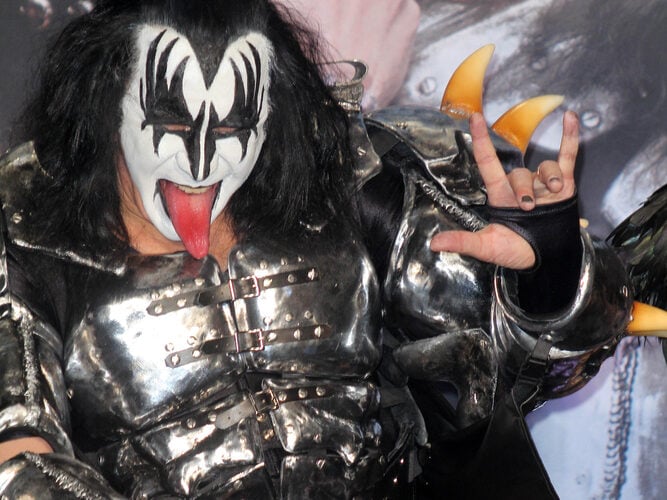
Gene Simmons insured his famously long tongue for $1 million during Kiss’s peak fame in the 1970s. His stage persona as “The Demon” relied heavily on sticking out that tongue during performances.
The tongue became a signature element of Kiss concerts and promotional materials. Merchandise featured it. Fans expected it.
Simmons built part of his brand around that single physical characteristic. From a business perspective, protecting that brand element makes sense.
If an injury prevented him from sticking out his tongue during performances, it would diminish the show’s impact and potentially affect ticket sales.
Troy Polamalu’s Hair Broke Records

NFL player Troy Polamalu insured his long, curly hair for $1 million after signing an endorsement deal with Head & Shoulders. The policy made him a Guinness World Record holder for the highest insured hair.
Polamalu’s hair became iconic during his career with the Pittsburgh Steelers. It flowed out from under his helmet during games and became instantly recognizable.
When Head & Shoulders signed him as a spokesperson, they needed to protect that investment. If something happened to his hair—if he cut it or if it got damaged—the endorsement deal would lose its value.
The insurance covered that risk. It protected the company’s marketing investment.
Jennifer Lopez Insured Her Famous Curves

Jennifer Lopez reportedly insured her backside for $27 million, though rumors of a billion-dollar policy circulated before she denied them. Still, $27 million is substantial for any body part.
Lopez built a career partly on her physical appearance. Music videos, movies, red carpet appearances—her image generates revenue across multiple industries.
Her curves became a defining characteristic of her brand. The insurance protects her earning potential if injury or illness affects her ability to maintain that image or perform.
For someone who dances extensively during concerts and makes frequent public appearances, that protection makes business sense.
Daniel Craig Insured His Entire Body

Daniel Craig insured his entire body for $9.5 million while filming Quantum of Solace. He insisted on doing many of his own stunts during Bond films, which increased the risk of injury substantially.
Craig did get injured on set multiple times. He sustained various injuries throughout his tenure as Bond but never had to cash in on the policy. Still, the coverage made sense given the physical demands of the role.
Stunt work involves real danger. Falls, fights, car chases—Craig participated in scenes that professional stunt performers usually handle.
The insurance protected both him and the production if something went seriously wrong.
Usain Bolt’s Legs Were Worth $200 Million

Usain Bolt insured his legs for $200 million during the 2012 Olympics. As the fastest person in recorded history, his legs generated extraordinary income from endorsements, appearance fees, and prize money.
Bolt’s world records and Olympic gold medals depended entirely on his legs functioning at peak performance. One serious injury could have ended his career and eliminated hundreds of millions in future earnings.
The insurance covered the potential loss if injury prevented him from competing. When you’re breaking world records and collecting gold medals, protecting that earning capacity becomes necessary rather than extravagant.
A Dutch Winemaker Insured His Nose

Ilja Gort, a wine producer from the Netherlands working in Bordeaux, took out insurance on his nose – worth around 5 million euros. His ability to smell? That’s key for someone who makes wine, no doubt about it.
Gort’s whole work life hinges on how well he can pick up scents in wine. Because making good wine means noticing tiny changes in smell or taste.
If he lost that skill, his job would fall apart. The coverage guards him if something harms his sense of smell – like an accident, sickness, or health issue.
It’s said to run about $23K per year. Sure, that sounds steep; yet when your job relies on sniffing things, it makes financial sense.
When Your Body Becomes Your Business

Some insurance plans sound odd – or even over the top – yet they’re built on simple logic. If a body feature brings in big money, covering it makes sense.
Instead of ignoring risks, smart moves involve planning ahead. Earnings tied to appearance? Then protection isn’t optional – it’s practical.
The rules admit a tough truth – appearance matters in some jobs. Sounds harsh, yet it’s true for dancers, sports stars, actors, or anyone relying on looks to make money.
Coverage doesn’t cause this situation; instead, it helps manage risks tied to it. You probably don’t have to cover your middle finger or chest hairs.
Yet the idea works for anyone. Anything that earns you money should be guarded – maybe by backup plans.
Most folks go for injury payouts or legal shields. Some end up phoning Lloyd’s because their palate brings home cash.
More from Go2Tutors!

- The Romanov Crown Jewels and Their Tragic Fate
- 13 Historical Mysteries That Science Still Can’t Solve
- Famous Hoaxes That Fooled the World for Years
- 15 Child Stars with Tragic Adult Lives
- 16 Famous Jewelry Pieces in History
Like Go2Tutors’s content? Follow us on MSN.