15 must-see masterpieces at the Louvre museum
The Louvre stands as the world’s largest art museum, housing over 35,000 artworks across 652,000 square feet of gallery space. Walking through this former royal palace feels like stepping through centuries of human creativity, where masterpieces from ancient civilizations share walls with Renaissance genius and revolutionary art. With such an overwhelming collection spanning from Egyptian mummies to Napoleon’s crown jewels, knowing which pieces deserve your limited time becomes essential for any visitor.
This curated selection represents the absolute must-see treasures that have shaped art history and continue to captivate millions of visitors each year. Here is a list of 15 masterpieces that showcase the Louvre’s unparalleled collection across paintings, sculptures, and ancient artifacts.
Mona Lisa

— Photo by Flik47
Leonardo da Vinci’s enigmatic portrait needs little introduction as the most famous painting in the world. Created between 1503 and 1519, this small oil painting on poplar wood depicts Lisa Gherardini, the wife of a Florentine silk merchant. The painting gained international fame after being stolen in 1911, with the media storm that followed searing Lisa’s face into public memory worldwide. Her mysterious smile and da Vinci’s revolutionary sfumato technique make this surprisingly small portrait an absolute must-see, despite the crowds that gather around her bulletproof glass case.
Venus de Milo

— Photo by gdragan
Standing nearly seven feet tall, this ancient Greek masterpiece represents the pinnacle of classical sculpture. Discovered in 1820 on the Greek island of Milos, the statue depicts Aphrodite (Venus in Roman mythology) and dates back to the Hellenistic period. Even without her arms, the sculpture’s beauty remains undiminished, showcasing the ideal feminine form that has influenced artists for over two millennia. The statue’s contrapposto pose and flowing drapery demonstrate why ancient Greek sculpture continues to set the standard for artistic excellence.
Winged Victory of Samothrace

— Photo by warasit
This marble representation of Nike, the Greek goddess of victory, was discovered in 1863 on the Greek island of Samothrace by French archaeologist Charles Champoiseau. Standing nearly ten feet tall, the sculpture was probably commissioned to thank the gods for a naval victory and may date back to 190 BCE. The masterful way the unknown sculptor carved flowing fabric that appears windblown and the sense of movement captured in stone make this headless, armless figure one of the most dynamic sculptures ever created.
Liberty Leading the People
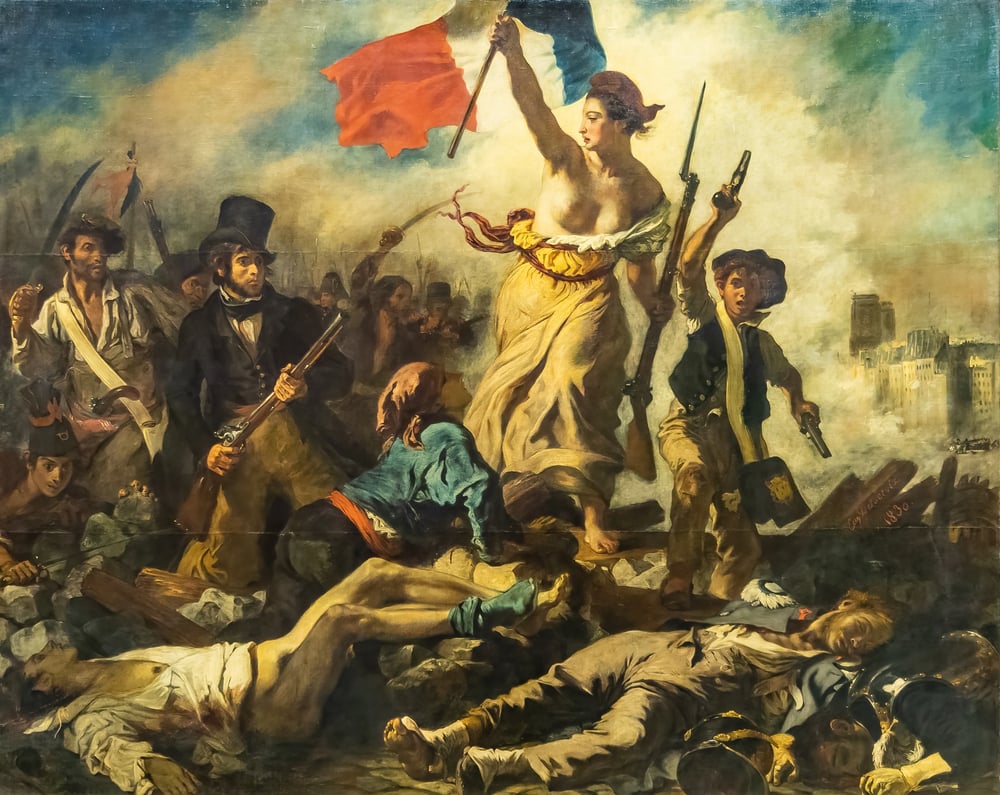
— Illustration by alfredosaz.gmail.com
Eugène Delacroix’s powerful painting depicts the July Revolution of 1830, when Parisians rose against King Charles X during three days of fighting known as ‘les trois glorieuses’. The female figure of Liberty, part goddess and part woman of the people, leads citizens through Parisian barricades while waving the French tricolor flag. This masterpiece succeeds because Delacroix created believable human figures that allow viewers to get caught up in the emotion, making the revolutionary moment feel immediate and real. The painting has become an enduring symbol of French revolutionary spirit.
The Raft of the Medusa

Théodore Géricault’s monumental painting tells the harrowing true story of shipwreck survivors. The work depicts the survivors and casualties of the Medusa shipwreck calling for help when they see the distant outline of a rescue ship. Painted in 1819, this massive canvas captures both human desperation and hope in a single frame. The dramatic composition, realistic portrayal of suffering, and the political scandal surrounding the actual shipwreck made this painting revolutionary in both artistic and social terms.
Psyche Revived by Cupid’s Kiss

Italian master sculptor Antonio Canova captured this moment of mythological rapture in 1787, commissioned by Welsh politician John Campbell. The sculpture depicts the climactic moment from the myth when Cupid’s kiss awakens Psyche from her deathlike sleep. Canova achieves an unreal softness in marble that was unparalleled in his era, representing the perfect union between human soul and desire. The tender emotion and technical mastery make this Neoclassical masterpiece one of the most romantic sculptures ever created.
The Coronation of Napoleon

Jacques-Louis David’s enormous painting shows Emperor Napoleon at his consecration and the coronation of Empress Josephine, depicting the splendor of the ceremony where each person’s position was studied for both aesthetic and political purposes. This Neo-Classical work functions almost like an album cover featuring a who’s who of famous French politicians from the era, including Napoleon’s family and even the painter himself. The painting’s massive scale and meticulous detail make it impossible to ignore as you walk through the gallery.
Wedding Feast at Cana
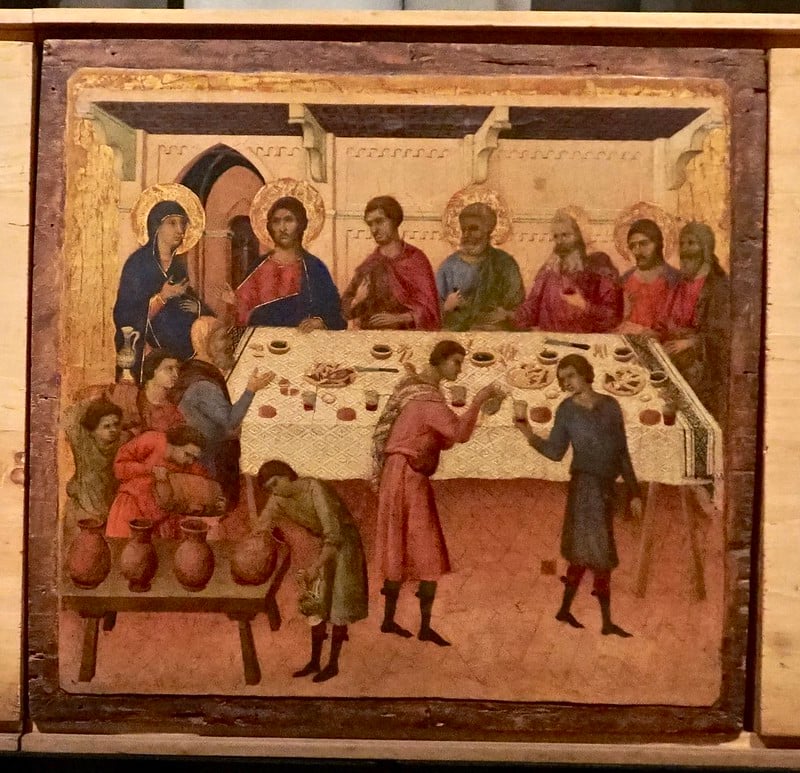
Paolo Veronese’s monumental canvas is the largest painting in the Louvre collection, originally commissioned for monks at the San Giorgio Maggiore Basilica in Venice. Created between 1562 and 1563, this Renaissance masterpiece depicts the biblical story of Christ’s first miracle, turning water into wine. The painting’s incredible detail allows viewers to discover new elements with each viewing, from the elaborate costumes to the architectural elements that showcase Veronese’s mastery of perspective and color.
Michelangelo’s Dying Slave
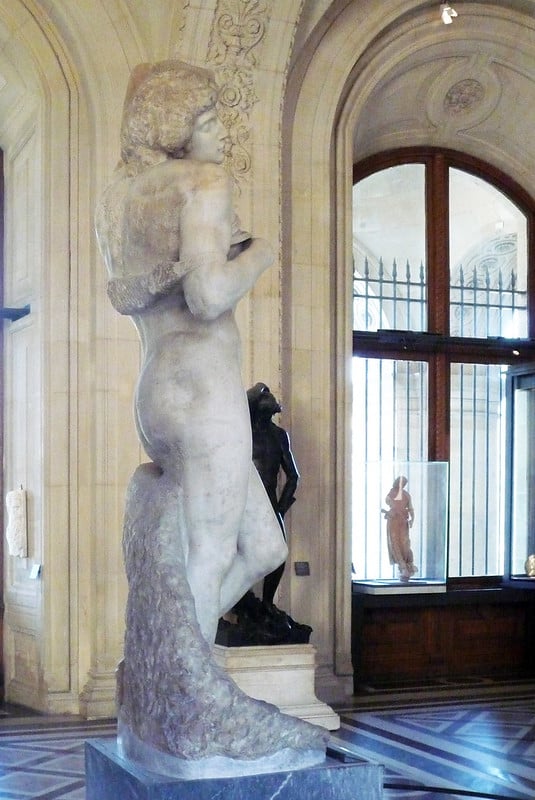
Originally sculpted to be part of Pope Julius II’s tomb, this unfinished marble sculpture dates from between 1513 and 1516. When the Pope’s ambitious tomb project was scaled back after years of delays and budget cuts, many of Michelangelo’s intended pieces were distributed to private collections. The sculpture’s unfinished state actually enhances its emotional impact, showing Michelangelo’s process while capturing the struggle between physical beauty and spiritual anguish that defined much of his work.
The Seated Scribe
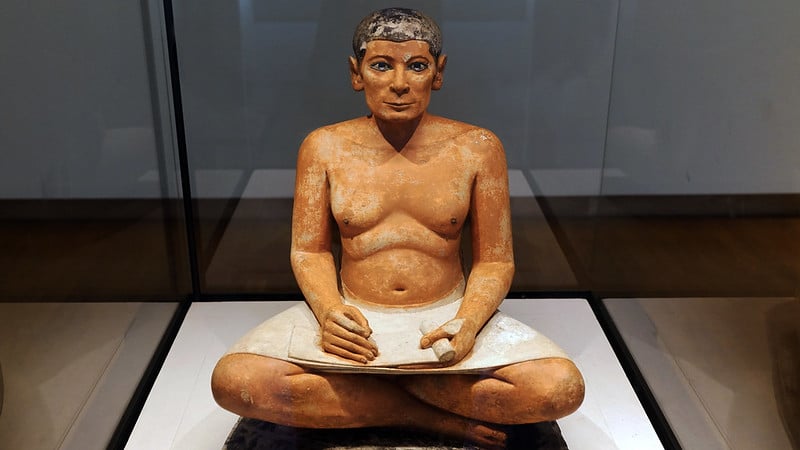
This painted limestone statue from ancient Egypt’s fourth dynasty still retains its original reddish pigment and features crystal eyes that create an intense, lifelike gaze. Often featured in history books to illustrate ancient Egyptian writing, the figure sits cross-legged in working position, and you can easily imagine his papyrus sheet on his legs and brush in his right hand. The sculpture’s remarkable preservation and the scribe’s alert expression create an intimate connection across nearly 5,000 years.
Great Sphinx of Tanis
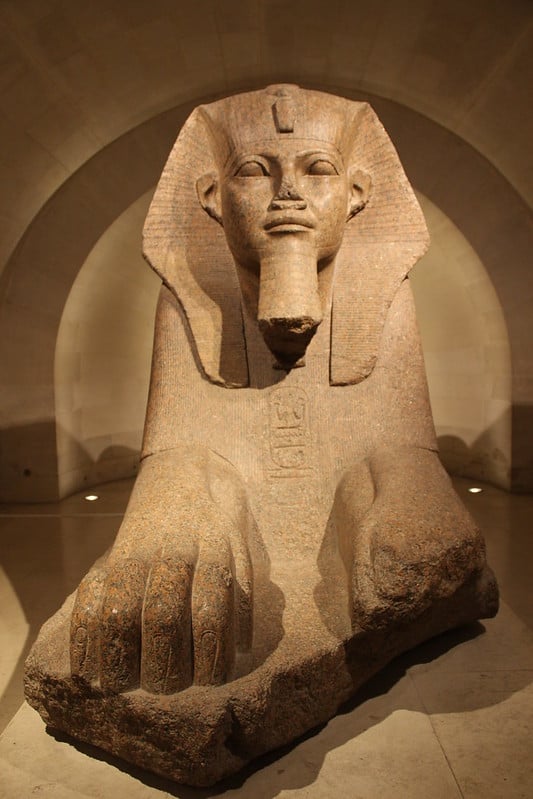
Carved from a single block of granite and believed to date back to the 26th century BC, this sculpture depicts an unknown Pharaoh with a lion’s body and human face. Discovered in Egypt at the ruins of the temple of Amun-Ra, the sphinx was acquired by the Louvre in 1826 and now guards the entrance to the museum’s Department of Egyptian Antiquities. As one of the largest sphinxes outside Egypt, this monument connects visitors directly to the power and mystery of ancient Egyptian civilization.
The Lacemaker
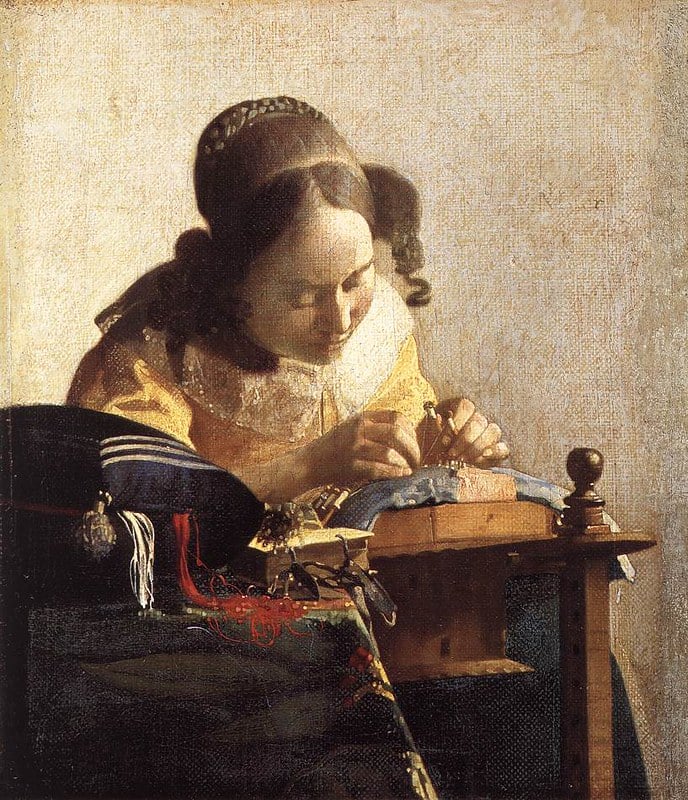
This famous 17th-century painting by Johannes Vermeer depicts a young woman focused intently on her detailed needlework. The intimate domestic scene showcases Vermeer’s mastery of light and his ability to find profound beauty in everyday moments. The painting’s small scale forces viewers to lean in close, creating an almost voyeuristic sense of observing a private moment of concentrated craft and quiet domesticity.
Venus de Arles
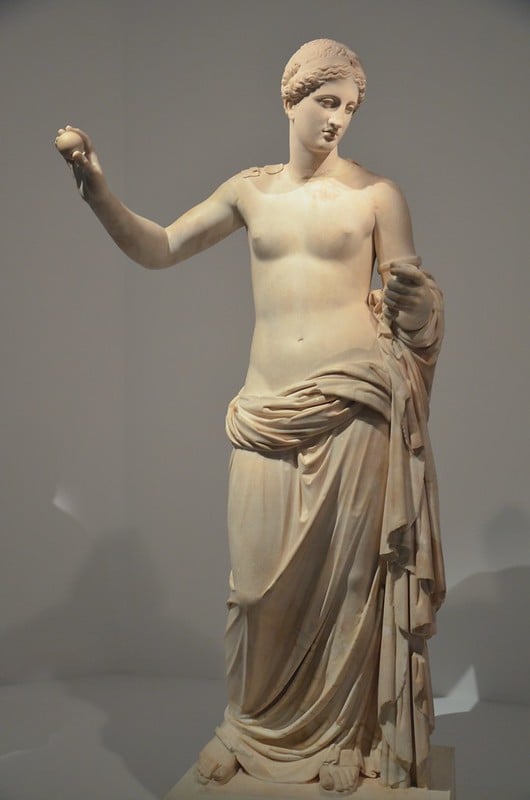
Discovered in pieces in 1651 by workmen digging a well at a Roman theatre in Arles, this sculpture was later given to Louis XIV to decorate the Hall of Mirrors at Versailles. This Roman copy of a Greek original underwent restoration in the 17th century, with the court sculptor adding arms, hands, and other details. The restoration work, which included polishing the surface and slimming the waist, represents the period’s aesthetic preferences while preserving an ancient masterpiece.
The Caryatids

These four female sculptures, created by Jean Goujon in 1550, serve as architectural support for a musician’s balcony, fashioned after the famous Erechtheion in Athens. Named after these proud figures at the entrance, the Caryatids Room showcases masterpieces of Greek sculpture while serving as a reminder of when this gallery functioned as a royal ballroom. These Renaissance sculptures represent the perfect marriage of function and beauty that defined French court architecture.
The Crown Jewels
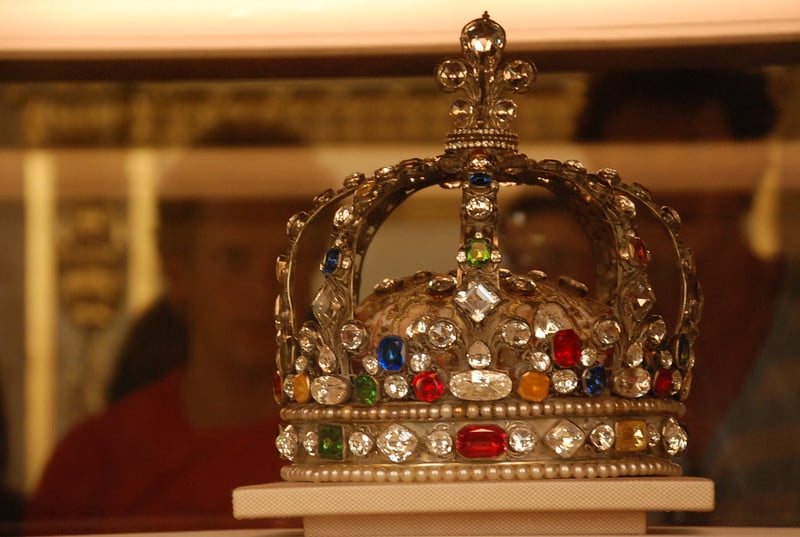
These treasures were part of King Louis XIV’s 800-piece collection, displayed in a chamber designed by the greatest painters, gilders, and sculptors of his time. The collection includes the Regent Diamond, one of the most famous gems in French history, along with crowns, scepters, and ceremonial objects that embodied royal power. The room holding the Crown Jewels is as extraordinary as the jewelry itself, creating an immersive experience of French royal grandeur.
Where Art Meets Eternity

These fifteen masterpieces represent just a fraction of the Louvre’s incredible collection, yet they offer a comprehensive journey through human artistic achievement. From ancient Egyptian scribes still hard at work to Renaissance masters capturing divine moments, each piece connects us to the artists, patrons, and civilizations that created them. These artworks have survived over the centuries and made such a mark on history that we cannot imagine the world without them. The Louvre serves not just as a repository for these treasures, but as a bridge between past and present, where masterpieces continue to inspire new generations of artists and art lovers. Walking among these works reminds us that great art transcends time, speaking directly to the human experience across millennia.
More from Go2Tutors!

- 16 Historical Figures Who Were Nothing Like You Think
- 12 Things Sold in the 80s That Are Now Illegal
- 15 VHS Tapes That Could Be Worth Thousands
- 17 Historical “What Ifs” That Would Have Changed Everything
- 18 TV Shows That Vanished Without a Finale
Like Go2Tutors’s content? Follow us on MSN.



