15 Photos of Historical Gates That Once Marked the Entrance to Ancient Cities
Standing before an ancient city gate feels like touching time itself. These monumental passages weren’t just architectural statements — they were promises of what lay beyond, guardians of entire civilizations, and silent witnesses to countless human stories.
Most have crumbled into memory, but the ones that remain carry the weight of centuries in their weathered stones.
Ishtar Gate
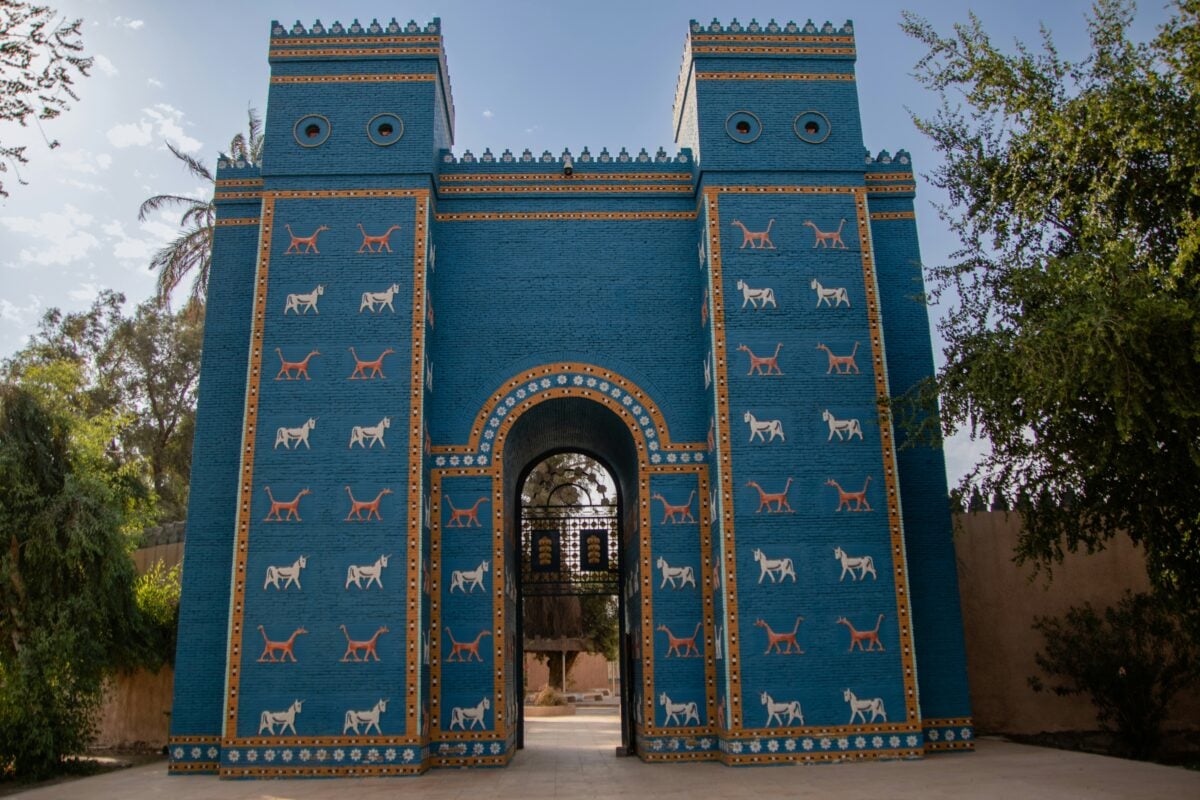
The Ishtar Gate dominates every conversation about ancient entrances for good reason. Built around 605-562 BCE in Babylon under King Nebuchadnezzar II (reigned 605-562 BCE), this masterpiece wasn’t just a gate — it was a theater.
The gate was constructed during his reign and completed around 575 BCE as part of the Processional Way renovation. Blue-glazed bricks covered every surface, decorated with golden dragons and bulls that seemed to prowl along the walls.
Walking through meant passing under the gaze of mythical beasts, a reminder that Babylon controlled forces beyond the ordinary world. The gate stood eight stories tall, making it visible from miles away across the Mesopotamian plain.
Merchants, diplomats, and conquerors all passed through the same archway, their footsteps wearing smooth the stones that today rest in Berlin’s Pergamon Museum.
Lion Gate
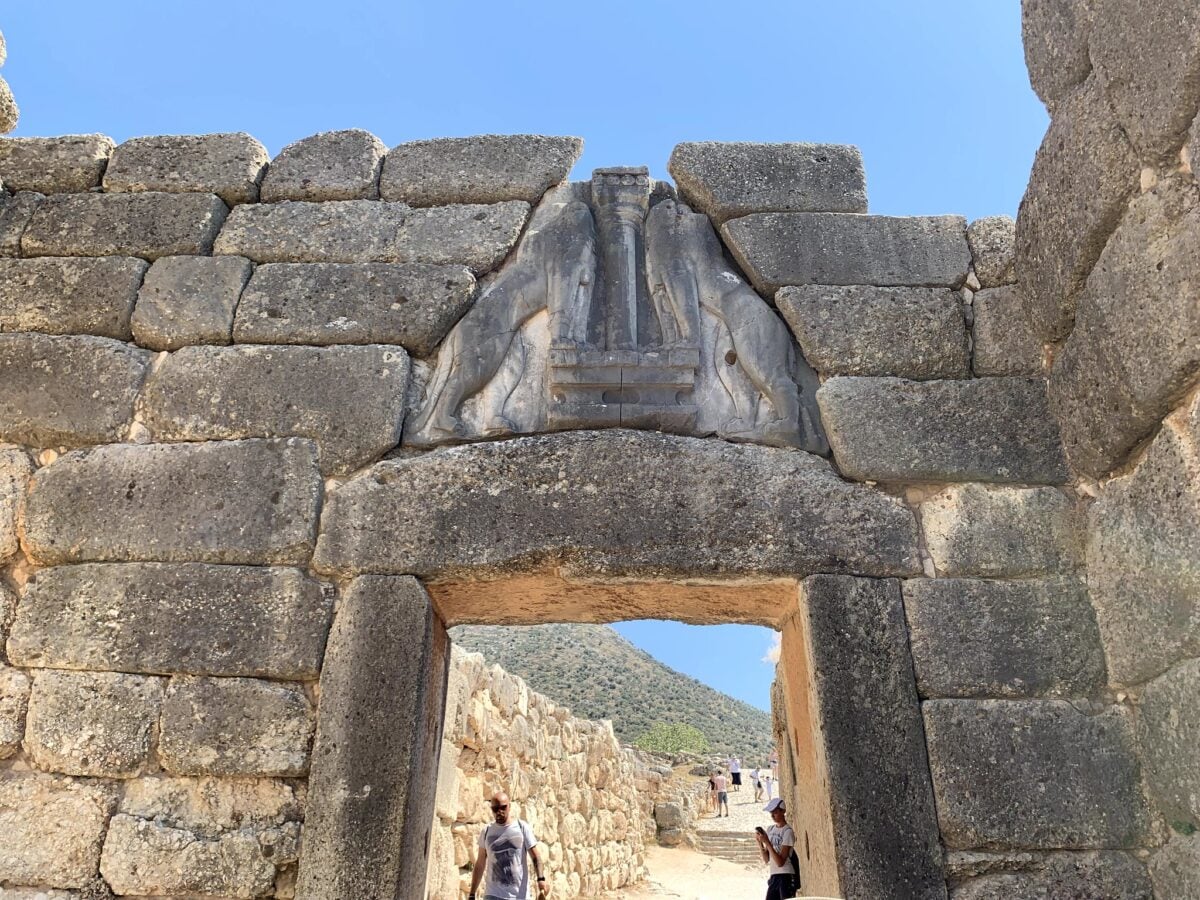
Mycenae’s Lion Gate cuts straight to the point. Two massive lions carved in stone rear up on either side of a pillar, their heads long since lost to time but their presence still commanding respect.
Built around 1250 BCE, this entrance guarded one of Bronze Age Greece’s most powerful cities. The engineering tells its own story — each stone block weighs several tons, fitted together without mortar.
The lions weren’t decorated. They were a warning.
Porta Nigra
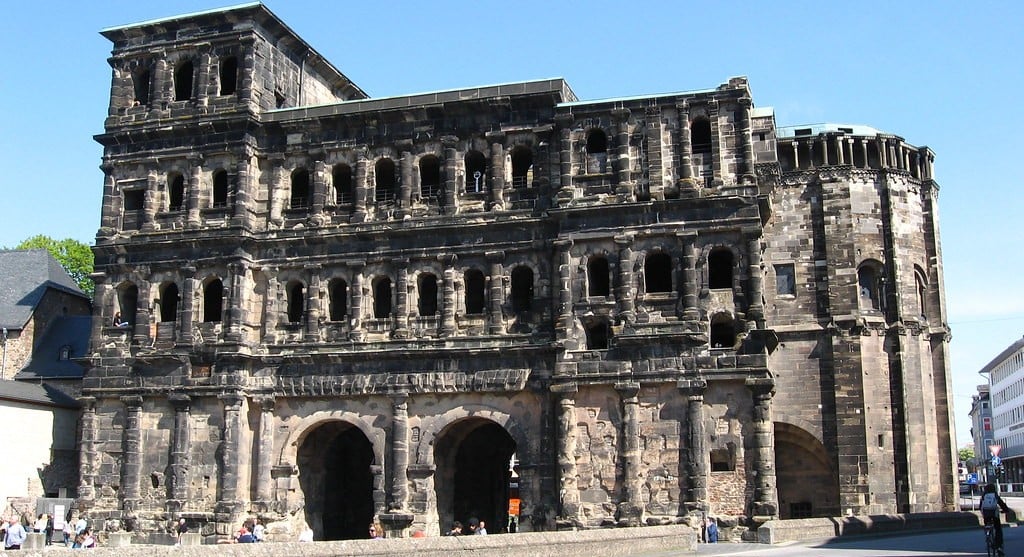
If city gates could develop personality over time, Porta Nigra in Trier, Germany would be the moody, complicated one that refuses to be ignored (and has every right to feel that way, considering it’s been standing since around 170 CE when Roman engineers were still showing off). The name means “Black Gate,” earned from centuries of weathering that darkened its sandstone blocks, and while other Roman structures crumbled or got cannibalized for building materials, this one survived by reinventing itself.
It became a church in the Middle Ages — talk about a career pivot — which meant medieval Christians preserved it instead of dismantling it for stone. So what started as a Roman military checkpoint evolved into a house of worship, then eventually back into a monument. Fair enough.
The gate still dominates Trier’s skyline, a four-story reminder that some things are simply too stubborn to disappear, even when empires do.
Brandenburg Gate
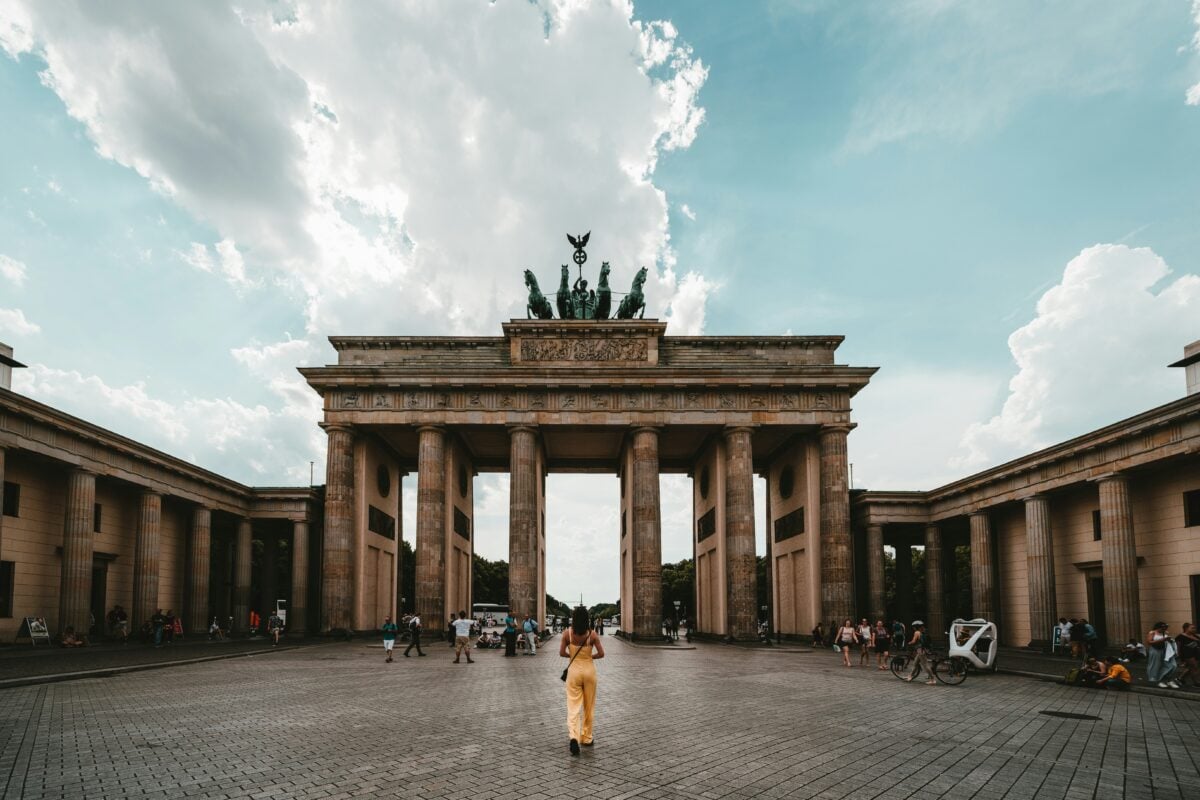
The Brandenburg Gate belongs to a different category entirely — less fortress, more symbol. Built in 1791, it never defended Berlin from invading armies, yet it witnessed more history than structures twice its age.
The twelve Doric columns support something more fragile than stone: the idea of passage between worlds. During the Cold War, the gate stood trapped in no-man’s land, neither East nor West but suspended between them.
The Quadriga sculpture on top — four horses pulling the goddess of victory — watched over a divided city for decades. When the Berlin Wall fell, people climbed all over those columns, celebrating not just political freedom but the simple right to walk through an open door.
The gate proves that some entrances become more powerful when they’re closed than when they’re open.
Jaffa Gate
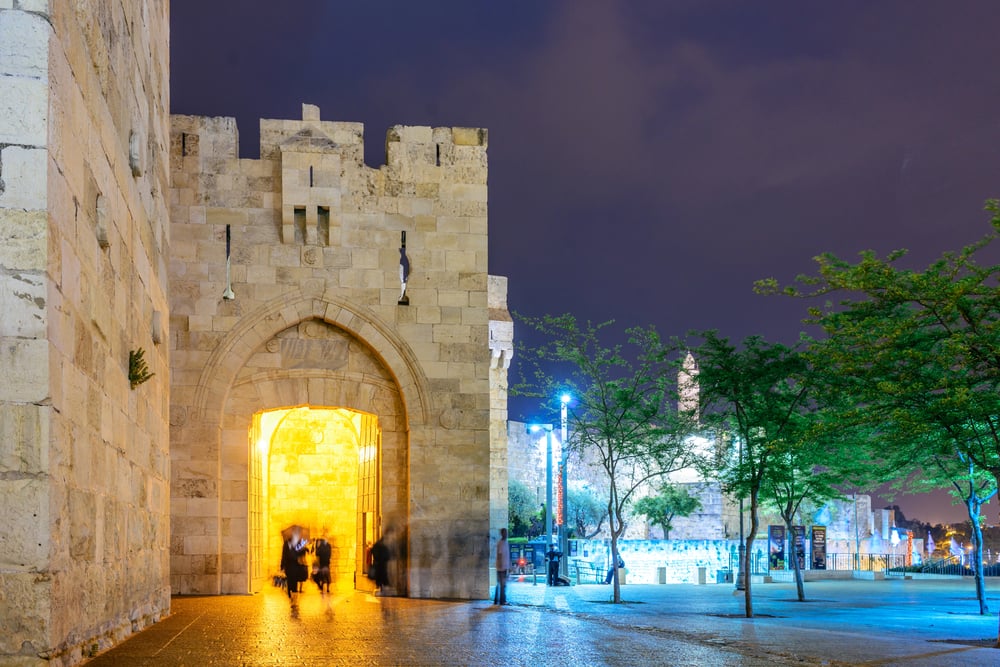
Jerusalem’s Jaffa Gate carries weight differently than other ancient entrances — not just the physical weight of Ottoman-era stones (though those are substantial enough, built by Suleiman the Magnificent in the 1530s to replace earlier fortifications), but the accumulated weight of every prayer, argument, celebration, and mourning procession that has passed beneath its arch. The gate faces west toward the ancient port of Jaffa, hence the name, and for centuries it served as the main entrance for pilgrims arriving from Europe and North Africa.
But here’s what makes it distinct: the breach in the wall next to the original gate, created in 1898 so Kaiser Wilhelm II could ride into the city in his carriage rather than dismount and walk through like everyone else. And that tells you something about gates — they’re democratic in a way that bothers certain people.
The stones themselves seem almost casual about their importance, weathered smooth by centuries of hands touching them for luck, for comfort, for connection to something larger than themselves.
Stadttor of Xanten
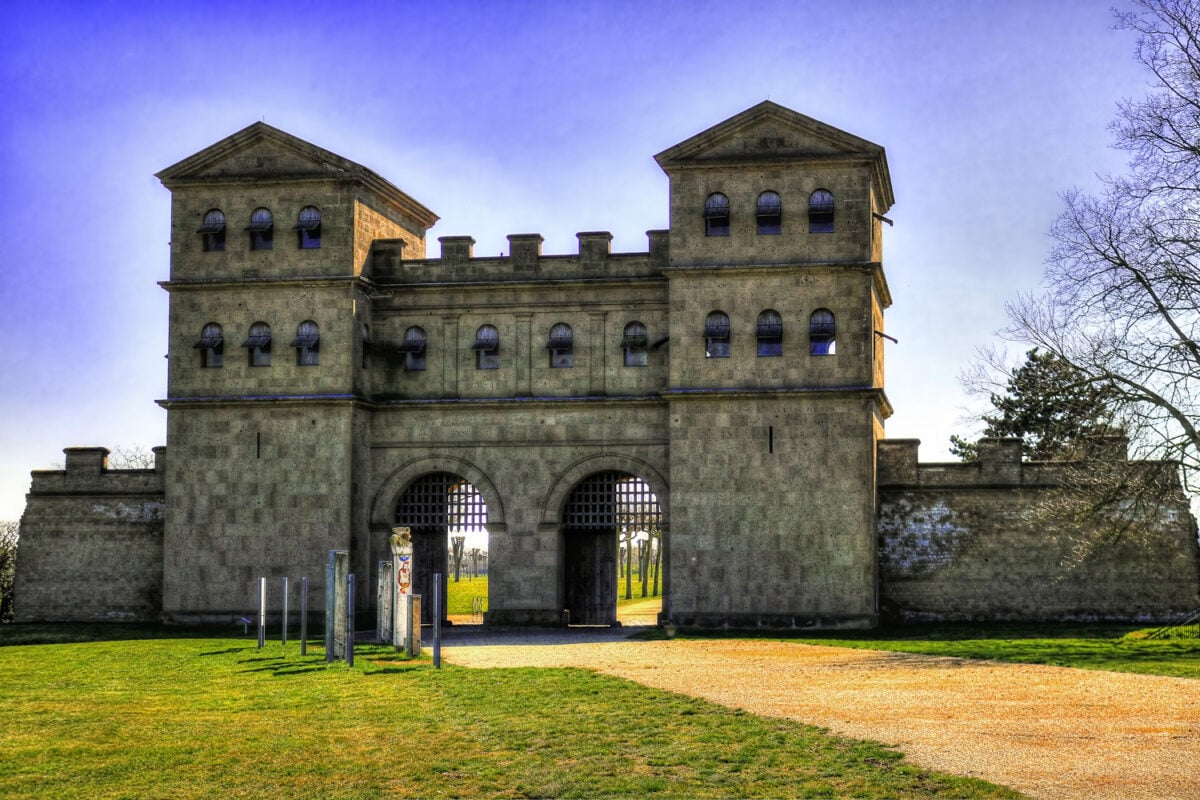
The Stadttor stands as Germany’s most perfectly preserved medieval city gate. Built in the late 14th century, it anchors Xanten’s defensive walls with the kind of practical elegance that medieval engineers perfected when they stopped trying to impress Romans.
Two round towers flank a central passage, creating a classic bottleneck design. Enemy forces approaching the gate faced arrow slits on three sides while defenders dropped unpleasant things from above.
The portcullis could slam shut in seconds, turning the entrance into a trap. Modern visitors walk through the same archway, though presumably with better intentions and certainly facing less scrutiny from the ramparts above.
Golden Gate of Constantinople
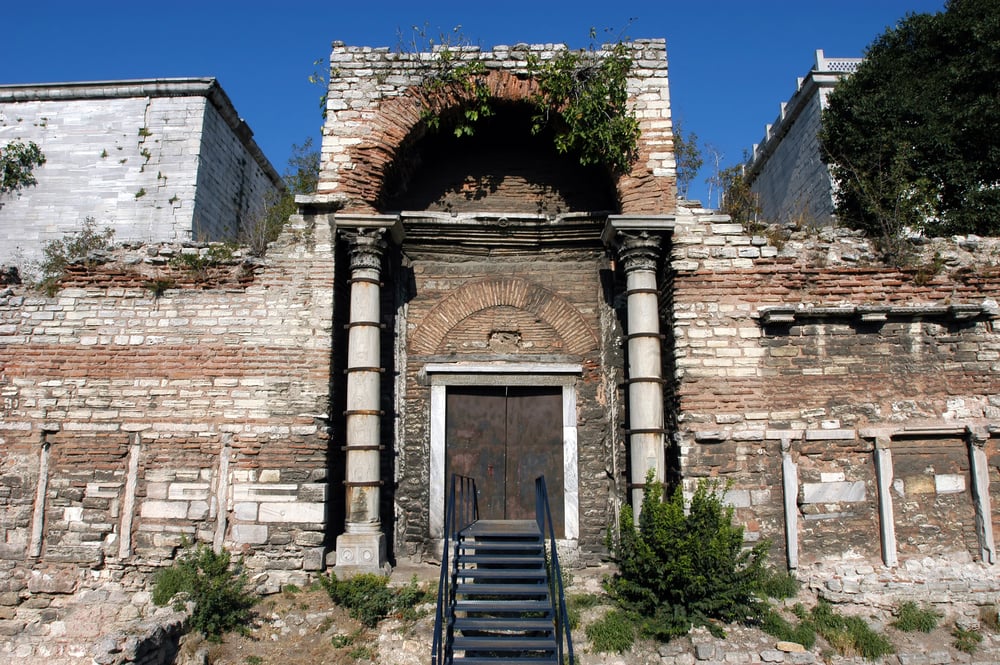
Built during the reign of Theodosius I (or possibly later, around the 5th century), this was the ceremonial entrance to the Byzantine capital — not for everyday traffic but for imperial processions, military triumphs, and state occasions that required maximum drama.
The gate was a theater of power. Emperors returning from successful campaigns passed through the Golden Gate while crowds cheered and petals fell from the ramparts above. The architecture itself became part of the performance, with three archways framed by marble columns and topped with bronze statues that caught the sunlight streaming off the Bosphorus.
Porta San Paolo
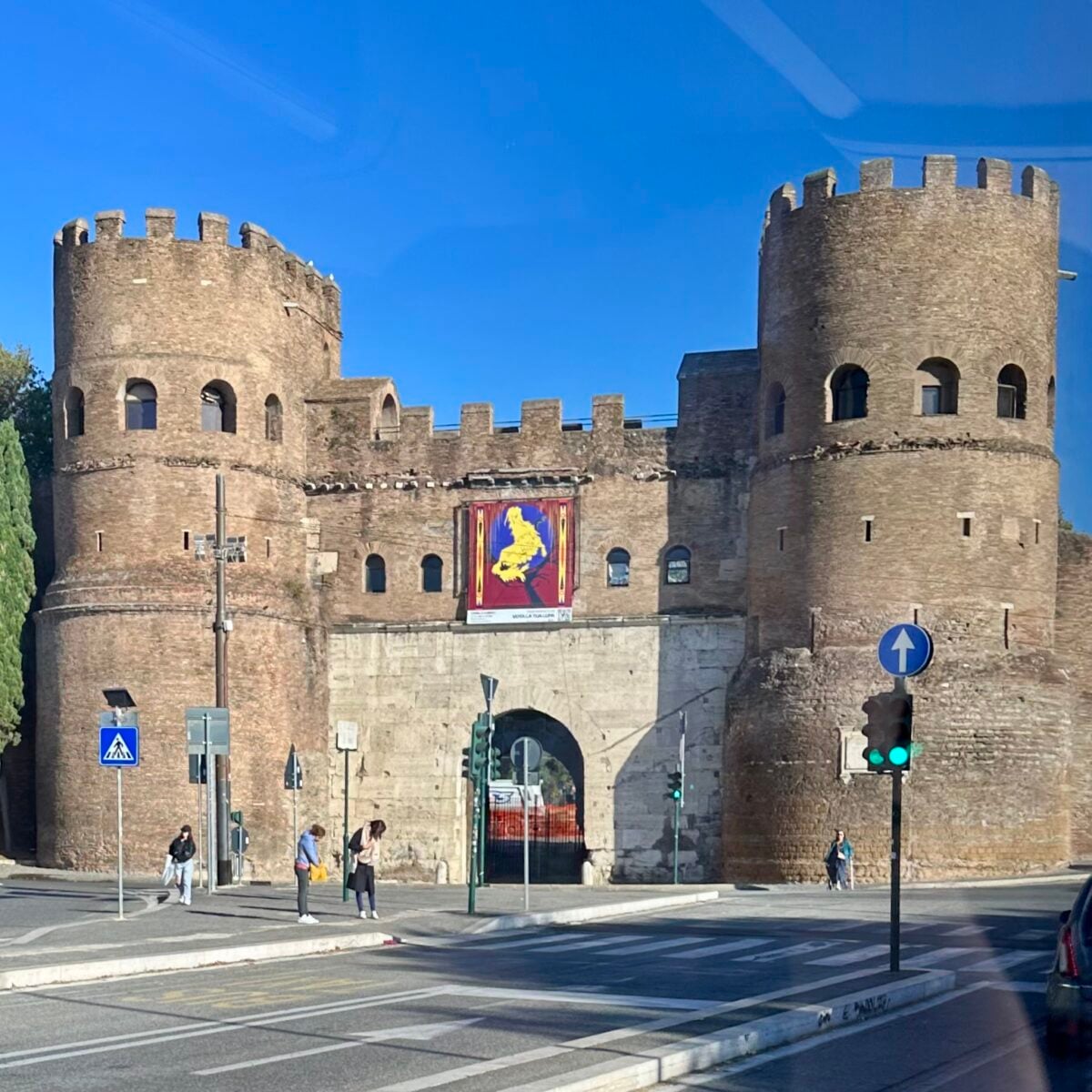
Rome’s Porta San Paolo guards the ancient road to the port of Ostia, and it still looks like it means business. It was built as part of the Aurelian Walls around 275 CE when the empire was getting genuinely nervous about barbarian raids and needed gates that could actually stop armies rather than just impress them).
The Aurelian Walls connected this gate to a defensive system that wrapped around the entire city, but Porta San Paolo got special attention because the Via Ostiense ran straight through it — control this gate and you controlled Rome’s food supply. Two massive drum towers flank the passage, their thick walls pierced with windows that served as archer positions, and the entire structure communicates a simple message that doesn’t require translation.
Even today, traffic passes between those towers, and drivers probably don’t realize they’re using the same route that Roman grain ships used to supply an empire. The gate survived because Romans built things to last, but also because later generations recognized something worth preserving.
Puerta de Alcalá
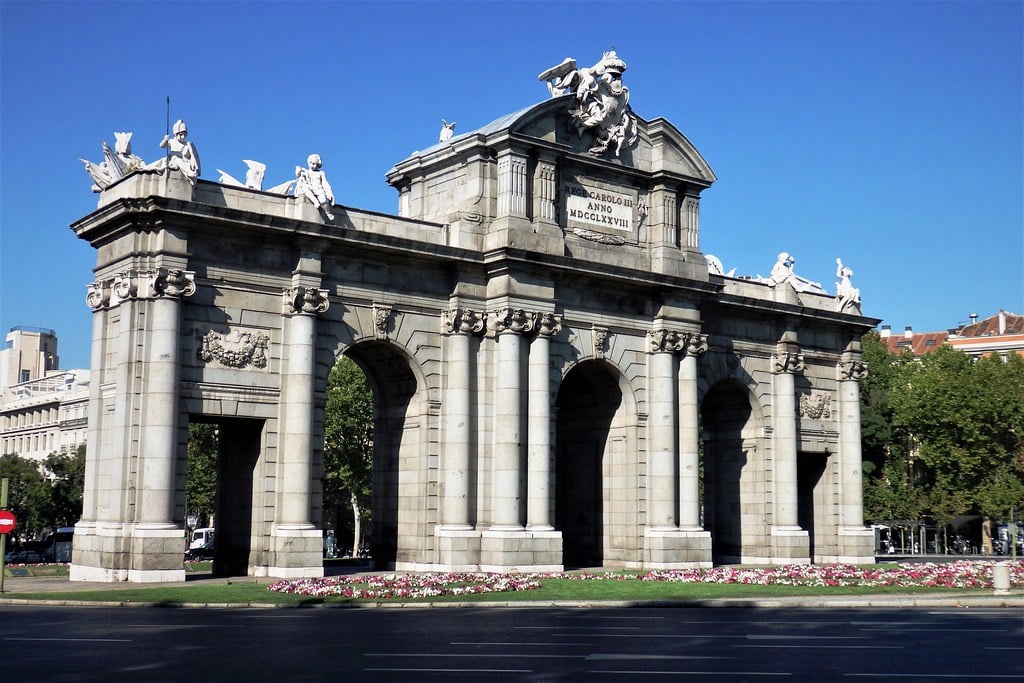
Madrid’s Puerta de Alcalá breaks the rules by design. Built in 1778 to replace an earlier gate, it deliberately abandoned medieval fortification principles in favor of pure neoclassical style. Five arches pierce a granite facade decorated with sculptures and royal crests — beautiful, welcoming, and completely useless for defense.
That was the point. By the late 18th century, Spanish kings wanted gates that celebrated culture and prosperity rather than military might.
The Puerta de Alcalá announced that Madrid was a modern European capital, confident enough to prioritize aesthetics over security. The gate stands today in the middle of a busy plaza, surrounded by traffic but still managing to look dignified despite the chaos.
Heuneburg Gate
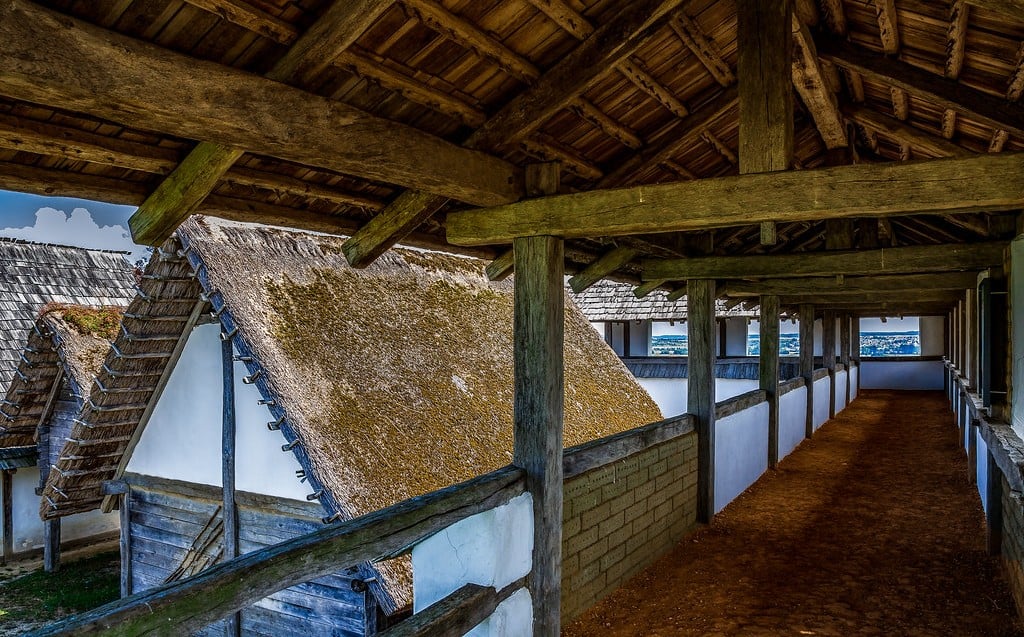
The Heuneburg Gate reaches back to a time when Celtic chieftains controlled trade routes along the upper Danube. Built around 600 BCE, this wooden and stone structure protected one of Iron Age Europe’s most important settlements.
What makes it remarkable isn’t grandeur — the gate was relatively modest — but survival against astronomical odds. Most Celtic settlements vanished without trace.
Wood rots, stones get reused, and memories fade. The Heuneburg survived because it was abandoned rather than destroyed, left to archaeological time instead of human recycling.
Reconstructed from foundation remains, the gate now offers a rare glimpse into pre-Roman European civilization, when local kings built their own version of monumental architecture.
Damascus Gate
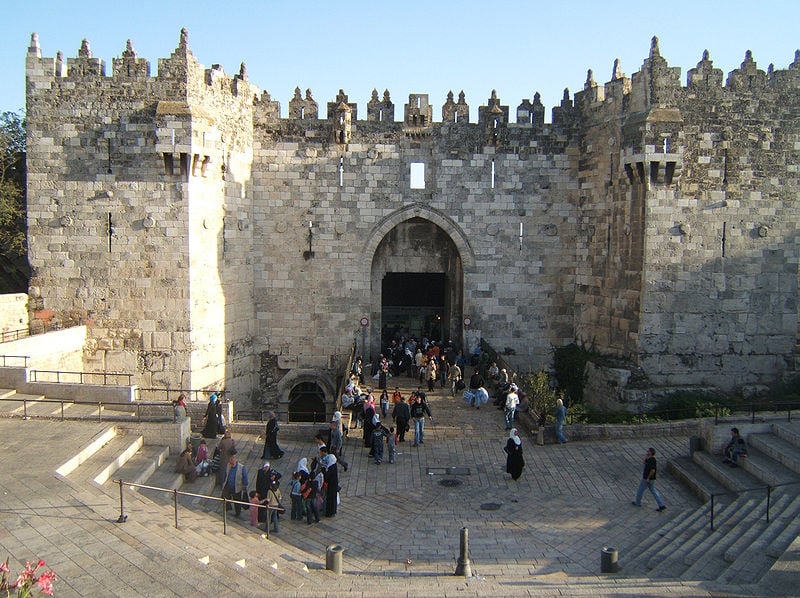
Jerusalem’s Damascus Gate operates like a small city unto itself, which has been true for centuries and shows no signs of changing despite occasional attempts by various authorities to impose order on what is fundamentally an organic marketplace that happens to occupy a 16th-century Ottoman fortification. Built by Suleiman the Magnificent around 1537 on the site of earlier Roman and Crusader gates, it faces north toward Damascus (hence the name), but more importantly, it faces toward the everyday life of Palestinian vendors who spread their wares along the stepped entrance, pilgrims clutching guidebooks and looking overwhelmed, tour groups following raised umbrellas, and local residents who navigate the chaos with practiced indifference.
The gate’s Arabic name, Bab al-Amud, refers to a column that once stood here during Roman times — layers of history compressed into a single entrance that somehow accommodates everyone. And every morning, the same vendors set up in the same spots their families have occupied for generations, as if the gate belongs more to them than to any empire that happened to build it.
Stephen’s Gate
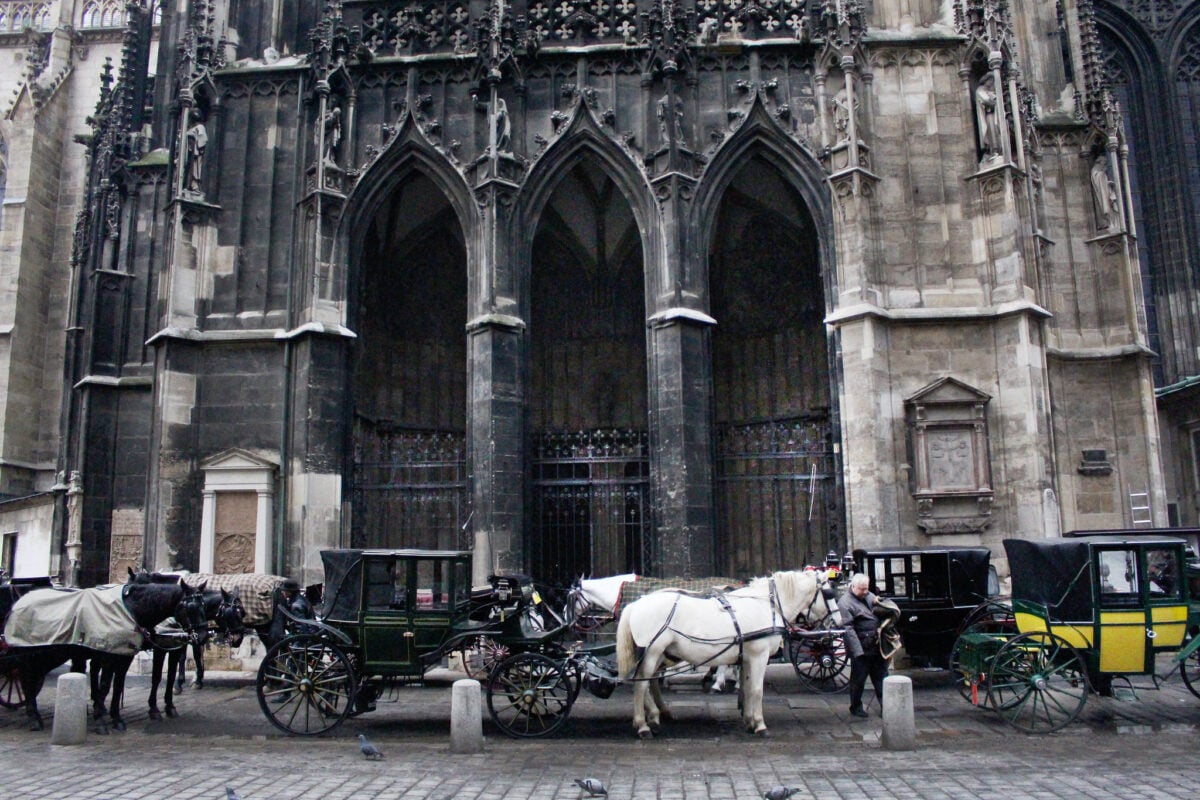
Vienna’s Stephen’s Gate no longer exists, but its ghost still haunts the city center where tourists photograph St. Stephen’s Cathedral without realizing they’re standing where medieval merchants once paid tolls to enter the city.
The gate was demolished in the early 19th century when Vienna decided walls were old-fashioned impediments to modern urban planning. This represents a common fate for city gates — victims of progress, traffic flow, and the simple desire for more space.
Most European cities tore down their medieval fortifications during the 18th and 19th centuries, trading historical character for commercial convenience. The irony cuts deep.
Cities that destroyed their gates now spend millions recreating a medieval atmosphere for tourists who want to experience the authentic past that was bulldozed for parking lots.
Gate of Xerxes
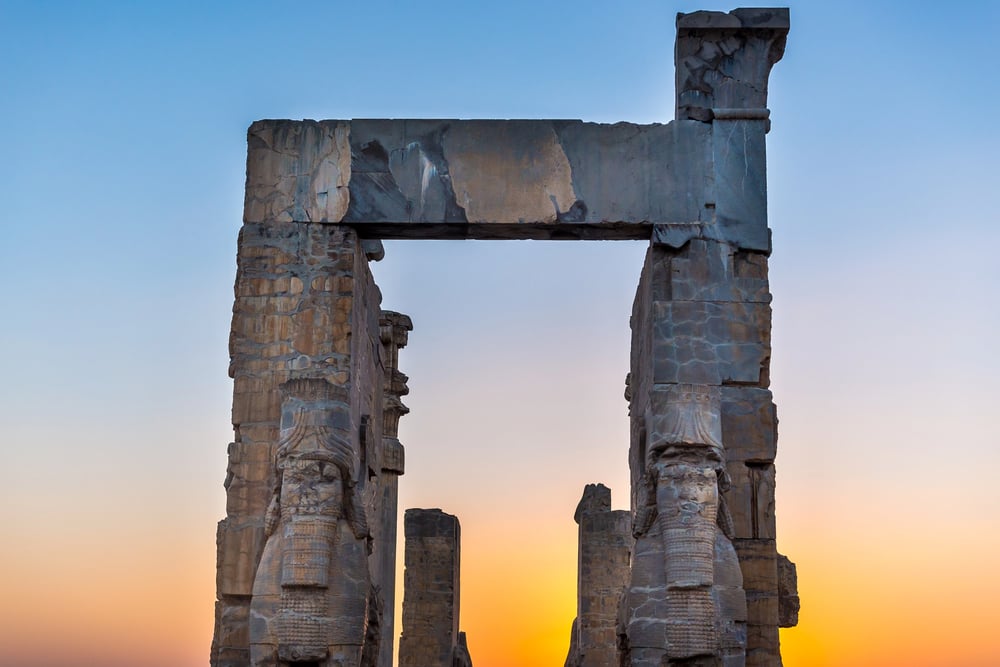
Persepolis holds the ruins of what might be history’s most ambitious entrance hall. The Gate of All Nations, built by Xerxes around 470 BCE, welcomed delegations from across the Persian Empire to the ceremonial capital where tribute was paid and loyalty renewed.
Massive stone bulls flanked the entrance, their wings spread wide and their human heads crowned with elaborate headdresses. The message was clear: this was where the civilized world came to acknowledge Persian supremacy.
Alexander’s soldiers burned Persepolis in 330 BCE, but the stone gate survived the flames. The bulls still stand guard over empty halls where no tribute will ever again be paid to the King of Kings.
Amber Gate
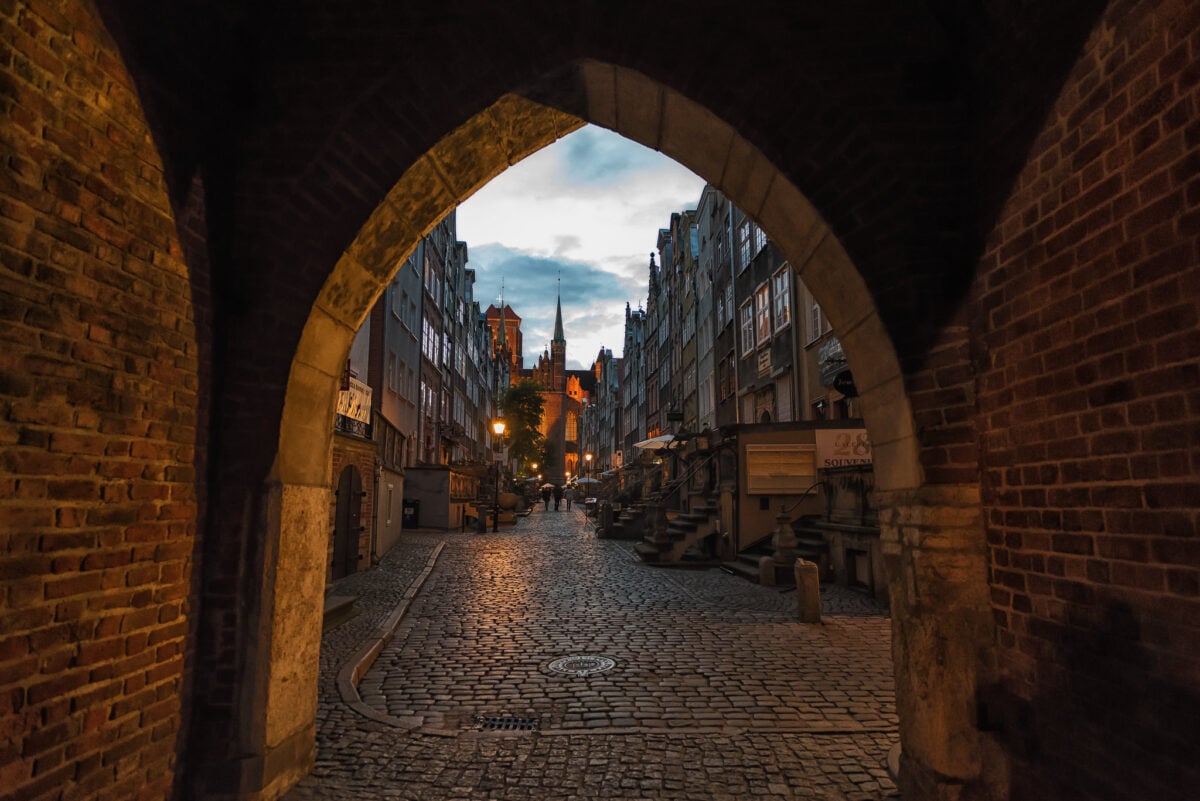
Gdansk’s medieval gates mostly disappeared during World War II, but the Golden Gate (often called the Amber Gate due to the city’s connection to Baltic amber trade) was reconstructed from wartime ruins. Built originally in the early 17th century, it marked the ceremonial entrance to the old city.
The rebuilding effort represents something deeper than architectural preservation. Post-war Gdansk needed symbols of continuity, proof that the city’s identity survived even total destruction. Reconstructing the gate meant reconstructing memory itself.
Today it anchors the Royal Way, a tourist route that follows the path medieval kings took when visiting the city. The stones are new, but the gesture remains ancient.
Water Gate
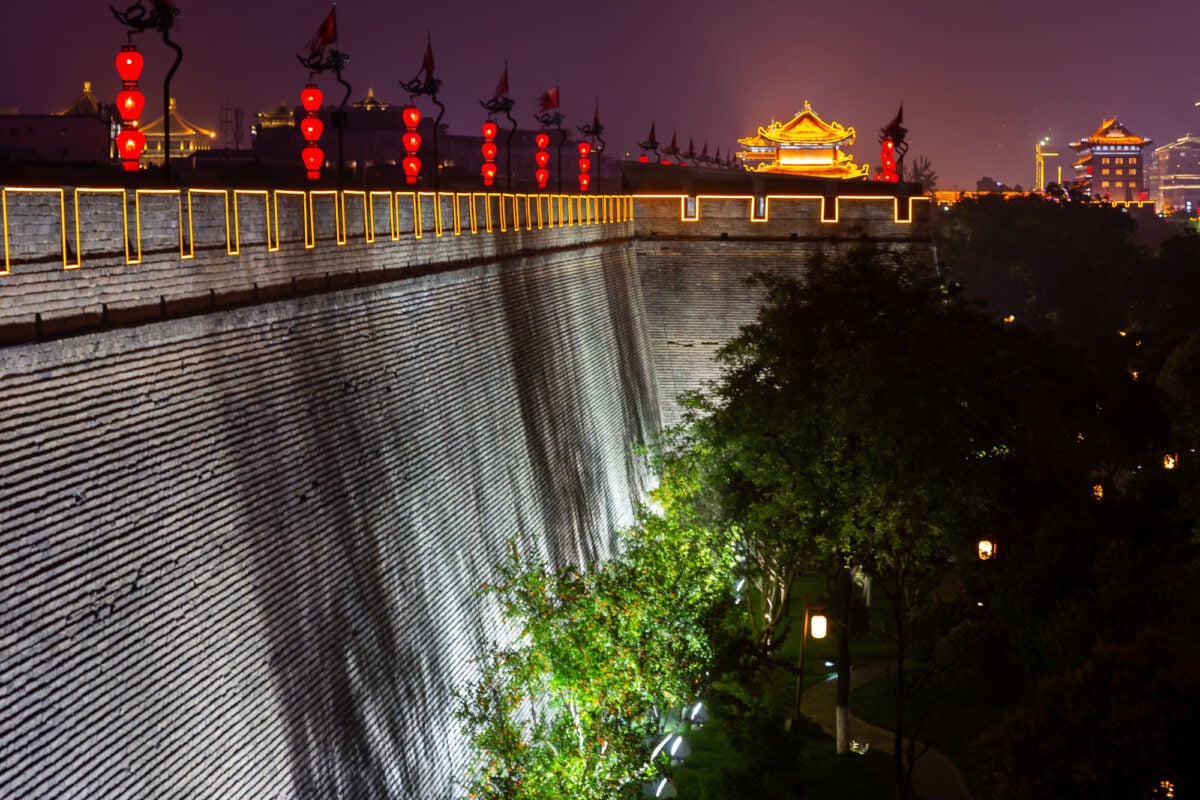
Xi’an’s ancient gates tell the story of China’s former capital through military architecture that evolved over dynasties. The South Gate, dating to the Ming Dynasty but built on Tang foundations, demonstrates how Chinese engineers solved the problem of monumental defense.
The gate complex includes multiple courtyards designed to trap attacking armies. Enemy forces that breached the outer gate found themselves in a killing ground, surrounded by walls and facing a second gate while defenders rained arrows from above.
The massive walls that connect these gates still encircle Xi’an’s old city, making it one of the world’s best-preserved examples of medieval urban fortification. Modern traffic passes through the same openings that once channeled the Silk Road.
Echoes in Stone
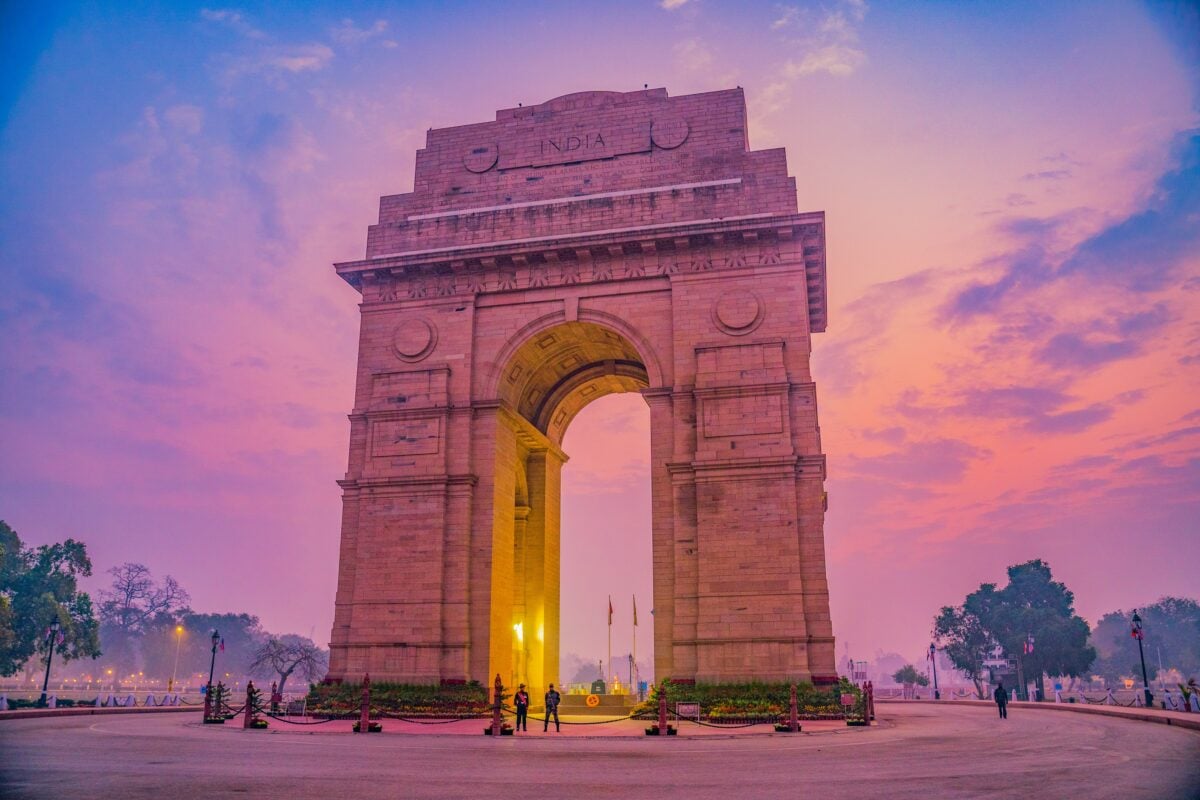
Walking through these surviving gates feels like reading history backwards — starting with what endured and imagining what was lost. Each entrance represents thousands that didn’t make it, doorways that crumbled into dust or disappeared under shopping centers and parking garages.
The gates that survived did so through luck as much as strength, preserved by accident of geography, changes in military technology, or simple stubborn refusal to disappear when empires collapsed around them. They remind us that every boundary is temporary, every wall eventually becomes a ruin, and every gate that once seemed permanent becomes a photograph in an article about things that used to exist.
The stones endure, but the cities they guarded transform beyond recognition, leaving these ancient doorways as monuments to the simple human desire to control who gets in and who stays out.
More from Go2Tutors!

- The Romanov Crown Jewels and Their Tragic Fate
- 13 Historical Mysteries That Science Still Can’t Solve
- Famous Hoaxes That Fooled the World for Years
- 15 Child Stars with Tragic Adult Lives
- 16 Famous Jewelry Pieces in History
Like Go2Tutors’s content? Follow us on MSN.