16 Bikes That Powered Cycling Legends
The greatest cyclists in history didn’t achieve their legendary status alone — beneath them were machines that became extensions of their bodies, tools that transformed human ambition into racing immortality. Some bikes were technological marvels that redefined what was possible on two wheels, while others were humble workhorses that simply refused to break under the pressure of greatness.
Here’s a list of the 16 bicycles that carried cycling’s most celebrated champions to victory and helped write the sport’s most memorable chapters.
Eddy Merckx’s Colnago Super
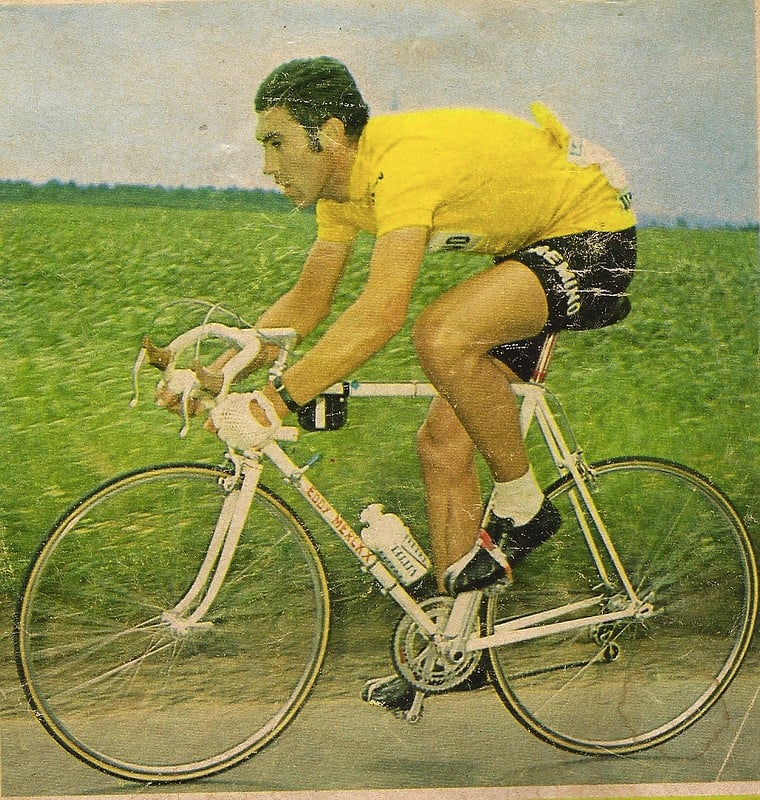
The Cannibal rode many bikes during his career, but his partnership with Colnago produced some of cycling’s most dominant performances. Custom geometry built specifically for his aggressive riding style.
Merckx demanded perfection from his equipment just as he demanded it from himself. The steel frame featured revolutionary tube shaping for the era, while the geometry allowed him to generate massive power while maintaining aerodynamic efficiency.
Those distinctive lugs became the signature of Italian craftsmanship.
Greg LeMond’s Look KG86

Carbon fiber revolutionized cycling when LeMond won the 1985 Tour de France aboard this French-made frame. The material was experimental, risky, and absolutely cutting-edge.
And it nearly didn’t work. Early carbon frames suffered catastrophic failures during races.
LeMond’s mechanics spent sleepless nights reinforcing the frame with additional layers of carbon. The gamble paid off with a Tour victory that proved lightweight materials could withstand the rigors of grand tour racing.
Miguel Indurain’s Pinarello

The Spanish time trial specialist rode custom Pinarellos during his five consecutive Tour de France victories. His massive frame required unique geometry that few manufacturers could accommodate.
Indurain’s power output was legendary among his peers — the bike needed to handle forces that would destroy normal racing frames. Pinarello’s engineers worked directly with him to create a machine that could channel his enormous strength into forward momentum.
The distinctive paint schemes became synonymous with Tour dominance.
Lance Armstrong’s Trek 5500

Before the controversy, Armstrong’s Trek partnership produced seven Tour de France victories. The OCLV carbon frame represented American engineering at its finest.
Trek’s wind tunnel testing gave Armstrong measurable advantages in time trials, where seconds determined overall victory. The company developed new carbon layup techniques specifically for his riding style.
Every tube was oriented to maximize stiffness while minimizing weight.
Fausto Coppi’s Bianchi

The Italian champion’s celeste-colored Bianchi became an icon of 1940s and 1950s cycling. Steel craftsmanship from an era when frames were built by artisans rather than machines.
Coppi’s elegance on the bike matched his equipment’s aesthetic beauty. Bianchi’s frame builders understood that cycling was as much art as sport.
The geometry created a riding position that looked effortless even during the most brutal mountain stages. Classic proportions that modern bikes still reference.
Bernard Hinault’s Gitane
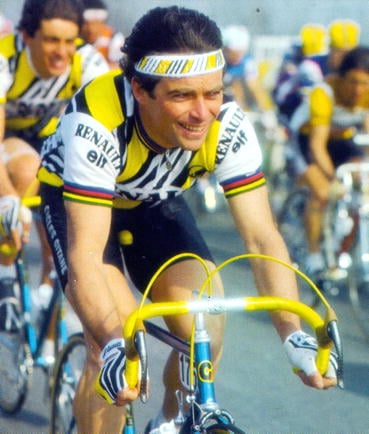
The Badger’s aggressive racing style found its perfect match in French steel. Gitane frames were built for riders who attacked constantly and never showed weakness.
Yellow and blue team colors. Hinault’s bike featured slightly steeper angles than most competitors preferred, allowing him to generate explosive accelerations that dropped rivals on steep climbs.
The rigid frame transmitted every watt of his considerable power directly to the road.
Tom Simpson’s Peugeot
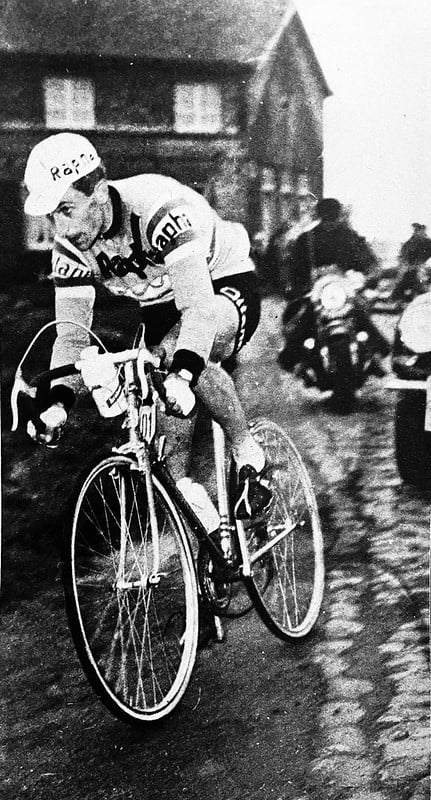
British cycling’s first Tour de France stage winner rode classic French steel during the 1960s. Simpson’s tragic death on Mont Ventoux made this bike part of cycling folklore.
Peugeot’s racing department built frames that prioritized durability over weight savings — a philosophy that served professional riders well during an era of poor road surfaces and minimal support. Simpson’s bike survived one of cycling’s most demanding decades largely unchanged.
Francesco Moser’s hour record Pinarello

The Italian’s 1984 hour record attempt required a completely revolutionary approach to bicycle design. Aerodynamics suddenly mattered more than traditional aesthetics.
Disc wheels. Bullhorn handlebars. Radical frame geometry.
Moser’s bike looked like science fiction compared to traditional racing machines. The hour record fell twice in quick succession as Moser proved that equipment innovation could overcome pure physiological limitations.
Marco Pantani’s Bianchi Mega Pro XL

The Pirate’s climbing dominance came aboard the featherweight Italian carbon. His tiny frame required custom geometry that most manufacturers couldn’t accommodate properly.
Still gives goosebumps. Pantani’s dancing climbing style needed a bike that responded instantly to his rhythm changes.
Bianchi created a frame so light that UCI weight limits became a consideration for the first time in professional cycling. The pink and celeste paint job became legendary during his Tour-Giro double.
Chris Boardman’s Lotus 108

British engineering met Olympic gold at the 1992 Barcelona Olympics. The carbon fiber pursuit bike looked more like aerospace technology than traditional cycling equipment.
Lotus Formula 1 engineers applied their aerodynamic expertise to create cycling’s most radical machine. The monocoque frame eliminated traditional tubing entirely.
Boardman’s pursuit of victory proved that marginal gains in equipment could produce major improvements in performance.
Graeme Obree’s Old Faithful
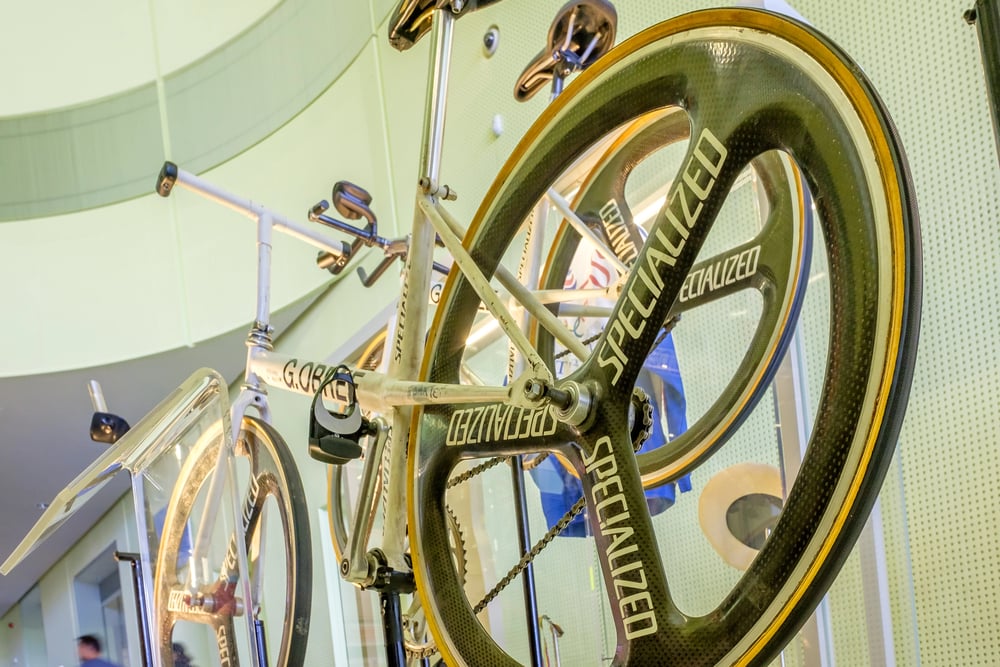
The Flying Scotsman built his own time trial bike using washing machine parts and scrap metal. His hour record attempts redefined what was possible with unconventional thinking.
Obree’s position was so radical that cycling’s governing body banned it after his records. The bike itself was crude by professional standards but perfectly suited to his unique physiology.
Sometimes innovation comes from necessity rather than budget.
Sean Kelly’s Vitus 979
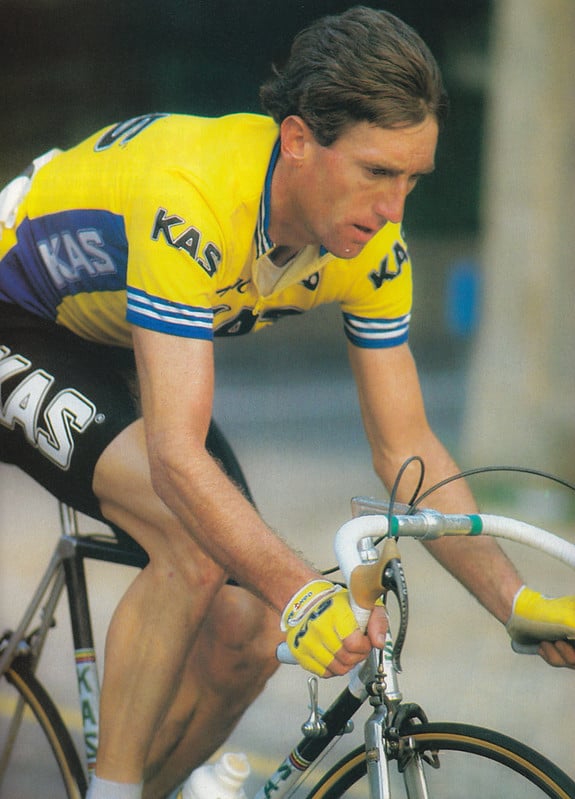
The Irish hardman’s classics victories came aboard aluminum frames when most professionals still rode steel. Vitus pioneered bonded aluminum construction during the 1980s.
Kelly’s spring classics campaigns were legendary, and his Vitus frames needed to handle cobblestone punishment that destroyed lesser equipment. The distinctive silver finish became synonymous with one-day racing excellence.
Aluminum’s stiffness suited his powerful sprinting style perfectly.
Laurent Fignon’s System U Gitane

The Professor’s two Tour de France victories showcased French engineering during cycling’s transitional period. His academic approach to training extended to meticulous equipment preparation.
Fignon demanded perfection from his mechanics — every component was measured, weighed, and optimized for specific race conditions. His Gitane frames featured subtle modifications that improved comfort during three-week stage races.
The yellow bar tape became his signature during Tour victories.
Stephen Roche’s Battaglin

The Irishman’s 1987 Triple Crown came aboard custom Italian steel frames built specifically for his physiology. Battaglin’s frame geometry allowed Roche to excel in time trials and mountain stages equally.
And what a year it was. Tour de France, Giro d’Italia, and World Championship victories all came aboard the same basic frame design.
Battaglin’s craftsmanship provided the consistency Roche needed during cycling’s most demanding season. Only five riders have ever achieved the Triple Crown.
Greg LeMond’s TVT 92

The American’s comeback story included this radical carbon fiber time trial bike. TVT’s French engineers created a machine designed purely for aerodynamic efficiency.
LeMond’s 1989 Tour victory margin was eight seconds — the closest in Tour history. His TVT time trial bike provided crucial advantages during the final day’s race against time.
The distinctive tri-spoke wheels and aerodynamic frame became symbols of American cycling’s golden era.
Merckx’s hour record De Rosa

Eddy Merckx’s 1972 hour record required a machine built specifically for sustained power output at maximum effort. De Rosa created a masterpiece of steel craftsmanship.
The track bike featured the stiffest frame De Rosa had ever built, designed to handle Merckx’s enormous power without flexing. Every component was chosen for efficiency rather than comfort.
The hour record stood for twelve years, proving that rider and machine had achieved perfect harmony.
Legends and Their Steel Companions
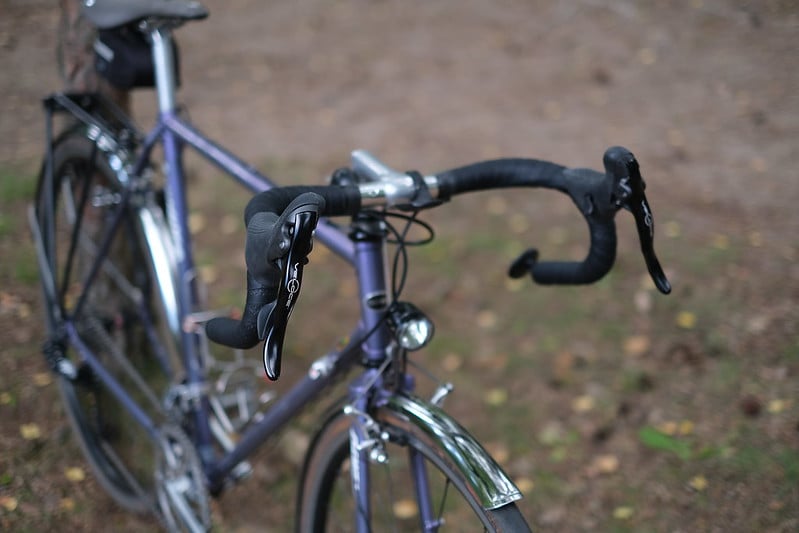
These machines represent more than transportation — they were partners in greatness, silent witnesses to cycling’s most transcendent moments. Whether forged from steel, molded from carbon, or hammered from aluminum, each bike became an extension of its rider’s will, transforming human dreams into mechanical reality and proving that sometimes the perfect tool makes all the difference between victory and defeat.
More from Go2Tutors!

- The Romanov Crown Jewels and Their Tragic Fate
- 13 Historical Mysteries That Science Still Can’t Solve
- Famous Hoaxes That Fooled the World for Years
- 15 Child Stars with Tragic Adult Lives
- 16 Famous Jewelry Pieces in History
Like Go2Tutors’s content? Follow us on MSN.