16 Film Soundtracks That Were Better Than the Movie Itself
Cinema history is filled with moments where composers created musical masterpieces for films that didn’t quite reach the same heights. Sometimes a brilliant score elevates an otherwise forgettable film, becoming the lasting legacy that audiences remember long after the credits roll.
Here is a list of 16 film soundtracks that ultimately overshadowed the movies they were created to complement.
Tron: Legacy
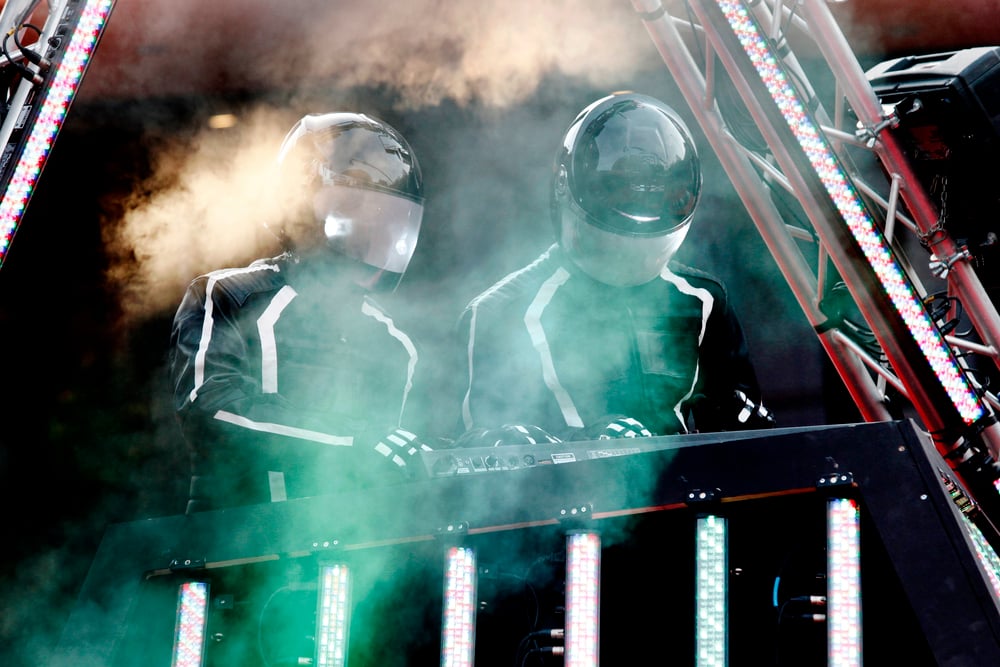
Daft Punk’s electronic symphony for this Disney sequel created a sonic landscape that perfectly captured both retro-gaming nostalgia and futuristic digital worlds. The French duo spent nearly two years crafting the score, blending orchestral arrangements with their signature electronic sound to create something truly groundbreaking.
While the film itself received mixed reviews for its plot holes and pacing issues, the soundtrack album peaked at number four on the Billboard 200 and has become a reference point for electronic music in film.
The Village

M. Night Shyamalan’s 2004 thriller may have disappointed audiences with its divisive twist ending, but violinist Hilary Hahn’s performances on James Newton Howard’s score remain hauntingly beautiful. The violin-centered compositions evoke a sense of pastoral isolation and hidden danger that the film struggled to consistently maintain.
Howard’s melancholic themes, particularly ‘The Gravel Road,’ have found life beyond the film, appearing in trailers and commercials for completely unrelated projects.
Like Go2Tutors’s content? Follow us on MSN.
Last of the Mohicans

Trevor Jones and Randy Edelman’s epic score features one of the most recognizable pieces of film music ever created. The main theme, ‘Promentory,’ with its driving percussion and soaring strings, has become synonymous with adventure and determination.
The film itself is a decent historical action movie, but the music transcends the material, evoking the American frontier with a power that has made it a favorite for sports montages and inspirational videos for decades afterward.
The Fountain

Clint Mansell worked with the Kronos Quartet and post-rock group Mogwai to compose a profoundly poignant, understated soundtrack for Darren Aronofsky’s ambitious but imperfect examination of love and death. The soundtrack builds to the poignant crescendo of “Death is the Road to Awe” by tying together motifs from three different timeframes.
The score has garnered a devoted fan base and influenced innumerable composers in both film and modern classical music, despite the movie’s uneven critical reception and lackluster commercial performance.
Interstellar

Hans Zimmer’s organ-centered score for Christopher Nolan’s space epic contains some of the composer’s most inspired work, particularly in the track ‘Mountains.’ The music captures both the vastness of space and the intimate human emotions at the heart of the story.
While the film itself divides opinions with its scientific liberties and emotional manipulation, the soundtrack stands as a perfect marriage of classical influence and modern techniques that many consider Zimmer’s masterpiece.
Like Go2Tutors’s content? Follow us on MSN.
The Great Gatsby

Baz Luhrmann’s flashy adaptation of F. Scott Fitzgerald’s classic novel received mixed reviews for its style-over-substance approach, but its soundtrack executive produced by Jay-Z was universally praised. The inspired blend of 1920s jazz with contemporary hip-hop and pop from artists like Lana Del Rey, Florence + the Machine, and The xx created a musical bridge between eras.
The soundtrack debuted at number two on the Billboard 200, with Lana Del Rey’s ‘Young and Beautiful’ becoming an unexpected wedding favorite.
Oblivion

M83’s partnership with Joseph Trapanese introduced a retro-futuristic electronic score that brought the eye-popping visual spectacle of the film into full concord while injecting an emotional richness lacking from the script in some places. The sweeping ‘StarWaves’ and vocal theme ‘Oblivion’ sung by Susanne Sundfør instantly became electronic music classics overnight.
Tom Cruise’s science fiction filmmaking foray was ruthlessly trashed by critics for being too derivative in narrative, yet the score itself still impacts both electronic music and film scoring.
It Follows

Disasterpeace (Rich Vreeland) created a synth-heavy score that pays homage to John Carpenter while establishing its own unsettling identity. The music for this indie horror film amplifies the sense of inescapable dread with its pulsing electronics and distorted textures.
While the movie itself was well-received by critics, the soundtrack has gained an even larger following, influencing a revival of synth-based horror scores and electronic music in general.
Like Go2Tutors’s content? Follow us on MSN.
Sunshine

John Murphy’s score for Danny Boyle’s uneven sci-fi film builds from delicate piano pieces to the now-iconic ‘Adagio in D Minor,’ a piece so emotionally powerful it has been repurposed in countless trailers, commercials, and other films. The soundtrack combines electronic and orchestral elements to create a sense of both wonder and terror.
Despite the film’s tonal shift in its final act which disappointed many viewers, the music maintains its emotional throughline flawlessly.
The Social Network

Trent Reznor and Atticus Ross won an Oscar for their unsettling, electronic score that perfectly captures the cold ambition and digital isolation at the heart of Facebook’s creation story. The opening track, ‘Hand Covers Bruise,’ with its simple piano melody over unsettling ambient textures, immediately established a new sound for digital-age storytelling.
While David Fincher’s film was critically acclaimed, the soundtrack has had an even more profound influence on how modern stories about technology are scored.
Drive

Cliff Martinez’s atmospheric score, combined with memorable synth-pop songs from Kavinsky and College, created a neon-soaked soundscape that defined the film’s cool, detached aesthetic. The soundtrack album became a cultural phenomenon that introduced many listeners to the synthwave genre and sparked a revival of 1980s electronic music styles.
While Nicolas Winding Refn’s stylish crime drama has its devoted fans, many more people have embraced its music than have actually seen the film.
Like Go2Tutors’s content? Follow us on MSN.
Blade Runner

Vangelis created what might be the definitive electronic film score with his synthesizer compositions for Ridley Scott’s sci-fi noir. The soundtrack’s blend of electronic textures, jazz influences, and ambient soundscapes defined the sound of dystopian future films for decades to come.
While the film initially underperformed and received mixed reviews before being recognized as a classic years later, the music was immediately acknowledged as revolutionary and has influenced countless electronic musicians.
The Theory of Everything

Jóhann Jóhannsson’s delicate, piano-driven score for this Stephen Hawking biopic conveys complex emotions with deceptive simplicity. The composer used subtle electronic processing and minimalist techniques to mirror both the elegance of mathematical theories and the complexity of human relationships.
Though some criticized the film for sanitizing Hawking’s life story, the soundtrack stands as one of recent decades’ most beautiful and emotionally resonant scores.
The Assassination of Jesse James by the Coward Robert Ford

Nick Cave and Warren Ellis created a haunting, elegiac score dominated by violin and piano that perfectly captures the film’s themes of myth-making and disillusionment. The mournful ‘Song for Jesse’ has become a concert staple for the duo.
Despite the film’s critical acclaim, its deliberate pacing and nearly three-hour runtime limited its audience. At the same time, the soundtrack has found a much wider appreciation among both film music enthusiasts and indie music fans.
Like Go2Tutors’s content? Follow us on MSN.
Requiem for a Dream
Clint Mansell’s ‘Lux Aeterna’ from this Darren Aronofsky film is one of the most recognized and repurposed pieces of film music in recent memory. The driving strings and electronic elements create an irresistible tension that perfectly mirrors the characters’ spiraling addictions.
While the film’s unflinching portrayal of addiction makes it difficult for many viewers to revisit, the soundtrack has taken on a life of its own, appearing in trailers, sporting events, and concert halls worldwide.
The Thin Red Line

Hans Zimmer’s meditative score for Terrence Malick’s poetic war film creates a sense of transcendence amidst the horrors of battle. The composer incorporated nature sounds and indigenous music influences to complement Malick’s philosophical approach to the war narrative.
While the film’s experimental structure and lengthy runtime made it less accessible than more traditional war films released the same year, the soundtrack stands as a powerful artistic statement about humanity’s relationship with nature and violence.
The Musical Legacy

Movie soundtracks have the rare capacity to go beyond their initial intent and establish themselves as independent cultural icons. These 16 instances show how composers can occasionally produce timeless musical compositions that survive the movies they were intended to accompany, demonstrating that sometimes the most enduring art comes from teamwork, even when the ultimate result is imperfect.
Like Go2Tutors’s content? Follow us on MSN.
More from Go2Tutors!

- 18 Unexpectedly Valuable Collectibles You Might Have Lying Around
- 20 Little-Known Historical Battles That Had Huge Consequences
- 20 Historical Artifacts That Scientists Can’t Explain
- 15 Inventions That Were Immediately Banned After Being Created
- 20 Actors Who Were Almost Cast in Iconic Roles
Like Go2Tutors’s content? Follow us on MSN.



