16 “Firsts” in History That Went Disastrously Wrong
History loves a good success story. The Wright brothers taking flight, Alexander Fleming discovering penicillin, Neil Armstrong stepping onto the moon — these moments get the spotlight, the monuments, the chapter headings in textbooks. But for every triumph that changed the world, there’s a spectacular failure that did the same thing, just not in the way anyone intended.
Being first doesn’t guarantee being right. Sometimes the pioneers who blazed new trails ended up walking straight off a cliff, taking others with them. These aren’t small stumbles or minor miscalculations — these are the catastrophic debuts that left destruction in their wake, the inaugural disasters that make you wonder how anyone thought they were a good idea in the first place.
The First Submarine Attack
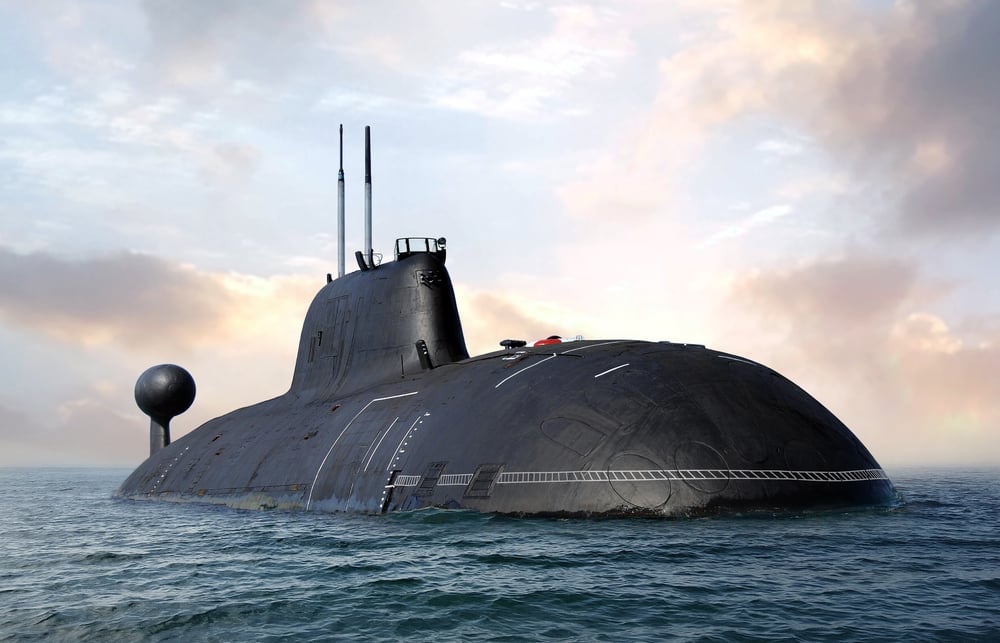
The Turtle made history in 1776 as the first submarine to attempt an attack on an enemy vessel. It failed completely. Sergeant Ezra Lee spent hours trying to drill a pit in the hull of HMS Eagle in New York Harbor, only to discover that the ship’s copper plating was too thick for his equipment. The drill bit broke, the mission was scrapped, and Lee barely escaped with his life when British forces spotted him on the surface.
The whole contraption was essentially a wooden barrel with a propeller operated by hand cranks. Lee had to work the pedals to move forward while simultaneously operating a hand drill above his head, all while holding his breath in a space barely large enough for one person. The Turtle never successfully attacked anything and was abandoned after a few more failed attempts.
The First Parachute Jump

André-Jacques Garnerin made the first successful parachute jump from a balloon in 1797, but the landing was anything but smooth (and the very concept, when you think about it, seems like something dreamed up by someone who had spent far too much time staring at falling leaves and wondering if humans could do the same thing — which is to say, it seems like the kind of idea that makes perfect sense right up until you’re actually falling through the air with nothing but silk between you and the ground). The parachute had no vent at the top, so it swung violently from side to side during the descent, making Garnerin violently airsick and nearly killing him when he crashed into a field outside Paris. Spectators rushed to help, expecting to find a corpse, but Garnerin had survived — barely.
The oscillation was so severe that witnesses described it as watching a man being “shaken like a leaf in a hurricane.” Garnerin’s innovative leap forward in human flight was also a masterclass in motion sickness. But here’s the thing about being first: even when everything goes wrong, even when the landing breaks your ribs and leaves you vomiting in a French field, it still counts as a breakthrough. And it was still better than his wife’s first jump, which came later and involved her parachute catching fire mid-descent.
The First Steam-Powered Car Accident
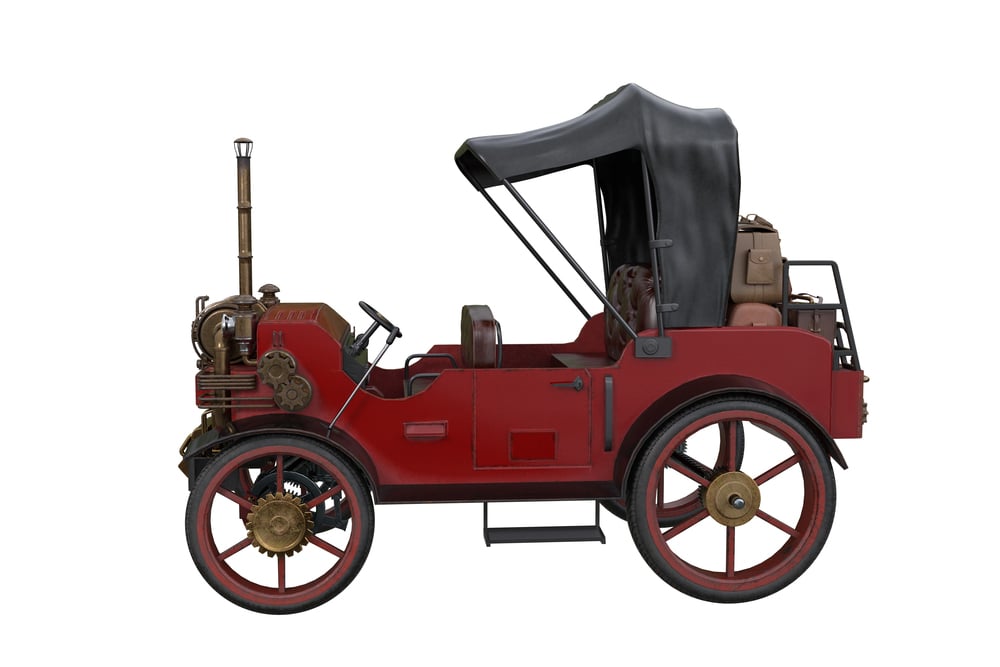
Nicolas-Joseph Cugnot built the first steam-powered vehicle in 1769 and promptly crashed it into a wall. The three-wheeled contraption could barely steer, had no brakes, and required the driver to stop every fifteen minutes to build up steam pressure. On its maiden voyage through Paris, Cugnot lost control and demolished a stone wall, earning him the distinction of causing both the first automobile accident and the first automotive insurance claim.
The vehicle moved at the blistering speed of 2.3 miles per hour — slower than a walking pace — yet still managed to be completely uncontrollable. This was progress, technically speaking, but the kind of progress that makes you question whether staying put might be the better option.
The First Public Demonstration Of Anesthesia

The first public demonstration of surgical anesthesia at Massachusetts General Hospital was a humiliating failure. On January 20, 1845, dentist Horace Wells attempted to demonstrate nitrous oxide anesthesia during a tooth extraction — but the patient cried out in pain, and the audience left convinced that anesthesia was a hoax.
The surgeon, John Collins Warren, proceeded without anesthesia while a room full of medical professionals watched the patient writhe in agony. The audience left convinced that anesthesia was a hoax. Morton had overslept, missing what should have been his moment of triumph. He eventually got another chance and proved that ether worked, but that first demonstration was a disaster that almost derailed one of medicine’s most important advances.
When Morton finally did demonstrate ether successfully, Warren famously declared, “Gentlemen, this is no humbug” — which tells you how badly the first attempt had damaged everyone’s expectations. Sometimes being first means being forgotten for all the wrong reasons.
The First Flight Across The English Channel
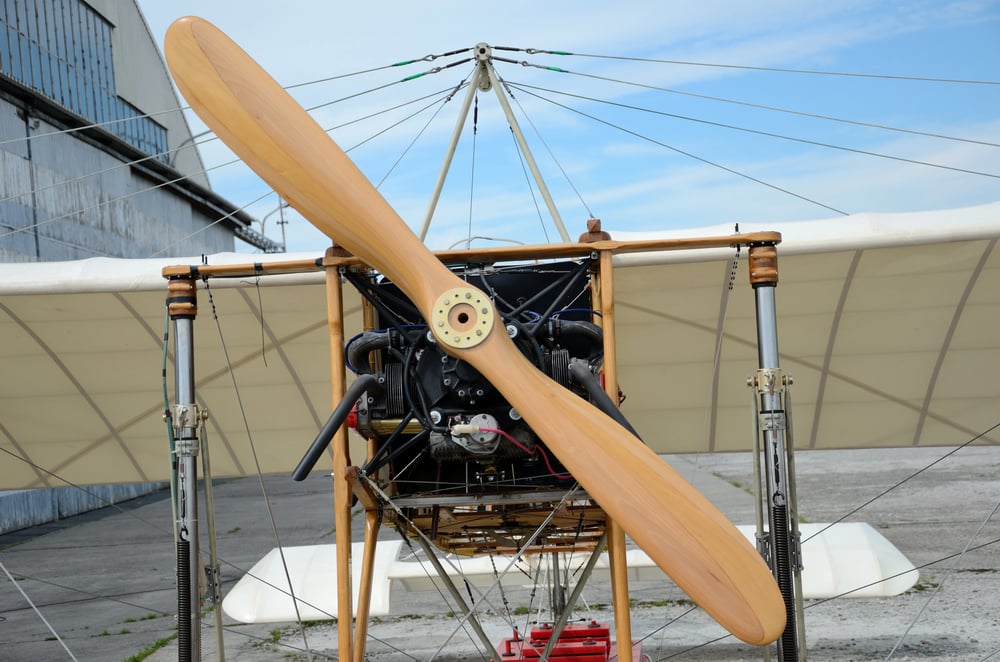
Louis Blériot’s historic 1909 flight across the English Channel was a triumph of aviation — except for the part where he had no idea where he was going, couldn’t see land for most of the journey, and only found the coast of England because he followed another ship that happened to be heading in the right direction (though calling it a “triumph” might be generous, given that Blériot spent most of the 37-minute flight completely lost in fog, with no compass, no map, and no real plan beyond “fly toward England and hope for the best” — which, when you consider that he was essentially strapped to a motorized kite held together with wire and optimism, seems less like careful planning and more like elaborate method of attempting to drown in the English Channel). He crash-landed near Dover on the English coast, destroying his aircraft, but technically made it across, which was enough to claim the prize money and the historical footnote.
The “navigation system” consisted of Blériot leaning out of his aircraft and trying to spot landmarks through the fog. He had no radio, no instruments, and no backup plan. That he made it at all was pure luck. But the crash landing broke his propeller, damaged his landing gear, and left him stranded on a beach with no way to get home — which seemed like a reasonable price to pay for proving that the English Channel was no longer an impenetrable barrier, even if the method involved more guessing than actual flying skill. So much for precision.
The First Television Broadcast

The first television broadcast was technically successful but practically useless. John Logie Baird’s 1926 demonstration transmitted a flickering image of a ventriloquist’s dummy named “Stooky Bill” across a few feet of space in his London laboratory. The image was barely recognizable, the resolution was terrible, and the whole system required so much light that it would have blinded any human subject — hence the dummy.
Baird’s mechanical television used a spinning disk with pits to scan images, producing a picture with just 30 lines of resolution. Modern televisions have over 1,000 lines. The result looked like a ghostly shadow moving behind frosted glass. It was revolutionary and completely impractical at the same time.
The First Electric Chair Execution

The first execution by electric chair was supposed to be quick and humane. Instead, it was a gruesome spectacle that took eight minutes and two separate jolts of electricity to kill William Kemmler in 1890. The first shock knocked him unconscious but didn’t kill him, leaving witnesses horrified as he began to revive, gasping and moaning on the chair.
The executioner had to apply a second, longer shock that literally cooked Kemmler’s body, filling the room with smoke and the smell of burning flesh. Witnesses fled the chamber, and newspapers called it “a disgrace to civilization.” The botched execution nearly ended the use of the electric chair before it began.
The First Motorized Flight

You might think this refers to the Wright brothers, but they weren’t first. That honor belongs to Gustav Whitehead, who allegedly flew a powered aircraft in Connecticut in 1901 — two years before Kitty Hawk. The problem is that Whitehead’s flight ended with him crashing into a building, destroying his aircraft, and injuring himself badly enough that he never attempted another flight.
No photographs exist of the flight, only newspaper accounts that may have been exaggerated. Whitehead’s aircraft was never successfully flown again, and he abandoned aviation entirely after the crash. Being first doesn’t count for much when nobody can prove it happened and the results were too disastrous to replicate.
The First Rocket Launch

Robert Goddard launched the first liquid-fueled rocket in 1926, and it traveled a whopping 41 feet before crashing into a cabbage patch (which sounds almost quaint, like something you’d find in a children’s book about a kindly inventor and his backyard experiments, until you realize that Goddard was essentially playing with controlled explosions powerful enough to level his entire neighborhood — and the rocket’s brief, parabolic journey from launch pad to vegetable garden was less “charming mishap” and more “barely avoided catastrophe”). The flight lasted 2.5 seconds and reached the altitude of a two-story building. Goddard’s neighbors complained about the noise and the fire hazard, and local authorities nearly banned his experiments.
The rocket was about as tall as a person and packed with enough explosive fuel to take out half the block if something went wrong. Which it did, just not in the way anyone expected. Instead of exploding, it simply fell over like a drunk person trying to do a handstand. The fact that it flew at all was remarkable; the fact that it destroyed someone’s dinner vegetables was probably inevitable. And yet this pathetic flight into a cabbage patch was the beginning of the space age — though the cabbages probably didn’t appreciate their role in history.
The First Transatlantic Telegraph Cable
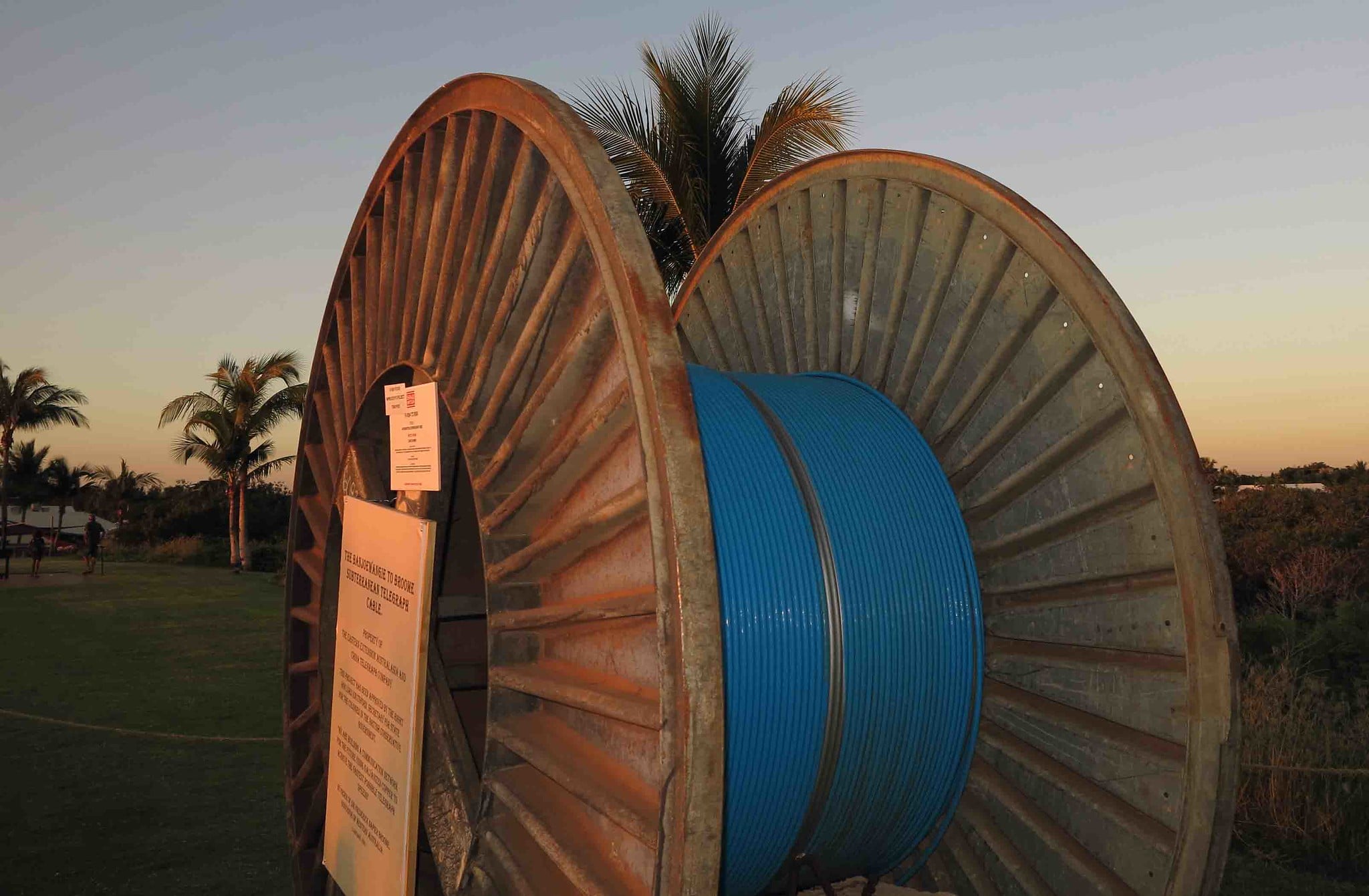
The first transatlantic telegraph cable was completed in 1858 after years of effort and enormous expense. It worked for exactly 23 days before failing completely. The cable had been damaged during installation, and the insulation deteriorated rapidly in seawater, causing signal quality to degrade until messages became unintelligible.
The final message transmitted was “Please repeat, as your dispatch is unintelligible.” Then the cable went silent forever. It took eight more years and several more failed attempts before a reliable transatlantic cable was successfully laid. The first attempt cost millions of dollars and achieved nothing except proving that laying cables across oceans was far harder than anyone had imagined.
The First Nuclear Power Plant Accident

The first nuclear power accident happened just four minutes after the first nuclear reactor achieved sustained nuclear fission. On December 2, 1942, Enrico Fermi’s Chicago Pile-1 experienced an unexpected power surge that could have caused a meltdown in the middle of Chicago. Fermi manually shut down the reactor by inserting control rods by hand — there were no automated safety systems.
The reactor was built under the stands of a football stadium at the University of Chicago, with no containment structure and no evacuation plan. If Fermi hadn’t been able to manually control the reaction, the resulting disaster could have irradiated downtown Chicago. The first nuclear reaction was also nearly the first nuclear disaster, separated by just a few minutes and one physicist’s quick thinking.
The First Public Movie Screening

The Lumière brothers’ first public film screening in 1895 was a disaster, but not for technical reasons (the footage itself was fine — workers leaving a factory, a train arriving at a station, everyday scenes that moved across a white sheet in ways that defied everything audiences thought they understood about reality). The problem was that audiences had never seen moving pictures before and genuinely believed they were watching real events unfold. When the film showed a train approaching the camera, the audience panicked and fled the theater, convinced they were about to be run over by an actual locomotive.
The Lumières had to stop the screening and calm the audience, explaining that the images weren’t real but simply recordings of real events. Even then, some audience members remained suspicious and refused to return to their seats. What should have been a triumphant debut of cinema instead became a lesson in managing mass hysteria. The medium that would eventually become the most popular form of entertainment in the world started with people running for the exits in terror.
The First Powered Helicopter Flight

Paul Cornu achieved the first manned helicopter flight in 1907, lifting himself about one foot off the ground for 20 seconds before crashing. His helicopter was completely unstable, impossible to control, and dangerous enough that he never attempted another flight. The machine used two counter-rotating rotors but had no way to control direction or altitude beyond hoping for the best.
Cornu’s helicopter was more of a vibrating disaster than a flying machine. It shook so violently that bolts came loose during flight, and the pilot had no way to steer except by shifting his weight — which didn’t work. After his brief, terrifying flight, Cornu abandoned helicopter development entirely and went back to building bicycles.
The First Motor Race

The first organized motor race, the Paris-Rouen race of 1894, was supposed to showcase the reliability and speed of horseless carriages. Instead, it proved that early automobiles were fragile, unreliable, and slower than horses. Only 21 of the 102 registered vehicles actually started the race, and only 17 finished. Most of the others broke down, ran out of fuel, or crashed before reaching the halfway point.
The winning vehicle averaged just 11 miles per hour over the 78-mile course — barely faster than a walking pace. Several participants had to stop to make major repairs, and one vehicle caught fire. The race was meant to prove that automobiles were ready to replace horses, but it mostly demonstrated that horses were still the better option for reliable transportation.
The First Radio Broadcast

Guglielmo Marconi’s first transatlantic radio broadcast in 1901 was supposed to transmit the letter “S” in Morse code from England to Newfoundland. What actually happened remains a subject of debate because the signal was so weak and distorted that it’s unclear whether Marconi actually received anything at all, or just heard atmospheric static and convinced himself it was the signal he was expecting.
The “successful” transmission may have been wishful thinking rather than actual communication. Marconi’s equipment was primitive, the atmospheric conditions were poor, and no independent observers could confirm that the signal had been received. It took several more years of development before reliable transatlantic radio communication was actually achieved.
The First Jet Aircraft Flight
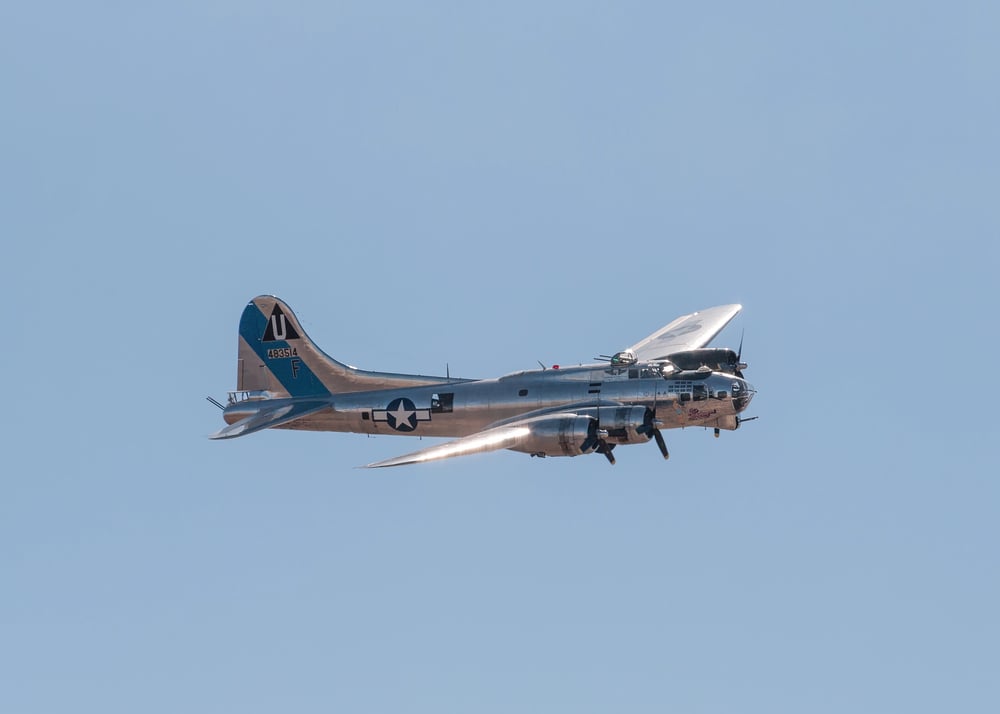
The first jet aircraft flight lasted 12 minutes and ended with the pilot making an emergency landing because the engine kept surging and threatened to tear itself apart. Hans von Ohain’s HeS 3B turbojet engine, fitted to a Heinkel He 178, flew on August 27, 1939, but barely. The engine was unstable, the fuel consumption was enormous, and the aircraft was slower than conventional propeller planes of the time.
The pilot reported that the engine sounded like it was about to explode throughout the flight, and the vibrations were so severe they loosened instruments in the cockpit. The historic flight proved that jet propulsion worked, but also that it needed years more development before it would be practical. The first jet age began with a pilot wondering if he was going to make it back to the ground alive.
When First Means Worst
There’s something almost comforting about these disasters. They remind you that progress isn’t a straight line from ignorance to enlightenment, but more like a drunken stumble from one catastrophe to a slightly better catastrophe. The pioneers who achieved these historic firsts weren’t visionaries who saw the future clearly — they were people willing to try things that seemed impossible, even when the results were embarrassing, dangerous, or both.
Maybe that’s what real innovation looks like: not the polished success stories we celebrate, but the spectacular failures that taught everyone what not to do next time. These weren’t just firsts — they were first drafts of the future, written by people brave enough or foolish enough to find out what would happen when nobody knew what would happen.
More from Go2Tutors!

- The Romanov Crown Jewels and Their Tragic Fate
- 13 Historical Mysteries That Science Still Can’t Solve
- Famous Hoaxes That Fooled the World for Years
- 15 Child Stars with Tragic Adult Lives
- 16 Famous Jewelry Pieces in History
Like Go2Tutors’s content? Follow us on MSN.