Elevator Facts That Change How You See Them
Elevators are everywhere. Most people step into one without thinking twice, hitting a button and waiting for the doors to slide shut.
But these metal boxes that carry us up and down buildings every day have stories that most riders never imagine. Let’s take a closer look at what makes these everyday machines more interesting than anyone gives them credit for.
The close door button doesn’t actually work in most elevators
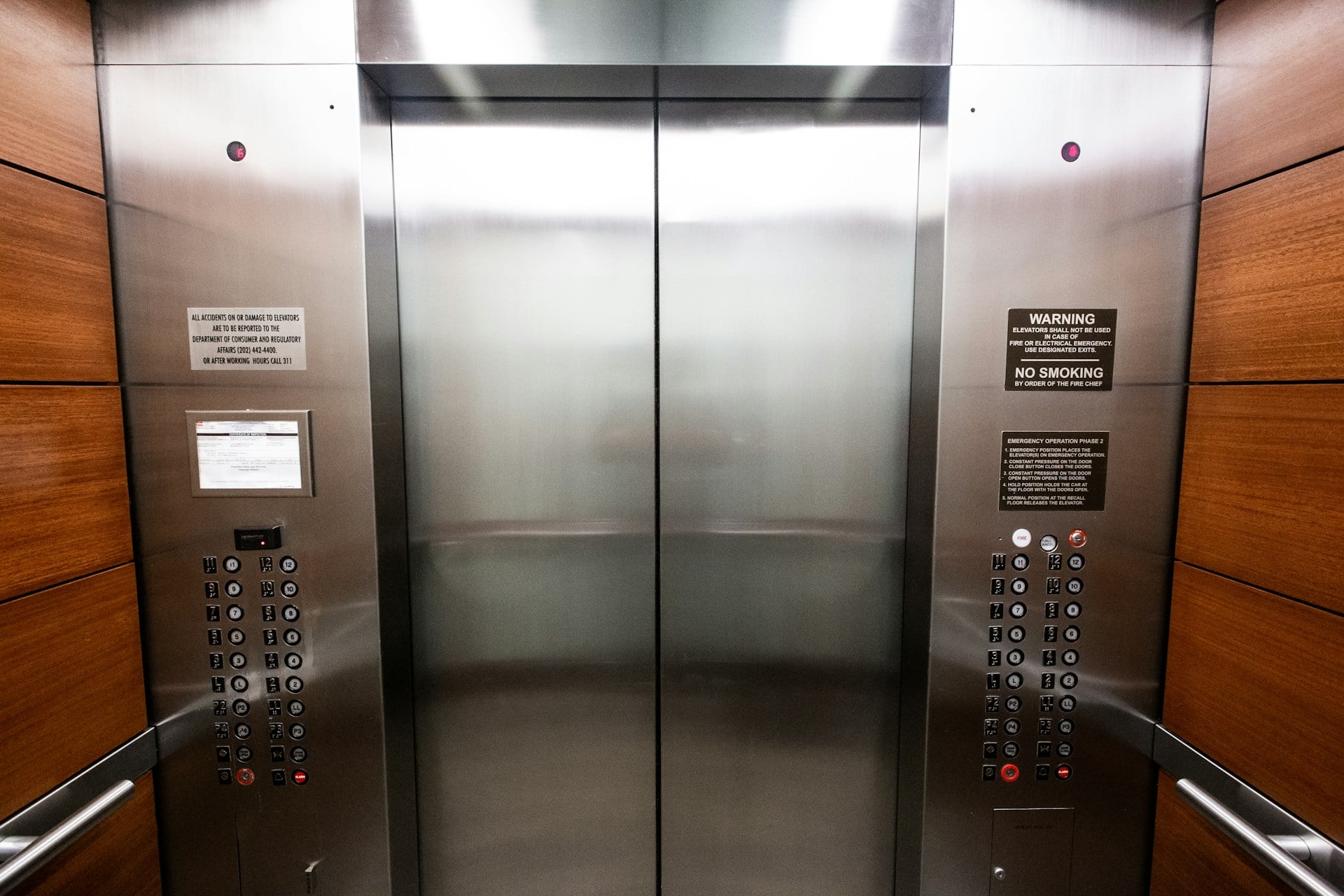
That button everyone frantically presses when they’re running late? It’s often completely useless.
In the United States, the Americans with Disabilities Act requires elevator doors to stay open long enough for people with mobility issues to enter safely. Most elevators made after the 1990s have close door buttons that are either disconnected or only work with a special key.
The button exists mainly to give impatient passengers something to do while they wait. It’s a placebo that makes people feel like they have control over the situation.
Elevators are safer than stairs by a huge margin
Walking up or down stairs is actually way more dangerous than taking an elevator. About 12,000 people die from stairway falls each year in the United States alone.
Meanwhile, elevator-related deaths number around 30 annually, and most of those involve maintenance workers, not regular passengers. The odds of dying in an elevator are about one in 10 million.
People worry about cables snapping or getting stuck, but statistically speaking, the stairs they avoid by taking the elevator pose a much bigger threat to their safety.
The first elevator safety brake was demonstrated by cutting the cable

Elisha Otis changed everything in 1854 at a New York exhibition. He stood on a platform high above a crowd and ordered an assistant to cut the rope holding him up with an axe.
The crowd gasped as the platform dropped, then immediately stopped just a few feet down. His automatic safety brake had worked perfectly, catching the platform before disaster struck.
That single demonstration convinced people that elevators could be safe for passengers, not just freight. Without that dramatic moment, skyscrapers as we know them probably wouldn’t exist.
Some elevators skip the 13th floor entirely

Triskaidekaphobia, the fear of the number 13, has convinced building designers to pretend an entire floor doesn’t exist. Many buildings jump from the 12th floor straight to the 14th floor in their elevator numbering.
The 13th floor usually still exists as a physical space, but it gets labeled as 14. Some buildings take it even further and skip any floor with a 4 in Asian buildings, since that number sounds like the word for death in several languages.
Residents and workers on the “14th floor” are really on the 13th, whether they realize it or not.
Elevator music exists because silence made people uncomfortable

The term “elevator music” comes from a real phenomenon that started in the 1920s. Early elevators were slow, and people found the silence awkward when they were packed into a small space with strangers.
A company called Muzak began providing piped-in music specifically designed to be pleasant but forgettable. The slow, instrumental versions of popular songs helped calm nervous passengers who weren’t used to being suspended in the air.
Eventually, this same concept spread to waiting rooms, grocery stores, and anywhere else businesses wanted to influence the mood of their customers.
The world’s fastest elevator travels at 46 miles per hour
The Shanghai Tower in China houses an elevator that rockets upward at speeds that would earn a ticket on many highways. This elevator can climb 1,898 feet in under a minute, taking passengers from the ground floor to the 119th floor before they finish checking their phone.
The cabin is pressurized like an airplane to keep ears from popping during the rapid ascent. Engineers had to design special systems to reduce the air resistance and vibration that come with moving a box full of people at highway speeds through a vertical tunnel.
Ancient Romans had a working elevator powered by humans and animals

The Colosseum in Rome featured an elaborate system of elevators that brought gladiators and wild animals up to the arena floor for entertainment. Slaves and animals turned massive wheels and pulleys beneath the structure, lifting platforms through trapdoors in the floor.
Archaeological evidence shows at least 28 of these lifts operated simultaneously during shows. The Romans called these devices “hoists,” and they were sophisticated enough to create dramatic surprise entrances that wowed audiences.
Modern reconstructions have proven that the ancient designs actually worked remarkably well for their time.
Elevator cables can hold way more weight than necessary
The steel cables supporting an elevator are built with ridiculous amounts of redundancy. A typical passenger elevator has between four and eight cables, and each one can support the full weight of the elevator car by itself.
Most elevators could lose all but one cable and still operate safely. The cables are made of multiple strands of steel wire twisted together, making them incredibly resistant to breaking.
Even if a cable somehow snapped, the safety brakes would kick in immediately and stop the car from falling.
Double-decker elevators exist in some skyscrapers

Imagine an elevator with two cars stacked on top of each other, moving together through the same shaft. These space-saving designs are used in super tall buildings where traditional elevators would take up too much valuable real estate.
One car serves odd-numbered floors while the other serves even-numbered floors. Passengers have to know which level to enter based on their destination, which confuses tourists but makes perfect sense to daily commuters.
The system allows buildings to transport more people using fewer elevator shafts, freeing up space for offices or apartments.
The highest outdoor elevator rises over 1,000 feet up a cliff
The Bailong Elevator in China’s Zhangjiajie National Forest Park is built into the side of a massive cliff face. This glass elevator travels 1,070 feet up the vertical rock wall, offering views that make most passengers grip the handrails tightly.
It can carry 50 people per trip and was built to reduce the environmental damage caused by tourists hiking the paths. The structure sparked controversy when it opened because critics argued it ruined the natural landscape.
But it remains one of the most spectacular elevator rides on Earth, combining engineering achievement with breathtaking scenery.
Elevators come with unique unwritten habits depending on where you are

Different cultures come with hidden guidelines for how to act in elevators – rules tourists usually aren’t aware of. In Japan, whoever’s nearest the panel tends to press floors for others, kind of stepping into a quick helper role.
Germans generally avoid chatting during the ride, seeing it as quiet time spent together without words. Across certain Middle Eastern regions, men let women go ahead when getting on or off, yet elsewhere folks just move based on who arrived first.
Not following these subtle norms won’t spark drama, still, residents tend to spot when outsiders miss the unspoken cues.
The longest lift trip lasts more than 180 seconds

The lift inside Jeddah Tower – still being built in Saudi Arabia – will one day claim the title for longest continuous climb. Once done, it’ll carry people more than three minutes straight from bottom to viewing platform.
Regular elevator trips usually run half a minute up to a full sixty, making this stretch seem endless by comparison. To fight off dull moments, creators added video displays along with mood-setting lights.
Since going up that far shifts air pressure fast, engineers must fine-tune cabin conditions so riders don’t feel odd.
Elevators used to need people who knew how to run them

Back in the day, before machines took over lifts during the ’50s, someone sat inside each one, running it by hand. Instead of buttons, they worked a handle or crank to match the floor – needed good timing plus steady hands.
Hitting the mark just right? That’s where workers showed off their craft. Thousands held these jobs, often backed by tight-knit worker groups fighting for rights.
Over time, tech moved them aside fast, leaving only traces behind. Even now, a few fancy hotels keep operators around – not because they’re needed, but ‘cause guests like the old-school feel.
Some elevators can detect when too many people are inside

Nowadays lifts come with smart scales spotting if things get too heavy, then they beep or say something. Once it’s overloaded, the lift won’t budge till folks step out until it’s light enough again.
Certain models notice even a single extra person among ten others just fine. That setup stops ropes from straining too much while helping brakes stay reliable.
If you’ve heard that alarm mid-ride, you know how everyone shifts around uneasily – trying to figure out who stays behind.
Elevator shafts can work like big flues when a fire starts

When a blaze hits a structure, elevator tubes may shoot smoke and warmth skyward quick – thanks to something known as the stack phenomenon. Warm air floats up on its own, while the lift chute acts like a straight-up path where fumes sprint from bottom levels to top ones in no time flat.
That’s the reason rescue crews insist folks take steps when things go wrong, not lifts under stress. Newer constructions pack tech that drags elevators down to set stories once alarms blare, locking shut the entrances.
On its own, the tube turns into a flue capable of becoming fatal if someone’s stuck mid-way as soot climbs.
The globe’s initial lift for people just went up five levels

Back in 1857, when Otis put in his first passenger lift at a NYC shop, folks saw it as something amazing – though it rose just 40 feet. This ride across five levels lasted around sixty seconds, which was way more sluggish compared to taking steps.
Still, shoppers enjoyed the new ease of it; particularly ladies wearing long gowns, since stair climbing tired them out. According to the shop’s boss, higher-floor sales jumped after customers didn’t have to hike upstairs anymore.
Just this one setup showed lifts could make money, sparking a business that’d change building design for good.
Space elevators could actually happen within 100 years

Scientists plus engineers are now testing ideas for lifts going from ground level up to orbiting bases far above Earth. These imagined systems might rely on cords built from nano-carbon stuff or similar tough components tied down to a floating base at sea.
Cargo along with passengers could move via cabin units driven by magnetic engines rather than rocket fuel. It feels like movie fantasy, yet the basic science holds together.
The biggest hurdle? Making stuff tough enough to hold up its own weight over huge spans. In case space elevators actually happen, then costs for getting into orbit might drop well past 90%.
What makes these metal containers still count

Elevators changed life way more than folks think. Because of them, we started building upward – cities turned from wide-out places into tight stacks climbing skyward.
Moving people smoothly between floors unlocked ideas architects couldn’t touch before the 1850s. Each time you squeeze into that small metal room, you’re riding a machine that rewired how we live and lay out our world.
Once you know what’s going on behind those closing panels, even a quick trip upstairs feels kind of new.
More from Go2Tutors!

- The Romanov Crown Jewels and Their Tragic Fate
- 13 Historical Mysteries That Science Still Can’t Solve
- Famous Hoaxes That Fooled the World for Years
- 15 Child Stars with Tragic Adult Lives
- 16 Famous Jewelry Pieces in History
Like Go2Tutors’s content? Follow us on MSN.