16 Inventions That Killed Their Inventors
Innovation’s always been a risky business, but some inventors ended up paying with their lives for breakthroughs that changed everything. History’s packed with brilliant minds who created world-changing tech, only to have their own creations turn deadly.
It’s one of those cruel ironies—the very thing you spend years perfecting becomes the thing that kills you. Aviation pioneers, chemists, engineers—they all thought they had everything figured out until something went catastrophically wrong.
Here are 16 inventions that killed their inventors, showing us that being a trailblazer sometimes means you don’t live to see where the trail leads.
Flying Machine
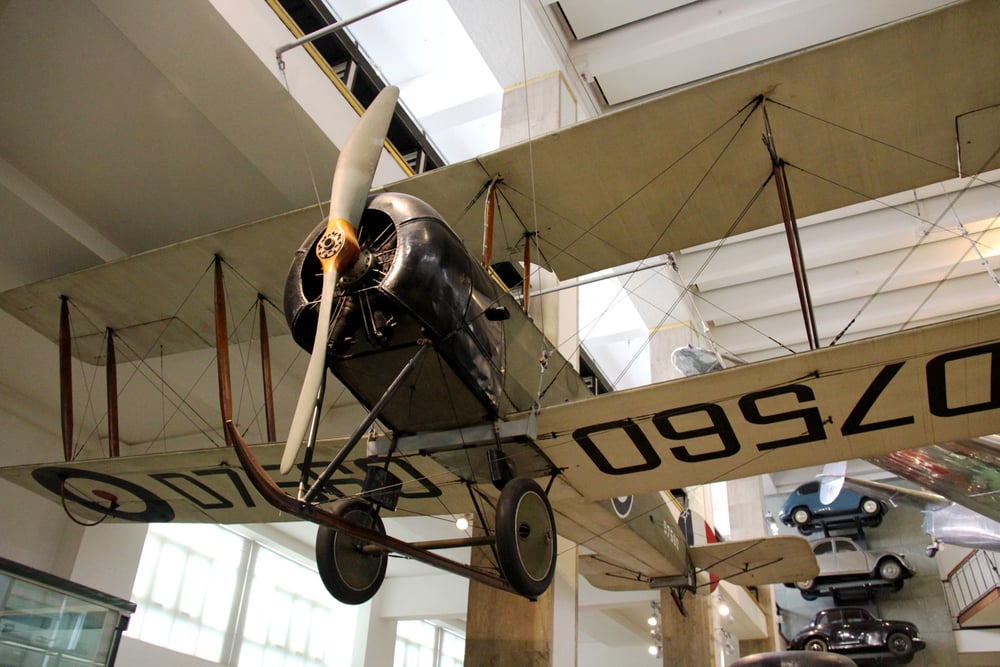
Otto Lilienthal earned the nickname ‘Glider King’ after making over 2,000 successful flights with his homemade aircraft. The guy was methodical about everything—recording wind speeds, adjusting wing angles, documenting each flight like a scientist.
But in 1896, a freak wind gust sent his glider into a stall, and he crashed hard enough to break his spine. He died the next day, probably wondering what he’d miscalculated.
Enriched Uranium

Marie Curie basically invented the field of radioactivity research, becoming the first woman to snag a Nobel Prize in the process. She spent countless hours handling radium and uranium samples—often keeping glowing vials in her desk drawer because she thought they looked pretty.
Nobody understood radiation poisoning back then, so she kept working with radioactive materials until aplastic anemia finally killed her in 1934.
Like Go2Tutors’s content? Follow us on MSN.
Parachute

Franz Reichelt started out as a tailor but became obsessed with creating the perfect wearable parachute. He’d tested his ‘parachute suit’ design with dummies, and it failed every single time—yet he remained convinced the problem was weight distribution.
In 1912, he decided to test it himself by jumping off the Eiffel Tower. The parachute didn’t open properly, and he hit the ground at full speed.
Rocket-Powered Car

Max Valier was one of those early rocket enthusiasts who helped lay the groundwork for modern space travel. He worked with liquid-fueled engines, trying to figure out how to make rockets practical for everyday use—including cars.
While tinkering with a rocket engine in his lab in 1930, something went wrong with the fuel mixture. The explosion was so powerful it killed him instantly.
Submarine

Horace Lawson Hunley built experimental submarines for the Confederate Navy, hoping to break the Union’s naval blockade. His submarine design—the H.L. Hunley—was basically a metal tube with a hand-cranked propeller and a torpedo attached to the front.
During a test dive in Charleston Harbor in 1863, the sub got stuck underwater and couldn’t surface. Hunley and his entire crew suffocated inside their own invention.
Like Go2Tutors’s content? Follow us on MSN.
Segway

Jimi Heselden didn’t actually invent the Segway, but he owned the company that made them and used one daily around his massive estate. The irony here is pretty thick—a guy who made his fortune from a device designed to be super safe ended up dying because of it.
In 2010, he accidentally rode his Segway right off a cliff near his home. Sometimes the universe has a twisted sense of humor.
Powered Flight

Thomas Selfridge was a U.S. Army officer who worked closely with the Wright brothers on early military aviation projects. He’d actually piloted powered aircraft solo—making him one of only a handful of people who’d done that successfully.
But during a 1908 demonstration flight with Orville Wright, their plane crashed hard enough to kill Selfridge instantly. He became aviation’s first fatality, which probably wasn’t the kind of ‘first’ he was hoping for.
Nuclear Reactor

Louis Slotin was a Canadian physicist working on the Manhattan Project, and his job involved some seriously dangerous experiments with nuclear materials. He’d bring chunks of plutonium close together to see how near he could get to starting a chain reaction—basically playing nuclear Russian roulette.
In 1946, his hand slipped during one of these experiments, causing a critical reaction that bathed him in lethal radiation.
Like Go2Tutors’s content? Follow us on MSN.
Radium Products

Eben Byers was a wealthy industrialist who got hooked on radium-based health products after companies started marketing them as miracle cures. Though he didn’t invent radium therapy, he became its biggest cheerleader—drinking bottle after bottle of radium water over several years.
The radium poisoning eventually ate away his jaw and killed him, but not before he’d convinced plenty of other people to try the stuff.
Ejection Seat

Henry Kremer spent his career designing ejection seats to help pilots escape from crashing aircraft. His prototypes had to launch a human being fast enough and far enough to clear a disabled plane—which meant dealing with tremendous forces and split-second timing.
During one test of his design, the ejection mechanism malfunctioned catastrophically. Instead of saving a pilot’s life, it ended Kremer’s.
Lightning Rod Improvement

Georg Wilhelm Richmann was a German physicist studying electrical phenomena in Russia during the 1750s. He’d heard about Benjamin Franklin’s kite experiment and decided to try his own version, except with different equipment and methods.
While conducting electrical experiments during a thunderstorm in 1753, lightning struck his apparatus and electrocuted him on the spot.
Like Go2Tutors’s content? Follow us on MSN.
Artificial Refrigeration

Jacob Perkins created one of the first mechanical refrigeration systems using liquid ammonia as a coolant. His vapor-compression design was revolutionary for food preservation, though working with ammonia meant dealing with a highly toxic gas.
During testing, his cooling system developed a leak that filled his workspace with ammonia fumes, which proved deadly within minutes.
Dynamite Detonator

David Edward Hughes focused on improving detonation systems for Alfred Nobel’s dynamite invention. His goal was creating more reliable ways to trigger controlled explosions in mining and construction work.
While testing one of his detonator prototypes, the device went off prematurely, killing Hughes in the blast before he could figure out what went wrong.
Steam-Powered Automobile
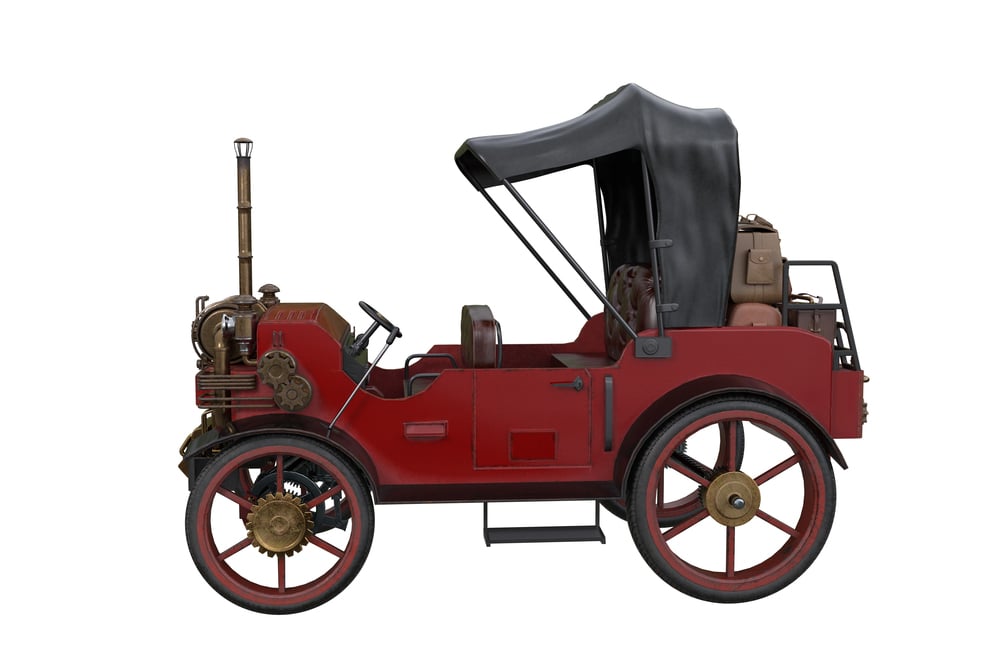
William Bullock invented an improved steam carriage meant to compete with horse-drawn transportation. His vehicle used high-pressure steam to turn the wheels, representing an early attempt at mechanized personal transport.
During a public demonstration, the steam boiler exploded from excessive pressure, fatally injuring Bullock along with several spectators who’d come to see the future of transportation.
Like Go2Tutors’s content? Follow us on MSN.
Acetylene Gas Production

Thomas Leopold Willson discovered a practical method for producing acetylene gas, which became essential for welding and lighting applications. His process combined calcium carbide with water to generate the highly flammable gas, though the reaction could be unpredictable.
While working to improve the production process in his laboratory, an acetylene explosion occurred that killed Willson instantly.
Early Aircraft Engine

Gustav Albin Whitehead claimed he’d achieved powered flight before the Wright brothers, designing various aircraft engines and airframes in his quest to conquer the skies. His engines were experimental and prone to mechanical problems, but he kept pushing the boundaries of what was possible.
During a test flight, his aircraft engine caught fire mid-flight, causing the plane to crash and killing Whitehead in the process.
Progress Has Its Price

These stories show how dangerous it can be to push into uncharted territory, especially when you’re working with forces and materials nobody really understands yet. Each of these inventors died chasing progress that would eventually make life better for millions of people, though they never got to see their work perfected.
Their deaths weren’t meaningless—other inventors learned from their mistakes and built on their discoveries. Sometimes the cost of moving forward includes losing the people brave enough to take those first dangerous steps into the unknown.
More from Go2Tutors!

- 16 Historical Figures Who Were Nothing Like You Think
- 12 Things Sold in the 80s That Are Now Illegal
- 15 VHS Tapes That Could Be Worth Thousands
- 17 Historical “What Ifs” That Would Have Changed Everything
- 18 TV Shows That Vanished Without a Finale
Like Go2Tutors’s content? Follow us on MSN.



