16 Islands That Didn’t Exist 100 Years Ago
Our planet’s surface never stops changing, though nowhere is this more obvious than when brand-new islands suddenly appear. Some islands have been around for millions of years, yet others are surprisingly fresh additions to world maps. These new landmasses pop up through volcanic eruptions, ambitious human construction projects, or shifting ocean patterns that reshape entire coastlines.
Island formation has really picked up steam in recent decades. Natural geological forces keep doing their thing, while humans have gotten remarkably good at building land where none existed before. Here is a list of 16 islands that have shown up on maps within the last century, each carrying its own fascinating creation story.
Surtsey
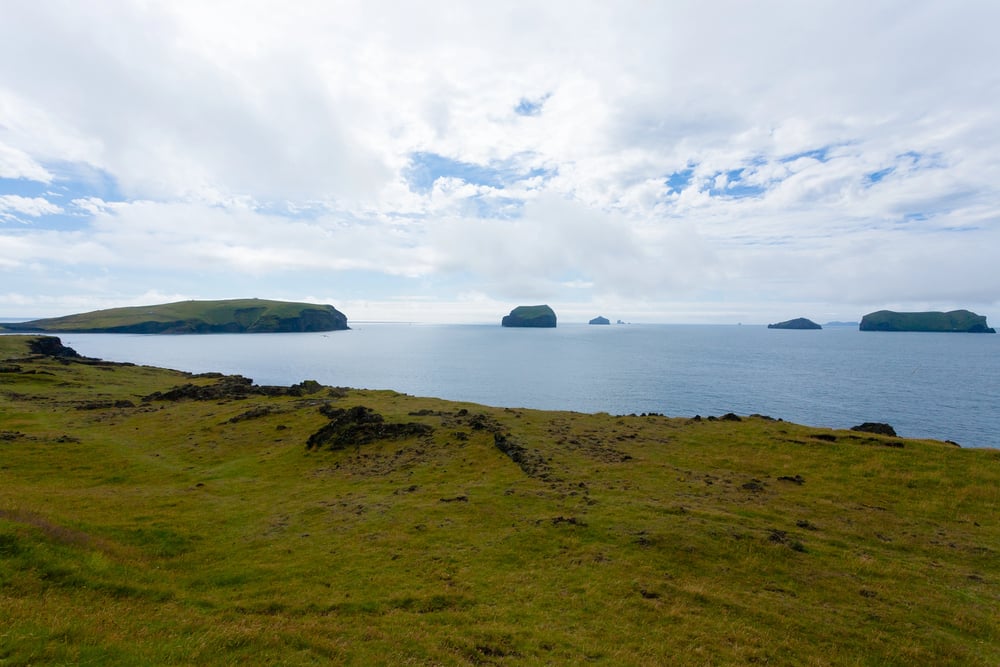
Back in 1963, Surtsey literally burst out of the North Atlantic near Iceland during an underwater volcanic eruption that kept going for years. Scientists turned this place into a living laboratory — it’s now a UNESCO World Heritage Site where researchers study how plants and animals colonize fresh land.
The island’s been shrinking bit by bit due to erosion, though it remains one of the most famous examples of recent volcanic island birth.
Palm Jumeirah
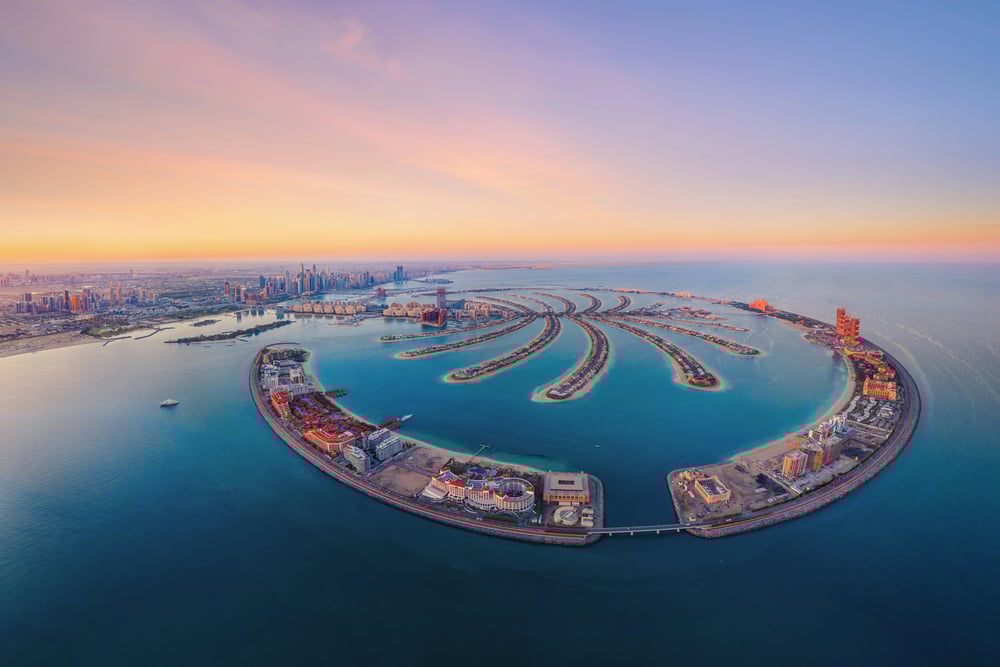
Construction on Dubai’s Palm Jumeirah kicked off in 2001, and it’s since become one of the city’s most instantly recognizable landmarks — shaped like a palm tree with a crescent breakwater wrapped around it. Spanning over 1,380 acres, this artificial island ranks among the world’s largest human-made landmasses.
Engineers used millions of tons of sand and rock dredged from the Persian Gulf to create luxury homes and hotels.
Anak Krakatau
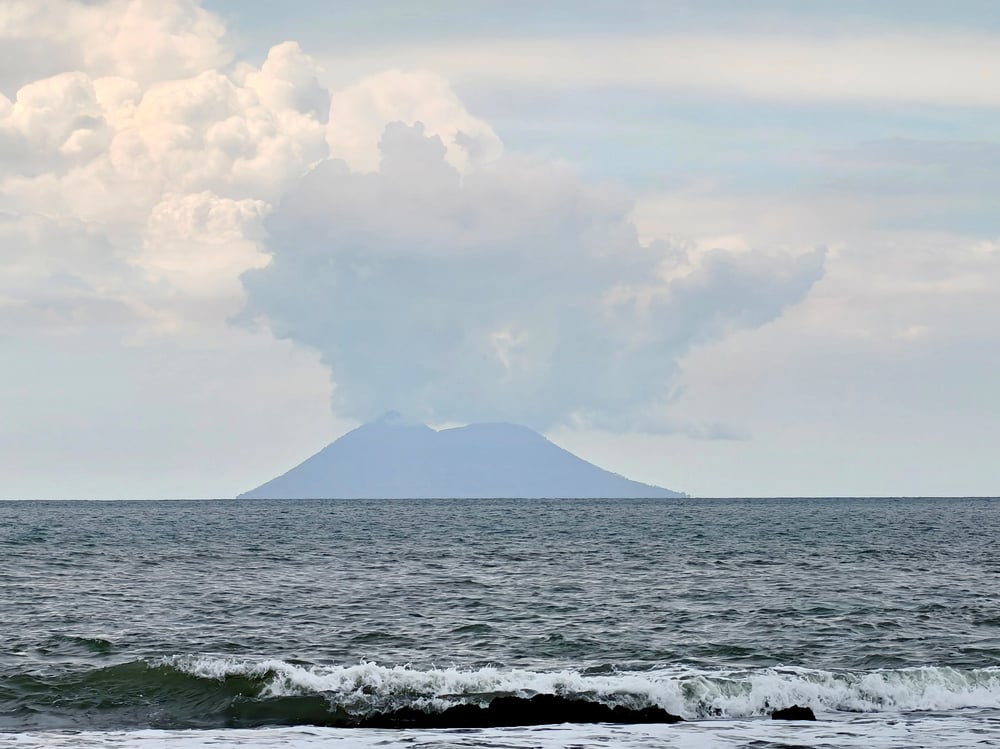
This volcanic island’s name literally translates to ‘Child of Krakatoa’ — it emerged in 1927 from the underwater crater left behind by the infamous 1883 Krakatoa blast. Over the decades, continued volcanic activity helped it grow to over 1,000 feet tall, though a 2018 eruption partially collapsed the island.
Despite these setbacks, volcanic forces keep rebuilding this ever-changing landmass.
The World Islands

Off Dubai’s coast sits a collection of 300 artificial islands arranged to look like a world map — complete with private residences, shopping centers, and hotels. Construction began in 2003 using advanced dredging techniques to create islands representing different countries and continents.
Progress has been slower than originally planned, yet several islands now feature luxury developments accessible by boat or seaplane.
Nishinoshima

This Japanese volcanic island got a dramatic makeover starting in 2013 when underwater eruptions created new land right next to the existing tiny island. The volcanic activity continued for years — eventually merging the new land with the original island and increasing its size more than tenfold.
Intermittent volcanic activity means the island keeps growing sporadically.
Hunga Tonga-Hunga Ha’apai

A massive underwater volcanic eruption in 2014-2015 created this island in Tonga, connecting two existing small islands with a bridge of fresh volcanic material. The eruption formed a crescent-shaped island about 1.2 miles long, though the catastrophic 2022 eruption that made worldwide headlines destroyed much of it.
This event perfectly demonstrated how quickly volcanic islands can both form and vanish.
Palm Jebel Ali

Palm Jebel Ali represents another piece of Dubai’s ambitious Palm Islands project — constructed around the same timeframe as The World Islands. Designed to be 50% larger than Palm Jumeirah, this artificial archipelago features the signature palm tree shape plus some additional design elements.
While construction has moved more slowly than its sister island, portions of the development now include residential and commercial properties.
Jadid Island

This small island popped up off Yemen’s coast between 2011-2013 following underwater volcanic activity in the Red Sea. The circular island initially measured about 1,600 feet across — rising roughly 65 feet above sea level.
Scientists kept close tabs on its formation since it provided valuable insights into early-stage volcanic island development in one of Earth’s most geologically active regions.
Sholan Island
Yemen’s coastline gained another addition in 2011 when Sholan Island emerged from the same underwater volcanic system that created Jadid Island. The island formed during eruptions that lit up the Red Sea with lava fountains visible from space satellites.
Like most newly formed volcanic islands, its long-term survival depends on whether volcanic activity can build it up faster than ocean erosion wears it down.
Fukutoku-Okanoba

Japan’s newest island was born in October 2023 when magma that had been building up for ages finally broke through the surface near Iwo Jima — creating fresh land 750 miles south of Tokyo. NASA satellites captured incredible images of the island’s formation as it rose from the Pacific Ocean depths.
This island represents one of the newest additions to Japan’s volcanic chain, though whether it’ll stick around permanently remains uncertain.
Bluewaters Island

Dubai’s Bluewaters Island opened to visitors in 2018 as an artificial island connected to the mainland by bridge. The circular island covers 0.4 square miles and houses residential towers, retail outlets, plus the world’s largest observation wheel called Ain Dubai.
Unlike the palm-shaped islands, Bluewaters was designed as a more conventional urban development focused on entertainment and tourism.
Kashagan Island
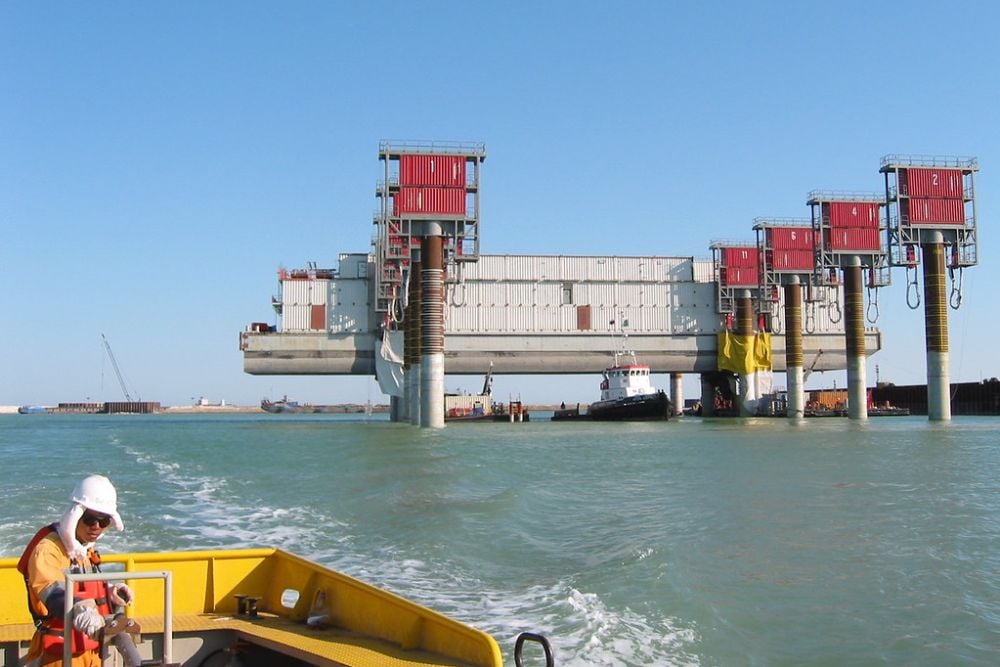
Kazakhstan constructed this artificial island in the Caspian Sea starting in 2000 as part of one of the world’s largest oil field developments. The island functions as a processing facility for offshore oil extraction, showing how artificial islands can serve industrial purposes beyond tourism and residential uses.
Multiple artificial islands were built in the shallow waters to support this massive energy project.
Peberholm

Denmark created this artificial island in the late 1990s as part of the Øresund Bridge project linking Denmark and Sweden. Built from material excavated during tunnel construction, the 1.6-mile-long island serves as the transition point between bridge and underwater tunnel sections.
Over the past two decades, the island has developed its own ecosystem, attracting various bird species and plant life.
Burj Al Arab Island
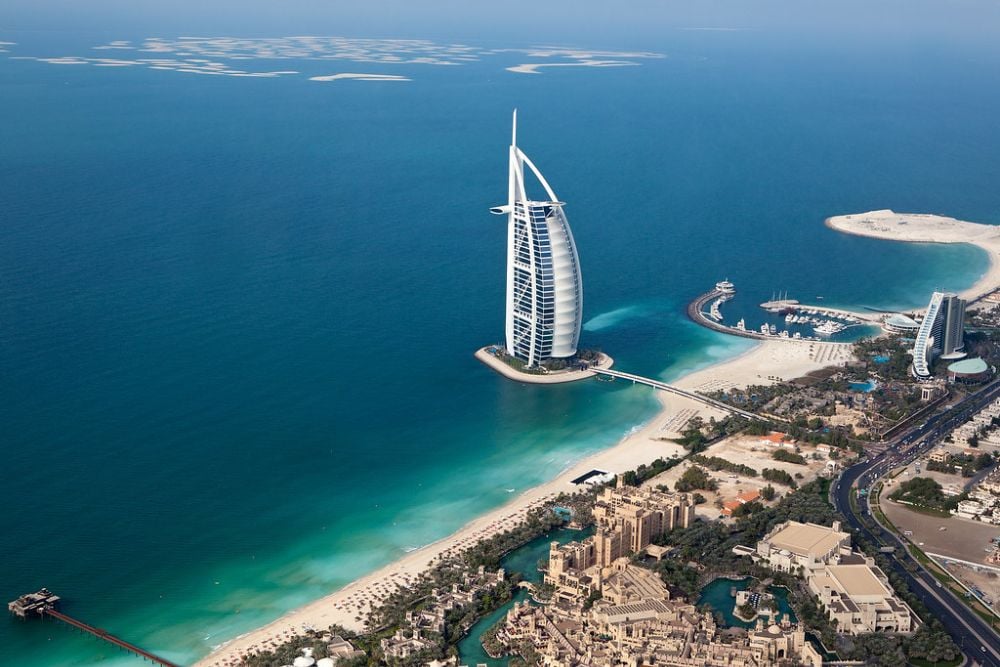
While the famous Burj Al Arab hotel was built on an existing small island, the current landmass was significantly expanded and reshaped during the 1990s to accommodate the luxury development. Connected to Dubai’s mainland by a private bridge, the teardrop-shaped island represents an early example of Dubai’s island-building ambitions.
The project proved the feasibility of creating luxury developments on artificial or heavily modified islands.
Hong Kong International Airport Island

One of the world’s most successful artificial island projects, this massive landmass was created during the 1990s by flattening mountains and reclaiming land from the sea. The island spans over 4.7 square miles and requires moving more than 200 million cubic meters of material.
Today it serves as one of Asia’s busiest airports, proving that artificial islands can support major infrastructure projects.
Marker Wadden

The Netherlands completed this artificial archipelago in 2016 as part of an ambitious ecological restoration project in Markermeer lake. The five islands were constructed using sediment dredged from the lake bottom, creating new wetland habitats for birds and fish.
Unlike commercial developments, these islands prioritize environmental restoration and show how artificial land creation can serve conservation goals.
When Engineering Meets Nature

The story of these 16 islands reveals two parallel forces reshaping our planet’s geography: the unstoppable power of volcanic activity and humanity’s growing ability to engineer new land. While volcanic islands represent nature’s raw creative force, artificial islands showcase human ambition and engineering prowess on an unprecedented scale.
Of the volcanic islands formed in recent decades, only a few like Surtsey are expected to survive long-term, as many face constant erosion from ocean waves. Meanwhile, artificial islands continue expanding coastal real estate and serving diverse purposes from luxury tourism to environmental restoration, proving that the age of island creation is far from over.
More from Go2Tutors!

- The Romanov Crown Jewels and Their Tragic Fate
- 13 Historical Mysteries That Science Still Can’t Solve
- Famous Hoaxes That Fooled the World for Years
- 15 Child Stars with Tragic Adult Lives
- 16 Famous Jewelry Pieces in History
Like Go2Tutors’s content? Follow us on MSN.