16 Math Puzzles to Test Your IQ
Numbers are sneaky. You think you know how they work — add this, subtract that, carry the one — and then a well-placed puzzle stops you cold.
The best math puzzles aren’t just about calculation. They’re about pattern recognition, lateral thinking, and catching your own assumptions before they lead you down the wrong path.
These 16 puzzles range from head-scratchers to full-on brain traps. Work through them honestly, resist the urge to scroll ahead, and see how many you can crack on your own.
1. The Missing Dollar

Three friends check into a hotel and pay $30 total — $10 each. The manager realizes the room only costs $25 and sends a bellboy back with $5.
The bellboy keeps $2 as a tip and gives each friend $1 back. So each person paid $9, which is $27 total.
Add the $2 tip and you get $29. Where did the missing dollar go?
There is no missing dollar. The puzzle tricks you into adding numbers that shouldn’t be added together.
The $27 already includes the $2 tip. The correct breakdown is $25 (room) + $2 (tip) + $3 (refunded) = $30.
Your instinct to add $27 + $2 is the trap.
2. The Two Trains
Two trains are 100 miles apart, heading toward each other. One travels at 40 mph and the other at 60 mph.
A fly starts at the front of the first train, flies to the second, bounces back, and keeps going until the trains collide. If the fly travels at 100 mph, how far does the fly travel in total?
The trains close the 100-mile gap at a combined speed of 100 mph, so they collide in exactly 1 hour. The fly spends that entire hour flying at 100 mph.
Total distance: 100 miles. The trick is realizing you don’t need to calculate each back-and-forth trip.
3. What Comes Next?
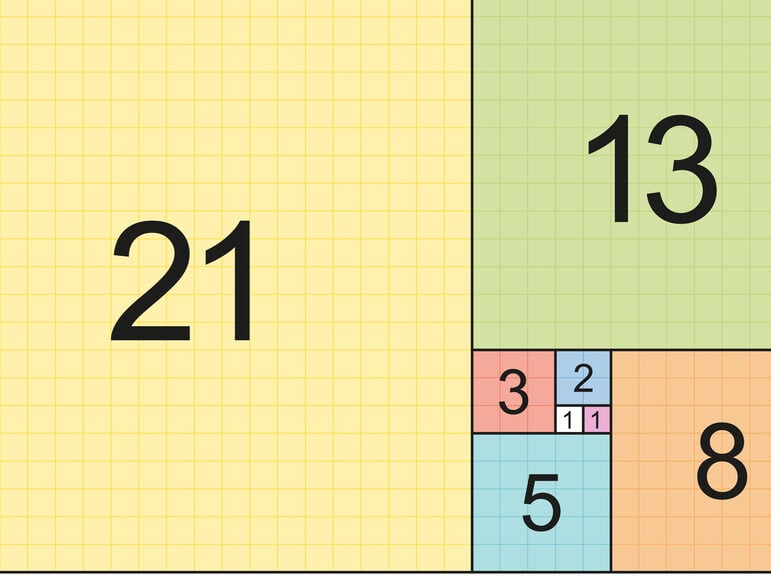
Look at this sequence: 1, 1, 2, 3, 5, 8, 13, 21, ___. The next number is 34.
Each number is the sum of the two before it. This is the Fibonacci sequence, and it shows up in nature more than most people realize — in sunflower spirals, shell patterns, and tree branching. Recognizing it quickly is a solid marker of mathematical intuition.
4. The Broken Clock

A clock shows 3:15. What is the angle between the hour and minute hands?
Most people say 0 degrees — both hands at the 3. But the hour hand moves continuously.
At 3:15, it’s a quarter of the way between 3 and 4. Each hour represents 30 degrees on the clock face, so 15 minutes moves the hour hand 7.5 degrees past the 3.
The minute hand sits exactly at the 3 (0 degrees). The angle between them is 7.5 degrees.
5. The Handshake Problem

At a party, every person shakes hands with every other person exactly once. If there are 10 people at the party, how many handshakes happen total?
The formula is n(n-1)/2, where n is the number of people. For 10 people: 10 × 9 / 2 = 45 handshakes.
You can verify this by thinking it through: the first person shakes 9 hands, the second shakes 8 new hands, and so on: 9+8+7+6+5+4+3+2+1 = 45.
6. The Locker Problem
A school has 100 lockers, all closed. Student 1 opens every locker.
Student 2 closes every second locker. Student 3 toggles every third locker.
This continues until Student 100 finishes. Which lockers are open at the end?
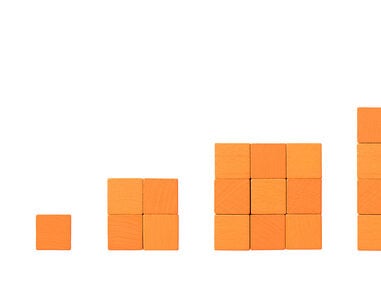
Only the perfect squares: 1, 4, 9, 16, 25, 36, 49, 64, 81, 100. A locker ends open if it’s toggled an odd number of times.
Most numbers have factor pairs, giving an even toggle count. But perfect squares have one factor repeated (e.g., 9 = 3×3), leaving them with an odd number of toggles — and open.
7. Age Riddle

A father is 30 years older than his son. In 5 years, he’ll be three times the son’s age.
How old is the son now? Let the son’s current age be x.
In 5 years: (x + 35) = 3(x + 5). Expanding: x + 35 = 3x + 15. Solving: 20 = 2x, so x = 10. The son is 10 years old.
These types of simultaneous equation problems look complicated in word form but simplify fast once you write them out.
8. The Coin Flip Streak
You flip a fair coin 10 times and get heads every time. What’s the probability of getting tails on the 11th flip?
Still 50%. Each flip is independent.
The coin has no memory. This puzzle tests whether you fall into the gambler’s fallacy — the false belief that past outcomes influence future ones in a fair, random system.
They don’t.
9. The Number Square
Place the numbers 1–9 in a 3×3 grid so that every row, column, and diagonal adds up to 15. This is called a magic square.
One solution:
2 7 6
9 5 1
4 3 8
The center must always be 5 in a 3×3 magic square using 1–9. The magic constant (15) equals n(n²+1)/2 where n=3.
There are exactly 8 solutions, all rotations and reflections of the one above.
10. The Lily Pad

A lily pad in a pond doubles in size every day. After 30 days, it covers the entire pond.
On what day did it cover half the pond? Day 29.
If the pad doubles each day, then one day before it covers the whole pond, it covers exactly half. This puzzle highlights exponential growth — the kind that feels slow at first and then suddenly overwhelming.
11. How Many Squares?
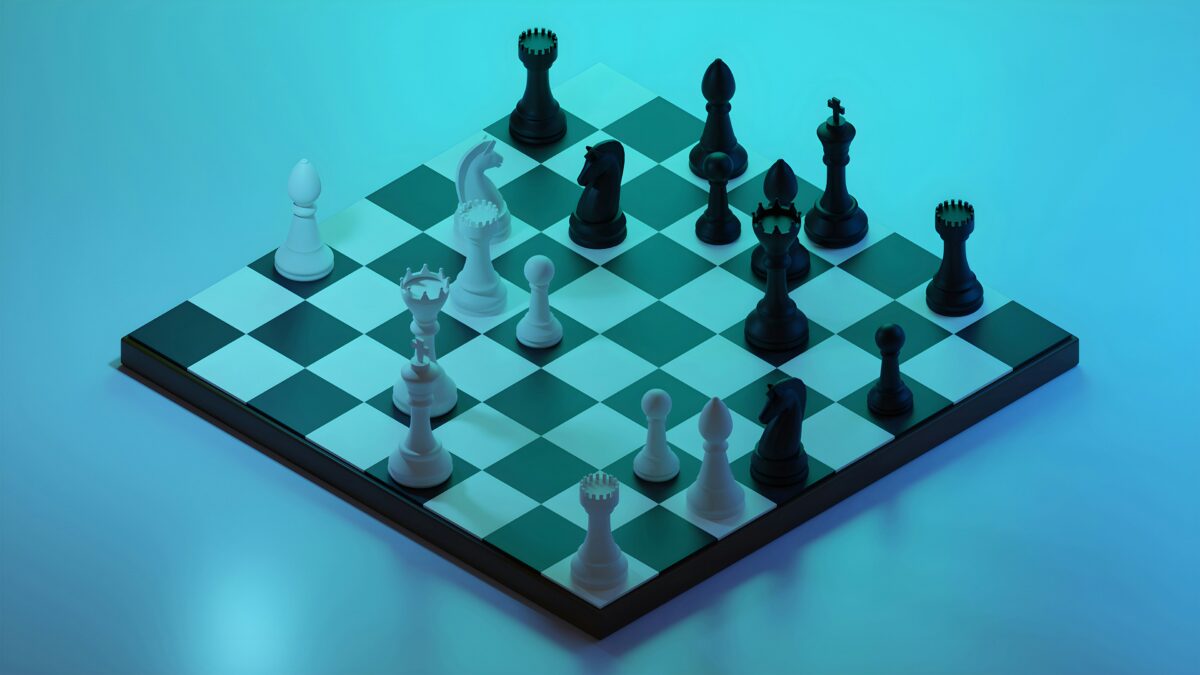
How many squares are in a standard 8×8 chessboard? Not 64.
There are actually 204. You count all sizes: 64 squares of 1×1, 49 of 2×2, 36 of 3×3, and so on down to 1 square of 8×8.
The total is the sum of squares from 1² to 8², which equals 204. Most people anchor on the obvious answer and stop thinking.
12. The River Crossing

A farmer needs to cross a river with a fox, a chicken, and a bag of grain. The boat holds only the farmer and one item.
If left alone, the fox eats the chicken and the chicken eats the grain. How does the farmer get everything across safely?
Take the chicken first. Go back, take the fox.
Bring the chicken back. Take the grain.
Go back and get the chicken. The key insight is that you’re allowed to bring something back — most people forget that and get stuck.
13. Sum of Digits
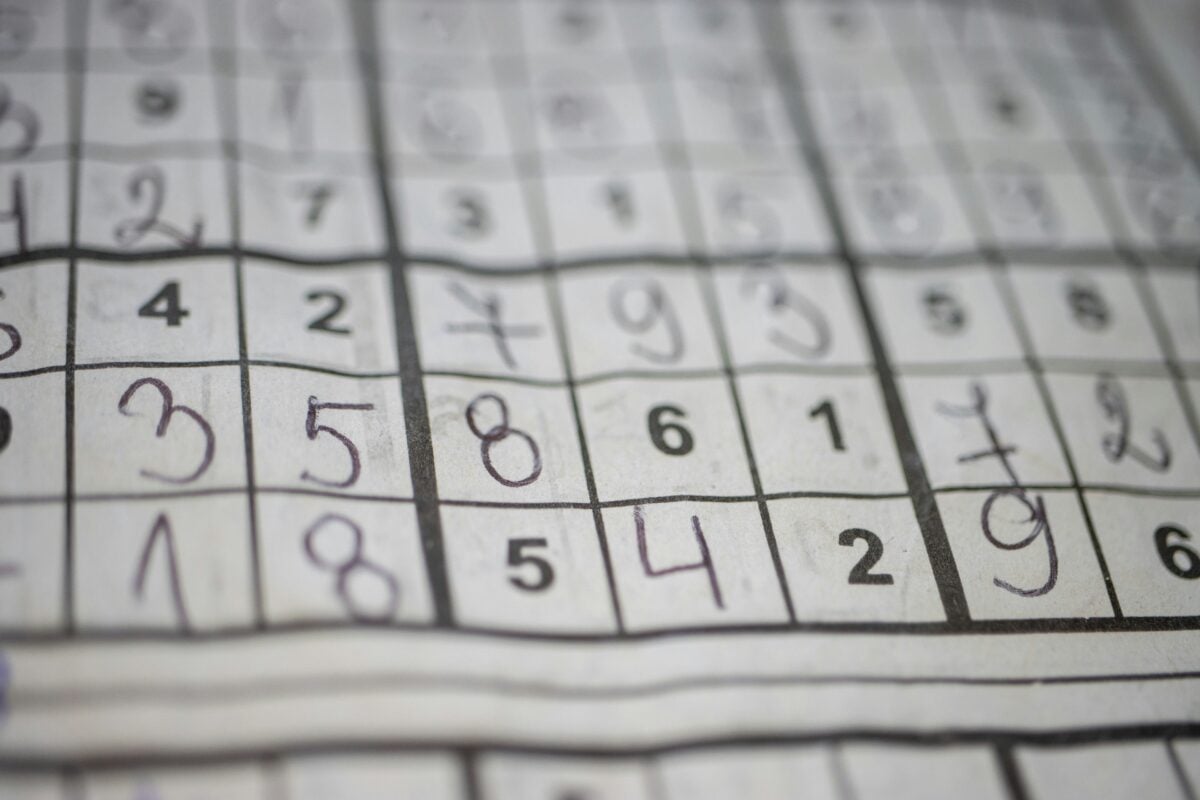
How much do you get when adding every digit between one and a hundred? A total of 901 comes from adding every single digit found in numbers starting at one and ending before 100.
After that, toss in an extra 1 because of the three zeros in 100, which count just once. Every group like teens or twenties behaves much the same way when you break it down.
Finding patterns instead of listing everything shows how clear math work looks up close. The result?
Sharp thinking beats endless counting.
14. The False Positive

A single person out of every thousand carries the illness. Though the test catches nearly all sick individuals, errors still happen sometimes.
Most folks tested do not carry the condition at all. When someone tests positive, it might surprise them how likely a mistake really is.
Even solid results can mislead when rarity shapes the odds. Accuracy alone does not tell what the outcome means for one person.
About nine out of every hundred. That’s how Bayes’ rule shows up here.
Picture one hundred thousand folks – around a hundred actually carry the illness. Of those, ninety-nine get spotted by the test – these are correct hits.
A single percent of those 99,900 unaffected individuals still shows up as positive – around 999 cases mistaken for illness. Ninety-nine real cases appear among the total 1,098 who tested positive.
Just nine percent turn out to actually be sick.
15. The Rope Around the Earth

A single meter added to a snug loop circling Earth’s middle – what space now sits beneath it, all the way round? That thin stretch of extra length spreads smooth and even, lifting the whole band just enough.
Picture that circle floating slightly above ground, held up by one small step in size. The distance below feels tiny, yet real – a whisper of room under a world-girdling thread.
A little under 16 centimeters. That comes from the rule: C equals two pi times r.
Boosting C by one full meter? Then r grows by one divided by two pi.
Which lands near 0.159 meters – yep, around 16 cm again. Does not matter if it’s Earth or a tennis orb.
Any round object follows this pattern. Hard to believe – but true.
16. The Birthday Problem

What if one more person walked in – would that tip the odds past fifty-fifty for matching birthdays? Imagine how few it actually takes inside a room.
Only 23 folks in a room. Guesses usually shoot way up – some say more than 180.
Yet odds stack fast once pairs enter the picture instead of single persons. That group size creates 253 different two-person combos, nudging the likelihood to about 50.7 percent for matching birthdays.
Jump to 70 attendees, suddenly chances soar past 99.9 percent.
When The Answer Surprises You Pay Attention

Wrong-feeling puzzles stick around long after you see answers. These moments show precisely where gut reactions go off track – like treating unrelated things as connected, or fixating on obvious numbers rather than counting carefully.
Numbers alone don’t make math what it is. What matters comes before punching digits into a machine – posing the real puzzle.
Speed at cracking tough problems does not belong only to those packed with equations in their heads. It leans toward whoever stops, just briefly, instead of racing ahead certain they see the solution.
A moment of silence holds greater weight than any equation ever could.
More from Go2Tutors!

- The Romanov Crown Jewels and Their Tragic Fate
- 13 Historical Mysteries That Science Still Can’t Solve
- Famous Hoaxes That Fooled the World for Years
- 15 Child Stars with Tragic Adult Lives
- 16 Famous Jewelry Pieces in History
Like Go2Tutors’s content? Follow us on MSN.