16 Most Iconic School Supplies From Childhood
Walking into a store during the back-to-school season used to feel like stepping into a wonderland of possibility. Rows of brightly colored binders, markers that smelled like fruit, and pencil cases shaped like your favorite cartoon characters lined the aisles.
School supplies weren’t just functional – they were personal statements, social currency, and sources of genuine excitement. Let’s look at the school supplies that defined childhood for generations of students.
Trapper Keeper
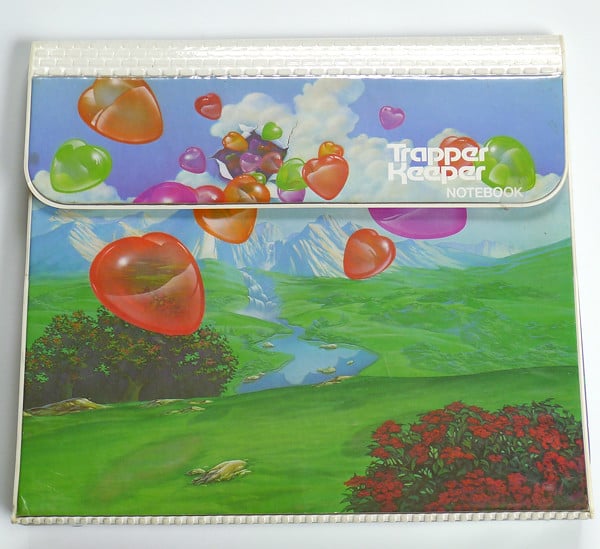
When Mead rolled out the Trapper Keeper nationwide in 1981, they created something close to perfection. The three-ring binder with the fold-over “trapper” flap and velcro closure became the most coveted item on back-to-school lists throughout the 1980s and 1990s.
The designs ranged from scenic landscapes to geometric patterns to later collaborations with Lisa Frank’s rainbow explosions. The sound of ripping open that velcro became the soundtrack to every classroom.
Kids obsessed over which design to choose each year – puppies, kittens, sports cars, abstract art. Teachers loved them slightly less, mostly because they were bulky and took up half the desk.
Sales eventually tapered off in the 2000s when Mead had to replace the PVC materials with safer alternatives, and Five Star binders gradually took over shelf space. But vintage Trapper Keepers? Those sell on eBay for nostalgic adults who remember the thrill of showing up to sixth grade with a fresh one.
Lisa Frank Everything

Neon pink dolphins. Rainbow cheetahs. Unicorns dripping with glitter and stars. Lisa Frank’s psychedelic animal designs dominated the 1980s and 1990s school supply market in ways that felt almost cultish.
Founded around 1980, Lisa Frank Incorporated hit its stride in 1987 when the company started producing school supplies featuring their distinctive designs. Girls especially went wild for anything bearing that signature explosion of color – folders, pencil cases, erasers, stickers, notebooks, and yes, Trapper Keepers.
The company grossed over $60 million annually during its 1990s peak. At one point, the Tucson headquarters employed around 500 people churning out products for back-to-school aisles across America.
Each design took months to approve, with early pieces airbrushed by hand before the company switched to computer software in 1989. The brand faded somewhat but experienced a resurgence in 2021 when Lisa Frank’s son took over marketing, rebranding the aesthetic as a lifestyle rather than just school supplies.
Mr. Sketch Scented Markers

The range of smells on these markers bordered on dangerous – they smelled too good. Grape, cherry, orange, cinnamon, licorice.
Kids spent more time sniffing the markers than using them to color. The chisel tip made them versatile for both broad strokes and finer details, but let’s be honest, the appeal was entirely olfactory.
Mr. Sketch didn’t have a monopoly on classroom scents though. Teachers also wielded the power of scratch and sniff stickers, which they stuck on spelling tests and homework assignments as rewards.
A gentle scratch with your fingernail released artificial fragrances – strawberry, pizza, popcorn, even skunk for the really unfortunate papers. These elevated ordinary sticker collections into multi-sensory experiences.
Gel Pens
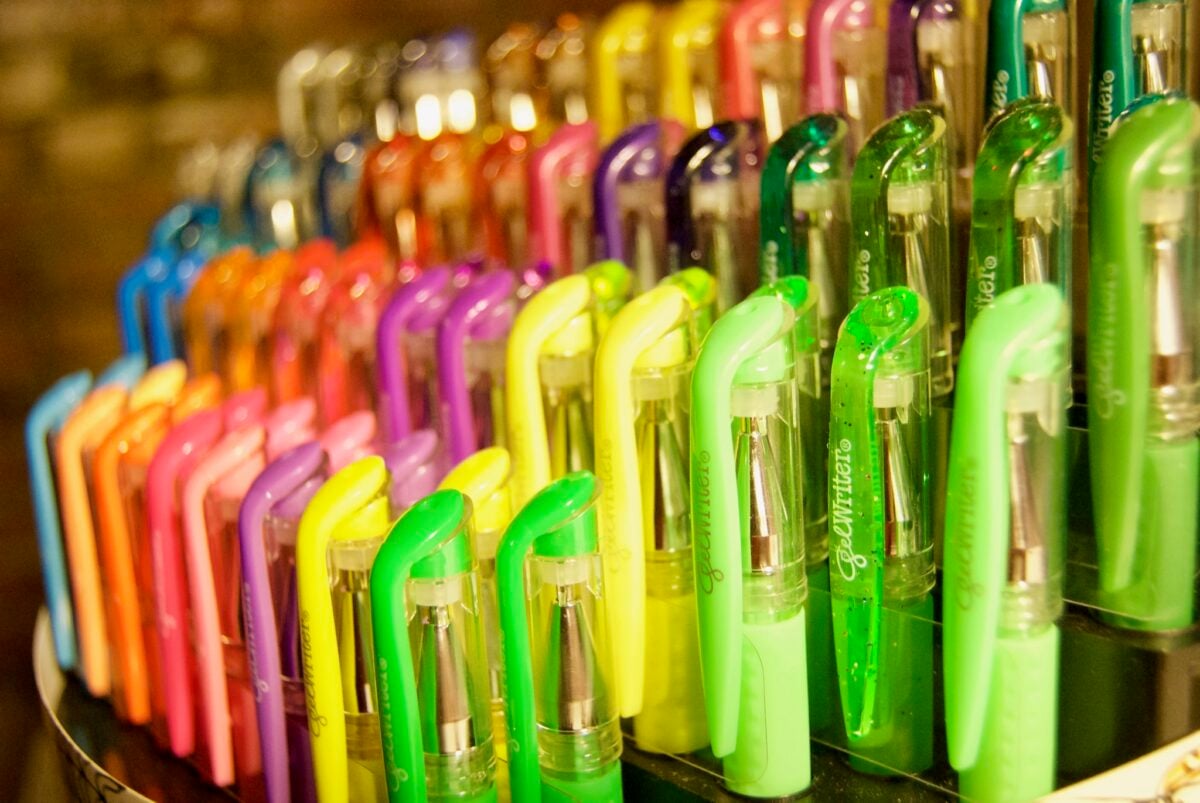
Sakura Color Products spent years in the early 1980s trying to create gel ink, failing repeatedly as each prototype brought new problems. The team tested everything with a jelly-like consistency – agar, grated yam, egg whites – before finally cracking the formula.
They released Ballsign pens in Japan in 1984, then brought them to the United States in 1989 under the name Gelly Roll. Taking notes suddenly felt less boring.
The paint-like ink rolled on smoothly and popped against any color of paper. By the mid-1990s, gel pens became back-to-school staples.
Kids hoarded them in every color, especially the metallic and glitter varieties that made even the dullest math homework look somewhat magical. The ink took longer to dry than regular pens, leading to plenty of smeared assignments, but nobody cared.
Metal Lunchboxes
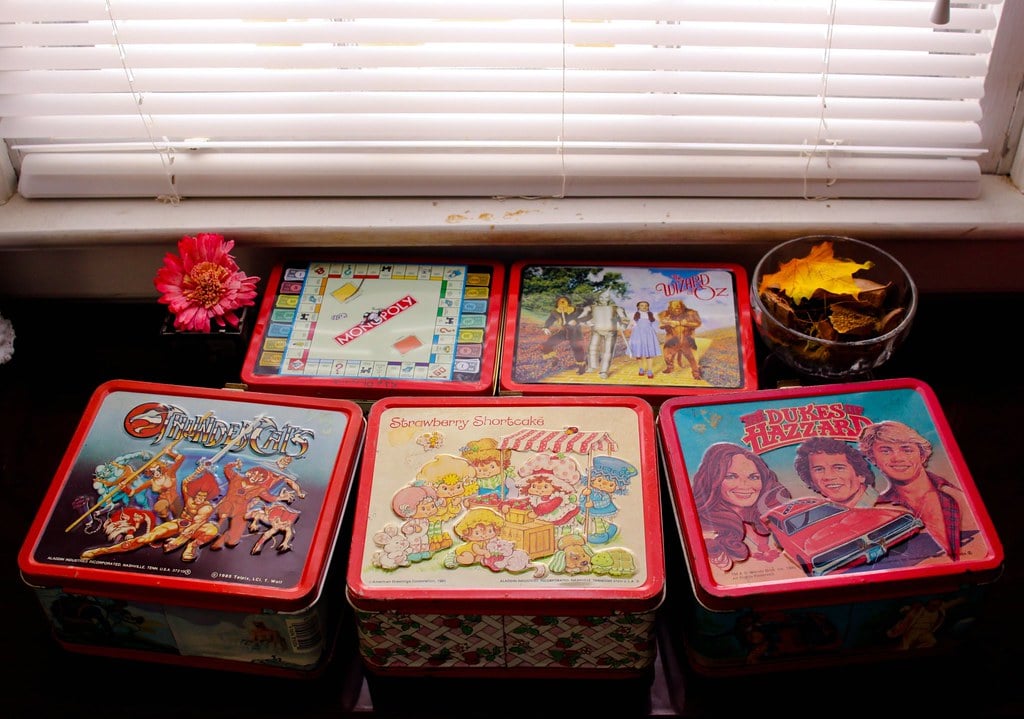
Their heyday started in the 1950s when Aladdin began putting popular characters on them. Soon they featured everything from superheroes to The Beatles, from Star Wars to The Munsters.
Kids proudly carried their favorite TV shows and movies right into the cafeteria, making these functional items into fashion statements. The golden age of metal lunch boxes spanned from the 1950s through the 1980s.
By the mid-1980s, concerns about safety – specifically worries about metal boxes being used as weapons during playground disagreements – led to the rise of softer plastic and vinyl containers. This ended what collectors now call the “metal age” of school lunch transportation.
Today, stores almost exclusively sell insulated, soft-sided lunch bags. Vintage metal boxes though? Some fetch hundreds or thousands of dollars from nostalgic collectors.
Troll Pencil Toppers
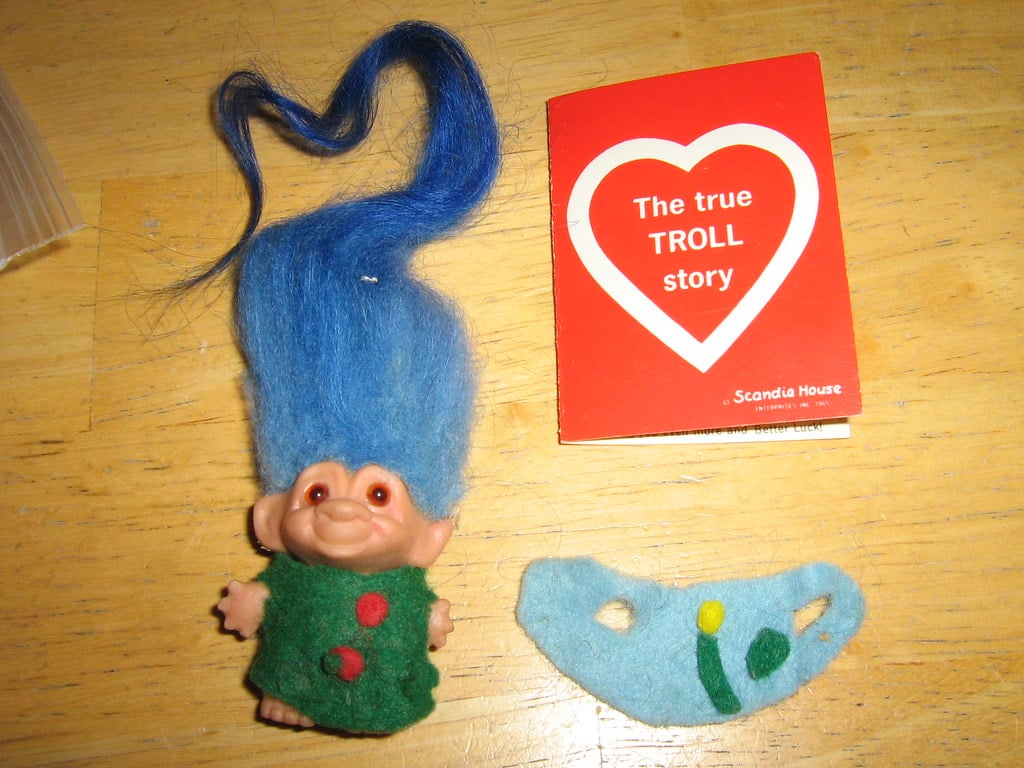
Why did elementary school girls stick tiny trolls with wild hair on top of their pencils? The world may never know. But during the early 1990s, the pencil topper troll craze reached fever pitch.
Miniature versions of the wild-haired dolls became must-have accessories, with kids arriving at school sporting every color of troll hair imaginable. Collecting different hair colors became competitive.
Some students filled their entire pencil case with rainbow arrays of tiny guardians watching over their homework. Teachers generally tolerated them until they became too distracting or when students discovered trolls made excellent projectiles.
Many schools eventually added pencil toppers to their “toys that should stay at home” lists, but by then the trend had already peaked.
Pop-a-Point Pencils

These eliminated the need for pencil sharpeners entirely. The pencils were filled with small plastic cartridges containing sharp graphite tips.
When the tip became too blunt, you pulled out the cartridge, pushed it into a pit at the back of the pencil, and voila – a new cartridge with a fresh writing tip popped forward. The new points were super sharp, almost sharp enough to stab yourself.
You could get clear ones, patterned ones, or even scented versions. Kids loved the novelty and the independence from the classroom pencil sharpener.
Today they’re largely novelty items, though you still find them on Amazon for anyone feeling nostalgic about never having to sharpen a pencil again.
Pee-Chee Folders
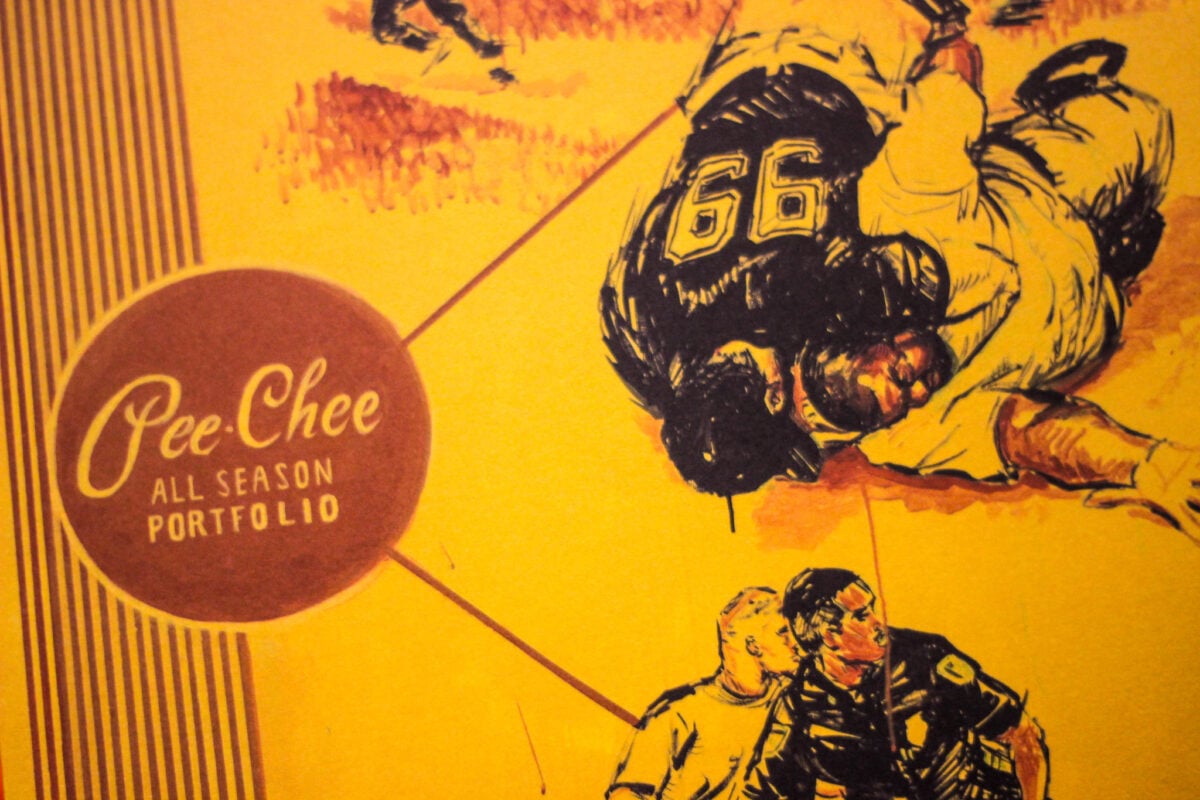
Around since the 1940s, these yellow folders cemented their icon status in the 1960s after an illustrator decorated them with images of athletic youngsters playing football, tennis, basketball, and other sports. The folders often included useful information printed inside – units of measurement, the periodic table, and other reference material.
Everyone had Pee-Chee folders. And everyone doodled on them. Students spent decades defacing their Pee-Chees in ways both innocent and decidedly not innocent, adding mustaches, speech bubbles, and creative modifications to the athletic figures.
Mead still sells these decidedly retro folders and has even added other color choices beyond the classic yellow, though the originals remain the most recognizable.
Spacemaker Pencil Box
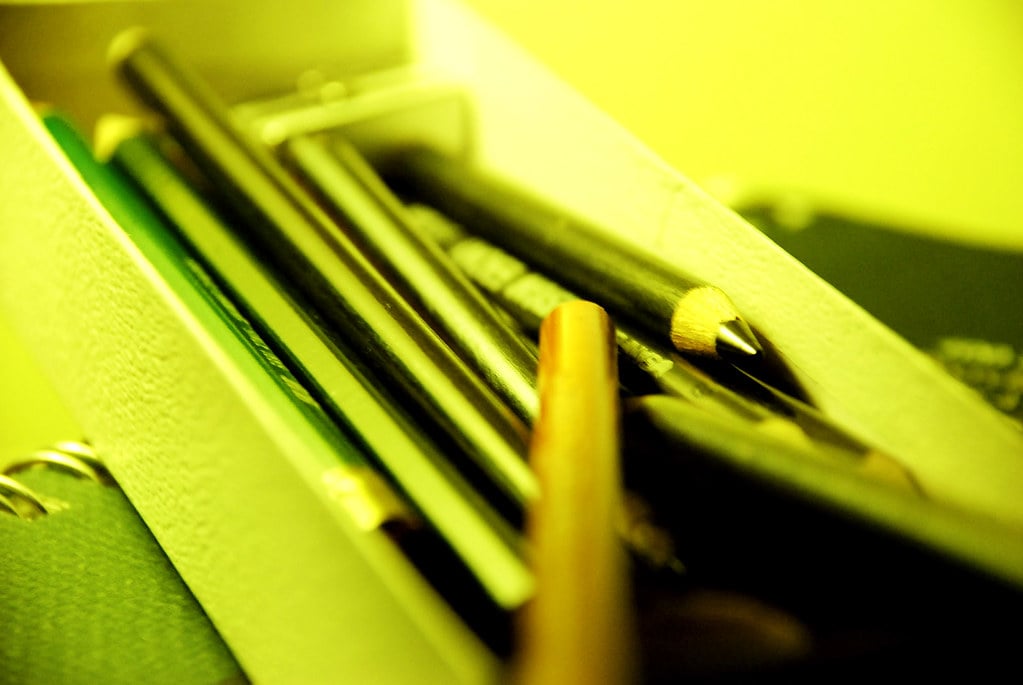
The king of school boxes. Those distinctive shiny bumps on the lid, surrounded by a textured field.
The different colored lids and bases. The satisfying “SNAP” when you closed and latched it.
Elementary school kids stored their many pens and pencils in this iconic box, which came in the standard 5×8 inch size or the “Stretch” version that could hold a 12-inch ruler. What looked like a simple plastic box was intense engineering – ensuring the right polypropylene resin, making sure the lid and base matched up evenly and smoothly, perfecting the tongue and groove latch, even calibrating the exact pressure needed to create that signature snap.
Spacemaker became the most copied and mimicked school box ever. Unfortunately, the original versions aren’t made anymore, though you find them on eBay and Etsy.
Bic Four-Color Pen

Click. Click. Click. Click. The sound these made drove teachers batty, but in the 1970s and 1980s, this fat-barreled pen was one of kids’ favorite writing instruments.
Unleashed upon the United States in 1971 after a successful launch in France, the pen let you switch between four colors – typically black, blue, red, and green – with a simple click. Why use a boring single-color pen when you could color-code your notes, emphasize different sections, or just entertain yourself by clicking through the options? The pens were prone to jamming back in the day.
Current models work much more smoothly, and they come in different versions now, including fashionable pastels. Some modern versions hold up to ten colors, taking the concept to its logical extreme.
Marble Composition Notebooks
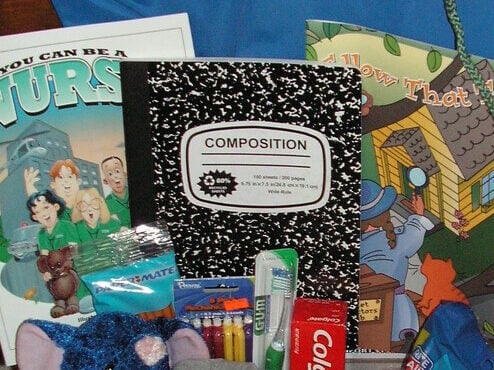
For many who grew up in the 1970s and 1980s, the Mead composition notebook was the notebook of all notebooks. The black-and-white marbled cover became instantly recognizable.
These were often back-to-school requirements, typically meant for journals or creative writing assignments. No matter what grade you were starting – kindergarten through twelfth – these marble composition notebooks had some significance.
They were sturdier than spiral notebooks, with sewn bindings that held up better to a year of use. The wide-ruled lines helped younger students, while college-ruled versions served older kids.
Teachers trusted them for important assignments because the sewn binding meant pages couldn’t easily be torn out without evidence.
Big Chief Tablets

These ubiquitous thick red tablets were common sights on school desks throughout the 1950s, 1960s, and 1970s. The cover featured a Native American chief in a feathered headdress – imagery that wouldn’t fly today for obvious reasons.
But for decades, these were the go-to tablets for early learners. Production changed hands between companies over the years, eventually coming to a halt roughly 20 years ago.
The thick paper and wide-ruled lines were designed specifically for children learning to write, giving them plenty of space to form letters. Never underestimate the power of nostalgia though – you still find versions on Amazon for people who want to recapture that piece of childhood or introduce it to a new generation.
Yikes! Pencils

These introduced kids to the idea that regular, standard pencils were boring. And they weren’t wrong. Yikes! pencils oozed with personality, coming in different shapes, patterns, and designs.
The 1993 commercial proclaimed, “you can’t look sharp with dull pencils,” which became a rallying cry for rejecting plain yellow pencils. Even the erasers often looked fun. Kids would know a Yikes! pencil when they saw one – the designs were distinctive and loud.
The battle was whether these fit the standard No. 2 requirement for standardized tests. They’re not made anymore, though dedicated fans have petitioned to bring them back.
You find them on eBay now, where they serve as conversation starters and nostalgia triggers.
Paper Mate Erasermate Pens
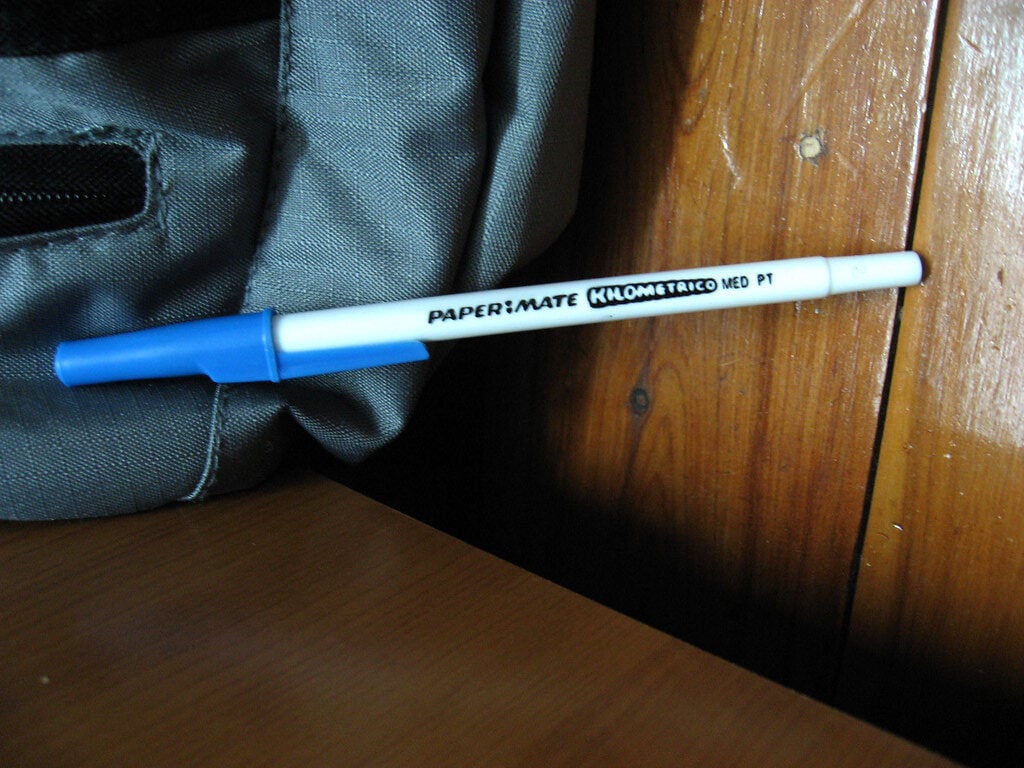
Paper Mate spent more than a decade developing the erasable ink used in Erasermate pens, which hit the United States market in 1979. The thrill of being able to write in pen and erase mistakes was undeniable when you were a kid.
Teachers typically banned regular pens until middle school, making erasable pens a gateway to feeling grown-up. The technology was never perfect.
The erasers wore down quickly, the erasing process sometimes left smudges, and the ink didn’t always hold up over time. They applied for a patent on the ink in 1982, then spent two years developing a pen that worked properly with it.
Modern versions like Pilot’s Frixion pens have largely displaced the original Erasermate brand, but the concept persists.
Rubber Cement
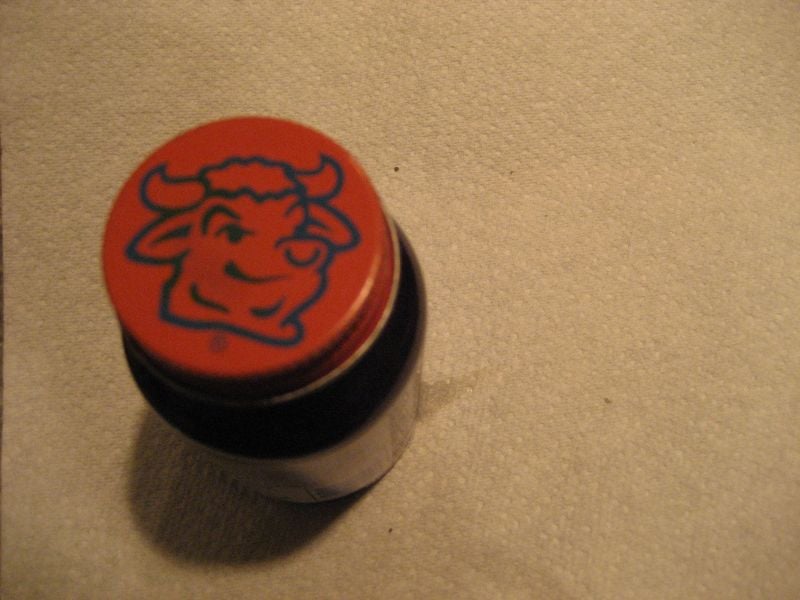
Besides the fact it smelled so-bad-it’s-good, rubber cement was the rare liquid adhesive that wouldn’t wrinkle paper when applied – plus it allowed for easy repositioning. Long before spray adhesives, glue sticks, and non-toxic kid-friendly glue gels, students were dipping brushes from rubber cement lids into jars of sticky yellow glue.
Gen X and older generations know exactly what’s up with rubber cement. For less-sticky projects, there were huge tubs of fun-smelling white paste. And of course, there was always a kid or two who enjoyed the taste.
With the advent of glue sticks, you don’t see rubber cement on many school supply lists these days, but you still buy it for anyone who appreciates its unique properties.
Ticonderoga Pencils

Some products are so enduring they manage to survive extinction. Even in this age of technology, Ticonderoga pencils remain so vital to the education experience that many teachers name the brand explicitly on their school supply lists.
No cheap pencils for their classes. The distinctive yellow pencil with green and yellow ferrule has been around since the 1800s.
The wood casing sharpens smoothly without splintering. The eraser works without leaving pink smudges everywhere.
The lead writes dark enough to be legible but light enough to erase cleanly. Teachers know the difference between a Ticonderoga and a discount store knockoff, and they’re not shy about specifying which one they want in their classrooms.
The Rituals We Remember

School supply shopping was never just about gathering tools for learning. The ritual meant something – walking those aisles, making choices, building anticipation for the year ahead.
You weren’t just picking folders and pencils. You were deciding who you’d be this year, how you’d express yourself, what your desk would look like.
Those supplies connected us to something bigger than ourselves. When you showed up with the same Lisa Frank folder as your best friend, you had a bond.
When someone complimented your Trapper Keeper design, you’d made a connection. The supplies themselves have mostly changed or disappeared, replaced by laptops and tablets and digital everything.
But for those who remember, those aisles of color and possibility remain vivid, carrying the weight of endless Septembers and the promise that this year would be different.
More from Go2Tutors!

- The Romanov Crown Jewels and Their Tragic Fate
- 13 Historical Mysteries That Science Still Can’t Solve
- Famous Hoaxes That Fooled the World for Years
- 15 Child Stars with Tragic Adult Lives
- 16 Famous Jewelry Pieces in History
Like Go2Tutors’s content? Follow us on MSN.



