16 Most Isolated Communities Living in the US
Most towns in America sit within easy reach of a highway, a Walmart, or at least a gas station. But scattered across this country are places where the nearest neighbor is an hour’s drive — or a helicopter ride — away.
These communities exist on the edges of maps, hemmed in by mountains, tundra, desert, or ocean. The people who stay do so by choice, necessity, or a deep sense of belonging to a place the rest of the world hasn’t figured out yet.
Here are 16 of the most isolated communities in the United States.
Supai, Arizona — The Village at the Bottom of the Grand Canyon
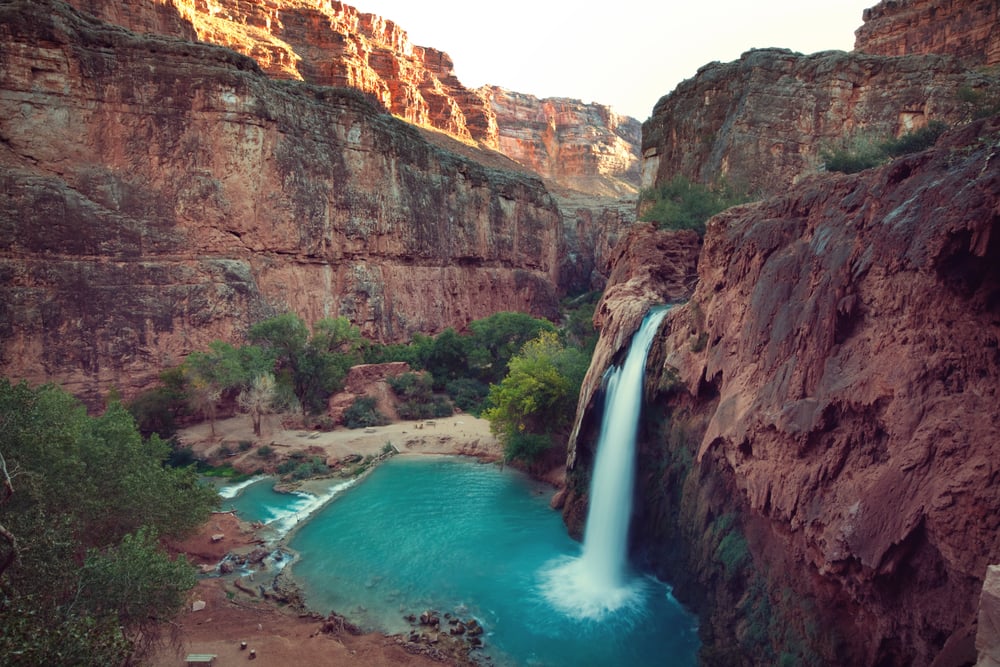
There’s no road into Supai. To reach the capital of the Havasupai Nation, you hike eight miles down into a canyon, ride a mule, or take a helicopter.
That’s your only option. About 500 people live in Supai, and their mail still arrives by mule train — one of the last places in the country where that’s true.
The village sits near the famous turquoise-blue Havasupai Falls, but the residents aren’t there for tourism. They’ve lived in this canyon for centuries.
Groceries cost two to three times more than anywhere else because everything has to be packed in. Medical emergencies are complicated.
And yet the community holds tight to this place, because it’s theirs.
Whittier, Alaska — Everyone Lives Under One Roof
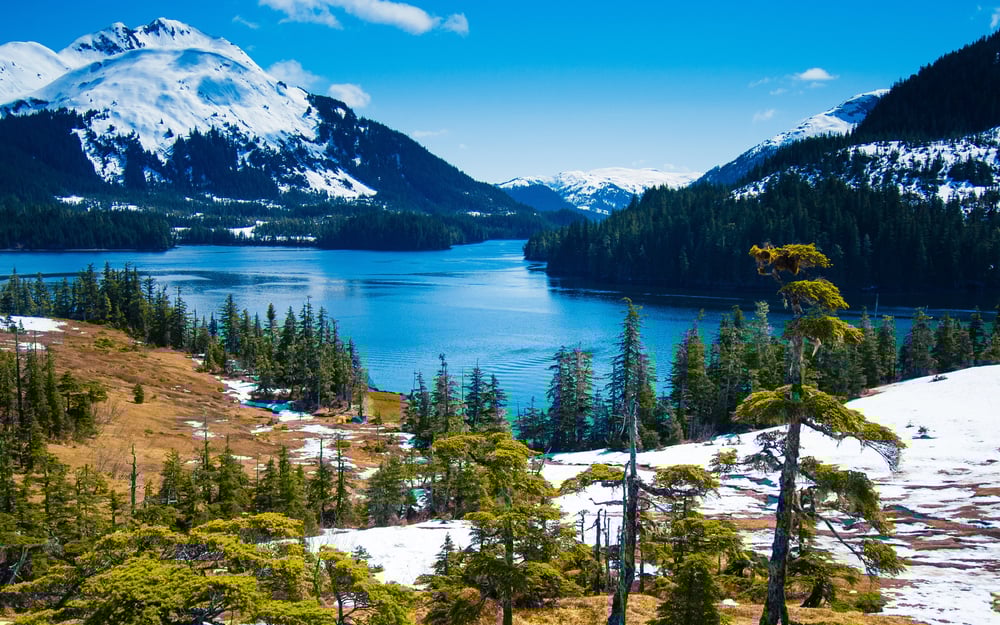
Whittier is connected to the rest of Alaska by a single road tunnel that shares its track with a railroad. The tunnel closes at night.
Nearly all of Whittier’s 200 or so residents live in one building: the Begich Towers, a 14-story former Army barracks.
Inside, you’ll find apartments, a church, a health clinic, a convenience store, and a school. In winter, people sometimes go days without stepping outside because everything they need is right there in the building.
It’s a strange, self-contained existence — part apartment complex, part small town, all under one concrete roof.
Utqiagvik, Alaska — The Northernmost City in the United States
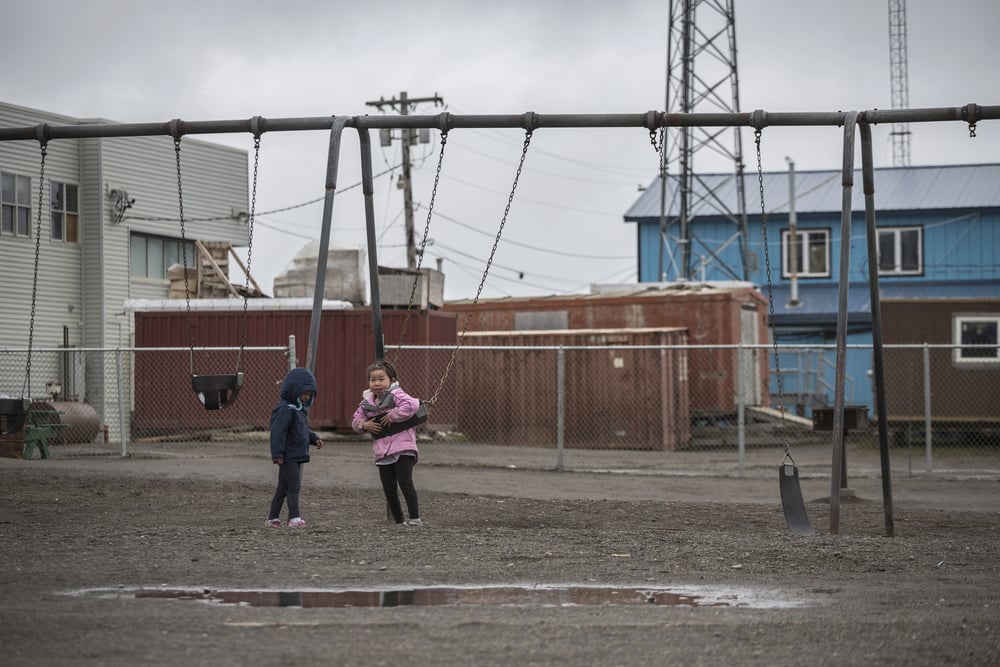
Utqiagvik (formerly known as Barrow) sits on the Arctic Ocean at the very top of Alaska. There are no roads connecting it to anywhere else.
You fly in or you don’t go. Every year, the sun disappears for about 65 days straight.
Temperatures drop well below -30°F. A gallon of milk can cost over $10 because everything arrives by cargo plane.
The Iñupiat people have lived in this region for thousands of years, and roughly 4,000 people call Utqiagvik home today. It’s a real city with schools, a hospital, and a government — but getting there means a long flight from Anchorage, which itself feels remote to most Americans.
Gambell, Alaska — A Village at the Edge of the World
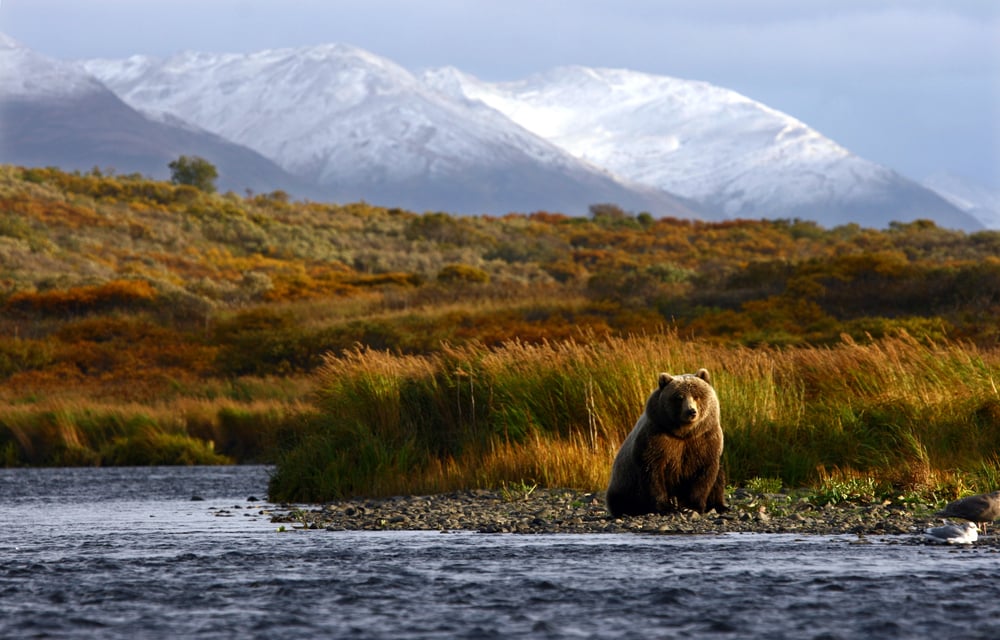
Gambell sits on the northwestern tip of St. Lawrence Island in the Bering Sea, about 36 miles from Russia. On clear days, residents can see Siberia from the shore.
The village has around 700 residents, almost all of them Siberian Yup’ik. There are no roads off the island, no ferry, and no easy way out during a storm.
Hunting walrus and bowhead whales remains central to the culture and the food supply. The nearest major city, Nome, is a 90-minute flight away — and Nome isn’t exactly a hub of convenience itself.
McCarthy, Alaska — One Road In, and That’s Being Generous
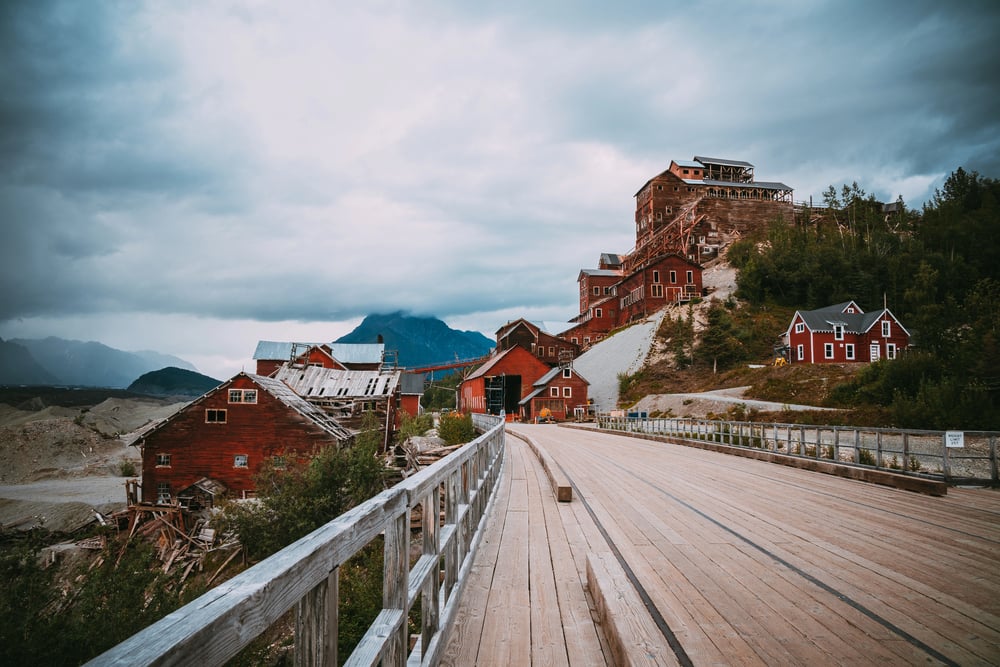
McCarthy is deep in the Wrangell-St. Elias wilderness. The only road in is 60 miles of unpaved gravel that can tear apart a standard car.
The road ends at a river, and for most of its history, visitors had to pull themselves across on a hand-operated tram. A footbridge now exists, but the vibe remains.
In winter, the town’s population drops to around 30 people. They’re surrounded by glaciers and mountains on every side, with no road connection to the main Alaska highway system.
Many residents rely on snowmachines in winter and small planes year-round for anything serious. McCarthy has a bar, a lodge, and a stubborn community that likes it exactly the way it is.
Chicken, Alaska — Named by a Town That Couldn’t Spell
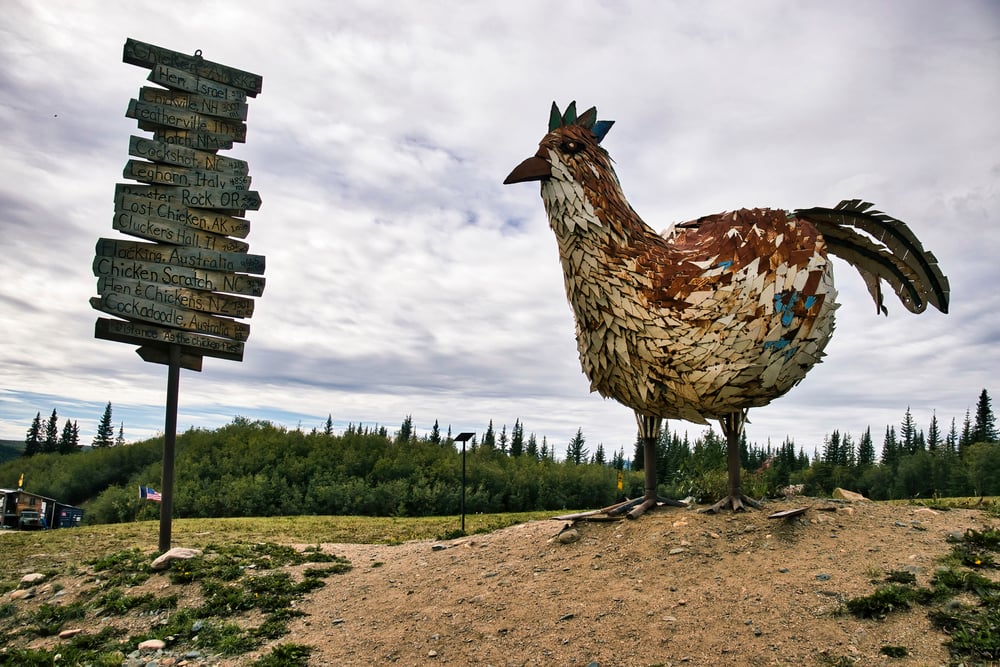
Legend has it the residents wanted to name the town Ptarmigan — the local bird — but nobody could agree on how to spell it. So they settled on Chicken instead.
The town sits near the Canadian border in eastern Alaska, with maybe 7 permanent residents in winter and a few dozen more in summer.
There’s one road in the Taylor Highway, which closes in winter entirely. No running water, no city services, no cell service worth speaking of.
The people who stay there through the dark months are a particular kind of self-reliant.
Adak, Alaska — A City Built for Thousands, Occupied by Few
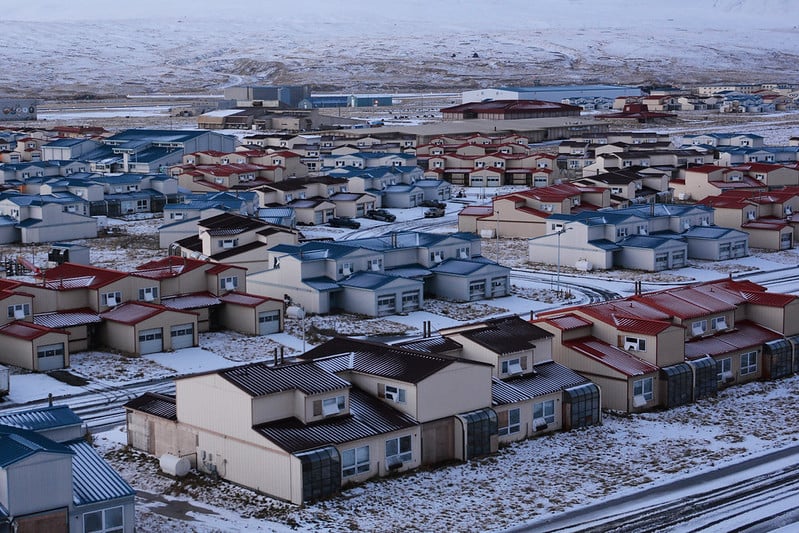
During World War II and the Cold War, Adak Island hosted a major military base. At its peak, over 6,000 people lived there.
Today the number hovers around 200. Adak is the southernmost city in Alaska, sitting in the middle of the Aleutian chain, battered by some of the worst weather on earth.
The wind rarely stops. Flights are irregular and expensive.
The infrastructure — roads, buildings, pipes — was built for a population 30 times the current size. Walking through parts of Adak feels like walking through a city that everyone decided to leave, except for the people who couldn’t imagine being anywhere else.
Monowi, Nebraska — Population: 1
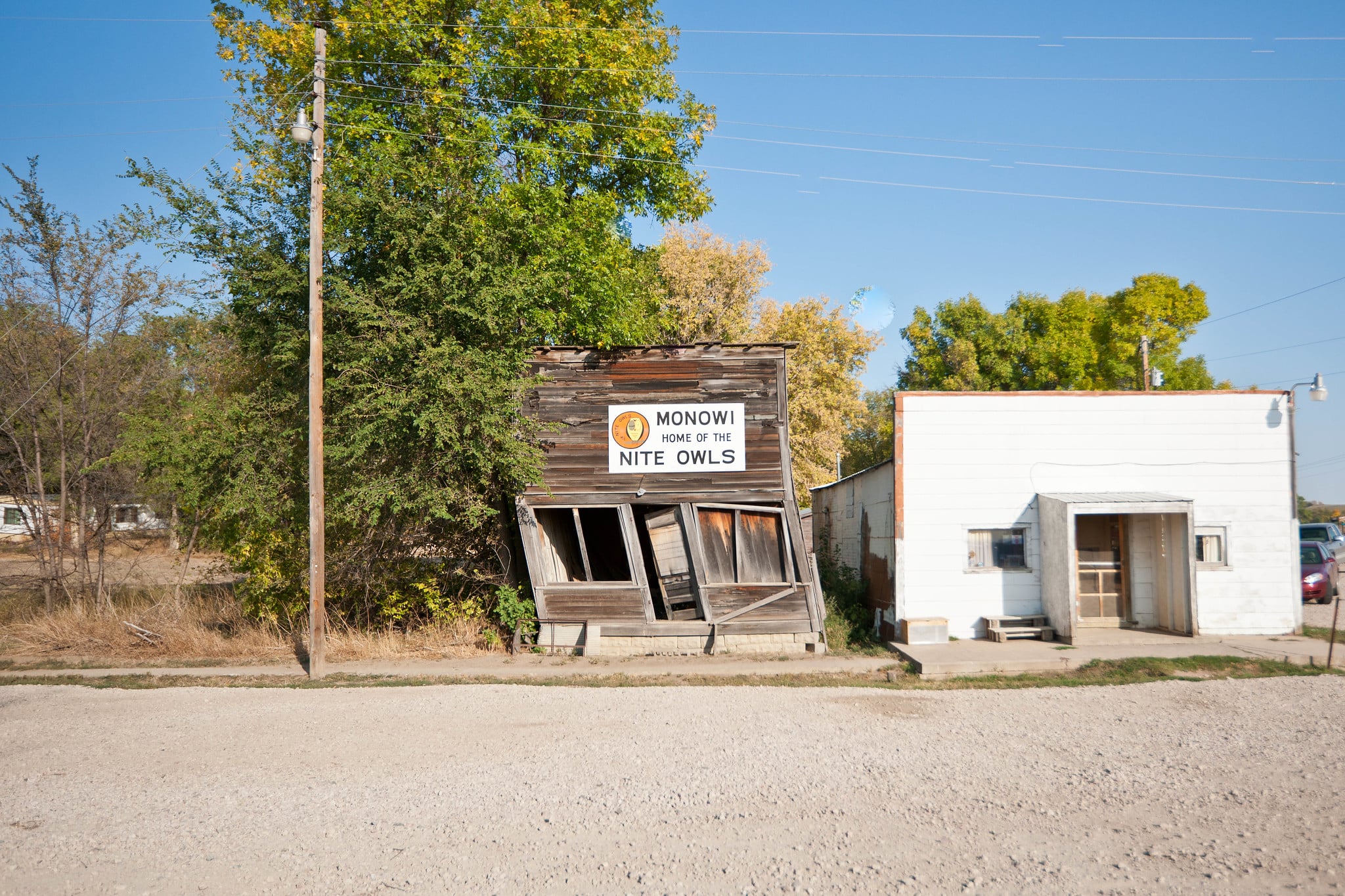
As of the last count, Monowi, Nebraska has exactly one resident: Elsie Eiler. She is the mayor, the bartender, and the librarian.
She pays taxes to herself, grants her own liquor license, and has kept the town’s bar and library open for years in honor of her late husband, Rudy.
Monowi was once a real small town with dozens of families. Time and economics emptied it out.
Elsie stayed. It may be the most isolated human settlement in the continental United States — not because of geography, but because it’s a community of one.
Lost Springs, Wyoming — Almost as Empty
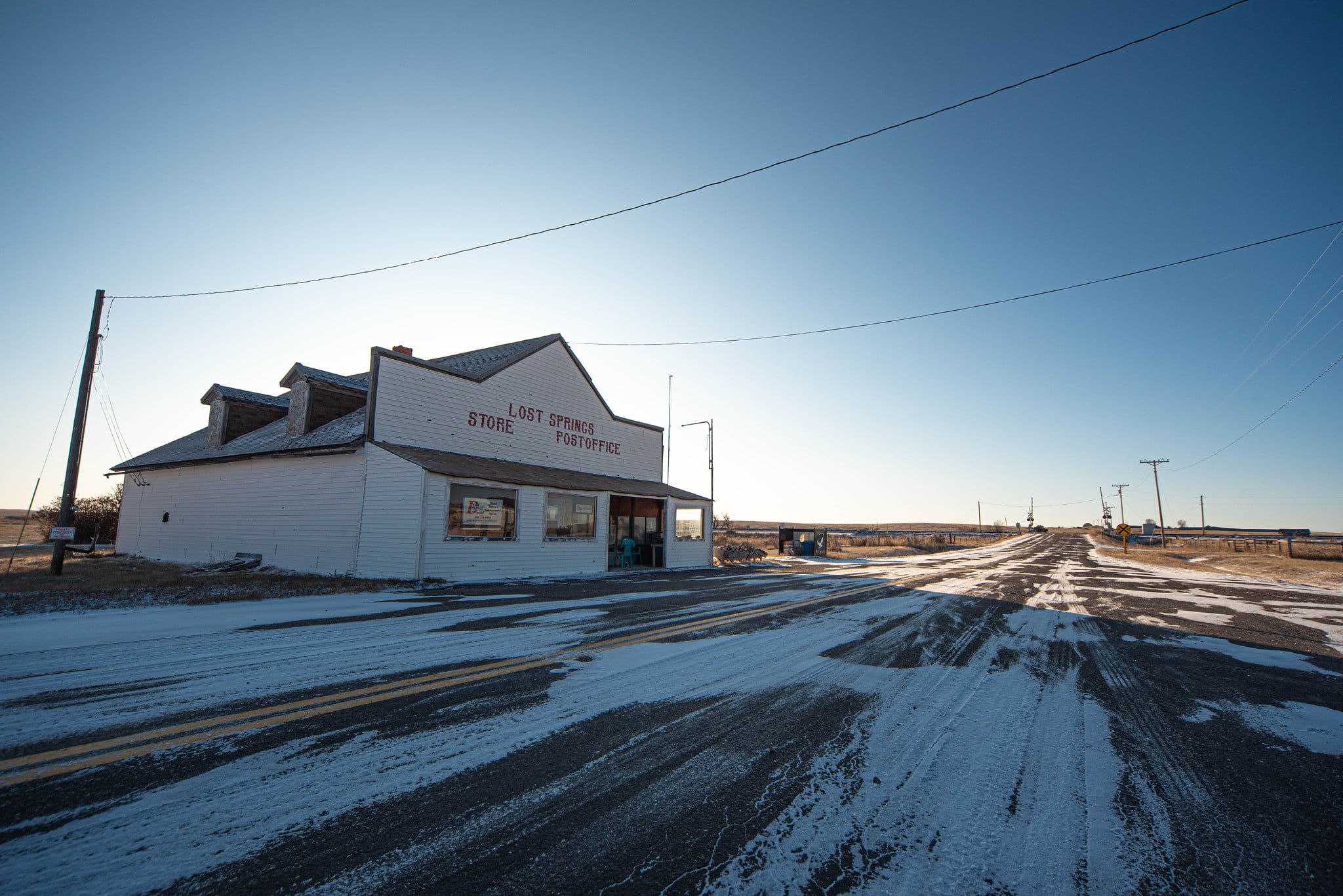
Lost Springs, Wyoming had a population of one for a while, though it has fluctuated slightly over the years. The town sits in the high plains of eastern Wyoming, surrounded by open range with little to interrupt the view for miles.
There’s a sign, a bar that comes and goes, and a handful of structures. The landscape is gorgeous if you like wide empty skies and absolute quiet.
Most people passing through are just passing through. The few who stay know exactly what they’re signing up for.
Terlingua, Texas — Ghost Town Turned Living Place
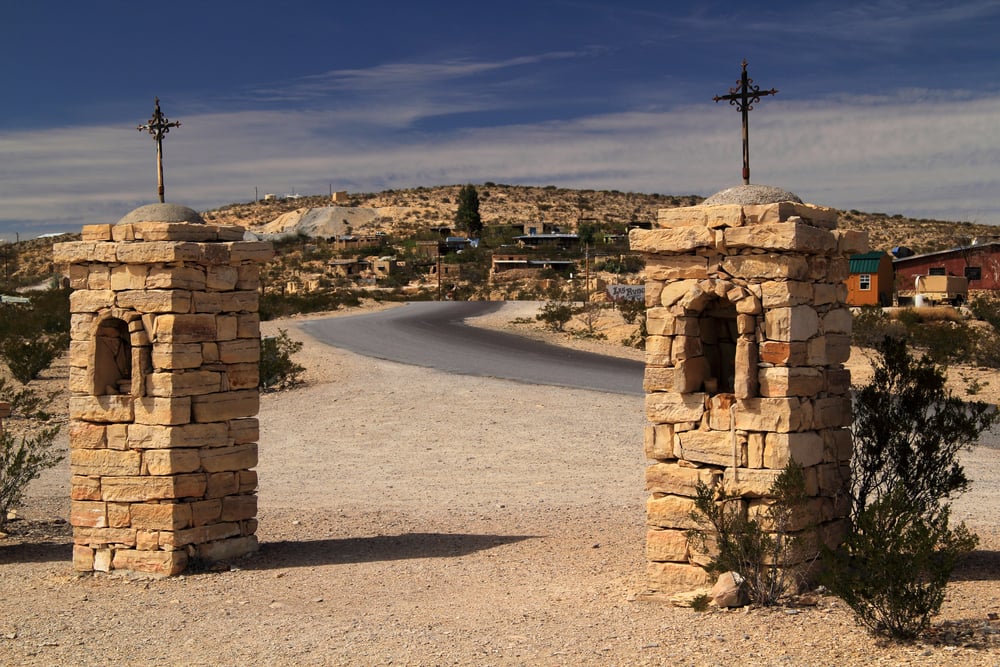
Terlingua started as a quicksilver mining town in the Big Bend region of southwest Texas. When the mines closed in the 1940s, nearly everyone left.
Then, slowly, a different kind of person started moving in — artists, eccentrics, off-grid enthusiasts. Today, Terlingua has a few hundred full-time residents scattered across a wide area near the Rio Grande.
The nearest large town is over two hours away. Summer temperatures push past 110°F.
Cell service is patchy. But the community is real and lively in its own way — there’s a famous chili cook-off, a general store, and a porch culture built around sunsets and stars so bright they’re almost unsettling.
Trona, California — The Desert Nobody Visits
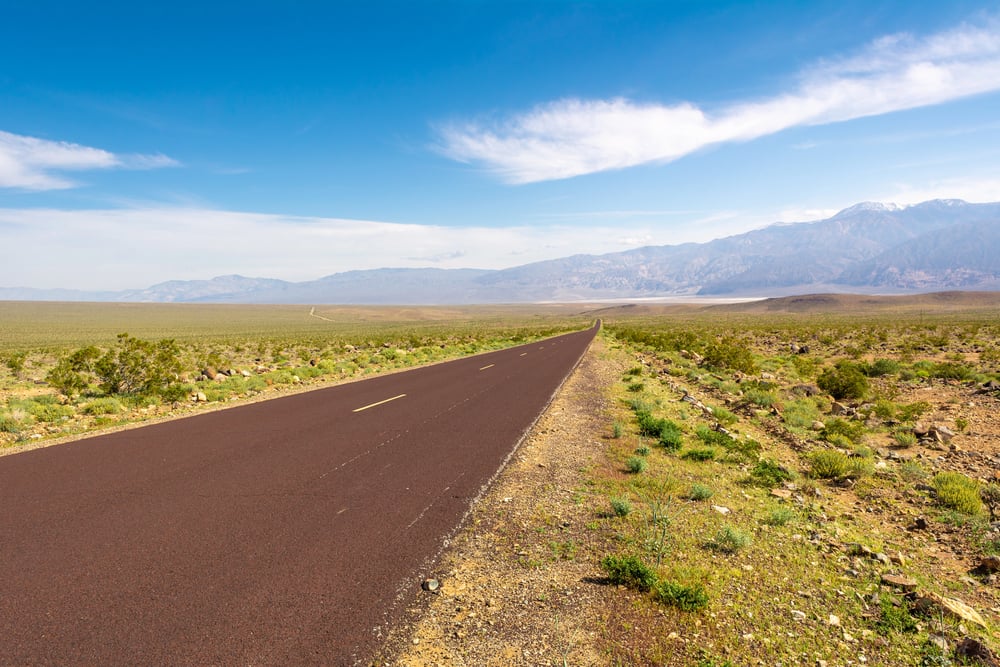
Trona sits in the Searles Valley of the Mojave Desert, surrounded by one of the strangest landscapes in California — a dry lakebed covered in mineral formations called tufa towers that look like they belong on another planet.
The town exists because of mining. Searles Lake is rich in minerals, and a processing plant has operated there for decades.
About 1,500 people live in Trona, many of them connected to the plant. The nearest city with a real grocery store or hospital is over an hour away.
Summer heat is brutal. The air smells of chemicals from the lake.
But the residents have built a community there, and many families have stayed for generations.
Lanai, Hawaii — Hawaii’s Most Forgotten Island
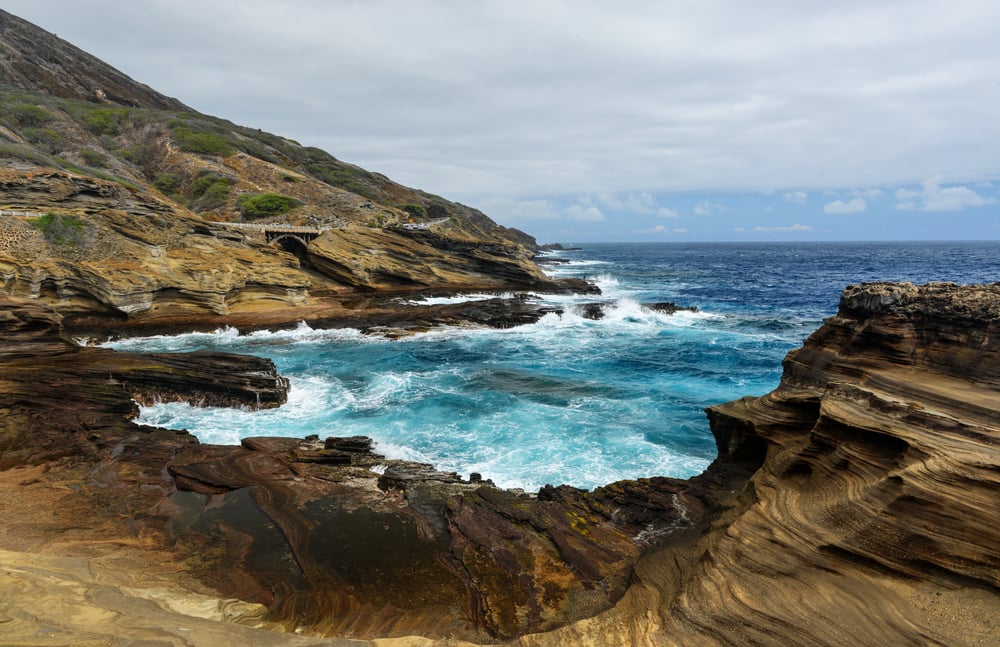
Most people who visit Hawaii never make it to Lanai. The island has no traffic lights, one small town (Lanai City), and is almost entirely owned by tech billionaire Larry Ellison.
Getting there means a ferry from Maui or a small plane — no major commercial flights, no cruise ship docks. About 3,000 people live on Lanai, many of them employed by the two luxury resorts Ellison operates.
Fresh groceries are shipped in and can be expensive and limited. The rest of the island is wild and mostly empty — red dirt roads cutting through pineapple fields that stopped producing decades ago.
It’s beautiful and odd, and the residents deal with the reality that one person owns most of the ground beneath their feet.
Rexford, Montana — Where the Road Ends at the Reservoir
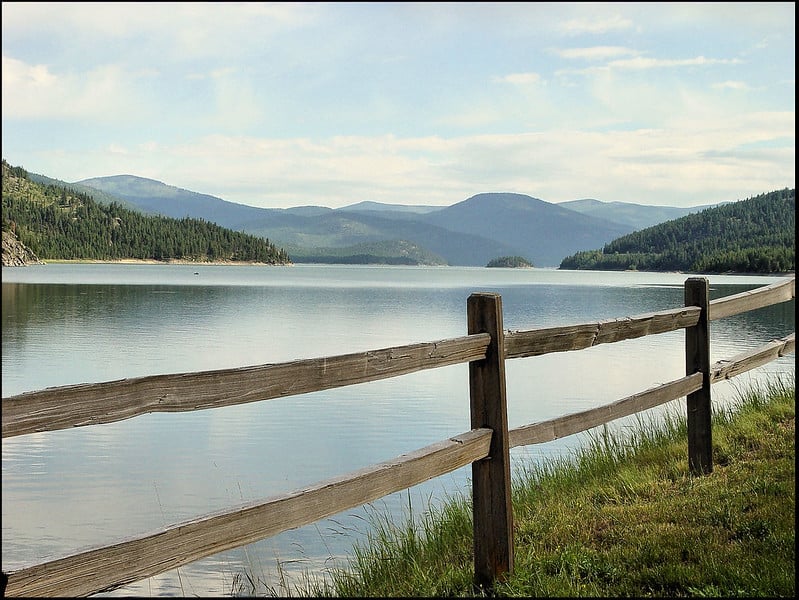
Rexford, Montana was relocated in the 1970s when the Army Corps of Engineers flooded the original town to build Lake Koocanusa. The residents were moved uphill and the old Rexford now sits at the bottom of a reservoir.
The new Rexford has a few dozen residents in a remote corner of Lincoln County near the Canadian border. The nearest city with a hospital, Kalispell, is over two hours away.
Winters are long and heavy with snow. But the lake is stunning, the mountains are close, and the people who live there tend to be deeply intentional about having chosen a place far from everything.
Centralia, Pennsylvania — A Town on Fire
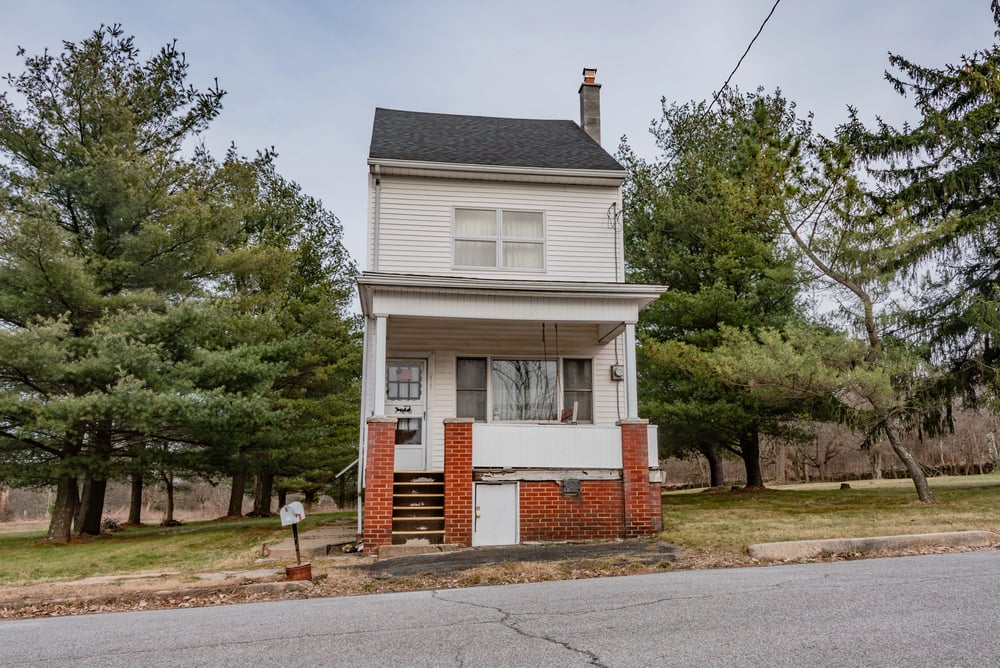
Beneath the streets of Centralia, a coal mine fire has been burning since 1962. It shows no signs of stopping — geologists estimate it could burn for another 250 years or more.
The fire caused sinkholes, released toxic gases, and cracked roads open with smoke rising from the gaps. The state condemned the town and relocated nearly all of its residents in the 1980s and 90s.
A handful refused to leave. A small group — fewer than 10 people — still lives among the abandoned homes and crumbling streets, their right to stay protected by a legal settlement.
It’s one of the strangest inhabited places in America.
Taos Pueblo, New Mexico — Continuously Occupied for Over a Thousand Years
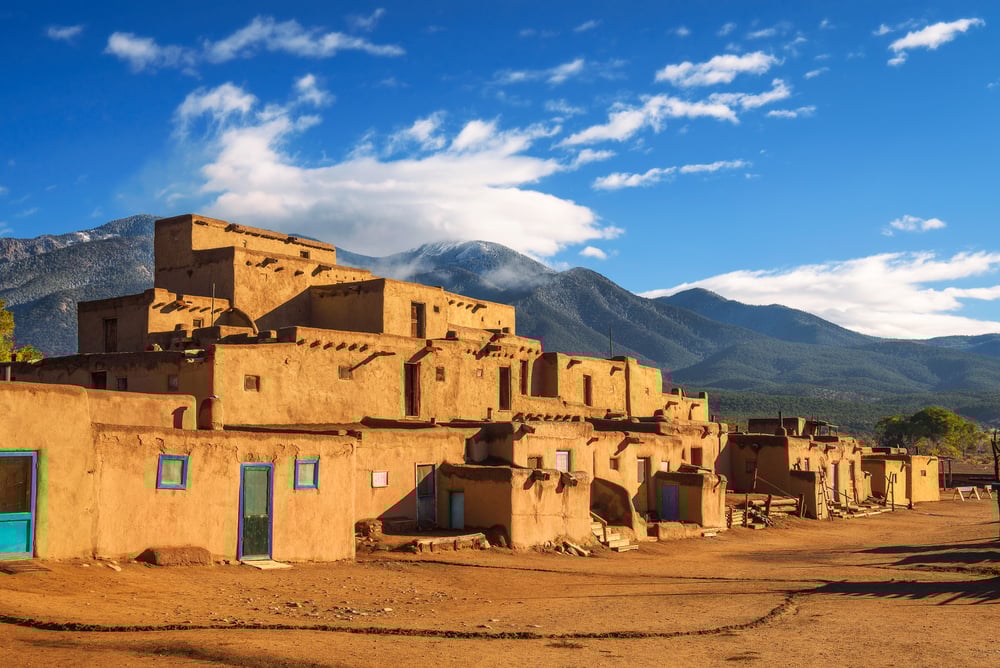
Taos Pueblo is not a ghost town or a dying community. It’s one of the oldest continuously inhabited places in North America.
The multi-story adobe structures that make up the pueblo have housed the Taos people for at least a thousand years. About 150 people live inside the ancient walls year-round without electricity or running water, by choice, as part of preserving traditional life.
The larger Taos Pueblo community numbers in the thousands and lives in the surrounding area. The residents inside the original structure rely on an acequia — a traditional water channel — for fresh water, and firelight after dark.
It’s not isolation born of hardship. It’s isolation as a form of cultural continuity.
Pie Town, New Mexico — A Dot on the Map That Actually Has Pies

Pie Town sits on US Route 60 in a remote stretch of western New Mexico, at an elevation of over 7,800 feet. The population is somewhere around 200, depending on who’s counting and who’s passing through
The town got its name from a dried-apple pie stand that operated there in the 1920s. Cafes have come and gone over the decades, but the pie tradition holds on.
Pie Town is far from everything — Albuquerque is two and a half hours away, and the surrounding landscape is wide-open high desert and rolling grassland. There’s no hospital, no chain stores, and barely a signal on most phones.
People who live there value the emptiness. They chose this particular dot on the map, and the pies don’t hurt.
What These Places Have in Common
The communities on this list are wildly different from each other. Some are indigenous villages that predate the United States itself.
Some are industrial towns that outlasted their industries. Some are places where stubborn individuals simply refused to leave when everyone else did.
But all of them share something: the people there made a decision, consciously or through inheritance, to exist outside the easy rhythms of modern American life. No quick Amazon delivery.
No hospital around the corner. No traffic, but also no safety net that most people take for granted.
What they often have instead is a fierce sense of place — a relationship to a specific patch of land, canyon, tundra, or desert that feels impossible to trade away for convenience. These aren’t communities that got left behind.
Many of them are exactly where they want to be.
More from Go2Tutors!

- The Romanov Crown Jewels and Their Tragic Fate
- 13 Historical Mysteries That Science Still Can’t Solve
- Famous Hoaxes That Fooled the World for Years
- 15 Child Stars with Tragic Adult Lives
- 16 Famous Jewelry Pieces in History
Like Go2Tutors’s content? Follow us on MSN.