16 Patents That Made People Super Rich
Behind every great invention is someone who saw a problem and refused to accept the status quo. While most patents never make their inventors a dime, a lucky few have transformed simple ideas into enormous fortunes that changed their creators’ lives forever. From accidental discoveries to years of persistent experimentation, these patent holders struck gold in the most unexpected ways.
Here’s a list of 16 patents that turned ordinary people into extraordinarily wealthy individuals.
Alexander Graham Bell – The Telephone

Alexander Graham Bell’s telephone patent, filed on March 7, 1876, is arguably one of the most valuable patents in history. Bell’s invention transformed human communication forever, laying the foundation for the global telecommunications industry.
By the end of the 19th century, Bell was worth around $1 million, which equals approximately $30 million in today’s money. His patent didn’t just make him rich – it created an entire industry that continues to generate trillions of dollars worldwide.
Chester Carlson – Xerography

Chester Carlson invented xerography (the photocopying process) in 1938 in a rented room above a bar, but it took over 20 companies rejecting his idea before anyone showed interest. When Haloid Company (later Xerox) finally commercialized his invention in 1959, Carlson’s royalties made him worth several hundred million by 1965.
Forbes estimated his fortune at $150 million in 1968, though he donated most of it to charity, giving away over $100 million during his lifetime.
Like Go2Tutors’s content? Follow us on MSN.
Lonnie Johnson – Super Soaker

NASA engineer Lonnie Johnson accidentally invented the Super Soaker in 1982 while working on an environmentally friendly heat pump. When his prototype shot a powerful stream of water across his bathroom, he immediately saw its toy potential.
After seven years of searching for a manufacturer, the Super Soaker launched in 1991 and generated $200 million in sales its first year. Johnson earned over $73 million in royalties from Hasbro, with total Super Soaker sales approaching $1 billion.
George de Mestral – Velcro

Swiss engineer George de Mestral got the inspiration for Velcro during a 1941 hunting trip when he noticed burr seeds sticking to his clothes and dog’s fur. After eight years of experimentation with different materials, he patented the hook-and-loop fastener in 1955.
His invention became a global phenomenon, and by 1957, he was selling 60 million yards per year through factories across multiple countries. The patent made him incredibly wealthy and spawned an industry worth hundreds of millions.
James Dyson – Cyclone Vacuum Technology

James Dyson developed his revolutionary bagless vacuum technology in 1980 after becoming frustrated with his clogged vacuum cleaner. He created 5,127 prototypes before perfecting his Dual Cyclone design, but British manufacturers refused to produce it because it threatened their lucrative replacement bag market.
Dyson eventually found success internationally and built a multi-billion dollar company, making him one of the wealthiest inventors in modern times.
Like Go2Tutors’s content? Follow us on MSN.
Robert Kearns – Intermittent Windshield Wipers

Robert Kearns invented the intermittent windshield wiper in the 1960s, inspired by the way human eyes blink. When auto manufacturers used his technology without permission, Kearns fought a bitter 12-year legal battle that ultimately netted him $10 million in settlements.
His David versus Goliath court victories against Ford and Chrysler became legendary, proving that individual inventors could win against corporate giants.
Art Fry – Post-it Notes

3M scientist Art Fry invented Post-it Notes in 1974 by combining a colleague’s weak adhesive with his need for bookmarks in his church hymnal. What started as a solution to keep his place while singing in the church choir became one of the most successful office products ever created.
While 3M doesn’t disclose individual royalties, Post-it Notes generate hundreds of millions in annual revenue, making Fry wealthy and earning him a place in the Inventors Hall of Fame.
Wilson Greatbatch – Implantable Pacemaker
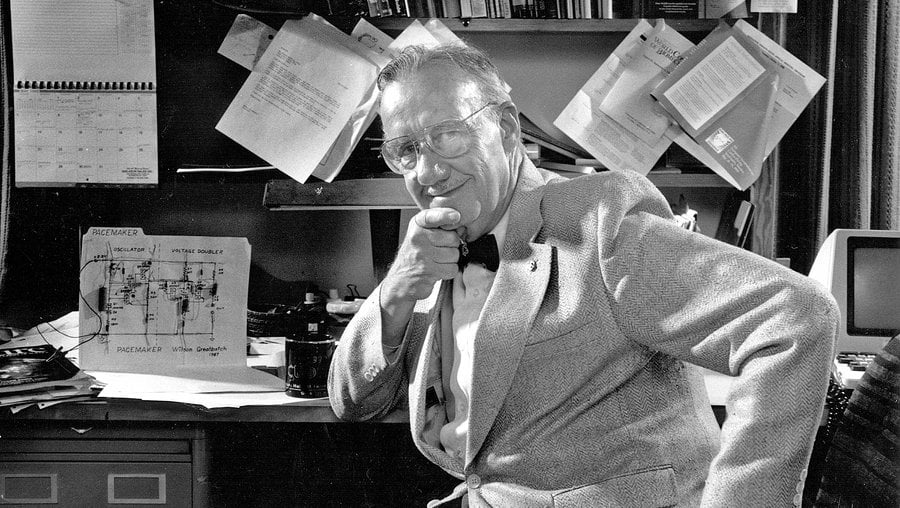
Wilson Greatbatch accidentally invented the implantable pacemaker in 1958 while building a heart rhythm recorder. He grabbed the wrong resistor, and his circuit produced electrical pulses that mimicked a human heartbeat.
His patent for the first implantable cardiac pacemaker revolutionized medicine and saved millions of lives. The technology made him wealthy and earned him over 325 patents during his lifetime, with pacemaker sales generating billions annually.
Like Go2Tutors’s content? Follow us on MSN.
Stephanie Kwolek – Kevlar

DuPont chemist Stephanie Kwolek invented Kevlar in 1965 while researching lightweight fibers for car tires during the oil crisis. Her cloudy, strange-looking polymer solution almost got thrown away, but she convinced a colleague to test it.
The resulting fiber was five times stronger than steel by weight. While Kwolek received only modest compensation as a DuPont employee, her invention generates billions in revenue for applications ranging from bulletproof vests to spacecraft.
Percy Spencer – Microwave Oven

Raytheon engineer Percy Spencer discovered microwave cooking in 1945 when a chocolate bar melted in his pocket while working with radar equipment. His experiments with popcorn and eggs led to the first microwave oven patent.
Spencer received numerous patents for microwave technology, and while his individual compensation isn’t public, microwave ovens became a multi-billion dollar industry that transformed how the world cooks food.
Bette Nesmith Graham – Liquid Paper

Bette Nesmith Graham invented Liquid Paper correction fluid in 1956 to fix typing mistakes at her secretarial job. Starting with tempera paint mixed in her kitchen blender, she built a company that she eventually sold to Gillette for $47.5 million in 1979.
Her simple solution to a common office problem made her one of the wealthiest women inventors of her time.
Like Go2Tutors’s content? Follow us on MSN.
Gary Starkweather – Laser Printer

Xerox engineer Gary Starkweather invented the laser printer in 1971 by combining xerographic technology with laser scanning. Despite initial skepticism from management, his invention revolutionized printing and generated billions in revenue.
While Starkweather’s exact compensation isn’t public, laser printing technology became fundamental to the modern office, with the global laser printer market worth tens of billions annually.
Marvin Camras – Magnetic Tape Recording

Marvin Camras invented magnetic tape recording technology in 1939 while trying to record his voice for his cousin who was overseas. His patents became the foundation for the entire magnetic recording industry, including cassette tapes, videotapes, and early computer storage.
Camras held over 500 patents and became wealthy from royalties on magnetic recording technology that dominated audio and video storage for decades.
Edwin Land – Instant Photography

Polaroid founder Edwin Land invented instant photography in 1947 after his three-year-old daughter asked why she couldn’t see a photo immediately after he took it. His instant camera patents made Polaroid one of the most successful companies of the mid-20th century, and Land became incredibly wealthy.
At its peak, Polaroid was worth billions, and Land’s patents on instant photography generated massive royalties for decades.
Like Go2Tutors’s content? Follow us on MSN.
Jerome Lemelson – Independent Inventor Extraordinaire

Jerome Lemelson holds over 600 U.S. patents, more than any other independent inventor in history. His patents covered everything from automated manufacturing to magnetic tape drives to early machine vision systems.
Through aggressive licensing and strategic patent filing, Lemelson earned over $1.5 billion in royalties during his lifetime, making him one of the wealthiest patent holders ever.
Hedy Lamarr – Frequency Hopping Technology

Hollywood actress Hedy Lamarr co-invented frequency hopping spread spectrum technology in 1942 to prevent the jamming of torpedo guidance systems. While she and her co-inventor donated their patent to the U.S. military during World War II, the technology later became fundamental to WiFi, GPS, and Bluetooth.
Though Lamarr didn’t profit from her wartime invention, her patent laid the groundwork for wireless technologies worth hundreds of billions today.
From Idea to Empire

These patent success stories remind us that brilliant ideas can come from anywhere – a frustrating household chore, a chance observation, or even a happy accident. What separates these inventors from the 97% whose patents never generate income is a combination of persistence, timing, and the ability to recognize the commercial potential of their discoveries.
Whether it took months or decades to find success, each of these inventors transformed a simple idea into a fortune that changed their lives forever.
Like Go2Tutors’s content? Follow us on MSN.
More from Go2Tutors!

- 18 Unexpectedly Valuable Collectibles You Might Have Lying Around
- 20 Little-Known Historical Battles That Had Huge Consequences
- 20 Historical Artifacts That Scientists Can’t Explain
- 15 Inventions That Were Immediately Banned After Being Created
- 20 Actors Who Were Almost Cast in Iconic Roles
Like Go2Tutors’s content? Follow us on MSN.