16 Star Patterns Every Outdoorsman Should Know
The night sky has served as humanity’s first map, clock, and compass for thousands of years. Long before GPS devices and smartphone apps, our ancestors navigated vast distances, timed their harvests, and found their way home using nothing but the stars above.
These celestial patterns remain just as reliable today, and knowing them can be invaluable when modern technology fails or when you simply want to connect with the natural world in a deeper way. Here is a list of 16 star patterns that every outdoorsman should be able to identify and use.
The Big Dipper

This is probably the most recognizable star pattern in the northern sky, looking exactly like a giant ladle or scoop. The Big Dipper serves as your cosmic compass—the two stars at the end of the cup always point toward the North Star.
It’s visible year-round throughout most of North America, though it appears to rotate around the North Star as the seasons change.
The Little Dipper
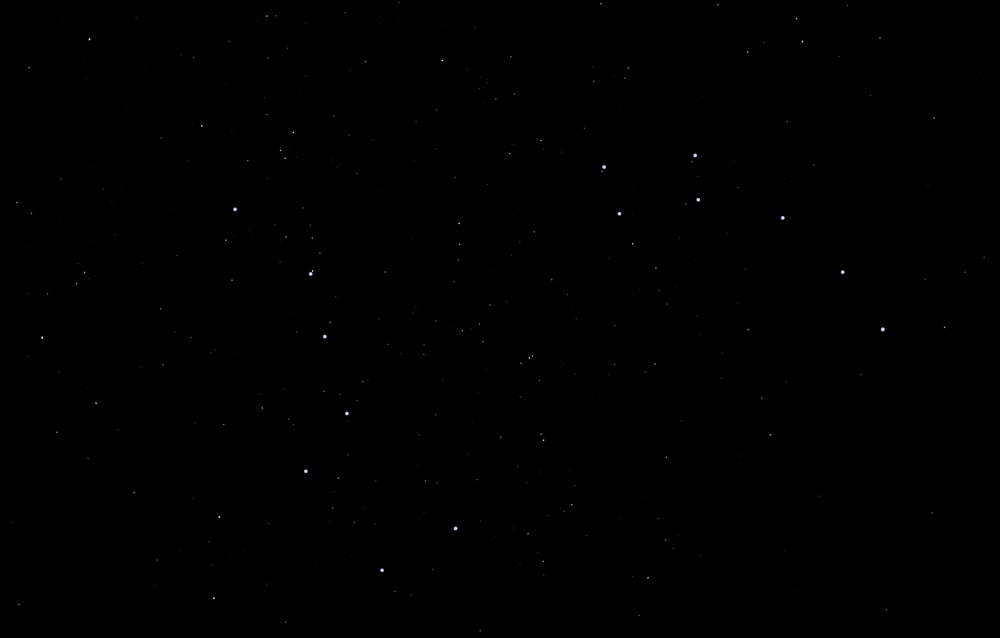
Much fainter than its big brother, the Little Dipper can be tricky to spot in areas with light pollution. The North Star sits at the end of the Little Dipper’s handle, making it the most important star for navigation.
Think of it as the period at the end of a sentence – small but crucial for understanding the whole picture.
Like Go2Tutors’s content? Follow us on MSN.
Polaris (The North Star)
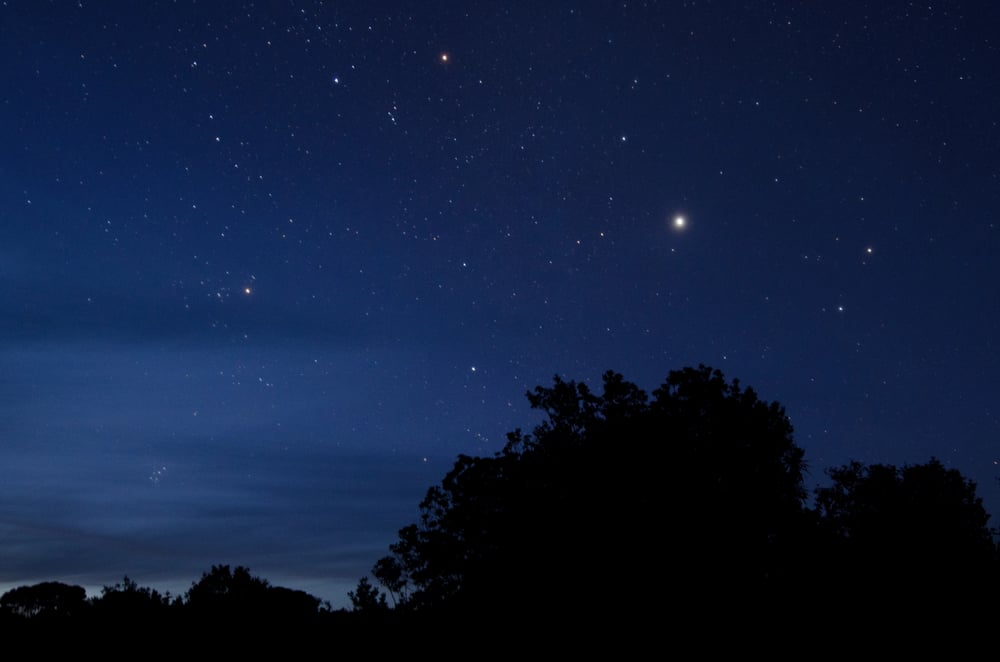
Polaris isn’t the brightest star in the sky, but it’s definitely the most useful for navigation. It sits almost directly above Earth’s North Pole, which means it stays in the same spot while all other stars appear to move around it.
Finding true north is as simple as locating this steady beacon.
Cassiopeia

This distinctive W-shaped constellation sits on the opposite side of the North Star from the Big Dipper. When the Big Dipper is low on the horizon or hidden behind trees, Cassiopeia often rides high in the sky, giving you another reliable way to find north.
It’s like having a backup compass that never needs batteries.
Orion

Winter’s most spectacular constellation dominates the southern sky from late fall through early spring. Orion’s belt—three bright stars in a perfect row—serves as a celestial landmark that’s visible from anywhere on Earth.
The constellation rises in the east around sunset during winter months, making it perfect for evening navigation.
Like Go2Tutors’s content? Follow us on MSN.
Orion’s Belt

These three stars in a straight line are impossible to miss once you know what to look for. The belt points toward other important stars and constellations, acting like a cosmic arrow.
In winter, if you’re facing Orion’s belt, you’re looking roughly south, which can help orient you when other landmarks aren’t visible.
Sirius (The Dog Star)

The brightest star in the night sky, Sirius twinkles with an intense blue-white light that makes it stand out from everything else. It follows Orion across the sky, sitting low in the southern horizon during winter evenings.
Ancient civilizations used Sirius to predict seasonal flooding and plan agricultural activities.
The Summer Triangle
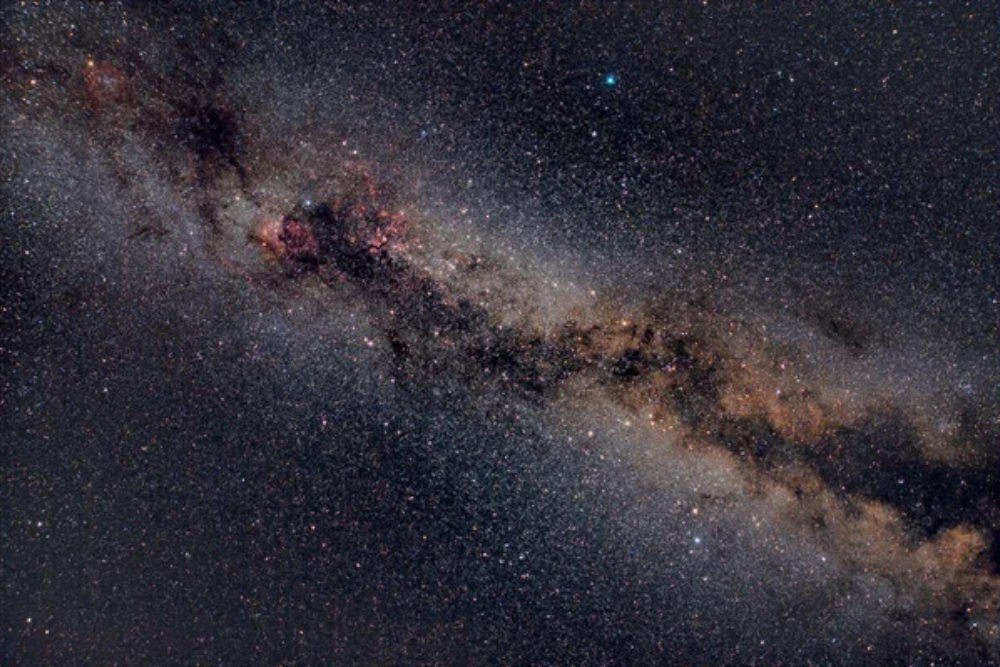
Three bright stars from different constellations form this massive triangle that dominates summer skies. Vega, Altair, and Deneb create a pattern so large it’s hard to miss once you know where to look.
This triangle serves as a roadmap to finding many other summer constellations.
Like Go2Tutors’s content? Follow us on MSN.
The Southern Cross

While not visible from most of the United States, this compact cross-shaped pattern is essential for navigation in the Southern Hemisphere. The Southern Cross points toward the South Celestial Pole, serving the same function as the North Star does up north.
It’s considerably smaller than most people expect, about the size of your fist held at arm’s length.
Ursa Major

The Big Dipper is actually just the tail and hindquarters of this much larger constellation representing a great bear. The full pattern includes a triangle of stars forming the bear’s head and additional stars marking its feet.
Learning the complete Ursa Major helps you navigate even when parts of the Big Dipper are obscured by terrain or weather.
Leo the Lion

This springtime constellation looks remarkably like its namesake, with a distinctive backwards question mark forming the lion’s head and mane. Leo rises in the east during spring evenings and can help you determine both direction and season.
The bright star Regulus marks the lion’s heart and serves as a useful navigation reference.
Like Go2Tutors’s content? Follow us on MSN.
Scorpius

Summer’s most recognizable constellation actually looks like a scorpion, complete with a curved tail and bright red heart star called Antares. Scorpius sits low in the southern sky during summer months, and its distinctive shape makes it easy to identify even in areas with moderate light pollution.
Ancient cultures used this pattern to mark the height of summer.
The Pleiades

Also known as the Seven Sisters, this tight cluster of stars looks like a tiny dipper to most people. The Pleiades rises in the east during autumn and has been used as an eye test for centuries—people with good vision can see six or seven individual stars.
This cluster appears much larger and more obvious than most beginners expect.
Cygnus the Swan

This large cross-shaped constellation flies along the Milky Way during summer and fall, with its brightest star Deneb, marking the swan’s tail. Cygnus is sometimes called the Northern Cross, and it’s positioned perfectly for navigation when other familiar patterns aren’t visible.
The constellation appears to be flying south along the river of stars that forms the Milky Way.
Like Go2Tutors’s content? Follow us on MSN.
Draco the Dragon

This long, winding constellation snakes between the Big and Little Dippers, wrapping around the North Star like a celestial serpent. Draco is faint, but once you learn its pattern, it becomes a useful tool for finding north when other constellations are hidden.
The dragon’s head is marked by a small trapezoid- or diamond-shaped cluster of stars that’s easier to spot than the rest of the body.
Andromeda

This constellation contains the famous Andromeda Galaxy, the most distant object visible at over 2 million light-years away. The constellation itself forms a large square connected to lines of stars extending outward.
Finding Andromeda requires dark skies, but it’s worth the effort for the connection to deep space it provides.
Navigating by Ancient Light

These star patterns have guided travelers for millennia because they represent something more reliable than any human technology—the fundamental structure of our cosmic neighborhood. While satellites can fail and batteries die, the stars continue their predictable dance across the heavens every single night.
Learning to read these celestial signposts connects you to countless generations of explorers, hunters, and adventurers who looked up at the same patterns and found their way home. In our age of glowing screens and GPS dependence, the ability to navigate by starlight remains one of the most valuable skills an outdoorsman can possess.
Like Go2Tutors’s content? Follow us on MSN.
More from Go2Tutors!

- 16 Restaurant Chains That Went Too Fast
- 12 Things Sold in the 80s That Are Now Illegal
- 15 VHS Tapes That Could Be Worth Thousands
- 17 Historical “What Ifs” That Would Have Changed Everything
- 18 TV Shows That Vanished Without a Finale
Like Go2Tutors’s content? Follow us on MSN.