16 Stories Behind Famous Military Code Names
Military code names have evolved from simple security measures into powerful symbols that capture the imagination of entire nations. What started as basic operational security during World War I has transformed into an art form where generals, admirals, and Pentagon officials carefully craft names that inspire troops, reassure allies, and sometimes intimidate enemies.
These aren’t just random words pulled from a hat. Every famous military operation name tells a story about the people who chose it, the circumstances they faced, and the message they wanted to send to the world. Here’s a list of 16 fascinating stories behind the code names that shaped military history.
Operation Dynamo

The evacuation at Dunkirk in 1940 got its name from the most mundane of sources. Vice Admiral Bertram Ramsay and his staff worked in a room deep within Dover Castle’s tunnel system that had once housed an electrical generator called a dynamo.
When they needed a code name for the desperate rescue mission, someone simply looked around the room and spotted the old equipment. From that humble beginning, Operation Dynamo became synonymous with one of the most miraculous military evacuations in history, saving over 338,000 Allied troops.
Operation Overlord
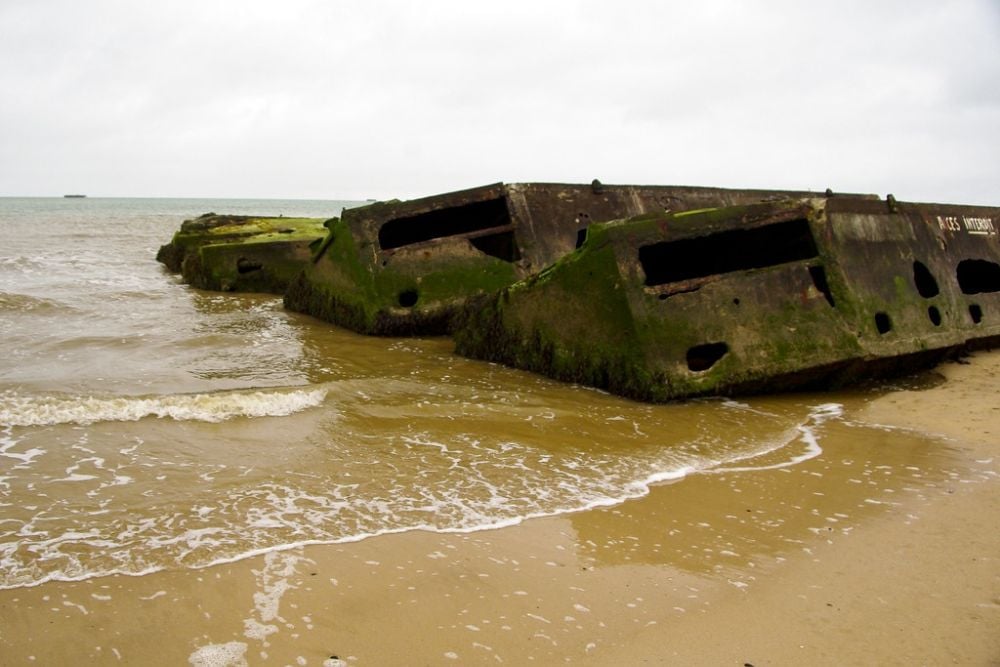
Winston Churchill personally chose this name for the D-Day landings, and he meant every syllable. The British Prime Minister wanted a name that conveyed absolute authority and dominance over the enemy.
‘Overlord’ suggested not just victory, but complete supremacy over Nazi Germany. Churchill was deeply involved in naming operations and had strong opinions about avoiding frivolous names that might dishonor the sacrifice of those involved.
The name proved prophetic as the operation did indeed establish Allied overlordship of Western Europe.
Like Go2Tutors’s content? Follow us on MSN.
Operation Desert Storm

This wasn’t the original name for the Gulf War offensive. Air Force planners had dubbed their air campaign ‘Instant Thunder,’ and General Schwarzkopf borrowed the storm metaphor to create Desert Storm.
The name perfectly captured the image of overwhelming natural forces unleashed against Iraq. Schwarzkopf himself played on the metaphor’s power, telling his troops ‘You must be the thunder and lightning of Desert Storm,’ a statement that was widely publicized and admired.
Operation Rolling Thunder
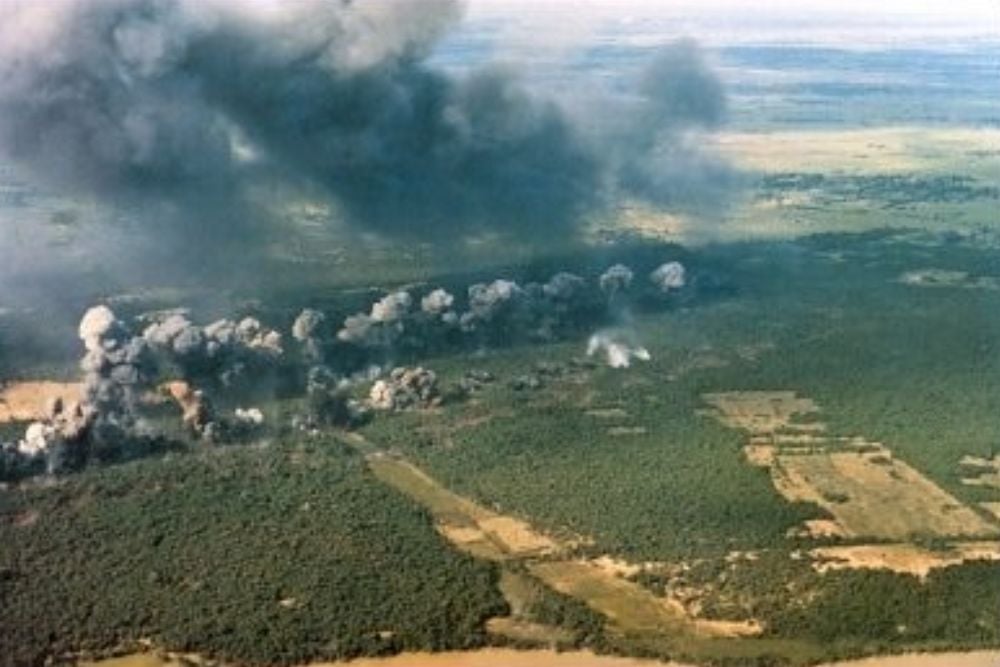
The Vietnam War’s massive bombing campaign against North Vietnam earned its name from a desire to project relentless, overwhelming force. The operation ran from 1965 to 1968 and became so culturally significant that the name was later adopted by a veterans’ advocacy group, a 1977 movie, an annual motorcycle rally, and even a Bob Dylan concert tour.
The name suggested an unstoppable force of nature, though the operation itself proved less decisive than its dramatic moniker implied.
Operation Just Cause

This 1989 invasion of Panama marked a turning point in military naming strategy. The original plan was called ‘Blue Spoon,’ but General James Lindsay called the Joint Chiefs to complain, asking ‘Do you want your grandchildren to say you were in Blue Spoon?’
The name was hastily changed to Just Cause, launching an era where operation names became public relations tools designed to justify military action to the American people.
Like Go2Tutors’s content? Follow us on MSN.
Operation Barbarossa

Hitler originally approved ‘Operation Fritz’ for the invasion of the Soviet Union, named after the son of one of the planners. Recognizing the inadequacy of such a casual name for history’s largest military operation, Hitler upgraded it to Barbarossa, after Frederick I Barbarossa, the Holy Roman Emperor who ‘extended German authority over the Slavs in the east and who, legend said, would rise again to establish a new German Empire’.
The name carried both historical weight and mythical prophecy.
Operation Urgent Fury

The 1983 invasion of Grenada received a name that sounds like the title of a movie that would pair Chuck Norris and Jean-Claude Van Damme as grizzled special ops leaders. Military planners in the 1980s were experimenting with more aggressive-sounding names, and Urgent Fury perfectly captured the Reagan administration’s approach to projecting American strength in the Caribbean.
Operation Market Garden

British forces chose this deceptively peaceful name for their ambitious 1944 plan to capture Dutch bridges and end the war by Christmas. The ‘Market’ referred to the airborne drops, while ‘Garden’ designated the ground forces’ advance.
The pastoral imagery masked one of World War II’s most audacious operations, though the name’s gentle tone proved sadly appropriate given the operation’s mixed results at Arnhem.
Like Go2Tutors’s content? Follow us on MSN.
Operation Eagle Claw

The failed 1980 attempt to rescue American hostages in Iran received a name that embodied American power and precision. Eagles represented strength and sharp talons suggested a swift, decisive strike.
Unfortunately, the operation’s mechanical failures and tragic helicopter crash made the name bitterly ironic, highlighting how even the most confident names can’t guarantee success.
Operation Torch

The Allied invasion of North Africa in 1942 took its name from the idea of bringing the light of freedom to a continent darkened by Axis occupation. American and British planners wanted a name that suggested both illumination and the burning away of enemy resistance.
The torch metaphor also connected to the Olympic torch, symbolizing international cooperation between the Allied nations.
Operation Toenails

The 1943 Allied invasion of New Georgia in the Solomon Islands carried one of the war’s more peculiar names, and the reason behind it seems to have been lost to history. Military historians have never uncovered why someone chose such an unglamorous name for a significant Pacific Theater operation.
Perhaps it reflected the nitty-gritty nature of island warfare, or maybe someone simply had a sense of humor about the whole affair.
Like Go2Tutors’s content? Follow us on MSN.
Operation Paul Bunyan

This operation put a decisive end to the most contentious tree dispute between two neighbors in history. In 1976, North Korean guards killed two American officers who were trying to trim a tree that blocked visibility in the Korean Demilitarized Zone.
The American response involved sending a massive force to cut down the entire tree, named after the legendary American lumberjack. The over-the-top name perfectly matched the absurd escalation of a landscaping dispute into an international incident.
Operation Beastmaster

This 2006 operation cleared three neighborhoods in Baghdad’s Ghazaliya suburb, an area known as ‘IED Alley East.’ Even though none of the soldiers used scimitars or could telepathically communicate with animals like in the movie, U.S. troops worked with the Iraqi Army to uncover seven weapon caches and capture a high-value target.
The name came from the 1982 fantasy film, showing how pop culture increasingly influenced military naming conventions.
Operation Frequent Wind

The helicopter evacuation of Saigon in 1975 needed a name that wouldn’t reveal its purpose to potential enemies. ‘Frequent Wind’ sounded like a routine weather operation but actually described the constant helicopter traffic that would lift Americans and South Vietnamese allies to safety.
The operation evacuated 1,373 American civilians, 5,500 Vietnamese nationals, and 989 Marines as North Vietnamese forces closed in on the South Vietnamese capital.
Like Go2Tutors’s content? Follow us on MSN.
Operation Kayla Mueller

The 2019 Special Operations raid that eliminated ISIS leader Abu Bakr al-Baghdadi was named in memory of one of Baghdadi’s many victims. Kayla Mueller was an American aid worker who was tortured and killed while held captive by ISIS.
Naming the operation after her transformed a tactical military action into a statement about justice and remembrance, showing how modern military naming has evolved to honor victims rather than just project power.
Operation Magneto

Almost 20 years before the superhuman mutant of the same name was manipulating magnetic fields in X-Men comics, Allied forces used this code name for a 1945 conference among Winston Churchill, Josef Stalin, and FDR at Yalta. While not strictly a military operation, the three leaders met to discuss securing Germany’s unconditional surrender and dividing post-war spoils.
The name’s later association with a comic book villain adds an unintended layer of irony to this pivotal moment in world history.
From Bunnyhugs to Battlefields

The evolution of military naming reflects broader changes in how wars are fought and justified. What began as simple operational security during World War I became a sophisticated tool for managing public opinion by the Gulf War.
Churchill’s warning against names like ‘Bunnyhug’ or ‘Ballyhoo’ that might disparage operations or allow grieving families to mock their loved ones’ sacrifice now seems quaint in an era of focus-grouped operation names. Modern military leaders understand that a well-chosen name can inspire troops, reassure allies, and help justify conflicts to skeptical publics, making the art of naming operations as strategically important as the operations themselves.
Like Go2Tutors’s content? Follow us on MSN.
More from Go2Tutors!

- 16 Historical Figures Who Were Nothing Like You Think
- 12 Things Sold in the 80s That Are Now Illegal
- 15 VHS Tapes That Could Be Worth Thousands
- 17 Historical “What Ifs” That Would Have Changed Everything
- 18 TV Shows That Vanished Without a Finale
Like Go2Tutors’s content? Follow us on MSN.