16 Structures Built Without Modern Tools
When you see a massive construction project today, it’s hard to imagine the site without towering cranes, hydraulic excavators, and cement trucks rumbling around like mechanical dinosaurs. Yet scattered across our planet stand monuments that make our modern engineering feats look almost ordinary – structures built by people who had never seen a powered machine, used only muscle power and ingenuity, and somehow created wonders that have lasted thousands of years.
These ancient builders didn’t have blueprints drawn on computer screens or laser levels to ensure perfect alignment. Instead, they relied on mathematical genius, astronomical knowledge, and construction techniques so sophisticated that modern engineers still scratch their heads trying to figure out exactly how they did it. What’s even more remarkable is that many of these structures demonstrate precision that rivals what we can achieve today with all our advanced technology.
Here is a list of 16 incredible structures that prove human determination and creativity can triumph over any technological limitation, showing us that sometimes the most impressive achievements come not from having the best tools, but from making the most of what you have.
Great Pyramid of Giza, Egypt
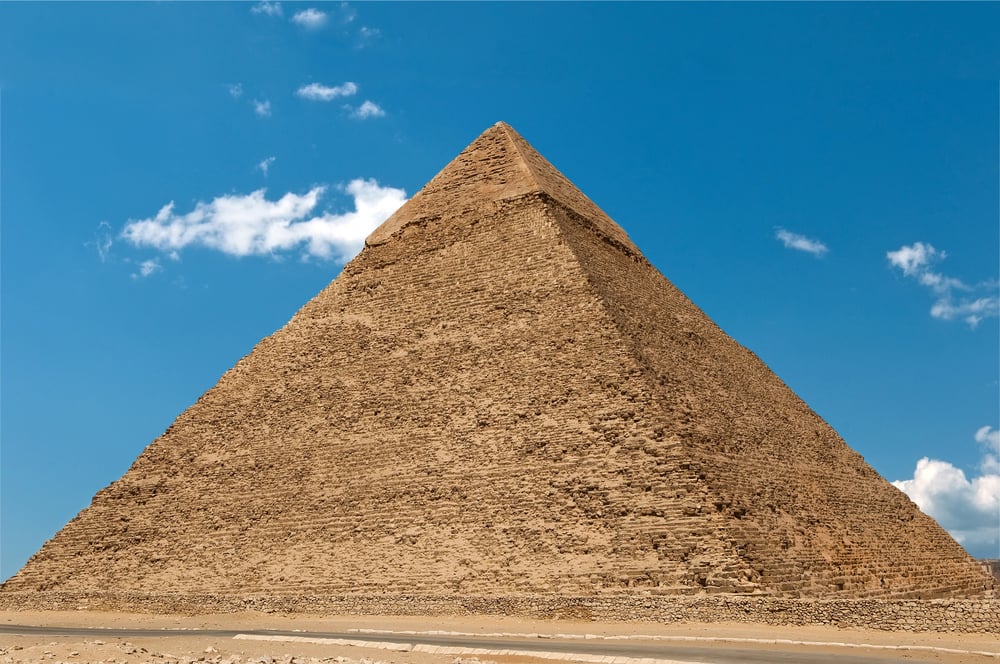
The Great Pyramid of Giza stands as perhaps the most mind-boggling construction achievement in human history, built around 2580-2560 BCE using nothing more sophisticated than copper tools, wooden sledges, and ramps. Workers somehow managed to place over 2.3 million limestone blocks, each weighing between 2.5 and 15 tons, with such precision that the entire 13-acre base is level within just a fraction of an inch.
The logistics alone would challenge modern construction teams – ancient Egyptians had no pulleys, no wheels, and no iron tools, yet they achieved accuracy comparable to what we can accomplish today with laser-guided equipment and computer-controlled machinery.
Stonehenge, England
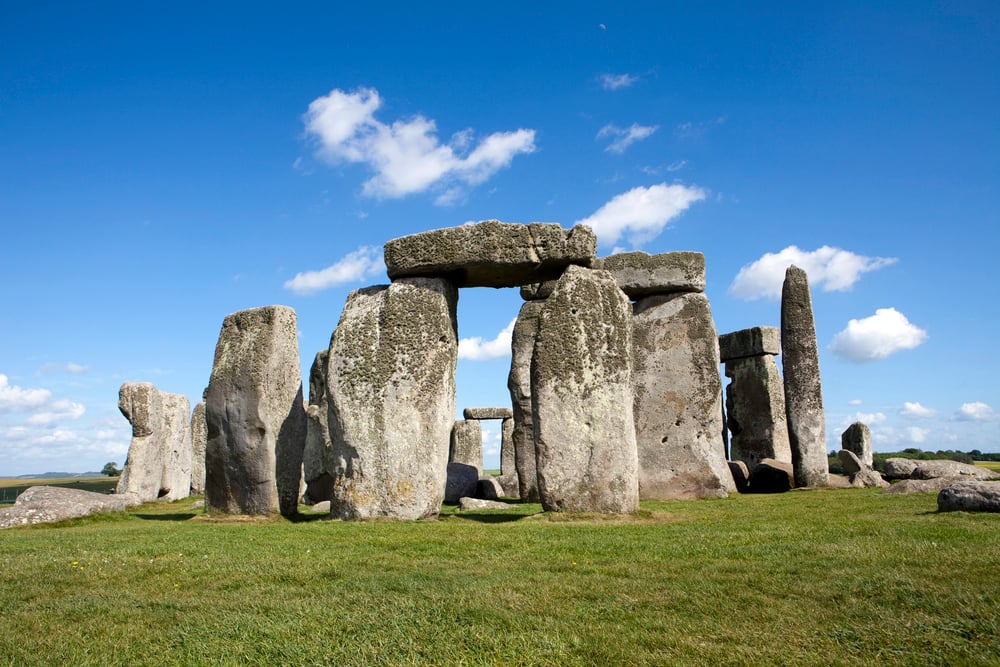
Stonehenge required ancient Britons to transport massive sarsen stones weighing up to 50 tons across 25 miles of countryside using only wooden sledges, log rollers, and rope around 3100-1600 BCE. The smaller bluestones traveled an even more incredible 150 miles from Wales, likely moved by a combination of overland sledding and water transport.
What makes this feat even more impressive is that the builders achieved perfect astronomical alignments, with the monument precisely oriented to capture the summer and winter solstices, proving they possessed sophisticated knowledge of celestial movements without any modern measuring instruments.
Machu Picchu, Peru

Built around 1450 CE high in the Andes Mountains, Machu Picchu demonstrates the Inca’s mastery of working with bronze tools, stone hammers, and wooden levers to create structures that have withstood centuries of earthquakes. The Inca used no wheels, iron tools, or mortar, yet their precisely cut stones fit together so perfectly that you can’t slide a knife blade between them.
Even more remarkable, they somehow transported these massive granite blocks up nearly vertical mountain slopes and arranged them to align perfectly with astronomical events like solstices and equinoxes, creating a city that seems to float among the clouds.
Angkor Wat, Cambodia

The Khmer empire constructed Angkor Wat between 1113-1150 CE as the world’s largest religious complex, covering 162 hectares and requiring an estimated 300,000 workers and 6,000 elephants to move sandstone blocks from quarries over 30 miles away. Without modern machinery, builders created a sophisticated water management system, precise astronomical alignments, and intricate stone carvings that cover nearly every surface.
The temple’s design replicates the Hindu universe in miniature, with the central towers representing Mount Meru and the surrounding moat symbolizing the cosmic ocean, all achieved through careful planning and mathematical precision rather than modern surveying equipment.
Great Wall of China
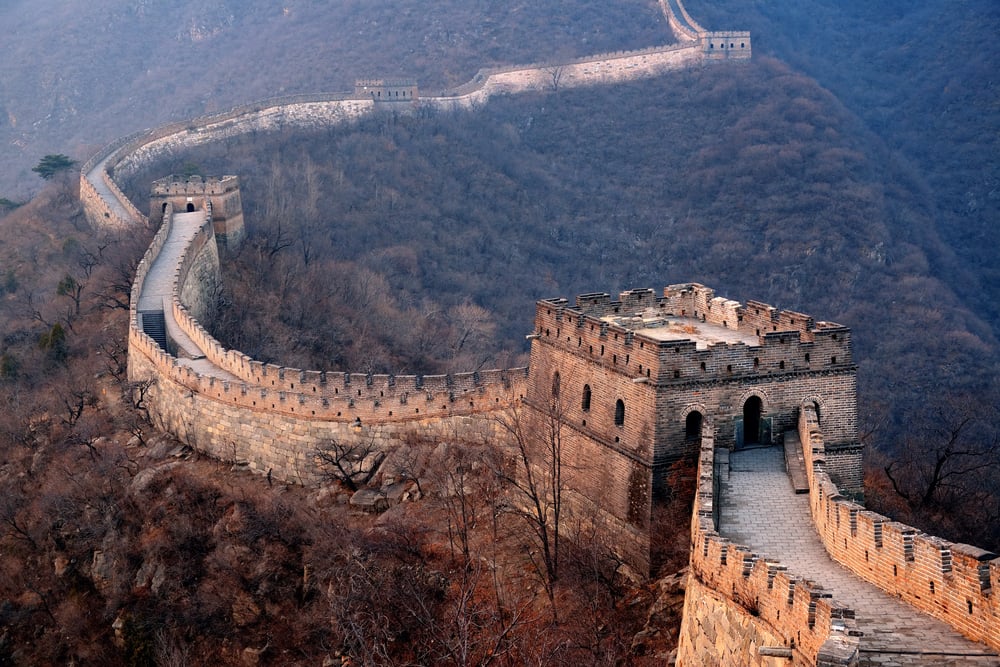
Stretching over 13,000 miles across northern China, the Great Wall represents one of humanity’s most ambitious construction projects, built over more than 2,000 years starting in the 7th century BCE using only hand tools, human labor, and animal power. Workers moved countless tons of stone, brick, and earth using wheelbarrows, carrying poles, and rope-and-pulley systems, often working in extreme weather conditions across mountains, deserts, and grasslands.
The wall required precise engineering to follow the natural contours of the landscape while maintaining defensive effectiveness, with watchtowers positioned at strategic intervals to create an integrated communication system spanning thousands of miles.
Colosseum, Rome

Roman engineers completed the Colosseum in 80 CE using a sophisticated understanding of concrete, arch construction, and hydraulic engineering that wouldn’t be matched again for over a thousand years. Without powered machinery, workers lifted massive travertine blocks weighing several tons each using only ropes, pulleys, and human-powered cranes called treadwheel cranes.
The amphitheater’s complex underground system included elevators operated by counterweights and pulleys to raise animals and scenery to arena level, plus an intricate network of corridors and chambers that could be flooded for mock naval battles or drained within hours.
Petra, Jordan
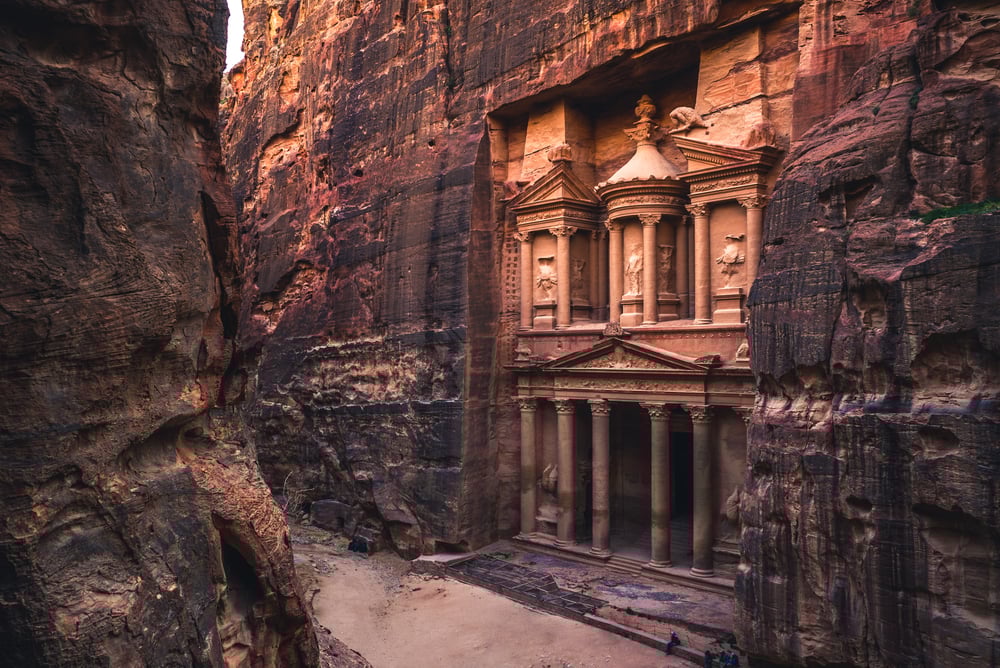
The Nabataeans carved the magnificent city of Petra directly into rose-colored sandstone cliffs between the 4th century BCE and 2nd century CE, using only iron tools, chisels, and incredible artistic skill. Working entirely by hand, they created elaborate facades, burial chambers, and water systems that demonstrate both engineering prowess and aesthetic genius.
The city’s sophisticated hydraulic system included dams, cisterns, and channels carved into rock faces that collected and stored precious rainwater in the desert, allowing a thriving civilization to flourish in one of the world’s most arid regions.
Chichen Itza, Mexico
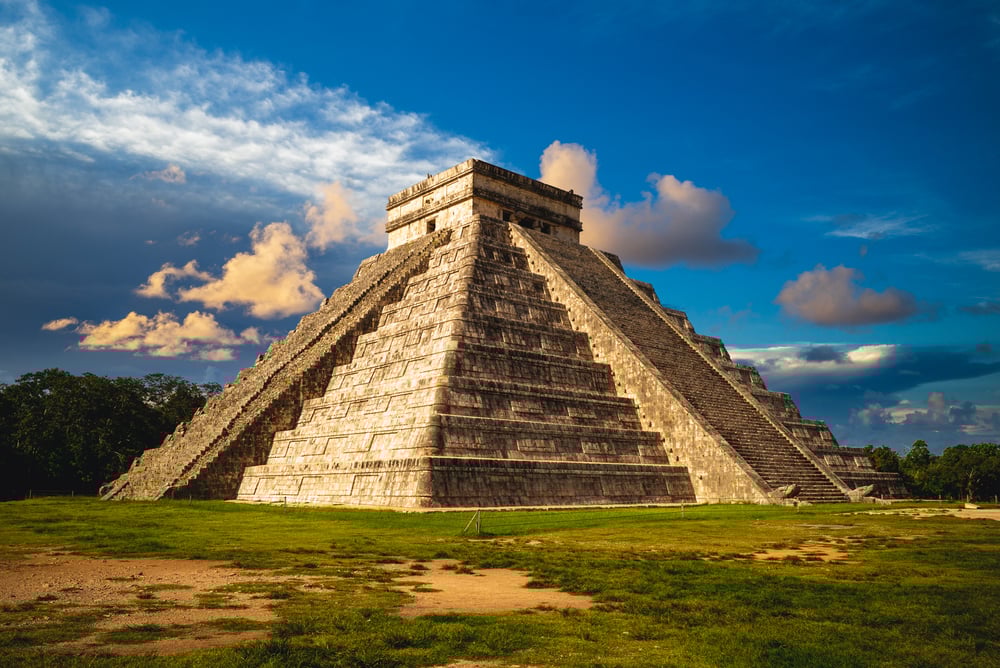
The Maya constructed Chichen Itza’s iconic El Castillo pyramid with such mathematical precision that the structure contains exactly 365 steps – one for each day of the solar year – and creates the illusion of a serpent slithering down the stairs during equinoxes. Built between the 9th and 10th centuries CE using stone tools and human labor, the pyramid demonstrates the Maya’s advanced understanding of astronomy, mathematics, and acoustics.
The site’s massive court for playing the ritual game was constructed with such acoustic precision that a whisper at one end can be heard clearly at the opposite end 500 feet away.
Göbekli Tepe, Turkey
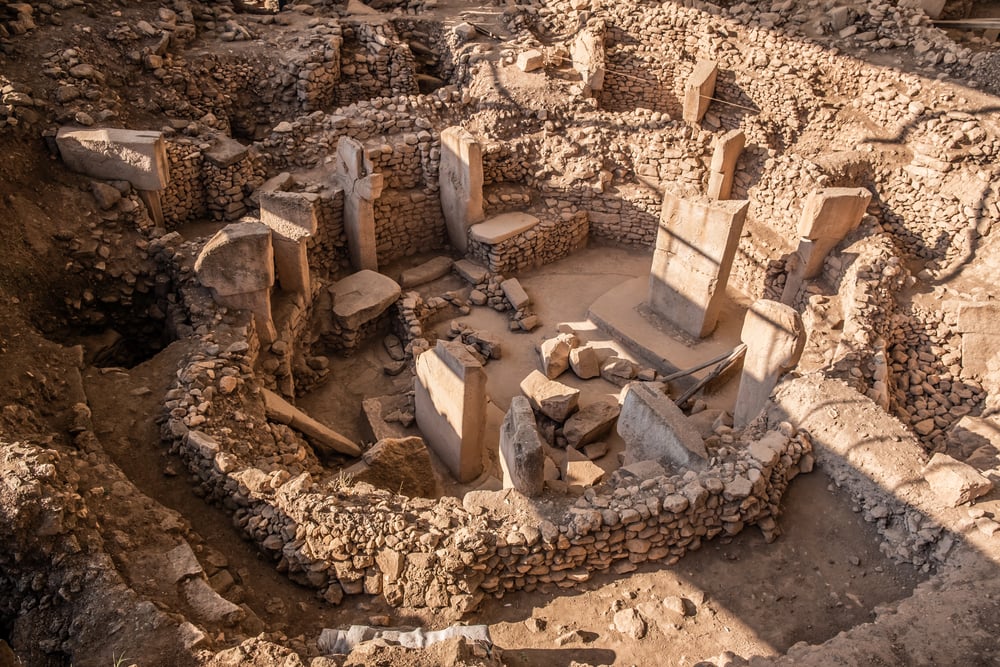
Göbekli Tepe predates Stonehenge by 6,000 years, making it potentially the world’s oldest temple complex, built around 9500 BCE by people who hadn’t yet developed agriculture or permanent settlements. Using only flint tools and fire-hardened wooden implements, prehistoric builders carved massive T-shaped pillars weighing up to 16 tons from solid bedrock and somehow transported them to create circular enclosures.
The site’s intricate animal carvings and complex symbolic reliefs suggest these hunter-gatherers possessed sophisticated religious beliefs and organizational skills that allowed them to coordinate large-scale construction projects without the social structures we associate with monumental architecture.
Newgrange, Ireland

Newgrange was built around 3200 BCE, making it older than both Stonehenge and the Egyptian pyramids, yet it demonstrates incredibly sophisticated astronomical knowledge and construction techniques. The Neolithic builders created a passage tomb with a roof box precisely aligned so that sunlight enters the chamber only during the winter solstice, illuminating the interior for exactly 17 minutes each year.
Using only stone tools and human labor, they constructed a watertight corbelled roof and decorated the structure with intricate spiral carvings, proving that complex astronomical observatories existed thousands of years before written history.
Puma Punku, Bolivia

Puma Punku, dating to around 536 CE, features some of the most precisely cut stone blocks in the ancient world, with joints so perfect that archaeologists initially thought they must have been created with modern machinery. Using only stone tools and bronze implements, builders created interlocking H-blocks and other complex shapes that fit together like a three-dimensional puzzle.
The largest stones weigh over 130 tons, yet somehow ancient workers quarried them from sites miles away and transported them across the Bolivian altiplano at 12,000 feet above sea level, where the thin air makes physical labor extremely challenging.
Easter Island Moai, Chile

The famous Easter Island statues, carved between 1250-1500 CE, required Polynesian sculptors to quarry nearly 1,000 massive moai from volcanic rock using only basalt hand tools called toki. Each statue weighs an average of 14 tons, with the largest reaching 82 tons, yet somehow ancient islanders moved them across the island and erected them on ceremonial platforms called ahu.
Recent experiments suggest the statues were ‘walked’ upright using ropes in a rocking motion, demonstrating an ingenious transportation method that required no wheels or large animals, just careful coordination and understanding of physics.
Pont du Gard, France

This Roman aqueduct bridge from the 1st century CE demonstrates the incredible precision possible with ancient surveying techniques, maintaining a gradient of just 1 in 3,000 over its entire 31-mile length to carry water from springs to the city of Nîmes. Roman engineers used only plumb lines, levels, and mathematical calculations to achieve this precision, while workers quarried and fitted massive limestone blocks weighing up to 6 tons each without mortar.
The three-story bridge stands 160 feet high and has survived for nearly 2,000 years despite floods, earthquakes, and wars, proving the durability of ancient construction techniques.
Hagia Sophia, Turkey

Completed in 537 CE, the Hagia Sophia pushed the boundaries of what was possible with ancient construction techniques, featuring a massive dome that seemed to float impossibly above the main hall. Byzantine engineers used a revolutionary system of pendentives to support the 102-foot diameter dome using only brick, mortar, and iron chains, creating an interior space that dwarfed anything built before.
Without modern structural analysis tools, they relied on mathematical principles and engineering intuition to design a building that has survived numerous earthquakes over 1,500 years, inspiring countless architectural innovations throughout history.
Borobudur, Indonesia

Built in the 9th century CE, Borobudur is the world’s largest Buddhist temple, constructed entirely from volcanic stone blocks fitted together without mortar using only hand tools and human labor. Javanese builders created a massive three-dimensional mandala representing the Buddhist cosmology, with over 2,600 relief panels and 504 Buddha statues arranged in perfect geometric harmony.
The monument’s sophisticated drainage system prevents water damage during Indonesia’s heavy monsoons, while its location and orientation demonstrate careful astronomical planning that creates symbolic connections between earthly and celestial realms.
Sacsayhuamán, Peru

The Inca fortress of Sacsayhuamán, built in the 15th century CE, features massive polygonal stones weighing up to 200 tons fitted together with such precision that the joints remain earthquake-proof after 500 years. Using only bronze tools, stone hammers, and wooden levers, Inca engineers quarried these enormous blocks from sites miles away and somehow transported them uphill to Cusco.
The construction technique involved slowly grinding the stones against each other until they achieved perfect fits, a process that could take months for a single block but resulted in walls so stable that Spanish conquistadors couldn’t destroy them even with gunpowder and iron tools.
Monuments to Human Ingenuity

These 16 extraordinary structures stand as eternal proof that the human spirit can overcome any technological limitation through creativity, determination, and collaborative effort. While we marvel at our modern machinery and computer-aided design, these ancient monuments remind us that the most impressive achievements often come from the marriage of human intelligence with pure determination.
Each stone placed, each perfectly calculated angle, and each astronomical alignment represents countless hours of human labor guided by mathematical genius and engineering intuition that remains impressive even by today’s standards, showing us that sometimes the greatest tools are the ones we carry within ourselves.
More from Go2Tutors!

- The Romanov Crown Jewels and Their Tragic Fate
- 13 Historical Mysteries That Science Still Can’t Solve
- Famous Hoaxes That Fooled the World for Years
- 15 Child Stars with Tragic Adult Lives
- 16 Famous Jewelry Pieces in History
Like Go2Tutors’s content? Follow us on MSN.



