Musical Scores Written in Geometric Shapes
Music and math have always been close friends. Composers throughout history found creative ways to write their music, and some took things to a completely different level by arranging notes into circles, triangles, squares, and other shapes.
These weren’t just pretty designs on paper. They were actual pieces of music meant to be performed, puzzles for musicians to solve, and sometimes clever jokes or messages hidden in plain sight.
Let’s explore some of the most interesting examples of composers who turned sheet music into visual art.
Baude Cordier’s heart-shaped chanson
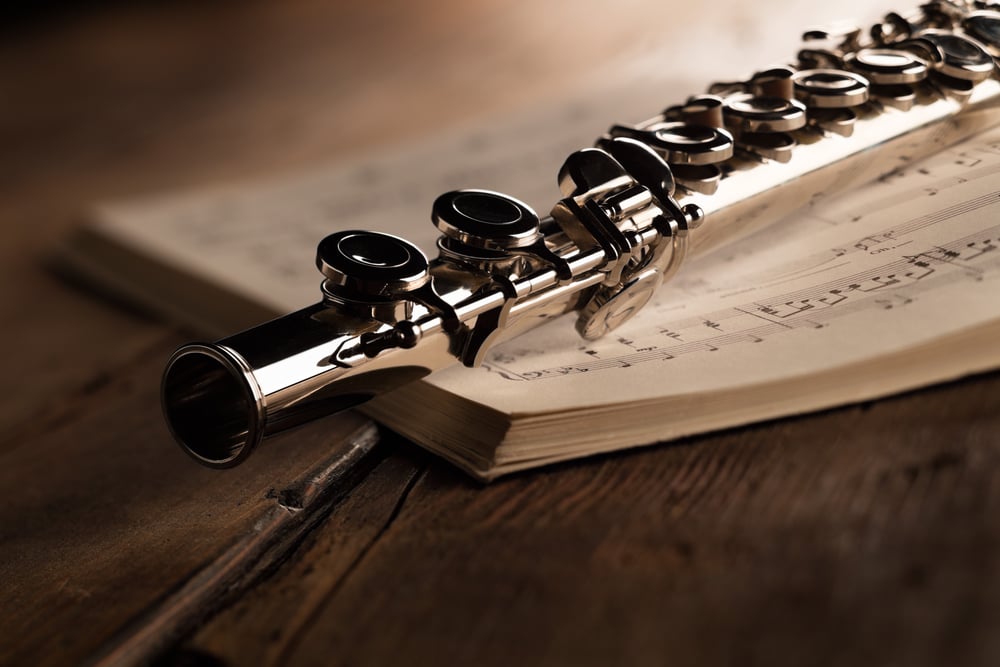
A French composer named Baude Cordier created one of the most famous shaped musical scores around 1400. His piece ‘Belle, Bonne, Sage’ appears as a perfect heart on the manuscript page.
The notes spiral from the outside edge toward the center, following the heart’s outline. Singers had to turn the page as they performed it, which must have been quite the challenge during a performance.
This wasn’t just showing off either. The song itself is a love poem, so the heart shape reinforces the romantic message of the words.
Circle canons from the Renaissance

Circular musical scores became popular during the 1400s and 1500s. Composers would write a melody that curved around in a complete circle with no clear beginning or end.
Multiple singers could start at different points along the circle and sing the same melody at the same time, creating harmony. The trick was figuring out where each voice should enter and when to stop.
Some circles had symbols or Latin instructions written in the center to help performers decode them.
Mozart’s musical joke

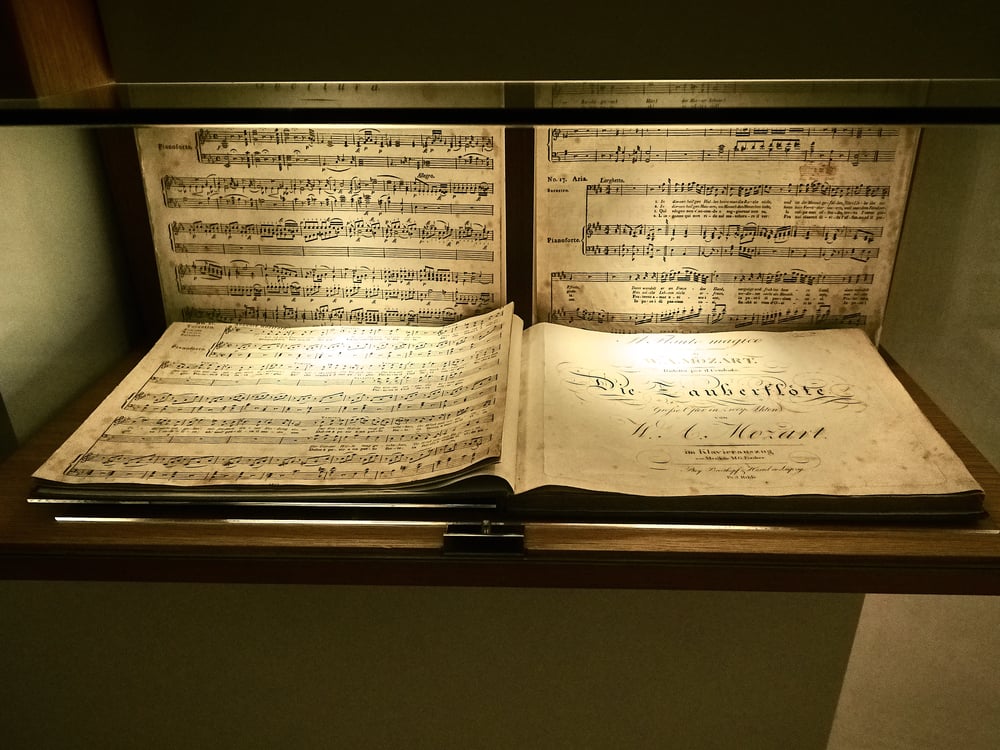
Wolfgang Amadeus Mozart wrote a piece that looks like a table on the page. His ‘Musikalisches Würfelspiel’ or musical dice game from 1787 used a grid system where performers rolled dice to determine which measures to play.
The geometric layout made it possible to create thousands of different combinations from the same set of musical fragments. Each column represented a different measure number, and each row contained alternative musical phrases.
Anyone could become a composer for a few minutes, even without training.
Bach’s crab canons

Johann Sebastian Bach loved mathematical puzzles in his music. He wrote several crab canons where the music could be played forwards and backwards at the same time.
When written on the page, these pieces often appeared as mirror images or symmetric shapes. One voice would read the notes from left to right while another voice read the same notes from right to left.
The geometry helped performers see the relationship between the two parts instantly.
The cross-shaped passion music

Several Baroque composers arranged their religious works into cross shapes on the manuscript page. This practice honored the Christian cross and showed up most often in passion settings or crucifixion music.
The notes would form the vertical and horizontal beams of a cross, with the most important musical climax happening right at the intersection. Performers sometimes hung these scores on church walls as both sheet music and religious art.
Triangular canons
Triangle-shaped scores appeared regularly during the Renaissance period. These three-sided arrangements usually indicated that three voices should sing the same melody starting at different times.
Each corner of the triangle marked where a new voice should begin. The geometry made the contrapuntal relationship obvious at a glance, which helped singers coordinate their entries without a conductor.
Star patterns in manuscripts
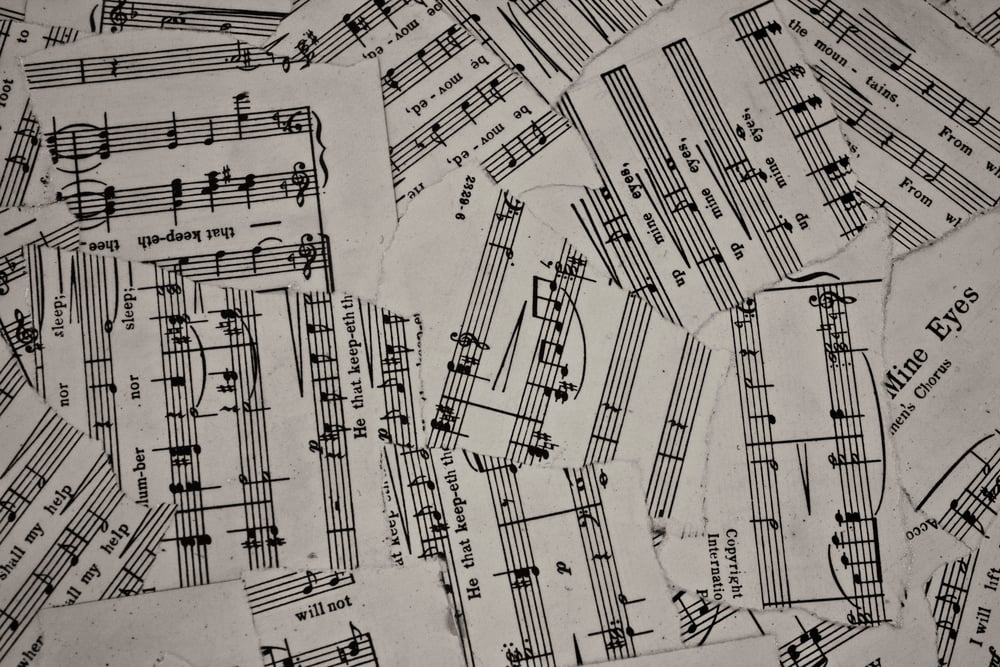
Some medieval and Renaissance composers created star-shaped arrangements with points radiating outward from a central note. These designs often had symbolic meanings related to divine light or celestial harmony.
The number of points mattered too. A five-pointed star might represent the five wounds of Christ, while a six-pointed star could reference the Star of David or the six days of creation.
Spiral compositions
Spiral scores wind outward from a central point like a snail shell. Performers start in the middle and read outward, or sometimes start on the outside and work their way in.
These pieces often got softer or louder as the spiral progressed, creating a natural crescendo or diminuendo. The visual effect matched the musical effect, which helped performers understand the composer’s intentions.
Diamond-shaped motets
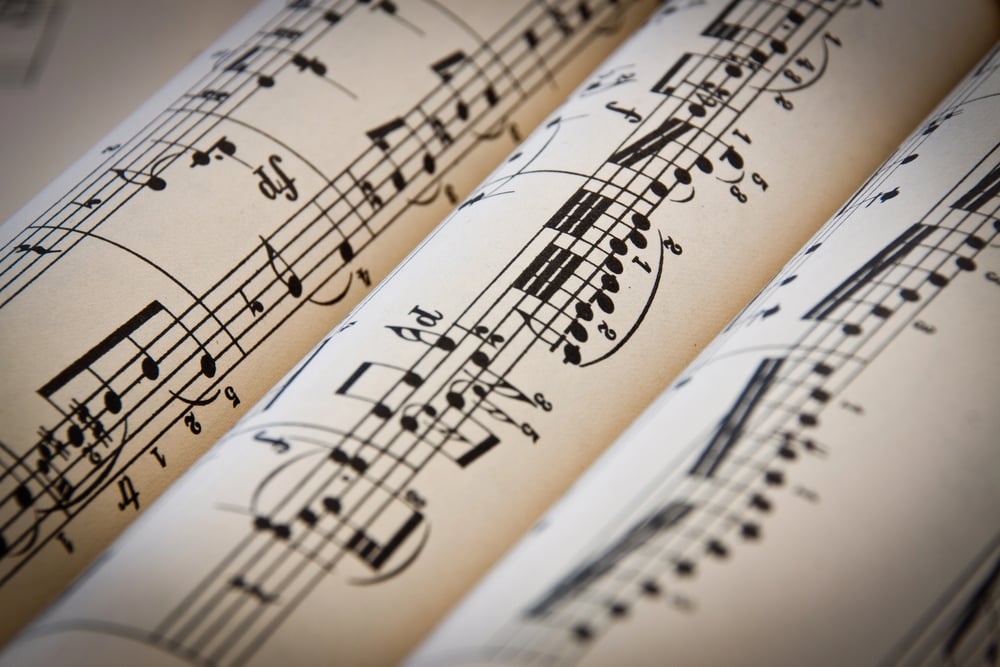
Four-sided diamond arrangements showed up in sacred music manuscripts. The diamond shape often housed four-part vocal music with each side representing a different voice part.
Soprano, alto, tenor, and bass singers could literally see their place in the geometric structure. This layout made copying music easier and helped prevent errors in the printing process.
Labyrinth songs

A few adventurous composers created maze-like patterns on the page. These labyrinth songs required performers to navigate through a complex path of notes, sometimes with multiple possible routes through the music.
Dead ends in the maze represented rests or pauses. The correct path through the labyrinth revealed the melody, while wrong turns led to musical nonsense.
Square canons from the Middle Ages
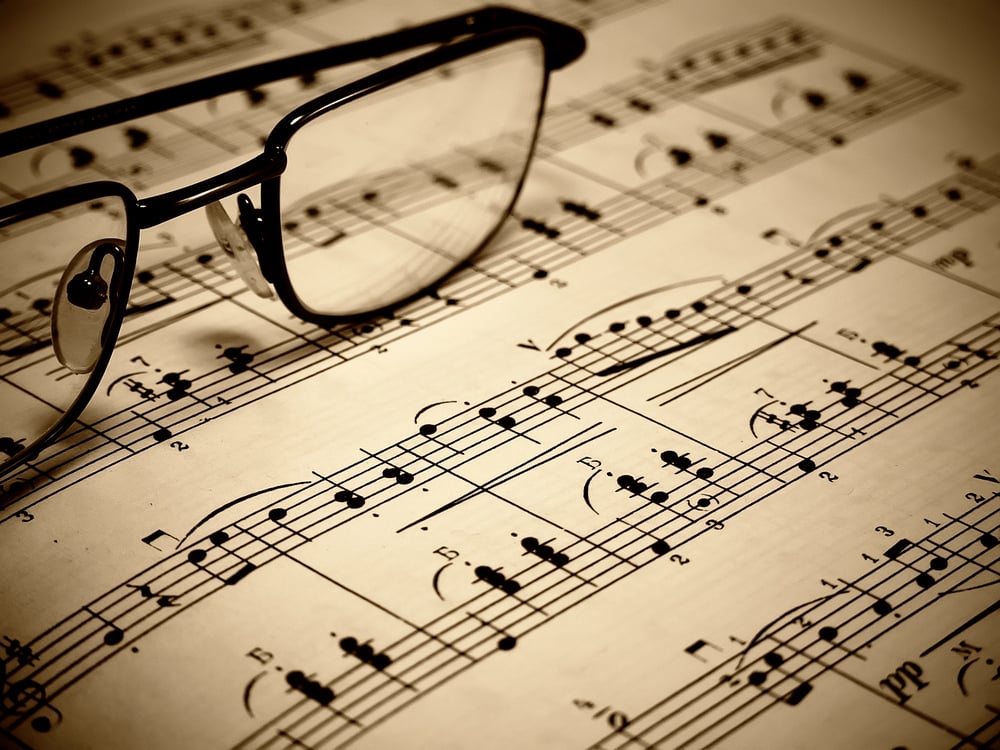
Perfect square arrangements became a way to show mathematical precision in music. Four voices would start from the four corners of the square and meet in the middle, or they might start in the center and expand outward.
These pieces demonstrated the composer’s skill at counterpoint because all four melodies had to work together harmoniously despite moving in different directions.
Proportional notation experiments

Modern composers in the twentieth century started using geometric shapes to indicate timing and duration rather than traditional note values. Circles might mean ‘hold this note until everyone else catches up’ while triangles could indicate accelerating tempo.
The shapes replaced traditional notation with visual symbols that gave performers more freedom to interpret the music.
Eye-shaped pieces
A handful of composers created scores that looked like eyes on the page. The pupil usually contained the main melody while the surrounding iris and white held accompanying parts.
Some eye-shaped compositions commented on themes of watching, seeing, or surveillance. Others just thought an eye would look striking on the manuscript page.
Pyramid structures

Musical pyramids typically started with a single note at the top and expanded downward with more voices joining at each level. This created a natural crescendo as more sound filled the space.
Ancient Greek music theory influenced these designs because philosophers believed pyramids represented stability and perfect proportion. The shape reinforced ideas about musical harmony reflecting cosmic order.
Cloud-shaped Renaissance songs

Weather pictures started showing up in music as notes shaped like clouds. While some songs used words about rain or storms, others focused on the sky above.
Because clouds have soft, uneven edges, they let musicians break away from strict shapes. Instead of straight lines, composers played with forms that felt looser.
Flower and plant designs
Botanical designs showed up in folk tunes about romance and seasonal festivals. For May Day melodies, rose-like patterns grew common.
Each petal held a separate verse or twist on the core tune. Songs based on gardens sometimes started at the bottom of the sheet, where roots climbed into stalks – lines of notes forming leaves along the way.
Modern graphic scores
From the ’50s on, modern musicians stretched shape-based sheet music as far as it could go. Think John Cage or Karlheinz Stockhausen – those guys made compositions resembling wild artwork instead of standard notes.
Blocks, curves, streaks, and spots stood in for noises, quiet moments, layers, even tone colors, letting players decide much of what to play. Music charts started feeling more like gallery pieces, mixing sound symbols with bold visuals.
Shaped notation today
Geometric music drawings didn’t actually vanish. When composers aim for a unique look or idea, they stick with these forms instead.
In teaching tunes to kids, basic figures pop up now and then – just to explain ideas like flipping, repeating, or playing backward. Thanks to online tools and apps, making such layouts is way simpler today, which keeps the practice growing through screens and pixels.
As signs turn into noise
Music’s more than just notes – it lives in many ways at once. Shapes on a sheet don’t only match timing and tone, yet they bring deeper ideas along.
When a tune about love is drawn like a heart, it feels unlike the same lines on regular staves. People playing or hearing such pieces sense those hidden messages, even if unaware.
Weird forms show that presentation matters as much as content.
More from Go2Tutors!

- The Romanov Crown Jewels and Their Tragic Fate
- 13 Historical Mysteries That Science Still Can’t Solve
- Famous Hoaxes That Fooled the World for Years
- 15 Child Stars with Tragic Adult Lives
- 16 Famous Jewelry Pieces in History
Like Go2Tutors’s content? Follow us on MSN.