16 Times Ancient Astronomers Were Right
Long before telescopes and space missions, ancient civilizations looked up at the night sky and made remarkable discoveries that still hold true today. These early stargazers didn’t have modern instruments, yet they managed to calculate celestial movements, predict eclipses, and understand cosmic patterns with stunning accuracy.
Here is a list of 16 times ancient astronomers got it absolutely right, proving that human curiosity and careful observation can unlock the universe’s secrets.
The Earth is Round

Greek philosopher Eratosthenes didn’t just know the Earth was round—he actually calculated its circumference around 240 BCE using shadows and basic geometry. His measurement? Off by only about 2% from the actual size. Ancient Greeks had figured out our planet’s shape centuries before Columbus sailed, which means the flat Earth belief was really more of a medieval misconception than an ancient one.
Solar Eclipses Follow Predictable Patterns
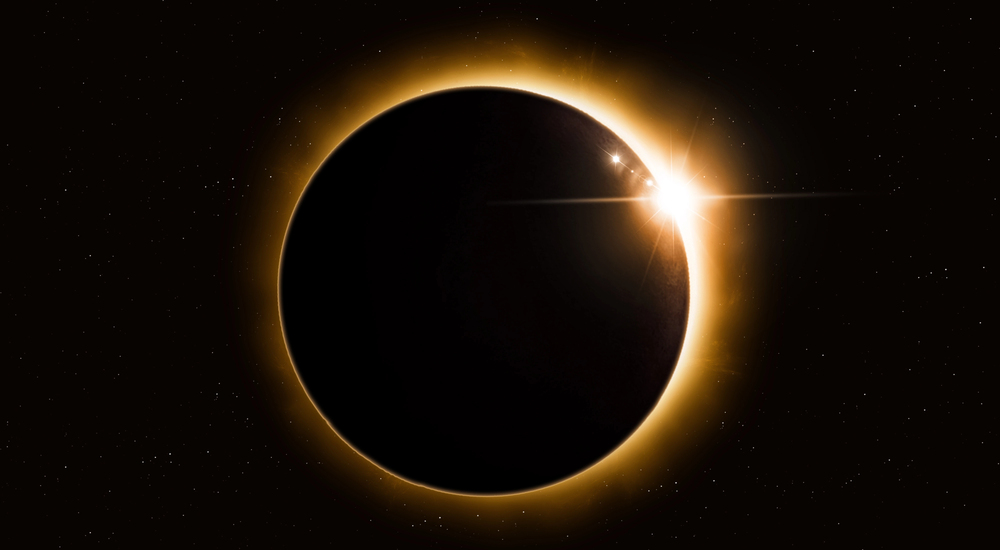
The Babylonians discovered that solar eclipses repeat in cycles called the Saros cycle — occurring approximately every 18 years, 11 days, and 8 hours. Using clay tablets covered in cuneiform calculations, they could predict eclipses with remarkable precision. This discovery was so accurate that modern astronomers still rely on the same 223-month cycle to forecast eclipses today.
Venus Has Phases Like the Moon

Ancient Mayan astronomers tracked Venus so precisely they knew it went through phases similar to our Moon. They called Venus the ‘Great Star’ — building entire calendars around its 584-day cycle. Their Venus tables were accurate to within hours over centuries, though they accomplished this without any optical instruments whatsoever.
The Milky Way is Made of Stars

Democritus, a Greek philosopher from the 5th century BCE, proposed that the Milky Way consisted of countless distant stars too faint to see individually. While his contemporaries thought it was a celestial river or divine pathway, Democritus nailed it completely. Galileo later confirmed this theory when he pointed his telescope at the Milky Way — seeing individual stars for the first time.
Precession of the Equinoxes

Hipparchus discovered that Earth wobbles like a spinning top, causing the position of stars to shift slowly over time. This precession cycle takes about 26,000 years to complete — Hipparchus calculated it around 150 BCE using careful observations spanning decades. Modern measurements show his calculations were remarkably close to the actual 25,772-year cycle.
The Moon Causes Ocean Tides

Ancient cultures from Polynesia to Britain understood that the Moon controlled the tides long before Newton explained gravity. Celtic druids and Pacific Island navigators timed their voyages according to lunar phases — knowing exactly when high and low tides would occur. They couldn’t explain why it happened, though they absolutely knew the Moon was responsible.
Mars Has a Retrograde Motion

Babylonian astronomers noticed that Mars sometimes appears to move backward against the background stars before resuming its normal path. They meticulously recorded these retrograde loops without understanding the orbital mechanics behind them. Their observations were so detailed that Kepler later used Babylonian data — spanning centuries — to work out Mars’s elliptical orbit.
Jupiter Has Four Large Moons

Chinese astronomers recorded observations of Jupiter’s moons as early as 364 BCE, calling them ‘four small stars following Jupiter.’ They didn’t have telescopes but managed to spot these moons during particularly favorable viewing conditions when Earth’s atmosphere was exceptionally steady. Galileo gets credit for ‘discovering’ them in 1610 — though the Chinese saw them first.
Comets Return on Schedule

Chinese astronomers kept detailed records of Halley’s Comet for over 2,000 years, noting its return every 75-76 years. They called it the ‘Broom Star’ — tracking its appearances with such precision that modern astronomers use their records to study the comet’s orbital changes over time. The Chinese data helped Edmund Halley prove that comets orbit the Sun.
The Sun is Much Larger Than Earth

Aristarchus of Samos calculated that the Sun was about 300 times larger than Earth around 270 BCE. While his actual estimate put the Sun at 18-20 times the Moon’s distance from Earth — it’s actually about 400 times farther — he correctly determined that the Sun dwarfed our planet in size. His geometric methods were sound even if his measurements were limited by available technology.
Stars Have Different Colors and Brightness

Ancient astronomers classified stars by color and brightness long before we understood stellar physics. The Chinese divided stars into five color categories, while Greek astronomers like Ptolemy created magnitude scales still used today. They correctly identified that red stars were different from blue-white ones, laying groundwork for modern stellar classification systems.
Planetary Alignments Can Be Predicted

Babylonian astronomers developed mathematical models that could predict planetary positions years in advance. Their ephemeris tables tracked Mercury, Venus, Mars, Jupiter, and Saturn with incredible accuracy, allowing them to forecast when planets would appear close together in the sky. These calculations were so reliable that they influenced agricultural planning and religious ceremonies across the ancient world.
Lunar Eclipses Happen When Earth Blocks Sunlight

Aristotle correctly explained that lunar eclipses occur when Earth casts a shadow on the Moon, proving Earth is round by noting the shadow’s curved edge. Ancient Greek understanding of eclipse mechanics was so complete they could predict both lunar and solar eclipses with reasonable accuracy. They even understood why lunar eclipses could be seen from anywhere on Earth’s night side, whereas solar eclipses are only visible from specific locations.
The Calendar Needs Leap Years

Ancient Egyptians realized their 365-day calendar gradually fell out of sync with the seasons. They developed correction methods to address this drift. The Romans later formalized leap years, adding an extra day every four years to keep the calendar aligned with Earth’s orbit. Without this correction, seasons would drift by about one day every four years, eventually making summer occur in winter months.
Meteors Come from Space

While many cultures thought meteors were atmospheric phenomena, some ancient astronomers correctly identified them as objects from space. Chinese records describe ‘guest stars’ falling from heaven, distinguishing them from earthly fires or lightning. They understood these fireballs originated beyond Earth’s atmosphere, even without knowing about meteoroids or asteroid composition.
Variable Stars Change Brightness

Ancient astronomers noticed that certain stars changed brightness over time, cataloging these variations with remarkable precision. The star Algol, whose brightness dims every 2.87 days, was known to Arab astronomers as ‘Ra’s al-ghul’ (the demon’s head) because of its winking behavior. They correctly identified this as an intrinsic property of the star rather than atmospheric effects.
When Ancient Wisdom Meets Modern Science

These ancient discoveries remind us that careful observation and logical thinking can unlock cosmic truths even without fancy equipment. While modern technology has refined our understanding and revealed the physics behind these phenomena, the fundamental observations made thousands of years ago remain valid. Today’s astronomers still build upon the foundation laid by these early sky watchers, proving that curiosity and dedication can bridge any technological gap. The next time you look up at the night sky, remember that ancient eyes saw the same patterns and made discoveries that still guide our exploration of the universe.
More from Go2Tutors!

- The Romanov Crown Jewels and Their Tragic Fate
- 13 Historical Mysteries That Science Still Can’t Solve
- Famous Hoaxes That Fooled the World for Years
- 15 Child Stars with Tragic Adult Lives
- 16 Famous Jewelry Pieces in History
Like Go2Tutors’s content? Follow us on MSN.