16 truths about Pearl Harbor and WWII’s start
December 7, 1941, changed everything. The surprise attack on Pearl Harbor thrust America into a global conflict that had already been raging for years. Yet despite decades of history books, documentaries, and Hollywood films, many people still hold onto myths about what really happened that ‘day which will live in infamy.’
The reality is both simpler and more complex than popular culture suggests. Here is a list of 16 essential truths about Pearl Harbor and how it connected to the broader story of World War II.
Pearl Harbor didn’t start World War II

The most common misconception is that Pearl Harbor marked the beginning of World War II. The war had been raging since September 1939 when Germany invaded Poland, and if you happened to live in Ethiopia, your war started in 1935 when Italy invaded. Japan had occupied Manchuria in 1931 and launched a full-scale invasion of China in 1937. Pearl Harbor brought America into the war, but it certainly didn’t start the global conflict.
The U.S. wasn’t completely unprepared for war

While the fleet at Pearl Harbor was clearly caught off guard that Sunday morning, America wasn’t the sleeping giant many imagine. Men were already in uniform, rearmament was underway, and factories were being converted to war production. The country had been moving away from isolationism for months, providing aid to Britain through programs like Lend-Lease. The military buildup was already happening—it just wasn’t focused on defending Hawaii.
Roosevelt knew an attack was coming somewhere
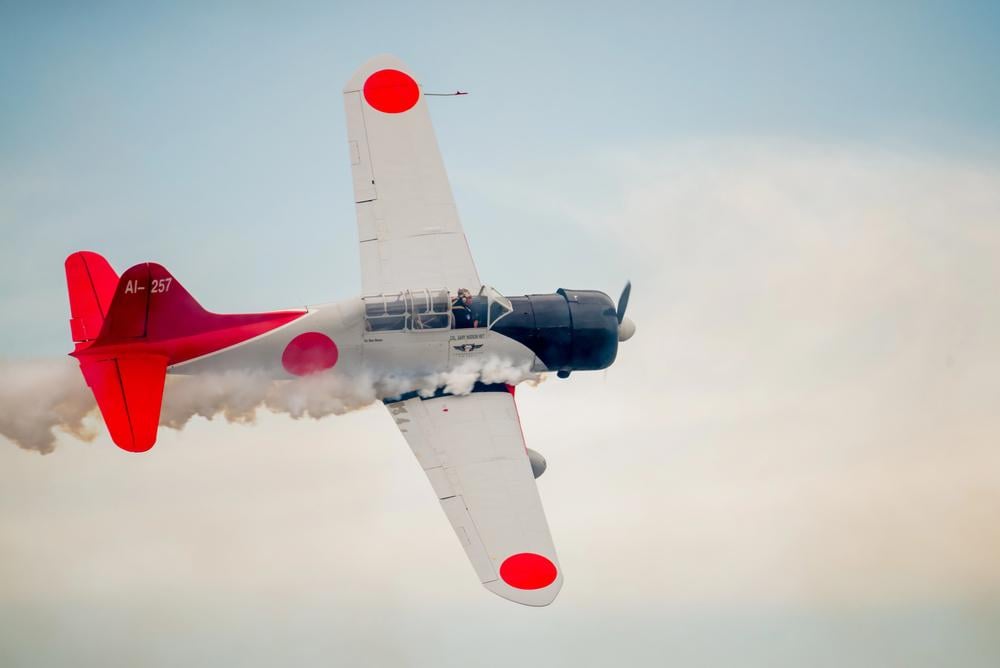
This doesn’t mean there was a conspiracy, but U.S. officials weren’t completely blind to Japanese intentions. The Navy department warned U.S. commanders before the attack and put them on a ‘war warning’. A Gallup poll just before the attack found that 52% of Americans expected war with Japan. The problem was that military leaders expected the Philippines or other Pacific territories to be hit first, not Pearl Harbor itself.
The Japanese attacked six targets that day, not just Pearl Harbor

Pearl Harbor was actually one of six targets hit by the Japanese on December 7, 1941, including Guam, Wake Island, Midway, Thailand and Malaya. The coordinated strikes across the Pacific showed this wasn’t just about crippling one naval base—it was about clearing the entire Pacific for Japanese expansion. Pearl Harbor gets all the attention, but it was part of a massive, simultaneous military operation.
The USS Ward fired the first shot, not the Japanese

The first shot was fired by the United States when the USS Ward, a destroyer, fired at a Japanese midget submarine at 0637. The submarine was hit and sunk before the air attack even began. This shot could have provided warning of the coming assault, but poor communication prevented the alert from reaching Pearl Harbor’s defenders in time. Sometimes the most crucial moments get lost in the chaos.
Admiral Yamamoto probably never said that famous quote

The line about ‘awakening a sleeping giant and filling him with a terrible resolve’ sounds perfect for a movie, and that’s exactly where it belongs. While this is a great line and sounded excellent when he said it in the movie Tora, Tora, Tora, there is no proof that Yamamoto made this statement. What he did say was that Japan couldn’t win a prolonged war against America—which turned out to be absolutely correct.
The attack lasted less than two hours but felt like an eternity

The first Japanese dive-bomber appeared over Pearl Harbor at 7:55 AM local time, a second wave struck at 8:50 AM, and the Japanese withdrew shortly after 9:00 AM. In just over an hour, the Japanese managed to sink or damage more than a dozen ships and destroy over 180 aircraft. The base was attacked by 353 fighters, level and dive bombers, and torpedo bombers in two waves launched from six aircraft carriers. It’s remarkable how much destruction happened in such a short window.
The Japanese borrowed tactics from the British

The planners studied the 1940 British air attack on the Italian fleet at Taranto intensively. The shallow waters of Pearl Harbor posed a challenge for torpedo attacks, so the Japanese borrowed an idea from the British carrier-based torpedo raid on Taranto, fashioning auxiliary wooden tail fins to keep the torpedoes horizontal. Innovation in warfare often comes from adapting someone else’s successful tactics.
Most of the damaged ships were eventually repaired and returned to service

Despite the devastating images of burning battleships, the U.S. Navy’s repair capabilities were extraordinary. American technological skill raised and repaired all but three of the ships sunk or damaged at Pearl Harbor. The USS Arizona was too badly damaged to salvage, the USS Oklahoma was raised but considered too old to repair, and the USS Utah wasn’t worth the effort. Everything else eventually sailed again and fought in later battles.
The Japanese made a crucial strategic error

The attack failed to damage any American aircraft carriers, which had been providentially absent from the harbor. Even more importantly, the Japanese focus on ships and planes spared our fuel tank farms, naval yard repair facilities, and the submarine base. These facilities proved vital for the Pacific campaign that followed. Destroying infrastructure often matters more than sinking ships.
It wasn’t just Japanese-Americans who were detained after the attack

The internment of Japanese-Americans is well-known, but over the course of World War II, around 120,000 Japanese-American citizens were sent to internment camps and approximately 11,000 German-Americans were interned, as well. Fear and suspicion affected multiple communities, though Japanese-Americans certainly bore the harshest treatment. An estimated 600,000 people of Italian descent were kept under restrictions.
The attack was years in the making

Preliminary planning for an attack on Pearl Harbor began early in 1941 under Admiral Isoroku Yamamoto. In the spring of 1941, Japanese carrier pilots began training in the special tactics called for by the Pearl Harbor attack plan. This wasn’t a spur-of-the-moment decision—it was a carefully orchestrated operation that took months of preparation and training.
Emperor Hirohito was personally involved in approving the attack

Emperor Hirohito did not approve the attack plan until November 5, after the third of four Imperial Conferences called to consider the matter. He initially hesitated but eventually gave his approval. Final authorization was not given by the emperor until December 1. The decision to attack wasn’t made by military commanders alone—it went all the way to the top of Japanese leadership.
A radar operator actually detected the incoming planes

The radar plot was made by Private George E. Elliot, Jr., with direction from oscilloscope operator Private Joseph L. Lockard, at the Opana Radar Station on the morning of December 7, 1941. The control officer believed the radar signals announced the approach of American B-17s scheduled for arrival the same day, but the signals actually tracked the first wave of Japanese bombers. Sometimes the warning signs are there, but human error or miscommunication prevents proper action.
The casualties were devastating but could have been worse

The United States suffered 3,435 casualties and loss of or severe damage to 188 planes, 8 battleships, 3 light cruisers, and 4 miscellaneous vessels. Japanese losses were less than 100 personnel, 29 planes, and 5 midget submarines. The lopsided nature of the casualties reflected the complete surprise achieved by the Japanese attack. Had the carriers been in port, the losses would have been catastrophic.
Pearl Harbor united America like nothing else could

The shock and anger that Americans felt in the wake of the attack on Pearl Harbor united the nation and was translated into a collective commitment to victory in World War II. The isolationist sentiment that had kept America out of the war evaporated overnight. In a strange way, the Japanese attack accomplished the opposite of what Yamamoto hoped—instead of demoralizing America, it gave the country a unified purpose it had never had before.
The legacy that changed everything
The attack on Pearl Harbor didn’t just bring America into World War II—it fundamentally changed how Americans thought about their place in the world. Before December 7, 1941, the United States could still imagine itself as isolated from global conflicts. After Pearl Harbor, America understood that modern warfare could reach anywhere, and that oceans weren’t enough to guarantee safety. The attack created the foundation for America’s role as a global superpower, a position that continues to shape international relations today. Understanding Pearl Harbor means understanding how a single morning’s violence can redirect the course of history itself.
More from Go2Tutors!

- 16 Historical Figures Who Were Nothing Like You Think
- 12 Things Sold in the 80s That Are Now Illegal
- 15 VHS Tapes That Could Be Worth Thousands
- 17 Historical “What Ifs” That Would Have Changed Everything
- 18 TV Shows That Vanished Without a Finale
Like Go2Tutors’s content? Follow us on MSN.