16 Unusual Military Inventions That Failed
Military history is packed with brilliant innovations that changed warfare forever. But for every GPS system or stealth bomber, there’s a rocket-powered wheel careening wildly off course.
The drive to gain battlefield advantage has led engineers and generals down some truly bizarre paths, resulting in weapons that looked impressive on paper but proved spectacularly useless in practice. Here’s a list of sixteen unusual military inventions that failed to live up to their ambitious promises.
The Great Panjandrum

This ungainly device was intended to be used against the beach defences of Hitler’s Atlantic Wall. It consisted of two rocket-propelled wheels, ten feet in diameter, joined by a cylinder filled with explosives.
The Panjandrum was designed to reach speeds of 60 miles per hour and to smash through 10-foot walls of concrete. But the rockets had an alarming tendency to detach mid-flight.
In January 1944, the DMWD invited the top brass to witness the weapon in action – the demonstration turned into chaos as rockets flew off in all directions and officials dove for cover behind sand dunes.
Windkanone
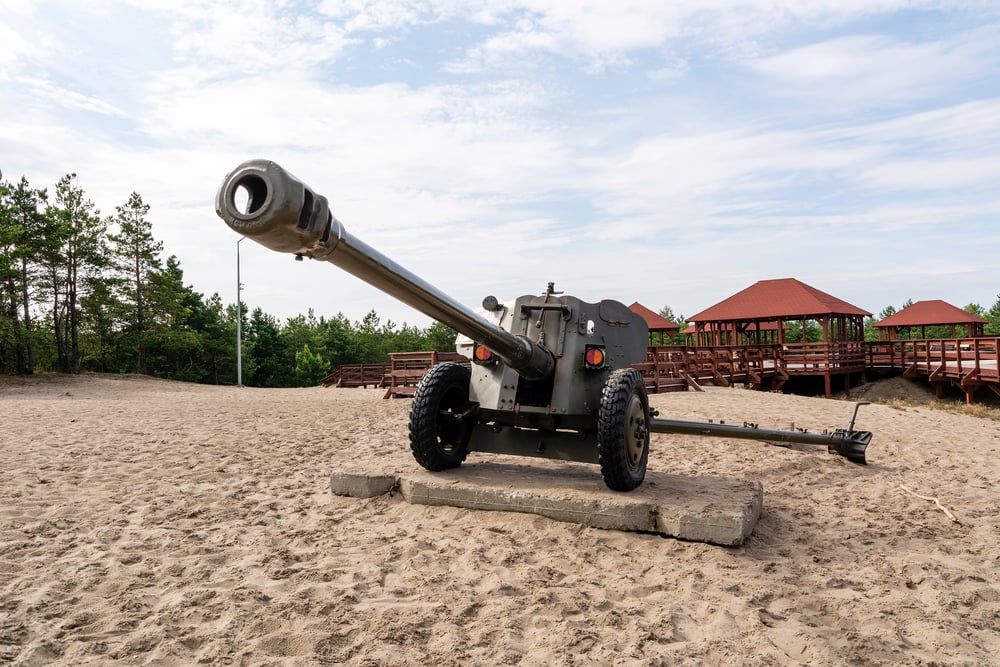
The Windkanone (Wind Cannon) was a bizarre German anti-aircraft weapon. It comprised a large barrel, bent upwards at one end, through which an explosive jet of compressed air was ejected upwards by the ignition of a mixture of hydrogen and oxygen.
The idea was to knock planes out of the sky with pure air pressure. In 1945 a wind cannon was installed on a bridge over the River Elbe, but it failed to achieve any results.
Turns out aircraft are surprisingly resilient to angry gusts of wind. Not great.
Like Go2Tutors’s content? Follow us on MSN.
Puckle Gun

Invented in 1718 by British lawyer James Puckle, the Puckle gun was the world’s first patented multi-shot weapon. It fired at triple the rate of a soldier armed with a standard single-shot flintlock rifle or musket.
The weapon even featured different ammunition for different enemies – round bullets for Christians, square bullets for Muslim Turks. The square bullets were supposed to cause more pain and show “the benefits of being Christian.”
Unfortunately, the aerodynamically flawed square projectiles flew slower and caused less damage than regular rounds.
Russian Circular Warship Novgorod
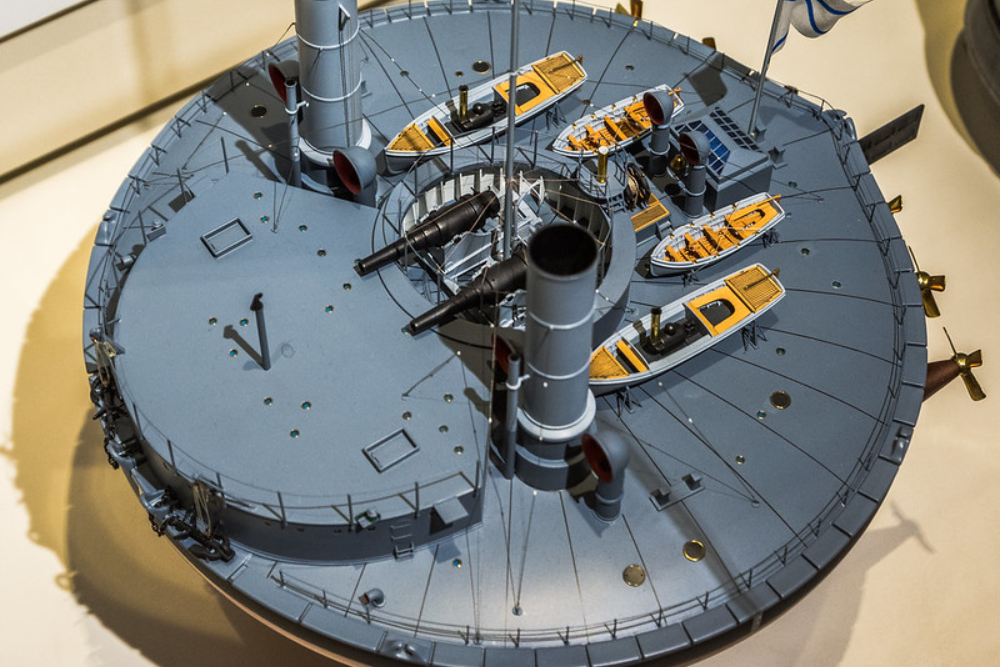
Novgorod was a monitor built for the Imperial Russian Navy in the 1870s. She was one of the most unusual warships ever constructed, and still survives in popular naval myth as one of the worst warships ever built.
The hull was circular to reduce draught while allowing the ship to carry much more armour and a heavier armament than other ships of the same size. The biggest drawback to her hull shape was that it greatly reduced the rudder’s ability to turn the ship by masking much of the flow of water so much that it took 40–45 minutes to make a full circle and the ship was almost unsteerable in a severe storm.
Each time the guns fired, recoil spun the vessel like a top.
Panzer VIII Maus

Panzerkampfwagen VIII Maus (English: ‘mouse’) was a German World War II super-heavy tank completed in July of 1944. As of 2025, it is the heaviest fully enclosed armored fighting vehicle ever built.
Hitler’s obsession with bigger and bigger weapons led to this 188-ton behemoth. Despite a massive Daimler-Benz aircraft engine powering the motors, the tank’s top speed was only 19 kilometers per hour (12 mph).
The Maus was so heavy it couldn’t cross most bridges and broke down constantly.
Like Go2Tutors’s content? Follow us on MSN.
Antonov A-40 Flying Tank

The Antonov A-40 Krylya Tanka (Russian: крылья танка, meaning “tank wings”) was a Soviet attempt to allow a tank to glide onto a battlefield after being towed aloft by an airplane, to support airborne forces or partisans. One T-60 was converted into a glider in 1942, intended to be towed by a Petlyakov Pe-8 or a Tupolev TB-3.
The tank was lightened by removing its armament, ammunition and headlights. Even with these modifications, the TB-3 bomber had to ditch the glider during its only flight, on September 2, 1942, to avoid crashing, due to the T-60’s extreme drag.
Soviet Anti-Tank Dogs

Anti-tank dogs were dogs taught to carry explosives to tanks, armored vehicles, and other military targets. They were intensively trained by the Soviet military forces between 1930 and 1946, and used from 1941 to 1943, against German tanks in World War II.
The original plan involved dogs carrying a bomb to a tank and returning safely before detonation. When that failed, the dogs were essentially turned into living missiles – explosives would detonate on contact, killing the dog.
Dogs were trained by being kept hungry and having their food placed under tanks. But the dogs refused to dive under moving tanks, often ran back to Soviet trenches with live explosives, and worst of all, sought out familiar diesel-powered Soviet tanks instead of gasoline-powered German ones.
Project X-Ray Bat Bomb
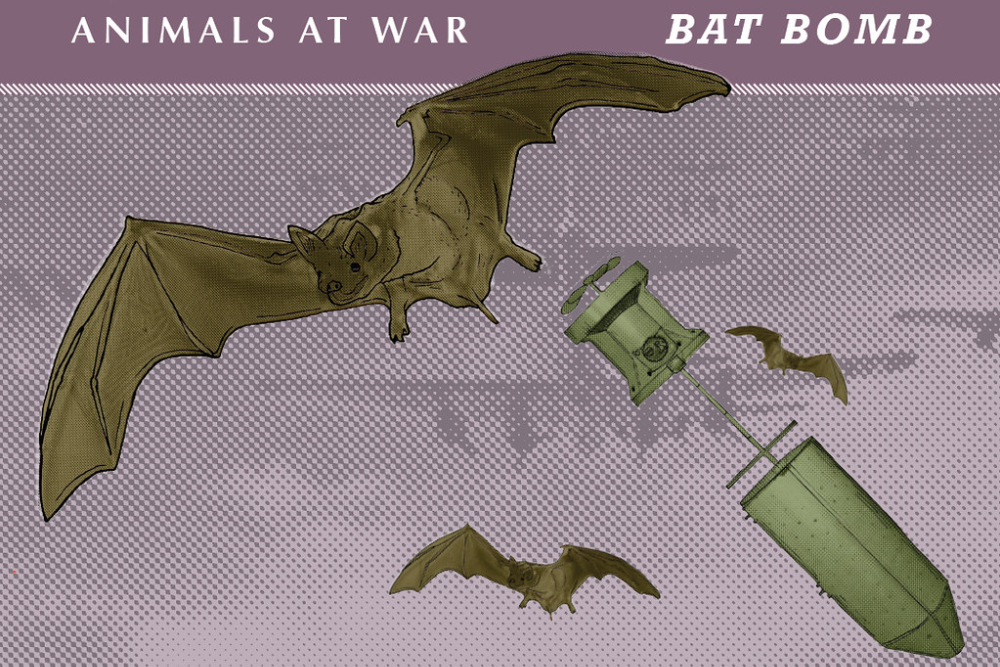
During World War II, an oral surgeon named Lytle Adams contacted the White House with a novel idea. Bats could be the Allies’ new secret weapons! Troops could strap little bombs to bats, airdrop them into Axis strongholds, and watch the destruction from a safe distance.
In 1942 he officially greenlit the project, where Adams and the inventor of napalm designed one-ounce explosive packs for Mexican free-tailed bats. The bats got loose on the military facility wearing their packs and wound up huddled under a fuel tank which exploded and incinerated the entire facility.
Like Go2Tutors’s content? Follow us on MSN.
Corkscrew Tank

Invented by the Russians, the corkscrew tank was created in order to make its way across rough, rocky, and harsh terrain. The vehicle was able to maneuver across terrain such as snow and ice, which is common in Russia and proved to be somewhat profitable.
While it was able to do some of the things it was designed to do, it had many downsides. The tank was nearly impossible to steer and provided terrible visibility for the crew inside.
USS Akron and USS Macon

These flying aircraft carriers were first crafted by German engineers in the early 1930s. The USS Macon was able to carry five F9C “Sparrowhawk” airplanes that could be launched as well as retrieved during flight.
Following a highly damaging event during 1934 due to flying too high of an altitude over Arizona, the USS Macon crashed on February 12, 1935 due to a structural failure during a storm. The USS Akron went down in high winds off the coast of New Jersey in April 1933.
Krummlauf
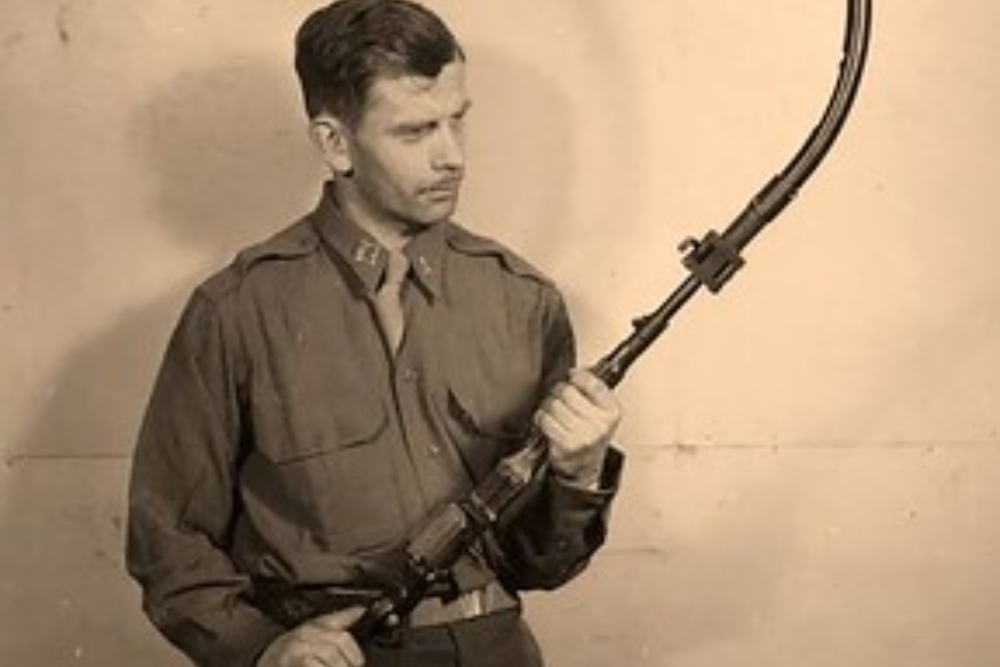
The Krummlauf was a curved barrel attachment for the German Sturmgewehr 44 assault rifle, designed to allow soldiers to shoot around corners without exposing themselves to enemy fire. The attachment featured a periscope sight to assist with aiming.
While the concept was clever, the curved barrel drastically reduced bullet velocity and accuracy while significantly increasing barrel wear.
Like Go2Tutors’s content? Follow us on MSN.
Active Denial System
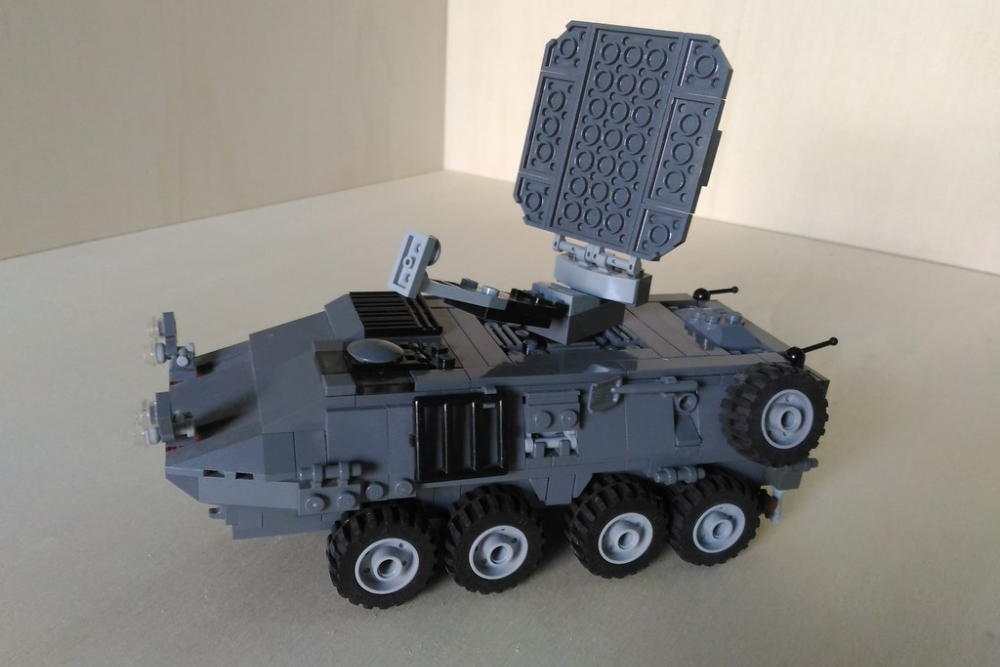
You might have heard about this system before: the weapons system that was basically the military’s attempt to make a working heat ray. After researching and developing the system for over a decade and spending $40 million dollars in the process, the weapon was recalled almost as soon as it hit the streets.
Because the Active Denial System did not unleash a concentrated blast of paralyzing heat that would cripple enemies – it just kind of gave them all terrible sunburns.
Liberator FP-45

The Liberator was a crude, single-shot pistol designed to be air-dropped to resistance fighters in occupied Europe. The guns would also have a psychological effect, since the thought that every citizen might be armed with a “Liberator” would strike fear into the hearts of occupying soldiers.
The U.S. produced 1 million FP-45s between June and August 1942, but the pistols failed to ever catch on in the field. Allied commanders found them impractical, and European resistance fighters tended to favor actual submachine guns.
LED Incapacitator

This little trick was the result of the military’s attempt to find a non-lethal alternative for crowd control. In 2007, they came up with a flashlight that used flashes of light in order to induce vertigo, nausea, and puking.
So what went wrong? For starters, the “flashlight” was huge – fifteen inches long and 4 inches wide. Also, there’s no real way to make sure your enemy actually looks at it, which is the only way it works.
You can literally foil this weapon by turning your head, closing your eyes, or just putting on a pair of shades.
Like Go2Tutors’s content? Follow us on MSN.
Kugelblitz
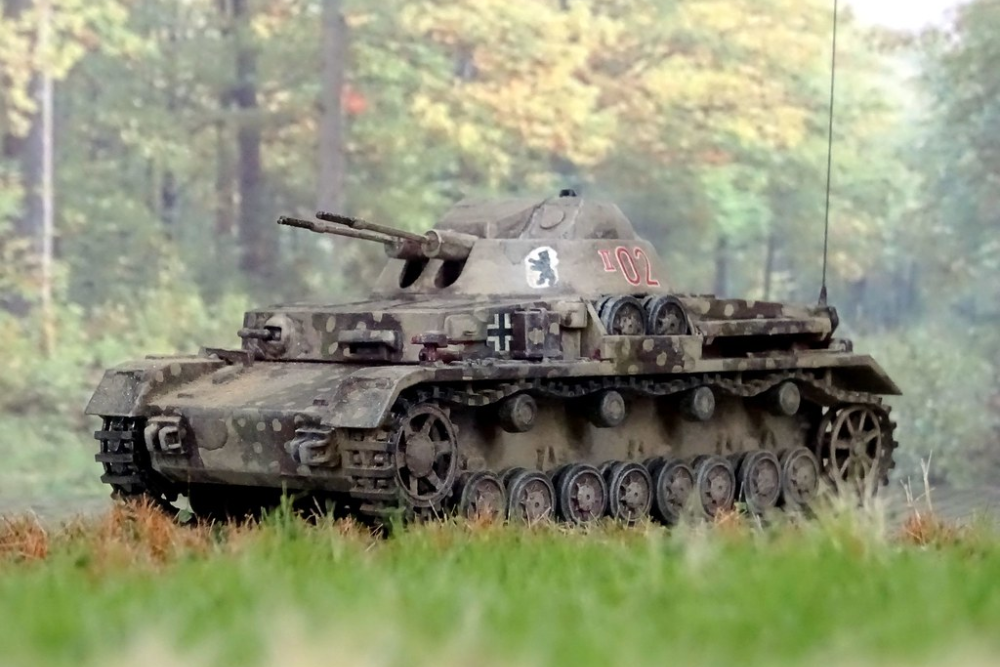
The Flakpanzer IV Kugelblitz (German for “orb lightning”) was a German self-propelled anti-aircraft gun developed during World War II. The need for specialized anti-aircraft had become urgent as the German Air Force was less able to protect itself against enemy fighter bombers.
The Kugelblitz featured a fully enclosed, rotating turret but was never completed in significant numbers – only five prototypes were built before the war ended.
Hajile
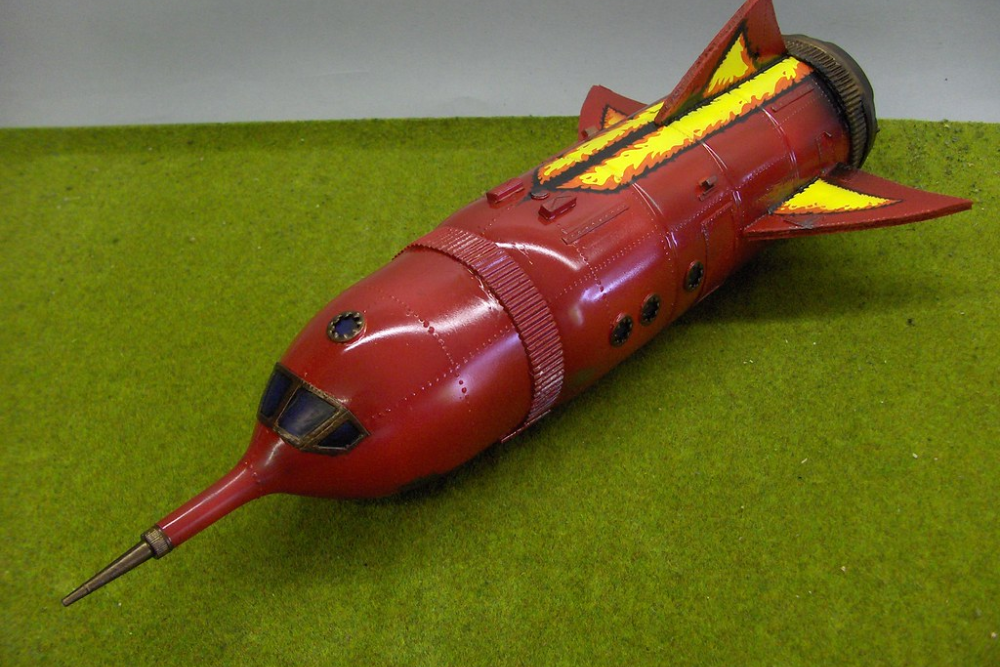
Created by the same minds that brought you the Great Panjandrum, Hajile was an early retrorocket design created with the hope of using a rocket to slow the descent of supplies dropped from planes. During tests, the contraption had a tendency to explode rather than gently lower supplies to the ground.
The project was abandoned after multiple spectacular failures.
When Ingenuity Goes Wrong
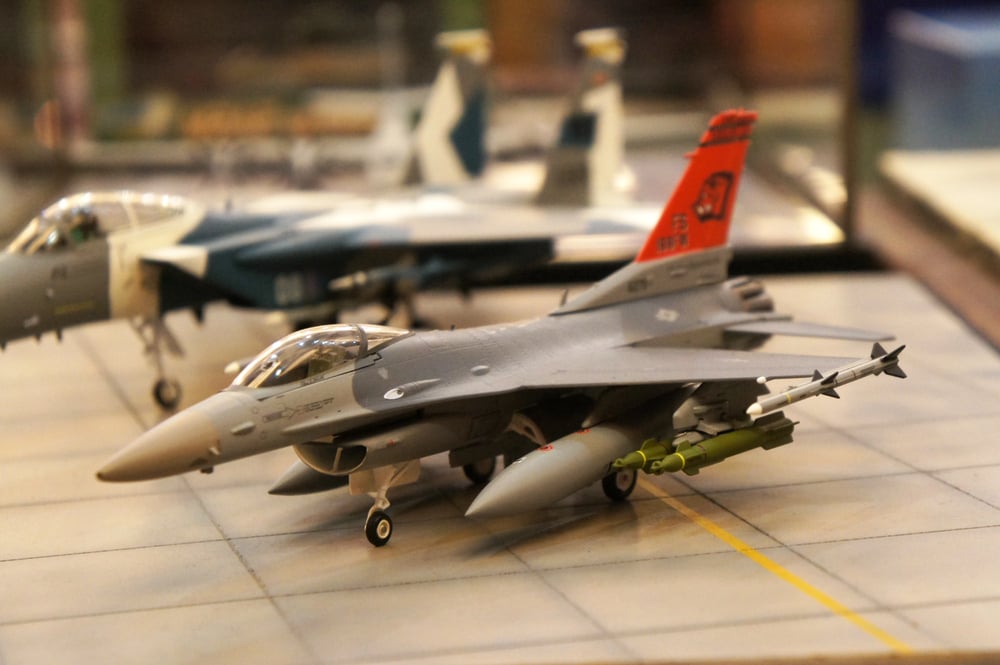
These failed inventions remind us that military innovation requires more than just creative thinking – it demands rigorous testing, practical engineering, and sometimes the wisdom to know when an idea simply won’t work. For every successful military technology that changes the world, there are dozens of spectacular failures that become footnotes in history.
Like Go2Tutors’s content? Follow us on MSN.
More from Go2Tutors!

- 16 Historical Figures Who Were Nothing Like You Think
- 12 Things Sold in the 80s That Are Now Illegal
- 15 VHS Tapes That Could Be Worth Thousands
- 17 Historical “What Ifs” That Would Have Changed Everything
- 18 TV Shows That Vanished Without a Finale
Like Go2Tutors’s content? Follow us on MSN.