17 Photographs That Captured History’s Turning Points
Photography has this strange power to freeze moments that change everything. A single frame can crystallize decades of tension, capture the instant when old worlds crumble, or reveal truths that speeches and manifestos never could.
These aren’t just pictures—they’re witnesses to the moments when history pivots, when the trajectory of entire nations shifts in the time it takes light to hit film.
The Falling Man
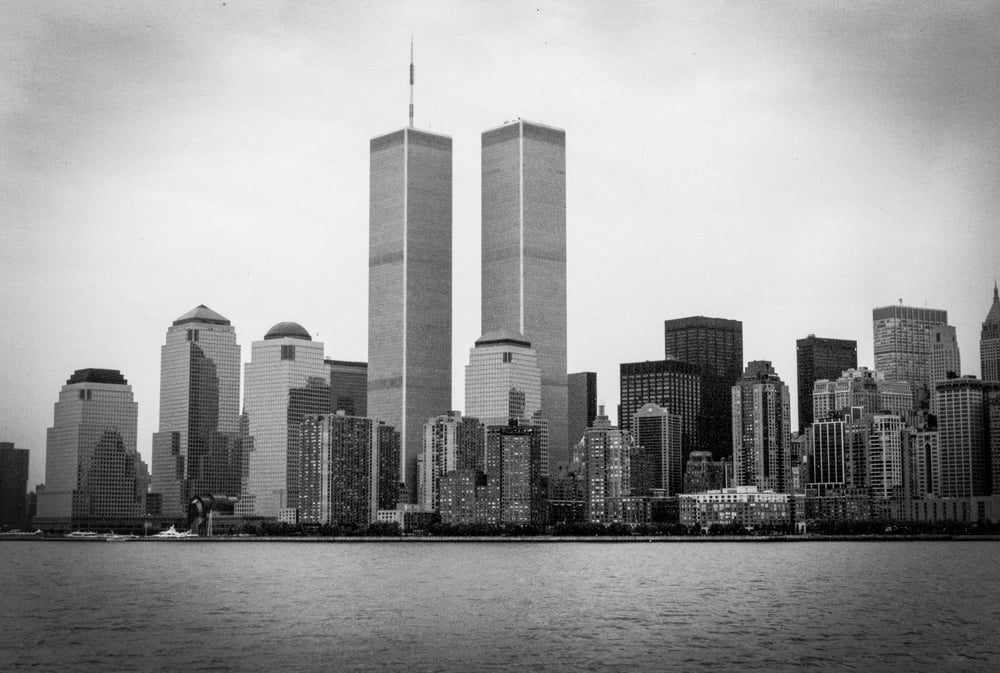
The photograph captures what words cannot. A figure falls through empty air against the stark geometry of the World Trade Center, and in that single frame, the entire weight of September 11th becomes unbearably human.
Richard Drew’s lens found one person’s final moments and somehow made them represent everyone’s—not just those who died that day, but everyone who watched the world change from their living rooms.
The image refuses to let the tragedy remain abstract. Statistics about casualties and geopolitical shifts feel distant, but this photograph corrects you with uncomfortable intimacy.
It insists that history’s turning points aren’t clean or noble—they’re made of individual human moments that we can barely stand to witness.
Tank Man

One person can stop history in its tracks, apparently. The photograph from Tiananmen Square shows exactly that—a lone figure standing in front of a column of tanks, shopping bags in hand, as if he’d simply wandered into the wrong intersection.
But the image captured something far more significant than one man’s quiet defiance (though that was remarkable enough): it froze the moment when individual conscience met state power, and neither side blinked first.
The tanks didn’t advance, which is the part that makes the photograph extraordinary rather than tragic. And the man didn’t move, which transformed what could have been a footnote into an enduring symbol.
Sometimes history’s most decisive moments happen not when something explodes, but when everything suddenly, impossibly stops.
The Reichstag Fire
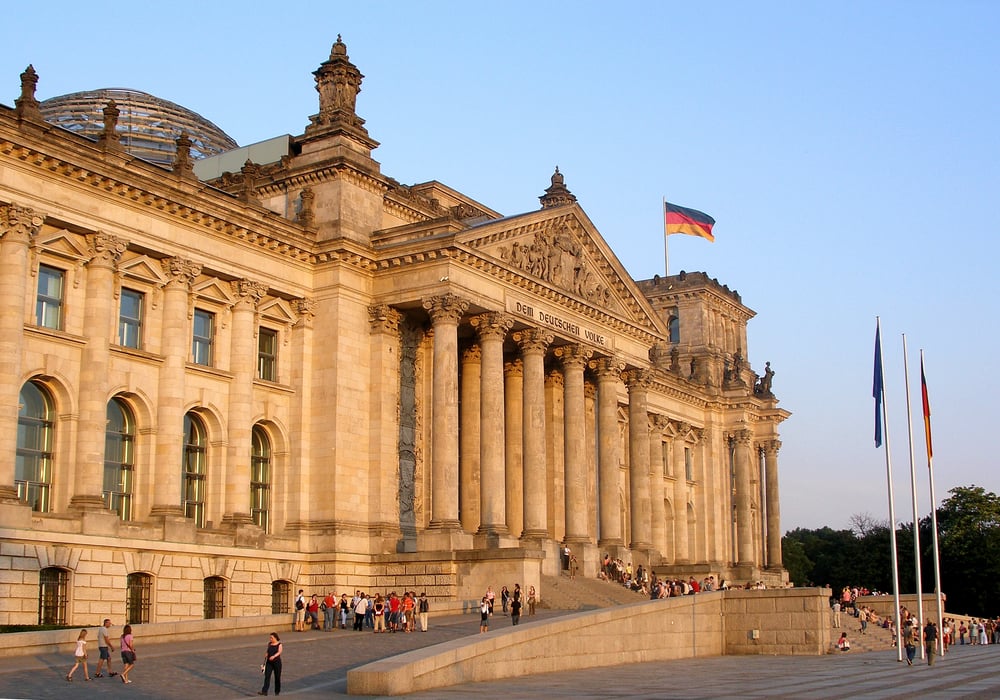
Fire has this way of revealing what was always there beneath the surface, like heat bringing invisible ink to light. When the Reichstag burned on February 27, 1933, the flames that consumed the German parliament building also illuminated something much darker—the path that would lead to the complete dismantling of democracy in Germany.
The photograph of the building ablaze became, in retrospect, a preview of the inferno that would engulf Europe.
But what makes the image so haunting isn’t just what it shows, but what it represents: the moment when manufactured crisis became the excuse for absolute power.
The fire burned for hours; democracy took only slightly longer to die. And the photograph watched it all, patient and indifferent, documenting the instant when a nation chose to believe that safety was worth more than freedom.
History has a way of repeating itself in photographs like this—the same desperate logic, the same willingness to trade everything for the promise of order.
The Blue Marble

Earth looks smaller than expected from space. The 1972 Apollo 17 photograph shows the entire planet suspended in black nothing—Africa and Antarctica clearly visible, swirling clouds marking weather systems that seemed so important from ground level.
But the image did something no political speech or environmental manifesto had managed: it made the concept of “one world” feel obvious instead of idealistic.
The photograph landed just as environmental consciousness was taking root, and it provided the perfect visual argument.
Here was proof that borders were invisible from space, that the atmosphere was a thin shell around a finite sphere, that everything humanity had ever known occupied one small blue dot.
The image became the unofficial flag of the environmental movement, and for good reason. It’s hard to argue with a photograph that shows exactly how alone and fragile the whole enterprise really is.
V-J Day in Times Square

The photograph catches pure relief in motion. A sailor grabs a nurse and kisses her in the middle of Times Square, and Alfred Eisenstaedt’s camera preserves the exact moment when an entire nation exhaled after years of holding its breath.
August 14, 1945: World War II was over, the boys were coming home, and spontaneous celebration erupted in the streets.
But the image works because it distills something vast and complicated—victory, homecoming, the end of rationing and blackouts and casualty lists—into something immediate and human.
Two people kissing in a crowd shouldn’t represent the conclusion of global warfare, but somehow it does.
The photograph found the perfect metaphor by accident: life asserting itself over death, intimacy triumphing over the machinery of war, the future beginning right there on the asphalt.
The Hindenburg Disaster

Some disasters unfold slowly enough for cameras to follow along, and the Hindenburg explosion was one of them. The German passenger airship caught fire while attempting to land in New Jersey on May 6, 1937, and photographer Sam Shere captured the massive aircraft collapsing in flames, its skeletal frame visible through the inferno.
But the photograph did more than document a tragic accident—it marked the end of the age of airships.
The image became an instant symbol of technological hubris meeting reality (which tends to be less forgiving than the drawing board).
The Hindenburg was supposed to represent the future of luxury travel, but Shere’s photograph showed that future burning to the ground in thirty-four seconds.
And so commercial airship travel died along with thirty-six passengers and crew members, killed not just by hydrogen and static electricity, but by a single photograph that made the whole enterprise look impossibly dangerous.
The Assassination of President Kennedy

The Zapruder film gave us the most documented assassination in history, but it’s the still frames that carry the weight. Frame 313 shows the moment of impact with clinical precision—President Kennedy’s head snapping back in the rear seat of the Lincoln Continental as the motorcade moves through Dealey Plaza.
Abraham Zapruder never intended to become history’s most reluctant cinematographer, but his 8mm camera captured the exact instant when American optimism died.
The footage (and the photographs extracted from it) did something unprecedented: they turned a national tragedy into a frame-by-frame examination that could be studied, analyzed, and endlessly debated.
And that obsessive re-examination became part of the tragedy itself—the moment when Americans began to distrust the official version of everything.
So the photograph didn’t just document an assassination; it accidentally created the conspiracy theory as a permanent feature of American political life.
The Fall of the Berlin Wall

Hammers and pickaxes don’t usually make history, but November 9, 1989, was different. Photographs show ordinary Berliners attacking the concrete barrier that had divided their city for twenty-eight years, wielding whatever tools they could find and chipping away at the physical symbol of the Cold War.
The images captured something that political summits and diplomatic negotiations had failed to achieve: the moment when people simply decided they’d had enough.
The Wall came down not because of treaties or official declarations, but because thousands of individuals started swinging hammers and refused to stop.
The photographs show the precise moment when abstract political concepts—freedom, reunification, the end of Soviet control—became concrete action.
And in doing so, they documented not just the fall of a wall, but the collapse of the entire postwar order in Europe.
The Kent State Shootings
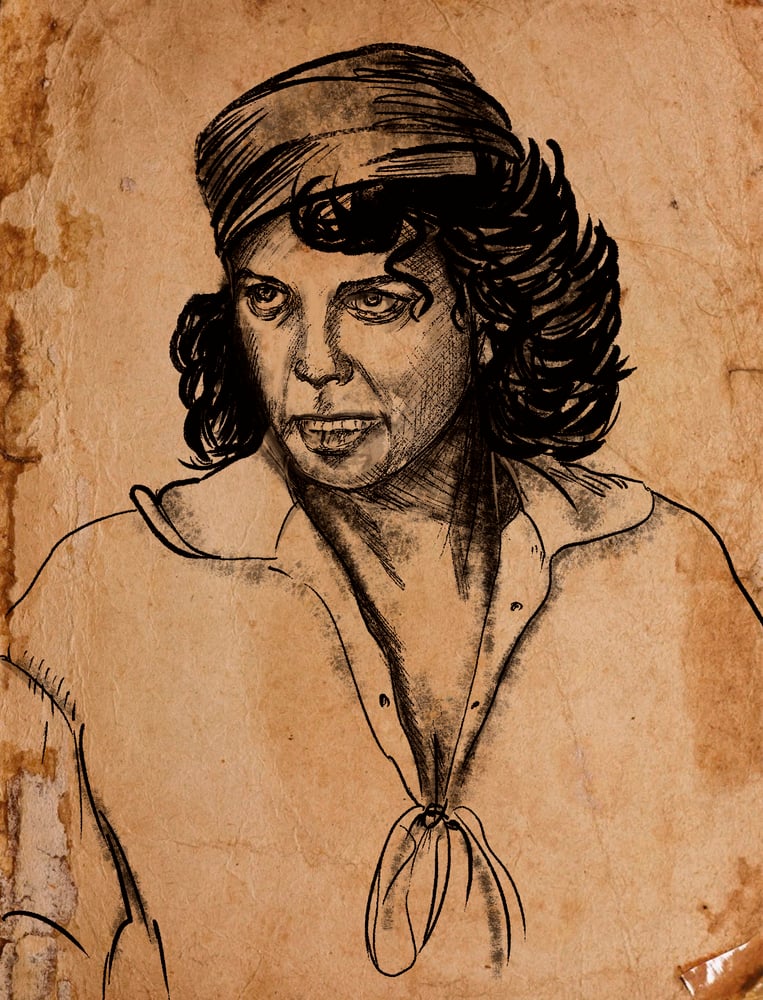
Mary Ann Vecchio kneels over Jeffrey Miller’s body, her arms raised toward the sky, her mouth open in a scream that the photograph cannot capture but somehow makes audible anyway. John Filo’s camera found her in the moments after Ohio National Guardsmen fired into a crowd of antiwar protesters at Kent State University on May 4, 1970, killing four students and wounding nine others.
The image crystallized the generational divide that had been building throughout the 1960s—young people protesting a war they didn’t support, shot by guardsmen not much older than they were, on a college campus that should have been safe from violence.
The photograph made the antiwar movement’s abstract arguments suddenly concrete: the government was willing to kill its own citizens to preserve a war that couldn’t be won.
And so the image became a recruiting poster for the opposition, proof that the stakes were higher than anyone had imagined.
The Mushroom Cloud Over Hiroshima

The cloud rises like a massive, malevolent flower—stem and bloom rendered in smoke and fire, beautiful in the way that purely destructive forces sometimes are. The photograph of the atomic bomb’s mushroom cloud over Hiroshima on August 6, 1945, captured the moment when warfare changed forever, when human beings gained the power to destroy entire cities in a matter of seconds.
But what makes the image so disturbing isn’t just its scale, but its elegance.
The mushroom cloud has this perfect symmetry that makes it seem almost natural, as if the laws of physics had conspired to create something aesthetically pleasing from absolute devastation.
And perhaps that’s the most unsettling thing about the photograph: it makes annihilation look beautiful, which might explain why nuclear weapons became both the ultimate deterrent and the ultimate temptation.
The cloud rises above a city of 300,000 people, but from this distance, they’re invisible—just another abstraction in the age of total war.
The Napalm Girl
Kim Phuc runs unclothed down a road in South Vietnam, her back burning from napalm, her mouth open in a scream that Nick Ut’s camera preserved forever. The photograph from June 8, 1972, shows a nine-year-old girl fleeing an accidental napalm attack on her village, and in doing so, it captured the essential horror of the Vietnam War—the way it consumed the innocent along with everyone else.
The image works because it refuses to let the war remain abstract.
Body counts and strategic objectives feel distant, but a burned child running down a dirt road demands immediate emotional response.
The photograph stripped away all the political justifications and tactical explanations and left only the fundamental question: is this worth a nine-year-old girl’s pain?
And for many Americans, the answer became no. The image helped turn public opinion against the war and proved that sometimes a single photograph can accomplish what years of protest cannot.
The Flag Raising at Iwo Jima

Five Marines and one Navy corpsman raise an American flag on Mount Suribachi, their bodies angled against the weight of the pole, their faces invisible but their effort unmistakable. Joe Rosenthal’s photograph from February 23, 1945, captured what would become the defining image of American victory in the Pacific—except that the battle for Iwo Jima was far from over when the picture was taken.
The flag raising was actually the second one of the day (the first flag was too small to be seen clearly from below), and the photograph became famous before anyone knew whether the men in it would survive the fighting.
Three of them didn’t. But the image worked because it showed American soldiers claiming territory through collective effort rather than individual heroism.
The composition suggests inevitability—these men will plant this flag on this hill because that’s what American soldiers do.
And in 1945, that kind of confidence felt both accurate and necessary.
The Black Power Salute at the 1968 Olympics

Tommie Smith and John Carlos raise their fists on the Olympic podium, heads bowed, black gloves stark against the white of their uniforms, and the photograph freezes the moment when sports became politics. The image from the 1968 Mexico City Olympics captured the Black Power salute that got both sprinters banned from competition, but it also documented the instant when American athletes decided that representing their country meant confronting its failures.
The photograph is composition made perfect by conviction—two men transformed into symbols by the simple act of raising their hands.
And the image resonates because it shows individuals using the platform their talent had earned them to make a statement their government didn’t want to hear.
The Olympics were supposed to be about unity and competition, but Smith and Carlos made them about justice and protest.
The photograph preserved that transformation for history, along with the knowledge that sometimes the most patriotic thing an athlete can do is embarrass their country on the world stage.
The Burning Monk

Thích Quảng Đức sits in perfect lotus position as flames consume his body, his face calm, his posture unchanged, as if he were meditating in a temple rather than burning alive on a Saigon street. Malcolm Browne’s photograph from June 11, 1963, captured the Vietnamese monk’s self-immolation in protest of the South Vietnamese government’s oppression of Buddhists, and in doing so, it revealed the depth of opposition to the U.S.-backed regime.
The image shocked the world because it showed someone choosing death over compromise, and choosing it with a serenity that made the political calculations of governments look petty and cruel.
The photograph became proof that the situation in Vietnam was more desperate than American officials had admitted—desperate enough to drive a monk to light himself on fire rather than accept the status quo.
And so the image helped erode support for U.S. involvement in Vietnam by demonstrating that America was supporting a government so unpopular that its citizens preferred death to submission.
The Little Rock Nine

Elizabeth Eckford walks alone through a crowd of screaming white students and adults, her white dress and dark skin making her the focal point of every photograph, her face composed despite the hatred surrounding her. The images from September 4, 1957, show the fifteen-year-old trying to enter Central High School in Little Rock, Arkansas, and finding herself face-to-face with the violent reality of school integration.
The photographs work because they strip the civil rights struggle down to its essence: a young woman trying to go to school while adults scream racial slurs at her.
The contrast between Eckford’s dignity and the crowd’s hysteria makes the moral equation obvious in a way that legal arguments and political speeches never could.
The images helped convince Americans that segregation wasn’t just wrong in principle—it was ugly in practice, turning adults into monsters and children into symbols of courage they should never have needed to display.
The Challenger Explosion

The space shuttle Challenger tears apart seventy-three seconds after launch, its solid rocket boosters spinning away from the main fuel tank in perfect symmetry, like some terrible firework exploding against the blue Florida sky. The photographs from January 28, 1986, captured the moment when America’s space program—and its sense of technological invincibility—came crashing back to earth.
The explosion was visible from the ground, which meant that thousands of people (including the families of the seven crew members) watched it happen in real time.
The photographs preserved that moment of collective realization: the small white trails that should have been carrying Christa McAuliffe and her crewmates to orbit had instead become the signature of catastrophic failure.
The images forced Americans to confront the fact that space travel was still dangerous, still experimental, still capable of killing people in full view of the world.
The Migrant Mother
Follow
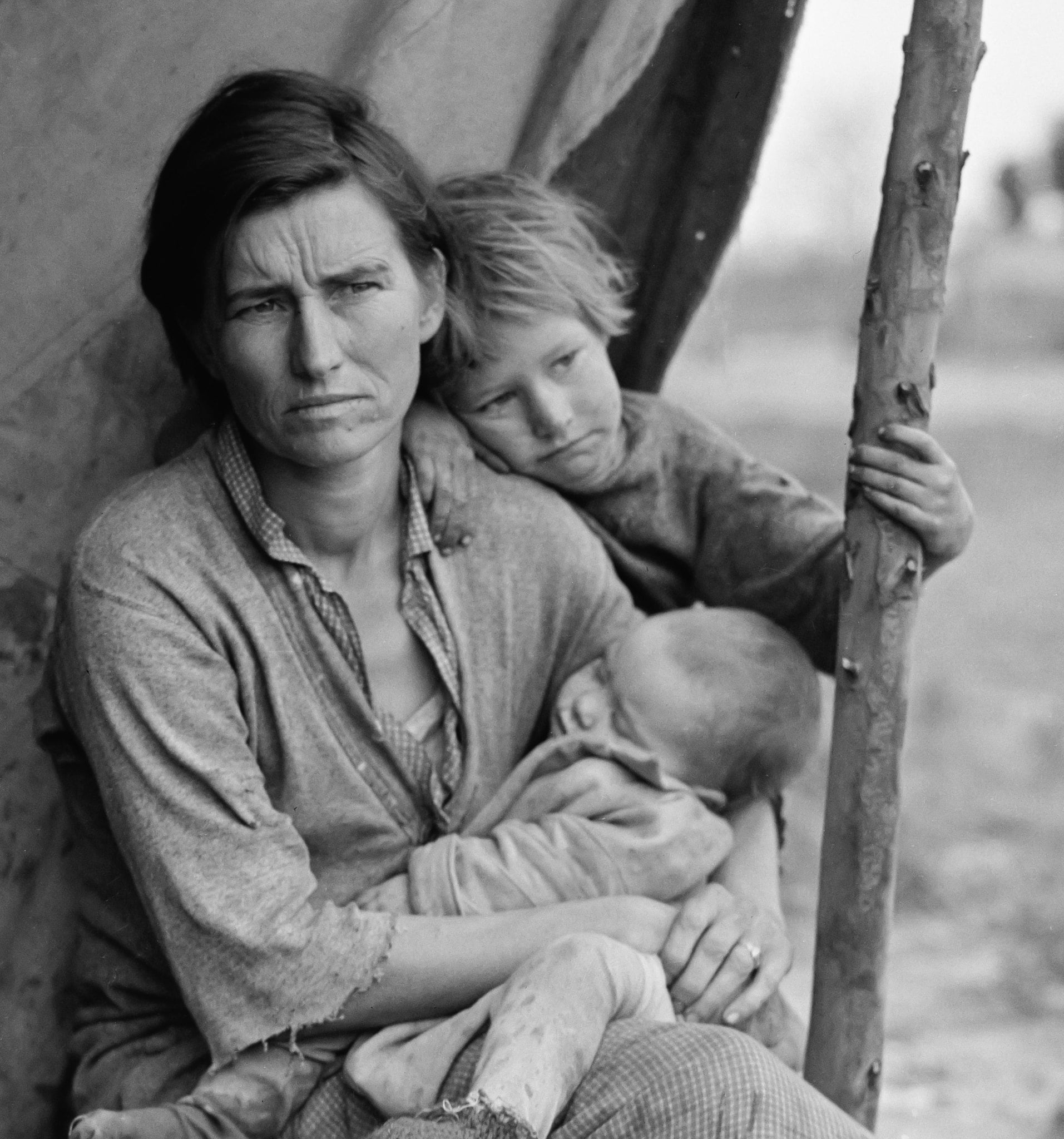
Dorothea Lange’s camera found Florence Owens Thompson sitting in a lean-to tent with three of her children, her face etched with worry, her hand raised to her chin in a gesture of exhausted contemplation. The 1936 photograph became the defining image of the Great Depression—not because Thompson’s situation was unique, but because Lange’s composition made her universal.
The photograph works because it shows poverty without sentimentality.
Thompson isn’t asking for help; she’s simply enduring, and her endurance becomes a form of dignity that makes the economic system’s failure feel personal and immediate.
The image helped convince Americans that the Depression wasn’t just a statistical abstraction—it was a human catastrophe that required government intervention.
And so a photograph of one woman and her children helped justify the New Deal by making the stakes unmistakably clear.
The Moment That Changed Everything
These seventeen photographs prove that history doesn’t announce itself with fanfare. It arrives in the space between one frame and the next, in the moment when light hits film and freezes something that will never happen again.
Each image caught a turning point not because the photographers were trying to capture history, but because they were paying attention when history decided to reveal itself.
The camera doesn’t lie, but it doesn’t tell the whole truth either.
What it does is preserve moments that would otherwise exist only in memory, and some of those moments happen to be the hinges on which entire eras turn.
These photographs remind us that the most significant changes often happen in plain sight, witnessed by anyone with the presence of mind to look through a viewfinder and press a button at exactly the right moment.
More from Go2Tutors!

- The Romanov Crown Jewels and Their Tragic Fate
- 13 Historical Mysteries That Science Still Can’t Solve
- Famous Hoaxes That Fooled the World for Years
- 15 Child Stars with Tragic Adult Lives
- 16 Famous Jewelry Pieces in History
Like Go2Tutors’s content? Follow us on MSN.



