17 Skills That Disappeared with Technology
Technology has a funny way of making life easier while quietly erasing skills that once defined entire generations. What used to be essential knowledge passed down from parent to child has become as obsolete as a rotary phone.
These weren’t just hobbies or party tricks—they were practical abilities that people relied on every single day. The pace of technological change means that skills considered vital just decades ago now seem almost mystical to younger generations.
Here is a list of 17 skills that have largely disappeared thanks to our digital revolution.
Reading Physical Maps

Before GPS turned everyone into navigation-dependent zombies, people could actually unfold a paper map and figure out where they were going. This wasn’t just about following roads — it required understanding scale, interpreting topographical features, and calculating distances by hand.
Map reading involved spatial reasoning skills that helped develop a genuine sense of direction, though it also meant pulling over to refold those massive, unwieldy sheets. Many people today struggle to navigate even short distances without digital guidance.
Using a Slide Rule

The slide rule was essentially a portable computer made of wood and metal, though it required actual mathematical knowledge to operate effectively. Engineers and scientists carried these precision instruments everywhere, performing complex calculations by sliding scales back and forth with practiced ease.
Using one meant understanding logarithms, trigonometry, and various mathematical relationships intuitively rather than just punching numbers into a calculator. The electronic calculator didn’t just replace the slide rule; it eliminated the need to truly comprehend the math behind the numbers.
Like Go2Tutors’s content? Follow us on MSN.
Developing Film Photography

Developing film was equal parts science and art, requiring precise timing, temperature control, and extensive chemical knowledge. Photographers mixed their own solutions, worked in complete darkness, and watched images magically appear in developer baths over several minutes.
The process demanded incredible patience since you couldn’t see your results until hours or days after taking the shot. This limitation made every photograph precious, forcing photographers to really think before pressing the shutter instead of taking hundreds of throwaway digital shots.
Manual Transmission Driving

Driving a stick shift required coordination between hands, feet, and brain that bordered on the athletic. Good drivers could feel the engine’s rhythm — hearing when to shift and smoothly engaging the clutch without even thinking about it.
Hill starts, downshifting for engine braking, and keeping the car from rolling backward at red lights were all part of the essential skill set. Today’s automatic transmissions have made driving accessible to more people, yet they’ve eliminated the intimate connection between driver and machine.
Cursive Handwriting

Cursive writing wasn’t just fancy penmanship — it was designed for speed and efficiency when handwriting served as the primary form of written communication. Good cursive flowed like liquid across the page, allowing writers to capture thoughts quickly without lifting the pen between words.
The connected letters created muscle memory patterns that made writing feel almost automatic after years of practice. While keyboards have largely replaced handwriting, some educators believe that the physical act of forming letters has helped significantly with learning and memory retention.
Like Go2Tutors’s content? Follow us on MSN.
Shorthand Writing

Stenographers could capture spoken words at incredible speeds using shorthand systems like Pitman or Gregg notation. These weren’t just abbreviated words — they were complete symbolic languages that represented sounds and concepts with elegant curves and lines.
A skilled stenographer could write 120 words per minute or more, making them absolutely invaluable in courtrooms, business meetings, and newsrooms. Voice recording technology has made this lightning-fast writing skill nearly extinct, though some court reporters still swear by it.
Mental Arithmetic

Before calculators became ubiquitous, people developed impressive mental math skills out of sheer necessity. Shopkeepers could add long columns of numbers in their heads — workers calculated hourly wages without electronic help, and students memorized multiplication tables up to 12×12 or higher.
This mental agility extended beyond basic arithmetic to include quick estimation, percentage calculations, and even square roots for the mathematically inclined. The ability to verify that the cash register was correct became a valuable life skill that most people have completely lost.
Phone Number Memorization

People used to memorize dozens of phone numbers — family, friends, work, pizza delivery, and emergency services without breaking a sweat. This wasn’t just rote memorization; it created sophisticated mental filing systems and strengthened memory muscles in ways that smartphones simply can’t replicate.
The act of dialing numbers repeatedly helped cement them in long-term memory through pure repetition. Speed dialing on landlines was considered a luxury, and losing your address book was a genuine catastrophe that could isolate you from your entire social network.
Like Go2Tutors’s content? Follow us on MSN.
Using a Card Catalog

Library card catalogs were intricate filing systems that required understanding of alphabetical organization, cross-referencing, and logical thinking skills. Finding information meant knowing how to navigate the Dewey Decimal System — understanding subject headings and following complex classification schemes.
The process involved physical searching through drawers of cards, often leading to unexpected discoveries along the way that you’d never find with targeted internet searches. This methodical approach to research taught patience and thoroughness that Google searches can’t quite replicate.
Analog Clock Reading

Reading analog clocks involved understanding the relationship between hour and minute hands — calculating time differences and visualizing time as a circular concept rather than just digital numbers. Children learned to ‘read’ time by understanding fractions: half past, quarter to, quarter after became second nature.
The analog face helped people visualize time remaining and develop an intuitive sense of duration that digital displays somehow lack. Digital clocks have made time reading instant, though arguably less intuitive for understanding complex time relationships.
Carbon Paper Usage

Carbon paper allowed people to create multiple copies of documents simultaneously, which was absolutely crucial in offices before photocopiers and computers arrived. Proper technique required understanding which side was carbon-coated, how much pressure to apply, and how to align multiple sheets perfectly without smudging.
Mistakes couldn’t be easily corrected, so careful planning and exceptionally neat handwriting were essential for professional documents. The purple-stained fingers were a badge of office work, and knowing how to change a typewriter ribbon was equally important for daily operations.
Like Go2Tutors’s content? Follow us on MSN.
Record Player Operation

Operating a turntable properly required a delicate touch and understanding of mechanical precision that bordered on the ritualistic. Users learned to handle vinyl records exclusively by the edges, clean them properly with special brushes, and set the needle down without creating those dreaded scratches.
Adjusting tracking weight, anti-skate settings, and understanding different speeds (33, 45, 78 RPM) were all part of the comprehensive skill set. The entire ritual of playing records, from careful handling to active listening, created a more intentional relationship with music than today’s streaming services ever could.
Rotary Phone Dialing

Dialing a rotary phone required genuine patience and precision since you couldn’t just tap numbers quickly like on modern keypads. Each digit involved rotating the dial clockwise until your finger hit the metal stop, then releasing it to spring back slowly.
Dialing a zero took the longest time of all, and making a single mistake meant starting the entire number over from the beginning. The physical effort and time investment made each phone call feel more deliberate and important than today’s instant connections.
Manual Typewriter Typing
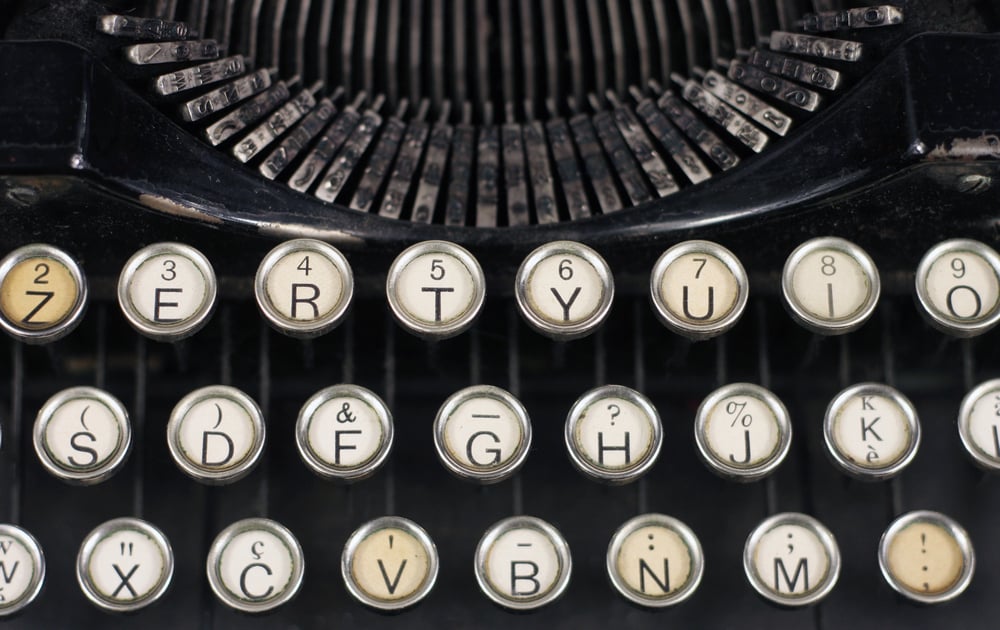
Typing on a manual typewriter demanded significant finger strength, consistent rhythm, and the ability to maintain steady pressure across all keys. Typists learned to strike keys firmly enough to make clear impressions through multiple carbon paper copies simultaneously.
The carriage return became a rhythmic part of the entire typing experience, while white-out or correction tape were absolutely essential tools for any office worker. The satisfying ‘ding’ at the end of each line and the considerable physical effort required to be made typing feel more deliberate and tactile than today’s frictionless keyboard tapping.
Like Go2Tutors’s content? Follow us on MSN.
Television Antenna Adjustment

Getting good TV reception required understanding basic radio frequency principles and having an incredibly delicate touch with antenna positioning. Family members took turns holding the rabbit ears in different positions while someone else watched for the clearest picture possible.
Adjusting outdoor antennas meant climbing on roofs and understanding signal direction from various broadcast towers miles away. Weather conditions, atmospheric interference, and even airplane flights could dramatically affect reception, making TV watching a more active and sometimes genuinely frustrating experience.
Encyclopaedia Research

Research before the internet meant developing sophisticated information-gathering strategies using multiple volumes of encyclopedias, reference books, and complex indexing systems. The skill involved extensive cross-referencing of topics, understanding how information was systematically organized, and following citation trails from one authoritative source to another.
Researchers learned to carefully evaluate source credibility and synthesize information from the limited materials available in their local library. The physical act of pulling heavy volumes from shelves and methodically flipping through pages created a more deliberate and focused research experience than rapid-fire web searches.
Memorizing Directions

Before GPS technology, people developed genuinely impressive spatial memory and navigation skills through absolute necessity. This involved creating detailed mental maps of their surroundings, understanding cardinal directions intuitively, and using permanent landmarks as reliable reference points.
Good navigators could give incredibly detailed directions using local knowledge: ‘turn left at the old gas station, then right where the big oak tree used to be.’ The skill included accurately estimating distances, understanding traffic patterns throughout different times of day, and having multiple backup routes memorized for when construction or accidents blocked the primary path.
Like Go2Tutors’s content? Follow us on MSN.
The Analog Generation’s Legacy

These vanished skills represent more than just outdated techniques — they embody fundamentally different ways of thinking, learning, and interacting with the physical world around us. While technology has undoubtedly made life more convenient and opened up incredible new possibilities, something genuinely valuable was lost in the transition from analog to digital living.
The patience, precision, and deep understanding required by these old-school skills developed cognitive abilities and problem-solving approaches that shaped entire generations of people. Today’s world moves faster and offers instant solutions to most problems, yet the methodical, hands-on approach of our technological ancestors remains a powerful testament to human adaptability and ingenuity.
More from Go2Tutors!

- 16 Restaurant Chains That Went Too Fast
- 12 Things Sold in the 80s That Are Now Illegal
- 15 VHS Tapes That Could Be Worth Thousands
- 17 Historical “What Ifs” That Would Have Changed Everything
- 18 TV Shows That Vanished Without a Finale
Like Go2Tutors’s content? Follow us on MSN.