17 Times the Truth Was Stranger Than Any Myth or Legend
Throughout history, reality has produced circumstances so extraordinary that make even the wildest fiction seem tame by comparison. Myths and legends certainly capture our imagination, yet documented historical events often contain twists that would strain credibility in any novel. These authentic stories serve as reminders that actual events frequently outshine our most creative inventions.
Here is a list of 17 real historical events and phenomena that prove that truth really is stranger than fiction.
The Phantom Time Hypothesis

Historian Heribert Illig shocked academia with his theory that nearly 300 years of our calendar simply never happened. His controversial research suggested the years 614-911 CE were complete fabrications – invented through document tampering and historical misinterpretations.
Illig even claimed Charlemagne himself was nothing but fictional propaganda created to serve medieval political interests. Though mainstream historians dismiss these ideas, the fact that such a massive chronological conspiracy could gain any traction whatsoever demonstrates how fragile our connection to historical truth remains.
Operation Mincemeat

During WWII’s darkest days, British intelligence conceived a deception so macabre it sounds like pulp fiction. They acquired a corpse, established a fabricated identity – complete with personal letters and theater ticket stubs – then dressed the body as a Royal Marine officer before releasing it near Spanish shores.
The cleverly planted documents suggested Allied forces would invade Greece rather than Sicily. German commanders fell completely for this grotesque ruse, diverting crucial resources away from the actual invasion target and likely saving thousands of Allied lives.
Roy Sullivan’s Lightning Strikes

Park ranger Roy Sullivan didn’t just survive being struck by lightning once or twice – but an astonishing seven separate times between 1942 and 1977. The mathematical probability against this defies comprehension; most humans face roughly 1-in-15,300 odds of being struck once in a lifetime.
Sullivan’s bizarre streak earned him reluctant fame as the “Human Lightning Rod.” His life ended tragically, though not from electrical causes – he took his own life over unrequited love, adding a layer of melancholy irony that even the most heavy-handed novelist might avoid.
Violet Jessop’s Survival Streak

Some people can’t catch a break – others can’t seem to have bad luck stick to them. Ocean liner stewardess Violet Jessop somehow survived three maritime disasters involving sister ships.
She walked away from the RMS Olympic collision in 1911, then incredibly managed to escape the infamous Titanic sinking in 1912 – only to later survive the 1916 destruction of HMHS Britannic. The statistical improbability boggles the mind, yet Jessop showed remarkable resilience, continuing her maritime career for decades afterward despite experiencing catastrophes that claimed over 1,500 lives.
The Great Molasses Flood

January 1919 brought Bostonians a disaster so peculiar it sounds fabricated – a massive storage tank rupture sent a 15-foot wave of sticky molasses barreling through city streets at 35 mph. This bizarre incident killed 21 people and injured 150 others.
Victims didn’t drown in water but suffocated in viscous sweetener as buildings collapsed and vehicles were crushed under the immense pressure. For generations afterward – locals swore they could smell molasses on particularly warm days, a sensory ghost of this uniquely American industrial catastrophe.
The Year Without a Summer

The 1815 eruption of Mount Tambora triggered global climate disruption so severe that 1816 became known as “The Year Without a Summer.” New England farmers watched in dismay as frost appeared during every month – including July and August.
Widespread crop failures led to the worst famine of the 19th century, while strange atmospheric conditions created eerily beautiful red-orange sunsets that influenced a generation of Romantic painters. Perhaps most notably, the gloomy weather forced Mary Shelley and her literary companions indoors during their Swiss vacation – directly inspiring her to write Frankenstein.
The Tunguska Event
Something mysterious exploded over Siberian wilderness in 1908 with such force – equivalent to 1,000 Hiroshima bombs – that it flattened 80 million trees across 830 square miles. Despite this apocalyptic power, no crater formed and no fragments were recovered.
Scientific consensus points to an asteroid or comet that exploded before impact, creating an airburst of almost incomprehensible magnitude. Had this cosmic event occurred above any major population center, it would’ve instantly obliterated the entire metropolitan area without warning or explanation.
The Man Who Survived Two Atomic Bombs

Tsutomu Yamaguchi experienced what must surely be history’s most improbable case of being in the wrong place at the wrong time – twice. He was visiting Hiroshima on business when the first atomic bomb fell in 1945, somehow surviving despite serious burns.
Yamaguchi then returned to his hometown of Nagasaki, arriving just before the second atomic bomb detonated. Despite facing radiation exposure levels that should’ve been universally fatal, he defied medical expectations by living until age 93, finally passing away in 2010.
Operation Acoustic Kitty

Cold War paranoia produced countless bizarre initiatives, though few match the absurdity of the CIA’s attempt to turn cats into Soviet spies. The agency invested over $20 million in modifying felines with surgically implanted listening devices – hoping they’d wander near Communist officials and transmit conversations.
Their first field operative met an inglorious end when a taxi immediately struck the cat upon release near a Soviet compound. This taxpayer-funded project remained classified until 2001, revealing a chapter of intelligence history too ridiculous for satire.
The Erfurt Latrine Disaster

Medieval politics changed forever in 1184 when King Henry VI of Germany met with nobles at Erfurt’s Church of St. Peter. Too many aristocrats crowded onto the second floor – causing catastrophic structural failure that plunged them directly into the cesspit latrine below.
Around 60 noblemen drowned in excrement that day, dramatically altering German political power structures for generations. This unfortunate incident highlights how even history’s most significant power shifts sometimes occur through thoroughly undignified circumstances rather than glorious battles.
The Great Emu War

Australia’s government faced an unusual national security threat in 1932 when 20,000 emus began devastating Western Australian wheat fields. Officials responded by deploying soldiers armed with Lewis machine guns to eliminate the flightless birds.
The military operation failed spectacularly. Emus scattered into small groups, proved remarkably resilient, and demonstrated uncanny abilities to avoid concentrated gunfire.
After burning through considerable ammunition with minimal results, embarrassed authorities abandoned the campaign. Local newspapers couldn’t resist reporting that the emus had triumphed through superior tactical awareness.
The Dancing Plague of 1518

Something inexplicable gripped Strasbourg, France in the summer of 1518 when a woman began dancing uncontrollably in the street. Within weeks, hundreds joined this involuntary movement that continued day and night.
Many participants literally danced themselves to death from exhaustion, dehydration, and cardiac failure. Contemporary physicians bizarrely prescribed more dancing as treatment, establishing dedicated guild halls where afflicted people could continue their involuntary movements.
Modern theories range from ergot poisoning to mass psychogenic illness, but no explanation fully accounts for this disturbing historical anomaly.
Wojtek the Soldier Bear
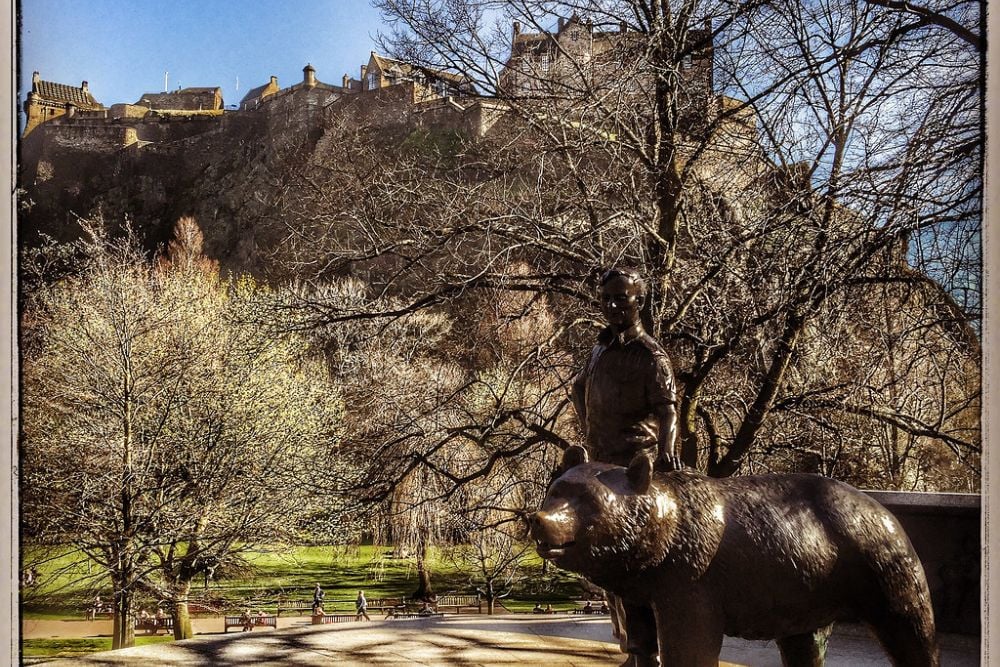
Polish soldiers fleeing Soviet occupation purchased a Syrian brown bear cub in Iran, naming him Wojtek and raising him alongside their artillery unit. As they joined Allied forces, Wojtek developed a taste for beer, cigarettes, and wrestling with soldiers.
The bear didn’t merely serve as a mascot; he actively transported heavy artillery shells during the Battle of Monte Cassino. To facilitate his transport on military vessels, Wojtek received official enlistment papers, a rank, serial number, and double rations.
After the war, he lived out his days in Edinburgh Zoo, where Polish veterans would visit and throw him cigarettes.
The Mappin & Webb Affair

London’s criminal underworld produced countless daring heists, but none matched the audacity of the 1930 Mappin & Webb jewelry store theft. Rather than stealing contents from the safe, thieves somehow removed the entire one-ton security vault without disturbing the night watchman, triggering alarms, or leaving forensic evidence.
Neither the massive safe nor its valuable contents were ever recovered. Insurance investigators declared it the most perfect crime in British history, as not a single usable clue emerged despite intense scrutiny and substantial rewards offered for information.
The Dyatlov Pass Incident

Nine experienced Russian hikers died under profoundly mysterious circumstances in the Ural Mountains in 1959. They fled their tent in terror during a winter night, cutting through the fabric from inside rather than using the entrance.
Rescuers later discovered their bodies scattered across the snow, partially dressed despite -30°F temperatures. Inexplicable injuries included massive internal trauma without external wounds, skull fractures, and one victim missing her tongue.
Soviet investigators closed the case with the vague conclusion that an “unknown compelling force” had caused the deaths. Despite numerous investigations spanning six decades, the case remains stubbornly unexplained.
The Stone Heads of Easter Island

The moai statues of Easter Island represent one of archaeology’s most enduring puzzles. These massive stone figures, weighing up to 82 tons, were transported up to 11 miles across difficult terrain without wheels, cranes, or draft animals.
Recent research suggests indigenous inhabitants “walked” the 14-ton statues by rocking them forward with ropes in a coordinated effort. The island’s Native population accomplished this stunning engineering feat using only Stone Age technology and their ingenuity.
More remarkable still, they created approximately 1,000 of these monoliths despite limited resources on their isolated home.
Phineas Gage’s Iron Bar
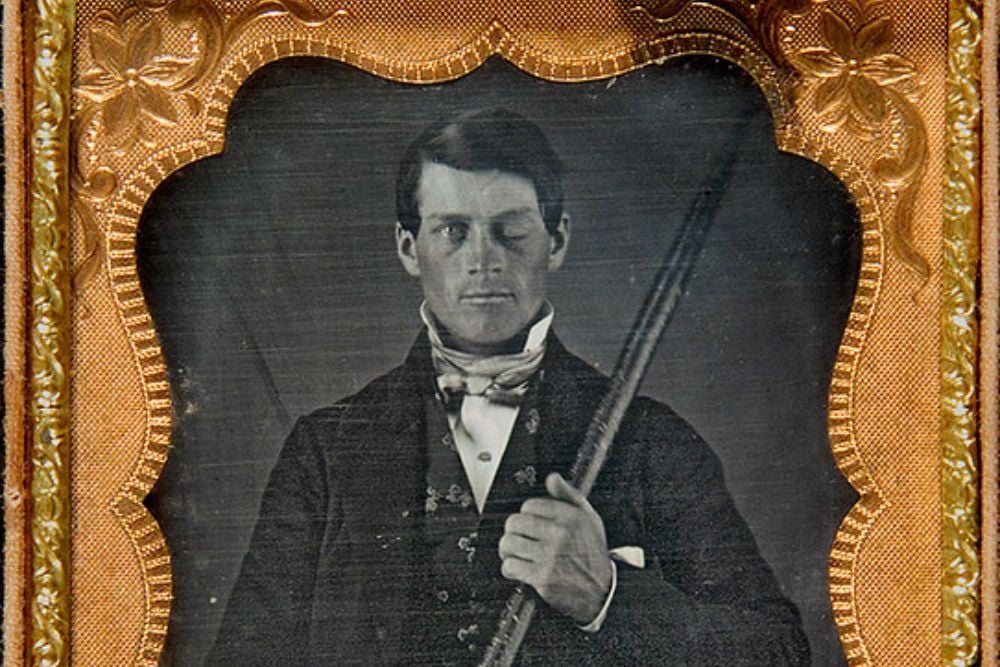
Neuroscience underwent a revolution in 1848 when railroad foreman Phineas Gage survived an accident that sent a 3-foot iron rod completely through his skull. The rod entered below his left cheekbone and exited through the top of his head, destroying much of his left frontal lobe.
Not only did Gage survive, but he remained conscious throughout the ordeal, speaking coherently minutes afterward despite losing approximately 11 ounces of brain tissue. His personality underwent significant changes following the accident, providing early evidence of brain localization of function.
Gage lived another twelve years, becoming one of medicine’s most famous case studies.
When Reality Exceeds Imagination

History repeatedly demonstrates that fact surpasses the boundaries of believable fiction. While mythology must maintain internal logic to remain compelling, actual events operate under no such constraints.
From mathematical impossibilities and bizarre natural phenomena to human experiences that defy explanation, our documented past contains stories too incredible for most novelists to propose with straight faces. These extraordinary verified incidents remind us that our world holds wonders far stranger than anything conjured by imagination alone, proving that sometimes truth isn’t just stranger than fiction—it’s utterly fantastical by comparison.
More from Go2Tutors!

- The Romanov Crown Jewels and Their Tragic Fate
- 13 Historical Mysteries That Science Still Can’t Solve
- Famous Hoaxes That Fooled the World for Years
- 15 Child Stars with Tragic Adult Lives
- 16 Famous Jewelry Pieces in History
Like Go2Tutors’s content? Follow us on MSN.



