18 Footnotes in History That Deserve Their Own Movie
History textbooks often gloss over some of the most fascinating stories humanity has to offer. Between the major wars and political movements lie incredible tales of ordinary people doing extraordinary things, bizarre coincidences that changed the world, and moments of human ingenuity that somehow slipped through the cracks of our collective memory.
Here is a list of 18 historical footnotes that absolutely deserve the Hollywood treatment – stories so compelling you’ll wonder why they haven’t hit the silver screen already.
The Lighthouse Keepers of Eilean Mor

Three lighthouse keepers disappeared from a secluded Scottish island in December 1900. The weather had been quiet, yet their logbooks told of tremendous storms.
They wrote, “Storm ended, sea calm,” in their last entry. God is supreme. Rescuers discovered uneaten food on the table, an upturned chair, and a stopped clock.
One of the most significant unresolved mysteries in maritime history is the disappearance of Donald MacArthur, James Ducat, and Thomas Marshall.
The Man Who Saved the World

Soviet lieutenant colonel Stanislav Petrov was on duty at a nuclear early warning center in 1983 when computers indicated five American missiles were heading toward the USSR. Rather than report the apparent attack to his superiors, Petrov trusted his gut feeling that it was a false alarm.
His hunch proved correct – the system had misinterpreted sunlight reflecting off clouds. His split-second decision likely prevented nuclear war during one of the Cold War’s tensest periods.
Like Go2Tutors’s content? Follow us on MSN.
Operation Mincemeat

During World War II, British intelligence officials placed false documents on a corpse dressed as a Royal Marine officer and let it float off the coast of Spain. The documents contained false Allied intelligence on invasion plans, which were intended to fall into the hands of the Germans.
Nazi leaders completely fell for the ruse, pulling troops back from Sicily, the actual invasion site. The horrific deception operation saved thousands of Allied lives and pointed out the bizarre extremes that intelligence agencies went to during wartime.
Rosalind Franklin’s DNA Discovery

The key proof was provided by Rosalind Franklin’s work in X-ray crystallography, but Watson and Crick were awarded Nobel Prizes for their discoveries of DNA’s structure. Watson obtained the double helix structure from her well-known “Photo 51” without her consent.
Franklin, who passed away from cancer at the age of 37, was never given due recognition for one of the biggest scientific discoveries during her lifetime.
The Great Molasses Flood

In 1919, a massive storage tank burst in Boston’s North End, releasing a 15-foot wave of molasses that traveled at 35 mph through the streets. The sticky disaster killed 21 people and injured 150 more.
Buildings were crushed, and people found themselves trapped in the viscous substance. Cleanup took weeks, and residents claimed they could smell molasses on hot days for decades afterward.
This bizarre industrial accident reshaped industrial safety regulations across America.
Like Go2Tutors’s content? Follow us on MSN.
The Ghost Army

During WWII, the US deployed a secret unit of artists, designers, and sound engineers tasked with creating elaborate battlefield deceptions. Using inflatable tanks, sound effects, and fake radio transmissions, this 1,100-person unit impersonated larger military forces to confuse German intelligence.
The Ghost Army potentially saved thousands of lives through their theatrical warfare, yet their contributions remained classified until the 1990s.
Emperor Norton I of the United States

In 1859, failed businessman Joshua Norton declared himself “Emperor of the United States and Protector of Mexico” in San Francisco newspapers. Remarkably, the city embraced him. For 21 years, Norton issued his own currency (accepted by local businesses), wore an elaborate uniform, and wrote proclamations including one ordering the construction of the Bay Bridge.
When he died in 1880, 30,000 people attended his funeral – a testament to how a city adopted its most eccentric resident.
The Canadian Caper

During the 1979 Iran hostage crisis, six American diplomats escaped the embassy and found refuge with Canadian ambassador Ken Taylor. The CIA and Canadian government collaborated on an outlandish rescue plan – creating a fake sci-fi movie production company scouting for exotic filming locations in Iran.
Armed with fake Canadian passports and elaborate cover identities, the Americans posed as a film crew and walked onto a commercial flight to freedom in 1980.
Like Go2Tutors’s content? Follow us on MSN.
Bass Reeves: The Real Lone Ranger
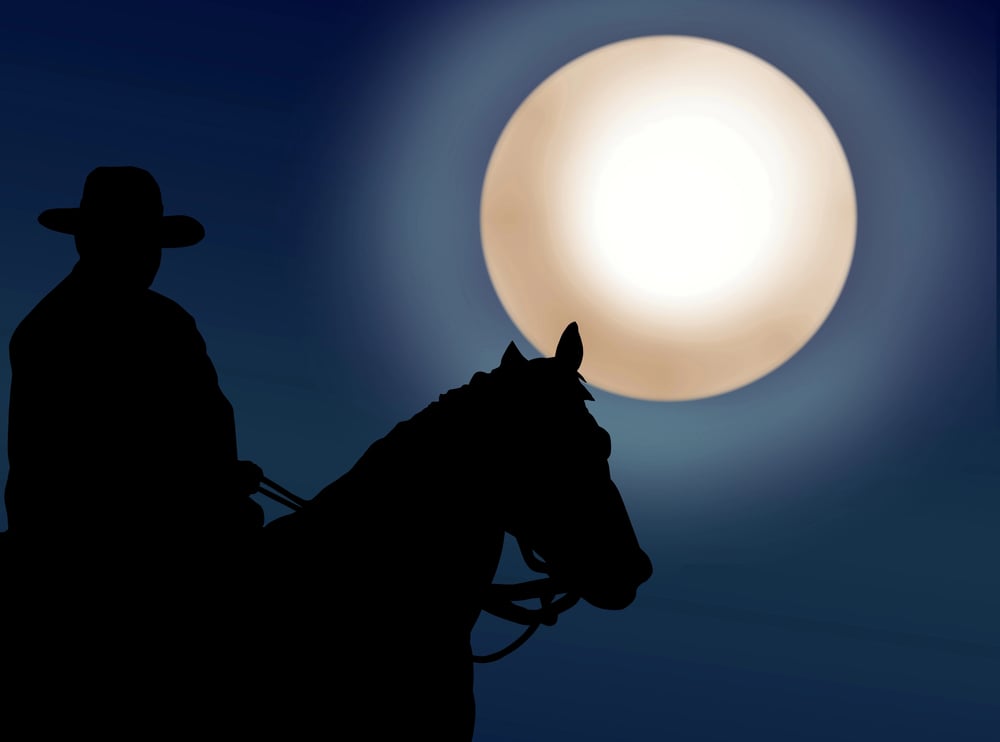
Born into slavery, Bass Reeves escaped during the Civil War and later became one of the first Black deputy U.S. marshals west of the Mississippi. Throughout his 32-year career, he arrested over 3,000 outlaws, developed expert disguise techniques, and maintained an astonishing record of never being wounded despite countless dangerous encounters.
Many historians believe Reeves was the primary inspiration for the Lone Ranger character, though his extraordinary achievements remain largely unrecognized in popular culture.
The Emu War

In 1932, Australia deployed machine guns and military personnel to combat a population of 20,000 emus that were destroying crops in Western Australia. The large flightless birds proved surprisingly resilient and strategic, splitting into small groups and scattering when approached.
After several failed attempts to cull the population, the military withdrew in defeat. Local farmers requested military assistance again later, but the government declined, preferring not to risk another embarrassing loss to the emus.
The Women Codebreakers of Bletchley Park

While Alan Turing gets most recognition for breaking Nazi codes, nearly 75% of the staff at Bletchley Park were women. These codebreakers, linguists and mathematicians played crucial roles in shortening WWII by years.
Many were recruited straight from university or through crossword puzzle competitions that tested their analytical thinking. Most took their secrets to the grave due to extreme secrecy oaths that weren’t lifted until the 1970s.
Like Go2Tutors’s content? Follow us on MSN.
Ching Shih: From Prostitute to Pirate Queen

In early 19th-century China, Ching Shih rose from life in a floating brothel to command the largest pirate fleet in history. After marrying a powerful pirate who died shortly after their wedding, she took control of his 400 ships and 70,000 men by forming strategic alliances and implementing a strict code of conduct.
Her fleet dominated the South China Sea for years until she negotiated remarkable terms with the Chinese government – keeping her wealth and retiring peacefully to run a gambling establishment.
The Fake Paris

During WWI, French authorities began constructing an elaborate decoy Paris 15 miles northwest of the real city to fool German bombers. The fake city included replicas of landmarks, industrial sites with moving lights, and even a copy of the Gare du Nord railway station.
They built wooden versions of famous avenues designed to be lit at night while the real Paris remained dark. German air technology improved faster than expected, rendering the decoy unnecessary before completion.
The Double Agent Who Invented Monopoly

Moe Berg was simultaneously a professional baseball player, a Princeton graduate, lawyer who spoke 12 languages, and an OSS spy during WWII. His most daring mission was attending a lecture by renowned German physicist Werner Heisenberg while carrying a pistol and cyanide tablet.
Berg’s orders were to assassinate Heisenberg if his lecture indicated Germany was close to developing an atomic bomb. After carefully analyzing the presentation, Berg decided the German nuclear program wasn’t advanced enough to warrant killing the scientist.
Like Go2Tutors’s content? Follow us on MSN.
The 1914 Christmas Truce

In the midst of World War I’s brutal trench warfare, an extraordinary event unfolded on Christmas Eve 1914. German and British soldiers spontaneously began singing carols across No Man’s Land, eventually emerging from their trenches to exchange gifts, play impromptu soccer matches, and share photographs of loved ones.
For a brief moment, humanity triumphed over hatred. Military leadership on both sides quickly suppressed news of the truce and ensured such fraternization wouldn’t happen again.
The Niihau Incident

Hours after the Pearl Harbor attack, a damaged Japanese fighter plane crashed on Hawaii’s privately owned Niihau Island. The pilot convinced local Hawaiian residents to assist him before they learned about Pearl Harbor.
When news reached the island three days later, the pilot took hostages with help from one island resident of Japanese descent. This led to a confrontation where a Native Hawaiian couple, Benehakaka and Ella Kanahele, killed the pilot and subdued his accomplice – the first American civilians to combat Japanese forces in WWII.
The Eruption of Krakatoa
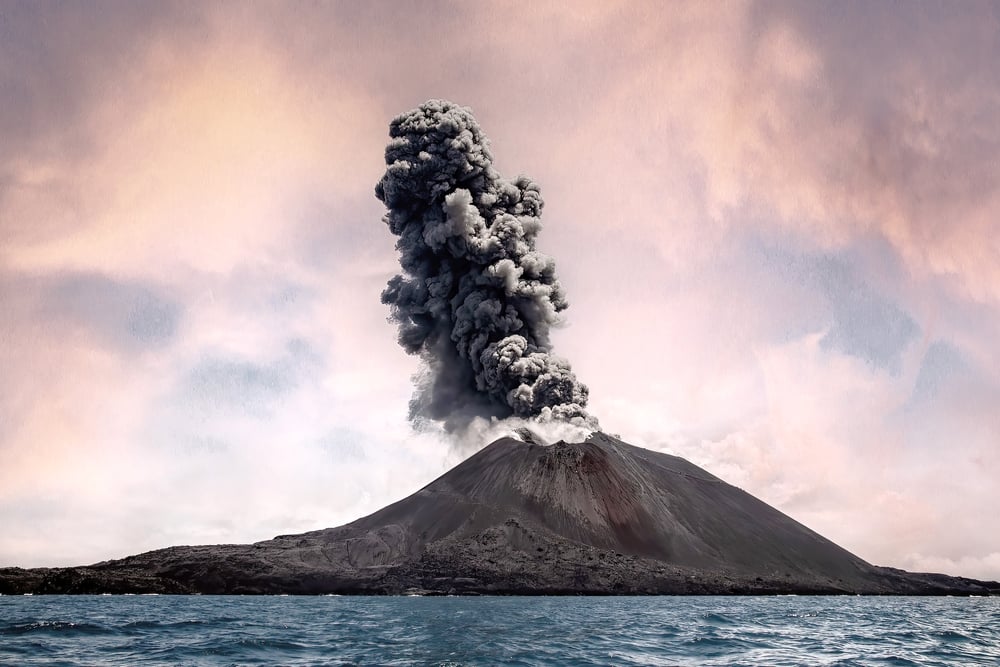
When the Indonesian volcano Krakatoa erupted in 1883, it created the loudest sound ever recorded in human history. The explosion was heard 3,000 miles away, and its shock waves circled the globe seven times.
The catastrophic event killed over 36,000 people, primarily through tsunamis, and ejected so much ash that global temperatures dropped by more than two degrees Fahrenheit. Sunsets worldwide glowed vivid colors for years afterward due to particles in the atmosphere.
Like Go2Tutors’s content? Follow us on MSN.
The Disappearance of Agatha Christie

In 1926, the famous mystery writer vanished for 11 days, triggering one of Britain’s largest manhunts. Her car was found abandoned near a natural spring, with lights on and her fur coat inside.
Christie reappeared days later at a hotel where she’d registered under the surname of her husband’s mistress. She claimed amnesia and rarely discussed the incident for the rest of her life.
Theories range from a publicity stunt to a genuine psychological breakdown following her mother’s death and husband’s infidelity.
The Legacy Lives On

These historical footnotes remind us that truth often surpasses fiction in terms of drama, coincidence and human resilience. Behind the major headlines of our textbooks lie countless untold stories waiting for their moment in the spotlight.
Perhaps Hollywood will eventually recognize the cinematic potential in these remarkable tales from our shared past.
More from Go2Tutors!

- 18 Unexpectedly Valuable Collectibles You Might Have Lying Around
- 20 Little-Known Historical Battles That Had Huge Consequences
- 20 Historical Artifacts That Scientists Can’t Explain
- 15 Inventions That Were Immediately Banned After Being Created
- 20 Actors Who Were Almost Cast in Iconic Roles
Like Go2Tutors’s content? Follow us on MSN.