18 Playground Games That Don’t Exist Anymore
Remember when recess meant something completely different? Back in the day, playgrounds buzzed with games that required nothing more than imagination, a few willing participants, and maybe a rubber sphere or two.
These weren’t organized sports with referees and scoreboards—they were pure, unfiltered fun that kids created and passed down like folklore. Most of these classic playground games have vanished from modern schoolyards, replaced by structured activities and safety concerns.
Here’s a list of 18 playground games that today’s kids will probably never experience.
Red Rover

This game involved two teams forming human chains by linking arms, then calling players from the opposing team to run and break through their line. The called player would sprint full speed and try to bust through the weakest link. If they succeeded, they could take someone back to their team.
If not, they joined the other side. The game usually ended when everyone got tired of being clotheslined by their classmates’ arms.
Dodgeball

The original version of dodgeball was far more intense than today’s foam-sphere alternatives. Players hurled hard rubber spheres at opponents with the goal of eliminating them from the game.
Getting hit meant you were out, but catching a throw meant the thrower was eliminated instead. The last team standing won, though most games devolved into all-out warfare with kids diving behind lunch tables for cover.
King of the Hill
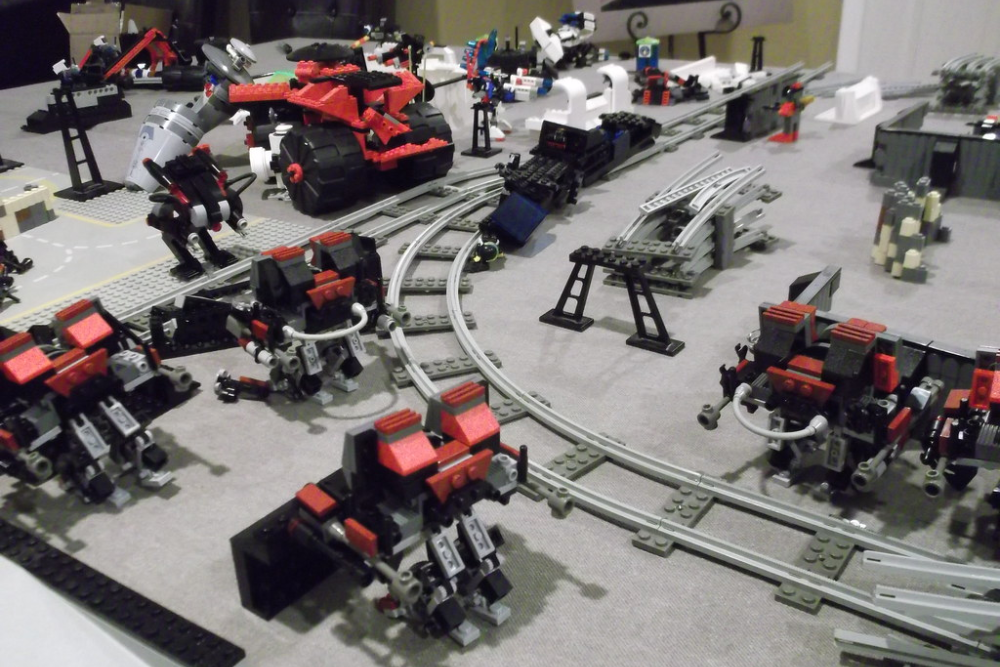
One person claimed the top of a hill, mound, or playground structure, and everyone else tried to knock them off to take their place. The ‘king’ had to defend their position against multiple attackers coming from all directions. Victory was temporary since someone was always plotting to dethrone you.
This game taught valuable lessons about power struggles and the loneliness of leadership.
British Bulldog
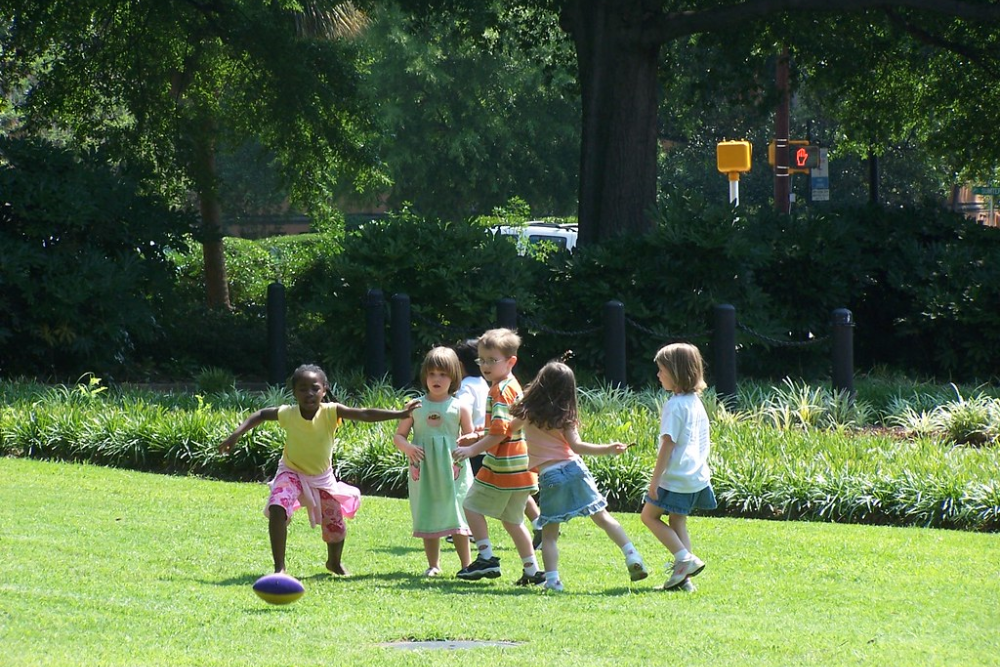
Players lined up on one side of the playground while one person stood in the middle as the ‘bulldog.’ When the bulldog called out, everyone had to run to the other side without getting tackled.
Anyone caught became a bulldog for the next round. The game continued until only one runner remained, though most kids preferred being bulldogs since tackling was more fun than running.
Smear the Queer
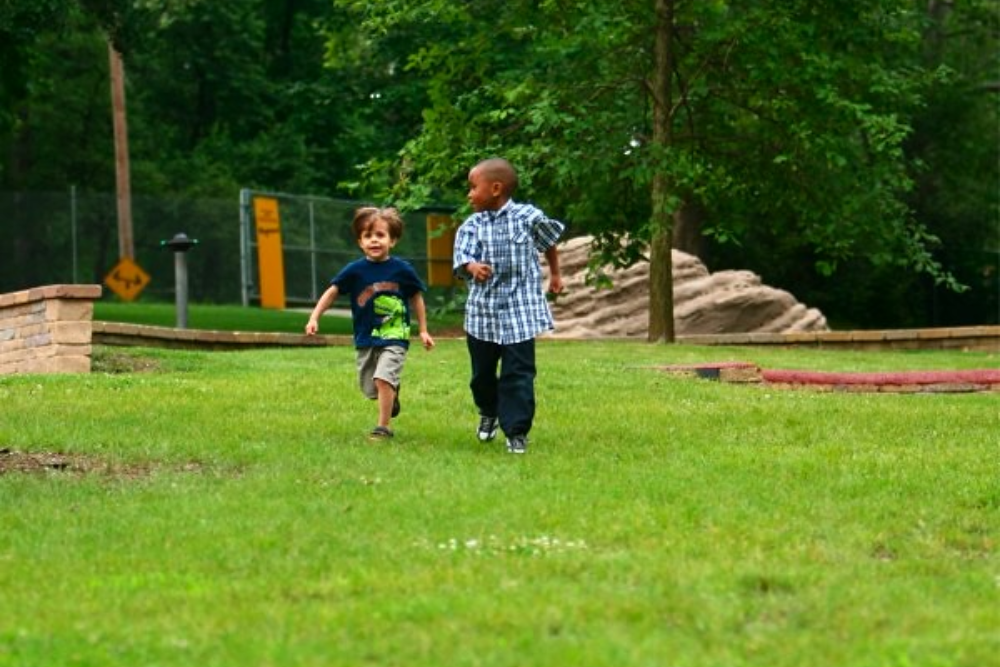
Despite its problematic name, this game was simply about one person carrying an object while everyone else tried to tackle them and steal it. Whoever ended up with the object became the new target.
The game had no real objective other than organized chaos, and it usually continued until a teacher intervened or someone got hurt. The name thankfully disappeared long before the game itself did.
Pogs
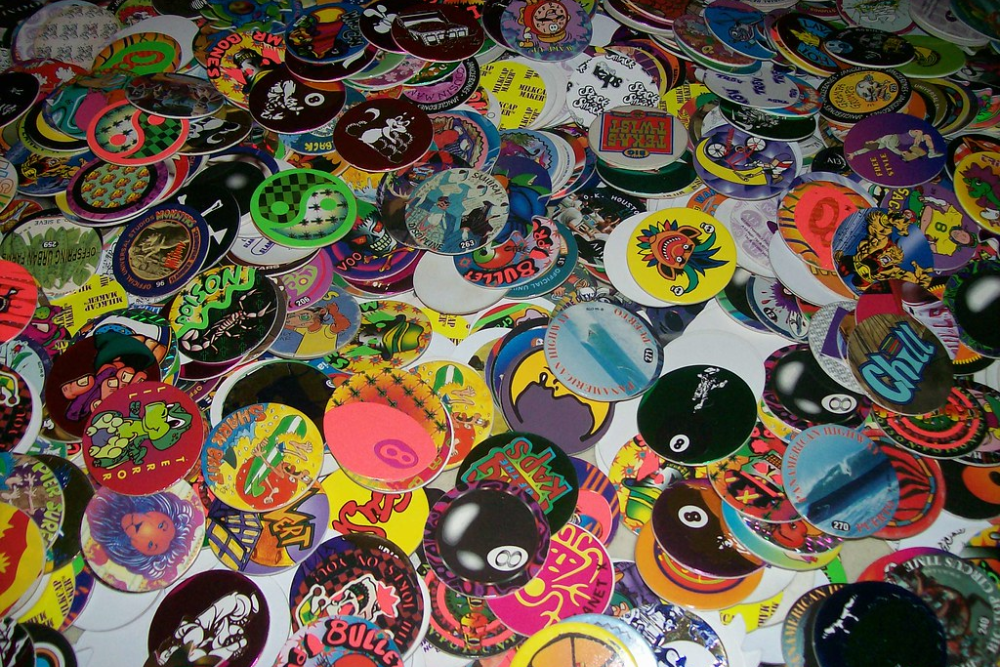
These circular cardboard discs became a playground currency in the 1990s. Players would stack their pogs face-down, then take turns throwing a heavier ‘slammer’ at the pile. Any pogs that flipped face-up belonged to the thrower.
Schools eventually banned pogs because kids were essentially gambling with their lunch money, and parents got tired of buying new sets when their children lost everything.
Jacks
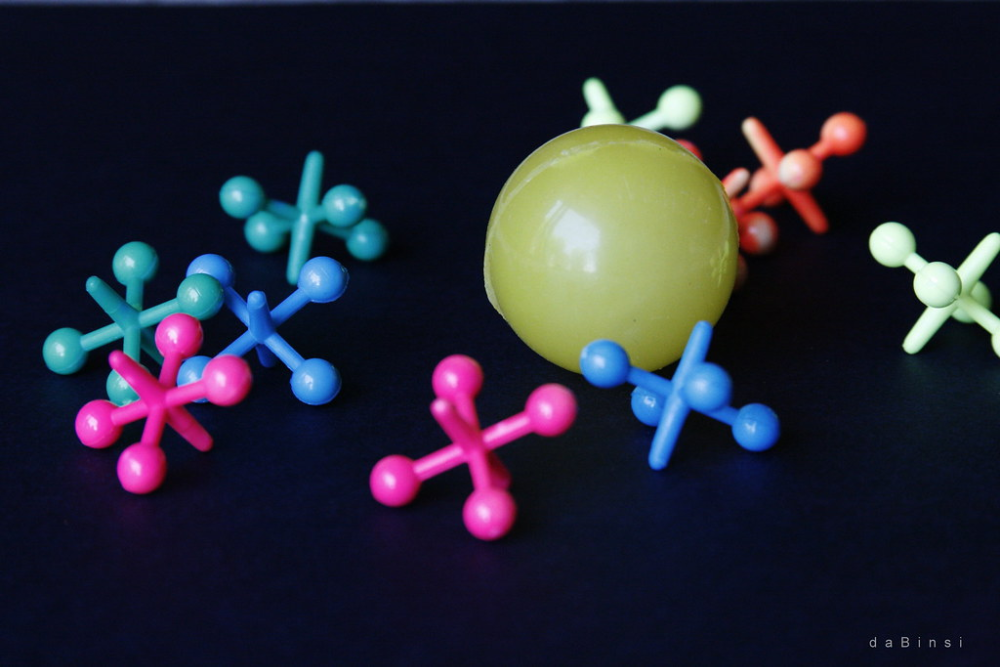
This game required a small rubber sphere and ten metal jacks shaped like six-pointed stars. Players would bounce the sphere and try to pick up jacks in sequence—first one at a time, then two, then three, and so on.
The metal jacks were sharp enough to hurt when stepped on, making this game a potential hazard for barefoot kids. Jacks required genuine skill and hand-eye coordination that made it oddly addictive.
Marbles

Kids would draw circles in the dirt and place marbles inside, then take turns trying to knock them out with a larger ‘shooter’ marble. Whatever marbles you knocked out, you kept. Different marbles had different values, with cat’s eyes and steelies being particularly prized.
The game required both strategy and precision, and serious players developed flicking techniques that would make a pool shark jealous.
Four Square
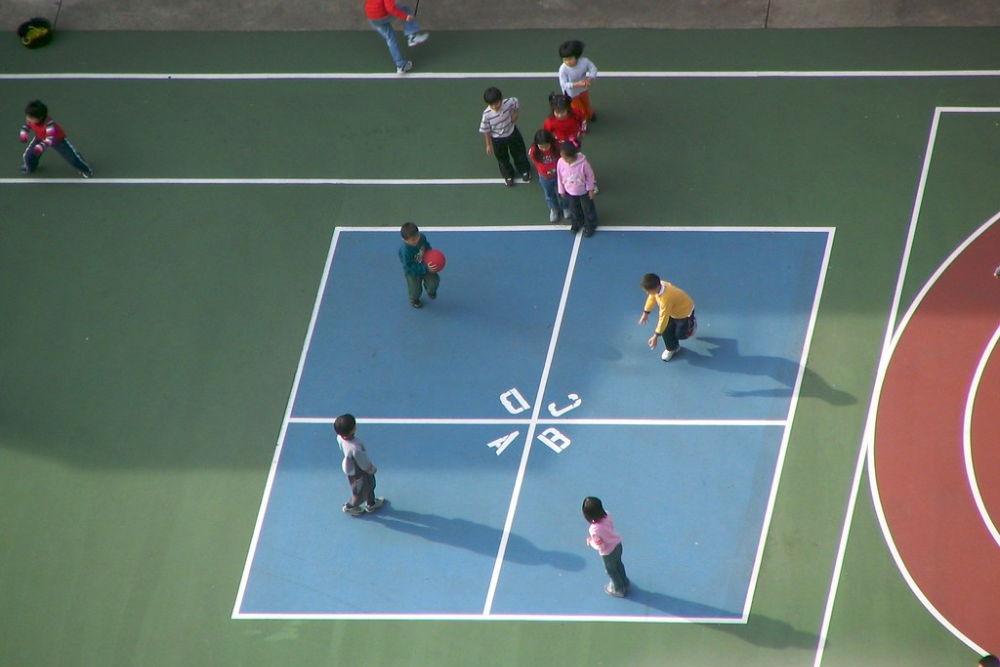
This court game used a large rubber sphere and four chalk-drawn squares numbered one through four. The player in square four served the sphere, and players tried to eliminate each other by making the sphere bounce twice in someone’s square or go out of bounds.
Getting eliminated meant moving to the end of the line, while everyone else advanced toward the coveted fourth square. The best players could hold square four for entire recess periods.
Wallball

Players lined up against a wall while one person threw a rubber sphere at it. If the sphere bounced back and someone caught it before it hit the ground, the thrower had to run and touch the wall before getting hit by the sphere.
Getting hit meant you were eliminated, but catching the sphere made you the new thrower. The game moved fast and required quick reflexes and even quicker feet.
Kick the Can
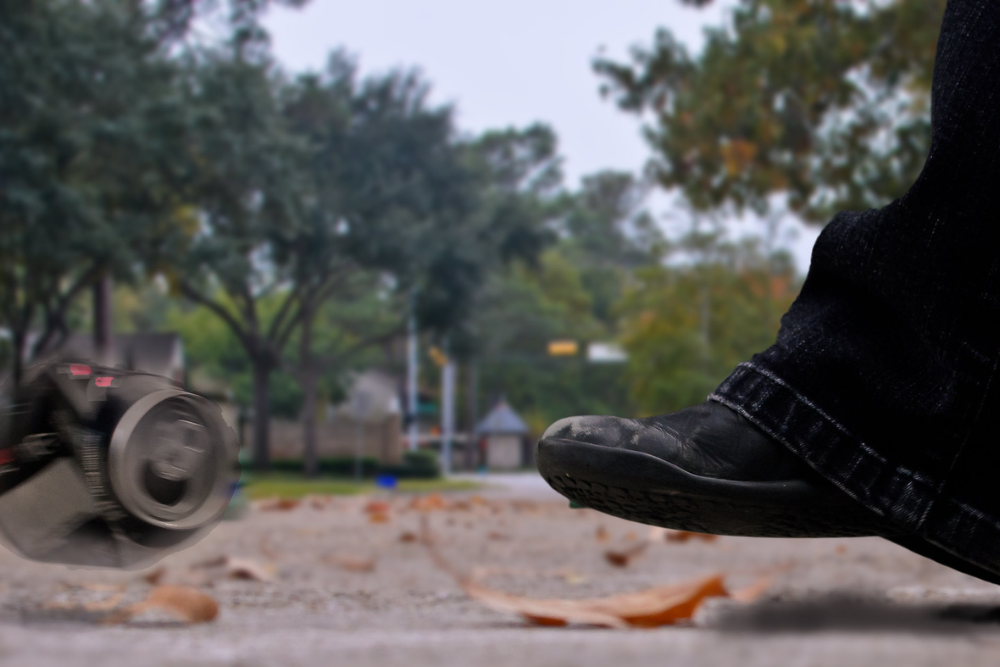
One person guarded an empty can while everyone else hid. The guard had to find the hidden players and tag them before they could run back and kick the can.
If someone successfully kicked the can, all caught players were freed and the game reset. The guard’s job was nearly impossible since they had to both hunt for hidden players and protect the can from surprise attacks.
Capture the Flag

Two teams each had a flag or object to protect while trying to steal the opposing team’s flag. Players could tag enemies in their own territory, sending them to ‘jail’ until a teammate freed them.
The game required both offensive strategy to steal the flag and defensive tactics to protect your own. Most games turned into elaborate military operations with scouts, diversions, and coordinated attacks.
Hopscotch
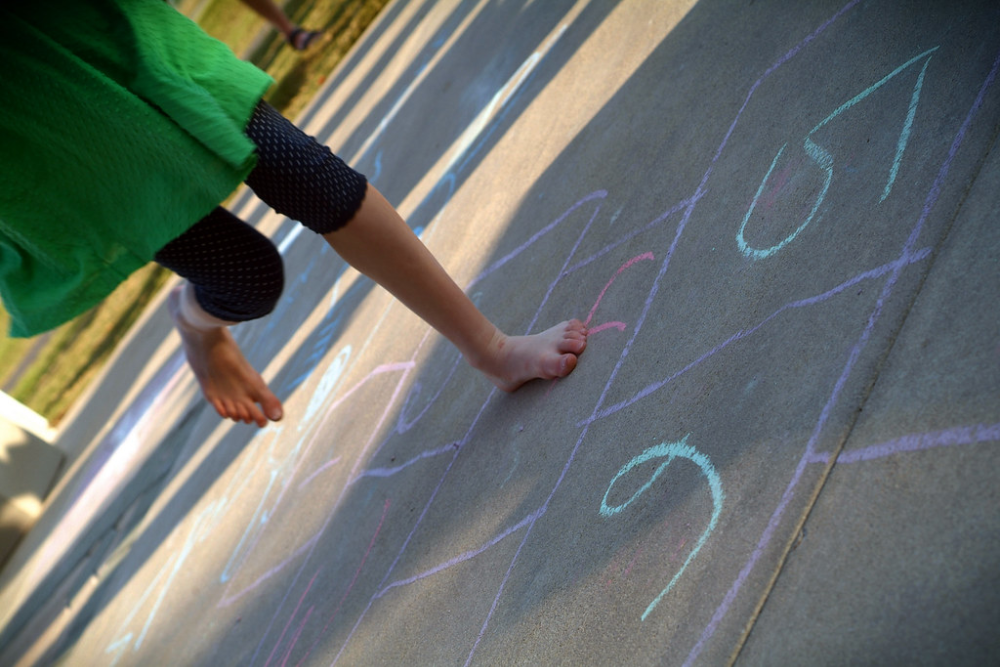
Players drew a numbered court with chalk and tossed a small object into the squares. You had to hop through the course on one foot, pick up your marker, and hop back without stepping on lines or losing your balance.
Different regions had different court designs, and some included special rules like ‘poison’ squares you couldn’t touch. The game was deceptively difficult and required both balance and precision.
Chinese Jump Rope

This game used a long elastic loop that two players held around their ankles while a third player performed increasingly complex jumping patterns. The rope started at ankle height, then moved to knees, waist, and eventually above the head.
Each level had specific jump sequences that players had to memorize and execute perfectly. Missing a jump meant you became a rope holder, and the game could continue for hours.
Tether Sphere

A sphere attached to a tall pole by a rope created this simple but engaging game. Two players stood on opposite sides and tried to wrap the rope completely around the pole in their direction by hitting the sphere.
The sphere would swing in wide arcs, and players had to time their hits perfectly to maintain momentum. Games often became intense rallies with the sphere whipping around at dangerous speeds.
Horse
Players took turns attempting basketball shots, with each miss earning a letter in the word ‘HORSE.’ The first player would make a shot, and everyone else had to duplicate it exactly—same spot, same technique, same style.
Missing meant getting a letter, and spelling H-O-R-S-E meant elimination. Creative players would attempt ridiculous shots like backwards throws or shots while sitting down just to mess with their opponents.
Spud

One player threw a sphere high into the air while calling out another player’s number. That person had to catch the sphere while everyone else scattered as far as possible. Once caught, the catcher yelled ‘SPUD’ and everyone had to freeze.
The catcher then got three steps to get close enough to hit someone with the sphere. Hit players received a letter in ‘SPUD,’ and four letters meant elimination.
Monkey in the Middle

Two or more players tossed a sphere back and forth while one person in the middle tried to intercept it. The middle player couldn’t move their feet but could jump and reach in any direction.
Successfully catching the sphere meant switching places with whoever threw it. The game was simple but surprisingly frustrating for whoever got stuck in the middle, especially when the other players were good at keeping the sphere just out of reach.
When Simple Was Better
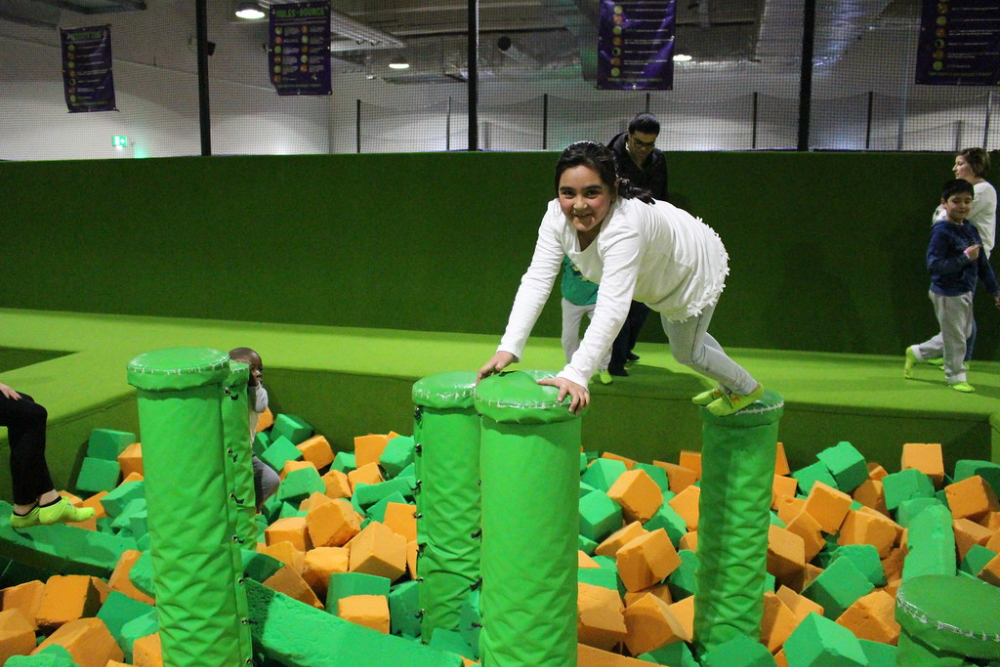
These games thrived because they required nothing more than basic equipment and imagination. Kids created their own rules, settled their own disputes, and learned social dynamics through trial and error.
Today’s playgrounds might be safer and more inclusive, but something was lost when we traded spontaneous chaos for structured activities. These forgotten games remind us that sometimes the best entertainment comes from the simplest ideas.
More from Go2Tutors!

- The Romanov Crown Jewels and Their Tragic Fate
- 13 Historical Mysteries That Science Still Can’t Solve
- Famous Hoaxes That Fooled the World for Years
- 15 Child Stars with Tragic Adult Lives
- 16 Famous Jewelry Pieces in History
Like Go2Tutors’s content? Follow us on MSN.