18 Puzzles That Took Decades to Finally Solve
Some puzzles are so fiendishly difficult they’ve kept the brightest minds stumped for generations. These mathematical conundrums, physical paradoxes, and mind-bending riddles have haunted scientists, mathematicians, and puzzle enthusiasts for decades before someone finally cracked their code.
Here is a list of 18 puzzles that required extraordinary persistence, brilliant insights, and sometimes completely new mathematical approaches before they finally surrendered their secrets.
Fermat’s Last Theorem
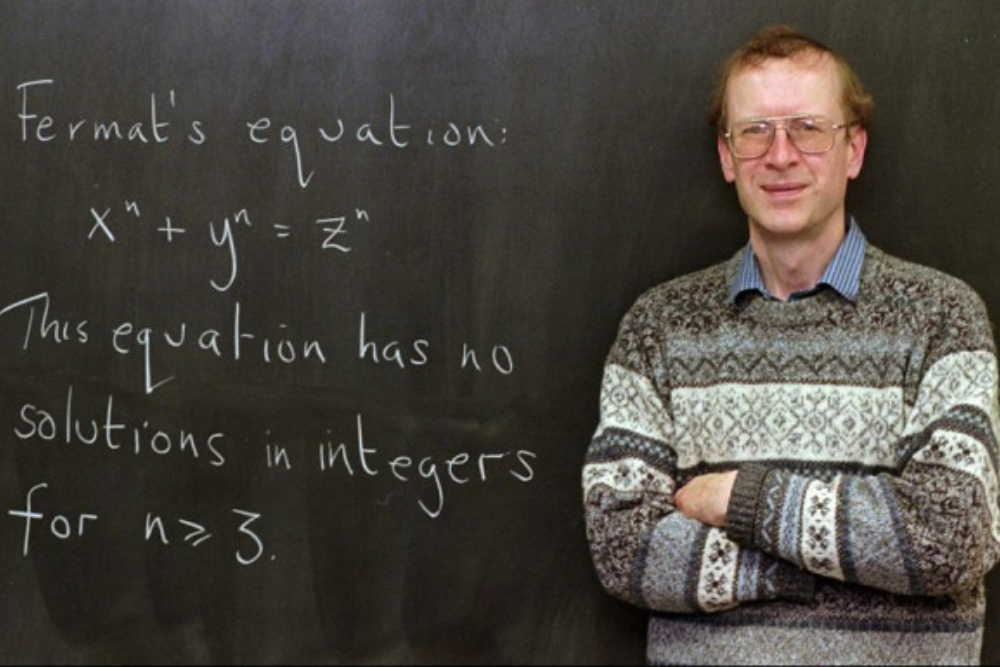
This deceptively simple mathematical proposition stumped the world for 358 years. Pierre de Fermat scribbled in the margin of a book that he had a proof, but the margin was too small to contain it.
Mathematicians chased this elusive proof until 1994, when Andrew Wiles finally solved it after dedicating seven years of solitary work to the problem. His proof ran to over 100 pages and used mathematical techniques that didn’t even exist in Fermat’s time.
The Four-Color Map Problem

Cartographers long wondered if any map could be colored using just four colors, with no adjacent regions sharing the same color. First posed in 1852, this seemingly simple question tormented mathematicians for 124 years.
The eventual proof in 1976 by Kenneth Appel and Wolfgang Haken was groundbreaking—it was the first major mathematical proof to rely heavily on computer calculations, checking thousands of possible map configurations.
Like Go2Tutors’s content? Follow us on MSN.
Poincaré Conjecture

This topological puzzle asked whether a three-dimensional shape with specific properties was essentially equivalent to a sphere. Henri Poincaré proposed it in 1904, and it remained one of mathematics’s greatest unsolved problems for a century. Russian mathematician Grigori Perelman finally solved it in 2003, publishing his solution in a series of papers online rather than in traditional journals.
He later declined both the Fields Medal and the million-dollar Millennium Prize for his achievement.
The Traveling Salesman Problem

Finding the shortest possible route connecting multiple cities has haunted mathematicians since the 1800s. While this problem sounds straightforward enough for a GPS, it becomes astronomically complex as the number of cities increases.
Though the general problem remains unsolved in polynomial time, significant breakthroughs in the 1970s and 80s made it possible to find optimal solutions for thousands of locations, revolutionizing everything from delivery services to computer chip design.
Kepler Conjecture

How should spheres be packed to use the least space? Johannes Kepler suggested in 1611 that the familiar pyramid arrangement used for stacking oranges was optimal, but proving this took nearly 400 years.
Thomas Hales finally solved it in 1998 with a proof so complex it took a dozen referees four years to verify it. Even then, some details remained uncertain until Hales completed a formal computer verification in 2014, removing all doubt.
Like Go2Tutors’s content? Follow us on MSN.
The Zodiac Killer’s 340 Cipher

This infamous cryptographic puzzle was sent to newspapers by the Zodiac Killer in 1969 and defied decryption for 51 years. Code-breakers, cryptographers, and amateur sleuths all tried their hand at cracking it, but it wasn’t until December 2020 that three private citizens finally broke the code.
They revealed a chilling message that confirmed the author was indeed the Zodiac Killer, though it didn’t reveal his identity, which remains unknown to this day.
The Collatz Conjecture

Take any positive integer: if it’s even, divide by two; if it’s odd, multiply by three and add one. Repeat this process and you’ll always eventually reach the number 1—or so the conjecture claims.
First proposed in 1937, this deceptively simple pattern has been verified for numbers up to 2^68, but a full proof remains elusive. It’s been described as ‘mathematics’ most deceptive elementary problem,’ appearing trivial yet resisting solution for over 80 years.
Goldbach’s Conjecture

In 1742, Christian Goldbach proposed that every even number greater than 2 can be expressed as the sum of two prime numbers.
This elegant statement has been verified for all numbers up to 4 × 10^18, but a complete proof continues to elude mathematicians. Progress has been made with partial solutions, including Chen Jingrun’s 1966 proof that every sufficiently large even number is the sum of either two primes or a prime and a semiprime.
Like Go2Tutors’s content? Follow us on MSN.
Rubik’s Cube God’s Number

How many moves are needed to solve any Rubik’s Cube configuration? This question took 35 years to answer definitively.
The cube’s inventor, Ernő Rubik, first solved his own creation in 1974 after a month of effort. In 2010, a team using Google’s computing resources finally proved that 20 moves are always sufficient—a number puzzlers call ‘God’s Number,’ representing the theoretical minimum for perfect play.
The ‘Hardest Logic Puzzle Ever’

Created by philosopher George Boolos in 1996, this puzzle involves three gods who answer questions with ‘yes’ or ‘no,’ but one always lies, one always tells the truth, and one answers randomly. The catch?
You don’t know which is which, and they answer in their own language where ‘yes’ and ‘no’ are unfamiliar words. It took several years before mathematicians found elegant solutions, with Raymond Smullyan’s approach requiring just three questions to determine which god is which.
Twin Prime Conjecture

Are there infinitely many pairs of prime numbers that differ by 2? This question has tantalized mathematicians since the 19th century.
In 2013, Yitang Zhang stunned the mathematical world by proving there are infinitely many prime pairs with a difference less than 70 million—not quite 2, but a massive breakthrough on a problem that had seen virtually no progress for centuries. The gap has since been reduced to 246, bringing us tantalizingly close to resolving the original conjecture.
Like Go2Tutors’s content? Follow us on MSN.
Voynich Manuscript

This mysterious medieval document filled with unknown writing and strange illustrations has confounded scholars since its rediscovery in 1912. Carbon dating places its creation between 1404 and 1438, but its indecipherable text has withstood analysis by the world’s top cryptographers.
Some recent researchers claim partial decoding success, suggesting it may contain information about medicinal plants, but most of these claims remain highly controversial among linguists and code-breakers.
P versus NP Problem

Can every problem whose solution can be quickly verified also be quickly solved? This fundamental question in computer science was formally posed in 1971 and has enormous implications for everything from internet security to artificial intelligence.
The Clay Mathematics Institute offers a million-dollar prize for its solution, but despite countless attempts, it remains open. Many computer scientists suspect the answer is ‘no,’ but proving it either way has become one of the great intellectual challenges of our time.
The Unknotted Rope Problem

Mathematicians wondered for decades: how do you determine whether a tangled loop of rope is truly knotted or can be untangled without cutting it? This question from the field of knot theory was solved in 1961 when Wolfgang Haken developed an algorithm to recognize the ‘unknot,’ but the solution was extraordinarily complex.
Improved algorithms have since been found, but even today’s fastest methods struggle with highly tangled configurations.
Like Go2Tutors’s content? Follow us on MSN.
The Perfect Cuboid Problem
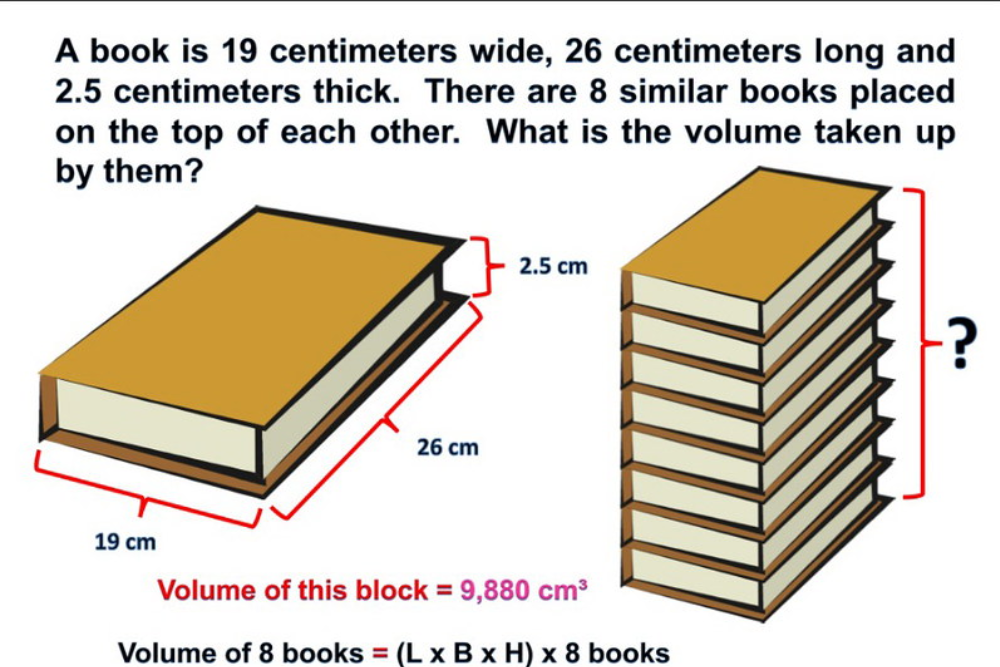
Is there a rectangular box with whole number dimensions that also has whole number diagonals on each face and through the center? This seemingly innocent geometric puzzle has been open since the 19th century.
Mathematicians have found ‘almost perfect’ cuboids missing just one integer diagonal, but a completely perfect one remains undiscovered. Number theorists have proven that if a solution exists, the smallest one would have dimensions in the millions.
Catalan’s Conjecture
In 1844, mathematician Eugène Catalan proposed that 8 and 9 are the only consecutive powers of whole numbers. Though it sounds straightforward, proving this required advanced number theory techniques that didn’t exist when the conjecture was made.
Romanian mathematician Preda Mihăilescu finally proved it in 2002, closing a problem that had remained open for 158 years.
Riemann Hypothesis

Proposed in 1859, this conjecture about the distribution of prime numbers is considered by many to be the most important unsolved problem in mathematics. Progress was made throughout the 20th century, including significant computational verification, but a complete proof remains elusive.
The hypothesis has such profound implications that over 1,000 mathematical papers have been published assuming it’s true, awaiting final confirmation.
Like Go2Tutors’s content? Follow us on MSN.
Kryptos Sculpture
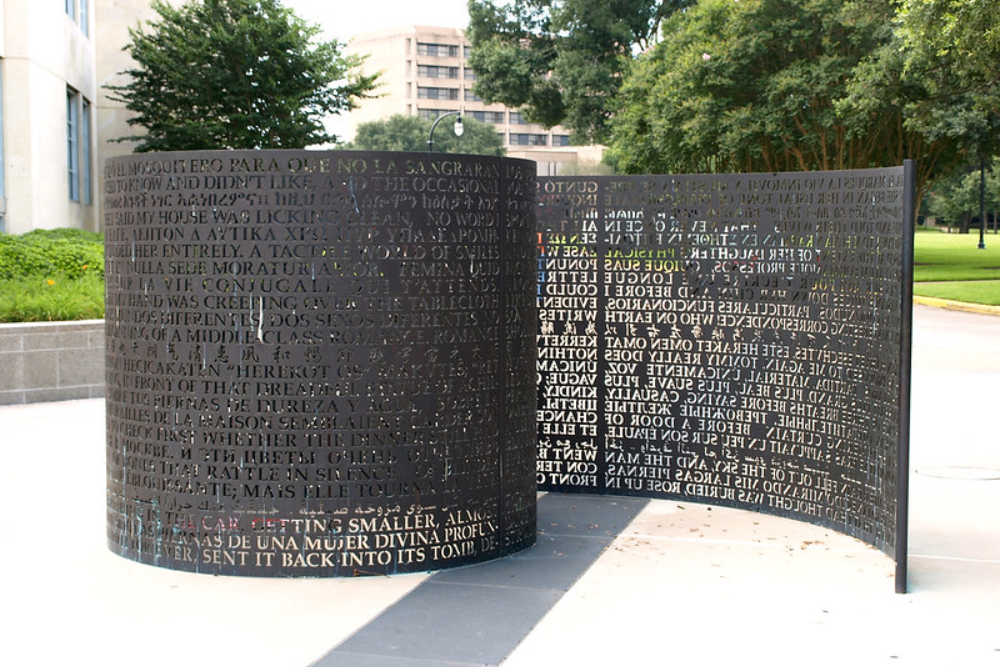
This encrypted sculpture at CIA headquarters contains four puzzles, with the final section remaining unsolved since its installation in 1990. Created by artist Jim Sanborn, the first three sections were deciphered by 1999, revealing poetic messages about intelligence gathering.
The final 97-character section has resisted all attempts at solution, despite periodic clues from the artist. It stands as one of the world’s most prominent unsolved cryptographic challenges, taunting some of the best codebreakers on the planet.
The Enduring Mystery of Puzzles
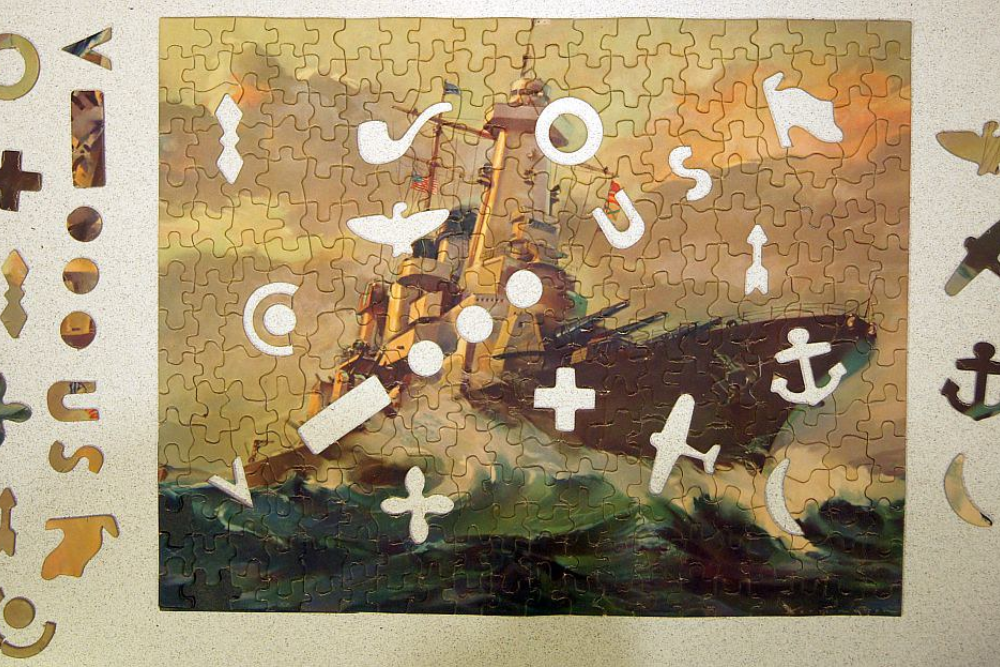
These marathon puzzles reveal something fascinating about human persistence. From Fermat’s cryptic margin note to modern CIA encryption challenges, the most compelling puzzles don’t just test our intelligence—they capture our imagination across generations.
The solutions, when finally found, often revolutionize entire fields of study, proving that even our most stubborn mysteries eventually yield to human ingenuity and computational power. What makes these long-unsolved puzzles truly special isn’t just their difficulty, but how they continue to inspire new approaches and push the boundaries of human knowledge.
Perhaps that’s the real solution to any great puzzle—not just the answer itself, but the journey of discovery it creates along the way.
More from Go2Tutors!

- 16 Restaurant Chains That Went Too Fast
- 12 Things Sold in the 80s That Are Now Illegal
- 15 Strange Things People Have Tried to Ban (And Failed)
- 16 Collectibles People Tossed Out Too Soon
- 17 Myths from Your Childhood That Were Actually Based on Real Things
Like Go2Tutors’s content? Follow us on MSN.



