Scientific Breakthroughs from Simple Mistakes
The lab door clicks shut. Someone knocks over a flask.
A technician grabs the wrong component from a box. You assume these moments end in cleanup and frustration.
Sometimes they launch entire industries instead. Science moves forward through careful planning and precise execution.
But some of the biggest discoveries happened when experiments went sideways. Researchers noticed something unexpected and followed the trail instead of throwing away the failed attempt.
These accidents changed medicine, technology, and how people live daily.
Fleming’s Messy Laboratory

Alexander Fleming returned from vacation in 1928 to find mold growing in his petri dishes. The staph bacteria cultures looked ruined.
He almost tossed everything before noticing the bacteria near the mold had died. The substance killing the bacteria turned out to be penicillin.
Fleming published his findings in 1929, but purifying the mold proved extremely difficult. He gave up after several years.
Nine years later, Howard Florey and Ernst Chain read his paper and spent another decade turning penicillin into medicine. The first successful patient treatment happened in 1940.
Penicillin production required massive effort. Scientists needed special fermentation vessels.
Six women called the “Penicillin Girls” farmed a few precious milligrams each week. A woman named Mary Hunt found a rotting cantaloupe at a market in Peoria, Illinois.
The mold on that melon produced six times more penicillin than Fleming’s original sample. By World War II, mass production finally arrived.
Spencer’s Melted Snack
Percy Spencer stood near a radar magnetron in 1945 when he noticed something odd. The candy bar in his pocket had melted into a sticky mess.
Most engineers would have been annoyed and moved on. Spencer wondered why.
He started running experiments. Popcorn kernels placed near the magnetron started popping.
An egg exploded in a colleague’s face. Spencer realized microwave radiation could cook food rapidly.
He built a metal box to contain the waves and created the first microwave oven prototype. The first commercial microwave hit the market in 1947.
Called the Radarange, it weighed 750 pounds, stood nearly six feet tall, and cost over $2,000. Restaurants were the only buyers.
Home models didn’t arrive until 1967, when Amana released a countertop version for $495. Today more than 90 percent of American homes have one.
Roentgen’s Glowing Screen
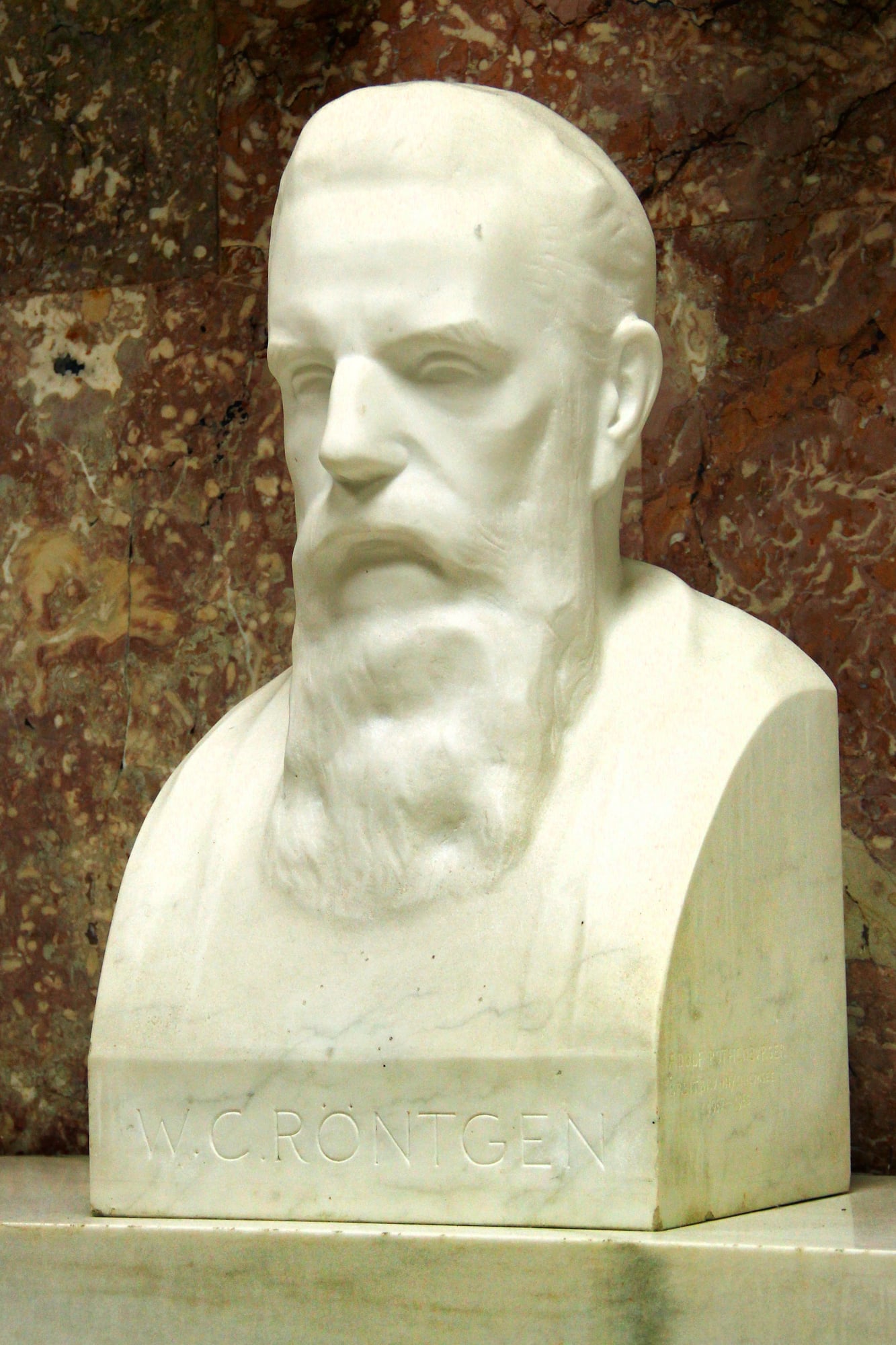
Wilhelm Roentgen was experimenting with cathode ray tubes in November 1895. He had covered his tube with heavy black cardboard to block light.
A fluorescent screen across the room started glowing anyway. Roentgen spent weeks investigating the mysterious rays.
They passed through paper, wood, and human flesh but not through bone or lead. He took a photograph of his wife’s hand showing her bones and wedding ring clearly visible.
The image was ghostly and startling. Doctors immediately saw the potential.
Within months, physicians were using X-rays to find broken bones and locate bullets. The first military use came in 1897 during the Balkan War.
Roentgen refused to patent his discovery, believing it should benefit everyone. He won the first Nobel Prize in Physics in 1901.
Silver’s Weak Adhesive

Spencer Silver worked at 3M in 1968 trying to create super-strong glue for aircraft construction. His experiment produced the opposite—a weak adhesive made from tiny acrylic spheres.
The glue stuck lightly to surfaces but pulled off easily without leaving residue. Nobody at 3M wanted weak glue.
Silver spent five years promoting his discovery internally through seminars and demonstrations. Management kept rejecting it.
The adhesive sat unused for years. Arthur Fry attended one of Silver’s presentations in 1974.
Fry sang in a church choir and his paper bookmarks kept falling out of his hymnal. He realized Silver’s adhesive could solve the problem.
Fry started using the glue on paper scraps to mark his pages. The product still took years to reach consumers.
3M launched test sales in 1977 as “Press ‘n Peel” in four cities. The response was terrible.
In 1979, they tried again with a massive free sample campaign in Boise, Idaho called the Boise Blitz. The reorder rate hit 90 percent.
Post-it Notes went nationwide in 1980 and became one of the top five best-selling office products worldwide.
Greatbatch’s Wrong Resistor

Wilson Greatbatch was building equipment to record heart sounds in 1956. He reached into a box for a resistor to complete his circuit.
He grabbed one with the wrong resistance value and plugged it in. The circuit started pulsing.
It would pulse for 1.8 milliseconds, stop for one second, then repeat. Greatbatch recognized the rhythm immediately—it matched a heartbeat.
He stared at the device in disbelief. Greatbatch spent the next two years refining the design in the barn behind his house.
The first implant in a dog happened in May 1958. The device worked perfectly, controlling the animal’s heart rhythm.
By 1960, doctors successfully implanted the pacemaker in human patients. The first unit lasted only four hours before body fluids shorted the circuit.
Within a year, improved designs lasted four months. Greatbatch later invented a lithium battery that powered pacemakers for ten years instead of two.
Today about three million people worldwide have implanted pacemakers. The device was named one of the ten greatest engineering contributions to society in the last 50 years.
Goodyear’s Hot Stove Accident

Charles Goodyear spent years trying to fix rubber’s problems. It solidified and cracked in winter.
It melted in summer heat. He tested countless combinations searching for a solution.
In 1839, Goodyear accidentally spilled a mixture of rubber, sulfur, and lead onto a hot stove. The mixture charred and hardened but remained flexible enough to use.
He had discovered vulcanized rubber by complete accident. Goodyear patented the process in 1844, long before automobiles existed.
The Goodyear Tire & Rubber Company, founded decades later in 1898, named itself after the man who made their business possible.
The Pacemaker’s Precise Timing

The electrical pulse needed precise timing. Too fast or too slow and hearts would fail to respond properly.
Greatbatch’s accidental discovery produced exactly the right rhythm without any deliberate calculation. He had been trying to build a heart sound recorder when he installed the wrong component.
The mistake created the exact pattern needed to regulate heartbeats. Medical researchers had been searching for this solution for years through careful planning.
Greatbatch found it by accident in his barn.
Discovering Patterns in Chaos

These breakthroughs share common elements. Someone made a mistake or noticed something unexpected.
They paid attention instead of dismissing the anomaly. They recognized potential in what looked like failure.
Fleming could have thrown away the contaminated petri dishes. Spencer might have just bought a new candy bar.
Roentgen could have ignored the glowing screen. Silver could have stopped promoting his weak adhesive after the first rejection.
They all kept looking. Scientific training emphasizes controlled experiments and careful methodology.
Researchers learn to eliminate variables and repeat results. But rigid thinking sometimes misses opportunities.
The unexpected result might matter more than the planned outcome.
From Laboratory to Everyday Life

These accidental discoveries didn’t stay in laboratories. Penicillin saved millions of lives during World War II and transformed medicine permanently.
Microwave ovens changed how people cook and eat. X-rays became essential for modern healthcare.
Post-it Notes are everywhere—offices, homes, schools. Pacemakers keep millions of hearts beating.
The path from accident to widespread adoption took years or decades. Fleming discovered penicillin in 1928.
Mass production didn’t happen until the 1940s. Spencer invented the microwave in 1945.
Home models didn’t arrive until 1967. Silver created his adhesive in 1968.
Post-it Notes didn’t launch nationwide until 1980. Turning accidents into products required persistence, funding, and people willing to champion strange ideas.
Management often rejected these inventions initially. Market tests failed.
Engineers faced technical problems that seemed insurmountable. Success came from refusing to quit.
The Cost of Perfect Plans
Organizations spend enormous resources planning research. They set specific goals, allocate budgets, and measure progress against milestones.
This approach produces results. It also sometimes blocks discovery.
3M initially rejected Silver’s weak adhesive because it didn’t meet their criteria for useful products. The company wanted strong glues, not weak ones.
They almost missed one of their most profitable products by staying focused on original objectives. Scientists face pressure to produce expected results.
Funding depends on meeting goals. Career advancement requires publishing findings that match proposals.
The system rewards confirming hypotheses, not exploring anomalies.
Creating Space for Accidents

Some companies now build randomness into their research processes. 3M famously allows employees to spend work time on personal projects.
This “permitted bootlegging” policy helped develop Post-it Notes. Google’s 20 percent time produced Gmail and Google News.
These policies recognize that breakthrough innovations often come sideways. You cannot schedule serendipity or mandate discovery.
But you can create environments where people notice unexpected results and have time to investigate them. Research teams need permission to follow interesting tangents.
They need resources to explore ideas that don’t fit current projects. They need protection from managers who only value pre-planned outcomes.
When Failure Reveals Truth
Fleming’s contaminated cultures revealed that mold produces bacteria-killing substances. Spencer’s melted candy exposed microwave heating properties.
Roentgen’s glowing screen showed that cathode rays produced penetrating radiation. These failures taught more than the original experiments would have.
Perfect execution sometimes teaches less than spectacular failure. When everything works as planned, you confirm what you already suspected.
When things break unexpectedly, you learn something new. The key is recognizing which failures matter.
Most accidents are just accidents—spilled chemicals, broken equipment, contaminated samples. Occasionally an accident reveals something fundamental about how nature works.
Distinguishing between meaningless noise and significant signal requires experience, intuition, and luck.
Building on Broken Foundations

Later innovations often build on accidental discoveries. Penicillin led to entire families of antibiotics.
X-rays enabled CT scans and other medical imaging technologies. Microwave ovens inspired industrial heating systems.
Post-it Notes spawned hundreds of similar products. The original inventors usually didn’t foresee these extensions.
Fleming thought penicillin might have limited medical uses. Spencer focused on cooking food.
Roentgen just wanted to understand cathode rays better. They opened doors without knowing what lay beyond.
Scientific progress rarely follows straight lines. Discovery branches and recombines.
Accidents connect with other accidents. Failed experiments from different fields merge into successful products.
The microwave required radar development from World War II. Pacemakers needed transistor technology and battery innovations.
Nothing happens in isolation.
Mistakes Worth Making
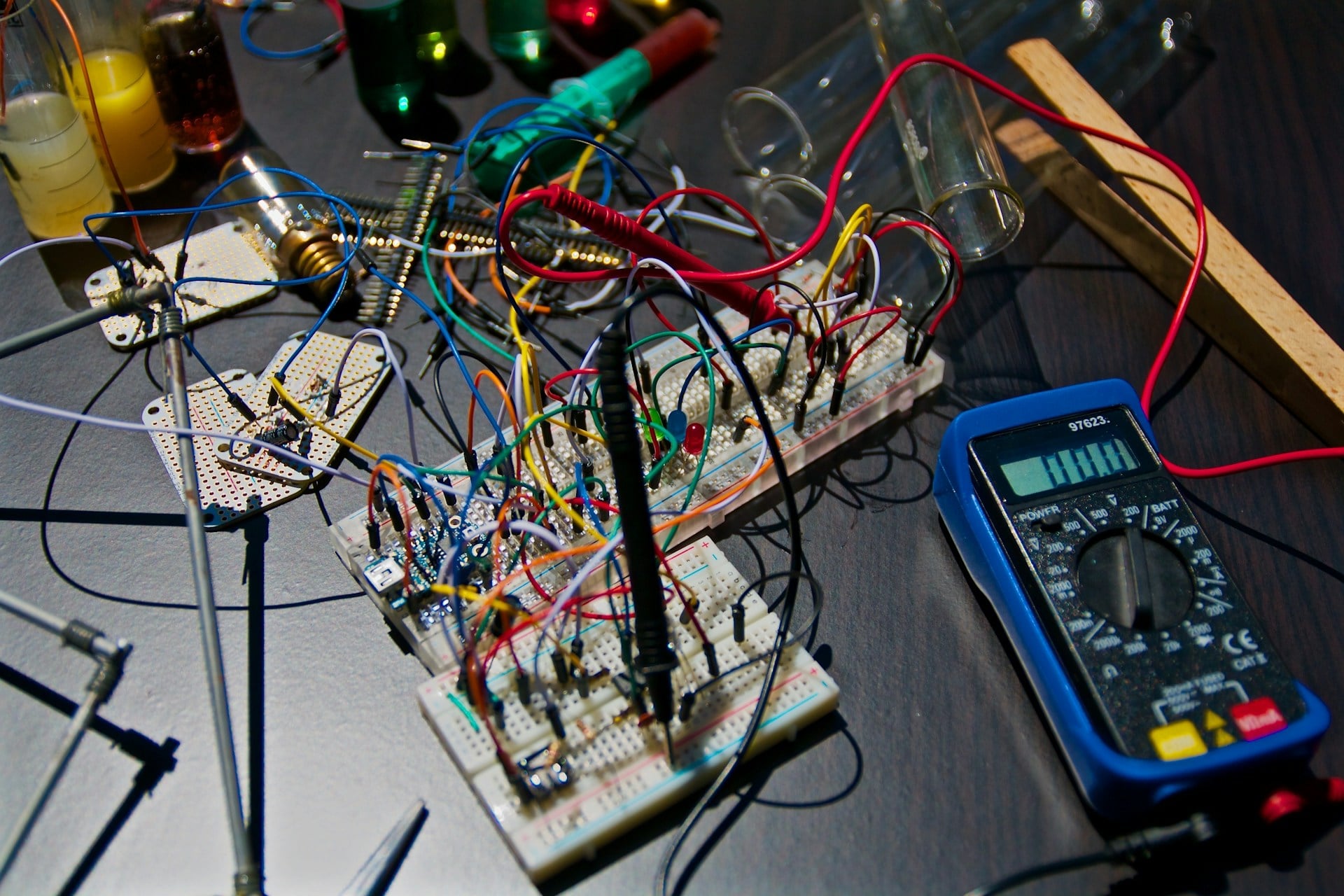
These stories don’t mean researchers should make careless errors or abandon systematic methods. Science still requires rigor, precision, and careful controls.
But excessive caution sometimes prevents discovery. The scientists who turned accidents into breakthroughs shared certain traits.
They stayed curious when experiments failed. They investigated anomalies instead of ignoring them.
They recognized significance in unexpected results. They kept working when others told them their ideas were worthless.
Fleming didn’t discover penicillin through sloppiness. He noticed contamination because he knew his cultures intimately.
Spencer understood magnetron physics deeply enough to realize his melted candy meant something. Roentgen had the knowledge to recognize that glowing screens shouldn’t be possible.
Expertise made their accidents productive. You need to know the rules before you can benefit from breaking them.
Random experimentation produces random results. Informed investigation of unexpected phenomena produces breakthroughs.
The difference lies in preparation, knowledge, and readiness to see what others miss.
More from Go2Tutors!

- The Romanov Crown Jewels and Their Tragic Fate
- 13 Historical Mysteries That Science Still Can’t Solve
- Famous Hoaxes That Fooled the World for Years
- 15 Child Stars with Tragic Adult Lives
- 16 Famous Jewelry Pieces in History
Like Go2Tutors’s content? Follow us on MSN.



