21 Rare Photos Of Disneyland from Its Early Years
That first summer day at Disneyland, back in 1955, wasn’t sleek or finished. Fresh concrete baked beneath a hot sky.
Attractions sputtered without warning. Outfits drooped before noon.
Still, those old snapshots show what newer ones often miss – a place figuring out its shape as it went. A peek behind the scenes shows 21 old snapshots of Disneyland when it first opened.
These images capture a version far simpler than today’s glitzy parks. Each frame feels quiet, almost ordinary.
Back then, empty pathways stretched under bare trees. Rides stood small against open fields.
Crowds were thinner, faces harder to spot. Some photos show workers adjusting props by hand.
Others catch guests staring at attractions like they weren’t sure what to do. Fences looked flimsy.
Signs appeared handwritten. The magic hadn’t been polished yet.
Dust kicked up near ticket booths. Benches sat spaced wide apart.
Even the castle seemed to huddle shyly among low buildings. There were no flashing lights overhead.
Just sunlight, shadows, and slow change beginning.
Opening Day Chaos, 1955
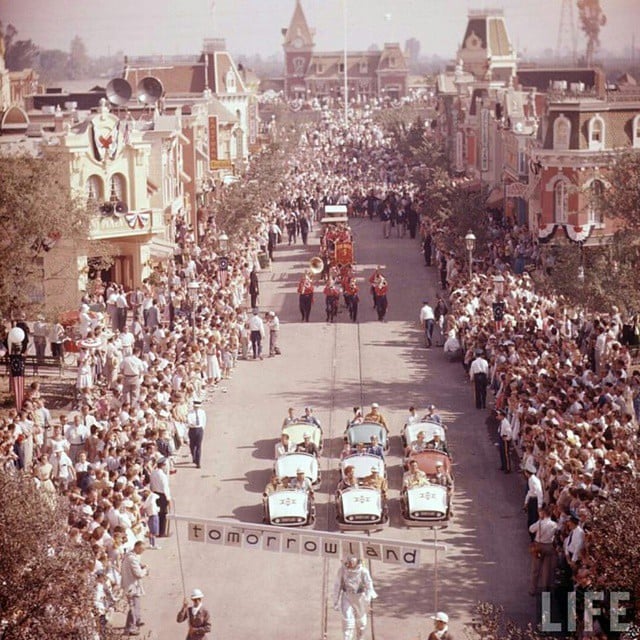
One of the most famous early images shows crowds packed tightly along Main Street during the park’s televised opening day. Invitations were oversold, counterfeit tickets slipped through, and attendance far exceeded expectations.
Women’s heels sank into soft asphalt. The photograph feels frantic rather than magical.
What it captures is ambition colliding with reality. Disneyland’s debut was messy, but the vision was unmistakable.
Dirt Around Sleeping Beauty Castle
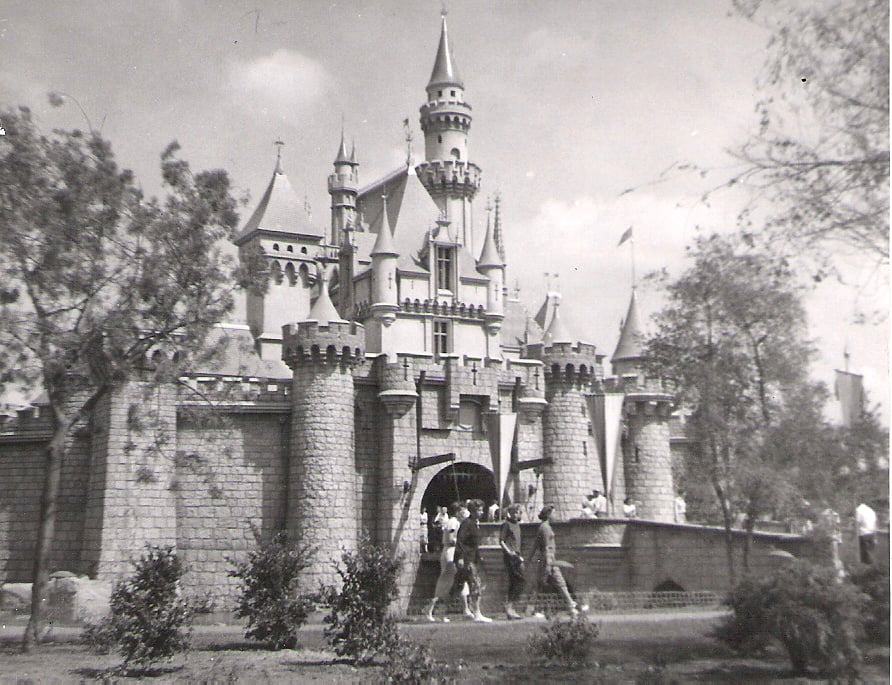
Early photographs of Sleeping Beauty Castle show patches of exposed earth and sparse landscaping around its base. The now-iconic centerpiece looked smaller and less grand without mature trees and carefully layered greenery.
The castle was designed using forced perspective to appear taller than its actual 77 feet. In early images, without the visual framing that later developed, that illusion feels more delicate.
The magic required time to grow into itself.
The Original Mark Twain Riverboat

Photos from 1955 show the Mark Twain Riverboat navigating the Rivers of America when the surrounding scenery was still developing. Some riverbanks appear bare, with young plants struggling to take hold.
The vessel itself looked pristine and theatrical, a floating piece of Americana. Yet the backdrop was still catching up.
The contrast highlights how Disneyland was built in layers rather than all at once.
Tomorrowland Without A Future
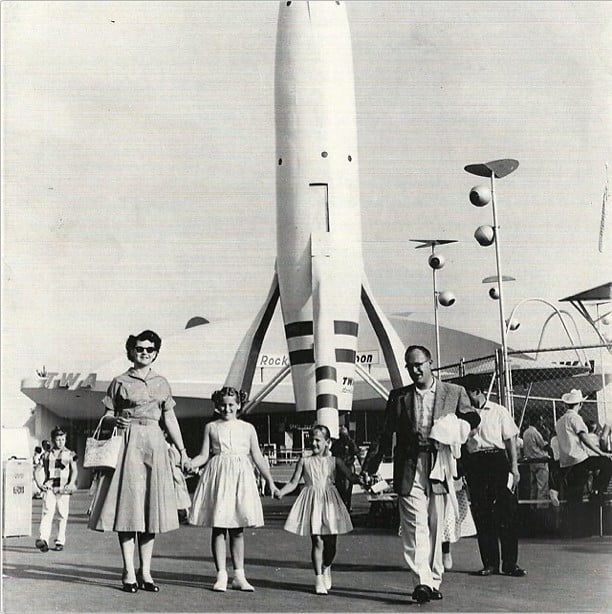
Early Tomorrowland photographs reveal a land that looked surprisingly minimal. Before major expansions, it featured limited attractions and wide open walkways.
The futuristic aesthetic leaned more toward practical exhibits than immersive fantasy. In those early years, Tomorrowland reflected 1950s optimism about space travel and technology.
Looking back now, it feels retro rather than futuristic. The future has a way of aging quickly.
Autopia’s Sparse Landscape

Autopia opened with small gasoline-powered cars driving along simple tracks bordered by modest fencing and young shrubs. Early images show little shade and wide open views of backstage areas.
The ride symbolized America’s car culture and fascination with highways. Even so, the surrounding landscape had not yet matured.
The trees that now soften the scene were once only saplings.
The Original Jungle Cruise Skippers

Rare photographs of Jungle Cruise in its first year show skippers delivering straightforward narration rather than the comedic style the ride is known for today. The tone was more serious, almost documentary in feel.
The riverbanks also appeared less dense. Over time, vegetation was layered to create the illusion of a remote jungle.
Early images reveal how much the environment depended on patient growth.
Main Street’s Early Shop Displays

Photographs from the mid-1950s show simpler window displays along Main Street, U.S.A. Merchandise leaned heavily into souvenirs and basic memorabilia rather than elaborate themed collections.
The street itself looked clean but less ornamented. Seasonal decorations were more restrained.
The charm was present, but the details were still evolving.
The Skyway Buckets In Open Air

Images of the original Skyway show small gondolas gliding above the park without the visual complexity that later surrounded them. The ride offered sweeping views over rooftops and undeveloped areas.
From these photographs, Disneyland looks smaller and more exposed. The sense of scale that now defines the park had not yet fully taken shape.
Fantasyland Before Its Redesign
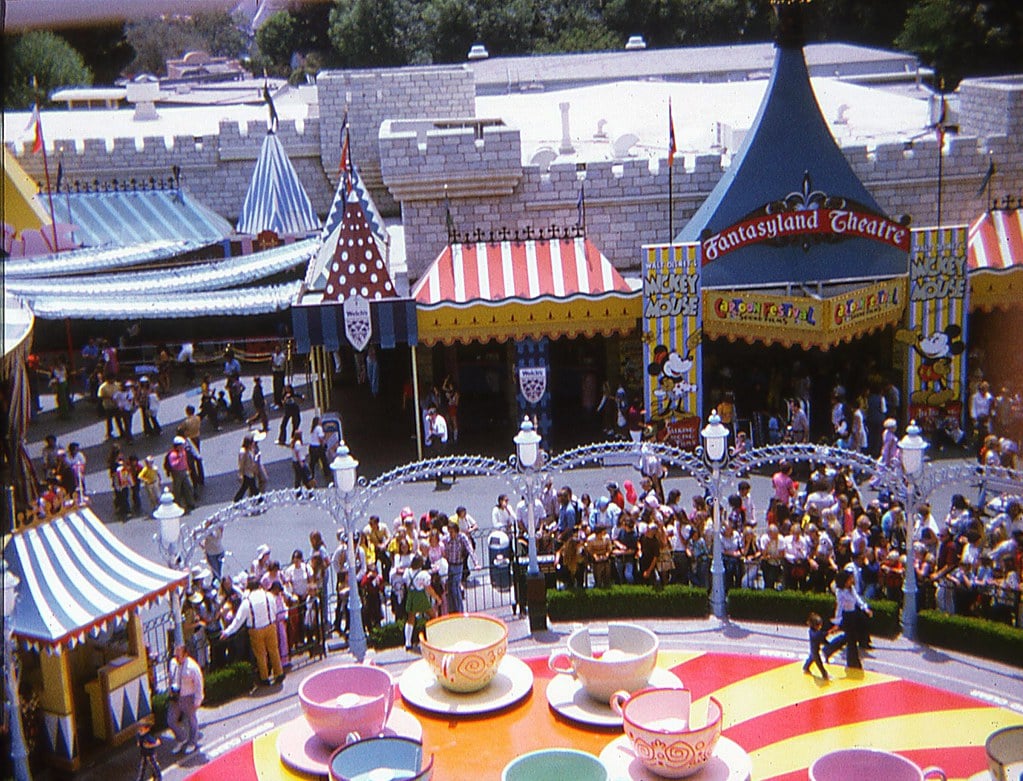
Early Fantasyland appears in black-and-white photographs as a collection of medieval-style facades painted in muted tones. The later vibrant redesign had not yet happened.
The rides were simpler, and the exteriors leaned heavily into storybook illustration rather than immersive architecture. It feels closer to a fairground than the richly layered land visitors recognize today.
The Matterhorn Under Construction

Construction photos from the late 1950s show the Matterhorn Bobsleds rising from steel frameworks and scaffolding. Workers stand against skeletal beams that would become one of the park’s most iconic silhouettes.
The Matterhorn, which opened in 1959, marked a leap in engineering ambition. Seeing it half-built emphasizes how experimental Disneyland remained during its first decade.
The Submarine Voyage Lagoon

When the Submarine Voyage debuted in 1959, early images show sleek gray submarines navigating bright blue water that looked almost artificially pristine. The surrounding rockwork was minimal compared to later enhancements.
The ride reflected Cold War-era fascination with exploration beneath the sea. Photographs capture a period when technological spectacle was central to Disneyland’s identity.
The Parking Lot Sea Of Cars

Early aerial photographs show vast parking lots filled with 1950s sedans stretching across former orange groves. The park sat amid open land rather than dense resort development.
The image underscores how much space surrounded Disneyland in its early years. Hotels and shopping districts had not yet crowded its borders.
Cast Members In Early Costumes

Photographs of early cast members reveal costumes that look less refined than modern versions. Fabric appears heavier, colors flatter, and character proportions slightly off.
Even so, the commitment to performance was already strong. The park’s emphasis on staff presentation was present from the beginning, even as the wardrobe evolved.
The Original Ticket Books

Images of early visitors clutching A through E ticket books offer a glimpse into how attractions were once categorized by experience level. Guests carefully rationed their coveted E-tickets.
The system shaped how families navigated the park. It added a layer of strategy to the day, something modern all-inclusive admission has replaced.
Bare Hills Around Frontierland

Frontierland’s early photos show wide expanses of dirt and modest rock formations. The landscaping was still developing, and some areas appeared sparse.
The romanticized Old West atmosphere depended heavily on imagination. Over time, additional detail and texture deepened the illusion.
Walt Disney Walking The Grounds

Walking around his park when it was new, Walt Disney snapped unposed photos that show him checking how things worked while watching visitors. Usually dressed in basic suits instead of fancy clothes, he stayed close to what mattered.
What you see here shows Disneyland always in motion. Changes came one after another, while upgrades simply refused to pause.
The Monorail’s First Glide

When the Monorail debuted in 1959, photographs show a sleek, futuristic train cutting across a relatively open skyline. It was one of the first daily-operating monorail systems in the Western Hemisphere.
The ride symbolized innovation and forward thinking. Against the modest backdrop of early Anaheim, it looked almost space-age.
Limited Shade On Main Street

Pictures taken at the start of summer show empty spaces where trees once stood on Main Street. Some visitors held up umbrellas, others stayed cool beneath fabric covers stretched overhead.
Later decades brought a deeper shape to landscaping. Sunlight in those first pictures seems wider, almost spilling out.
Modest Fireworks Displays

Photographs from early nighttime celebrations show smaller-scale fireworks compared to today’s elaborate productions. The castle projections and synchronized soundtracks had not yet arrived.
Even so, the spectacle drew crowds. The desire for shared nighttime moments was present from the start.
The Surrounding Orange Groves

Fringes of citrus trees once curled around Disneyland, a quiet echo of Anaheim’s farming past. Where crops grew, magic now hums – different worlds sitting side by side.
Few buildings stretched beyond its borders, just open land on every side. Not until later did concrete begin creeping in around it.
When Magic Was Still Experimental

Rough edges showed through in those first pictures of Disneyland. The paint looked new.
Trees hadn’t grown in yet. A few things clicked right away – others just faded out without noise.
What stood then wasn’t quite what stayed. What worked didn’t come right away.
Each change built on what came before it.
The Legacy Beneath The Polish

Peering into these uncommon photos shifts how we see Disneyland’s past. Today’s smooth facade began as on-the-fly fixes, tweaks made mid-stride.
Its beginning carried stumbles, guesswork, flashes of daring – perfection nowhere in sight. It starts with dust.
Old photos show how dreams take shape one line at a time, rough and unsure. Where smooth walkways now lie, there were once muddy trails, half-built frames reaching skyward.
Hope stood where cranes used to swing. Perfection never showed up first – growth did.
What stays isn’t what was built, but what kept changing.
More from Go2Tutors!

- The Romanov Crown Jewels and Their Tragic Fate
- 13 Historical Mysteries That Science Still Can’t Solve
- Famous Hoaxes That Fooled the World for Years
- 15 Child Stars with Tragic Adult Lives
- 16 Famous Jewelry Pieces in History
Like Go2Tutors’s content? Follow us on MSN.