26 Ancient Punishments That Sound Unbelievable Yet Were Perfectly Legal for Centuries
Every legal system reflects what its society feared most. For much of history that meant disorder, dishonor and gossip at least as much as violence, and the penalties were designed to be seen, heard and remembered by the entire community.
Some of these punishments sound invented. They were written into statute books, enforced by judges and defended by respectable people who could not imagine doing things any other way.
Poena Cullei, the Roman Sack

Roman law reserved one of its strangest penalties for parricide, the killing of a parent. The convicted person was sewn into a leather sack and thrown into a river or the sea, and by imperial times the sack was also said to contain a dog, a rooster, a snake and a monkey.
The ritual was meant to cut the offender off from earth, water and sky alike. The penalty appears in Roman legal texts, including the law codes compiled under Emperor Justinian.
Versions of it lingered in some European legal traditions long after Rome itself had fallen.
Ostracism by Pottery Shard

Citizens of fifth-century BC Athens could vote to banish a fellow citizen for ten years without accusing him of any crime. Each voter scratched a name onto a pottery shard called an ostrakon, and if enough votes were cast, the man with the most names had to leave the city.
He kept his property and citizenship and could return when the term ended. Plutarch tells of an illiterate voter who asked Aristides the Just to write the name Aristides on his shard.
When asked why, the man said he was simply tired of hearing Aristides called just.
Trial by Ordeal With Hot Iron and Water

Medieval European courts sometimes let the divine decide guilt. An accused person might carry a red-hot iron several paces or pull a stone from boiling water, after which the hand was bandaged and inspected days later.
A clean wound meant innocence, and festering meant guilt. In the cold water ordeal, sinking was considered a sign of innocence.
The Fourth Lateran Council in 1215 forbade priests from blessing ordeals, which ended the practice across much of Europe. One economist has argued that priests quietly adjusted the tests so most defendants passed.
Trial by Combat and the Case of 1818

England allowed some disputes to be settled by armed combat between the parties, on the theory that the divine would favor the righteous side. The right was largely forgotten until 1818, when Abraham Thornton, acquitted of murdering Mary Ashford, faced a fresh private accusation from her brother.
Thornton formally demanded trial by battle, and the court agreed that the old law still stood. The brother declined to fight, and Thornton went free.
Parliament abolished the right in 1819, roughly 750 years after the Normans brought it across the Channel.
Pillory in the Public Square

A wooden frame locked the offender’s head and hands in place, usually in a market square, while the public was free to jeer and throw rotten food. Crowds could turn a sentence into something far more dangerous, and some people did not survive the experience.
Author Daniel Defoe was pilloried in London in 1703 for a satirical pamphlet, and crowds reportedly threw flowers instead and drank to his health. England limited the punishment in 1816 and abolished it entirely in 1837.
It was designed for humiliation, which made public opinion part of the sentence.
Stocks on the Village Green

Stocks held the offender’s ankles between two hinged boards, leaving the person seated in public view for hours or days. They were aimed at drunkards, vagrants, idle workers and minor troublemakers.
English laws of the 14th and 15th centuries expected towns and villages to keep a set, and many parishes did so for centuries. Unlike the pillory, stocks were cheap, portable and suitable for small offenses.
Many English villages still keep their old stocks on display near the church or green, often with a plaque noting when they were last used.
Scold’s Bridle and the Iron Tongue Plate
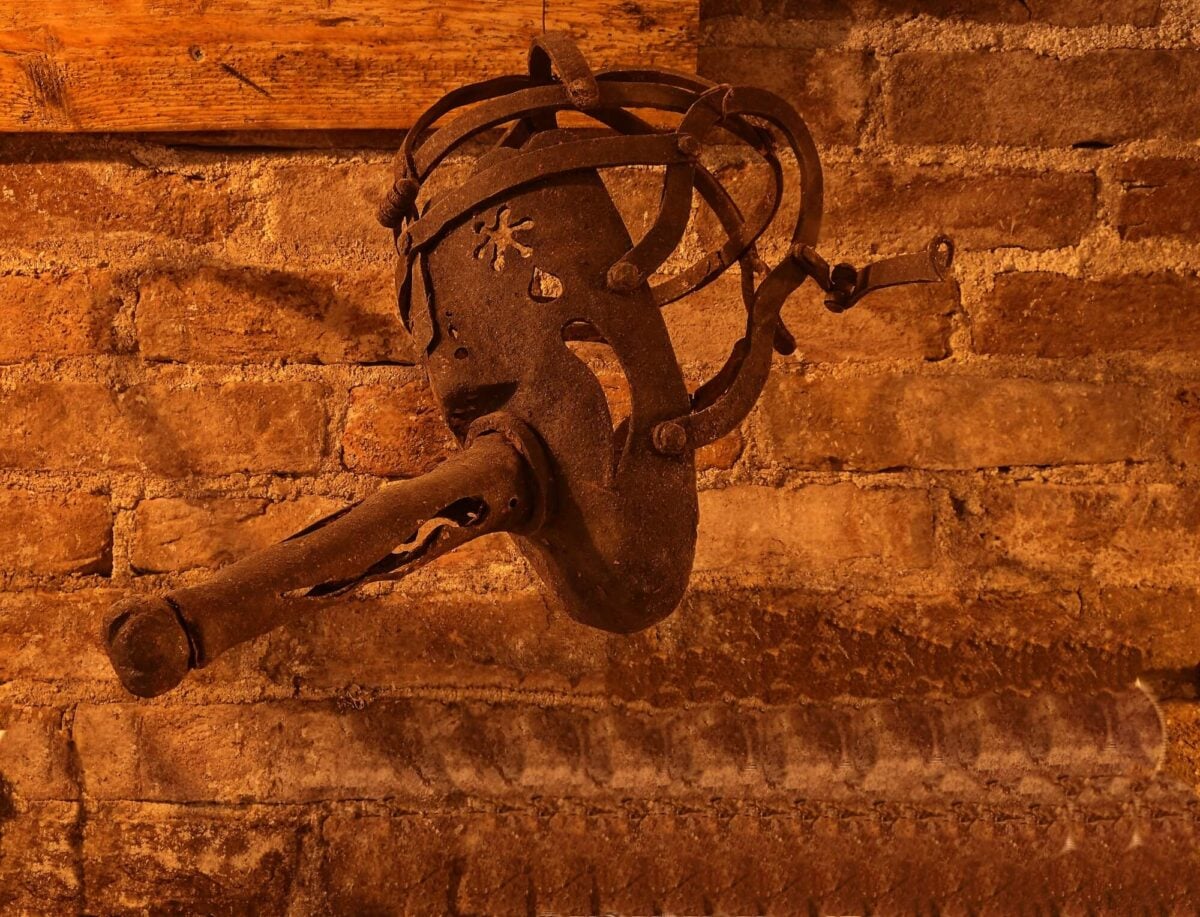
A scold’s bridle, sometimes called a branks, was an iron frame locked around the head with a flat metal plate pressed onto the tongue. It was used mainly on women accused of gossiping, nagging or quarreling, and the wearer was often led through town on a chain.
The first recorded use is in Scotland in the 16th century, and English towns used the device well into the 1800s. Many surviving examples are decorated or shaped like faces.
Several are displayed in British museums, where they make visitors noticeably quieter.
Ducking Stool in the Village Pond

A ducking stool was a chair fixed to the end of a long wooden beam, which could be swung out over a pond or river and lowered to plunge the occupant into the water. It was used for scolds, quarrelsome neighbors and dishonest traders, and the number of dips depended on the offense.
The last recorded use in England is often given as 1809 in Leominster, where a woman named Jenny Pipes was ducked. In 1817, officials there tried again, but the water was too low.
The Leominster ducking stool still survives inside the town’s Priory Church.
Drunkard’s Cloak in Newcastle

Magistrates in parts of 17th-century England punished public drunkenness with a wooden barrel worn like a garment. Openings were cut for the head and hands, and the offender was marched through the streets wearing it while neighbors watched.
The punishment is described in Newcastle upon Tyne by Ralph Gardiner in a 1655 book of local grievances. Barrels were heavy, awkward and deeply undignified, which was the point.
The device later appeared in cartoons and in other countries, but it began as a sober civic response to a very common problem.
Peine Forte et Dure for Refusing to Plead
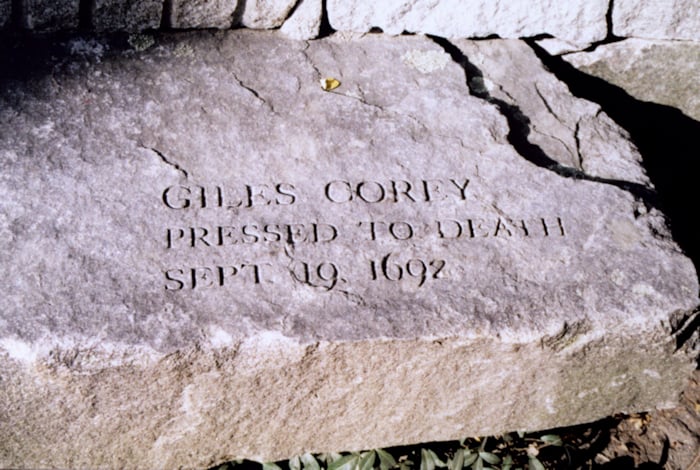
English courts could not try a defendant who refused to enter a plea, so the law applied pressure, literally. Heavy weights were stacked on the accused until he pleaded or died.
Some chose to die unconvicted so their estates would pass to their families rather than be forfeited. The most famous case in America was Giles Corey, pressed in Salem in 1692 during the witch trials, who reportedly asked for more weight.
Parliament ended the practice in 1772 by treating a refusal to plead as a guilty plea, a rule later reversed.
Benefit of Clergy and the Neck Verse

Clergy in medieval England could escape the secular courts and be tried by the gentler church courts instead. The test for being clergy became the ability to read, usually the opening of Psalm 51, which became known as the neck verse because it could save a person from hanging.
Illiterate defendants simply memorized it. To stop repeat claims, those who used the privilege were branded on the thumb.
Over time the exemption grew so wide that Parliament kept listing crimes to which it did not apply. It was finally abolished for most people in 1827.
Transportation to the Far Side of the World

For much of the 18th and 19th centuries, British courts punished crimes by shipping convicts overseas. Before the American Revolution, tens of thousands were sent to the American colonies.
After 1788, the destination became Australia, and by the time transportation ended in 1868 about 162,000 convicts had been sent there. Offenses could be as minor as stealing clothing or a few handkerchiefs.
Many convicts never returned, and in practice a seven-year sentence often meant permanent exile. Their descendants now make up a significant share of the Australian population.
Animal Trials in Medieval Courts
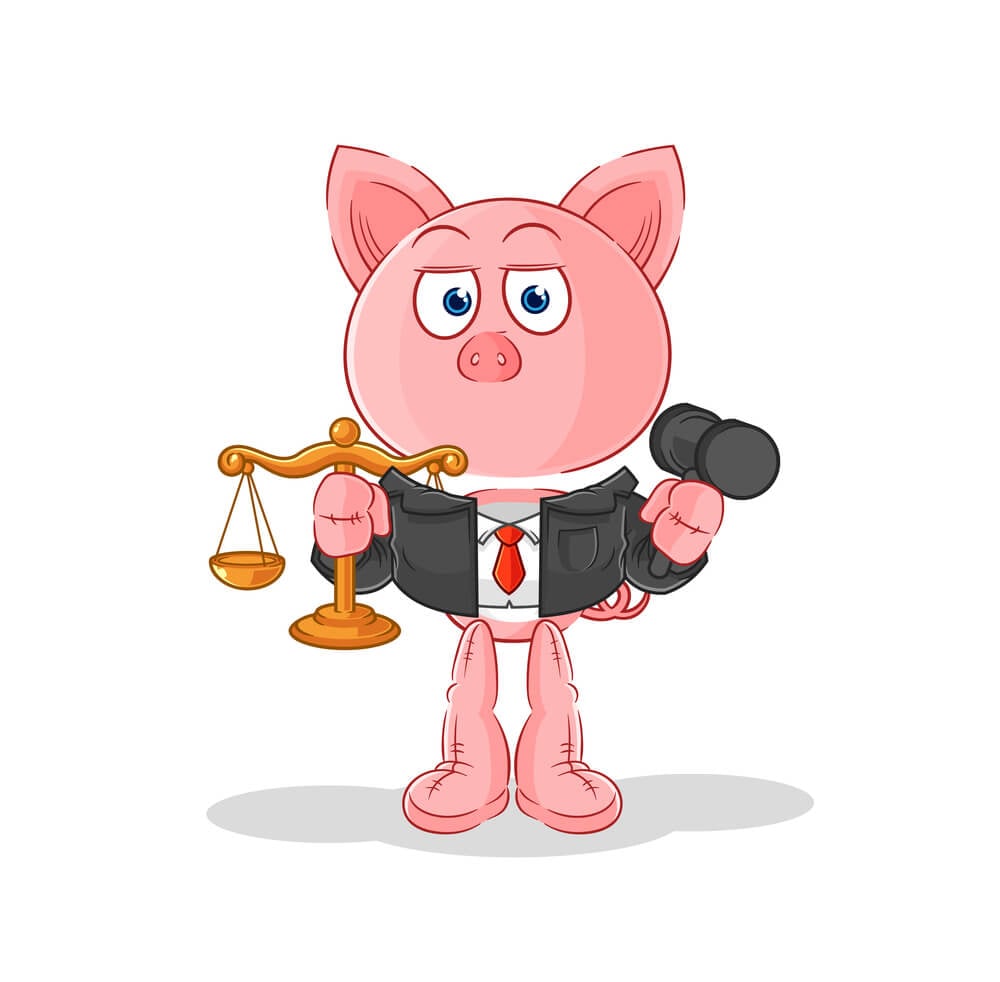
Courts in medieval and early modern Europe put animals on trial, complete with lawyers, evidence and formal sentences. In 1386, a pig in Falaise, France, was executed for killing a child, reportedly dressed in human clothing for the occasion.
Rats, weevils and locusts were sometimes summoned to appear in church courts for destroying crops. In one 16th-century case at Autun, lawyer Bartholomew Chassenee argued that the rats could not safely attend because of the town’s cats.
The trials followed the same procedures used for people, which was part of their purpose.
Outlawry and the Wolf’s Head

Medieval English law could declare a person an outlaw, placing him literally outside the protection of the law. An outlaw’s property was forfeited, and anyone could kill him without penalty, because he was said to bear a wolf’s head.
The status was usually imposed on people who fled rather than face trial, and it made the Robin Hood legends possible. Outlawry faded from use over the centuries but lingered on the books for a very long time.
It was only formally abolished in English criminal proceedings in 1938, centuries after anyone had actually been declared an outlaw.
Damnatio Memoriae and the Erased Emperor
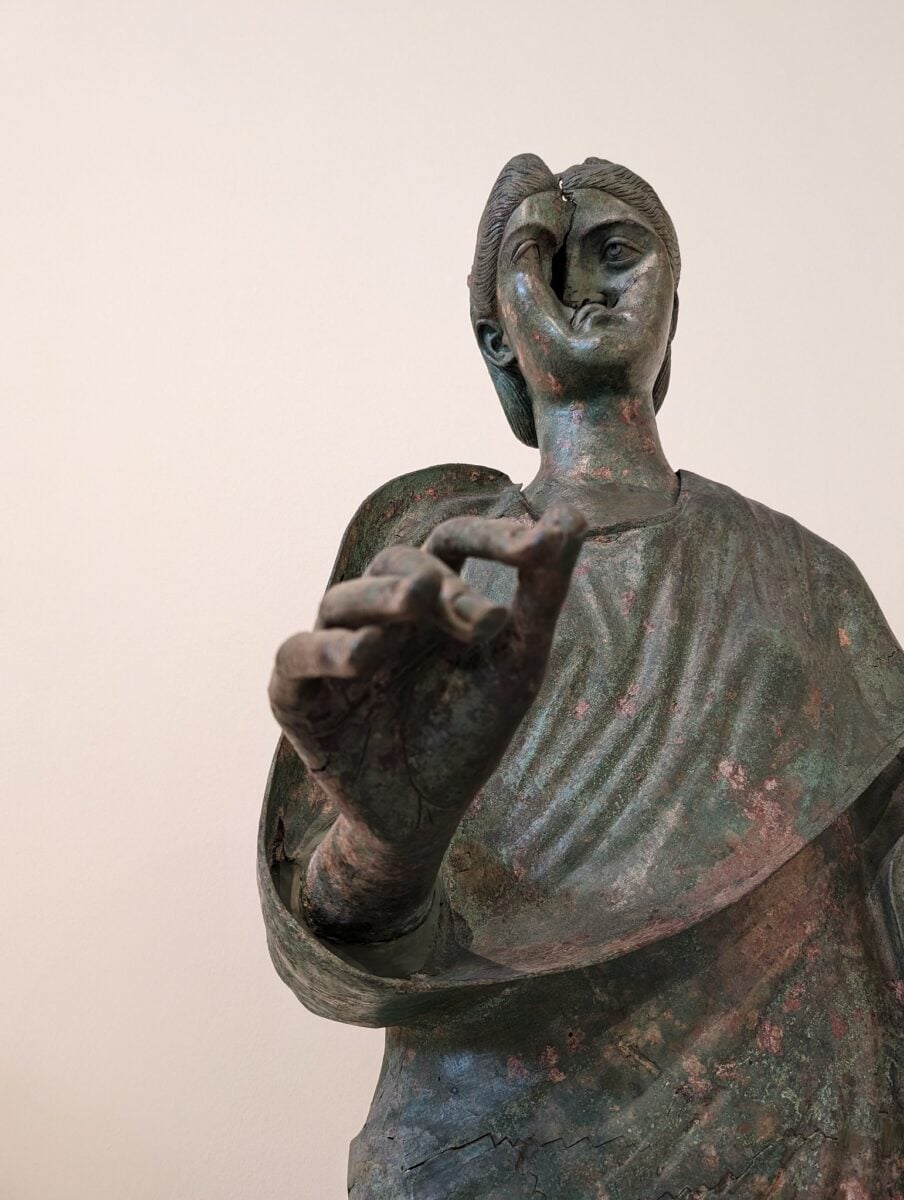
Rome had a way of punishing people after death by attacking their memory. The names of disgraced figures were chiseled off inscriptions, their statues smashed or recut and their faces scraped from paintings.
After Emperor Caracalla had his brother Geta killed in 211 AD, he ordered Geta erased from public records and images. A painted panel known as the Severan Tondo, now in Berlin, still shows the family portrait with Geta’s face deliberately scratched away.
The Latin term was coined by later scholars, but the practice was very real and widely used.
Draco’s Laws Written in Blood
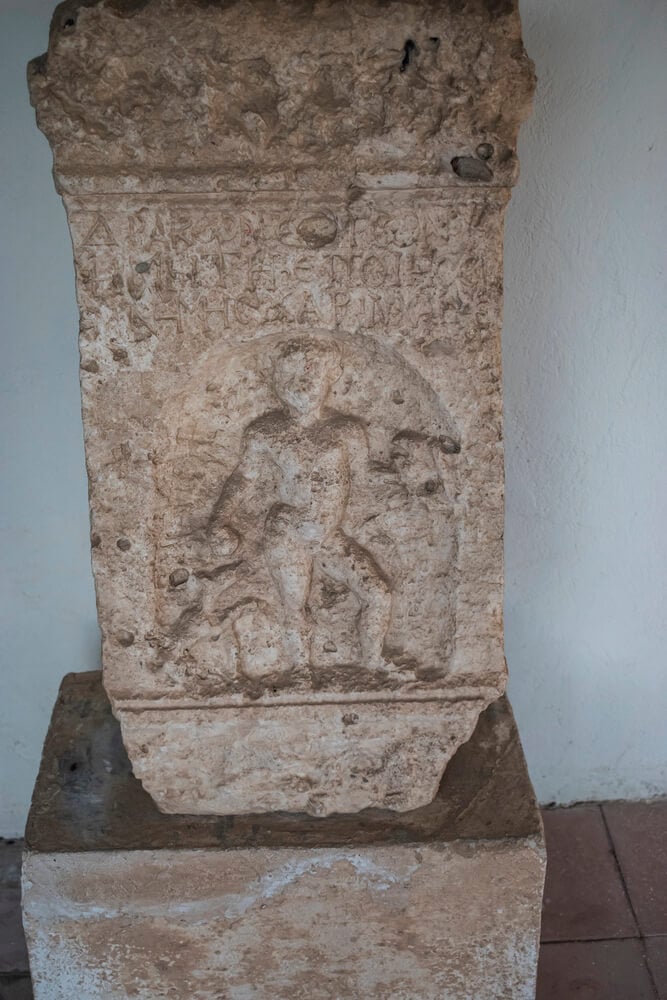
Around 621 BC, an Athenian lawgiver named Draco produced one of the first written legal codes in Greece. It was famous for severity.
According to Plutarch, even minor crimes such as stealing fruit or vegetables could carry the death penalty, and a later orator quipped that the laws were written in blood rather than ink. The code at least made rules public instead of leaving them to aristocratic judges.
Solon repealed most of it about a generation later, keeping only the homicide laws. The word draconian has meant excessively harsh ever since.
Hammurabi’s Law for Careless Builders
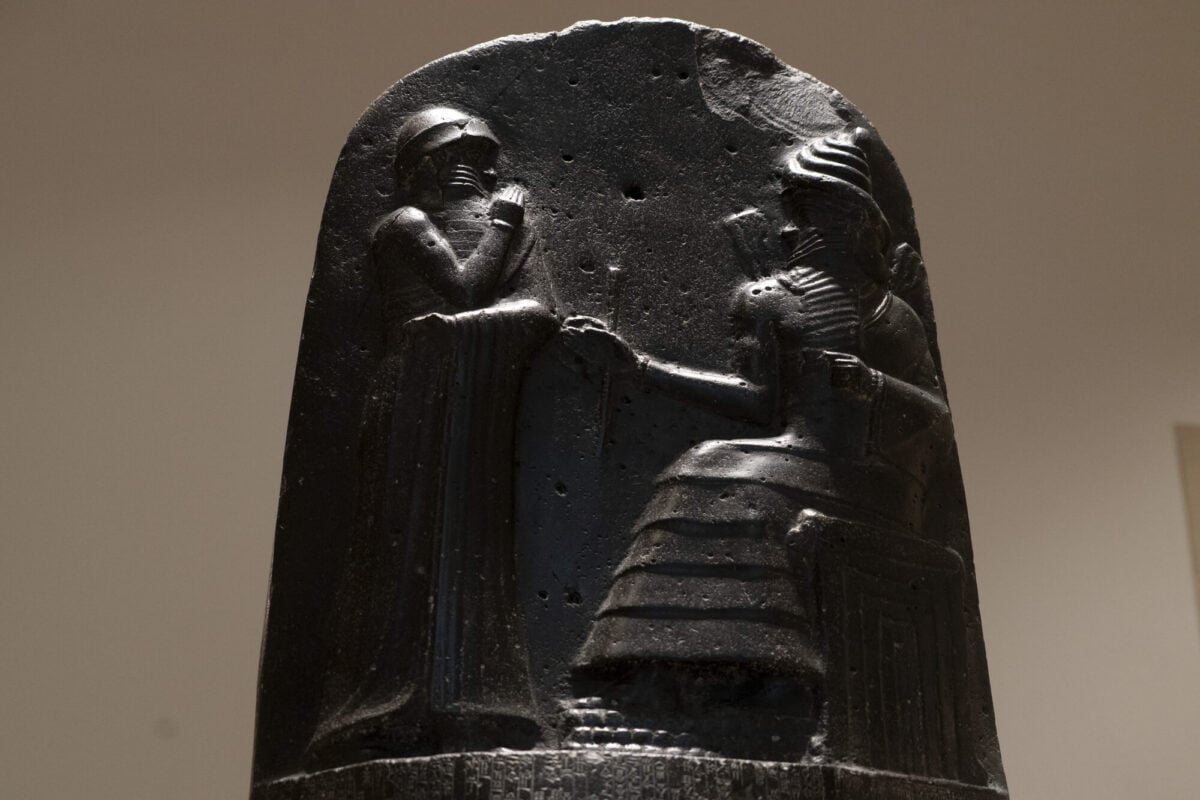
The Babylonian code of King Hammurabi, carved on a basalt stele around 1754 BC, held builders personally responsible for their work. If a house collapsed and killed its owner, the builder was to be put to death.
If the collapse killed the owner’s son, the builder’s son was to be put to death instead. The principle of matching punishment to injury ran through the entire code.
The stele was found at Susa, in modern Iran, in 1901 and now stands in the Louvre, where its fine print still makes contractors wince.
Jougs at the Scottish Church Door

Jougs were an iron collar attached by a short chain to a church wall, market cross or town jail in Scotland. Offenders were locked into them for public shaming, often for moral lapses judged by the local church, such as missing services or quarreling.
They were cheaper than stocks and kept the offender standing where the entire parish would pass. Many Scottish churches still have jougs fixed beside the door.
One of the best-known sets hangs at Duddingston Kirk in Edinburgh, alongside a mounting block and a small watchtower.
Shame Flute for Bad Musicians

Towns in the Holy Roman Empire sometimes punished musicians who played badly or disturbed the peace with a shame flute, a heavy iron instrument locked around the neck. The offender’s fingers were clamped against the keys, forcing the pose of a musician while making it impossible to play.
The victim was then displayed in public. An example is held at the Medieval Crime Museum in Rothenburg ob der Tauber, Germany, alongside shame masks and other devices.
The flute captures how much early modern justice relied on ridicule rather than pain.
Shame Stones for Quarrelsome Neighbors

Several German and Alsatian towns kept heavy carved stones that could be hung around the neck of someone convicted of slander or quarreling, usually women. The offender was paraded through the streets while carrying the weight.
Mulhouse, in Alsace, displays a copy of its Klapperstein, a stone of about 12 kilograms carved with a grimacing face, on the front of its old town hall. The punishment matched the crime in a symbolic way.
Someone who had loaded neighbors with gossip now had to carry a load of her own for everyone to see.
Wergild and the Price List for Injuries
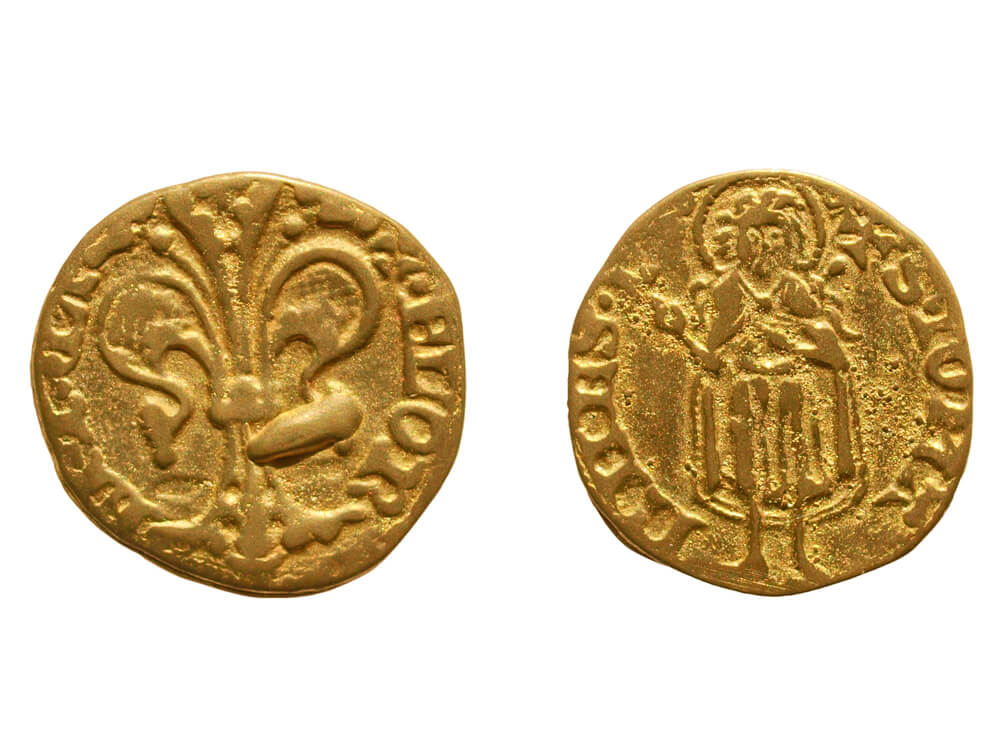
Early Germanic and Anglo-Saxon law often replaced revenge with compensation, known as wergild. The laws of King Aethelberht of Kent, written around 600 AD and among the earliest documents in English, list payments for specific injuries.
The loss of a thumb, for example, was valued at 20 shillings, with smaller sums for individual fingers and toes. Higher-ranking victims were worth more.
The system seems coldly commercial, but it was meant to stop blood feuds between families. A fixed price list gave both sides a way to end a dispute without more killing.
Katorga and the Road to Siberia

Russia sentenced criminals and political prisoners to katorga, a system of forced labor in remote regions, especially Siberia, from the 17th century onward. Many convicts walked thousands of miles in chained columns to reach mines and work camps.
Novelist Fyodor Dostoevsky served four years of katorga in Omsk after 1849 and drew on it for his book about prison life. Families sometimes followed prisoners into exile voluntarily.
The system survived the fall of the tsars, and the Soviet Union later expanded it into the network of camps known as the Gulag.
Galley Slavery in the French Navy

France sentenced convicts to row in its Mediterranean war galleys for centuries, chaining them to benches in crews of several men per oar. After 1685, when Protestantism was outlawed in France, some Protestants who refused to convert were sent to the galleys as well.
The main base was at Marseille, and sentences could be for life. The galley corps was merged into the regular navy in 1748, when galleys were obsolete, and convicts were moved to land-based prisons called bagnes.
The French word for convict labor long carried the memory of the oars.
Debtors’ Prisons and the Marshalsea

In England, creditors could have a person jailed for unpaid debts, and the prisoner stayed locked up until the debt was settled, which was often impossible from inside a cell. Prisoners paid for their own food and lodging, so debt tended to grow behind bars.
Entire families sometimes lived inside, with wives and children coming and going. London’s Marshalsea prison was notorious for these conditions until it closed in 1842.
The Debtors Act of 1869 largely ended imprisonment for ordinary debt in England, though it lingered for some cases.
Sanbenito and the Garment Hung Up in Church

The Spanish Inquisition required some people convicted of heresy to wear a sanbenito, a penitential tunic often colored yellow and marked with crosses or other symbols. They wore it in public for a set period as part of their penance.
Afterward, the garment was frequently hung in the local church with the wearer’s name attached, where it could remain for generations. That meant the shame passed to children and grandchildren, who might be barred from certain offices.
The practice continued in parts of the Spanish world into the 18th century.
Cangue Around the Neck in Imperial China
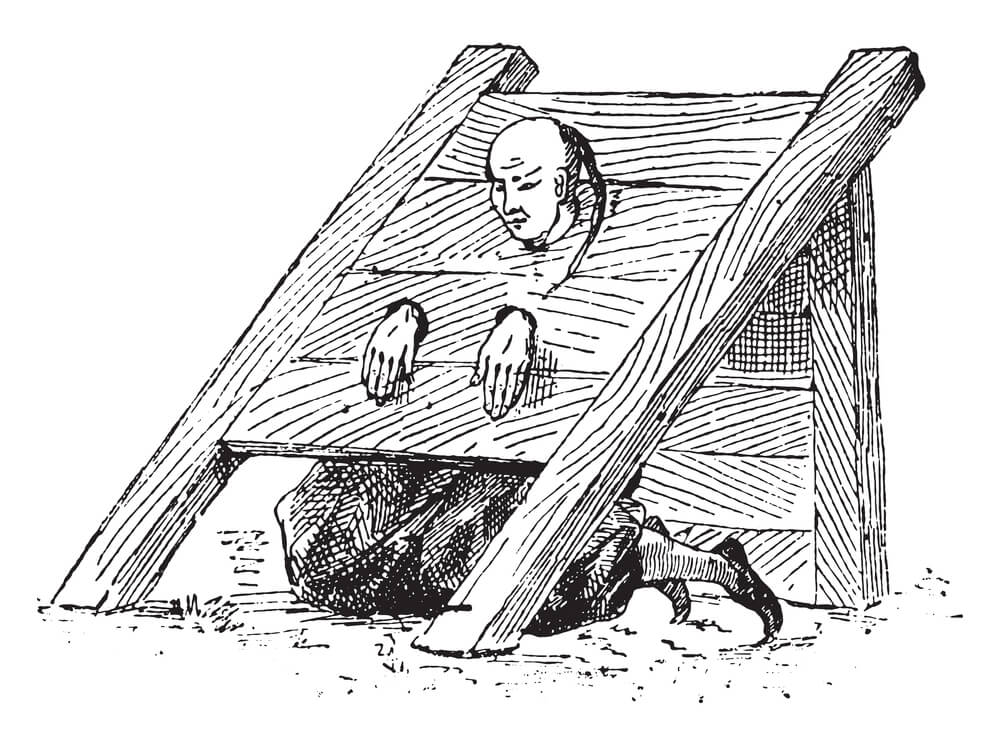
Chinese courts used the cangue, a large wooden board locked around the neck, as a public punishment for minor offenses such as theft. The board often carried a written description of the crime and the offender’s name.
It was wide enough that the wearer could not reach his own mouth and depended on passersby or relatives for food. Offenders were displayed in public places for days or weeks.
The cangue was used for centuries and appears in photographs from the late Qing dynasty, shortly before it was abolished in the early 20th century.
Justice Built for an Audience

Nearly every punishment here was designed for spectators. Stocks, pillories, bridles and barrels worked because neighbors saw them, and the pain was often secondary to the loss of reputation.
In small communities, standing was everything, so shame was the most efficient penalty available. Modern justice tends to hide punishment behind walls and paperwork.
That shift feels humane, and in many ways it is. Yet these old laws are a reminder that every era chooses what to punish and how loudly, and future readers may find present choices just as strange.
More from Go2Tutors!

- The Romanov Crown Jewels and Their Tragic Fate
- 13 Historical Mysteries That Science Still Can’t Solve
- Famous Hoaxes That Fooled the World for Years
- 15 Child Stars with Tragic Adult Lives
- 16 Famous Jewelry Pieces in History
Like Go2Tutors’s content? Follow us on MSN.



