Massive Scandals in Olympic History
The Olympics are supposed to represent the best of humanity—athletic excellence, fair play, and nations coming together in the spirit of competition.
It’s a beautiful idea, really.
But like any massive global institution involving billions of dollars, intense national pride, and career-defining moments, the Games have seen their share of darkness.
Some Olympic scandals were so brazen, so shocking, that they changed how we think about sports entirely.
These aren’t just stories about athletes who bent the rules.
They’re about systematic cheating, corrupt officials, geopolitical nightmares, and moments when the Olympic ideal came crashing down in spectacular fashion.
Let’s take a closer look at some of the most jaw-dropping controversies that have rocked the Olympic movement.
Ben Johnson’s 100-Meter Fall from Grace

Seoul 1988 gave us one of the most dramatic moments in track and field history—and then took it away just as quickly.
Canadian sprinter Ben Johnson blazed through the 100-meter final in 9.79 seconds, seemingly shattering the world record and leaving American rival Carl Lewis in the dust.
Johnson’s eyes were bloodshot, his muscles looked superhuman, and for about 48 hours, he was the fastest man alive.
Then came the test results.
Johnson had tested positive for stanozolol, an anabolic steroid.
The gold medal was stripped, and his time was never ratified as an official world record.
Carl Lewis’ 9.92 from that same race stood as the Olympic record instead.
Johnson became the poster child for everything wrong with performance-enhancing drugs in sports.
What made it worse was the denial—Johnson initially claimed he’d been sabotaged, that someone had spiked his drink.
Later testimony revealed he’d been doping for years, part of a systematic program.
The scandal didn’t just destroy one man’s career.
It fundamentally changed how we watch sprinting, adding a permanent asterisk of doubt to every extraordinary performance.
Russia’s State-Sponsored Doping Program
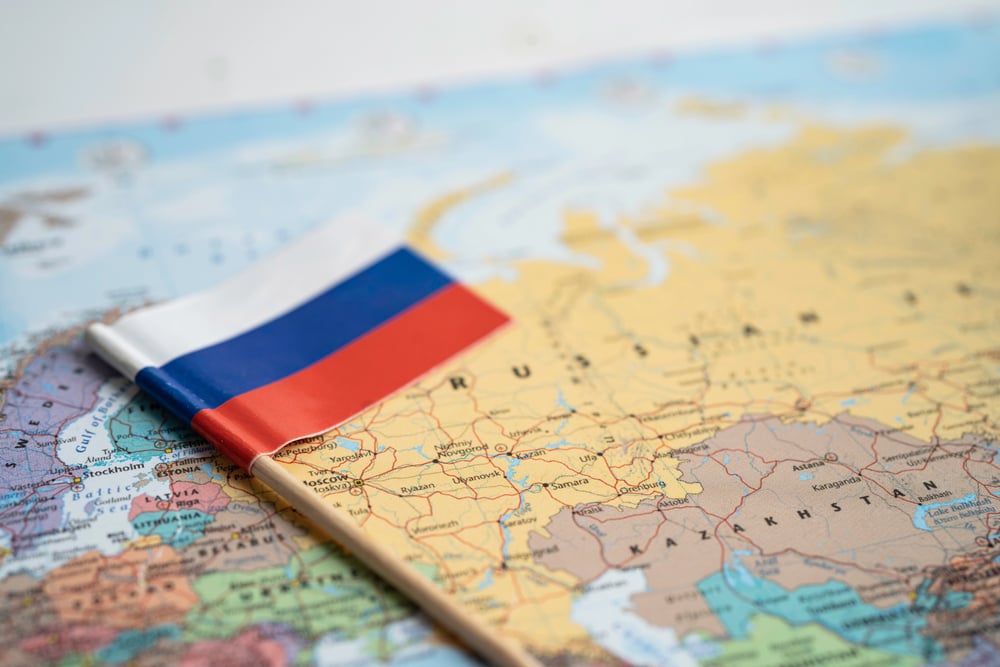
If Ben Johnson was a solo act, Russia wrote the playbook for institutional cheating on a scale the Olympics had never seen.
The 2014 Sochi Winter Games weren’t just about athletic competition—they were about a conspiracy that reached the highest levels of Russian government.
Investigators later uncovered that Russian officials had been running a sophisticated doping scheme, complete with a secret lab, midnight sample swaps, and a literal opening in the wall where dirty urine samples went in and clean ones came out.
The fallout was unprecedented.
Following investigations and sanctions from the World Anti-Doping Agency, Russia faced severe restrictions.
Athletes could compete as neutrals under the ‘Olympic Athletes from Russia’ designation at PyeongChang 2018.
By Tokyo 2020, they competed under the ‘Russian Olympic Committee’ banner, still prohibited from using their flag or anthem.
Dozens of medals from previous Games were retroactively stripped.
The scandal exposed how far some nations will go when Olympic success becomes tied to national prestige and political power.
It wasn’t just cheating—it was an organized, government-funded operation that made a mockery of fair competition.
The Figure Skating Judging Fiasco
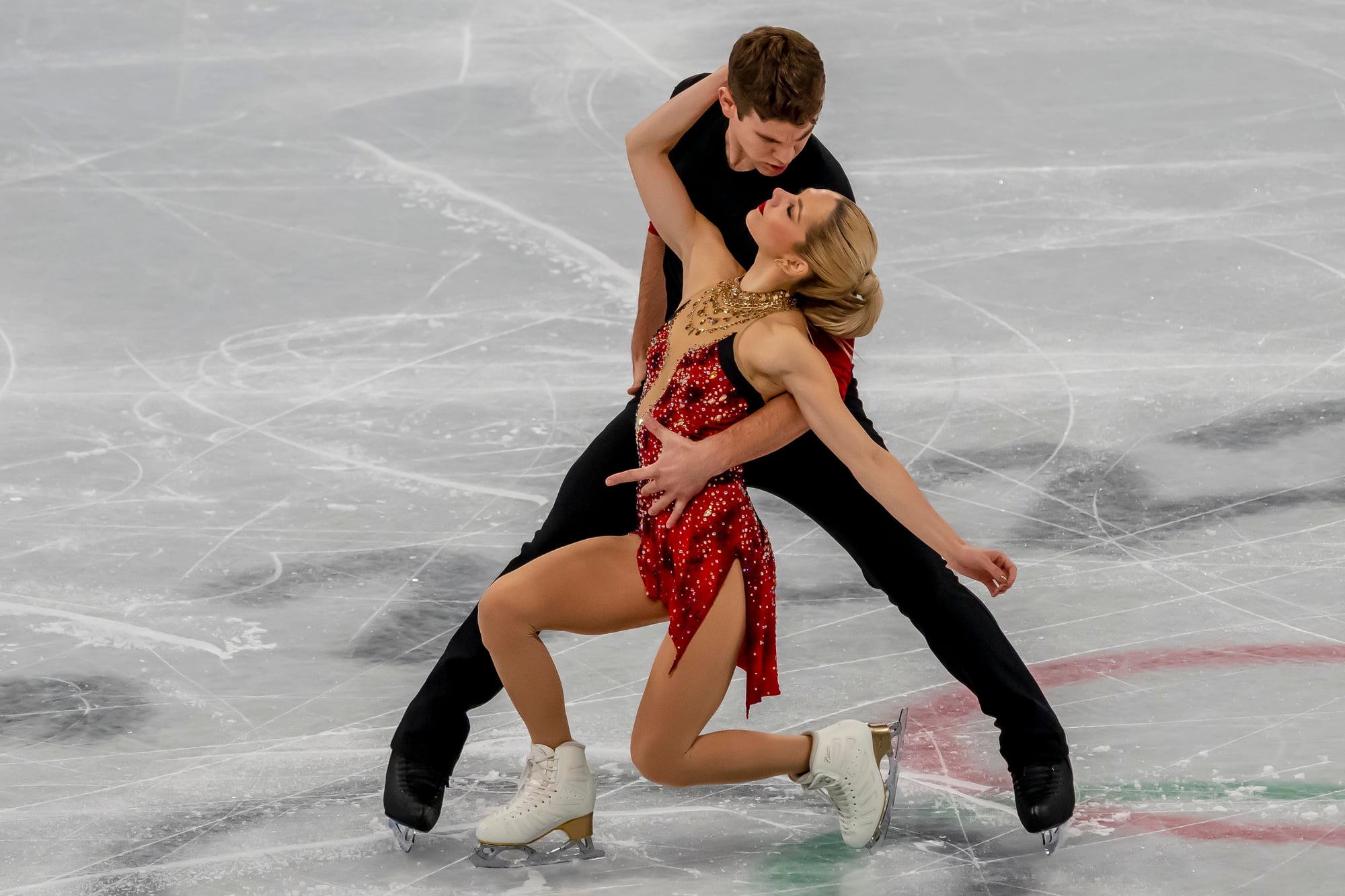
Salt Lake City 2002 gave us a scandal so convoluted it required flow charts to explain, but the basic story is simple: something seemed very wrong with the figure skating pairs competition.
Russian duo Elena Berezhnaya and Anton Sikharulidze skated a flawed routine, stumbling on a landing.
Canadian pair Jamie Salé and David Pelletier performed nearly flawlessly.
Yet somehow, the Russians won gold.
The uproar was immediate and loud.
French judge Marie-Reine Le Gougne initially admitted she’d been pressured, then later retracted that claim.
The investigation never conclusively proved vote-swapping beyond reasonable doubt, but the cloud of suspicion was thick enough that the International Olympic Committee eventually awarded duplicate gold medals to the Canadian pair.
The scandal revealed what many had long suspected—that figure skating judging was vulnerable to influence and bloc voting, even if the exact mechanics remained murky.
The entire judging system was overhauled afterward, replacing the old 6.0 system with a more complex points-based approach.
Whether that actually fixed the problem remains debatable.
The Salt Lake City Bid Bribery Scheme

Before Salt Lake City could host those controversial Games, it had to win the right to host them—and that process turned out to be thoroughly corrupt.
In 1998, reporters uncovered that the Salt Lake Organizing Committee had spent over $1 million on IOC members and their families.
The spending included cash payments, luxury trips, and medical care, though it’s worth noting that some funds went toward scholarships and community programs that weren’t purely gifts.
Still, the impropriety was clear enough that the scandal forced ten IOC members to resign or be expelled, the biggest shakeup in the organization’s history.
It pulled back the curtain on how Olympic host cities were really chosen—not purely through merit or infrastructure or public enthusiasm, but through relationships that often crossed ethical lines.
The IOC instituted reforms afterward, limiting how host cities could wine and dine committee members.
The incident made everyone wonder how many other Olympic bids had been won through questionable means, and whether the so-called reforms actually changed the culture or just made people better at hiding it.
Roy Jones Jr. and the Worst Decision in Boxing History
Seoul 1988 wasn’t just memorable for Ben Johnson.
It also gave us what many consider the most egregious judging error in Olympic boxing history.
American light middleweight Roy Jones Jr. absolutely dominated South Korean fighter Park Si-Hun in the gold medal match.
Jones landed 86 punches to Park’s 32.
He outboxed, outmaneuvered, and thoroughly outclassed his opponent in every conceivable way.
Then the judges awarded the fight to Park.
Even the Korean crowd booed the decision.
Park himself looked embarrassed on the podium.
The scoring was so indefensible that investigations followed, revealing at least two judges had been wined and dined by Korean officials before the fight.
The International Boxing Association suspended those judges, though no official ruling ever overturned the match result.
Jones went on to become a dominant professional champion, but the robbery in Seoul remains one of those moments that makes you question whether Olympic judging in subjective sports can ever truly be fair when national pride and home-country advantage enter the equation.
The 1972 Munich Massacre
Some scandals are about cheating or corruption.
Others are about failures so profound they redefine what security and safety mean at the Olympics.
Munich 1972 was supposed to be Germany’s chance to show the world a peaceful, welcoming nation—a stark contrast to the 1936 Berlin Games under Nazi rule.
Instead, it became the site of a terrorist attack that killed 11 Israeli team members, including athletes, coaches, and officials.
Palestinian terrorists from the Black September organization broke into the Olympic Village, took Israeli team members hostage, and eventually killed them during a botched rescue attempt at a military airport.
The Games were suspended for 34 hours but then controversially resumed.
IOC President Avery Brundage’s decision to continue sparked outrage—it felt tone-deaf, prioritizing the show over grief and security.
The massacre fundamentally changed how Olympics are secured.
Today’s Games resemble fortresses, with massive security budgets and armed presence everywhere.
Munich showed that the Olympics, for all their idealism, couldn’t exist outside the geopolitical conflicts of the real world.
The Tonya Harding Conspiracy

Lillehammer 1994 didn’t host the scandal itself, but it was the destination for one of sports’ strangest and most tabloid-ready controversies.
Figure skater Tonya Harding’s ex-husband and bodyguard hired someone to attack her rival, Nancy Kerrigan, whacking her knee with a baton at the U.S. Championships just weeks before the Olympics.
The goal was to injure Kerrigan badly enough to knock her out of Olympic contention and clear Harding’s path to gold.
Kerrigan recovered in time to compete and won silver.
Harding finished eighth.
The question of what Harding knew and when she knew it consumed the American media.
She initially denied involvement, then later admitted she’d learned about the attack afterward and failed to report it.
The U.S. Figure Skating Association banned her from competitive skating for life.
The whole saga felt less like an Olympic scandal and more like a crime drama—jealousy, violence, working-class resentment, and the pressure cooker of elite athletics all colliding in the most American way possible.
It remains the most bizarre intersection of sports and criminal conspiracy in Olympic history.
Where the Scandals Leave Us

These moments aren’t just historical footnotes.
They’re reminders that the Olympics, for all their pageantry and inspirational commercials, exist in a messy, flawed world where people cheat, judges make terrible decisions, and institutions protect themselves before they protect athletes.
The Games have evolved in response—better testing, reformed judging, tighter security—but scandals keep emerging because the incentives remain the same.
Winning at the Olympics can transform lives, elevate nations, and secure legacies.
That kind of pressure breeds corner-cutting.
Still, maybe that’s why these scandals matter.
They force the Olympic movement to confront its failures rather than coast on its mythology.
Each controversy has sparked reforms, however imperfect.
The athletes who compete cleanly deserve a system that catches the cheaters, rewards honest performances, and doesn’t look the other way when powerful nations or influential officials bend the rules.
The scandals show us how far the Olympics have strayed from their ideals—but also how much those ideals still mean, even when they’re broken.
The fact that we’re still outraged when they’re violated suggests we haven’t given up on what the Olympics could be, even as we reckon with what they sometimes are.
More from Go2Tutors!

- The Romanov Crown Jewels and Their Tragic Fate
- 13 Historical Mysteries That Science Still Can’t Solve
- Famous Hoaxes That Fooled the World for Years
- 15 Child Stars with Tragic Adult Lives
- 16 Famous Jewelry Pieces in History
Like Go2Tutors’s content? Follow us on MSN.