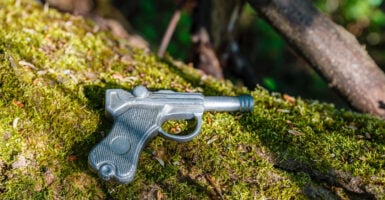
26 Cap Guns and Toy Pistols Collectors Compete Over
Cap pistols once rode in the holsters of nearly every American boy, and a surprising number of them survived the childhoods that wore them down. Cast iron, die-cast metal, and painted tin turned Western heroes and ray-gun fantasies into pocket-money purchases.
Today the survivors sit in glass cases and auction catalogs, priced by maker, model, and how much paint is left.
Collectors chase them for different reasons. Some want one maker’s complete run, while others want every pistol tied to a favorite television cowboy.
The pistols below are the names that come up again and again at shows and in price guides.
Texan Pistols From Hubley
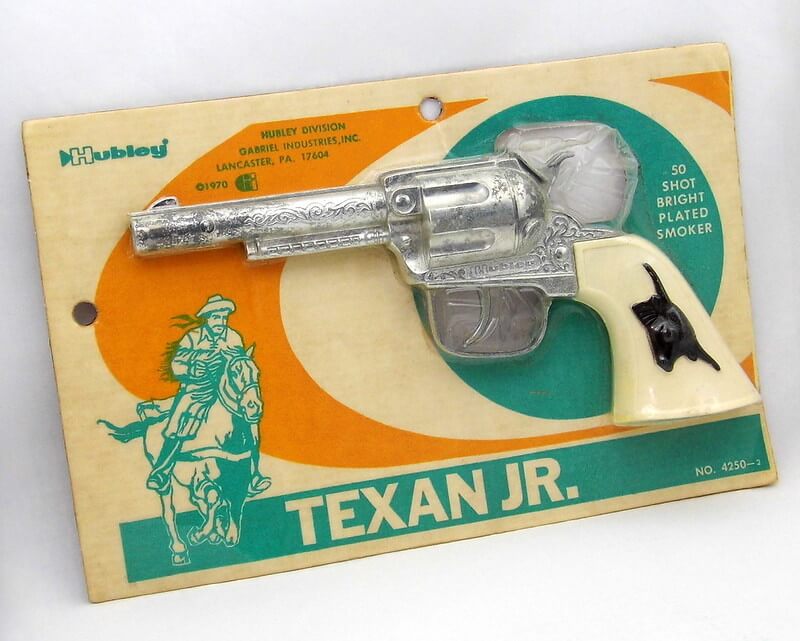
Hubley Manufacturing began in Lancaster, Pennsylvania, in 1894, and by the middle of the twentieth century it was among the best-known makers of metal cap pistols. The Texan became one of its signature Western models and appeared in several sizes and finishes over the years.
Collectors sort Texans by size and by the condition of the plating, since a bright finish rarely survives a childhood of backyard shootouts. A loose Texan in decent shape often sells for roughly 80 to 200 dollars, while a boxed example with its holster can go far higher.
Colt-Licensed Revolvers
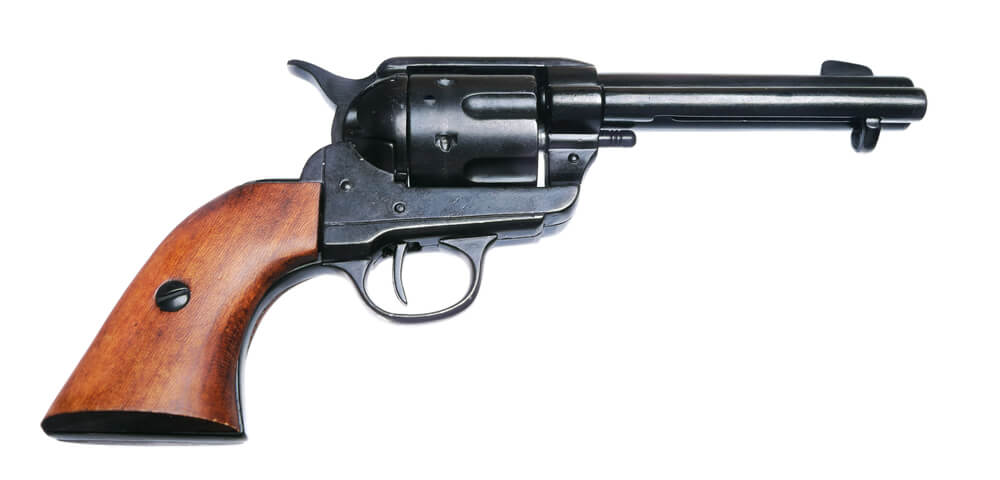
Hubley also held a license to put the Colt name on its toy pistols, and the Colt .45 models of the 1950s are among the most commonly collected examples. The design echoed the famous Single Action Army revolver closely enough that a boy could imagine he held the real thing.
Collectors look for clear Colt markings and an intact grip to confirm a licensed piece. A loose pistol often brings about 60 to 150 dollars, with a matching holster adding to the total and heavy finish wear taking it away.
Davy Crockett Flintlock Pistols
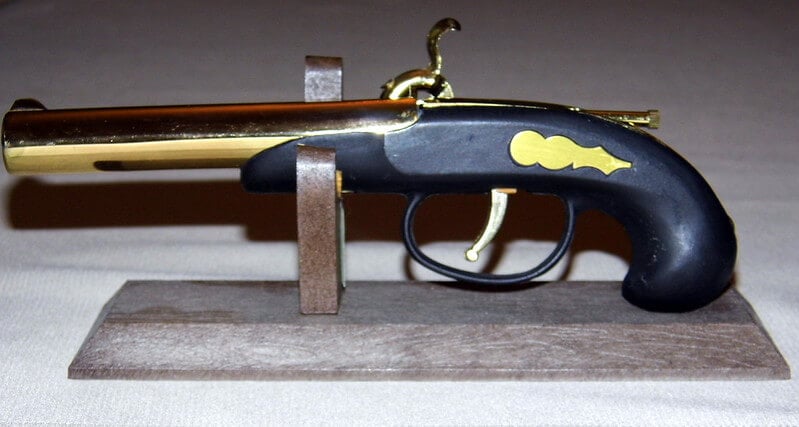
Disney’s Davy Crockett serial aired in 1954 and 1955, and Fess Parker in a coonskin cap made frontier gear a national craze almost overnight. Hubley answered with a Davy Crockett pistol styled after an antique flintlock instead of a Western six-shooter.
The look was a sharp break from the usual cowboy rigs on toy shelves, and it sold the frontier of Tennessee to boys who had only seen the West on television. Examples that still have their original packaging are harder to find than loose pistols, and the decorative detail on the frame wears away quickly in play.
Atomic Disintegrator Ray Pistols
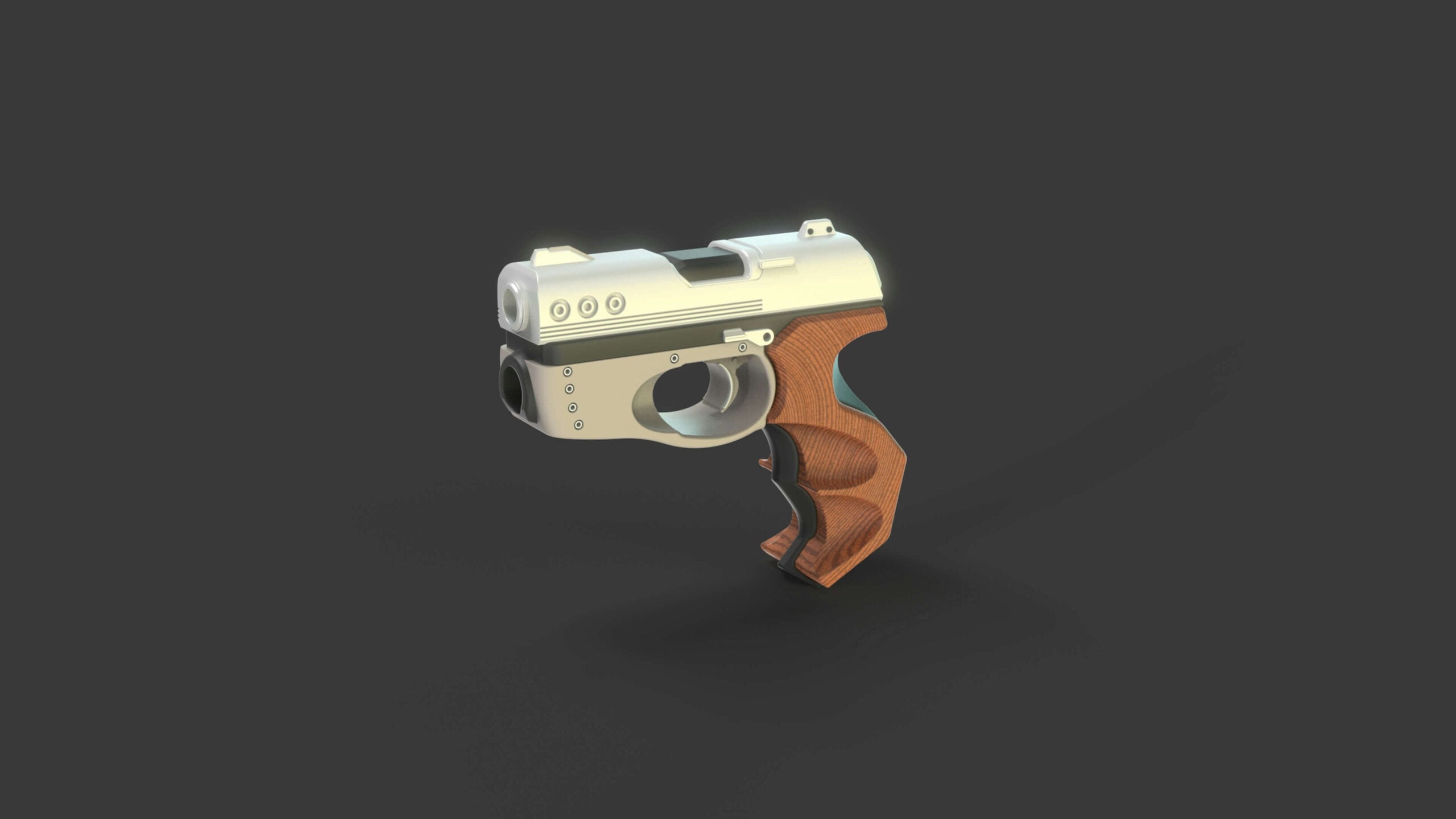
Hubley’s Atomic Disintegrator belongs to a Cold War family of toy pistols that borrowed the language of science and the bomb. The name alone dates the piece to the 1950s, when the word atomic was a selling point in every toy aisle.
Few cap pistols capture the mood of the decade so neatly, and fewer still promise to vaporize an imaginary enemy from across the living room. Hubley made it in the same Lancaster, Pennsylvania, plant that turned out its Western pistols.
Prices vary widely with the paint and plating that remain, and complete examples with an original box sit well above bare pistols.
Ric-O-Shay 45
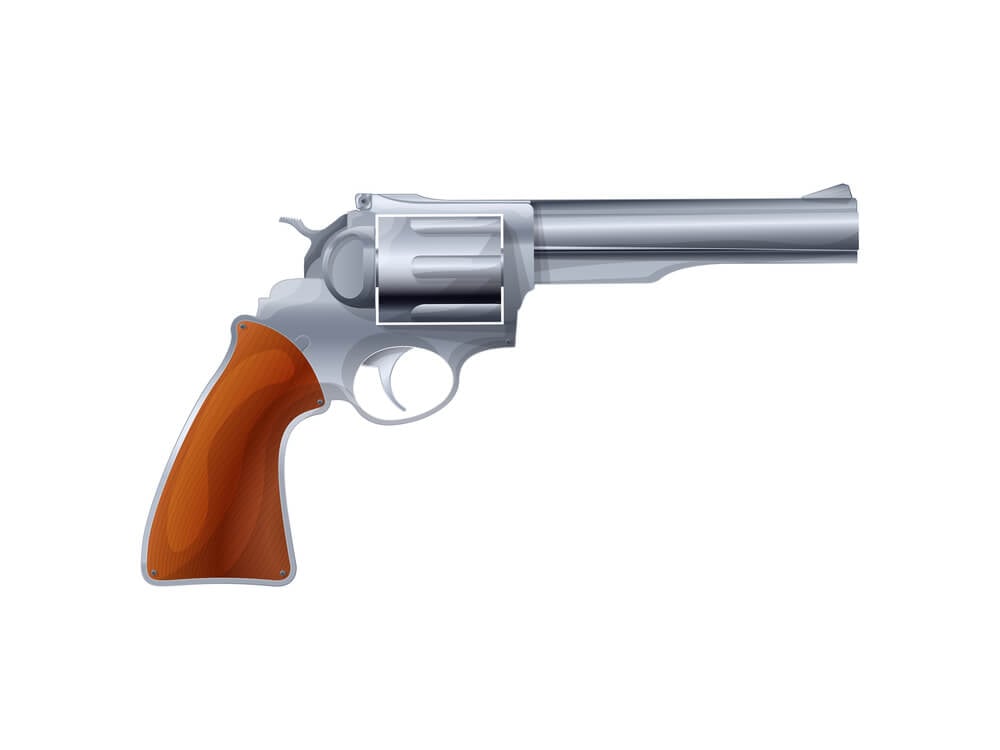
Among Hubley’s postwar models, the Ric-O-Shay 45 wore a name built to sound like a ricocheting bullet, a pun that kids of the 1950s understood at once. It was sold with holsters and belts in the same years when Western television dominated the evening schedule and every living room had a sheriff in it.
Collectors prize complete rigs because the leather and the pistol rarely stay together over seventy years. A pistol alone is common enough, though sets with the belt, holster, and original box command noticeably more depending on how much finish has worn off.
Mattel Agent Zero M Movie-Shot
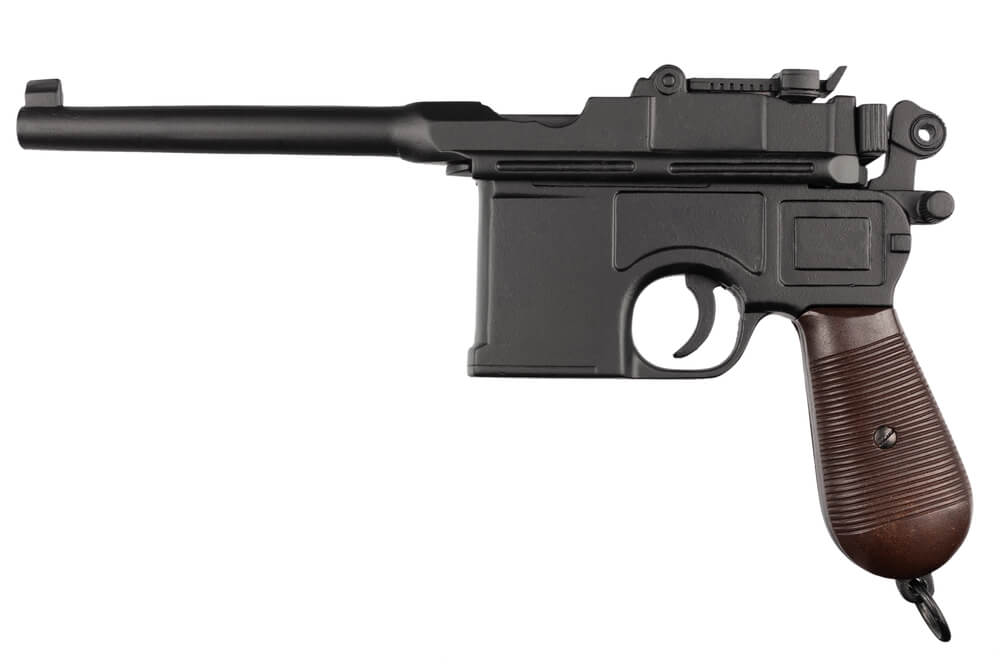
Mattel’s Agent Zero M Movie-Shot is dated to 1965 in period listings, a moment when spy fever had filled toy aisles with secret-agent gear. The Agent Zero M name gave Mattel a spy line of its own, and the Movie-Shot belongs to that short-lived family.
Collectors who normally chase Western rigs often add it as a change of pace from the cowboy shelf. Values swing with completeness, since a set missing pieces sells for far less than a tidy one, and a crushed box can pull the price down sharply.
Lone Ranger Cast Iron Pistols
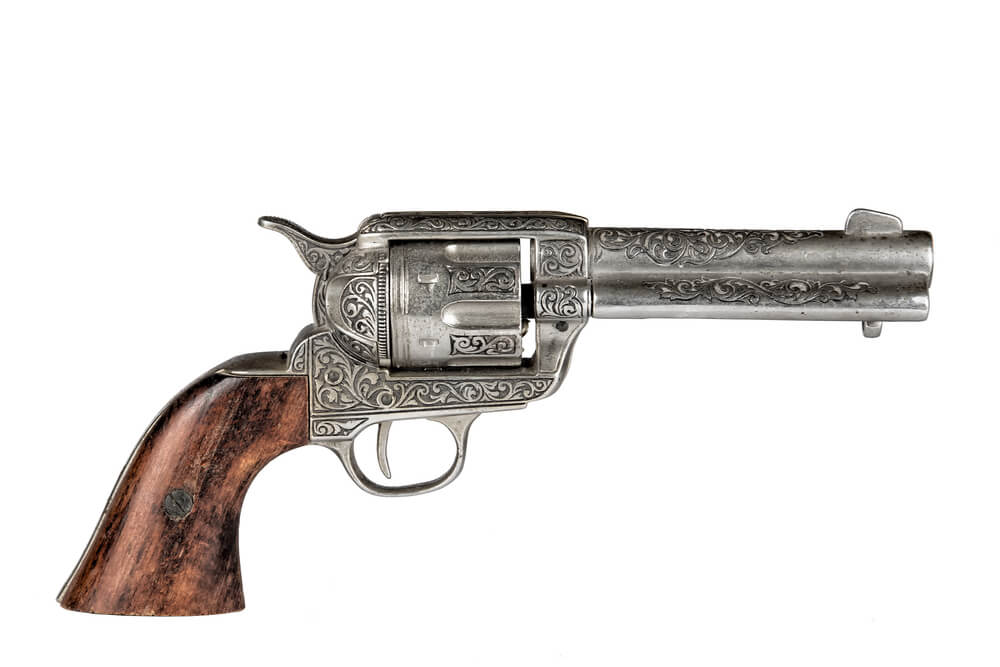
Radio listeners first heard the Lone Ranger in 1933 from station WXYZ in Detroit, and the masked hero reached television in 1949 with Clayton Moore in the lead role, along with his companion Tonto and his horse Silver. Lone Ranger cap pistols and holster sets sold to a generation of children who knew the hero from both the radio and the screen.
The character’s name on the grips is the main draw, since the pistols themselves resemble other Western models of the era. Condition decides the price, and rust or missing paint cuts into the value fast.
Kilgore Invincible
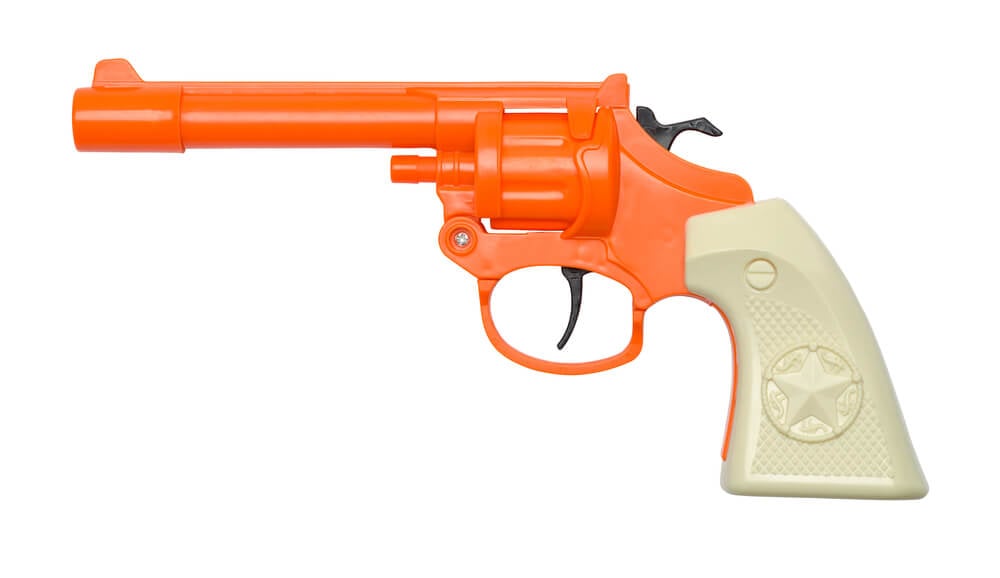
Kilgore Manufacturing of Westerville, Ohio, produced cast iron cap pistols in the early twentieth century, and the Invincible is documented from about the 1930s. Local history writers have photographed surviving examples as artifacts, which shows how these pistols moved from toy box to family keepsake.
The heavy, detailed castings are a favorite of collectors who prefer the older cast iron generation over later die-cast pieces. A good Kilgore with its original finish can sell for several hundred dollars, while pitted or repainted examples go for much less.
Gene Autry Pistols From Kenton
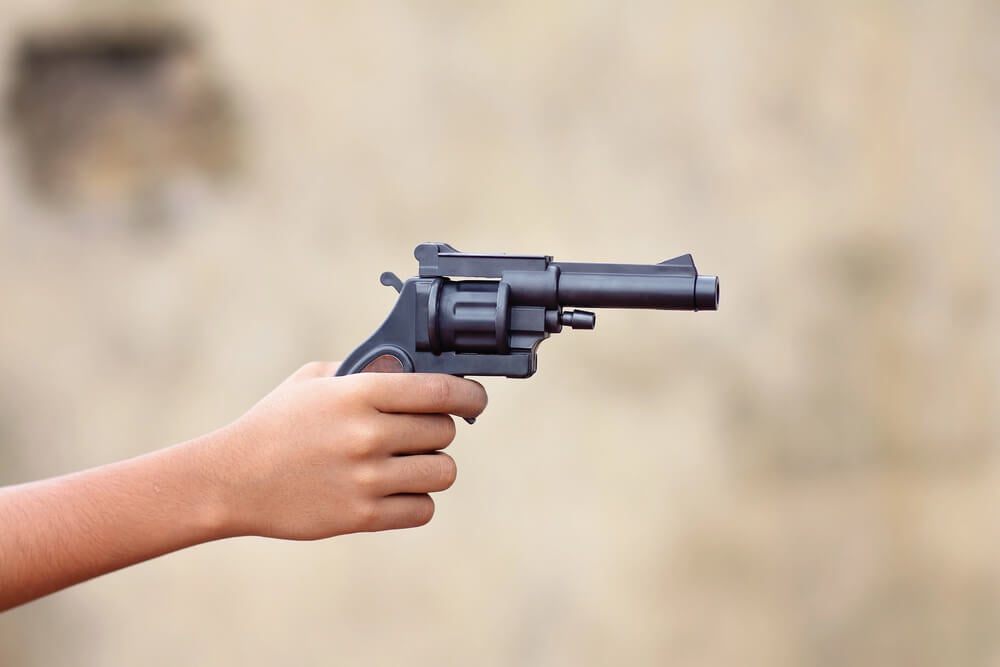
Kenton, Ohio, was home to the Kenton Hardware Company, a maker of cast iron toys that earned a place in the town’s local history. The firm made pistols carrying the name of Gene Autry, the singing cowboy who rose through radio, film, and television.
Cast iron pieces from small Ohio factories like this one are prized by collectors who value the heavy, hand-finished look of the older generation. Authentic Kenton pieces differ from reproductions, so buyers watch for casting quality and honest wear, and values fall when a pistol has been repainted or pitted by rust.
Stevens Pistols From Cromwell
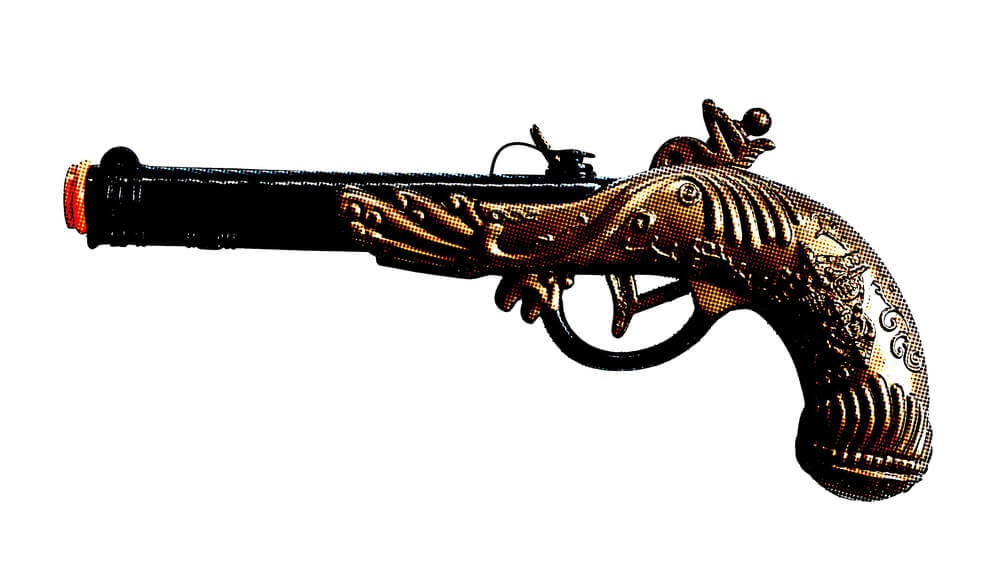
J. and E. Stevens Company of Cromwell, Connecticut, dates to 1843, which puts it decades ahead of the Western television craze. The firm is best known to collectors for its cast iron cap pistols and its mechanical banks, and a reprinted catalog of its iron toys is a standard reference.
Early Stevens pistols appeal to buyers who want something older than the postwar cowboy era. Prices often run into the hundreds of dollars for good examples, though cracked castings and worn paint pull them down.
Nichols Stallion 45 Mark II
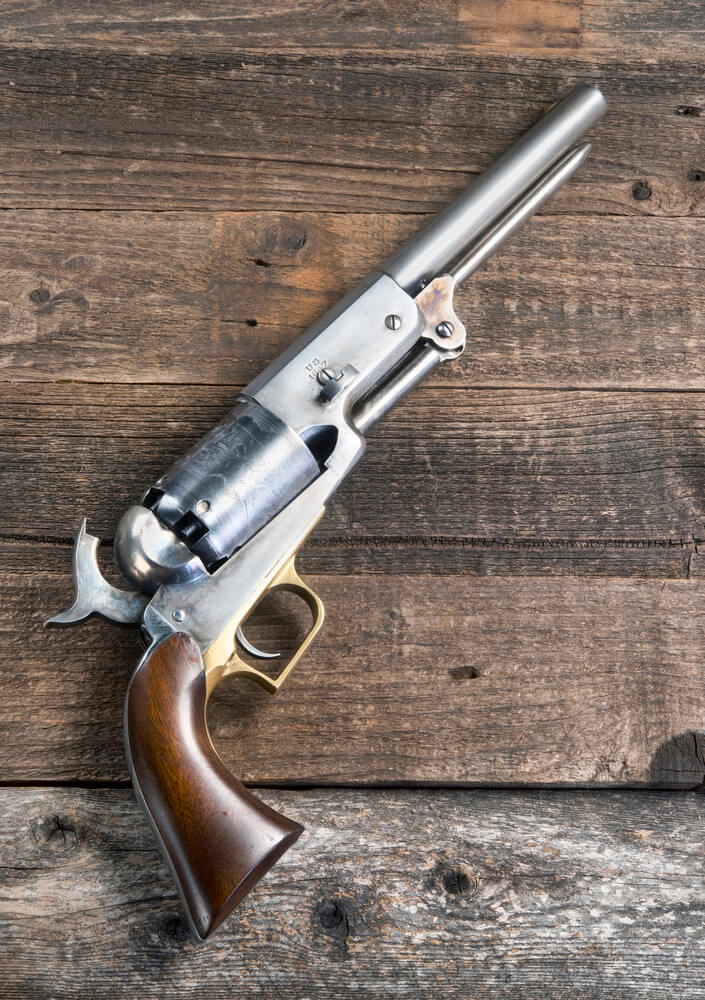
Nichols Industries of Pasadena, California, built a loyal following among cap gun collectors, and the Stallion 45 Mark II is among its best-remembered models. The pistol stood out for its realistic look and for the box art that came with it, which collectors often value as highly as the toy inside.
Dedicated collector websites keep pages for Nichols models and their boxes, which has made identifying variations far easier. A pistol in its original box with minimal wear can bring several hundred dollars, while loose examples with scuffed finish cost far less.
Mattel Fanner 50
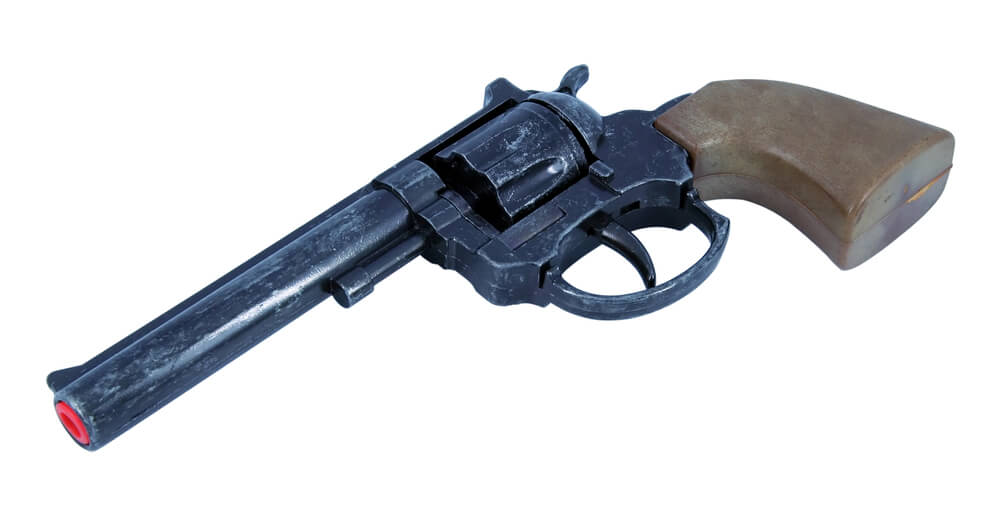
Mattel introduced the Fanner 50 in 1957, and the pistol took its name from the fanning technique that Western gunfighters supposedly used. The company itself had been founded in 1945 in California by Harold Matson and the husband and wife team of Elliot and Ruth Handler, and its name blends Matt and Elliot.
The Fanner became one of the toy industry’s best-known Western sellers of the late 1950s. Loose pistols are common, but complete sets with the original box and accessories bring noticeably higher prices, and missing parts reduce them.
Shootin’ Shell Sets and Television Ads
DepositPhotos
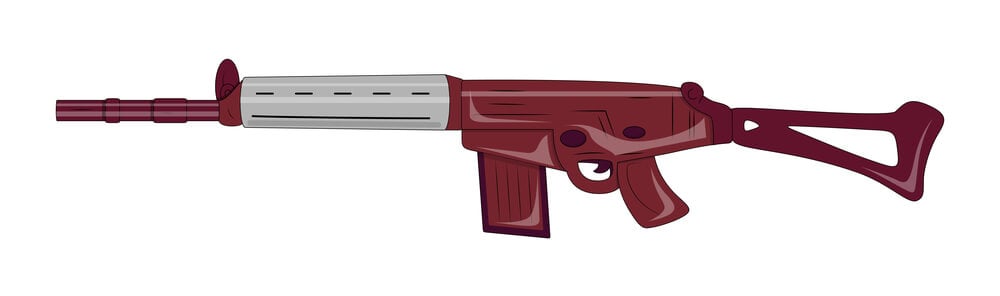
Mattel became a pioneer of television toy advertising when it bought commercial time on The Mickey Mouse Club in 1955 to sell its Burp Gun. That strategy carried into the Fanner line, and the Shootin’ Shell cartridges were marketed to children as a part of the fun.
Collectors prize the cartridge sets because the small brass-looking pieces were lost far more often than the pistols themselves. A pistol with a full set of its original cartridges is worth more than the same model without them.
Wyandotte Pressed Steel Pistols
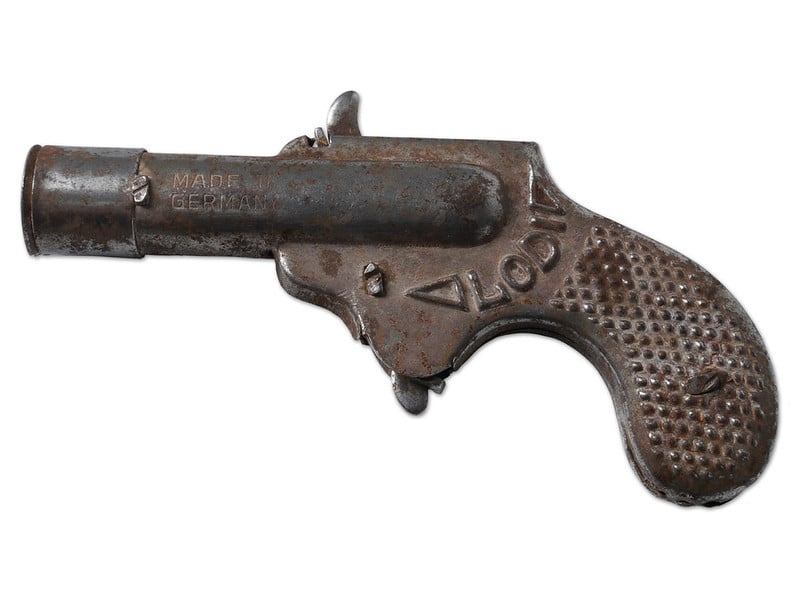
Pressed steel toys sold under the Wyandotte name came from the All Metal Products Company of Wyandotte, Michigan, and its toy guns became a staple of the cap pistol market. Pressed steel kept production costs low and the pistols affordable for families who could not spend much at Christmas.
Collectors who love the brand often pair pistols with Wyandotte’s many other toys, including vehicles and ray guns. Rust and paint loss are the usual problems, so clean examples with original boxes bring the best prices.
Halco and the Penney’s Connection
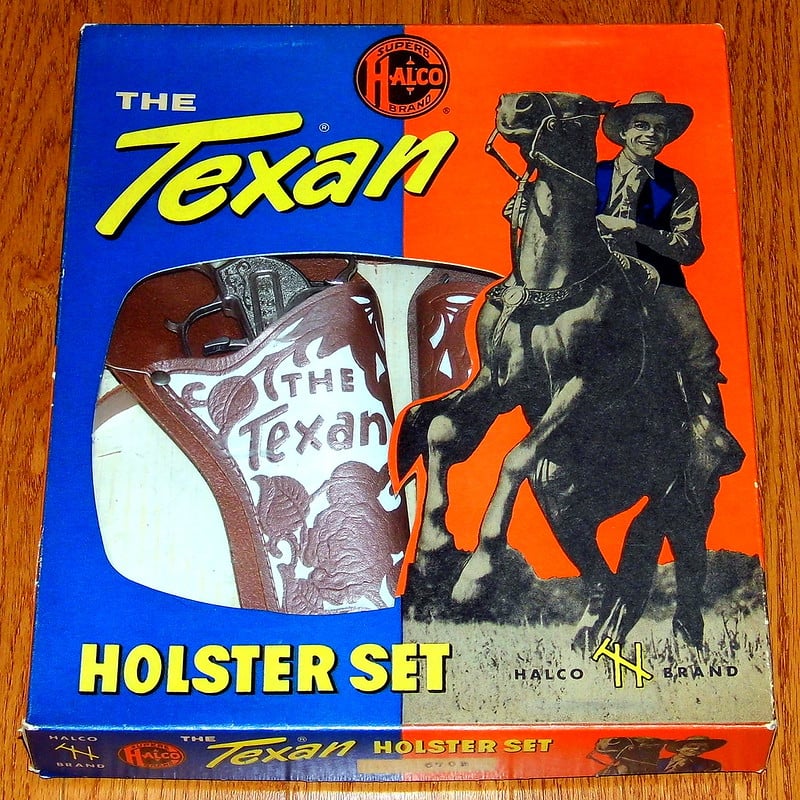
Halco was the toy label sold through J.C. Penney stores, and some of its cap pistols were made by Hubley, such as the Smoky Joe model. That means collectors sometimes find the same Hubley design carrying a different brand name, which makes the hunt for matching pairs more interesting than it first appears.
Penney’s shelves reached small towns that larger toy stores skipped, so these pistols often turned up in ordinary households. Prices depend on whether the Halco name is still legible and on whether the original box survives, since the box carries part of the appeal.
Roy Rogers Holster Sets
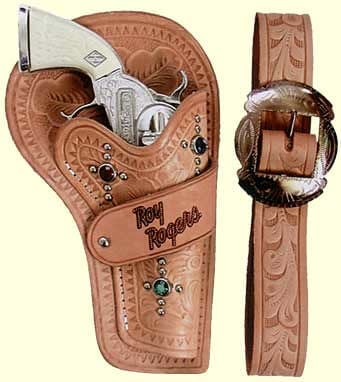
Roy Rogers was billed as the King of the Cowboys, rode a palomino named Trigger, and shared the screen with his wife Dale Evans. Classy Products made Roy Rogers holster sets in the 1950s, and the sets remain popular with collectors who grew up watching his show.
At a 2010 Christie’s auction of the Rogers and Evans collection, Trigger himself sold for 266,500 dollars. Toy pistol sets bring a small portion of that amount, often in the low hundreds of dollars, depending on the leather, the studs, the shine of the plating, and the original box.
Hopalong Cassidy Merchandise
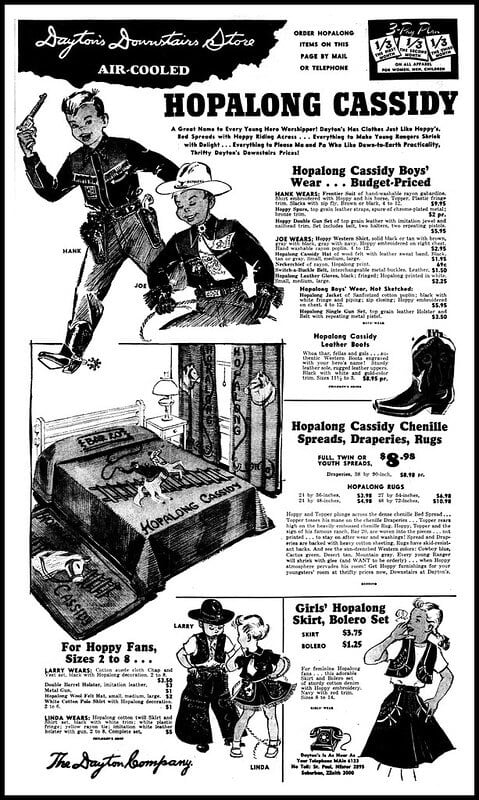
William Boyd bought the rights to Hopalong Cassidy and turned the black-clad cowboy into one of television’s first major merchandising successes after the show reached NBC in 1949. Pistols and holster sets bearing his name filled department stores, alongside dozens of other products aimed at children.
Boyd’s papers at the American Heritage Center in Laramie, Wyoming, include records of that merchandising, which is why historians treat him as a pioneer of licensing. Collectors prize items with Hoppy’s name on the original box, and fading or missing accessories bring prices down.
Agent Zero M Undercover Set
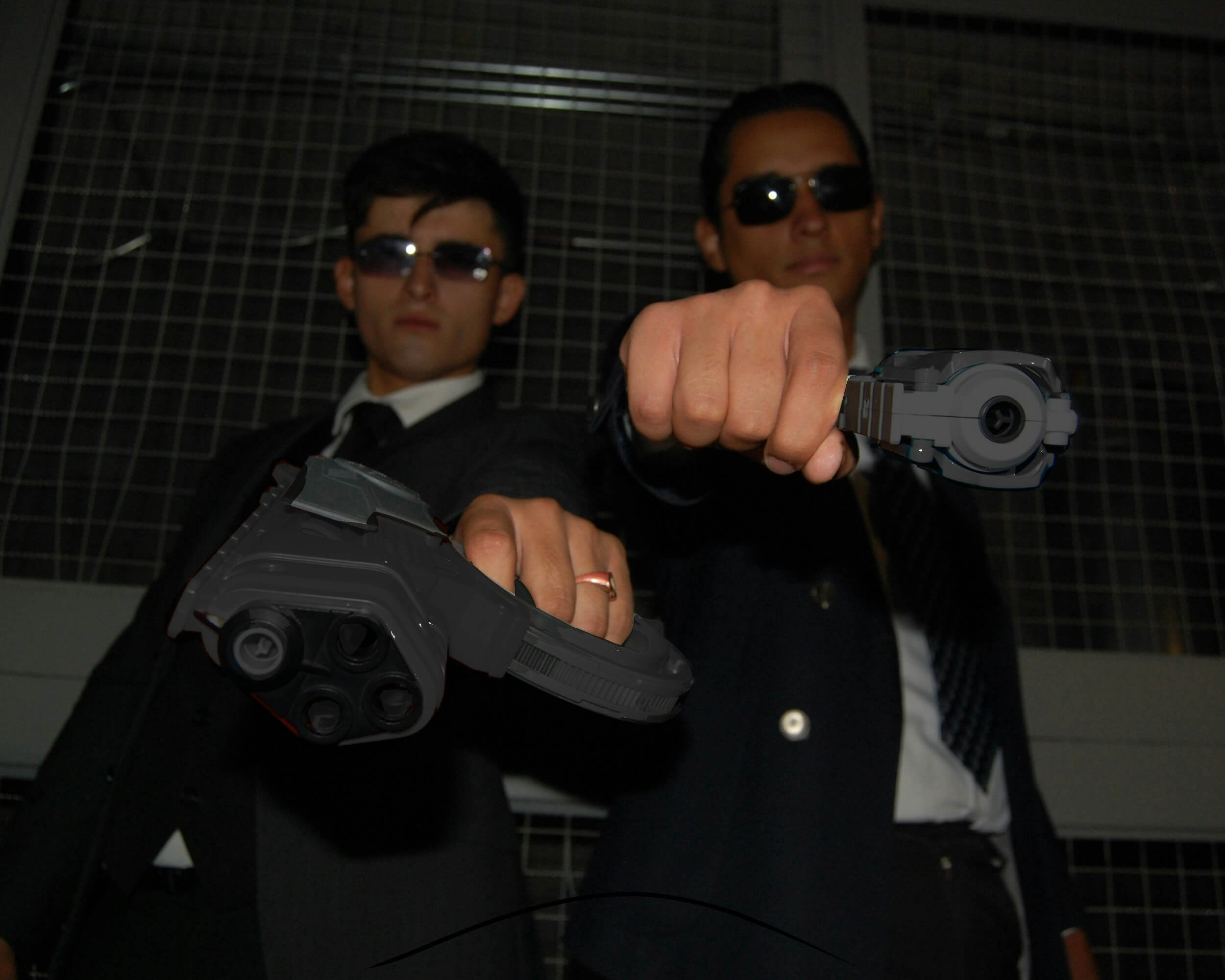
A separate Mattel offering, the Agent Zero M Film Shot Undercover Set, turns up in listings dated 1964, which places it at the front of the spy toy wave. The word undercover in the name shows how Mattel sold the idea of a secret life to children, with the pistol as one part of a larger kit.
Buyers often compare it with the Movie-Shot to see how the line changed from one year to the next. Faded packaging and absent pieces usually mean a much lower price than a clean, complete set.
Buck Rogers XZ-31 Rocket Pistol
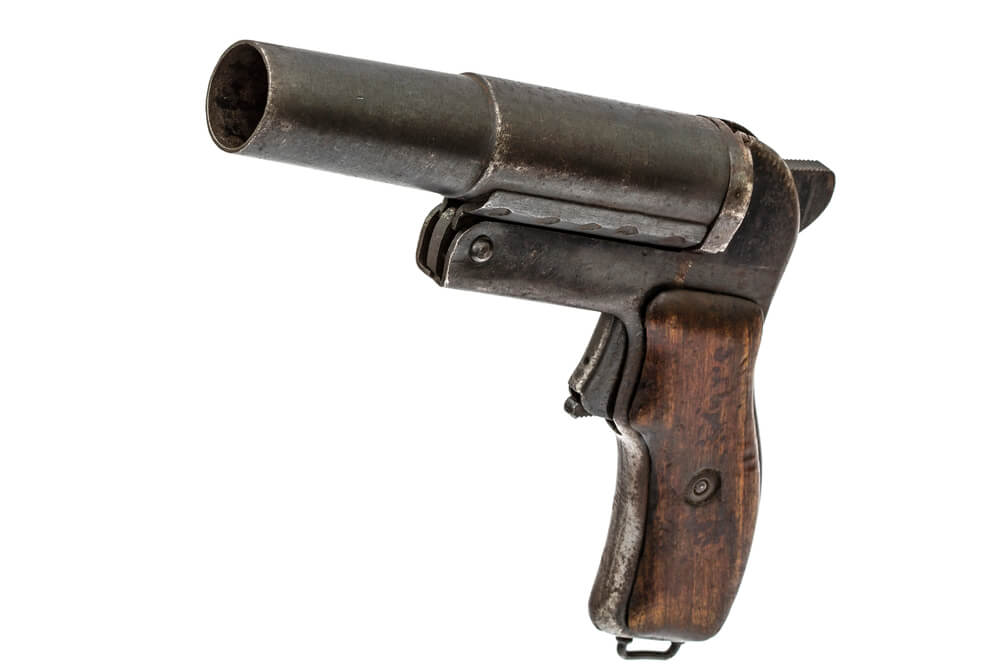
Daisy Manufacturing of Plymouth, Michigan, released the Buck Rogers XZ-31 Rocket Pistol in 1934, borrowing its name from the futuristic comic strip hero. Buck Rogers himself came from a story set in the twenty-fifth century, so the toy was a ray gun for a century that had not yet arrived.
Daisy was better known for air rifles, which makes the pistol an unusual departure. A boxed example in clean shape can sell for well over a thousand dollars, while worn pistols without packaging sell for far less.
Hubley Texan Jr. Cap Gun
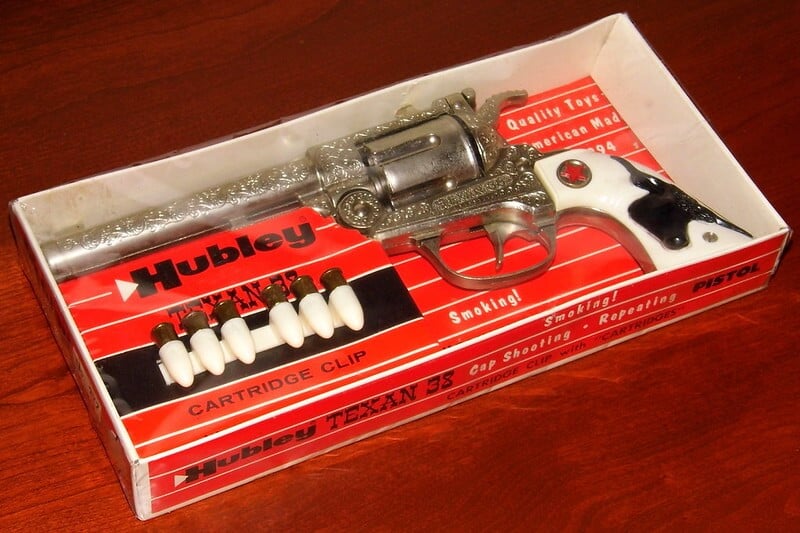
A smaller companion to the popular Texan came from Hubley as well under the name Texan Jr., a pistol sized for younger boys who wanted the same look as their older brothers. Collectors Weekly has carried owner stories about the model, which shows how often it survives as a family keepsake.
The Jr. suffix is the quickest way to tell it apart from the full-size version at a crowded show. Plating that has pitted or flaked tends to cut a loose pistol to the low end of the usual range, while a clean example with its holster sells for more.
Remco Lost in Space Sets
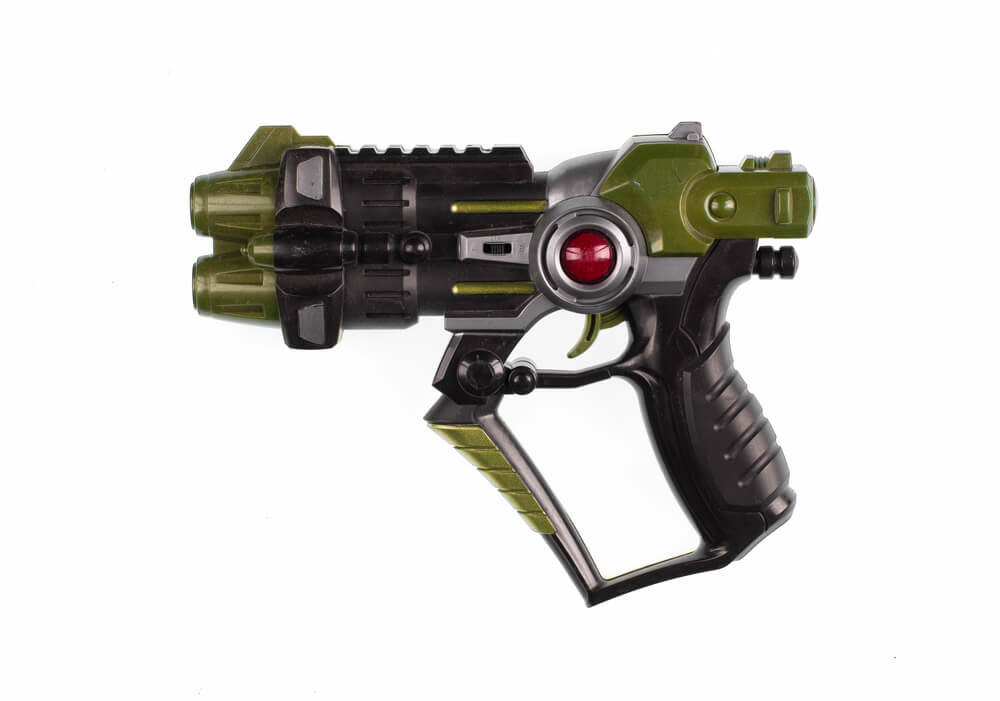
Remco, a New Jersey toy company, produced a Lost in Space helmet and gun set after the science fiction series reached CBS in 1965. The pistol belonged to a generation of television tie-ins that sold a show through toys, since the series itself had a Robot and a Robinson family to market.
Collectors of the set note that the plastic helmet and gun together make the prize, and a missing piece cuts the value sharply. A complete set with its box can bring several hundred dollars, while a loose gun brings much less.
Parris Scout Holster Sets
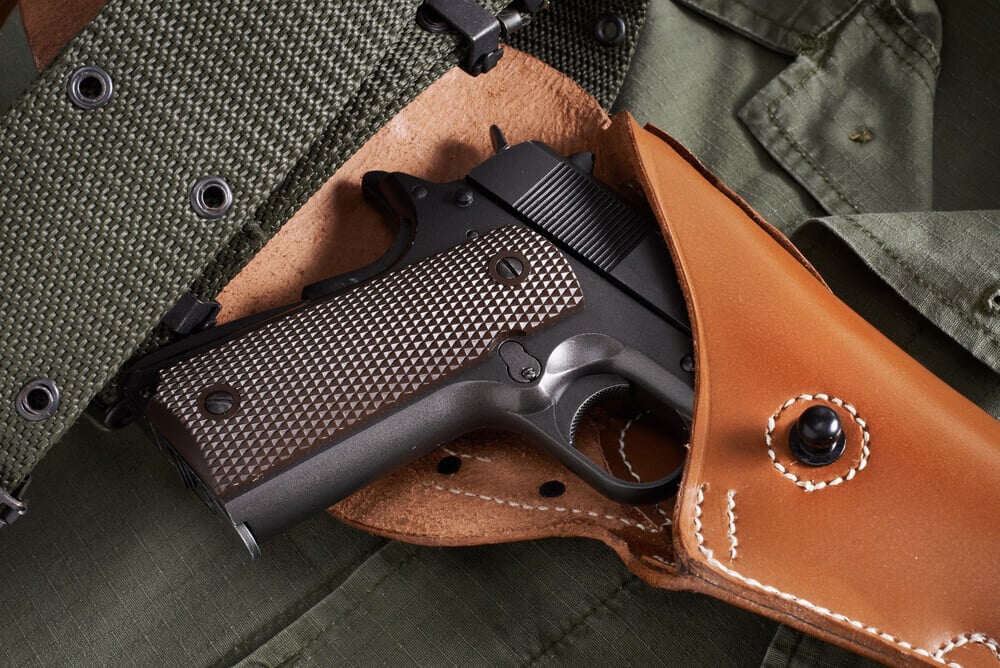
Parris Manufacturing, a Tennessee toy firm that dates to 1936, sold Scout double holster sets that still turn up on collector auction sites. These sets belong to the cheaper end of the cap pistol world, built for children who wanted a rig without the price of a cast iron model.
Collectors enjoy them because the company’s history stretches across decades of toy trends. A boxed Scout set in clean condition often sells for modest sums, while cracked leather or missing pieces cut the price further.
Lone Star From Britain
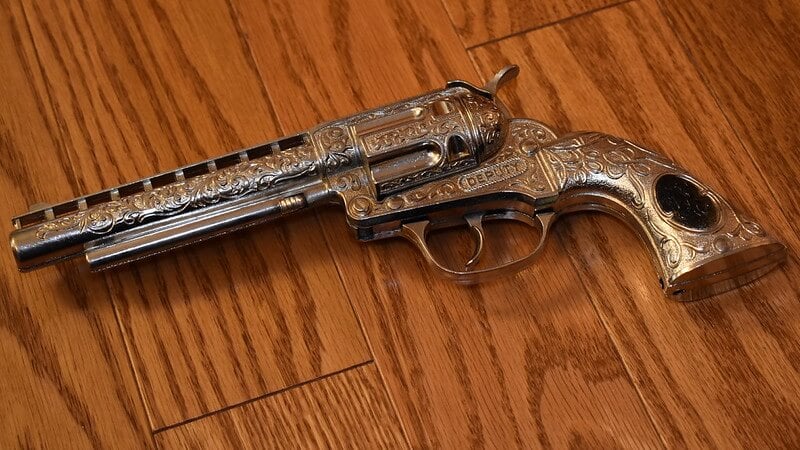
Lone Star was a British toy brand that produced die-cast cap pistols for children in England during the 1950s and 1960s. British collectors have long kept pages and archives devoted to die-cast pistols, including ones made in the United States, which shows how widely the cowboy craze spread.
The pistols differ in markings and packaging from American models, and those differences are what collectors hunt when they want something less common on their side of the Atlantic. Prices vary with the box and with how much finish survives on the die-cast body.
Hubley Colt Model 1860
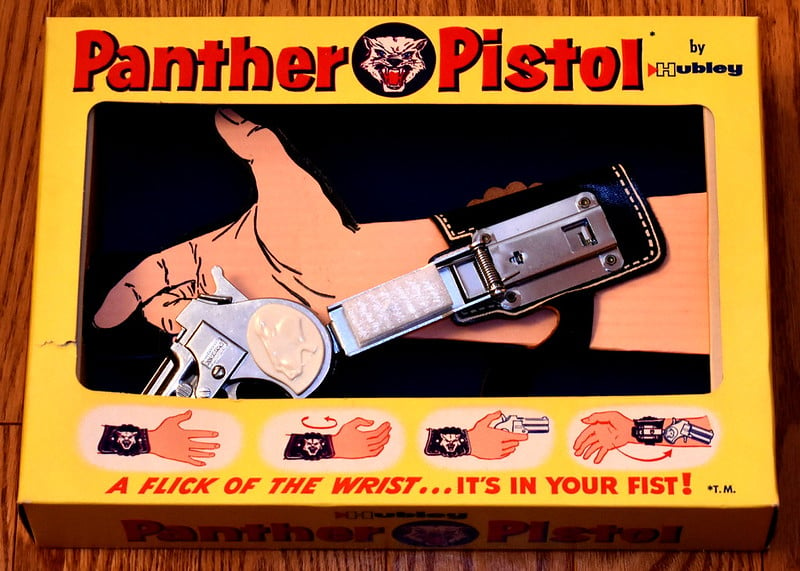
Hubley produced a toy pistol under the name Colt Model 1860, borrowing the designation of a revolver associated with the Civil War era. Collectors Weekly has published an owner story on the model, and its title spells out the full Hubley and Colt pairing.
Toy makers of the period often reached back into history for names that sounded serious to a child with a holster belt. Buyers check the grips and markings first, because replaced parts and worn lettering lower the price well below that of an untouched pistol.
Hubley Smoky Pistol and Holster
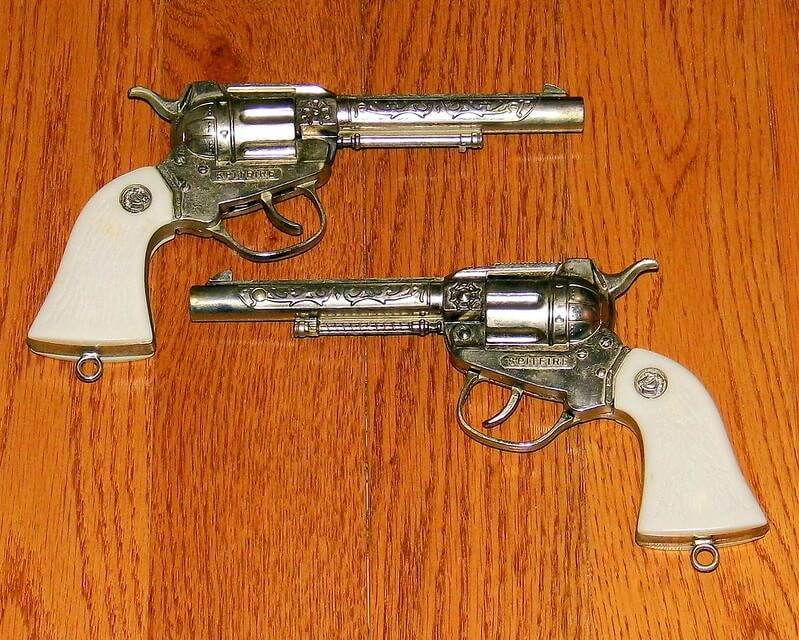
The Hubley Smoky pistol is documented in a collector story as sold with a holster, and the pairing matters because the two pieces so rarely stay together. Many surviving pistols lost their leather decades ago to basement damp and years of rough play.
Collectors who find a matched pair treat it as the better prize, even when the pistol itself is common. Cracked or stiff leather, missing studs, and a pistol with rubbed-off finish all bring the price down, while a tidy matched rig earns a clear premium.
Wyandotte Space Pistol No. 10
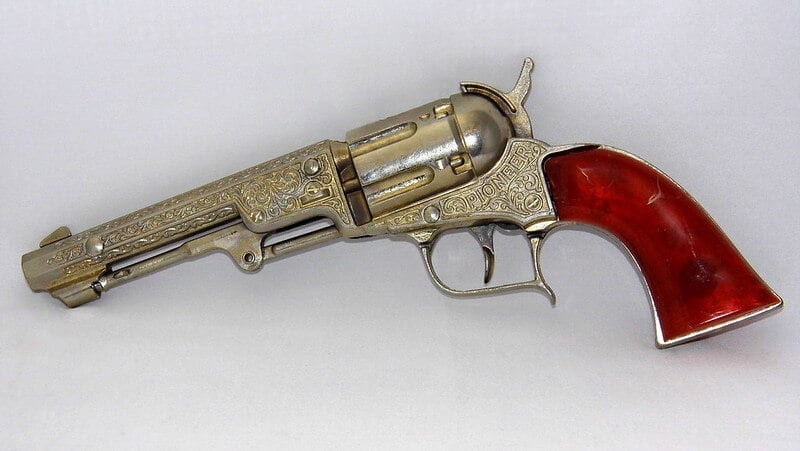
Wyandotte sold a metal space pistol listed as the No. 10, and its full name describes a futuristic bell clicker toy, which tells collectors the intended play was noise and imagination. Wyandotte was a Michigan maker of pressed steel toys, so the pistol sits beside its cars, planes, and other space items in many collections.
Boxed examples turn up now and then and are the ones buyers prefer. Dents, rust, and chipped paint hold values down, and a clean pistol with its box can bring noticeably more.
Cowboys Who Never Left the Toy Box
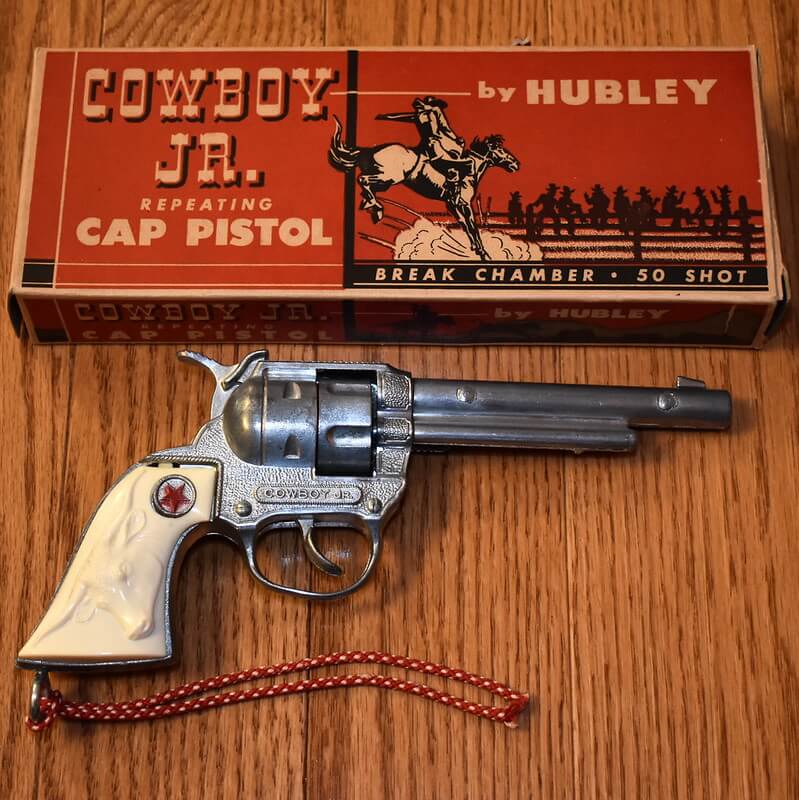
Cap pistols tell a quiet history of American childhood, one in which boys and girls dressed as sheriffs, rangers, and space explorers after school. Each maker and each licensed name marks a moment, whether it was radio in the 1930s, Western television in the 1950s, or science fiction in the 1960s.
Collectors preserve that history one pistol at a time.
The competition among buyers is real, but it rests on affection as much as on money. A well-kept Texan or a boxed Fanner 50 puts a piece of an afternoon from decades ago on a shelf.
For that reason, the best finds are often the pistols that still show a little wear from the hands that first held them.
More from Go2Tutors!

- The Romanov Crown Jewels and Their Tragic Fate
- 13 Historical Mysteries That Science Still Can’t Solve
- Famous Hoaxes That Fooled the World for Years
- 15 Child Stars with Tragic Adult Lives
- 16 Famous Jewelry Pieces in History
Like Go2Tutors’s content? Follow us on MSN.