15 Board Games Designed to Teach Lessons They Ended Up Ignoring
Board games have long been tools for education, designed to impart wisdom while entertaining players. But sometimes, the execution falls short of the noble intention.
The disconnect between a game’s stated purpose and its actual gameplay can create an ironic twist that undermines the very lessons it aims to teach. Here is a list of 15 board games that were created with specific educational or moral lessons in mind, but somehow managed to contradict or ignore those same principles through their mechanics or player experiences.
Monopoly
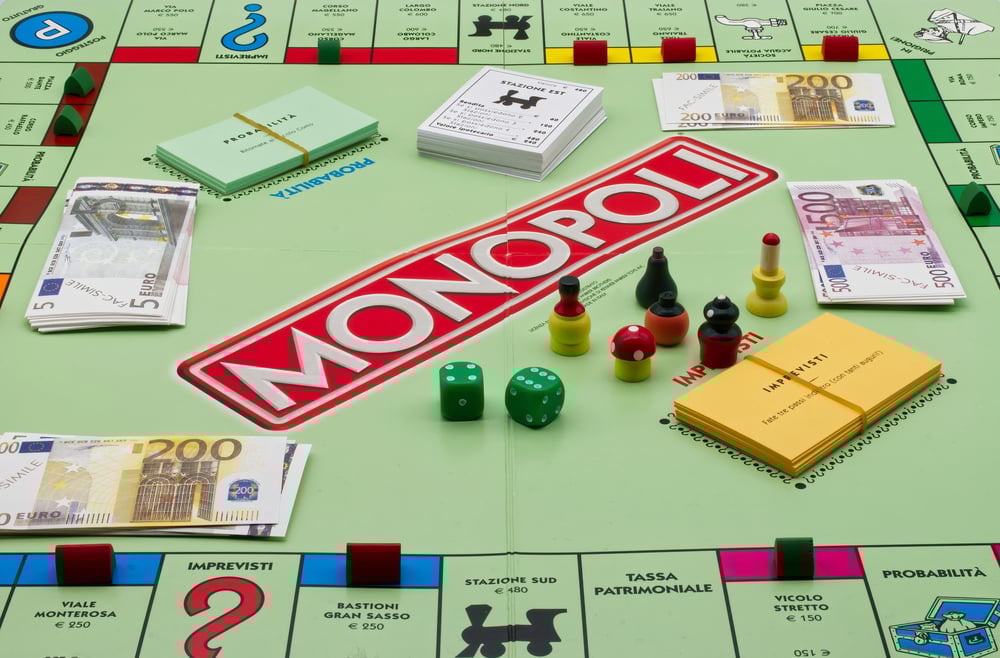
Originally created as “The Landlord’s Game” by Elizabeth Magie to demonstrate the negative effects of land monopolization, this classic became the opposite of its intention. Instead of teaching players about the dangers of wealth concentration, Monopoly celebrates becoming the richest player by driving others to bankruptcy.
The game rewards aggressive property acquisition and rent-gouging—precisely the economic behaviors its creator wanted to critique. Most players leave the table having learned to crush their opponents financially rather than understanding the intended lesson about economic inequality.
The Game of Life
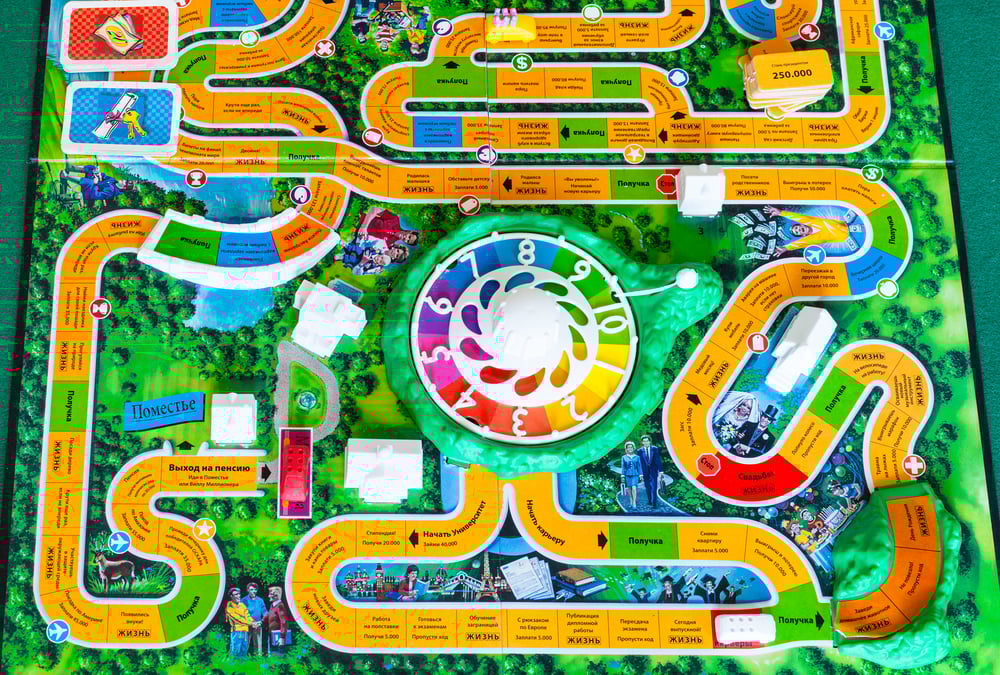
In the end, The Game of Life simplifies difficult life decisions to chance spins and lucky breaks in an effort to teach players about life choices and their effects. Although the game purports to replicate real-life situations and decisions, luck frequently determines success rather than strategy or careful consideration.
Inadvertently teaching that luck prevails over responsible decision-making, players often find that landing on the correct space is more important than preparation. The most significant life events are trivialized by the simplistic depiction of financial, family, and professional choices.
Candy Land

Created to entertain children recovering from polio in the 1940s, Candy Land was meant to teach young players about taking turns and following rules. However, the game involves zero strategic thinking or meaningful choices—players simply draw cards and move accordingly.
This pure luck-based system contradicts the valuable lesson that our decisions impact outcomes. Children might learn patience and rule-following, but miss out on developing critical thinking or understanding cause-and-effect relationships that other games could teach while remaining age-appropriate.
Risk

Although its mechanics sometimes favor aggressive expansion over careful diplomacy, Risk markets itself as a game of diplomatic negotiation and strategic conquest. Though it often degenerates into dice-rolling chance and targeting the weakest player, the game theoretically teaches military strategy and resource management.
Risk reduces complicated geopolitical reality to a zero-sum fight for world dominion instead of reflecting realistic international interactions or the true expenses of conflict. When the only win condition is total conquest, players seldom investigate diplomatic remedies.
Chutes and Ladders
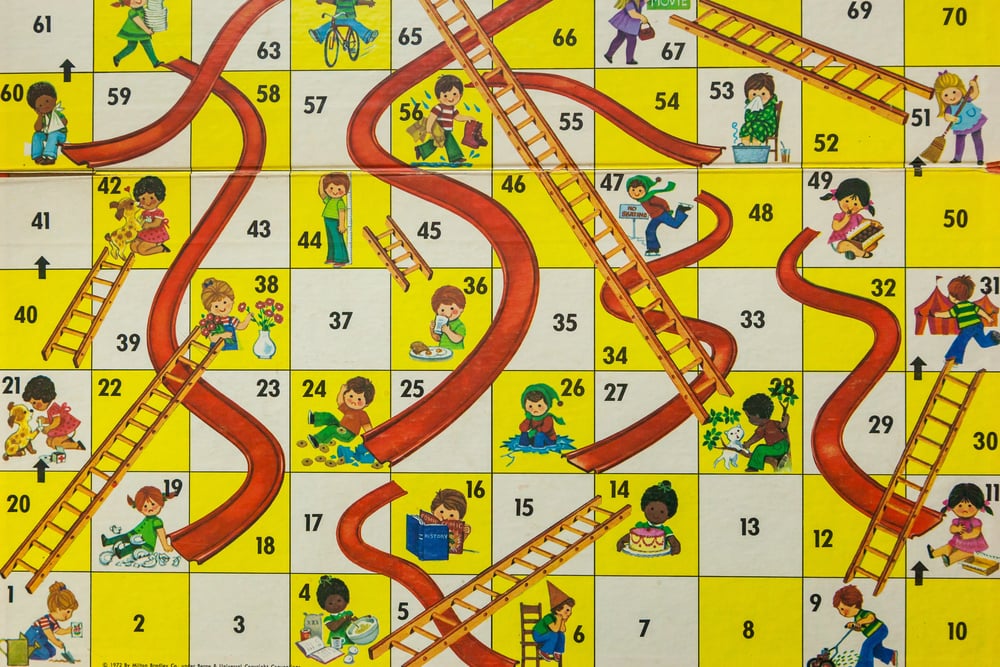
This classic children’s game was originally designed in India to teach moral lessons about karma—good deeds lead to advancement, while bad actions result in setbacks. However, the modern version stripped away much of this context, turning meaningful choices into random chance.
Players have no agency in their movement up ladders or down chutes, contradicting the original lesson that our actions determine our fate. The game inadvertently teaches children that advancement in life is arbitrary rather than connected to ethical choices or hard work.
Mouse Trap

Marketed as a lesson in cause-and-effect relationships and basic engineering concepts, Mouse Trap rarely functions as intended. The complex Rube Goldberg machine at its center frequently fails to work properly, parts go missing, and the setup becomes tedious.
Rather than teaching about reliable mechanical systems, the game often demonstrates the frustration of designs that look impressive but lack functional reliability. Players spend more time fixing the contraption than enjoying or learning from the gameplay experience.
Trivial Pursuit

Created to celebrate knowledge across diverse fields, Trivial Pursuit often rewards memorization of obscure facts rather than true understanding or critical thinking. The game claims to value education and intellectual curiosity, but its format emphasizes isolated trivia over connected knowledge or practical application.
Players might excel by knowing random facts about categories they’ve never studied deeply, potentially reinforcing the misconception that education is about accumulating disconnected information rather than developing deeper comprehension.
Scrabble

Though designed to enhance vocabulary and spelling skills, Scrabble has evolved into a game where memorizing obscure two-letter words and strategic board placement outweigh actual language mastery. Expert players often use words they don’t know the meaning of, focusing on point values rather than communication.
The game rewards specialized knowledge of unusual letter combinations rather than rich vocabulary usage or expressive language skills. This approach contradicts the linguistic growth the game supposedly encourages.
Clue

Marketed as a detective game teaching deductive reasoning, Clue often devolves into random guessing or a process of elimination rather than genuine detective work. The game simplifies complex crime-solving into a formulaic process, lacking the nuanced critical thinking that real detective work requires.
Players rarely need to construct timelines, examine motives, or evaluate evidence as actual detectives would. This oversimplification potentially undermines the logical reasoning skills the game was supposedly designed to develop.
Diplomacy

Created to teach negotiation, alliance-building, and international relations, Diplomacy frequently rewards betrayal and backstabbing over honest diplomacy. The game’s mechanics make keeping your word disadvantageous in many situations, teaching players that breaking promises leads to victory.
While real diplomatic relations certainly involve strategic thinking, the game’s emphasis on deception contradicts its supposed lesson about building trust and managing complex international relationships. Players often leave the table with damaged friendships rather than enhanced diplomatic skills.
Settlers of Catan
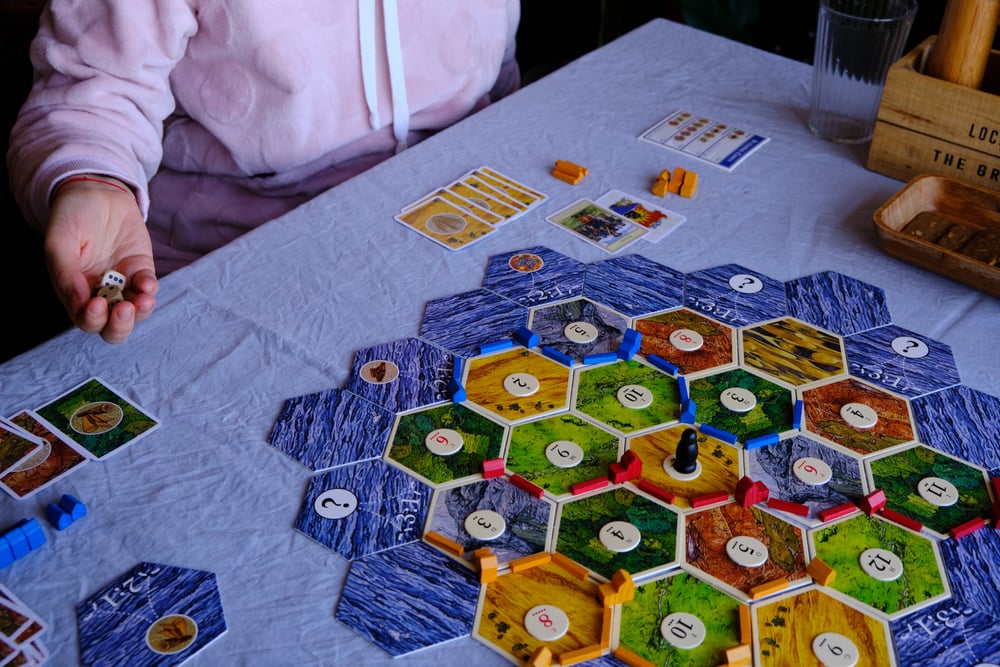
Though designed to teach resource management and fair trade, Catan often rewards monopolistic practices and can punish players who fall behind early. The game’s intention to demonstrate balanced economic development frequently gets overshadowed by the randomness of dice rolls determining resource production.
Players stuck with poor initial placements learn that starting conditions matter more than skilled play, contradicting the lesson that thoughtful management leads to success. The robber mechanic also encourages targeting vulnerable players, creating a feedback loop that works against the game’s purported lesson about collaborative economic development.
Operation

Created to teach steady hands and fine motor skills, Operation’s harsh buzzer punishment for mistakes can actually increase anxiety and reduce motor control in players. The game claims to simulate medical precision, but its all-or-nothing approach to success contradicts actual medical training, which emphasizes learning from mistakes.
The game’s focus on avoiding errors rather than developing skills gradually might teach players to fear failure rather than embrace the learning process that comes from making and correcting mistakes.
Hungry Hungry Hippos
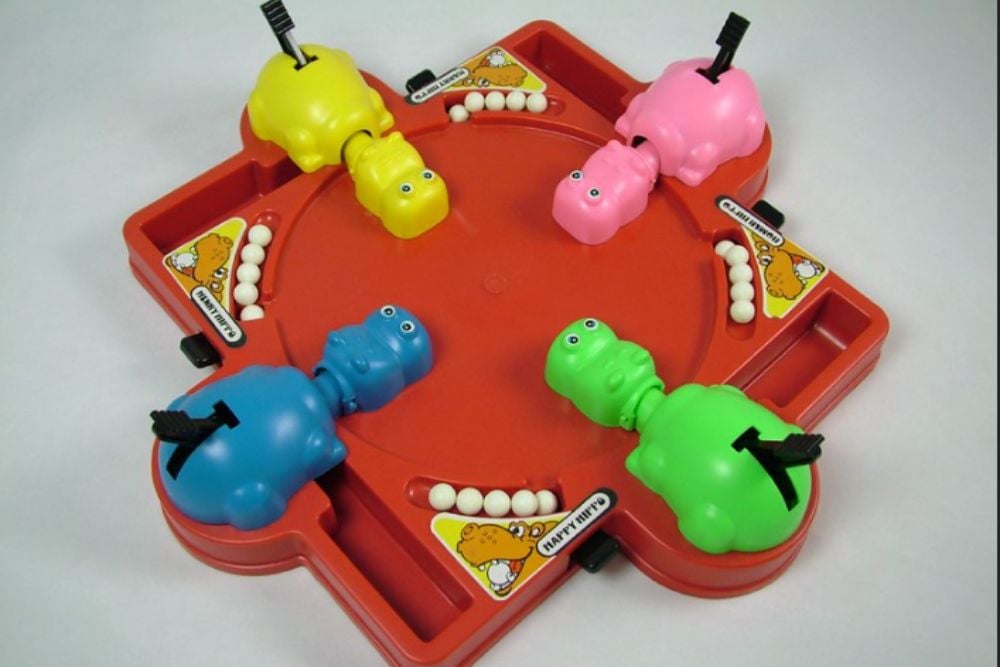
Marketed as teaching counting and quick reflexes to young children, this frantic game rewards chaotic button-mashing over thoughtful play or counting skills. The game’s high-energy competition encourages grabbing as many marbles as possible without any strategic component or mathematical thinking.
Children might learn to count their captured marbles, but the gameplay itself reinforces impulsive behavior rather than patient consideration. This contradiction undermines the educational value the game supposedly offers.
Uno

Though designed to teach number and color matching for younger players, Uno’s most memorable moments come from competitive “gotcha” cards like Draw Four and Skip, which contradict its friendly, educational premise. The game markets itself as family-friendly while encouraging players to hamper others’ progress whenever possible.
This disconnect between the simple matching exercise and the antagonistic special cards creates confusion about the game’s actual lessons. Players learn to delight in others’ misfortune rather than focusing on the pattern recognition skills the game was supposedly designed to develop.
Monopoly Junior
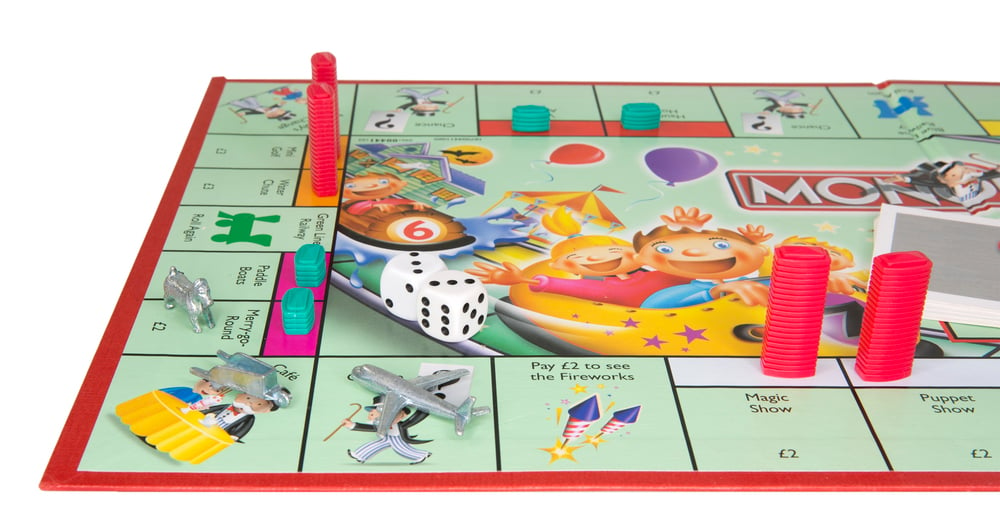
Created as a simplified version to teach younger players about money management, Monopoly Junior maintains many of the problematic aspects of its parent game. While featuring child-friendly themes and simpler rules, it still rewards aggressive property acquisition and teaches that success means watching others fail.
The game misses opportunities to introduce cooperative economic concepts or balanced resource distribution to children forming their first impressions about money. Young players learn that financial victory requires others to lose everything, contradicting healthier lessons about mutual prosperity.
Games Beyond the Box

The disconnect between intended lessons and actual gameplay reveals something significant about how we learn through play. Games don’t just teach through their stated objectives—they teach through their mechanics, incentives, and victory conditions.
The most powerful lessons often come not from what game designers claim their creations will teach, but from what behaviors the rules actually reward. Perhaps the greatest lesson from these games is to look beyond the box cover claims and consider what values are truly being reinforced through play.
More from Go2Tutors!

- The Romanov Crown Jewels and Their Tragic Fate
- 13 Historical Mysteries That Science Still Can’t Solve
- Famous Hoaxes That Fooled the World for Years
- 15 Child Stars with Tragic Adult Lives
- 16 Famous Jewelry Pieces in History
Like Go2Tutors’s content? Follow us on MSN.