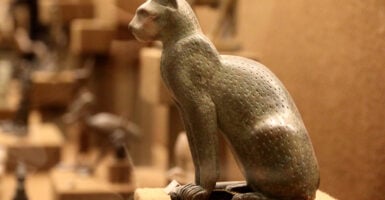
26 Vintage Sci-Fi Toys Collectors Pay Real Money For
Plenty of childhood toys ended up in a landfill decades ago, but a specific category of space-age plastic survived attics and basements in just enough quantity to build a real collector market. Pricing depends heavily on condition, packaging, and completeness, so the figures below sell across a wide range depending on how well they held up.
Kenner’s Double-Telescoping Lightsaber Luke Skywalker

Early production runs of the first Kenner Star Wars Luke Skywalker figure in 1978 featured a lightsaber that extended in two separate stages rather than the single-piece saber used in later releases. The design was scrapped almost immediately for being too fragile, making surviving examples with the original telescoping saber intact among the most sought-after pieces in the entire vintage Star Wars line.
The Rocket-Firing Boba Fett Prototype
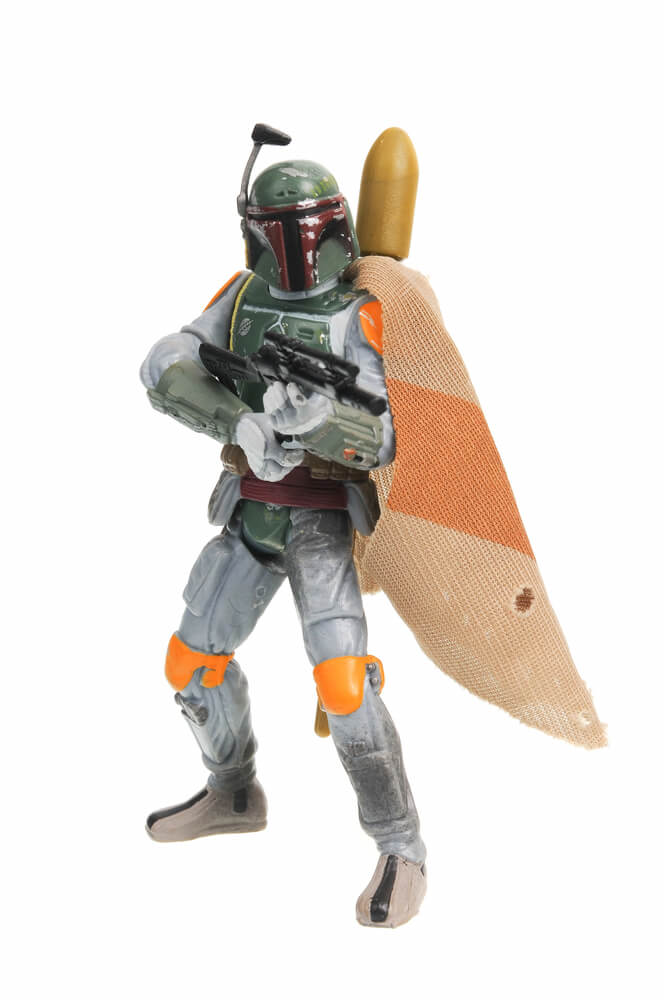
Kenner originally planned a version of the Boba Fett figure with a spring-loaded rocket that could launch from his backpack, but pulled the feature before mass release after concerns about the projectile being a choking hazard for children. A small number of prototype figures with the working rocket escaped the factory, and they now rank among the most expensive action figures in existence.
Blue Snaggletooth From the Sears Cantina Adventure Set

Kenner’s standard Snaggletooth figure wore a red jumpsuit, matching a mistaken reference photo, but an exclusive version sold only through a Sears mail-order cantina playset came dressed in blue and stood at a different scale than the rest of the line. The packaging error turned an obscure background alien into one of the most recognizable variant figures among vintage collectors.
The Vinyl-Caped Jawa

Kenner’s first run of Jawa figures included a cape made of soft vinyl rather than the cloth fabric used in every later production run. The vinyl cape variant is now one of the most valuable standard figures from the original 1978 line, prized specifically for a manufacturing choice that lasted only a few months.
Mego’s Mr. Spock Action Figure
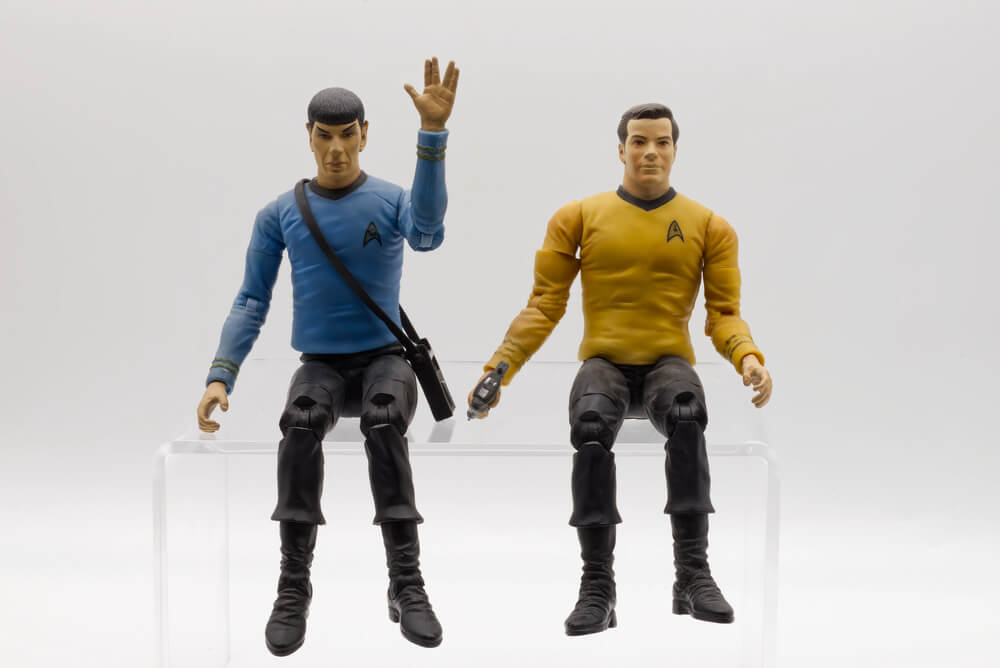
Mego’s line of 8-inch Star Trek figures, launched in 1974, gave a generation of fans their first posable Spock, Kirk, and McCoy dolls, complete with cloth uniforms styled after the original series. Sealed, mint-condition examples of the Mr. Spock figure regularly draw strong prices from Star Trek collectors specifically because so many were unboxed and played with as children.
The 1968 Star Trek Tracer-Scope Rifle
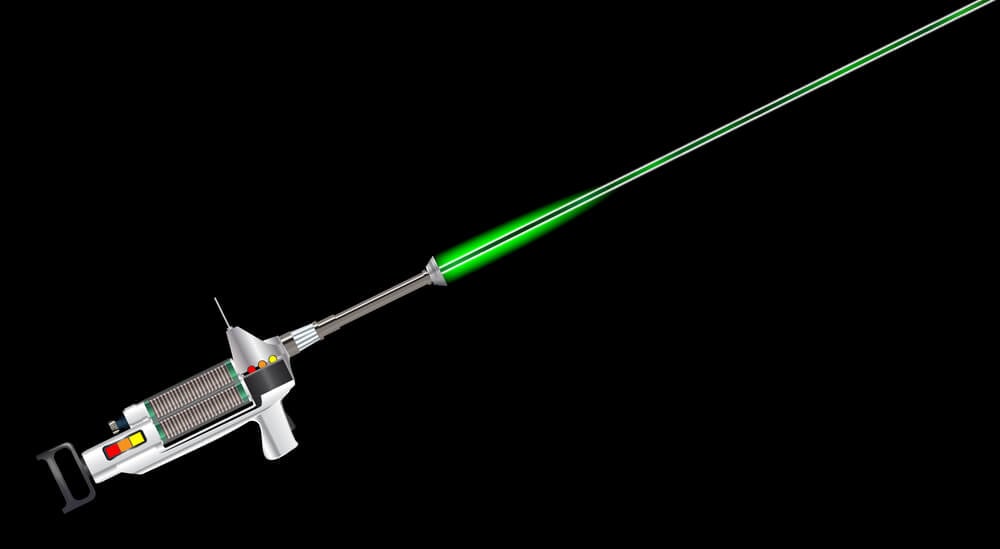
Marketed as one of the earliest pieces of Star Trek merchandise, this toy rifle claimed to launch small discs “into space” despite no such device ever appearing in the show. Its obscurity and the small number that survive in original packaging have made it one of the more surprising high-value items in Star Trek collecting.
Corgi’s Eagle Transporter From Space: 1999
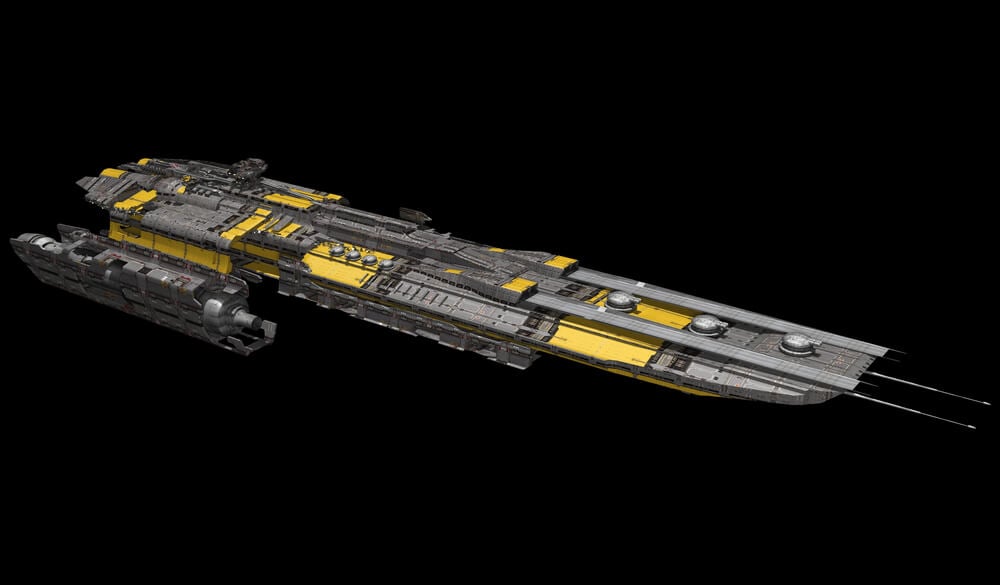
British toy company Corgi produced a detailed die-cast model of the Eagle Transporter spacecraft from the television series Space: 1999, complete with a removable modular pod. Boxed examples with all original accessories intact are difficult to find today and draw strong interest from collectors of British television toys specifically.
Mattel’s Major Matt Mason Figures

Major Matt Mason, released by Mattel starting in 1966, was one of the first toy lines built specifically around a fictional astronaut rather than a licensed television or film character. The bendable rubber figures and their accompanying space station accessories are now collected as an early example of space-race-era toy design predating both Star Trek and Star Wars merchandise.
Remco’s Lost in Space Robot

Remco’s battery-operated toy version of the Robinson family’s robot from Lost in Space could move, light up, and make sound effects when it launched in 1966. Working examples with an intact original box are considered a benchmark piece for collectors focused on 1960s television-tie-in robots.
Mattel’s Battlestar Galactica Colonial Viper

Released to coincide with the original 1978 Battlestar Galactica series, Mattel’s die-cast Colonial Viper spacecraft featured spring-loaded missiles that could fire from its wings. Later toy safety regulations forced changes to the firing mechanism, making the earliest production runs with the original launcher more desirable to collectors.
Ideal’s Zeroids Robots
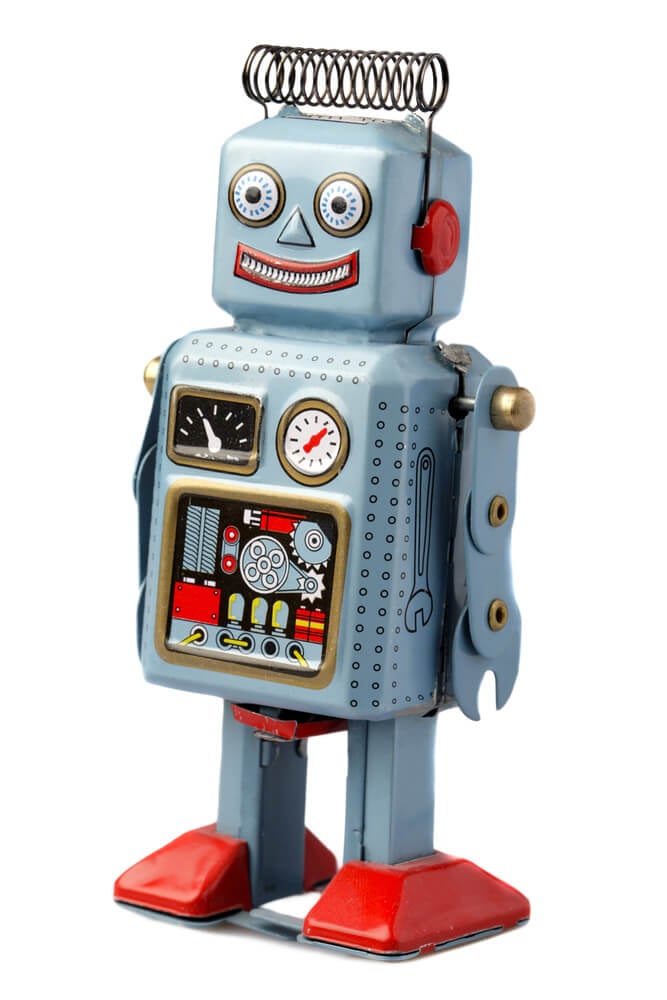
Ideal Toy Company’s Zeroids line, launched in the late 1960s, offered a series of battery-powered robot toys with interchangeable parts and simple remote controls, years before robots became a dominant toy category. Complete sets with original controllers and accessories are uncommon enough that they routinely draw bidding wars among vintage robot collectors.
Marx’s Robert the Robot

One of the earliest mass-produced robot toys aimed at children, Robert the Robot was released by Louis Marx and Company in the 1950s with a hand crank that made his ears spin and a wired remote control shaped like a telephone. Its status as a genuine precursor to the entire toy robot category gives well-preserved examples value well beyond typical 1950s tin toys.
Aurora’s Forbidden Planet Robby the Robot Model Kit

Aurora Plastics released a build-it-yourself plastic model kit of Robby the Robot from the 1956 film Forbidden Planet, part of a broader line of monster and sci-fi model kits the company produced through the 1960s. Unbuilt kits still sealed in their original box are especially valuable, since most surviving examples were assembled and painted by the children who bought them.
Dinky’s UFO Interceptor
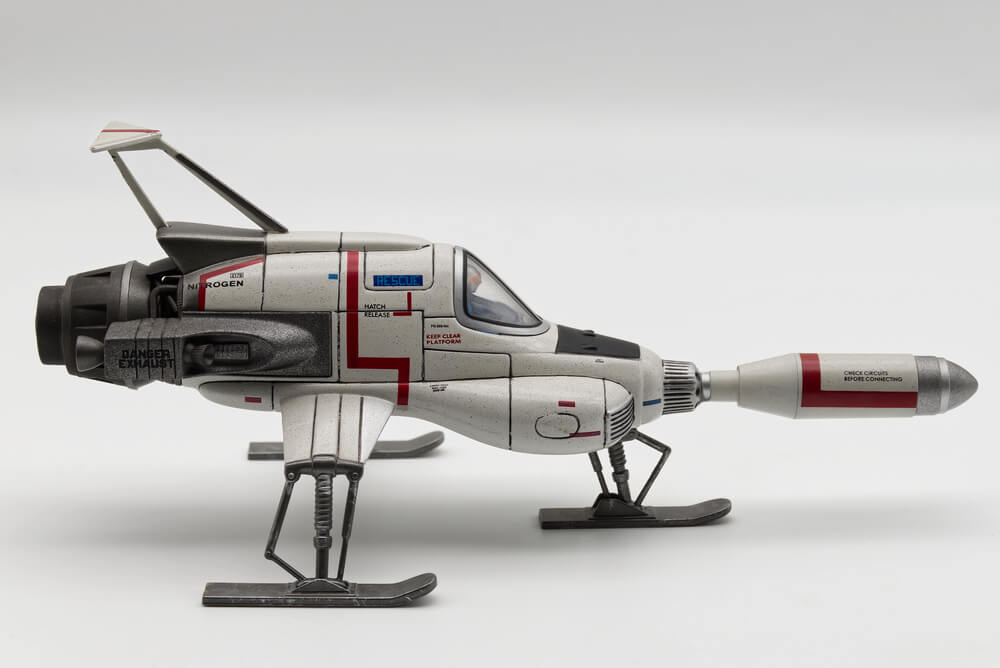
British die-cast manufacturer Dinky Toys produced a detailed model of the Moonbase Interceptor spacecraft from the 1970 television series UFO, complete with a firing missile mechanism. The toy’s relative obscurity outside the United Kingdom makes complete, boxed examples harder to find internationally, driving up prices for collectors specifically hunting British sci-fi merchandise.
Milton Bradley’s Star Bird
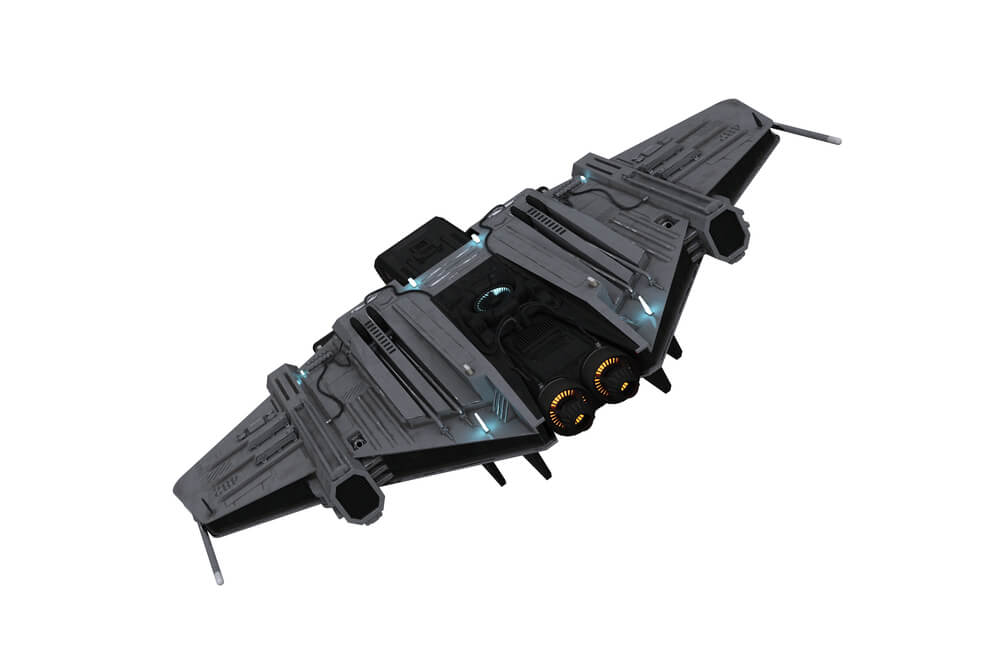
Marketed in the late 1970s as a real remote-control flying spacecraft rather than a simple wheeled toy, Star Bird used a battery-powered internal mechanism to hover briefly using a tethered guide wire. Working examples with the original box and wire assembly intact are considered unusually difficult to find given how often the mechanism failed with regular play.
Mego’s Micronauts

Originally adapted from a Japanese toy line called Microman, Mego’s Micronauts figures featured interchangeable parts and a distinctive die-cast metal and clear plastic aesthetic that set them apart from other action figures of the late 1970s. The line’s connectable parts encouraged kids to mix and match pieces across figures, which means complete, unmodified original sets are unusually scarce today.
Ideal’s Robert the Robot Successor, Mr. Machine
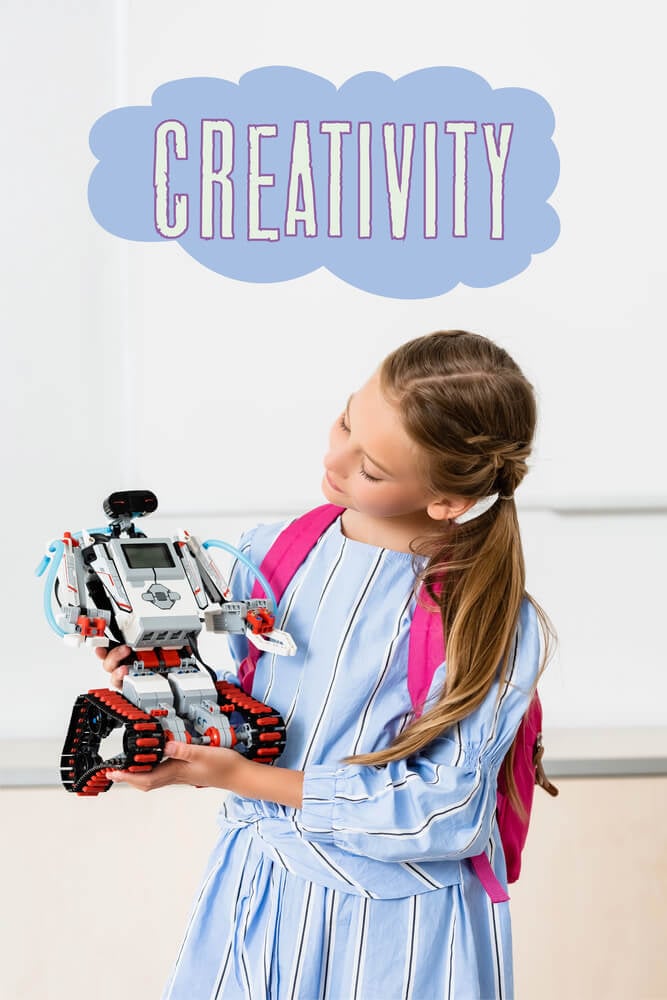
Mr. Machine, released by Ideal in the 1960s, was a wind-up robot with a clear plastic body that showed its internal gears turning as it walked, complete with a small whistle that played a jingle. Its transparent design made it instantly recognizable, and well-preserved examples with the original whistle intact are considered a standout piece among mid-century mechanical toy collectors.
Palitoy’s UK Star Wars Boxed Playsets
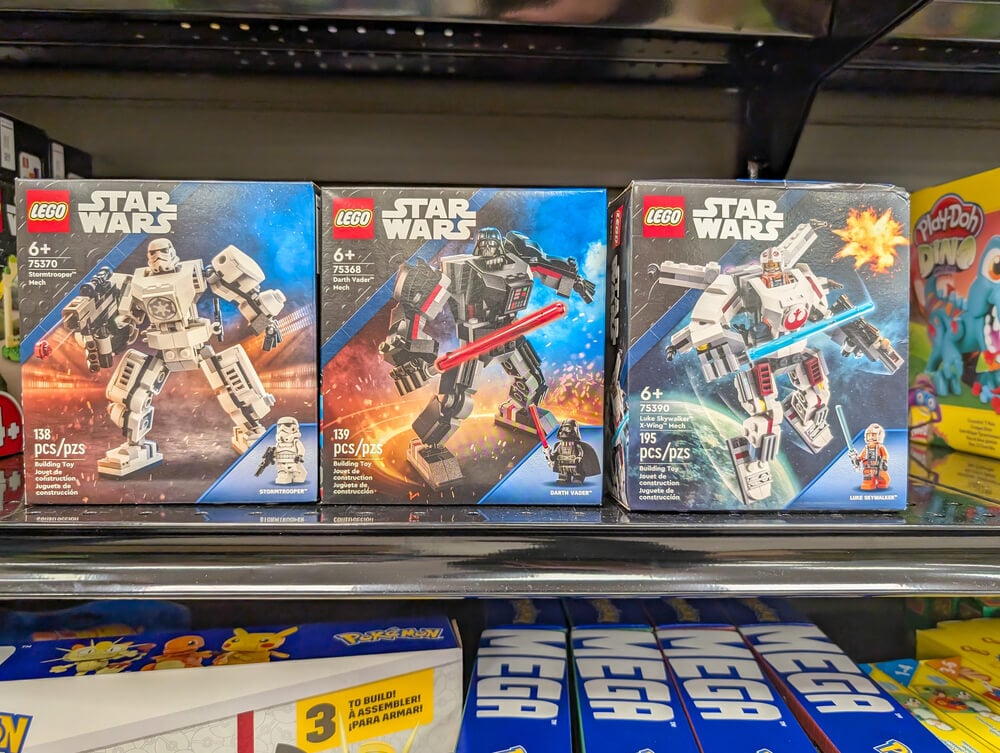
Palitoy, Kenner’s British licensee, produced its own regional packaging for Star Wars playsets and vehicles sold in the United Kingdom, often with different box art and slightly different contents than the American Kenner versions. Collectors specifically pursuing Palitoy-branded boxes pay a premium over identical Kenner releases simply because far fewer of them survive in good condition outside Britain.
Parker Brothers’ ROM Spaceknight Figure

Based on a short-lived Marvel Comics character rather than a film or television show, the ROM Spaceknight action figure released by Parker Brothers in 1979 combined a licensed toy with an in-house comic book tie-in. Its relative obscurity compared to Star Wars figures from the same era makes complete, boxed examples a niche but genuinely valuable find.
Mattel’s Big Trak Programmable Vehicle

Released in 1979, Big Trak let kids punch in a sequence of movement commands on an onboard keypad, making it one of the first mass-market toys to introduce basic programming logic to children. Complete units with the original accessory trailer and instruction manual are considered a benchmark piece among collectors of early electronic toys.
Louis Marx’s Electric Robot and Son
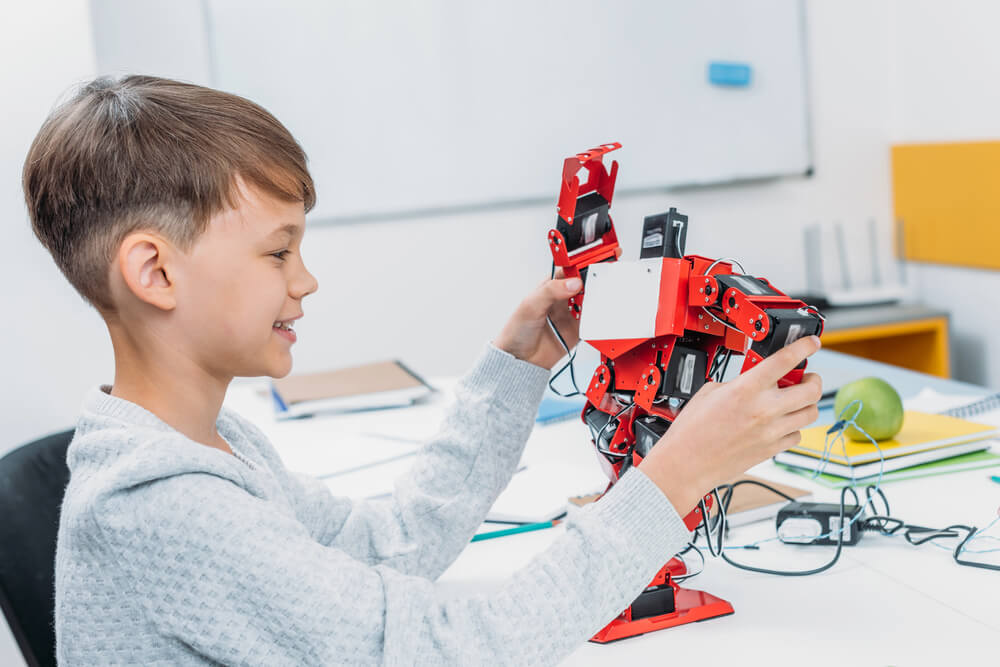
This tin toy, produced in the 1950s, depicted a battery-operated robot pulling a smaller robot “son” behind it on a cart, a novelty design that stood out from the more common single-figure robot toys of the era. Working examples in good condition are uncommon enough that they regularly appear in specialized tin-toy auctions rather than general vintage toy sales.
The Kenner Death Star Playset

Kenner’s original 1978 Death Star Space Station playset packed multiple play areas, a working elevator, and a trash compactor scene into a single large box, making it one of the most ambitious playsets of the initial Star Wars toy line. Complete examples with all original inserts, stickers applied correctly, and no missing parts are difficult to find given how heavily the set was played with by children.
The Shogun Warriors Line

Imported into the United States by Mattel in the late 1970s, Shogun Warriors adapted large-scale Japanese robot toys for an American audience, including die-cast metal figures with spring-loaded punching fists and firing missiles. Their large size and metal construction made them prone to damage during play, so undamaged examples with functioning features are genuinely uncommon today.
The Weeble Space Base Playset
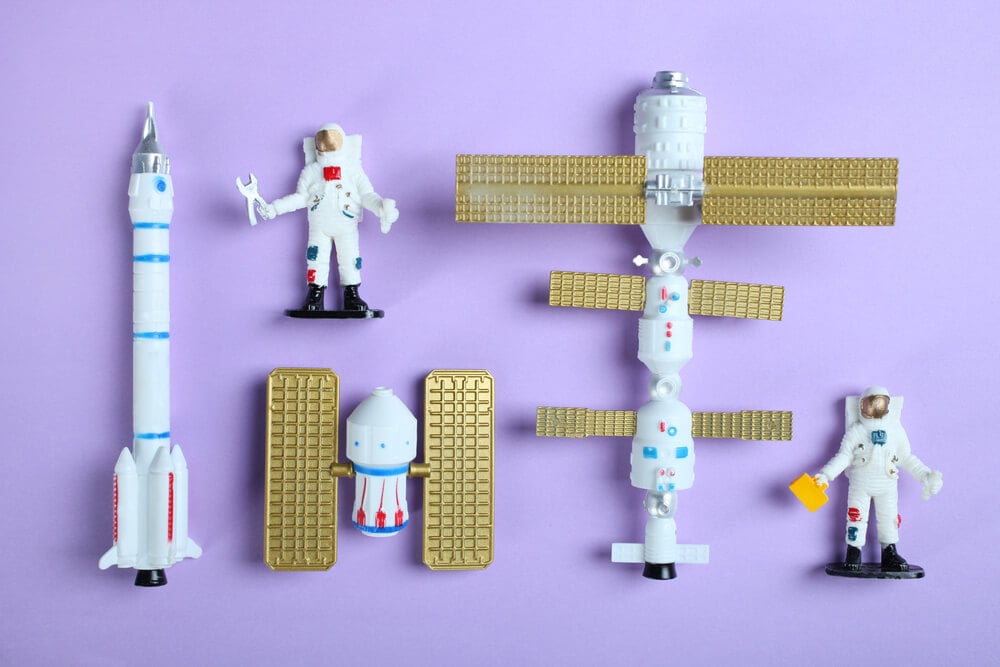
Hasbro’s wobbling Weebles line crossed over into science fiction with a Space Base playset in the 1970s, giving the toddler-oriented toy line an outer space theme complete with rocket-shaped Weeble figures. Its status as a toddler toy rather than a display piece means well-preserved, complete examples are scarcer than the line’s ordinary house and playground sets.
Mattel’s Space 1999 Eagle One

A separate, larger-scale Mattel toy version of the Eagle Transporter from Space: 1999 was produced specifically for the American market, distinct from the British Dinky die-cast version. Its size and modular design made it a standout among 1970s spacecraft toys, and complete examples with unbroken plastic modules are difficult to source today.
View-Master’s Science Fiction Reel Packs

View-Master produced dedicated reel sets tied to major science fiction franchises, including Star Trek, Star Wars, and Space: 1999, letting kids view stereoscopic scenes from the shows and films through a handheld viewer. Complete boxed sets with all reels and the accompanying storybook booklet intact are a specific niche within toy collecting that draws steady, dedicated interest.
Why Plastic From the 1970s Keeps Getting More Expensive

None of these toys were designed to last. They were built for a Christmas morning and a few years of rough play before being replaced by whatever came out the following season, which is exactly why intact examples are so hard to find now.
The toys that survive in good condition mostly did so by accident, tucked away in a closet or never opened at all rather than being carefully preserved on purpose. That accidental survival is what collectors are really paying for.
A price tag on an old action figure is not really about the plastic itself; it is about how unlikely it was for that particular piece of plastic to make it to today without a missing weapon, a broken cape, or a name scrawled on the box in crayon.
More from Go2Tutors!

- The Romanov Crown Jewels and Their Tragic Fate
- 13 Historical Mysteries That Science Still Can’t Solve
- Famous Hoaxes That Fooled the World for Years
- 15 Child Stars with Tragic Adult Lives
- 16 Famous Jewelry Pieces in History
Like Go2Tutors’s content? Follow us on MSN