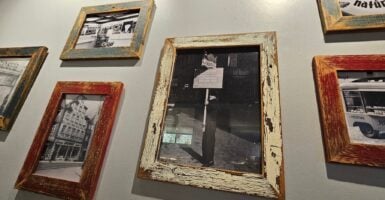
27 Historic Photos Few People Have Seen
The most famous photographs in history get reprinted so often that they begin to feel like wallpaper. Behind them sits a much larger archive of images that are just as remarkable but rarely make it into textbooks or social media feeds.
Some are firsts, some are hoaxes, and some simply caught a moment nobody else thought to record.
View From the Window at Le Gras
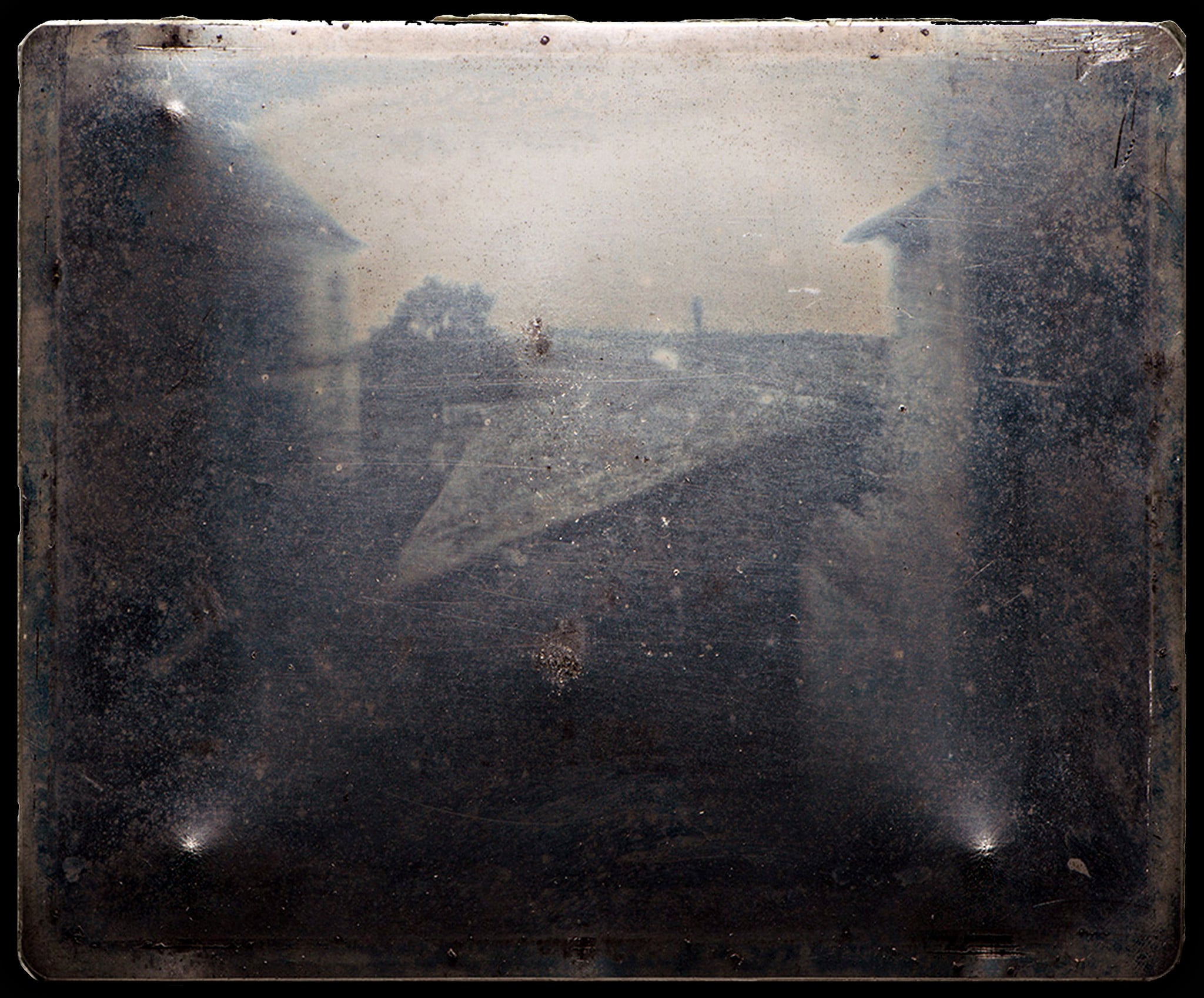
The oldest surviving photograph made with a camera shows little more than rooftops and a courtyard, blurred into soft shapes. Joseph Nicephore Niepce made it around 1826 or 1827 from an upstairs window at his estate in Saint-Loup-de-Varennes, France, using a pewter plate coated with bitumen of Judea, a type of asphalt that hardens in light.
Estimates of the exposure time range from hours to several days. The plate disappeared for decades until historians Helmut and Alison Gernsheim tracked it down in 1952.
It is now displayed at the Harry Ransom Center at the University of Texas at Austin.
Boulevard du Temple
In 1838, Louis Daguerre photographed a busy Paris street, the Boulevard du Temple, from a window. The exposure lasted several minutes, so moving carriages and pedestrians left no trace, and the street appears empty.
In the lower left corner, however, a man stands still with one foot raised, apparently having his boots polished. He is generally considered the first person ever captured in a photograph, and the figure working on his boots may be the second.
Daguerre announced his process publicly the following year, and photography spread around the world within months.
Robert Cornelius and the First Selfie
Late in 1839, a young Philadelphia lamp maker named Robert Cornelius set up a camera behind his family’s store, removed the lens cap, ran into the frame and sat still for several minutes. The resulting daguerreotype, showing him with tousled hair and folded arms, is considered the earliest surviving photographic portrait of an American and one of the first self-portraits ever made.
On the back he noted that it was the first light picture ever taken, an overstatement but an understandable one. Cornelius later ran one of the earliest photography studios in the United States.
The image is held by the Library of Congress.
Hippolyte Bayard’s Staged Drowning
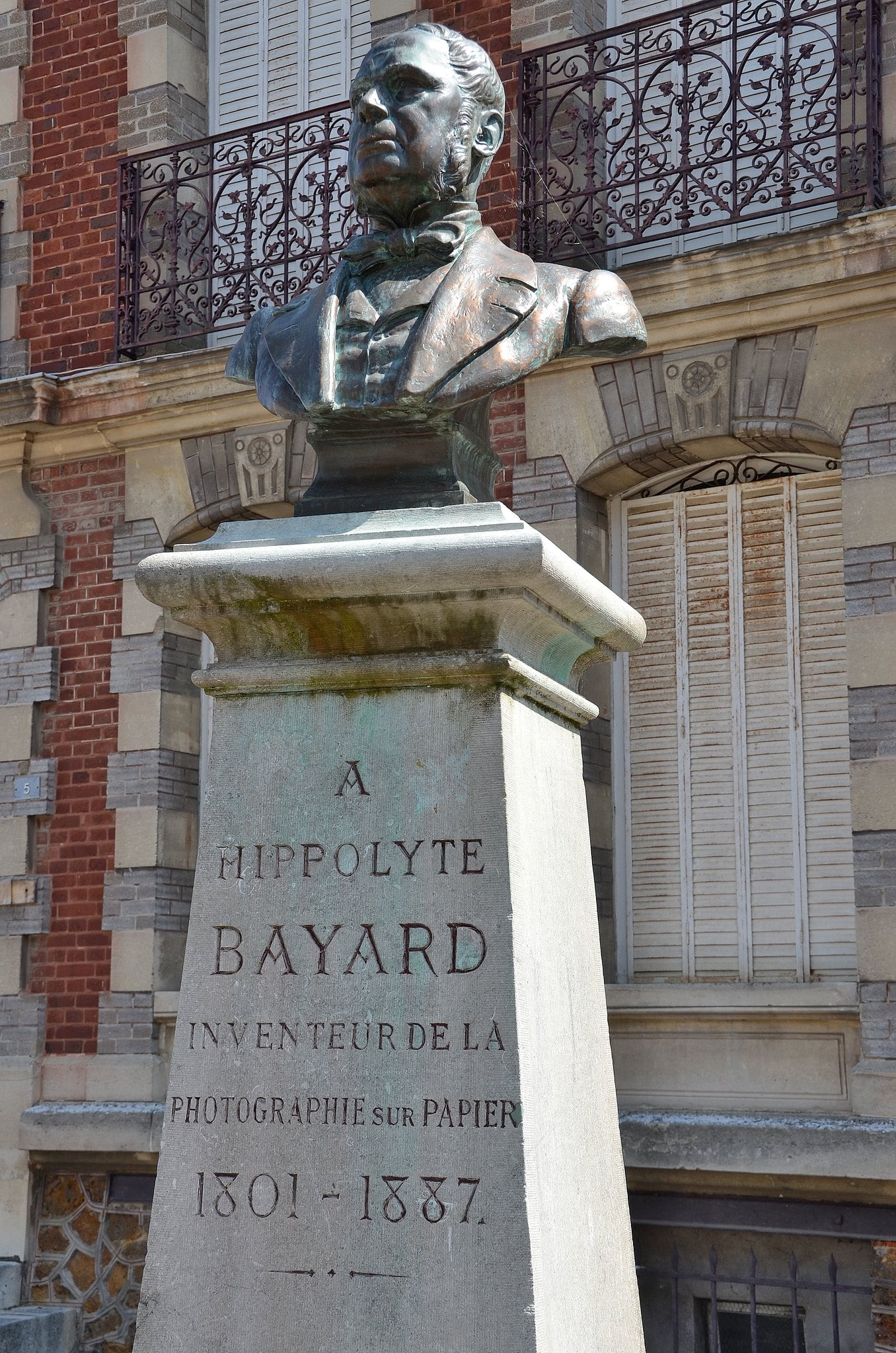
French photographer Hippolyte Bayard posed as a corpse in October 1840, slumped against a wall with his eyes closed, and made a print he titled Self Portrait as a Drowned Man. Bayard had invented his own photographic process but felt the French government had ignored him in favor of Daguerre.
On the back he wrote a bitter caption claiming the neglected inventor had drowned himself in despair. The image is widely considered the first staged photograph and the first photographic hoax.
Bayard went on to a long career as a photographer and lived until 1887.
Draper’s Daguerreotype of the Moon
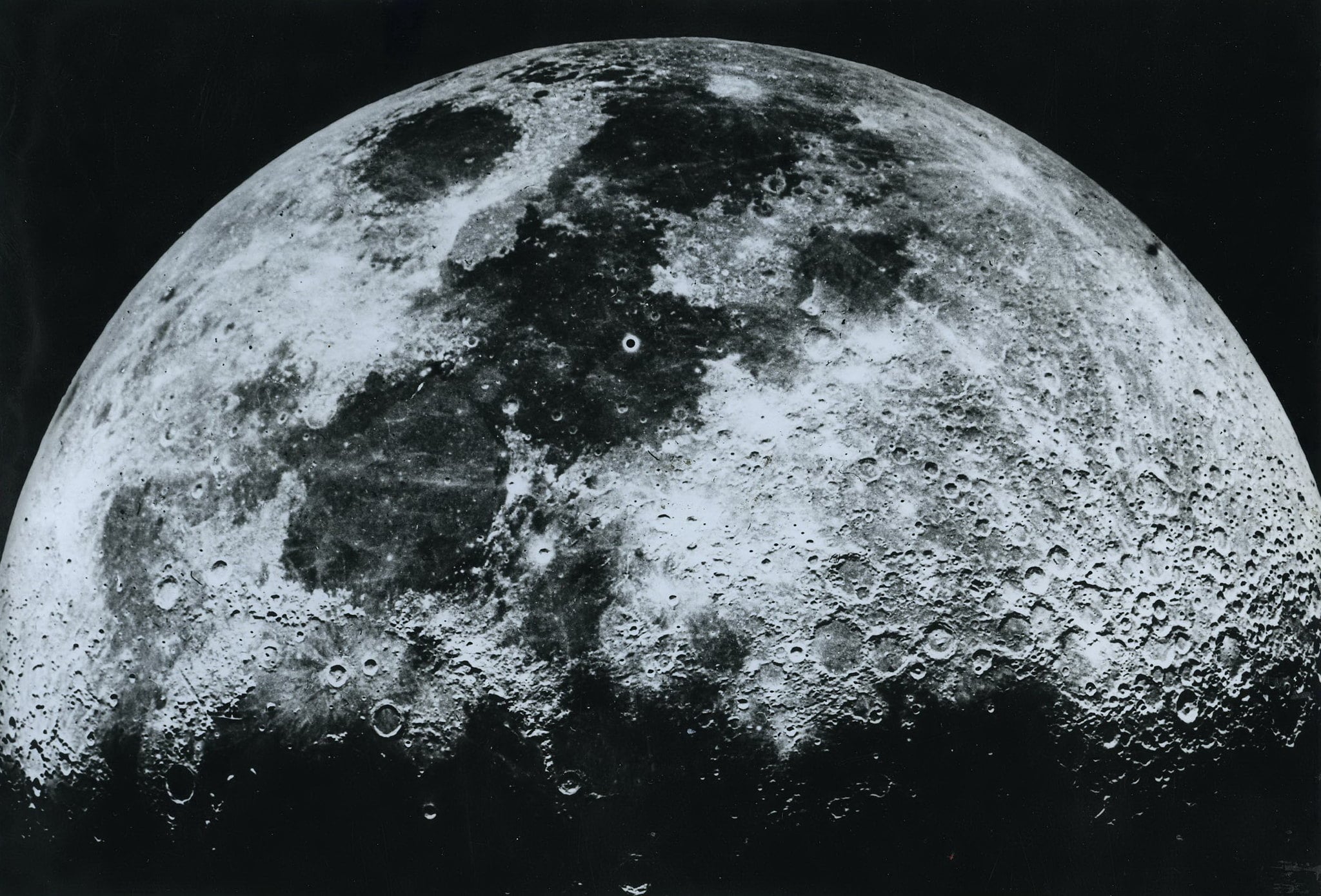
John William Draper, a chemistry professor at New York University, made a daguerreotype of the moon in March 1840 from the roof of the university building. The exposure took about 20 minutes, and the result was a fuzzy disk showing light and dark regions.
It is widely considered the first successful photograph of the moon and one of the first astronomical photographs of any kind. Draper also took one of the earliest photographic portraits, of his sister Dorothy.
The moon image opened the field of astrophotography, which would eventually produce images of galaxies billions of light-years away.
Sunspots in 1845
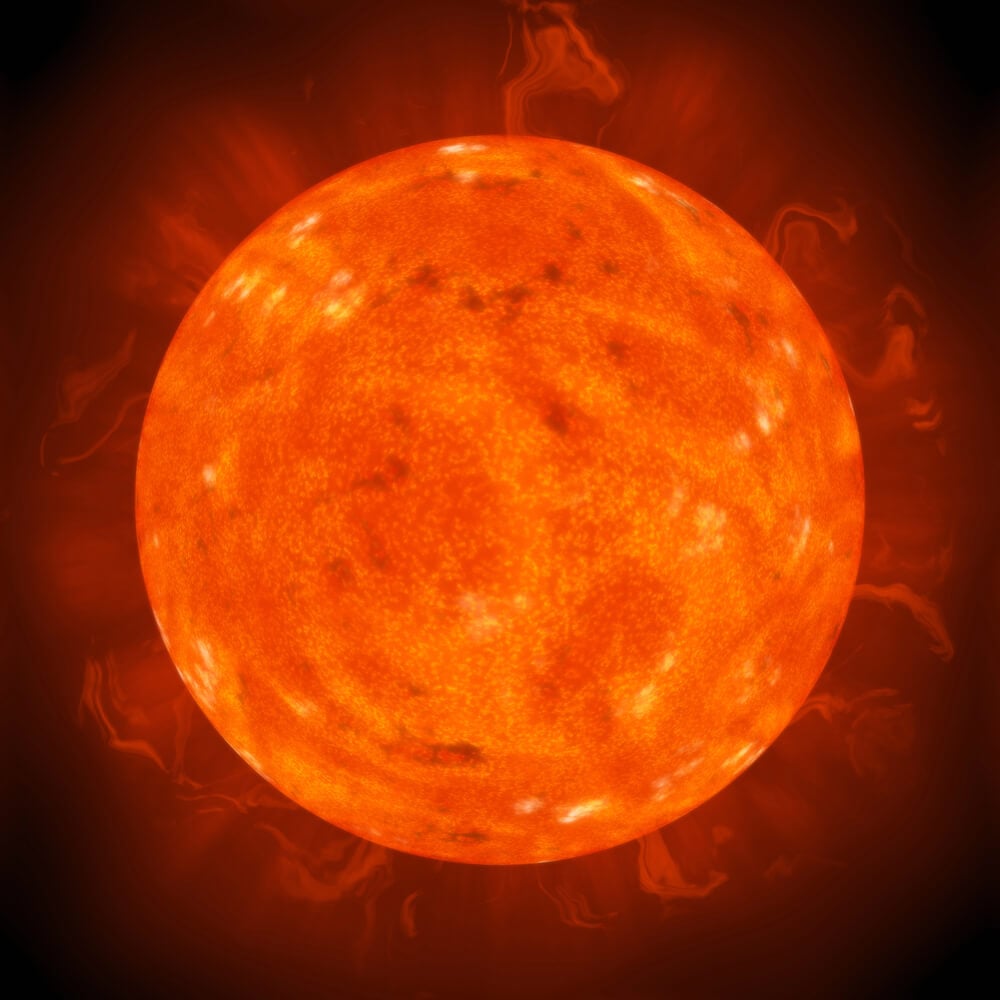
French physicists Hippolyte Fizeau and Leon Foucault made a daguerreotype of the sun on April 2, 1845, the earliest known photograph of it. The exposure lasted only a fraction of a second, a remarkable feat at the time.
The image shows the sun’s disk darkening toward its edge, an effect called limb darkening, along with several sunspots. Foucault later became famous for the pendulum that demonstrated Earth’s rotation, and Fizeau for measuring the speed of light.
Their sun picture showed how photography could capture astronomical detail the human eye could not hold.
Maxwell’s Three-Color Ribbon

Physicist James Clerk Maxwell demonstrated what is often cited as the first color photograph at the Royal Institution in London in 1861. Photographer Thomas Sutton photographed a plaid ribbon three times, through red, green and blue filters, and the three images were projected through matching filters and overlapped on a screen.
The result was a recognizable color picture of the ribbon. The experiment supported Maxwell’s theory that any color could be reproduced from three primaries.
Scientists later realized the emulsion barely responded to red light, so the test worked partly by luck. The same principle still underlies digital cameras and screens.
Niagara Falls in 1840
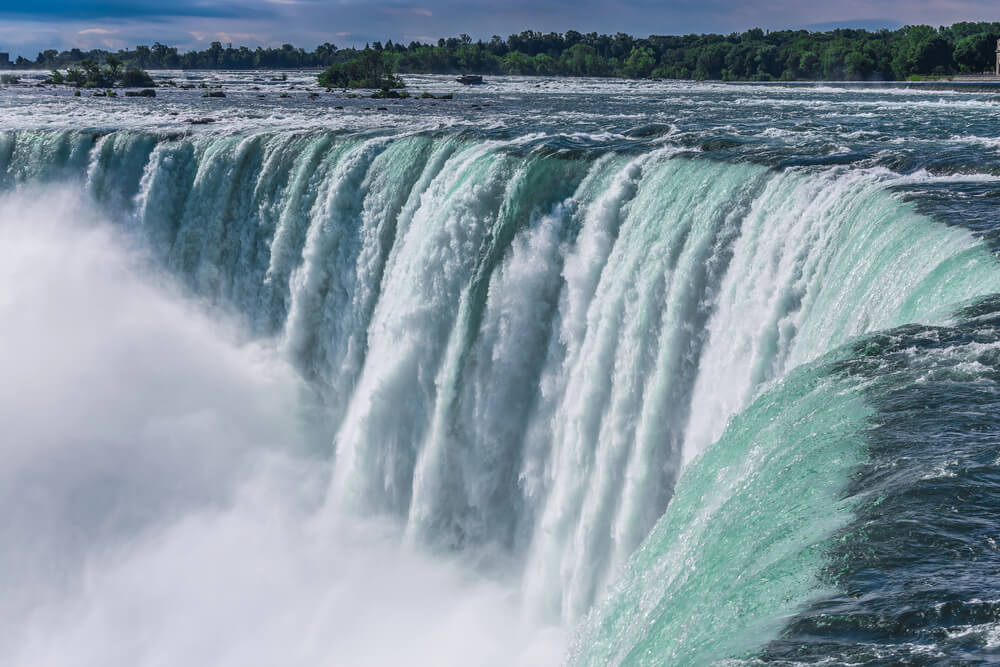
Hugh Lee Pattinson, an English chemist from Newcastle, traveled to North America in 1840 and made daguerreotypes of Niagara Falls, among the earliest surviving photographs of the falls. He was one of the first people to carry the brand-new technology across the Atlantic.
Images made from his plates were later used as references for engravings of famous views. The falls themselves have changed since then, worn back by erosion and partly controlled by diversion of water for hydroelectric power, so his pictures record a landscape that no longer looks quite the same.
John Quincy Adams, Daguerreotype of a President
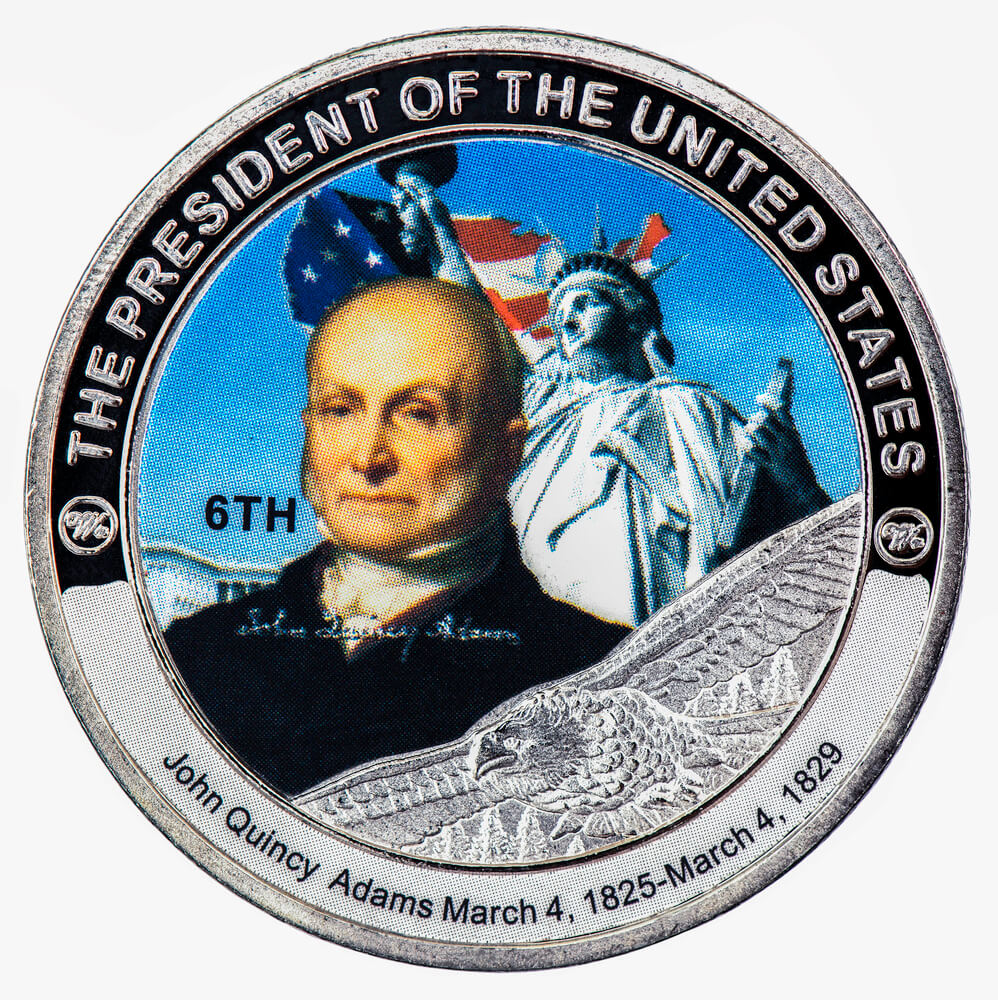
In 1843, former president John Quincy Adams sat for a daguerreotype by Philip Haas in Washington. By then he was serving in the House of Representatives, years after leaving the White House.
The portrait is the earliest known authenticated photograph of a U.S. president. The National Portrait Gallery acquired it in 2017.
William Henry Harrison may have been photographed during his brief time in office in 1841, but no such image is known to survive, which leaves the Adams plate as the oldest confirmed link between American presidents and the camera.
Boston From the Air
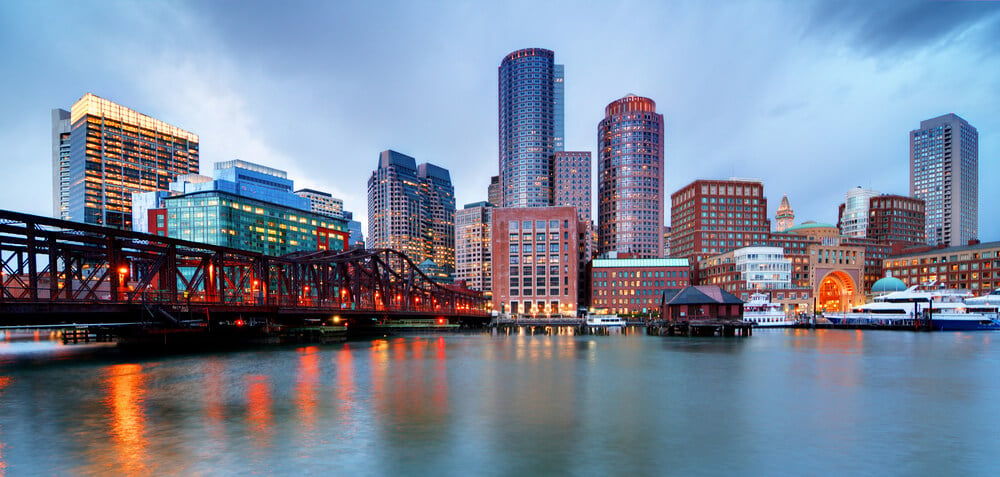
Photographer James Wallace Black rose above Boston on October 13, 1860, in a tethered, gas-filled aircraft and made a photograph of the city’s rooftops and streets from about 1,200 feet. He titled it Boston, as the Eagle and the Wild Goose See It.
It is the oldest surviving aerial photograph, since an earlier image by the French photographer Nadar has been lost. Black’s print shows wharves, church spires and crowded streets in fine detail.
A print is held by the Metropolitan Museum of Art, and it remains one of the most surprising views of nineteenth-century America.
The Unfinished Washington Monument
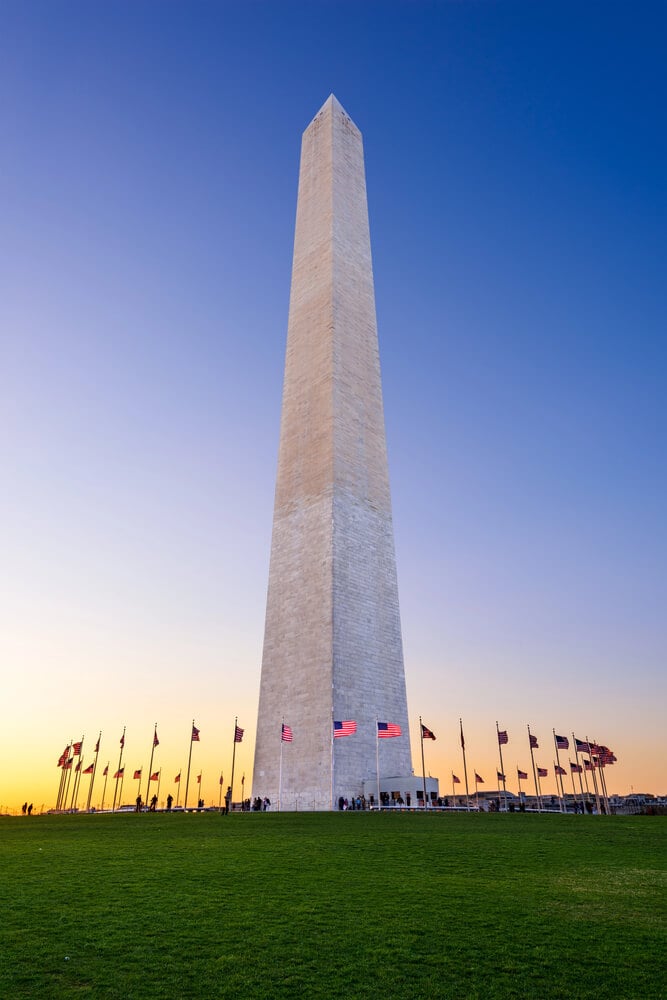
For more than two decades, the Washington Monument was a stubby, unfinished shaft. Construction began in 1848, but it stalled in 1854 amid funding problems and political turmoil, including the theft of a stone donated by Pope Pius IX.
Photographs from the 1860s show the stump, about 150 feet tall, with cattle grazing nearby, since the grounds were used for livestock during the Civil War. Work resumed in 1879, and the monument was completed in 1884.
A visible change in the marble’s color about a third of the way up marks where builders picked up again.
Lincoln at Gettysburg
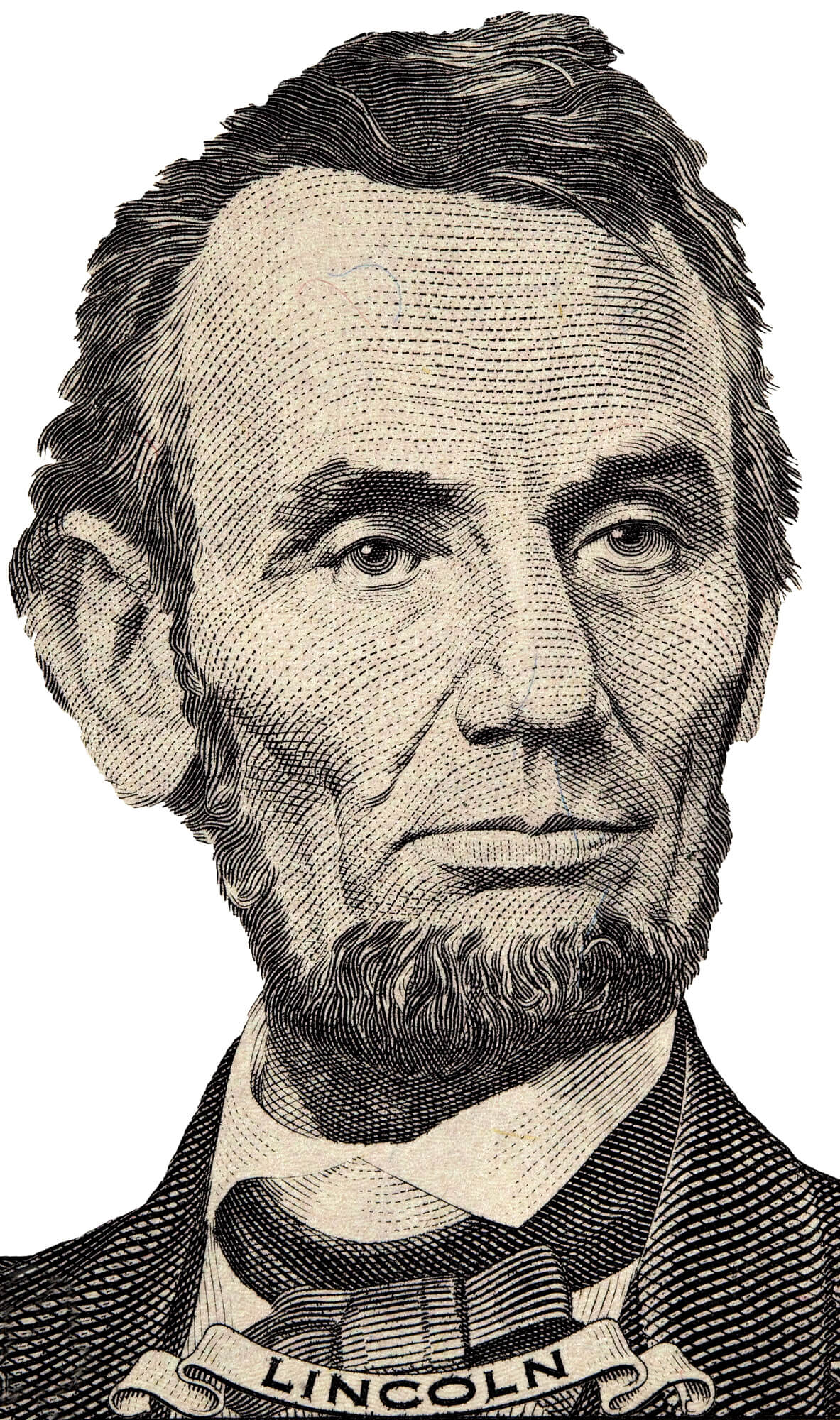
Photographers captured the crowd at the dedication of the Soldiers’ National Cemetery at Gettysburg on November 19, 1863. For nearly 90 years, nobody realized Abraham Lincoln appeared in one of them.
In 1952, Josephine Cobb, a specialist at the National Archives, enlarged a glass plate negative and identified a bareheaded, bearded figure in the crowd as Lincoln, around the time of his famous address. The image, attributed to David Bachrach, is the only widely accepted photograph of Lincoln at Gettysburg.
Researchers have since proposed other possible sightings in different plates, but those identifications remain debated.
Lincoln’s Second Inauguration Crowd
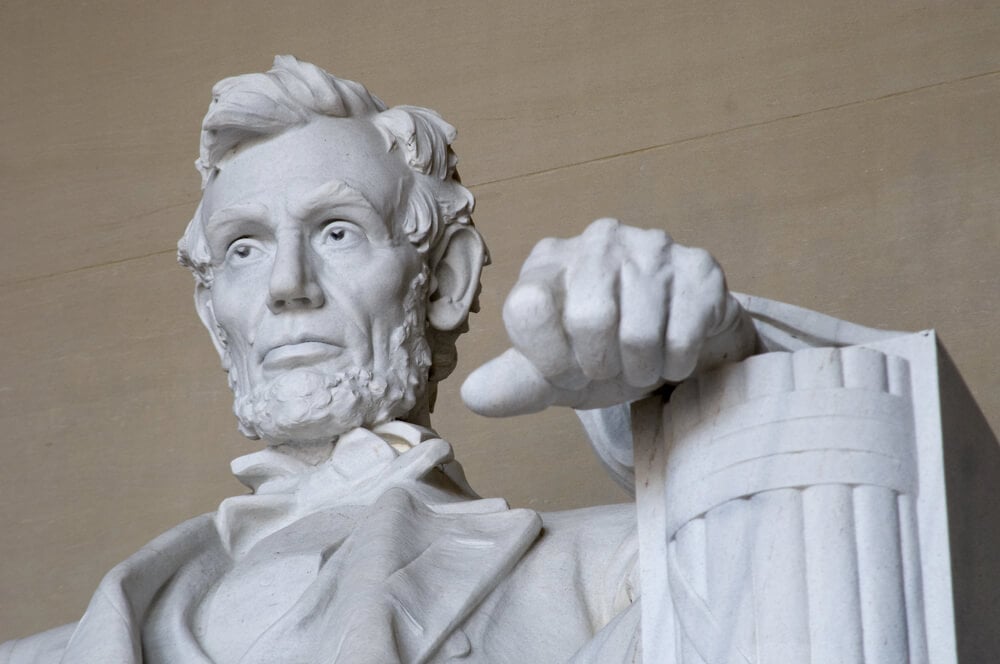
Alexander Gardner photographed Abraham Lincoln delivering his second inaugural address from the east front of the Capitol on March 4, 1865. The image shows Lincoln standing at the center of a dense crowd, reading the speech that closed with its famous call for malice toward none.
Some historians have identified figures in the crowd above the president as John Wilkes Booth and several of his co-conspirators. Six weeks later, Booth shot Lincoln in Washington.
If the identification is right, the photograph places the president and his killer in the same frame.
Mumler’s Spirit Photograph of Mary Lincoln
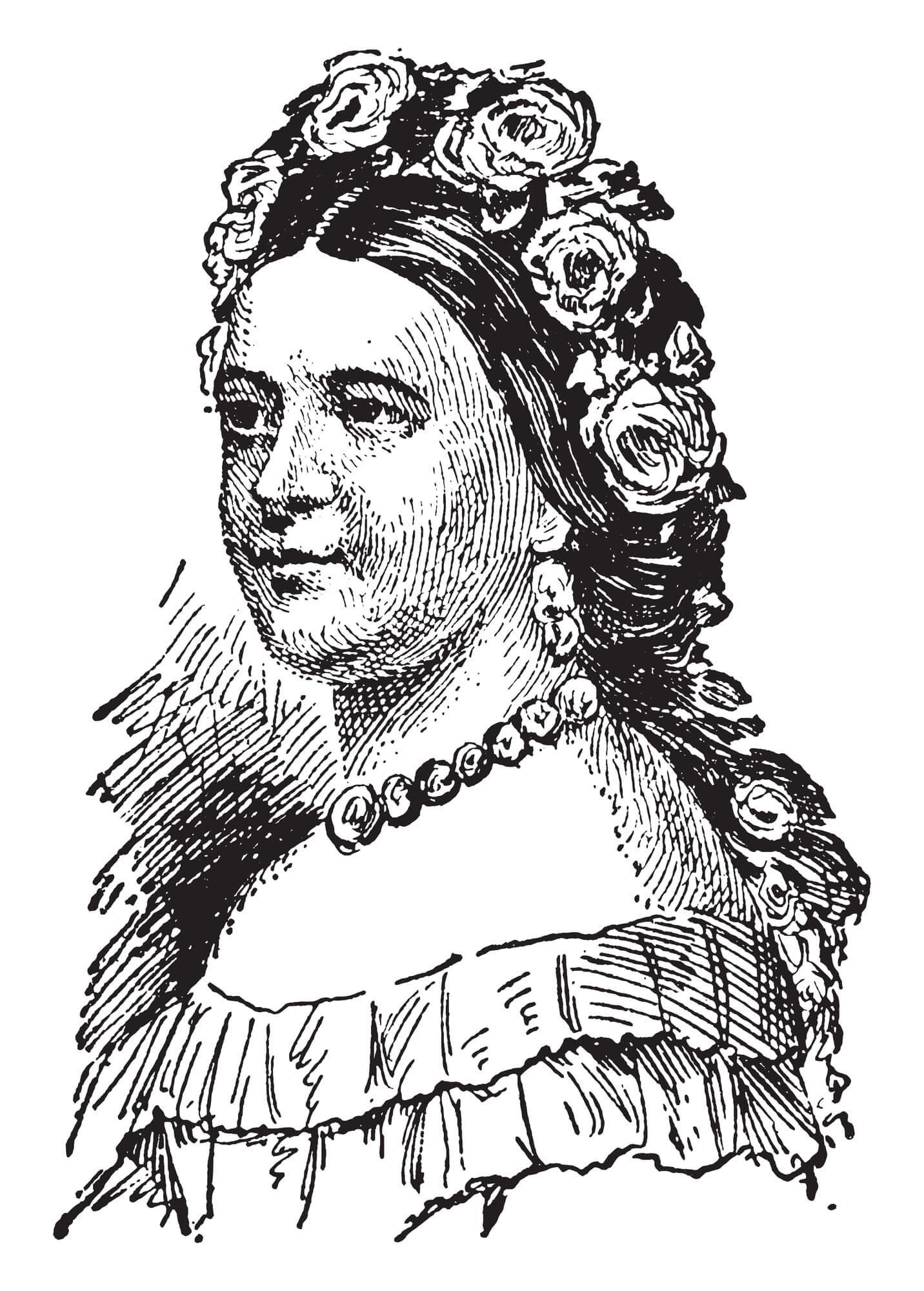
Around 1872, Mary Todd Lincoln visited the Boston studio of William Mumler, a photographer who claimed he could capture the spirits of the dead. The resulting portrait shows her seated, with a ghostly figure resembling Abraham Lincoln standing behind her, hands on her shoulders.
Mumler had been tried for fraud in New York in 1869, with showman P.T. Barnum testifying against him, though he was acquitted. The image is a double exposure, a technique Mumler almost certainly used deliberately.
It remains one of the best-known spirit photographs, evidence of how grief created a market for supernatural images after the Civil War.
A Young Harriet Tubman
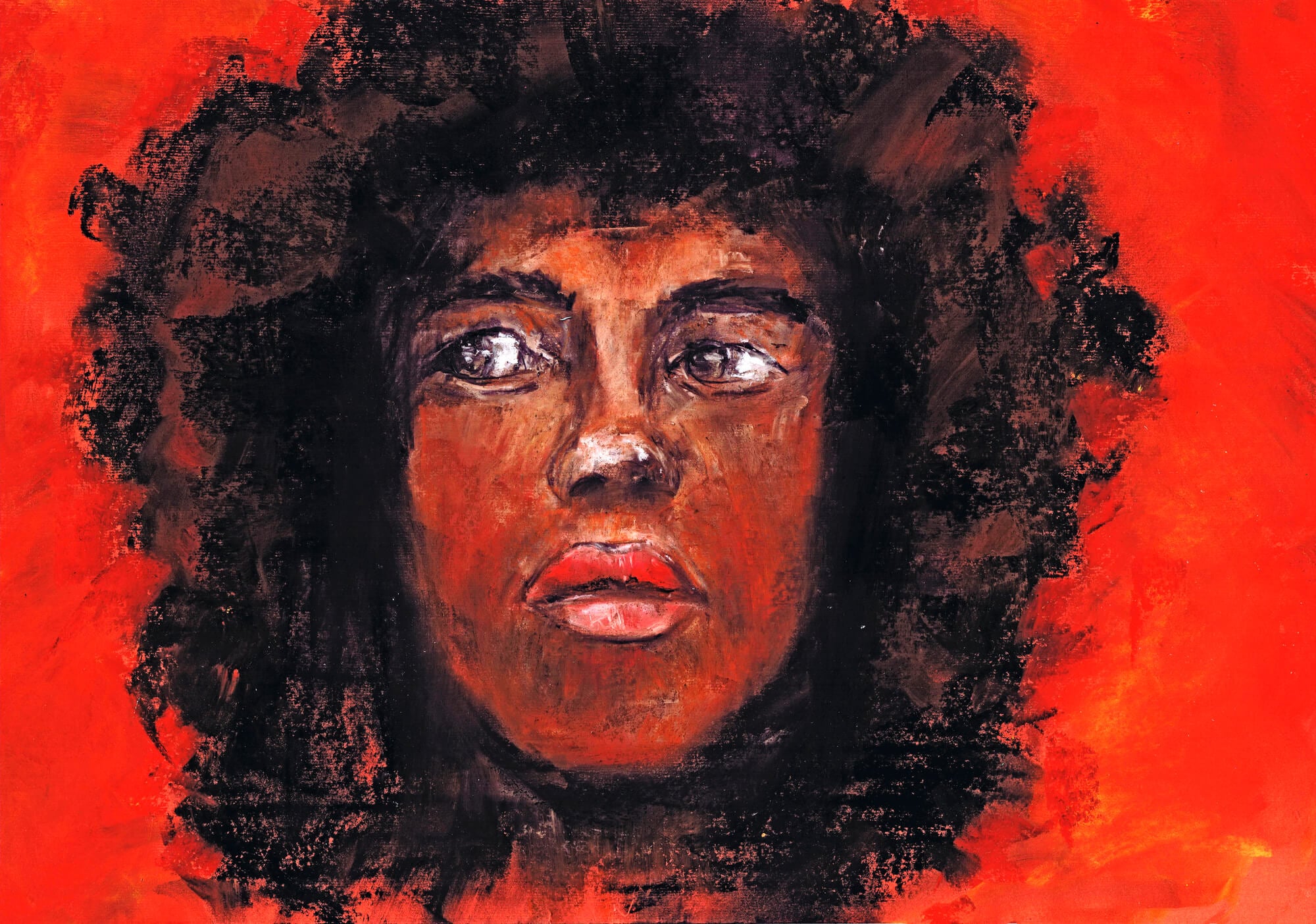
For years, the only widely known photographs of Harriet Tubman showed her as an older woman. Then, in 2017, the Library of Congress and the Smithsonian’s National Museum of African American History and Culture jointly acquired a carte de visite showing her in her mid-40s, taken around 1868 or 1869 by Benjamin F. Powelson in Auburn, New York.
The photograph was part of an album that belonged to Emily Howland, a Quaker abolitionist and teacher. It sold at auction for about 161,000 dollars.
The portrait shows Tubman seated and composed, just a few years after her service in the Civil War.
Billy the Kid Playing Croquet
Collector Randy Guijarro paid two dollars in 2010 for a small tintype at a junk shop in Fresno, California. The photograph shows a group of people playing croquet outside a building.
After years of research, a team working with Kagin’s, a numismatic firm, argued that one of the men was Billy the Kid, photographed in New Mexico in 1878 with members of the Regulators. A 2015 National Geographic Channel documentary presented the findings, and the tintype was valued at 5 million dollars.
Some historians remain skeptical, but if authentic, it is only the second known photograph of the outlaw.
The First Photograph of Lightning
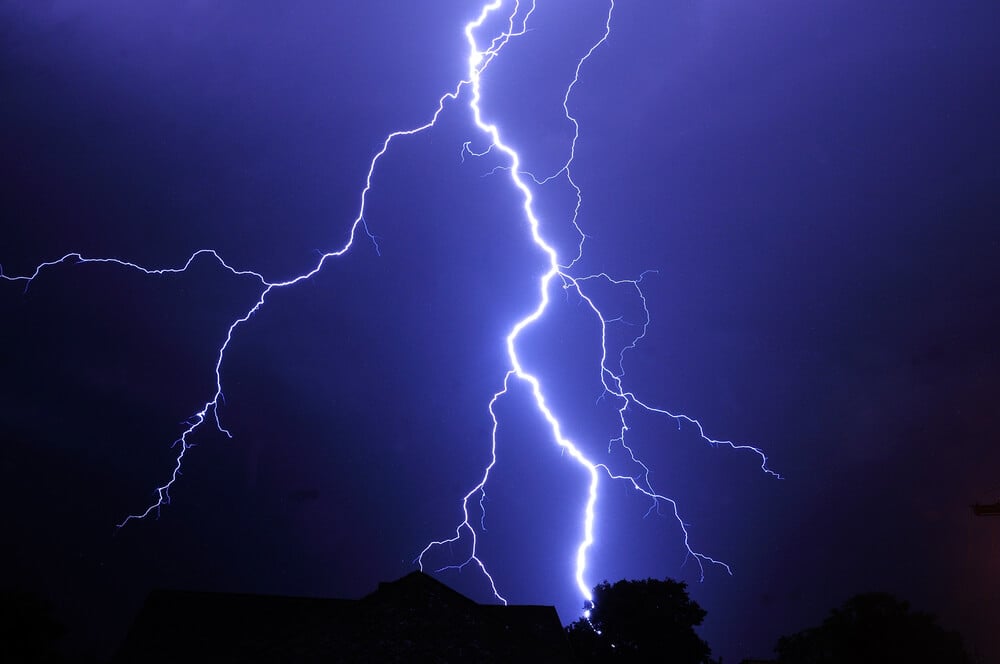
Philadelphia photographer William Nicholson Jennings made what is considered the first photograph of lightning on September 2, 1882. Earlier attempts had failed because of slow emulsions and because nobody quite knew how to time an exposure for a split-second event.
Jennings’s image showed lightning as a branching, irregular line instead of the neat zigzag painters had used for centuries. Jennings was a working professional who experimented constantly, and his plate marked one of the first times a camera caught a natural event too fast for the eye to follow.
The photograph changed how scientists and artists understood one of nature’s most dramatic events.
Snowflake Bentley’s First Crystal

Wilson Bentley, a teenage farmer in Jericho, Vermont, attached a microscope to a bellows camera on January 15, 1885, and photographed a single snowflake, the first known photograph of a snow crystal. Over the next 46 years, he captured more than 5,000 snowflakes, catching each on a black board and transferring it with a feather or splinter before it melted.
His work, published in the 1931 book Snow Crystals, helped popularize the idea that no two snowflakes are alike. Bentley, known as Snowflake Bentley, died of pneumonia that same year after walking home through a blizzard.
Liberty Rising in a Paris Courtyard
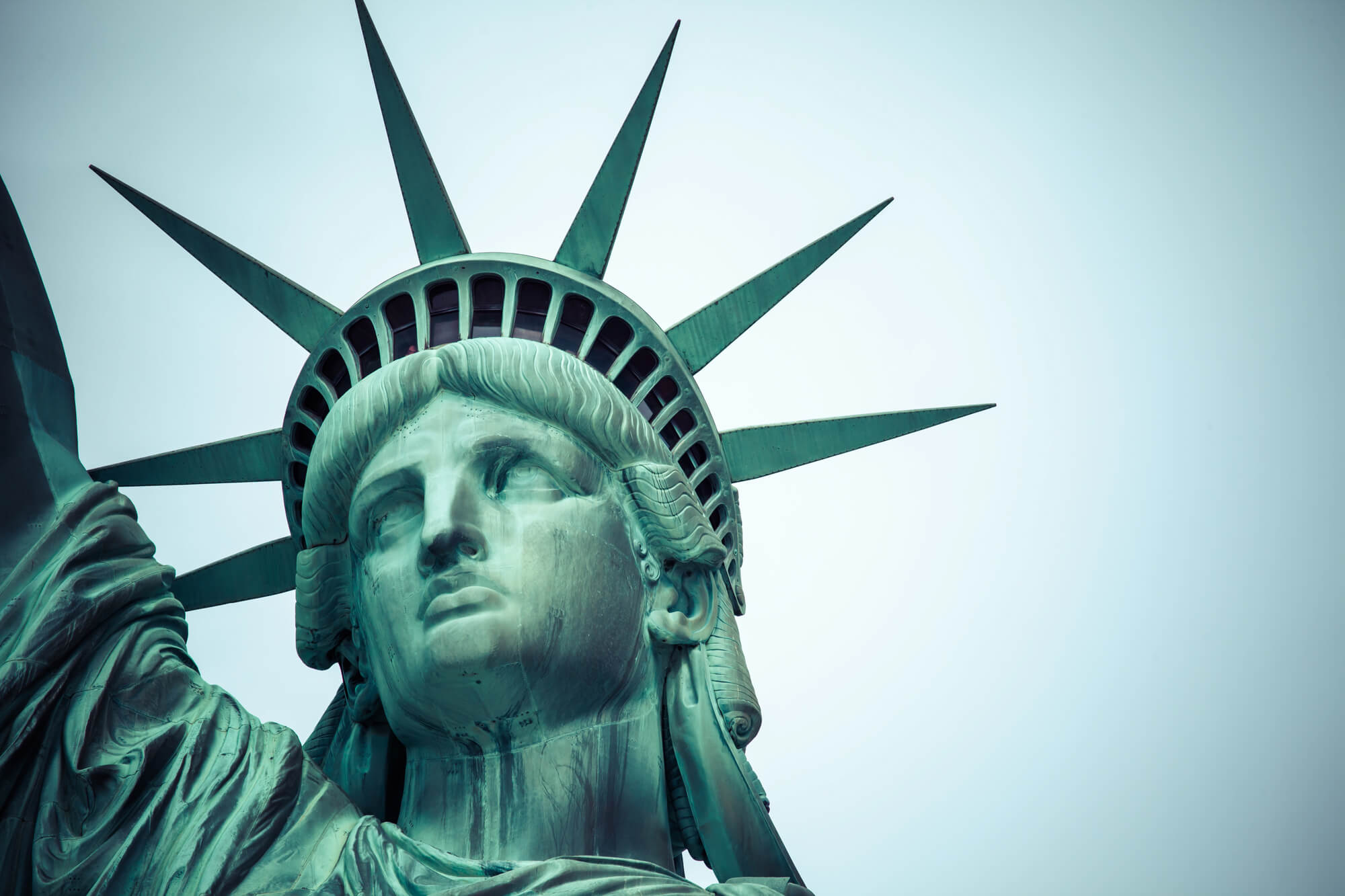
Before it was shipped to New York, the Statue of Liberty was assembled in a Paris courtyard at the workshop of Gaget, Gauthier and Company. Photographs from the late 1870s and early 1880s show the copper statue rising above Paris rooftops, surrounded by scaffolding, along with the giant plaster models used to shape the copper sheets.
The head had been displayed at the 1878 Paris World’s Fair, and the torch-bearing arm was shown in Philadelphia and New York before the rest was finished. The completed statue was dismantled into about 350 pieces and shipped across the Atlantic in 1885.
Eiffel Tower Half Built
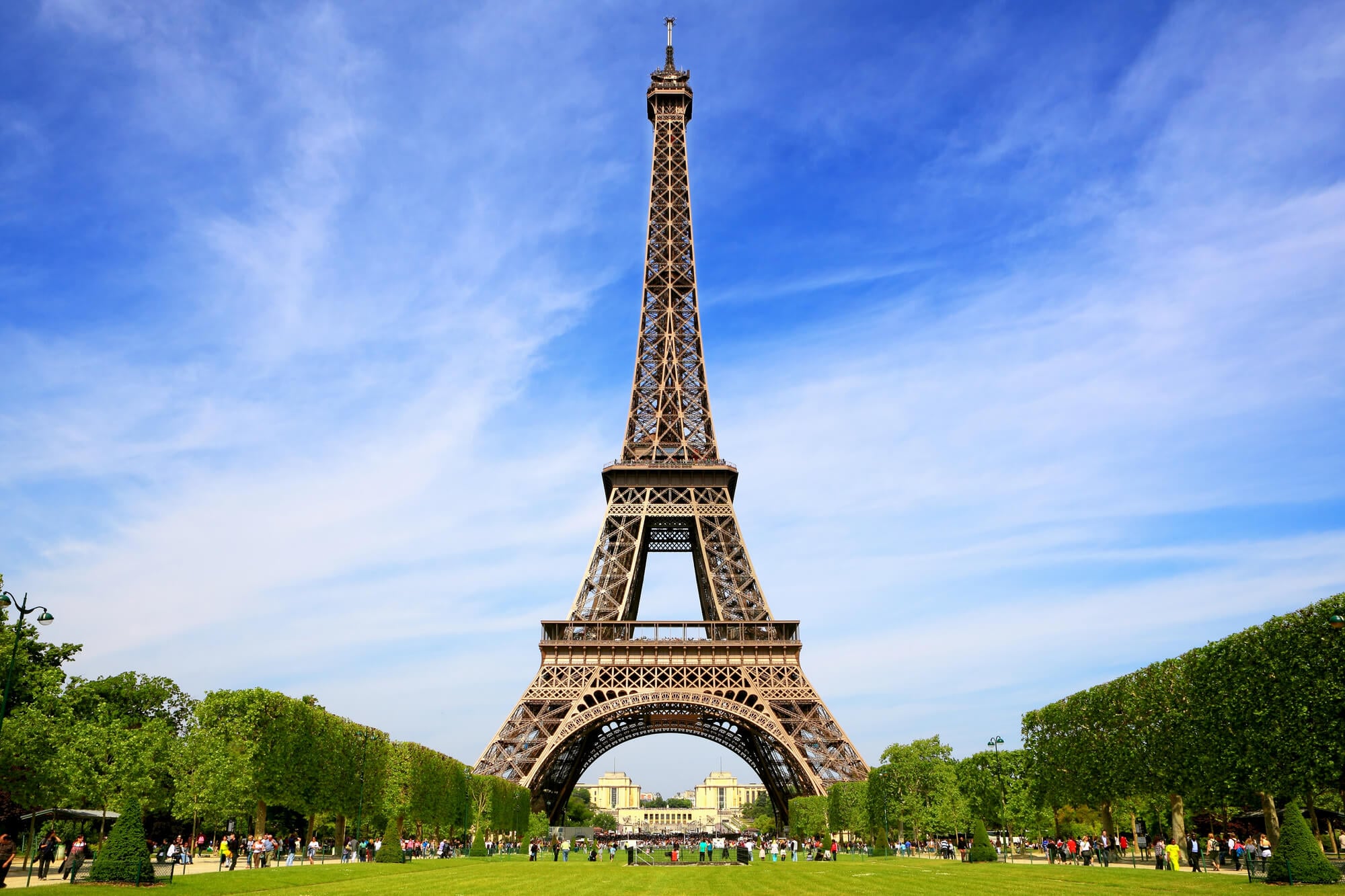
Photographer Louis-Emile Durandelle documented the construction of the Eiffel Tower from 1887 to 1889, producing a series of images showing the tower’s four legs rising separately, then joining at the first platform, then climbing skyward. Workers balance on narrow beams without harnesses, and cranes creep up the structure.
The tower contains roughly 18,000 iron parts held together by about 2.5 million rivets. Many Parisian artists and writers publicly protested its construction.
Durandelle’s photographs show the moment when what critics called an eyesore was still a skeleton, months away from becoming the symbol of the city.
Prokudin-Gorsky’s Color Russia
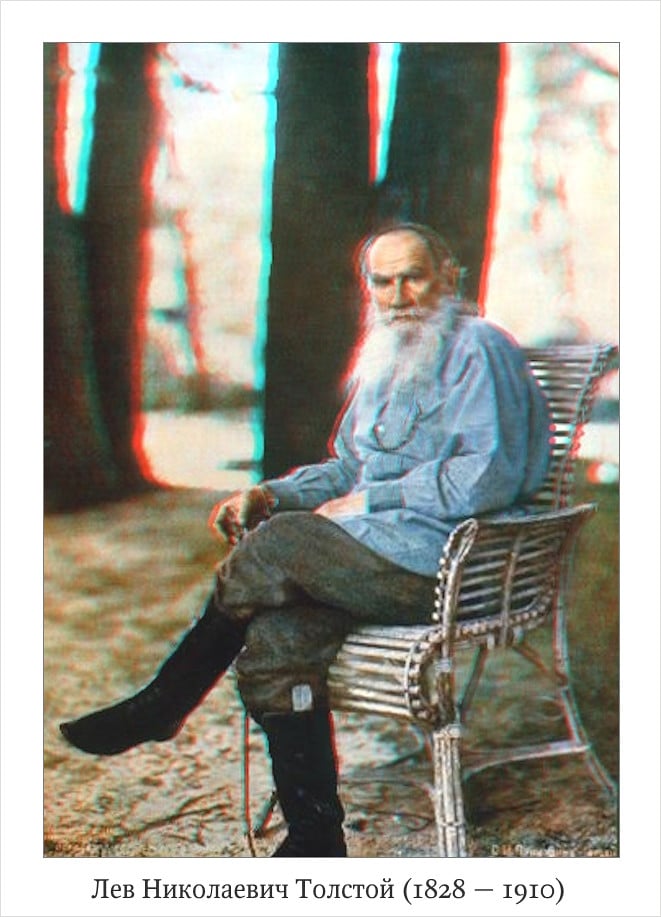
Between roughly 1909 and 1915, photographer Sergei Prokudin-Gorsky traveled across the Russian Empire with support from Tsar Nicholas II, taking three exposures of each scene through red, green and blue filters on a single glass plate. When combined, the images produce vivid color photographs of a world on the verge of revolution, including peasant girls, mosques, railways and the emir of Bukhara in a brilliant robe.
The Library of Congress bought the collection from his heirs in 1948. Digital processing in the early 2000s finally revealed the full color, showing prerevolutionary Russia as few had ever seen it.
Fairies at Cottingley
Cousins Elsie Wright and Frances Griffiths, aged 16 and 9, took photographs in 1917 in Cottingley, England, that appeared to show them with tiny winged fairies. Sir Arthur Conan Doyle, the creator of Sherlock Holmes and a committed spiritualist, promoted the images in a 1920 article in The Strand Magazine, and they fooled many people for decades.
In 1983 the cousins admitted that the fairies were paper cutouts copied from a children’s book and held up with hatpins. Frances maintained to the end, however, that the fifth photograph was genuine.
The episode remains a classic study in how much people want to believe.
Nessie and the Surgeon’s Photograph
The most famous image of the Loch Ness Monster appeared in the Daily Mail in April 1934, credited to Robert Kenneth Wilson, a respected London physician. Because a doctor supplied it, it became known as the surgeon’s photograph, and his reputation lent it credibility.
It showed a long neck rising from the water. In 1994, researchers revealed it had been a hoax organized by big-game hunter Marmaduke Wetherell, who had earlier been humiliated by the newspaper.
The monster was a sculpted head attached to a toy submarine, built by Wetherell’s stepson Christian Spurling, who confessed before his death.
Benjamin, the Last Thylacine
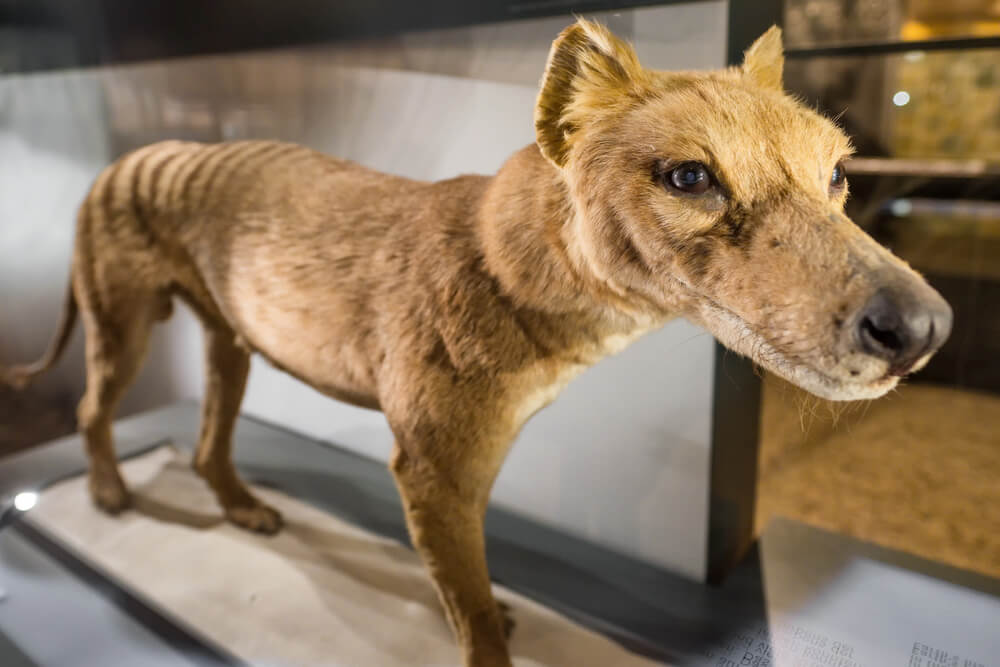
The last known thylacine, often called the Tasmanian tiger, lived at Beaumaris Zoo in Hobart, Tasmania. In December 1933, naturalist David Fleay filmed and photographed the animal in its enclosure, capturing about a minute of footage, and was bitten during the session.
The animal, later nicknamed Benjamin, died on September 7, 1936, apparently after being locked out of its sheltered sleeping area on a cold night. Australia now marks National Threatened Species Day on that date.
Fleay’s grainy images remain the best record of a species that was formally declared extinct decades later.
Earth From a V-2 Rocket
A team at White Sands Proving Ground in New Mexico launched a captured German V-2 rocket on October 24, 1946, carrying a 35mm motion picture camera. The camera snapped a frame every second and a half as the rocket climbed to about 65 miles.
When the rocket crashed back to Earth, the film, protected in a steel cassette, survived. The grainy black and white frames were the first photographs ever taken of Earth from space, showing the curve of the planet against a black sky.
Clyde Holliday, the engineer who designed the camera, said the images showed how Earth would look to visitors from another planet.
Migrant Mother’s Lesser-Known Frames
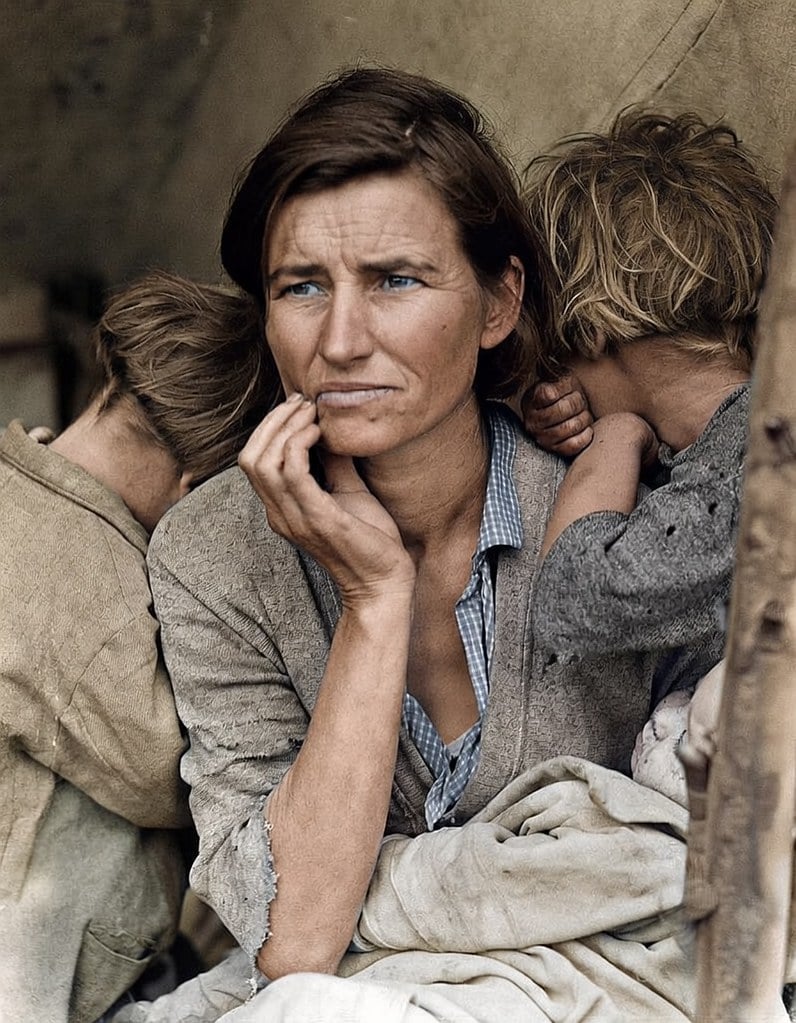
Photographer Dorothea Lange stopped at a pea pickers’ camp in Nipomo, California, in March 1936 and made a series of exposures of Florence Owens Thompson and her children. One became Migrant Mother, among the most famous photographs in American history.
The other frames, showing the family from different angles, in a makeshift tent and with children on her lap, are seen far less often. The famous image itself was retouched to remove Thompson’s thumb from the lower right corner.
Thompson was identified publicly only in the 1970s and said she had received nothing from the photograph’s fame.
Jefferson’s First Face on Mount Rushmore
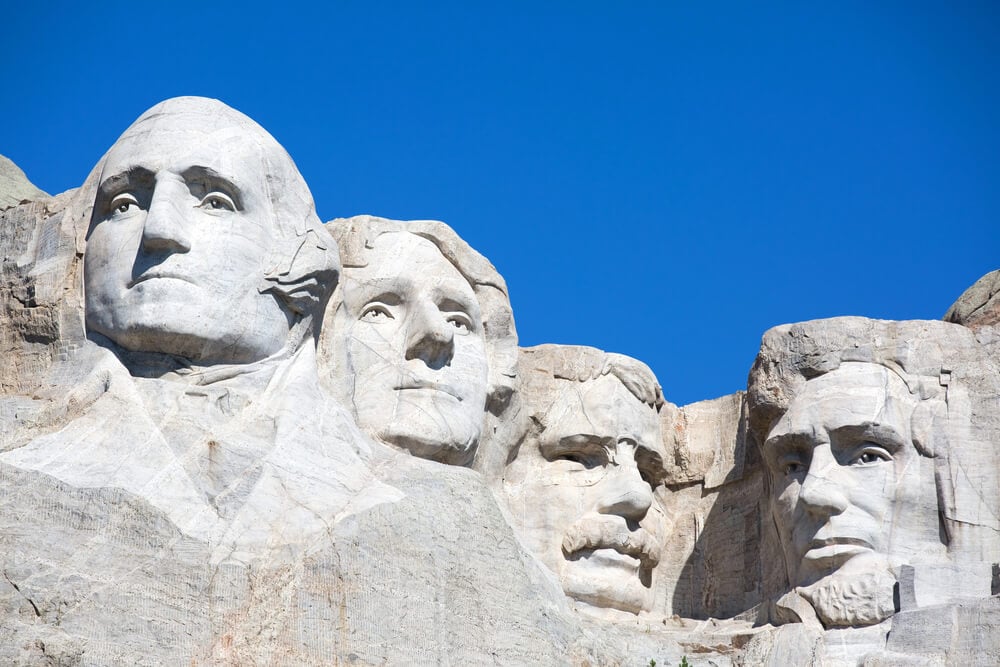
Construction photographs from Mount Rushmore, carved between 1927 and 1941 under sculptor Gutzon Borglum, reveal a surprise. Thomas Jefferson’s face was originally carved on George Washington’s right side.
In 1934, after about two years of work, crews found the rock there was badly fractured, so they blasted the face away with dynamite and recarved Jefferson on the other side. Photographs of the early Jefferson show a nearly finished face that no longer exists.
In total, workers removed about 450,000 tons of rock from the mountain, and not one person died during the project.
Silver Plates and Overlooked Moments
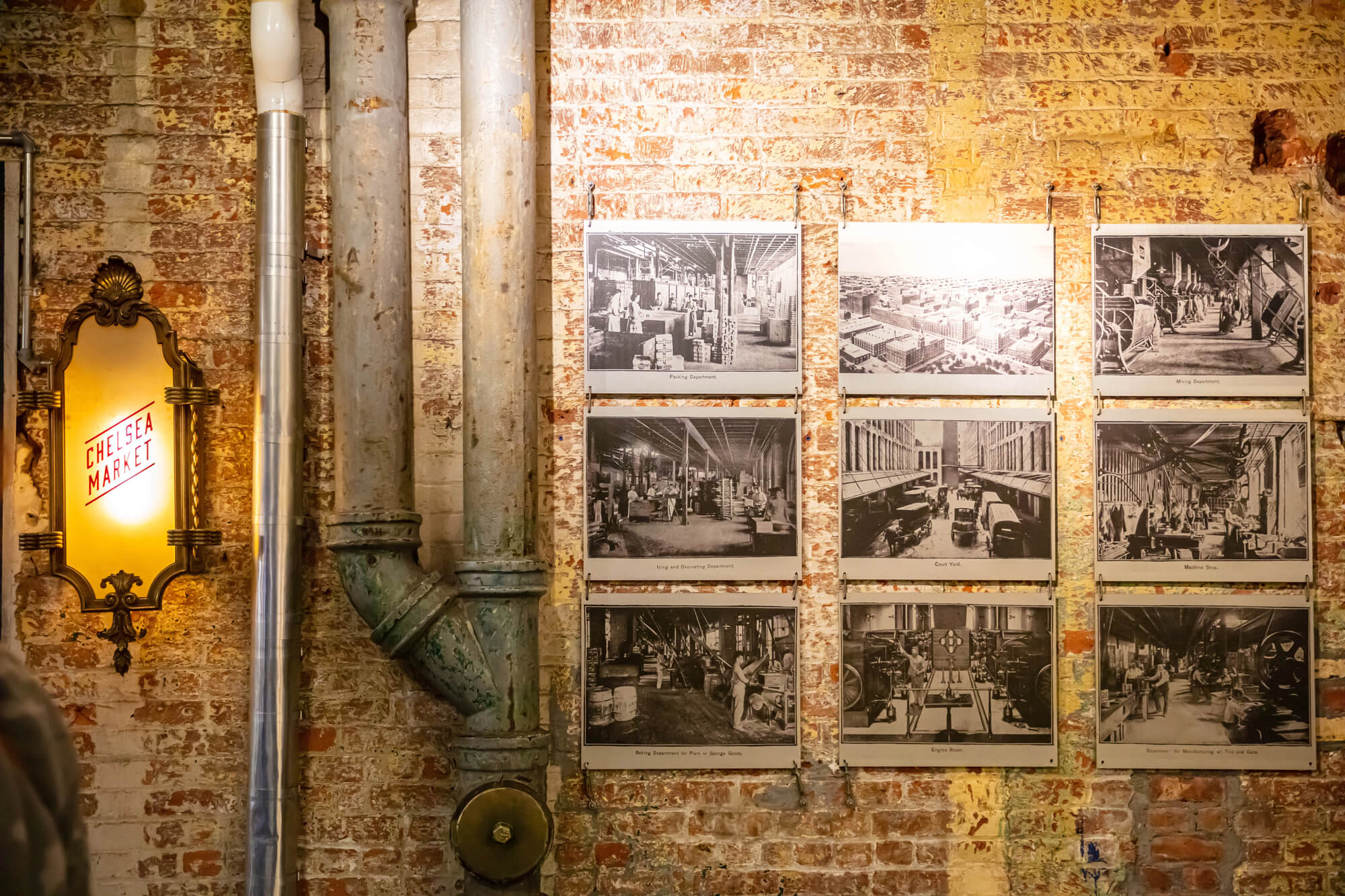
Many of these photographs were never meant to be famous. Some were technical experiments, some were family keepsakes, and others sat in archives until a researcher with a magnifying glass looked closer.
Their obscurity says more about which images get repeated than about their importance. They also show how quickly photography moved from novelty to evidence.
Within a few decades of the first blurry rooftops, cameras were recording presidents, documenting construction, exposing hoaxes and measuring the sky. Every one of these images is a quiet argument that the archive is far larger than its greatest hits.
More from Go2Tutors!

- The Romanov Crown Jewels and Their Tragic Fate
- 13 Historical Mysteries That Science Still Can’t Solve
- Famous Hoaxes That Fooled the World for Years
- 15 Child Stars with Tragic Adult Lives
- 16 Famous Jewelry Pieces in History
Like Go2Tutors’s content? Follow us on MSN.