27 Old Farm Tools Buyers Mount on Walls
Long retired from actual farm work, these tools have found a second life as decoration, valued now for their shape and patina rather than their original function. A rusted blade or a worn wooden handle that would have been discarded decades ago is now the exact quality buyers look for, since heavy restoration or repainting can actually lower a piece’s value among serious collectors.
Prices depend heavily on condition, maker’s marks, and how visually distinctive a tool’s silhouette is once hung. The tools below are among the most commonly sought after for wall display, chosen as much for how they look from across a room as for what they once did in a field.
Hay Forks
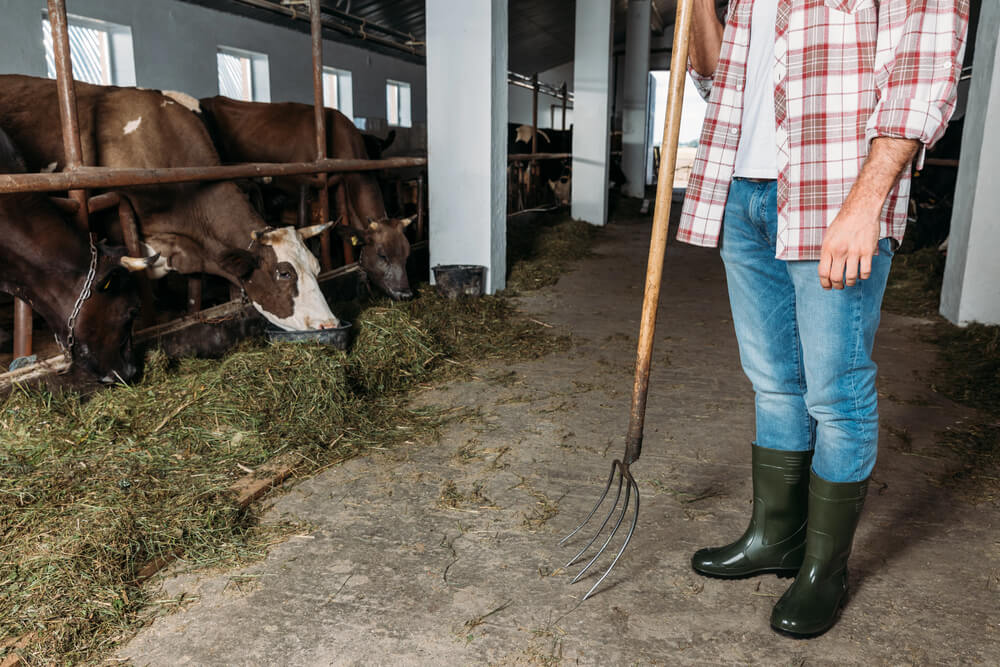
With long wooden handles and wide, curved metal tines, hay forks make a strong visual statement when mounted horizontally or in a fan arrangement with several forks of varying sizes. Original wooden handles with visible wear from decades of gripping are preferred over replaced or refinished handles.
Two- and three-tine versions are both common, though wider forks tend to draw more attention when displayed.
Scythes
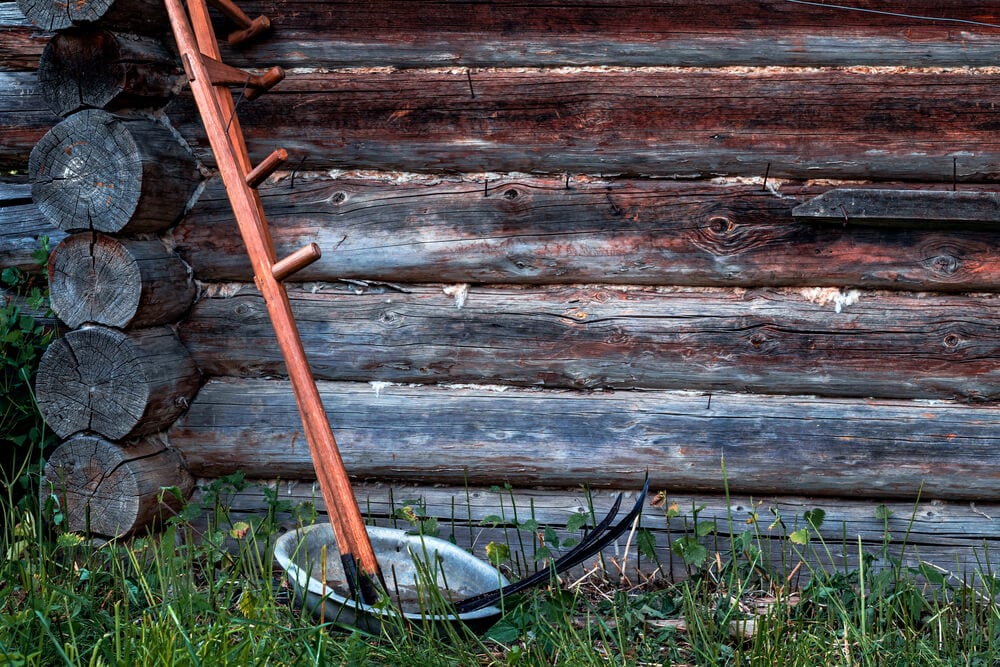
A long curved blade attached to a similarly curved wooden snath, the scythe’s dramatic silhouette makes it one of the most recognizable tools in this category, often mounted alone as a single statement piece above a mantel or barn door. Rust on the blade is generally left intact by buyers rather than cleaned off, since a bright, polished blade can look artificially new.
The blade’s curve and the snath’s matching curve together create a visual balance that straight-handled tools lack.
Cross-Cut Saws
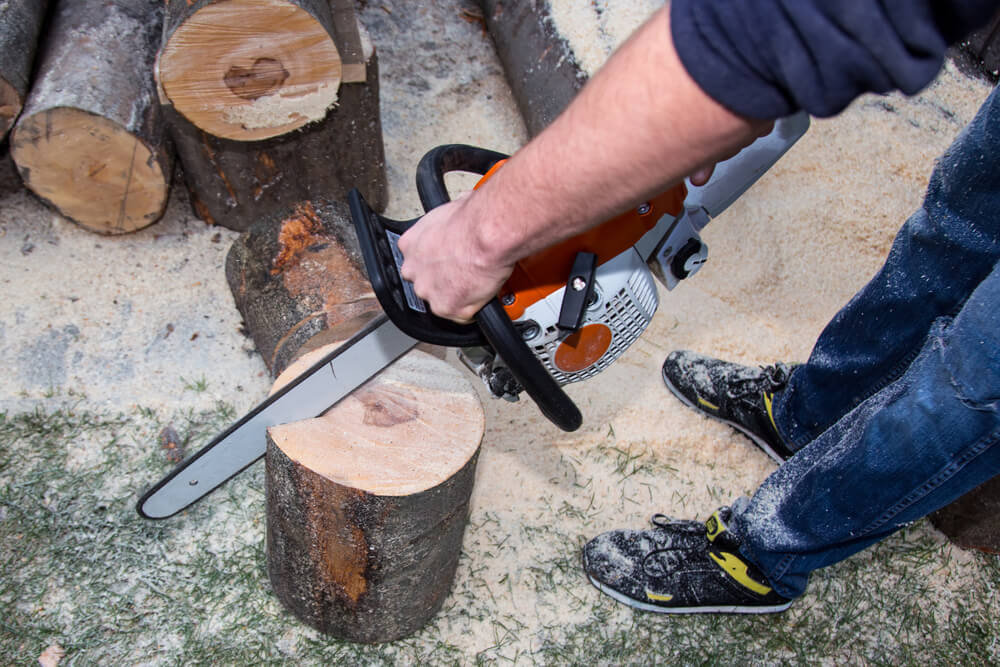
Long two-person saws with large, evenly spaced teeth were originally used for felling trees, and their extended horizontal length makes them well suited to hanging above a long wall, doorway, or fireplace. Some buyers specifically seek saws with a maker’s name still legible on the blade, which adds both authenticity and value.
The alternating tooth pattern creates a striking visual texture when lit from an angle.
Horse-Drawn Plow Blades
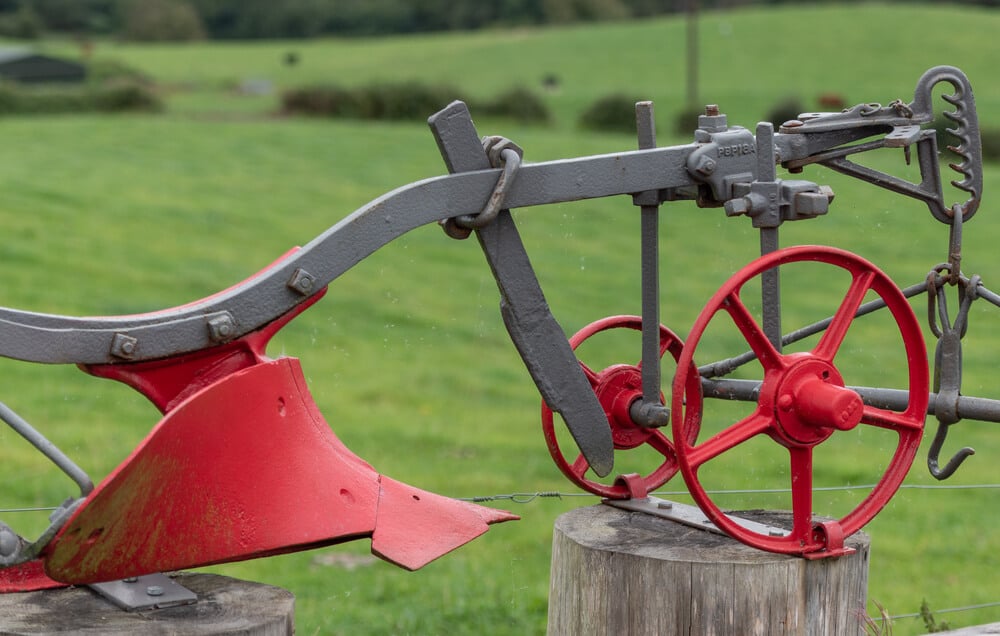
The curved metal blade, or share, from a horse-drawn plow has a sculptural quality on its own once separated from the wooden frame, and is frequently mounted as a standalone wall piece. Heavy surface rust is generally considered part of the appeal rather than a flaw.
Larger blades from bigger plows command higher prices due to their more imposing scale on a wall.
Wooden-Handled Pitchforks
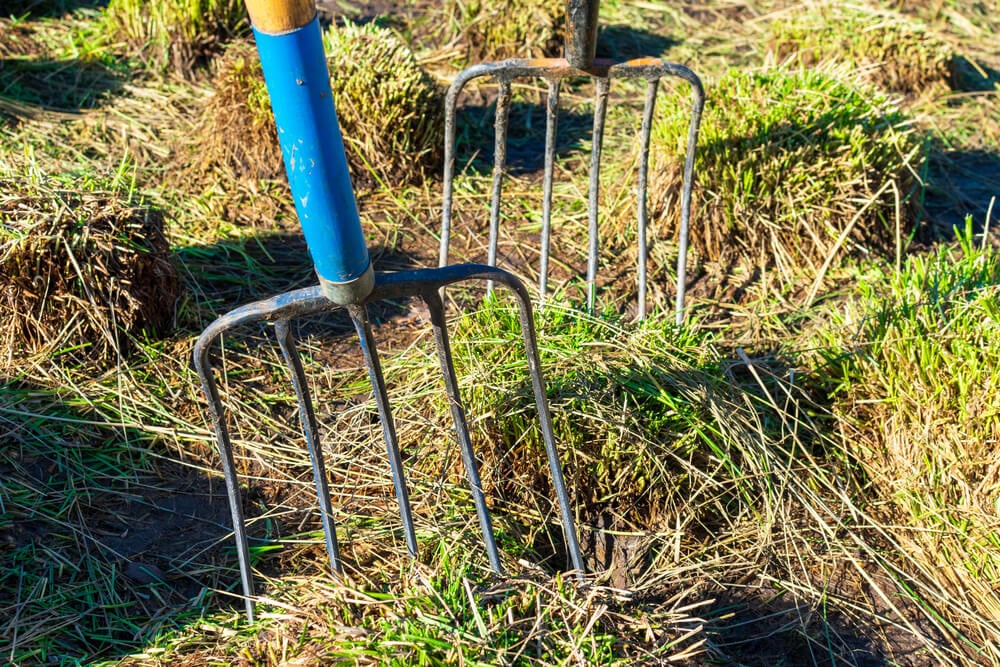
Similar to hay forks but typically with narrower, more closely spaced tines, pitchforks were used for handling loose straw and manure rather than baled hay. Their lighter overall weight makes them easier to mount securely than heavier tools.
A worn, smooth handle with visible grain is considered more desirable than a handle still showing its original varnish.
Grain Scoops
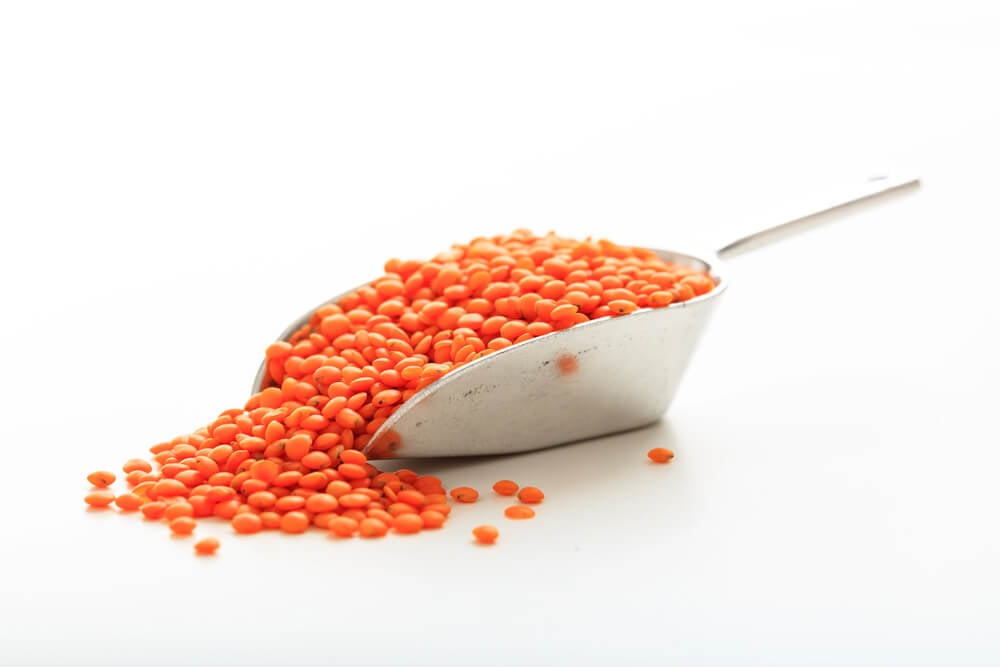
Wide, shallow wooden or metal scoops used for shoveling loose grain have a simple, clean shape that works well as a smaller accent piece rather than a dominant centerpiece. Wooden scoops with a natural aged patina are generally preferred over painted metal versions.
Their compact size makes them a common choice for buyers working with limited wall space.
Ice Tongs
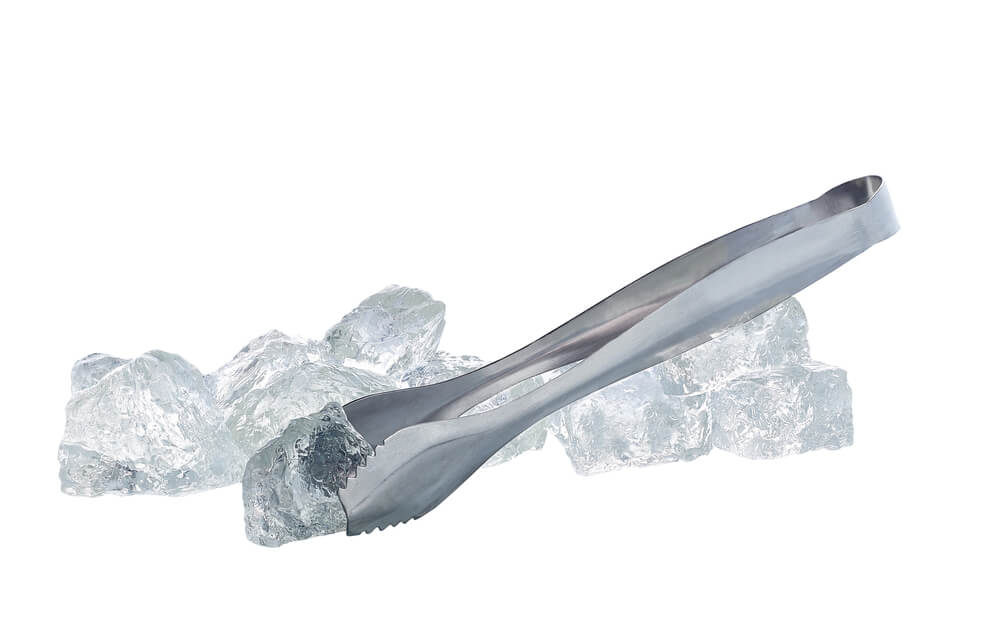
Curved metal tongs originally used for gripping and carrying large ice blocks have an almost sculptural symmetry when hung closed, resembling a pair of hooked pincers. Their relatively small size makes them a popular choice for a grouped display alongside several other small tools.
Rust patterns on the curved gripping ends are viewed as adding character rather than detracting from the piece.
Wash Boards
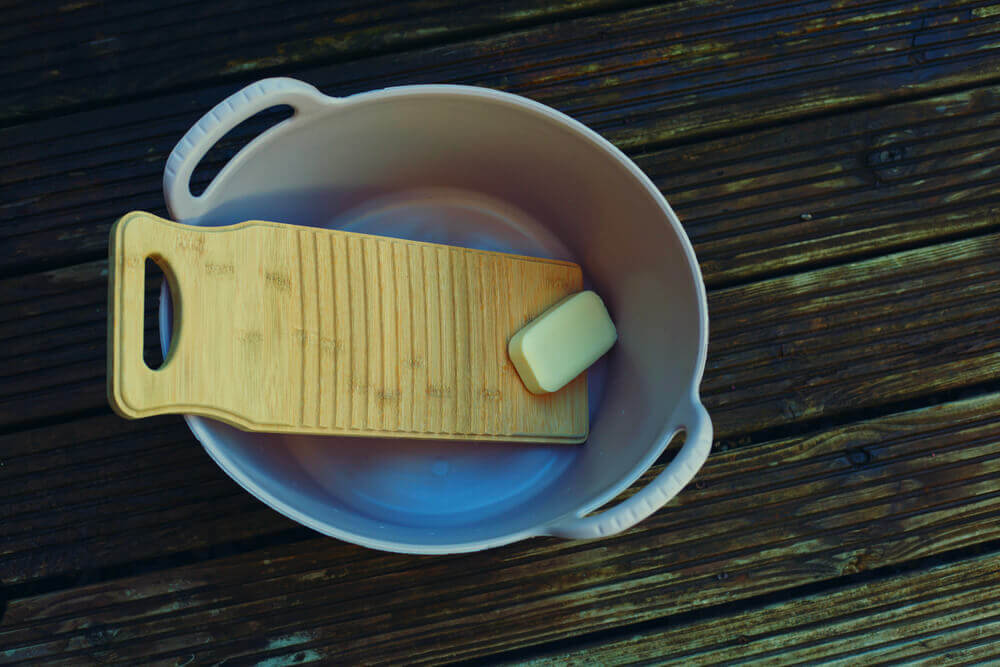
Featuring a corrugated metal or glass surface set into a wooden frame, wash boards were used for scrubbing laundry by hand and are now valued as much for their strong graphic pattern as for their farmhouse association. Boards with a manufacturer’s name stamped or painted on the frame are considered more desirable.
Their flat, rectangular shape makes them easy to mount securely with minimal hardware.
Wooden Yokes
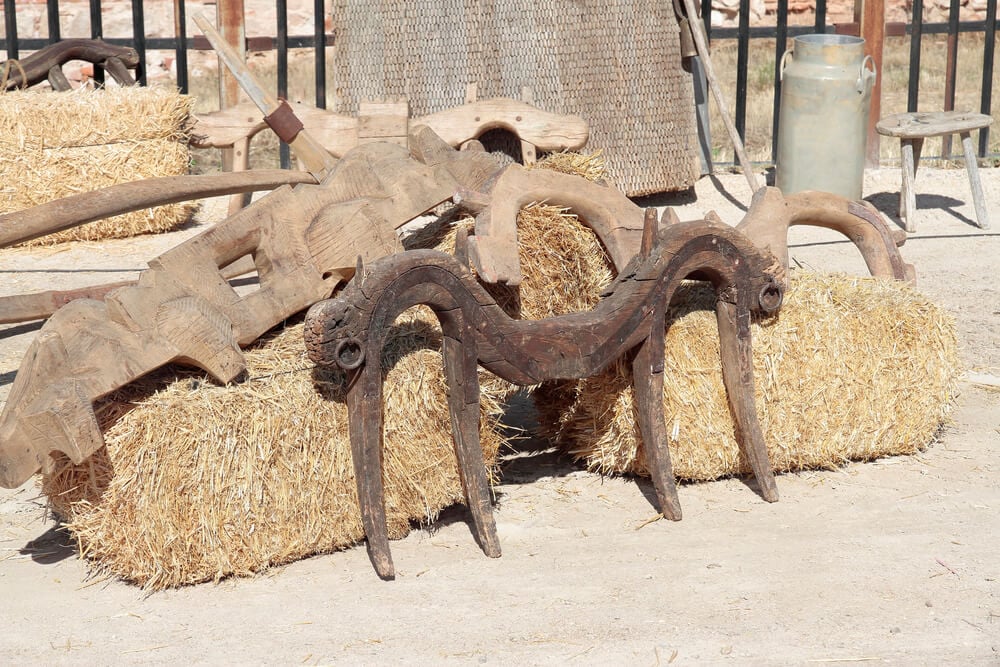
Curved wooden beams originally fitted over the necks of oxen or other draft animals to distribute the load of pulling equipment have a distinctive arched shape that reads clearly even from a distance. The wood’s natural curve, shaped by the animal’s neck over repeated use, is a detail buyers specifically look for as a sign of genuine use rather than a reproduction.
Larger yokes designed for a pair of animals are rarer and typically more valuable than single-animal versions.
Branding Irons
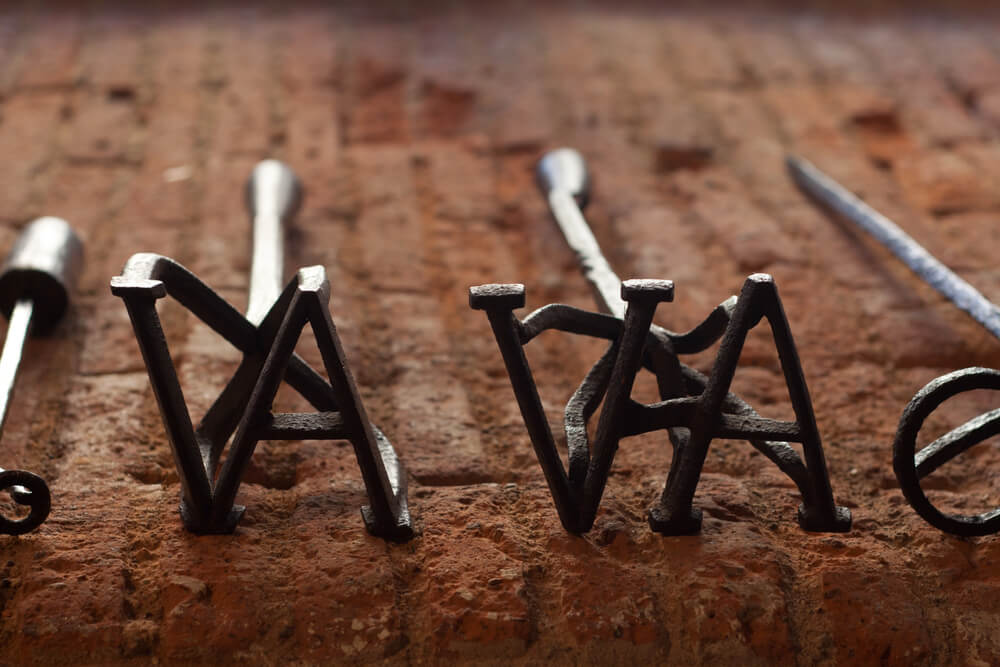
Long metal rods with a distinctive symbol or letter forged into one end, branding irons are compact enough to display in a grouped arrangement showing several different marks together. Handmade irons with an irregular, hand-forged symbol are generally more sought after than later mass-produced versions with cleaner, more uniform lettering.
Their small size and clear identifying mark make them popular with buyers interested specifically in a documented ranch or farm history.
Corn Huskers
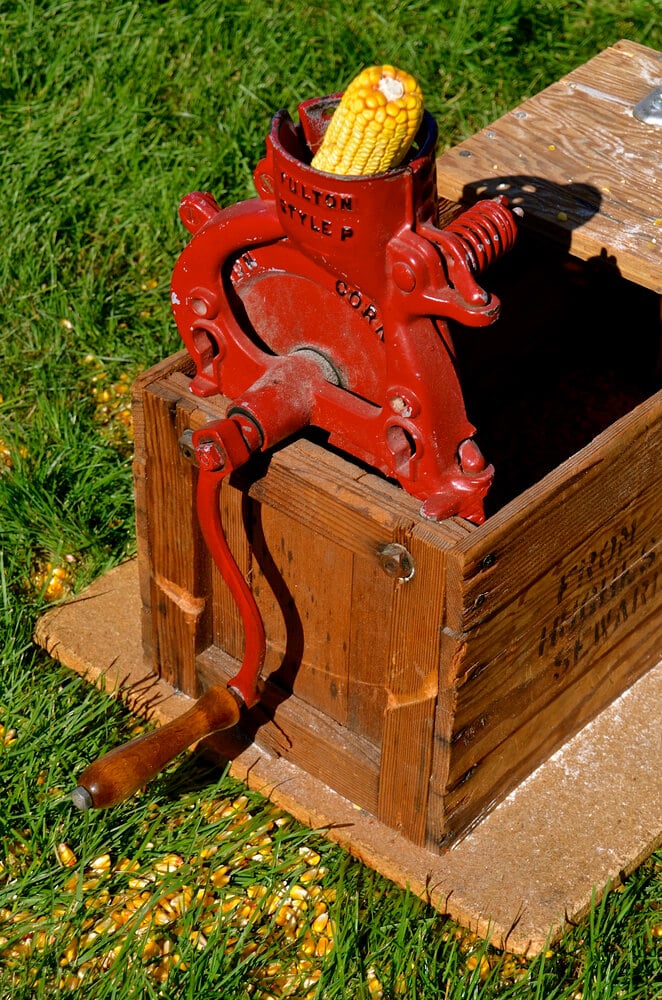
Small hand tools, often a metal hook or peg strapped to the palm with a leather harness, used for stripping husks from ears of corn quickly by hand. Their small size makes them a common choice for a grouped display of several husker variations mounted together.
Leather straps in stable, unbroken condition add noticeably to value, since the leather often deteriorates faster than the metal component.
Barn Lanterns
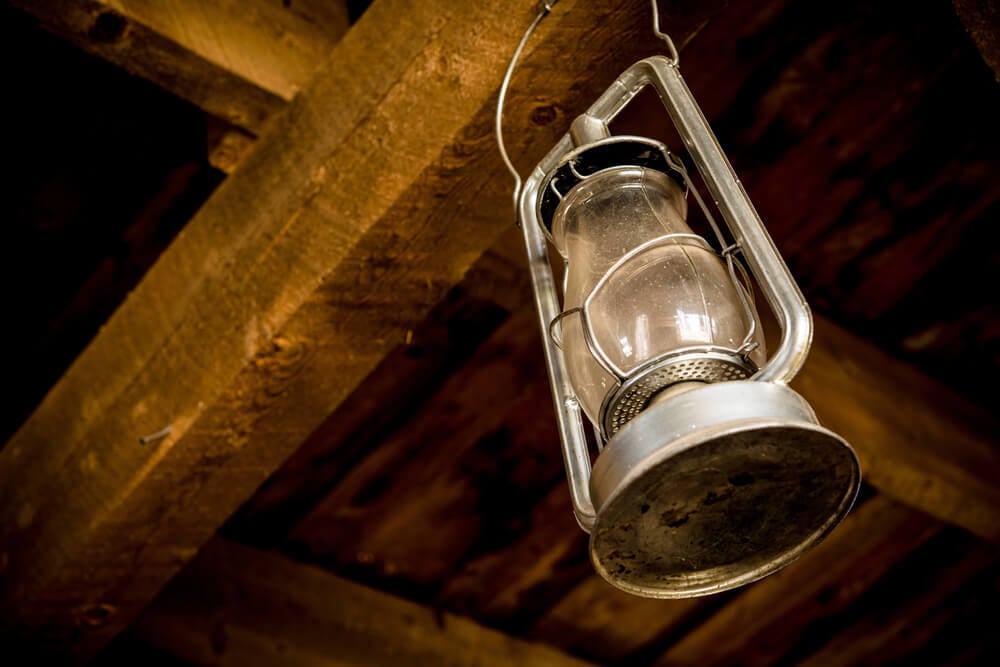
Metal-framed lanterns with a glass globe, originally fueled by kerosene, are prized for the warm, aged patina the metal takes on over decades. A cracked or replaced globe generally lowers value compared to an intact original.
Buyers often hang several lanterns of varying heights together to create a layered display rather than mounting a single lantern alone.
Horse Bits
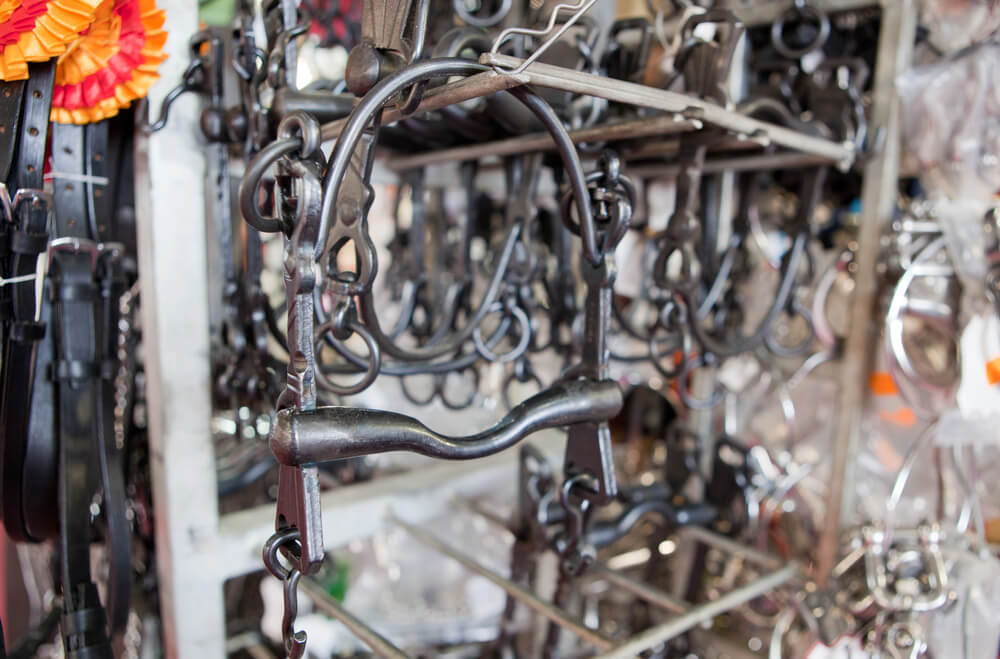
The metal mouthpiece and rings from a horse’s bridle have a compact, geometric shape that works well in a small grouped arrangement alongside other tack-related pieces. Bits with unusual or ornate ring designs are more sought after than plain, standard versions.
Their relatively small scale makes them a popular choice for filling in gaps within a larger themed wall display.
Wooden Rakes
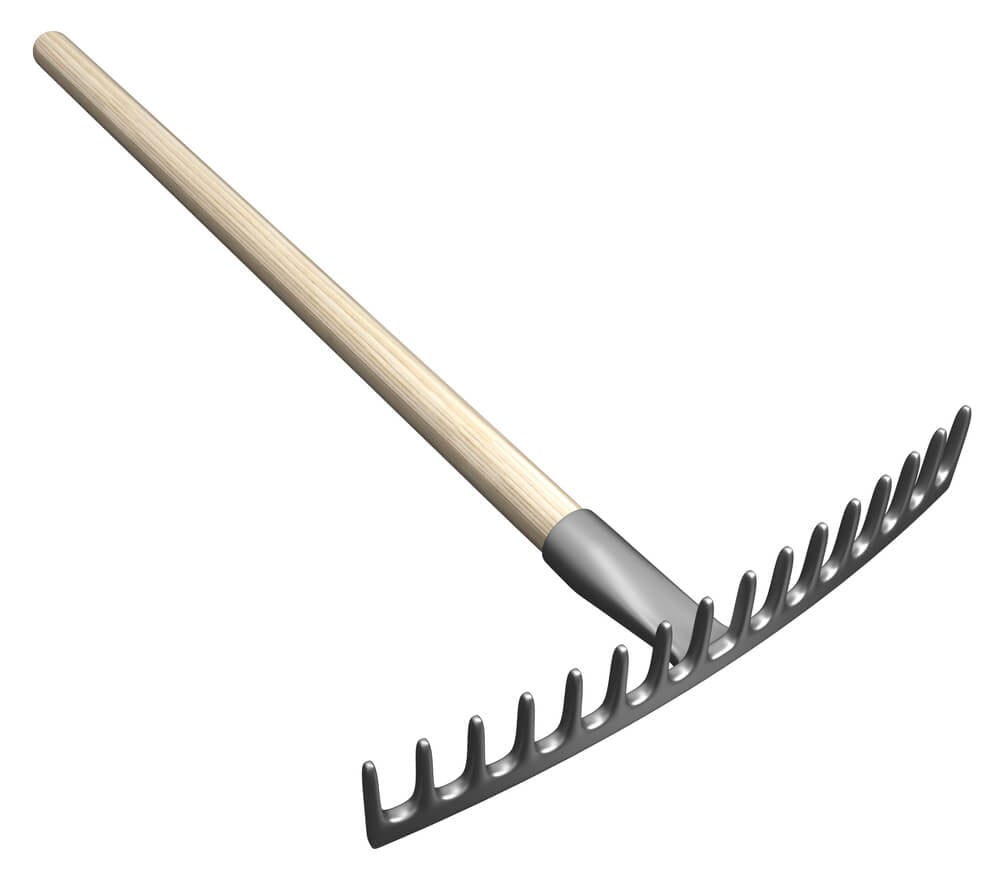
Featuring a row of wooden or metal teeth set into a horizontal crossbar attached to a long handle, hay rakes have a clean, symmetrical shape that reads well from a distance. Rakes with hand-carved wooden teeth, rather than later metal-toothed versions, are generally considered more desirable among collectors focused on earlier production eras.
Their wide horizontal profile makes them a natural match for mounting above a long piece of furniture.
Sickles
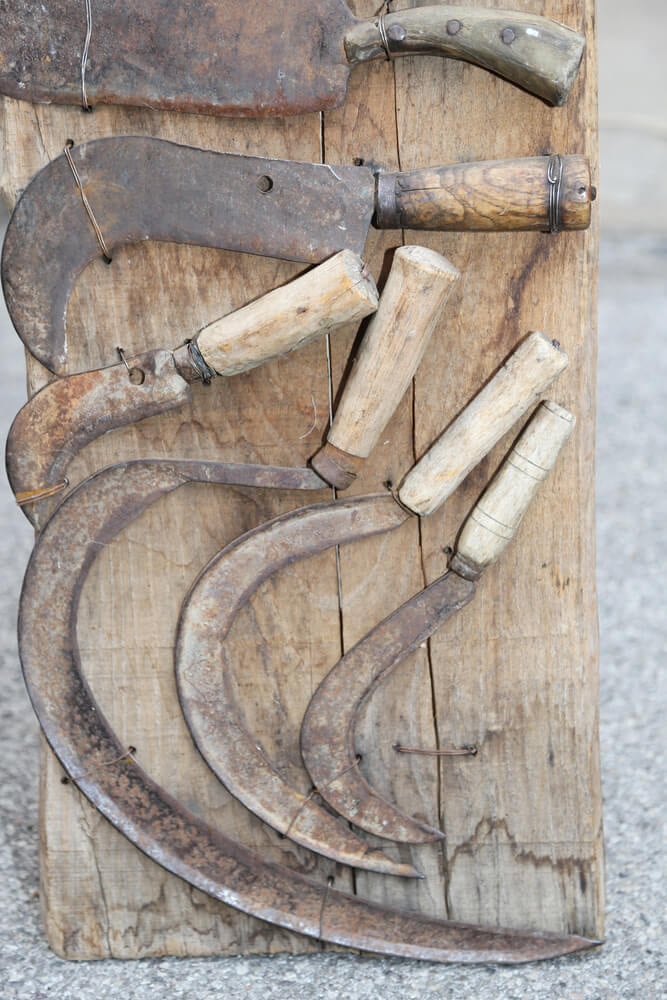
Smaller and more tightly curved than a scythe, the single-handed sickle was used for close cutting work in tighter spaces than a full scythe allowed. Its compact curved blade makes it a popular choice for smaller wall spaces where a full-sized scythe would be impractical.
Wooden handles with a smooth, worn grip are preferred over handles that have been sanded or refinished.
Milk Cans
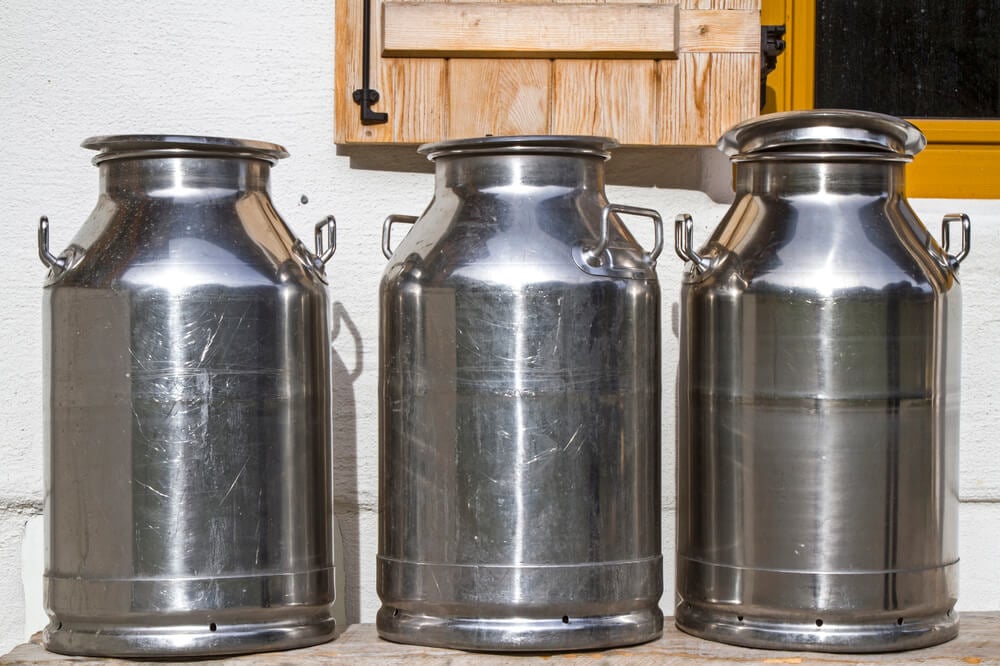
Tall metal cans with a narrow neck and wide base, milk cans are more often displayed standing on the floor than mounted directly on a wall, though smaller versions are sometimes hung using custom brackets. Original dairy or farm names stenciled onto the metal significantly increase value over plain, unmarked cans.
Dents and worn paint are generally left as-is rather than restored.
Butter Churns
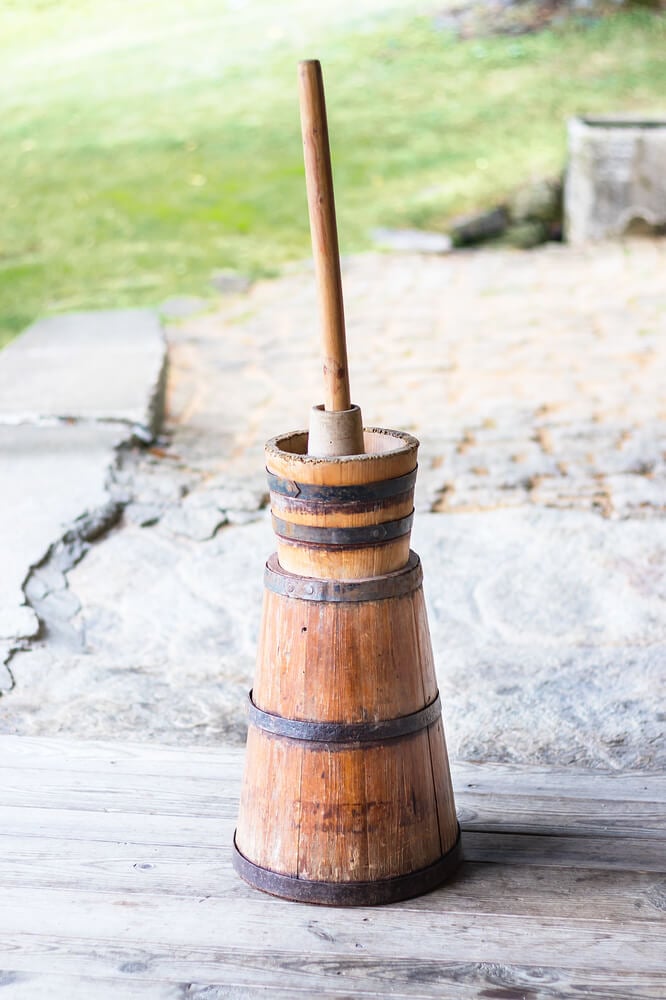
Wooden barrel-style churns with a hand crank or dasher mechanism are valued for their rounded, substantial shape, typically displayed on the floor or a shelf rather than mounted, though the removable dasher itself is sometimes hung separately as a smaller accent piece. Original metal banding around the wooden staves in solid, uncorroded condition adds meaningfully to value.
A churn with its original lid and crank intact is considered a significantly more complete and desirable piece than one missing components.
Grain Sickles with Serrated Blades
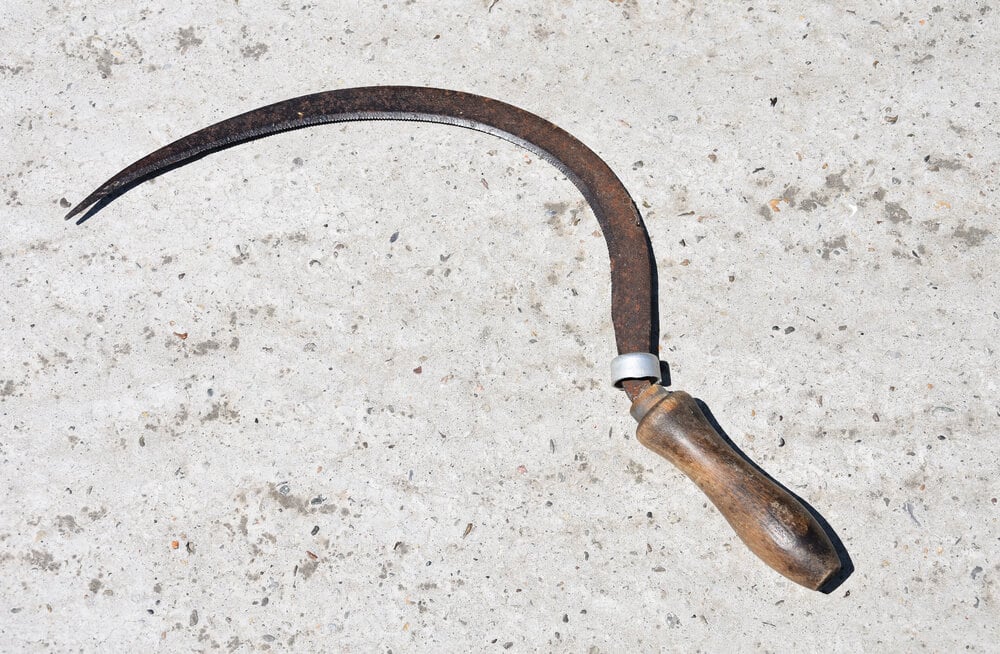
A specific variant of the standard sickle featuring a serrated rather than smooth cutting edge, these were used for cutting tougher grain stalks and have a more textured blade surface that catches light differently than a smooth-edged sickle. Collectors focused specifically on tool variation often seek out both serrated and smooth versions as a matched pair for display.
The serration pattern itself is a detail closely examined for signs of hand-forging versus later machine production.
Wooden Egg Baskets
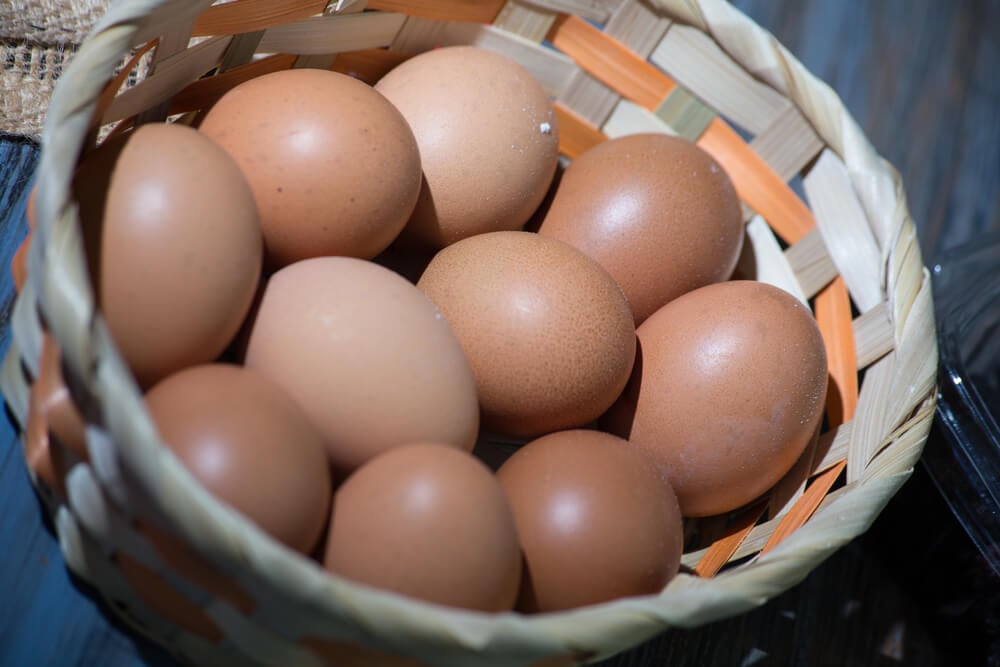
Woven from thin strips of wood rather than wire, egg baskets have a rounded, structural form that works well hung from a single peg or nail rather than mounted flat. Baskets with a tall carrying handle intact are considered more complete and desirable than those with a broken or missing handle.
Their natural, undyed wood tone is generally preferred over baskets that have been stained or painted.
Fence Post Diggers
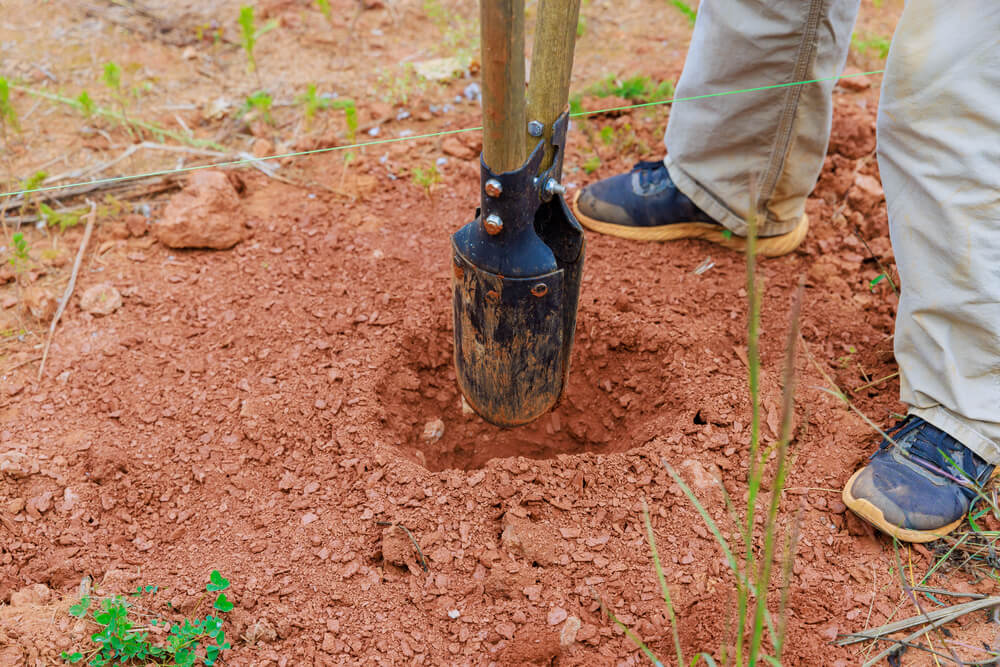
A pair of long wooden handles connected to two hinged metal digging blades, fence post diggers have a distinctive scissor-like shape when hung with the blades slightly open. Their considerable length makes them well suited to a tall, narrow wall space where a horizontal tool would not fit.
Wooden handles with a natural aged gray tone are generally preferred over handles retaining their original paint or varnish.
Wagon Wheels
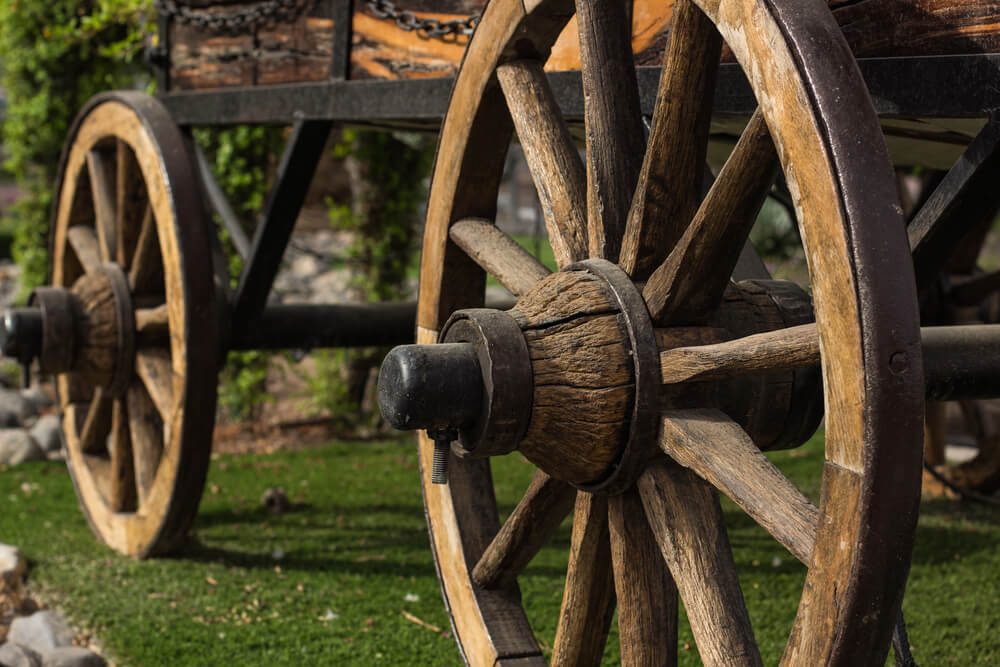
Though often displayed as a standalone piece leaning against a wall rather than fully mounted, smaller wagon wheels are sometimes hung flat using a central bracket. Wheels with the original iron rim intact and a full set of spokes are significantly more valuable than incomplete examples.
Weathered, unpainted wood is generally preferred by buyers over wheels that have been repainted in bright colors.
Grain Flails

A long wooden handle connected by a leather or rope hinge to a shorter wooden striking bar, flails were used for threshing grain by hand and have an unusual jointed shape unlike most other single-piece farm tools. The hinge mechanism itself is a key detail buyers examine, since a broken or replaced hinge significantly changes the tool’s presentation when hung.
Their relative rarity compared to more common tools like rakes or pitchforks makes them a sought-after centerpiece.
Wool Carders
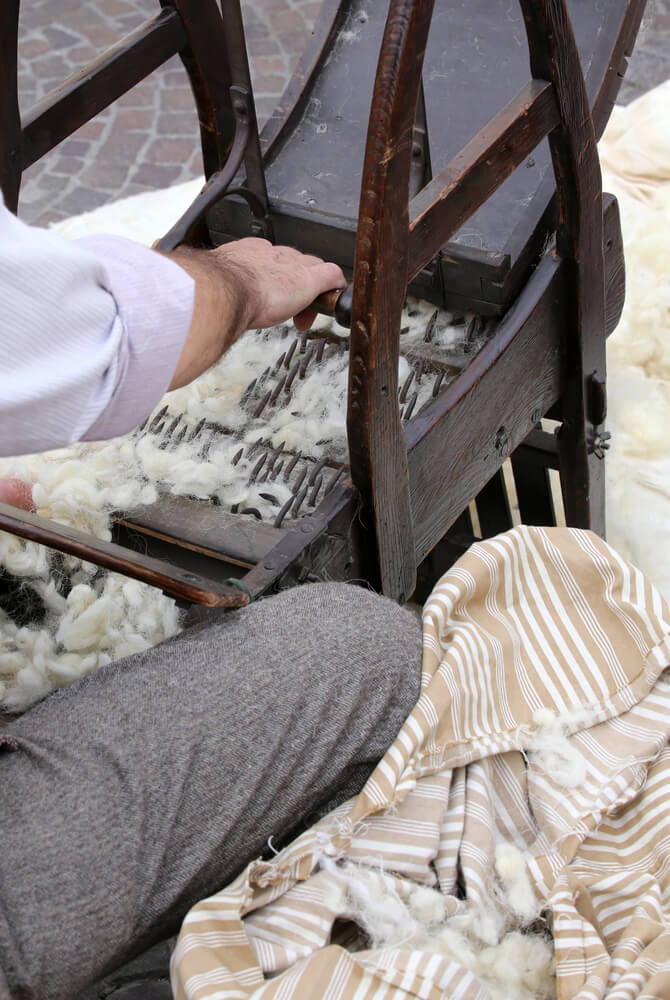
Paddle-shaped tools fitted with rows of short wire teeth, used for combing and aligning wool fibers before spinning, wool carders have a distinctive paired shape since they were typically used two at a time. Buyers specifically seek matched pairs rather than single carders, since a matched set displays more cohesively.
Wire teeth in straight, undamaged condition are preferred over carders with bent or missing teeth.
Cattle Prods
Long wooden or metal rods, sometimes fitted with a small pointed or electrified tip, cattle prods have a simple, elongated shape that pairs well in a grouped display alongside other handling tools like branding irons. Older, non-electric wooden versions are generally more sought after for decorative purposes than later electric models, which read as more clinical than rustic.
Their straightforward shape makes them easy to mount with minimal hardware.
Threshing Forks
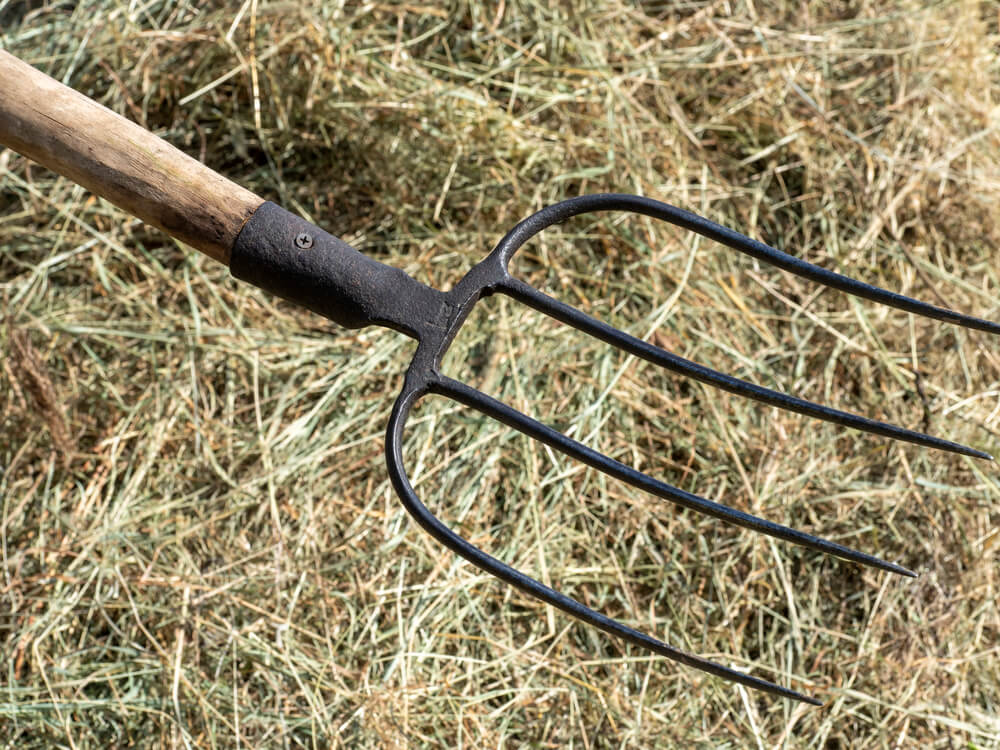
Larger and more heavily built than standard hay forks, threshing forks were designed for handling bulkier loads during grain processing and have a correspondingly bolder, heavier silhouette when displayed. Their substantial size makes them a strong choice for a dominant, single-piece wall display rather than a grouped arrangement.
Wide tine spacing is a detail that helps distinguish threshing forks from standard hay forks in an inventory listing.
Horseshoe Sets
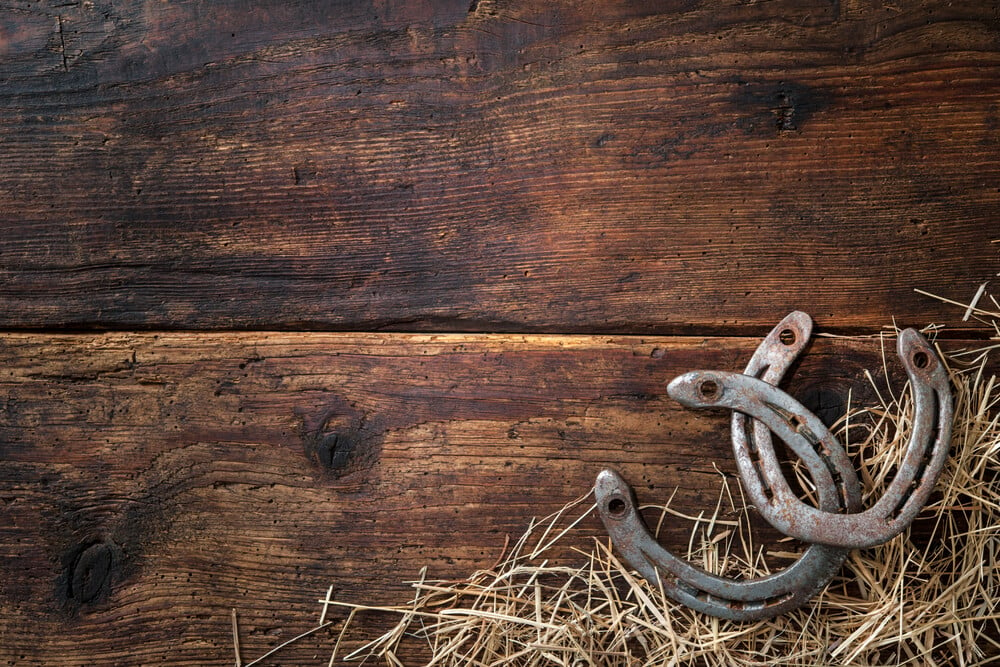
Complete sets of four matching horseshoes, ideally from the same animal and retaining consistent wear patterns, are often arranged in a symmetrical display rather than shown individually. Hand-forged shoes with visible hammer marks are generally more desirable than later, more uniform machine-made versions.
Buyers specifically interested in luck-related folk traditions often seek horseshoes with the open end oriented a particular way, adding a layer of value beyond pure aesthetics.
Well Pump Handles

The cast iron handle and spout assembly from a hand-operated water pump has a strong architectural shape on its own once separated from the pump body, often mounted as a compact accent piece. Original paint in a worn, chipped state is generally preferred over a repainted or powder-coated finish.
Smaller pump handles are popular for tighter spaces where a larger tool would overwhelm the wall.
Rust as the Real Finish

What unites all of these tools on a wall is that their function has been entirely replaced by their form. Nobody hanging a scythe above a fireplace intends to cut hay with it again, and that shift is exactly what allows a tool once considered worn out or obsolete to become valuable in an entirely different way.
The rust, the dents, and the smoothed handles are not flaws to buyers. They are the evidence of the work the tool actually did.
That is also why restoration tends to hurt value rather than help it. A tool stripped of rust and repainted looks new, and new is precisely what nobody is looking for in this category.
The appeal lies in the decades of visible use, displayed now not as a working object but as a record of it.
More from Go2Tutors!

- The Romanov Crown Jewels and Their Tragic Fate
- 13 Historical Mysteries That Science Still Can’t Solve
- Famous Hoaxes That Fooled the World for Years
- 15 Child Stars with Tragic Adult Lives
- 16 Famous Jewelry Pieces in History
Like Go2Tutors’s content? Follow us on MSN.



