28 Photos That Captured History in the Making
A single frame can settle an argument that a thousand pages of text cannot. Some of the most important pictures ever made were taken by people who had never held a camera before, or who were simply standing in the right doorway at the right second.
Others were planned for weeks and still surprised everyone.
These photographs changed how people understood wars, elections, rights movements and their own planet. Each one froze a moment that was still unfolding when the shutter closed.
View From the Window at Le Gras
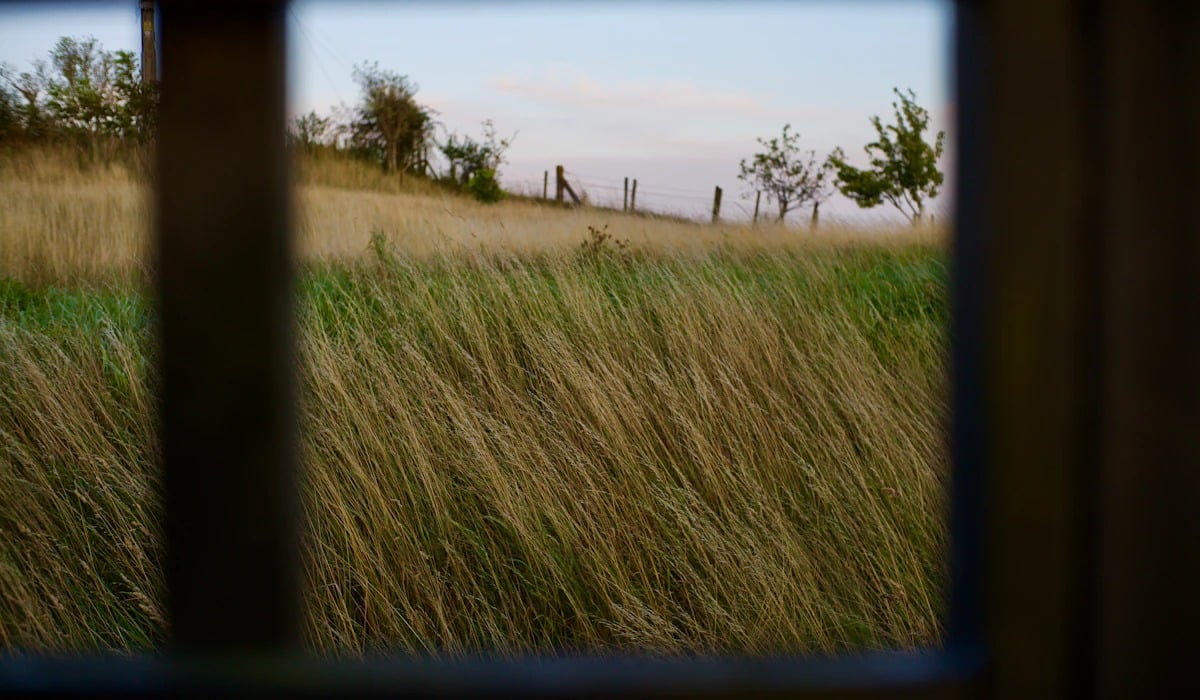
Joseph Nicephore Niepce made this image around 1826 or 1827 from an upstairs window of his family estate at Saint-Loup-de-Varennes in France. He coated a pewter plate with bitumen of Judea, a light-sensitive asphalt, and left it exposed for hours or possibly days.
The result is a ghostly view of rooftops and a courtyard, with sunlight falling on both sides of the buildings because the sun moved across the sky during the exposure. It is generally regarded as the oldest surviving camera photograph, and it is kept today at the Harry Ransom Center at the University of Texas at Austin.
Robert Cornelius Looks Into His Own Lens
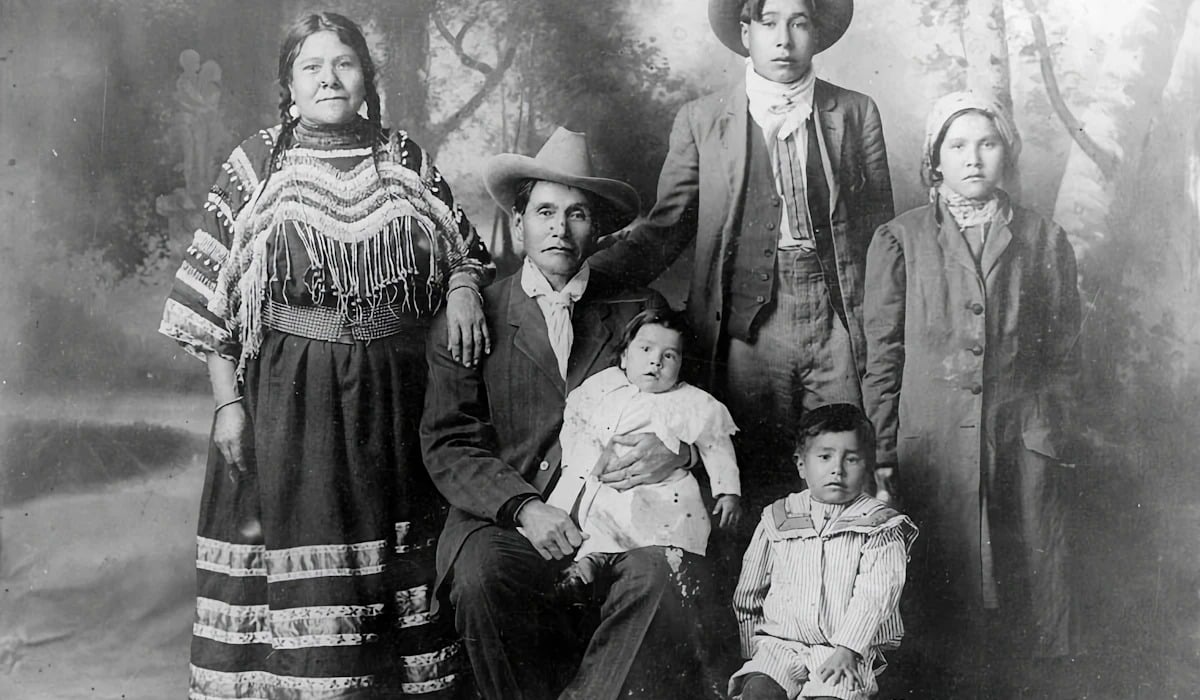
In 1839, a Philadelphia lamp maker and metalworker named Robert Cornelius set up a camera behind his family’s store, uncovered the lens, ran into the frame and held still. The daguerreotype shows a young man with tousled hair and folded arms, slightly off center, looking faintly surprised.
It is widely described as the earliest surviving photographic portrait of an American and is often called the first selfie. The Library of Congress holds the image.
Cornelius later opened one of the earliest portrait studios in the United States, then returned to the family lighting business.
Lewis Hine and the Breaker Boys
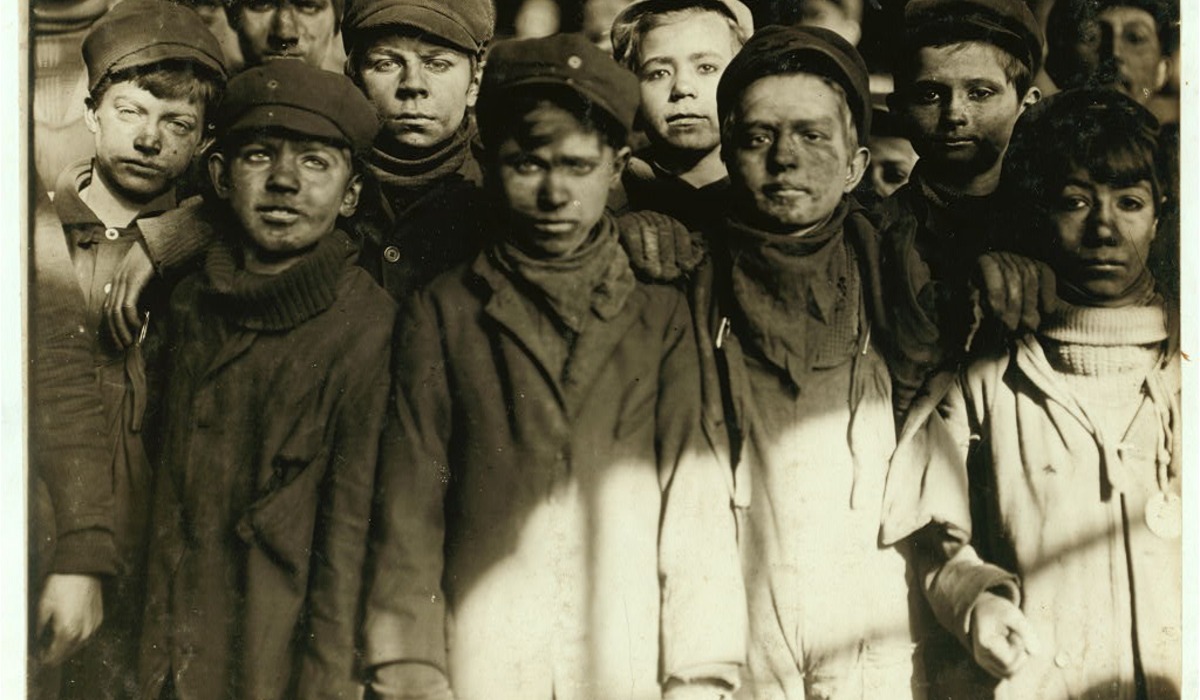
Lewis Hine worked as an investigative photographer for the National Child Labor Committee, and around 1911 he photographed boys sorting coal at a breaker in South Pittston, Pennsylvania. The picture shows rows of children hunched over chutes, faces darkened by coal dust, with a supervisor standing among them.
Hine sometimes posed as a fire inspector or a salesman to get inside mines and mills. His images gave reformers hard evidence that words alone could not supply, and they fed the long campaign that led to federal child labor limits in the Fair Labor Standards Act of 1938.
John T. Daniels Records the First Flight
At Kill Devil Hills near Kitty Hawk, North Carolina, on December 17, 1903, Orville Wright set up his camera and asked John T. Daniels of the nearby lifesaving station to squeeze the bulb if anything happened.
Daniels, who by most accounts had never taken a photograph before, caught the Wright Flyer just after it lifted off, with Wilbur running alongside. The flight lasted about 12 seconds and covered roughly 120 feet.
The glass plate negative is held by the Library of Congress, and the image remains the only photograph of that first powered flight.
Lunch Atop a Skyscraper
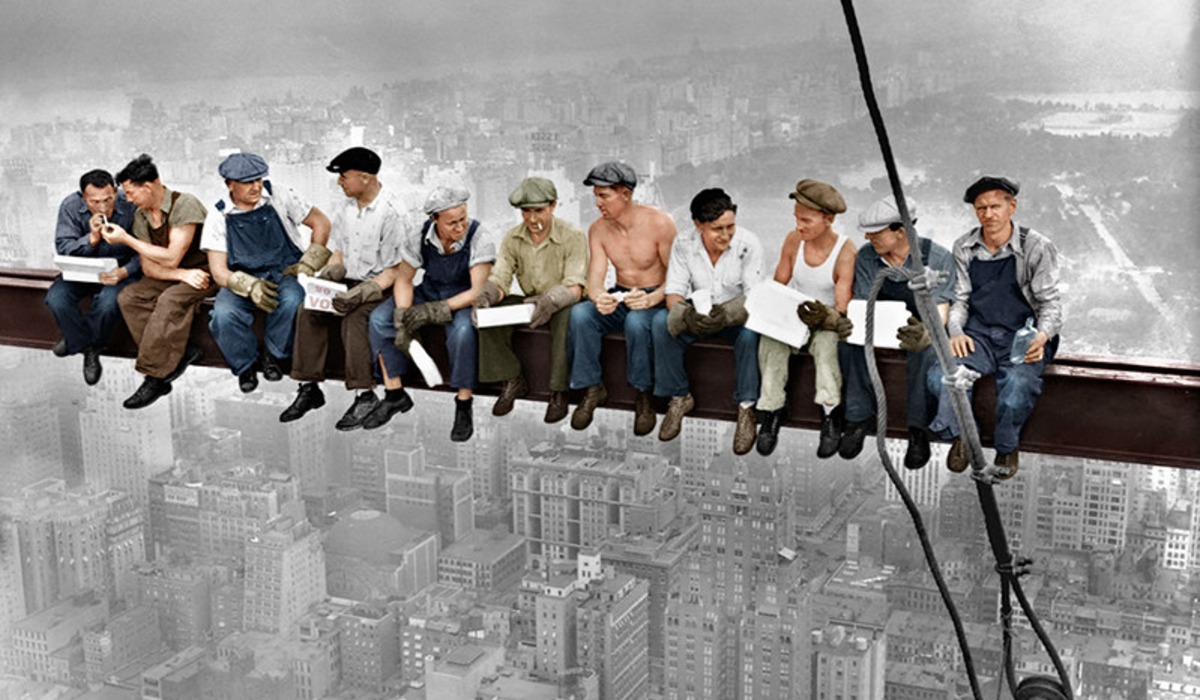
Eleven ironworkers sit on a steel beam high above Manhattan, eating lunch and chatting with nothing below their dangling feet. The photo was taken on September 20, 1932, during construction of the RCA Building at Rockefeller Center, and it ran in the New York Herald Tribune in early October.
It was a promotional stunt, though the danger was real. For decades it was credited to Charles Ebbets, but researchers have since pointed out that Thomas Kelley and William Leftwich were also on the beams that day, and the identity of the person behind the camera remains uncertain.
Dorothea Lange Finds the Migrant Mother
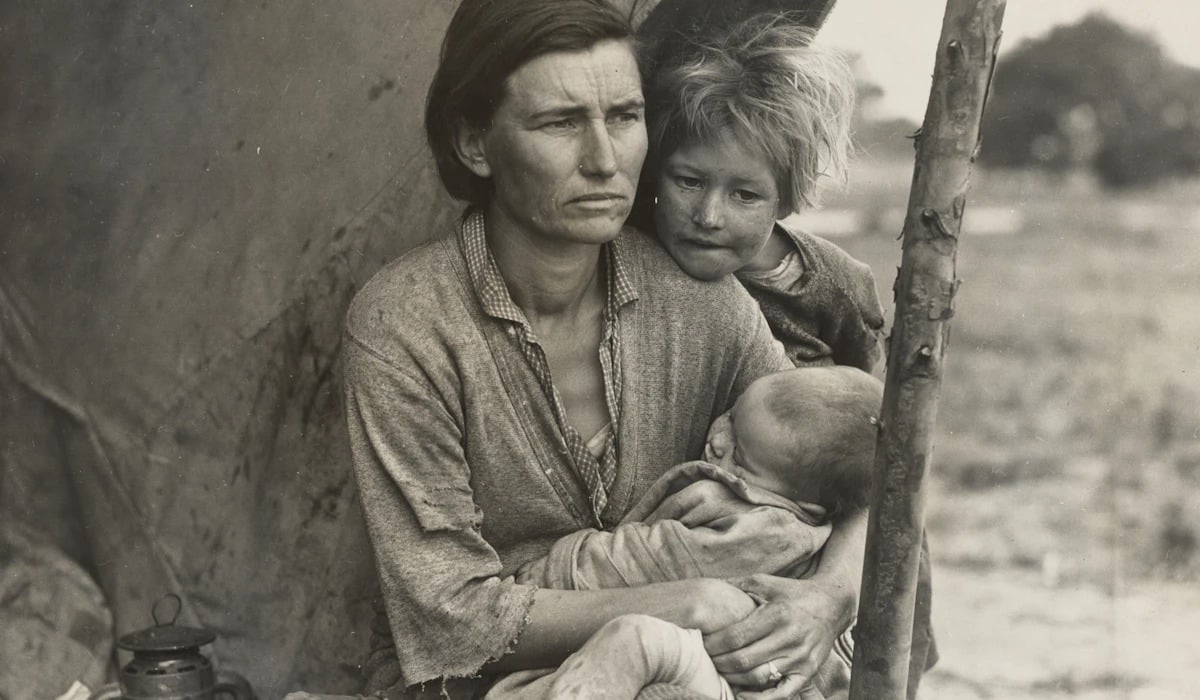
In March 1936, Dorothea Lange was driving home from an assignment for the Resettlement Administration when she turned back toward a pea pickers’ camp in Nipomo, California. There she photographed Florence Owens Thompson, a mother sitting in a lean-to with her children pressed against her shoulders.
Lange made only a handful of exposures in about ten minutes. Newspapers ran the pictures within days, and federal officials sent food to the camp.
The final frame, with the woman’s hand raised to her chin, became the defining face of the Great Depression.
Arthur Rothstein in a Dust Storm
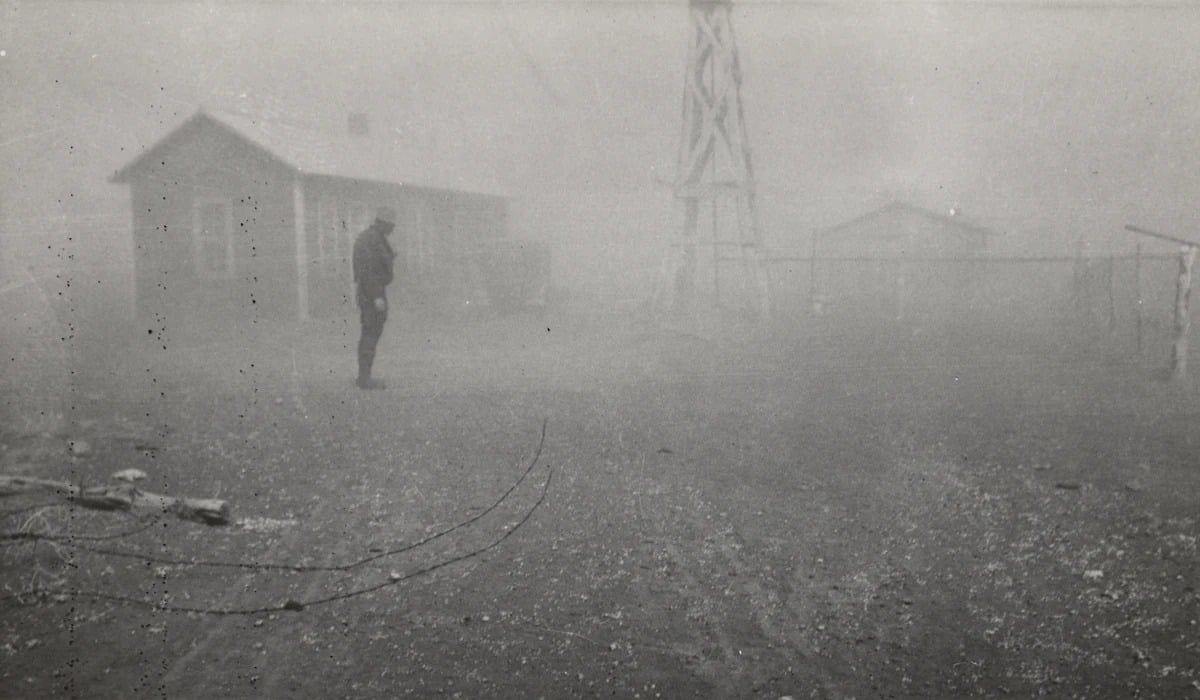
Arthur Rothstein was a young photographer for the Resettlement Administration when he reached Cimarron County, Oklahoma, in April 1936. His photograph shows farmer Arthur Coble and his two young sons walking toward a shed half buried in drifting soil, bent against the wind.
It is often titled Fleeing a Dust Storm, and Rothstein later acknowledged arranging elements of some of his Dust Bowl scenes. The picture became the visual shorthand for the Dust Bowl, a disaster caused by drought, heavy plowing and relentless wind across the southern plains.
Sam Shere at Lakehurst
The German airship Hindenburg caught fire on May 6, 1937, while landing at Naval Air Station Lakehurst in New Jersey, and 36 people died. International News Photos photographer Sam Shere was among the press crews waiting for the arrival, and he is said to have raised his camera from the hip and taken a single frame.
The picture shows the giant hull wrapped in flame, its nose still pointed upward above the mooring mast. Alongside Herbert Morrison’s radio report, the image effectively ended the era of passenger airships within a few years.
Robert Capa on Omaha Beach
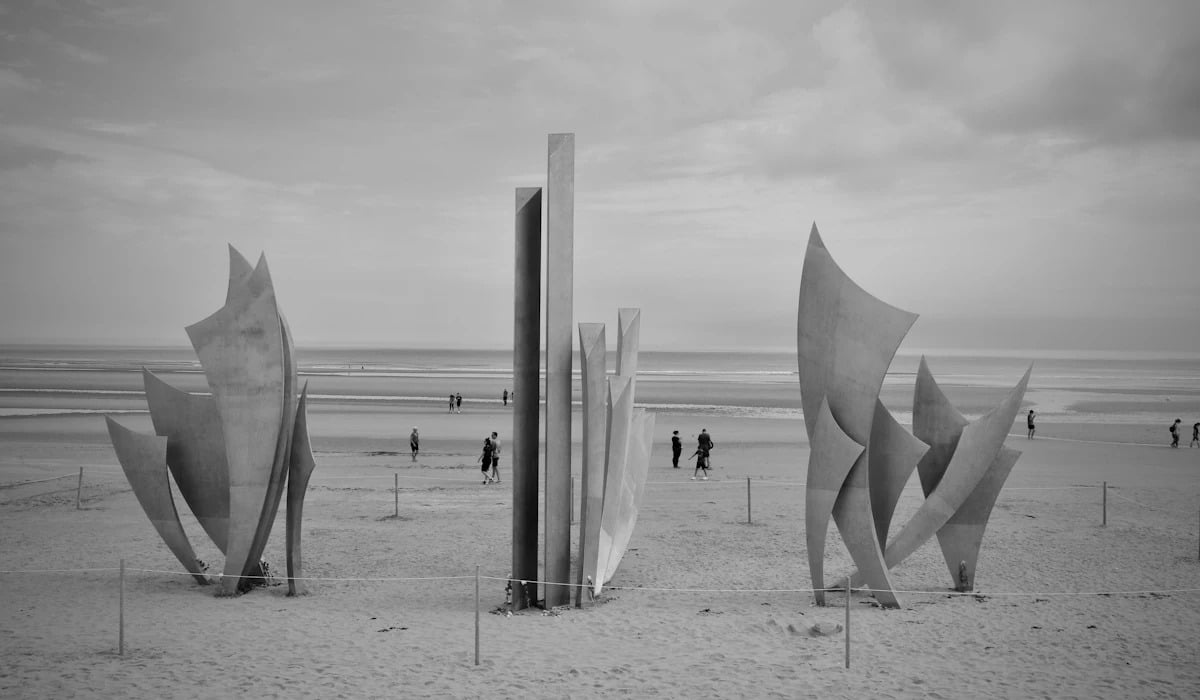
Robert Capa waded ashore with the first wave of American troops at Omaha Beach on June 6, 1944, shooting under fire as men sheltered behind steel beach obstacles. He shipped his film back to the Life office in London, where, according to the long-told story, a darkroom accident ruined most of it.
Only around eleven frames survived, blurred and grainy, and they are now known as the Magnificent Eleven. That blur, partly a result of the mishap, made the pictures feel more like a soldier’s memory than a posed scene, and they still shape how the landings are imagined.
Joe Rosenthal at Iwo Jima
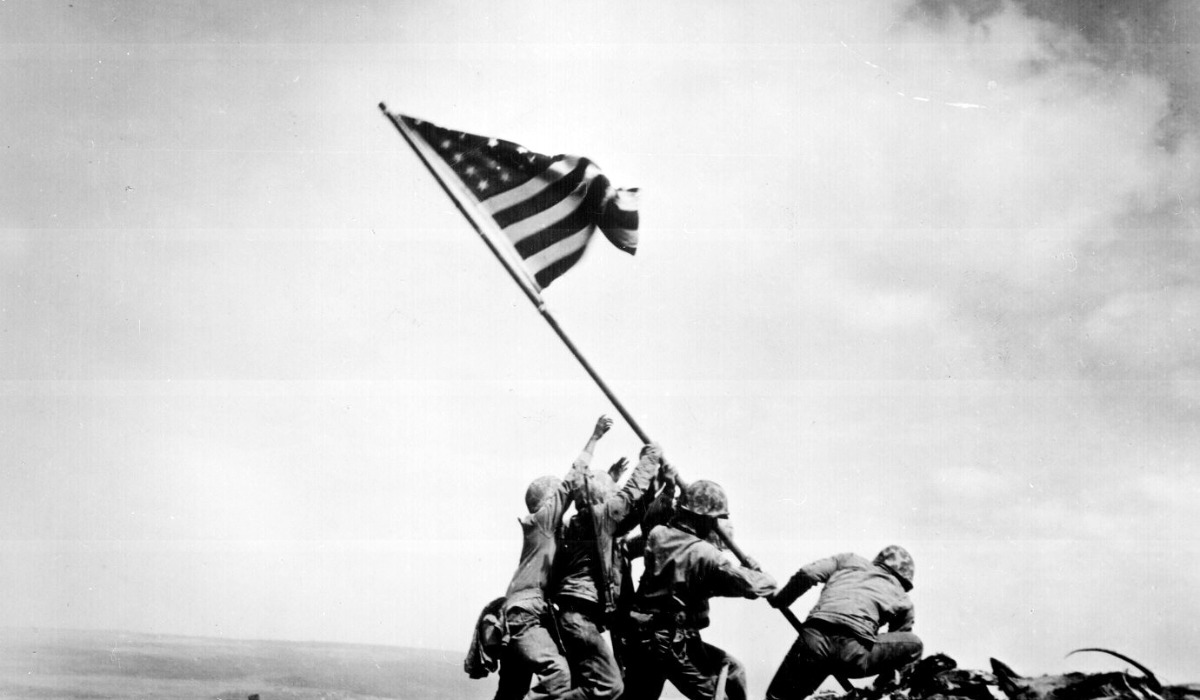
Associated Press photographer Joe Rosenthal climbed Mount Suribachi on Iwo Jima on February 23, 1945, and caught six Marines straining to plant a large American flag in the rubble at the summit. It was actually the second flag raising on the peak that day, replacing a smaller flag hoisted earlier.
Rosenthal did not see the result until it had already been printed in newspapers across the United States, and some readers wrongly assumed it was posed. The photograph won the Pulitzer Prize for Photography in 1945 and served as the model for the Marine Corps War Memorial in Arlington, Virginia.
Yevgeny Khaldei Over the Reichstag
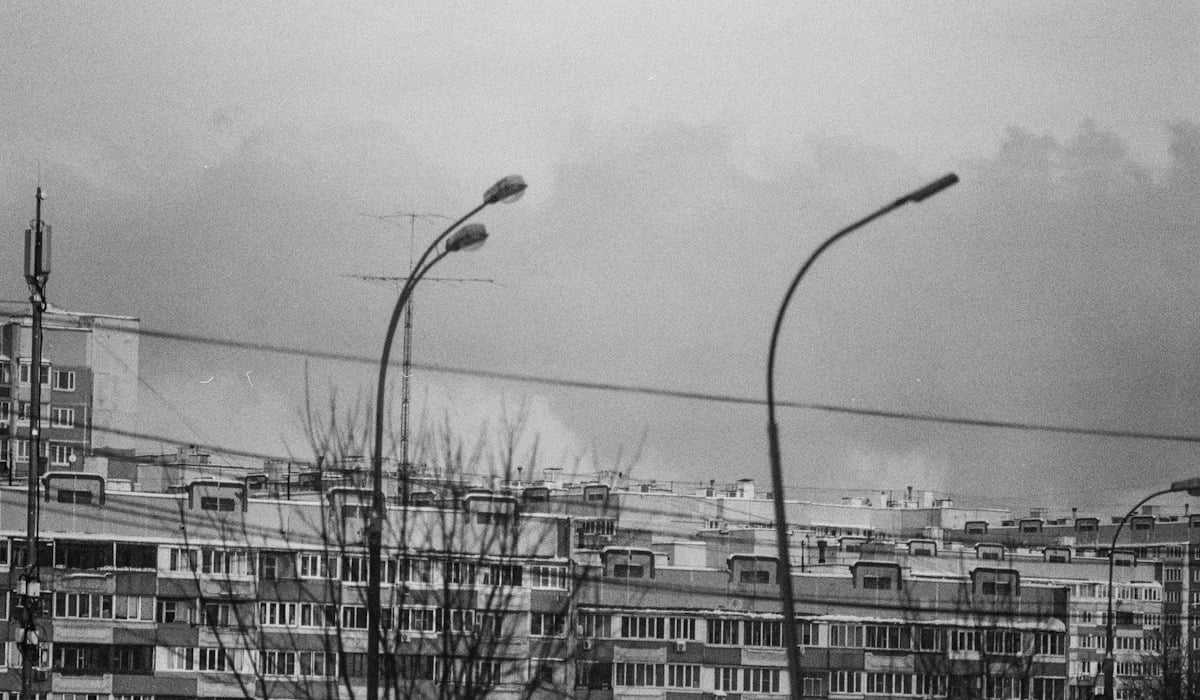
Soviet photographer Yevgeny Khaldei photographed a Red Army soldier raising the hammer and sickle over the Reichstag in Berlin on May 2, 1945. The flag had reportedly been sewn from tablecloths, and the scene was restaged after the actual capture of the building.
Before publication, Khaldei’s editors noticed that one soldier appeared to wear a wristwatch on each arm, a hint of looting, so the extra watch was retouched out. Smoke was also darkened in the sky for drama.
The picture became the Soviet answer to the flag at Iwo Jima.
Alfred Eisenstaedt in Times Square
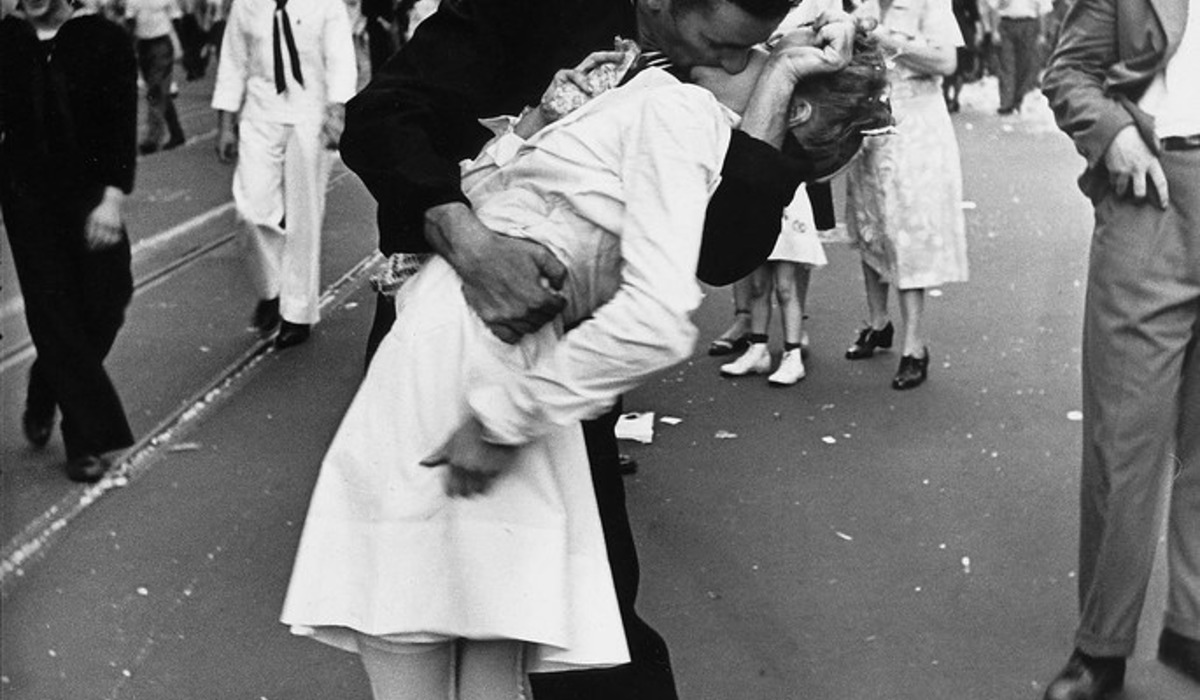
Crowds poured into Times Square on August 14, 1945, as news of the Japanese surrender spread, and Life photographer Alfred Eisenstaedt caught a sailor sweeping a woman in a white dress into a kiss. Navy photographer Victor Jorgensen captured the same moment from a slightly different angle.
The identities of the two people were disputed for decades, and later accounts suggested the woman had not known the sailor at all. That detail has complicated how the picture is seen, but it remains the picture most Americans associate with the end of World War II.
A Captured V-2 Looks Back at Earth
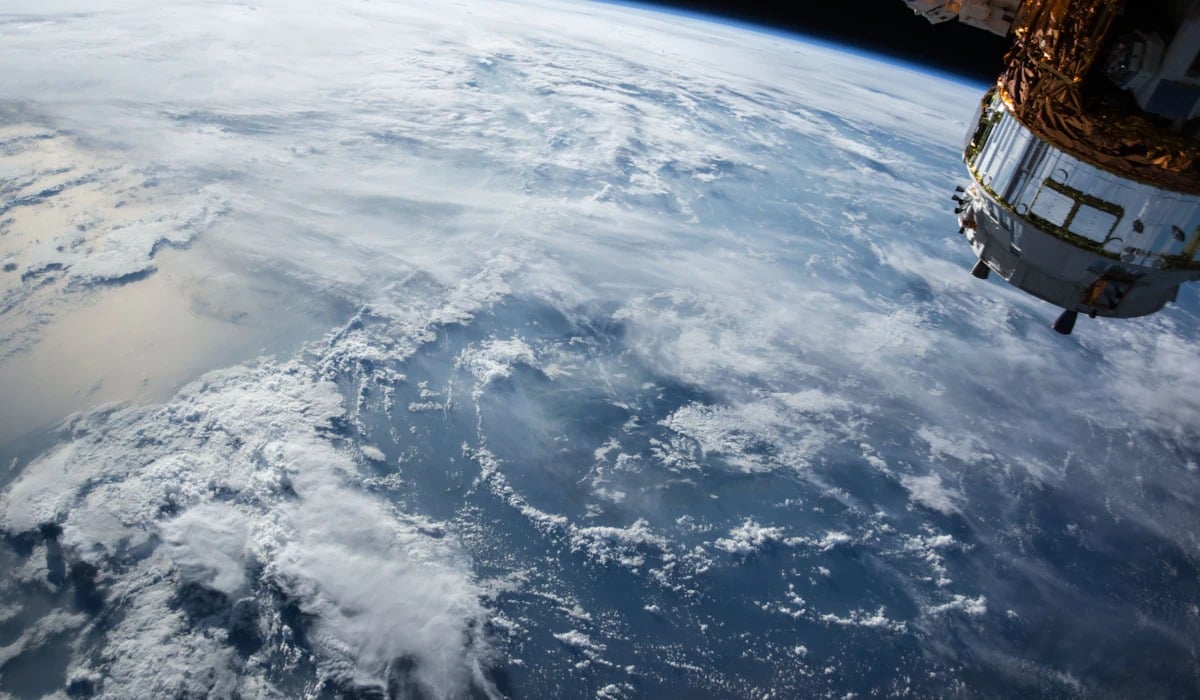
A team working with the Johns Hopkins Applied Physics Laboratory launched a captured German V-2 rocket on October 24, 1946, from White Sands, New Mexico, carrying a 35mm motion picture camera mounted inside. The camera clicked a frame every second or so as the rocket climbed to about 65 miles, well above the usual boundary of space.
The rocket then crashed, but the film survived inside a steel cassette. The grainy black and white frames show clouds and a curving horizon, the first photographs ever taken of Earth from space, more than a decade before the first satellite reached orbit.
Margaret Bourke-White at the Spinning Wheel
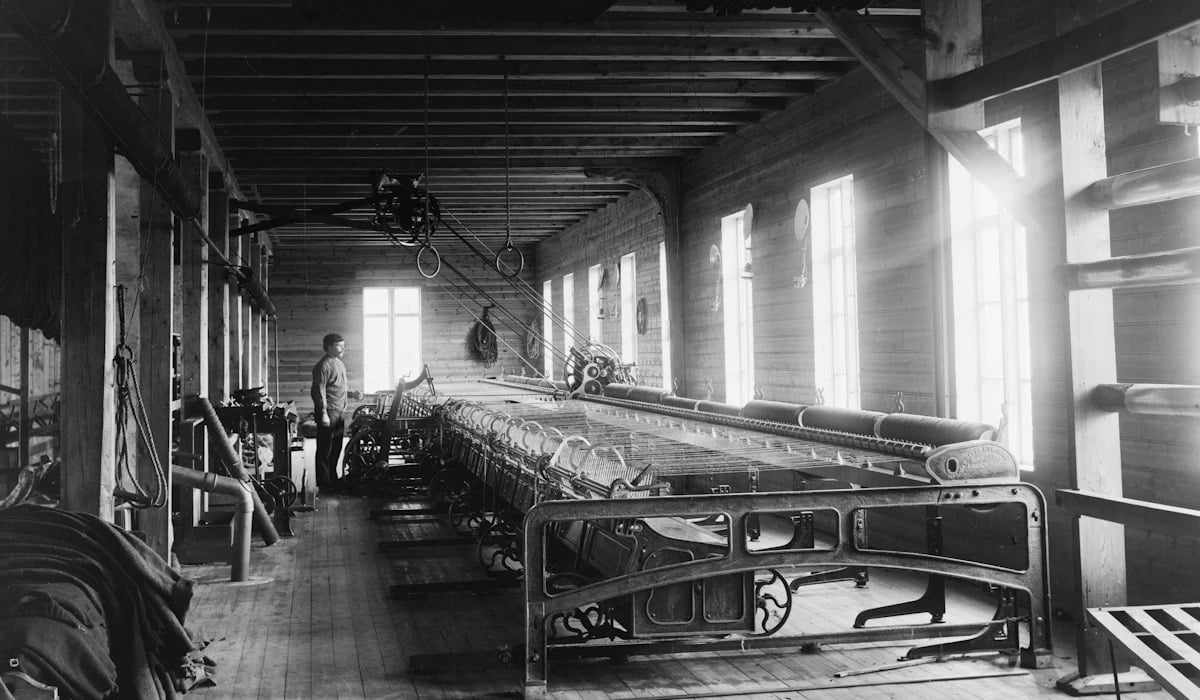
Life sent Margaret Bourke-White to India in 1946, and she was told that before photographing Mohandas Gandhi she should learn to use the spinning wheel, his symbol of self-reliance. Her photograph shows the wheel in the foreground with Gandhi reading in the background, lit by a single window.
The image ran as Gandhi was pressing for Indian independence and opposing the coming partition, and it is still the portrait of him that most people picture first. Bourke-White was one of the last journalists to interview him, just hours before his assassination in January 1948.
Truman Holds Up a Wrong Headline
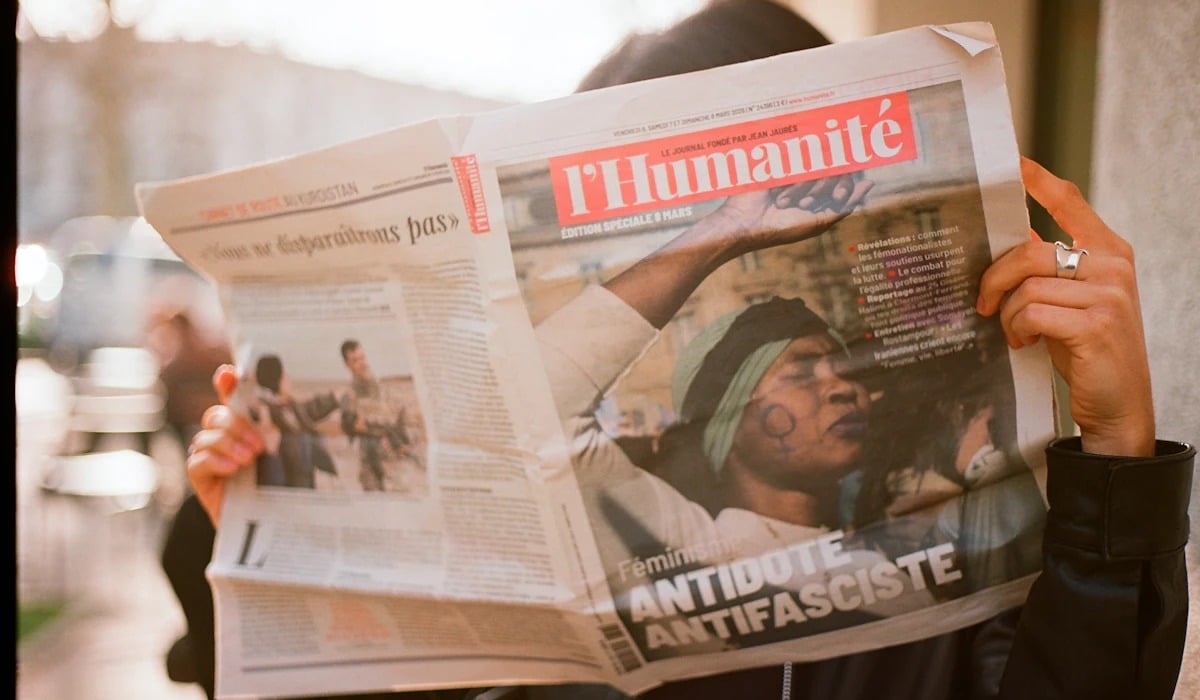
President Harry S. Truman stood on November 3, 1948, at the back of his train at St.
Louis Union Station and held up an early edition of the Chicago Daily Tribune with the banner Dewey Defeats Truman. The paper had gone to press on early returns and confident polling, and Truman had won.
The National Gallery of Art credits its print to Byron H. Rollins of the Associated Press, and W.
Eugene Smith also photographed the moment. The broad grin on Truman’s face did more to embarrass the pollsters than any editorial could.
Arthur Sasse Catches Einstein Off Guard
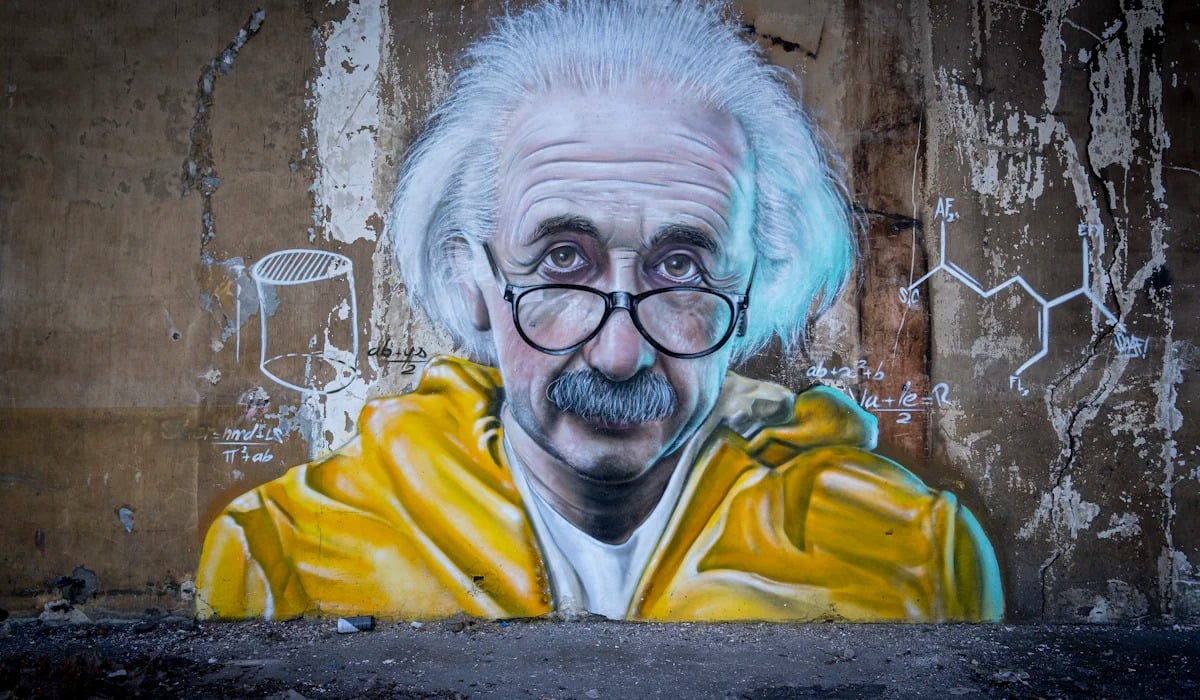
Albert Einstein turned 72 on March 14, 1951, and International News Photos photographer Arthur Sasse followed the physicist to a car after a celebration in Princeton, New Jersey. Asked for one more smile after a long day of cameras, Einstein stuck out his tongue instead, and Sasse fired at exactly the right instant.
Einstein liked the result enough to order copies, and a print he signed sold at auction in 2017 for 125,000 dollars. The photo shaped how the public imagined the most famous scientist of the century, playful and impatient rather than remote.
Rosa Parks Rides Up Front
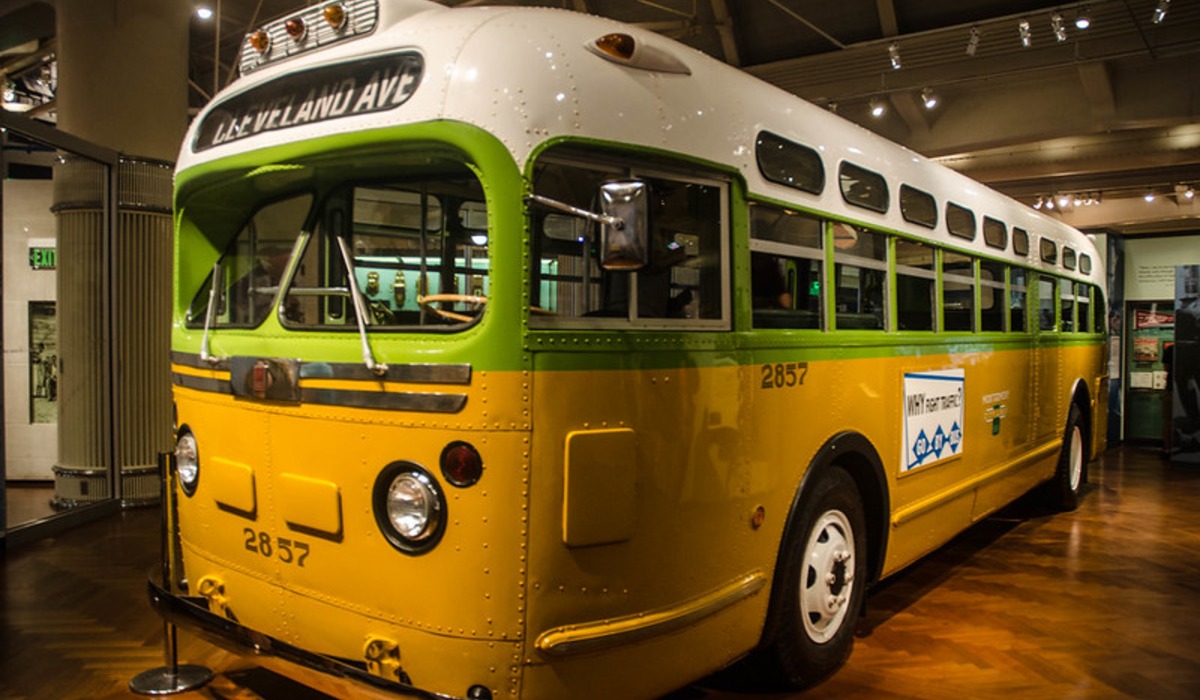
The day after Montgomery, Alabama, integrated its buses following a Supreme Court decision, on December 21, 1956, Rosa Parks was photographed sitting near the front of a city bus. Seated behind her was Nicholas Chriss, a United Press reporter, and the picture was arranged for the press.
The boycott had lasted more than a year. Although it was not taken on the day of her arrest in 1955, it became the defining image of the boycott’s success and of a movement that was only gathering strength.
Will Counts at Little Rock
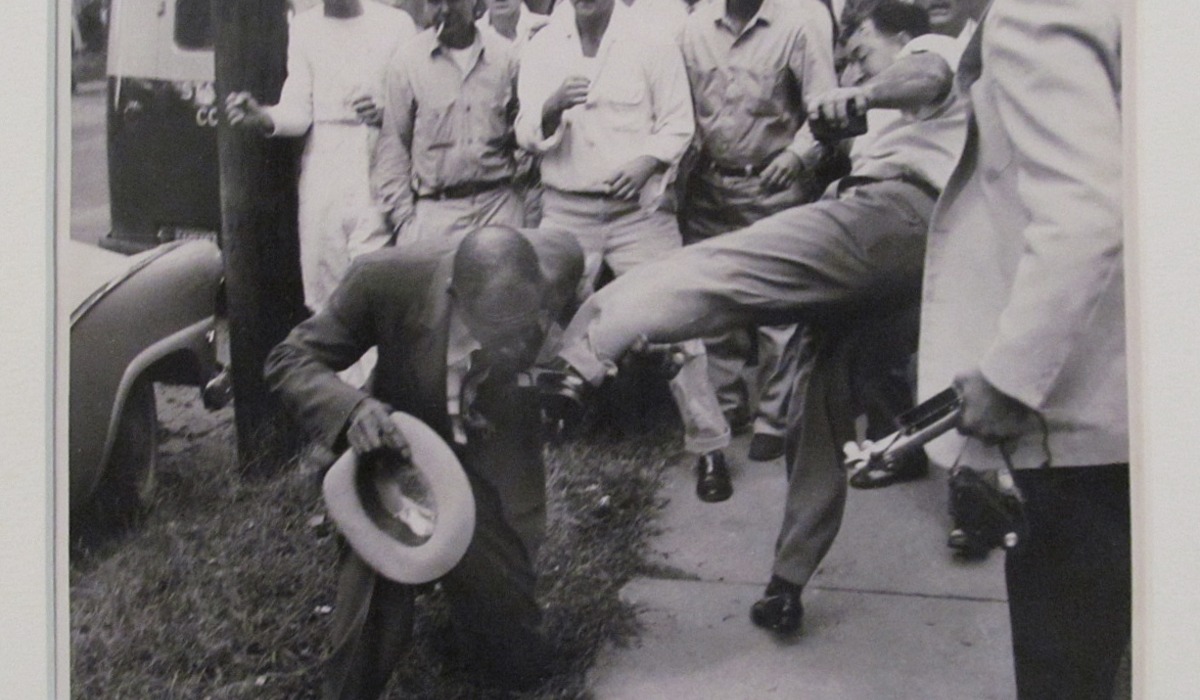
Fifteen-year-old Elizabeth Eckford arrived alone on September 4, 1957, at Little Rock Central High School, separated from the eight other Black students who were set to integrate the school. Arkansas Democrat photographer Will Counts captured her walking past a jeering crowd, with Hazel Bryan shouting behind her.
Eckford is calm, dark glasses on, books in hand, while the faces behind her are twisted with anger. Decades later, Eckford and Bryan briefly reconciled, a coda that drew its own wave of attention.
The image spread across the country and helped push President Dwight D. Eisenhower to send federal troops later that month.
Peter Leibing and Conrad Schumann
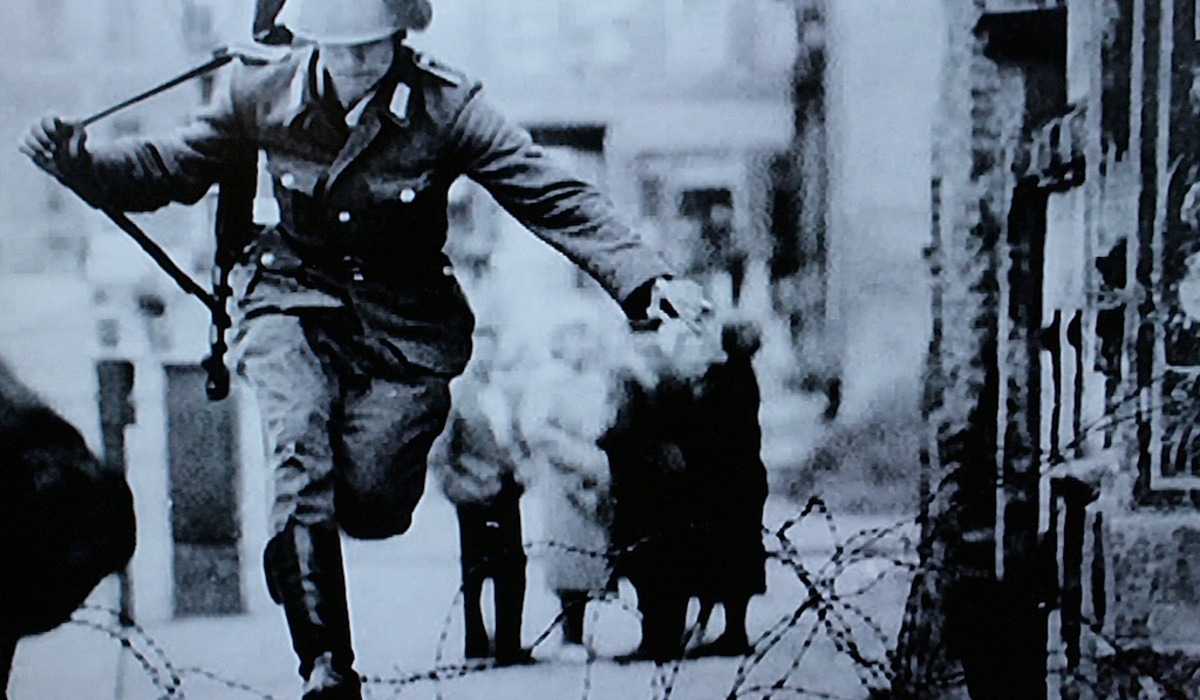
Two days after East Germany began sealing off West Berlin, on August 15, 1961, 19-year-old East German border guard Conrad Schumann stood on Bernauer Strasse beside a low coil of barbed wire. Photographer Peter Leibing had been watching him and guessed he might jump.
When Schumann leapt over the wire, dropping his rifle, Leibing caught him in midair. The picture, often called the Leap into Freedom, became a defining image of the early Cold War.
The barbed wire was soon replaced by the concrete wall that stood until 1989.
Neil Leifer Stands Over Liston
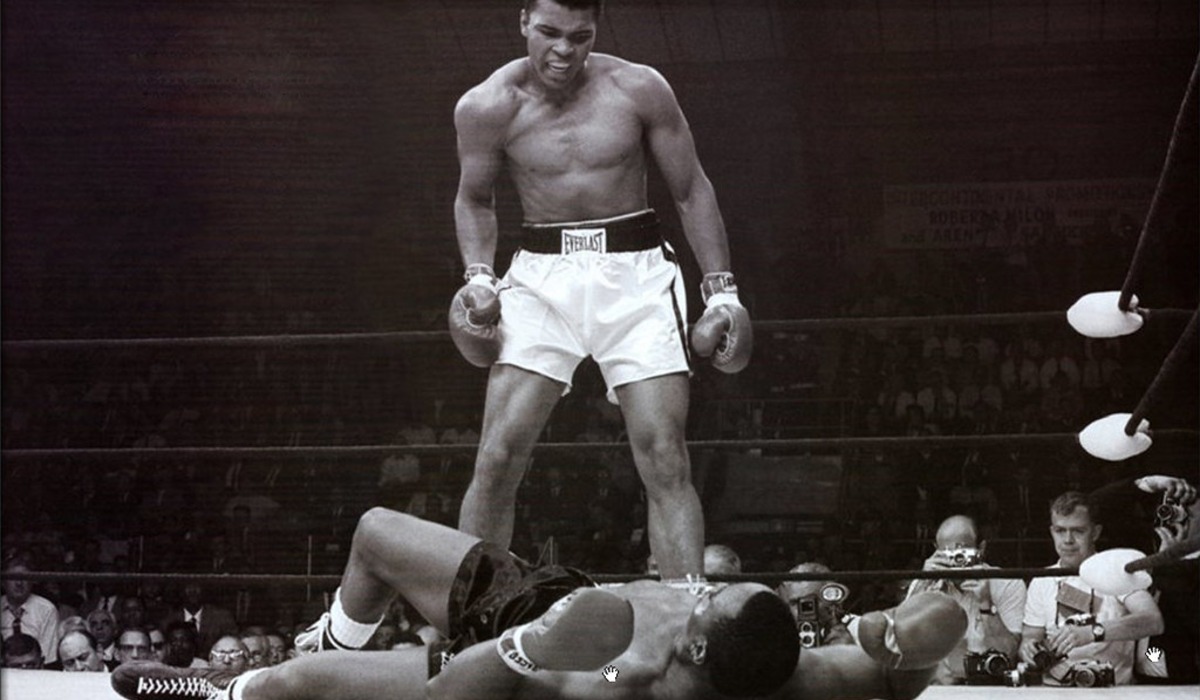
Muhammad Ali knocked out Sonny Liston in Lewiston, Maine, on May 25, 1965, in the first round of their rematch, a punch so quick that many in the arena missed it. Sports Illustrated photographer Neil Leifer was seated at ringside when Ali stood over the fallen Liston, shouting at him to get up.
Leifer was only 22 at the time, and his seat placement turned out to be the decisive advantage. Another photographer across the ring caught the same moment from the opposite side, but Leifer’s angle became the definitive image of the fight and of Ali’s defiance.
John Dominis in Mexico City
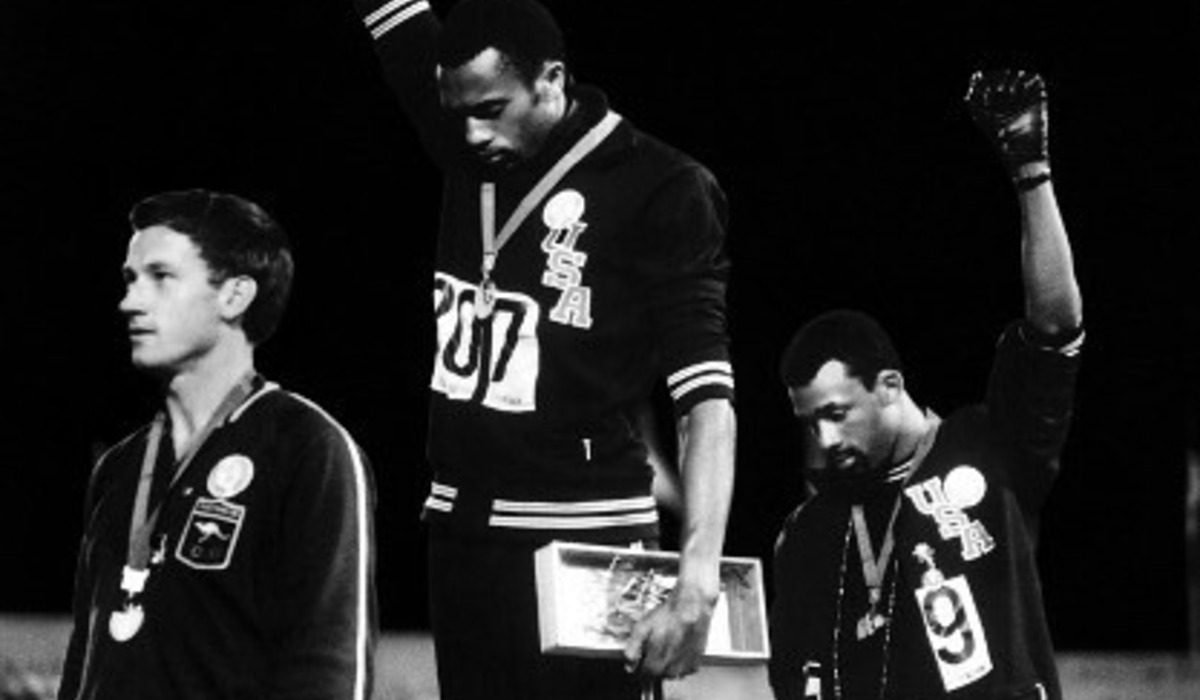
After the 200 meters on October 16, 1968, at the Mexico City Olympics, gold medalist Tommie Smith and bronze medalist John Carlos raised gloved fists on the podium during the national anthem. Life photographer John Dominis was one of several photographers who captured the moment.
Both Americans wore black socks with no shoes to represent poverty, and silver medalist Peter Norman of Australia wore a badge supporting their cause. The two Americans were sent home from the Games, but the image became one of the defining pictures of the civil rights era in sport.
Earthrise From Apollo 8
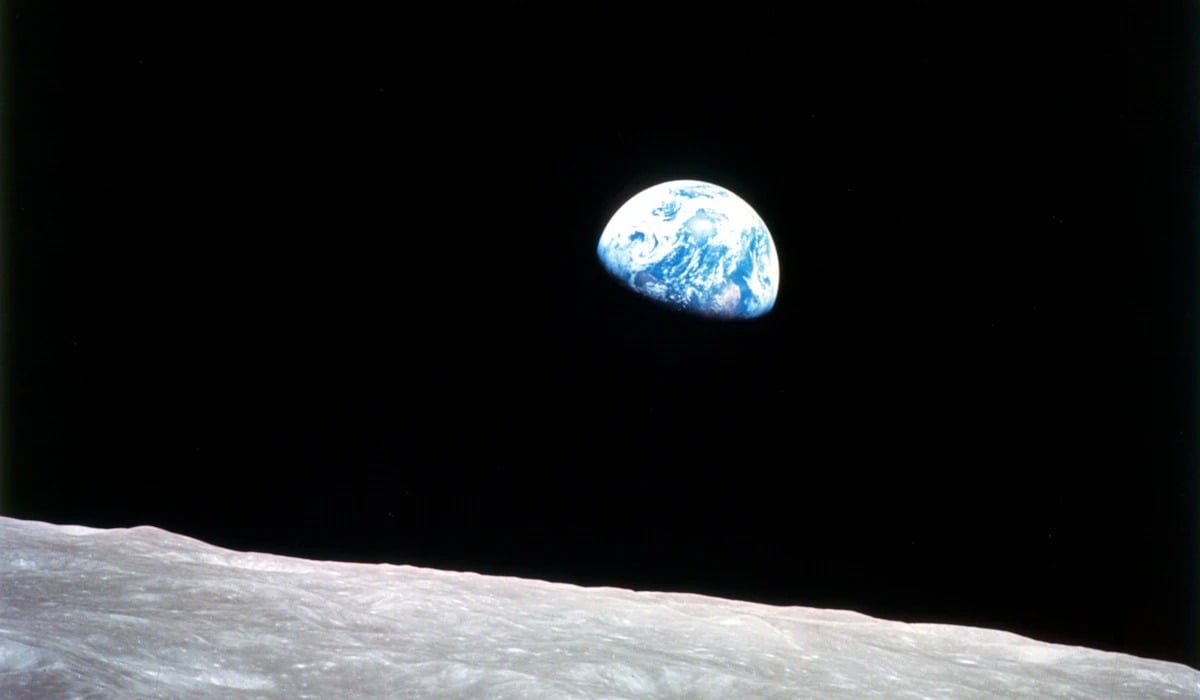
Astronaut Bill Anders was photographing the lunar surface from Apollo 8 on December 24, 1968, when Earth rose over the moon’s horizon. He switched to color film and caught the blue planet hanging above a gray landscape.
The crew had been focused on the moon and had not planned to look back. Anders, Frank Borman and Jim Lovell were the first humans to orbit the moon.
Earthrise became a rallying image for the environmental movement, and it is often described as one of the most influential environmental photographs ever taken.
Buzz Aldrin on the Moon
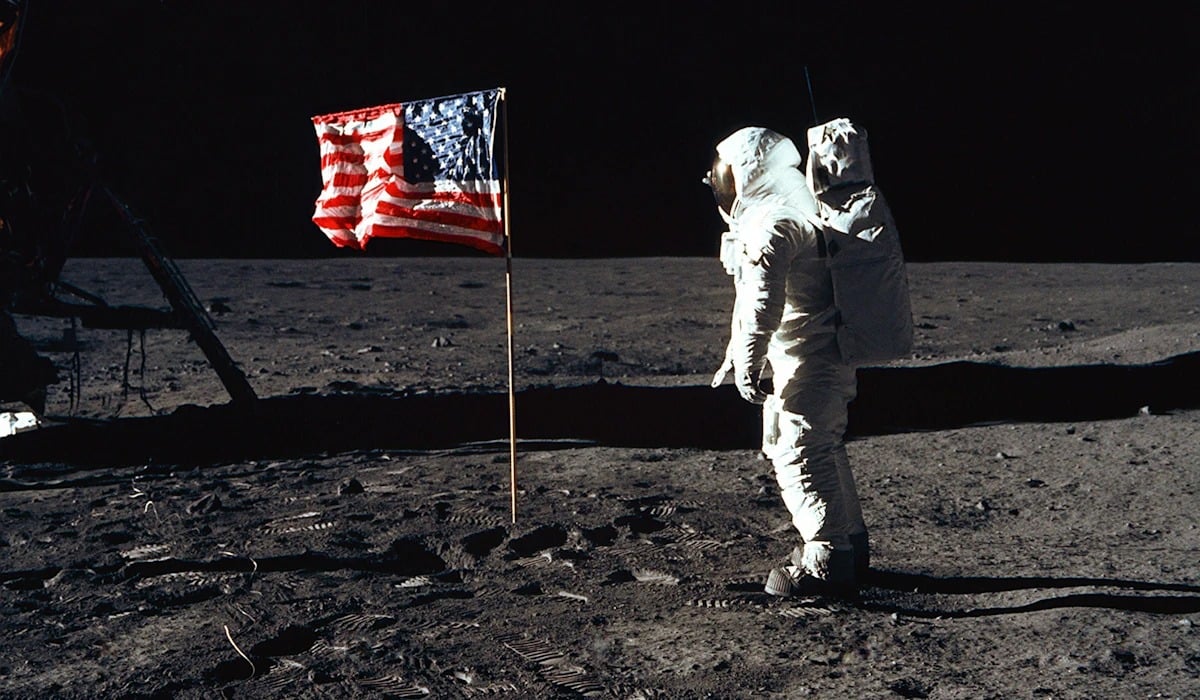
Neil Armstrong photographed Buzz Aldrin on July 20, 1969, standing on the lunar surface during Apollo 11. Aldrin faces the camera in his white suit, and his gold visor reflects Armstrong, the lunar module and the empty gray plain.
Because Armstrong carried the camera for most of the moonwalk, there are very few good photos of the first man on the moon himself. The image of Aldrin became the standard picture of the landing, a photograph of one astronaut that quietly contains both.
Aldrin’s footprint, shot separately to study lunar soil, became almost as famous.
The Blue Marble From Apollo 17
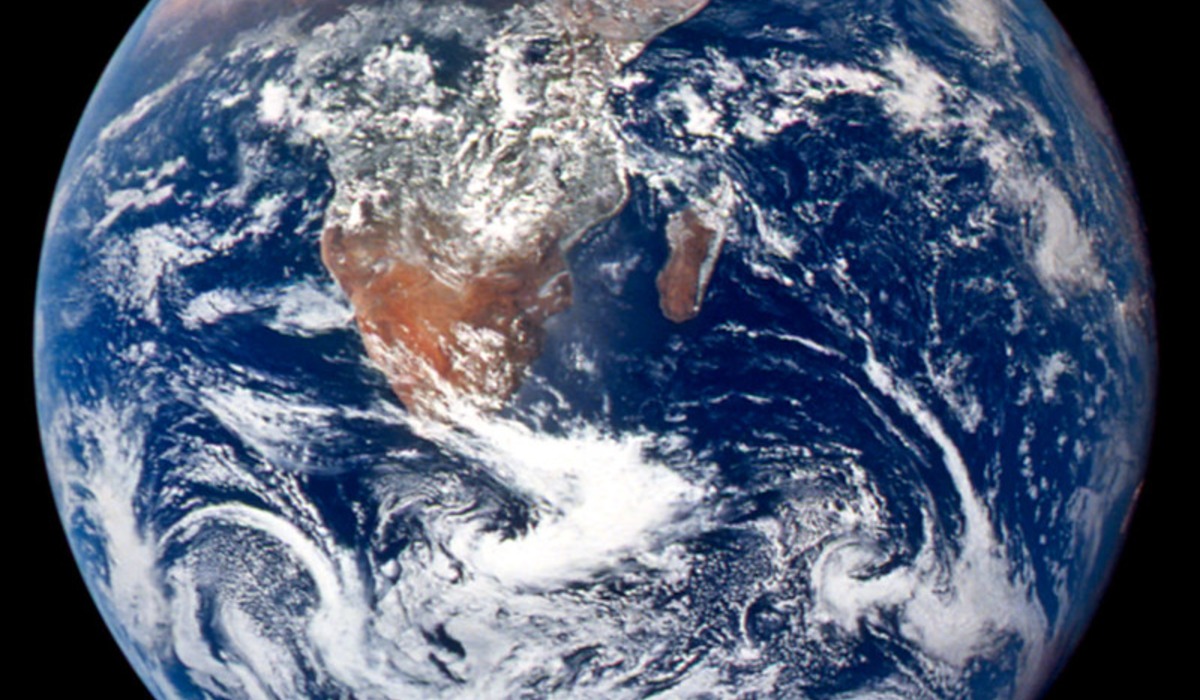
Three astronauts aboard Apollo 17 photographed the full disk of Earth from about 18,000 miles away on December 7, 1972, on their way to the moon. Africa, Antarctica and the Arabian Peninsula are visible beneath swirling clouds.
NASA credits the crew collectively, though Harrison Schmitt is often named as the photographer. Because the sun was behind the spacecraft, Earth appeared fully lit.
Apollo 17 was the final crewed landing of the Apollo program, and copies of the picture went on to hang in classrooms around the globe.
Jeff Widener and Tank Man
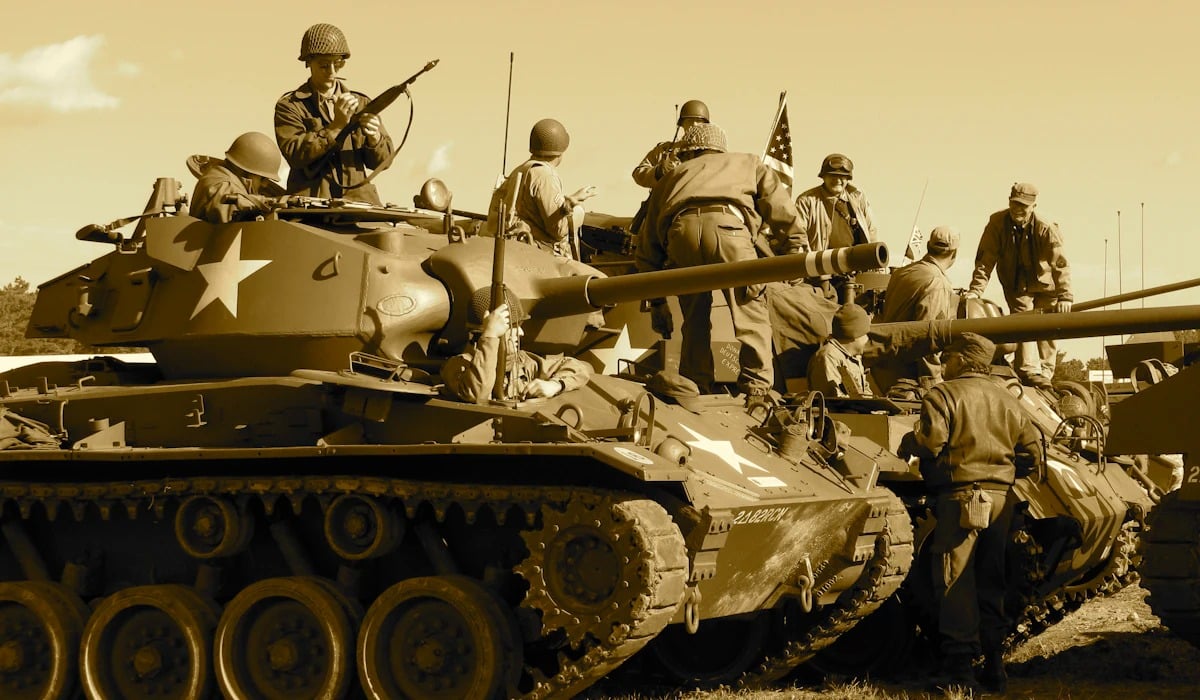
The day after Chinese troops cleared Tiananmen Square in Beijing, on June 5, 1989, a man carrying shopping bags stepped in front of a column of tanks on Chang’an Avenue. Associated Press photographer Jeff Widener caught the standoff from a balcony of the Beijing Hotel, using a telephoto lens.
Several other photographers, including Stuart Franklin and Charlie Cole, captured it too. Widener was nursing a head injury and nearly ran out of film, so by his own account an American student carried the film out of the hotel for him.
The man’s identity has never been confirmed, and the image remains heavily censored inside China.
Pale Blue Dot From Voyager 1
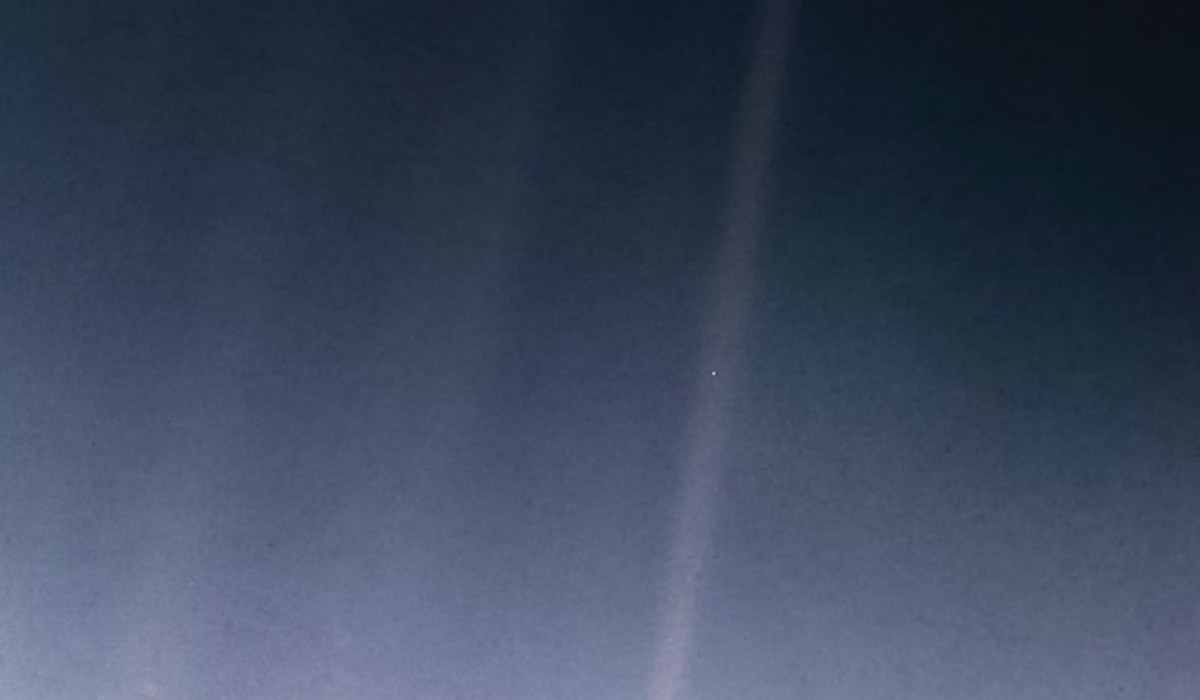
Voyager 1 turned its camera back toward the inner solar system on February 14, 1990, at the request of astronomer Carl Sagan. From about 3.7 billion miles away, Earth appeared as a speck less than a single pixel wide, caught in a band of scattered sunlight.
Sagan later used the image as the title and theme of his 1994 book Pale Blue Dot, a meditation on how small and fragile the planet is. Shortly afterward, the cameras were switched off to save power, so it was among the last images Voyager 1 ever took.
Pillars of Creation From Hubble
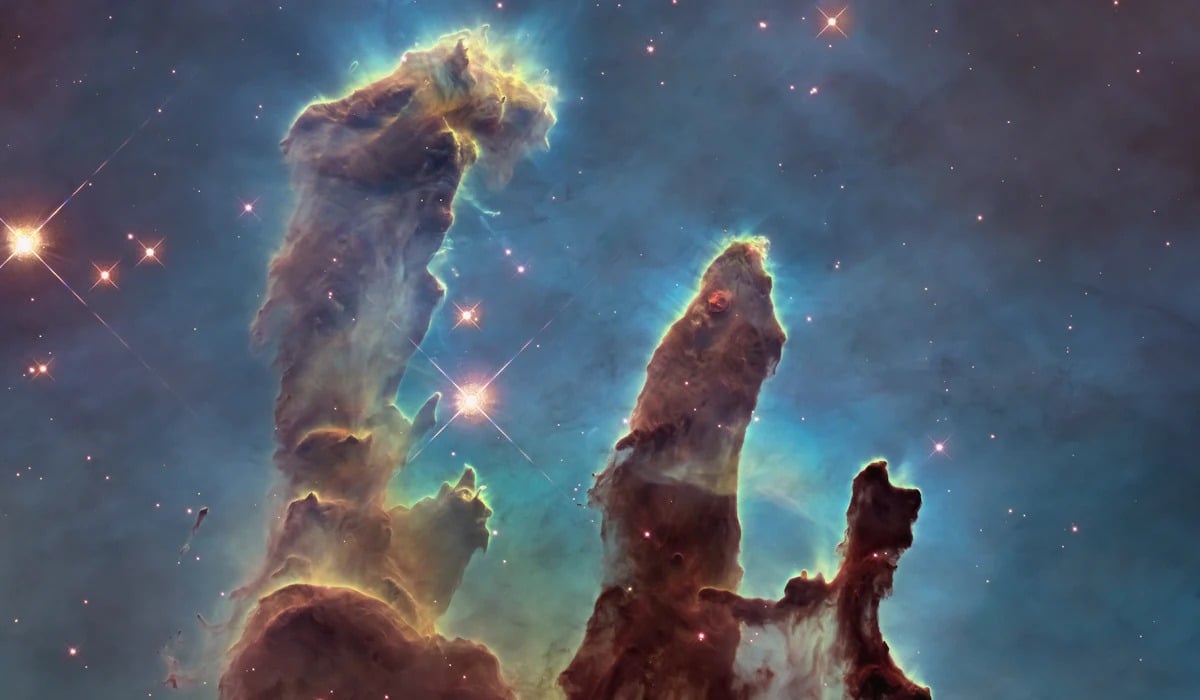
Towering columns of gas and dust in the Eagle Nebula were captured by the Hubble Space Telescope on April 1, 1995, in a region roughly 6,500 light years from Earth. Astronomers Jeff Hester and Paul Scowen led the observation.
The pillars are nurseries where new stars form, their edges eroded by intense radiation from hot young stars nearby. NASA released a sharper version in 2014, and the James Webb Space Telescope revisited the scene in 2022, but the 1995 image is the one that put Hubble on posters everywhere.
Shutters That Rewrote the Record
Most of these photographers had no idea that the frame they were taking would be studied for generations. Some were professionals on assignment, others were bystanders handed a camera.
What united them was proximity, standing close enough to a moment that it could not be ignored.
Photographs can be staged, edited or misunderstood, as several of these stories show. Even so, a single image can still change how people see a war, a law or their own planet.
A good photograph does not only record history, it quietly argues with it.
MORE FROM GO2TUTORS!

- The Romanov Crown Jewels and Their Tragic Fate
- 13 Historical Mysteries That Science Still Can’t Solve
- Famous Hoaxes That Fooled the World for Years
- 15 Child Stars with Tragic Adult Lives
- 16 Famous Jewelry Pieces in History
Like Go2Tutors’s content? Follow us on MSN.