29 Vintage Lunch Boxes from Your Childhood Now Worth Money
There’s something about a beat-up metal lunch box sitting on a shelf at a flea market that stops people cold. Maybe it’s the smell of old thermos plastic that somehow lives in the memory.
Maybe it’s the specific shade of orange or the cartoon face grinning from the lid — a face that once meant Tuesday was almost over and the cafeteria was almost survivable. Whatever it is, those lunch boxes aren’t just nostalgia anymore.
The collector market has gotten serious, and the prices on some of these things would make your third-grade self genuinely speechless.
The Lone Ranger
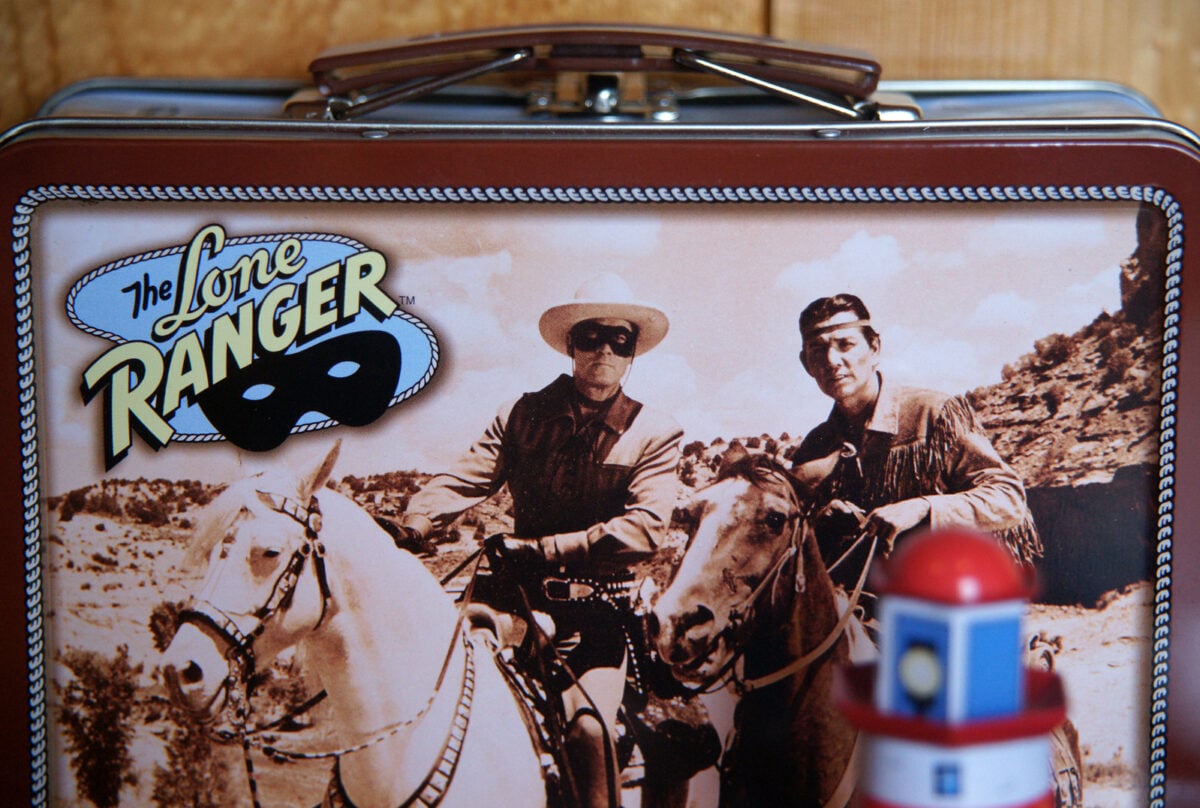
The Lone Ranger lunch box from 1954 is one of the earliest and most collectible metal lunch boxes ever produced. American Thermos made it, and a clean example with its original thermos routinely sells for over $500 at auction — sometimes considerably more.
It’s not pretty by modern standards, but it’s essentially the starting pistol for the entire lunch box collecting hobby.
Hopalong Cassidy
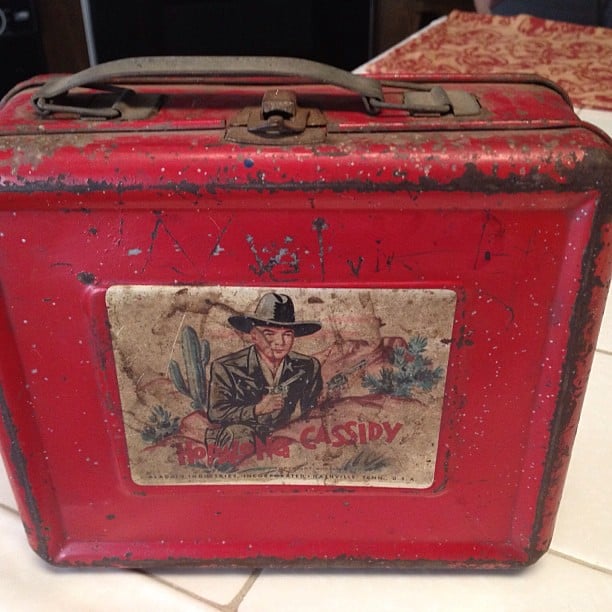
This is where it all began, officially. The 1950 Aladdin Hopalong Cassidy box is widely credited as the first licensed character lunch box ever sold, which makes it less of a collectible and more of a historical artifact.
Mint-condition examples have sold for well north of $2,000, and the ones with matching thermoses push even higher.
The Jetsons
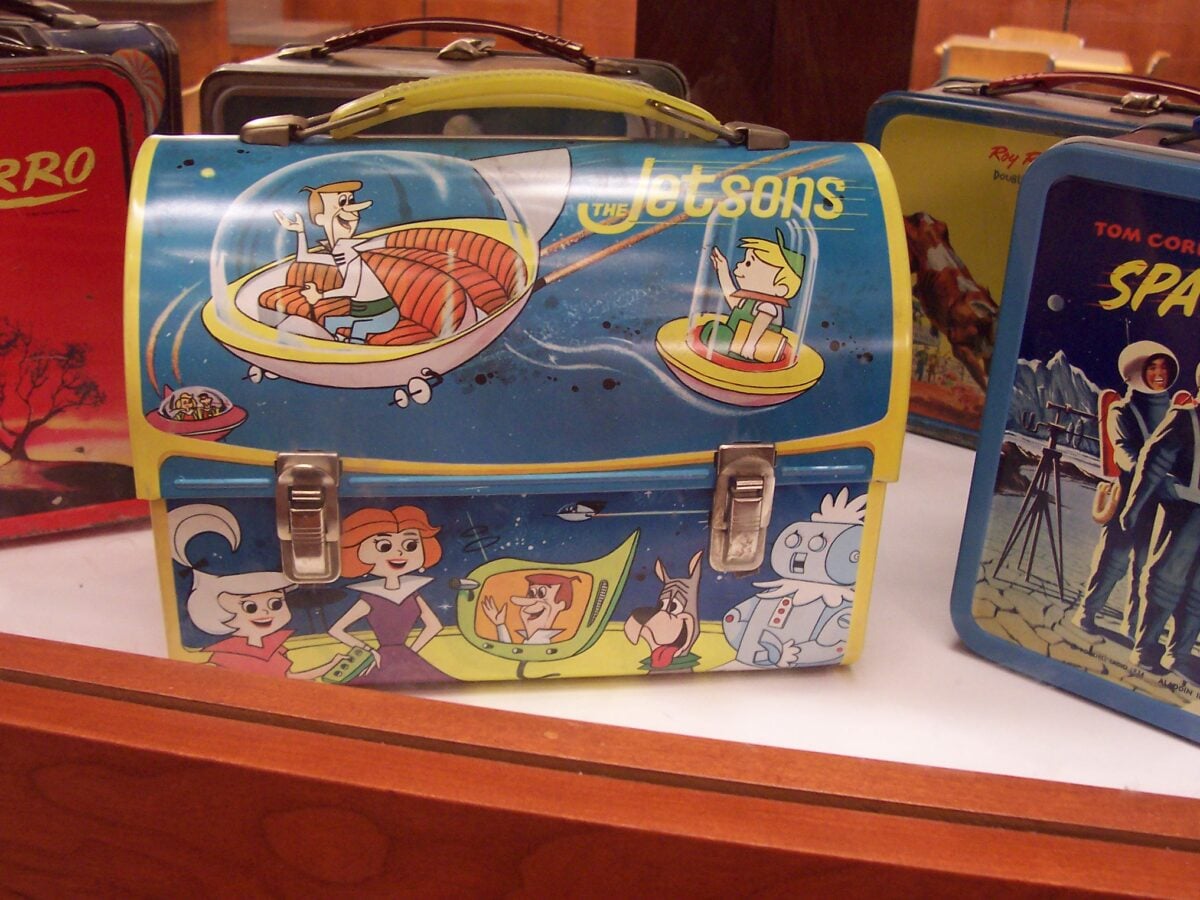
The Jetsons lunch box from 1963 is the kind of object that collectors describe with the word “grail,” and they mean it without irony. Aladdin produced it, and the lithograph artwork — all rocket cars and space-age optimism — holds up in a way that feels genuinely charmed rather than dated.
A top-condition example can fetch $1,000 or more, and finding one in any condition without serious rust is an event.
Star Wars
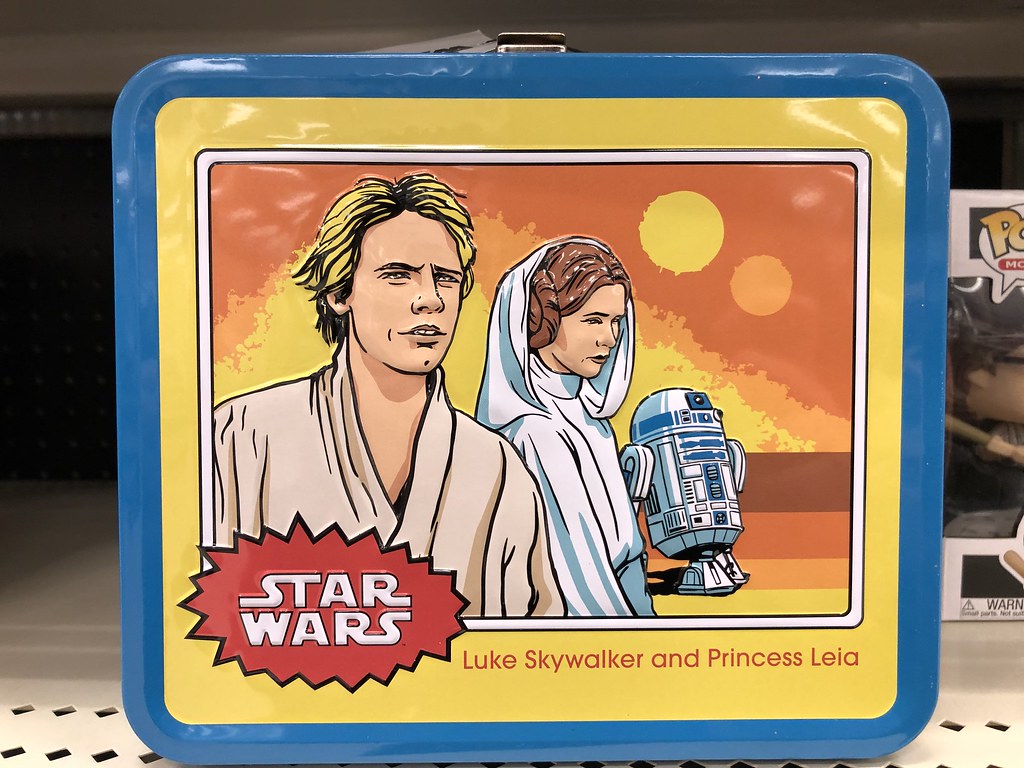
The original 1977 King-Seeley Thermos Star Wars metal lunch box is common enough that plenty of people still have one in a garage, and rare enough in truly clean condition that prices vary wildly. A well-preserved example with its matching thermos sells in the $100–$300 range, but near-mint examples climb higher.
The plastic version from the early 1980s is worth less — the metal one is the one that matters.
The Beatles
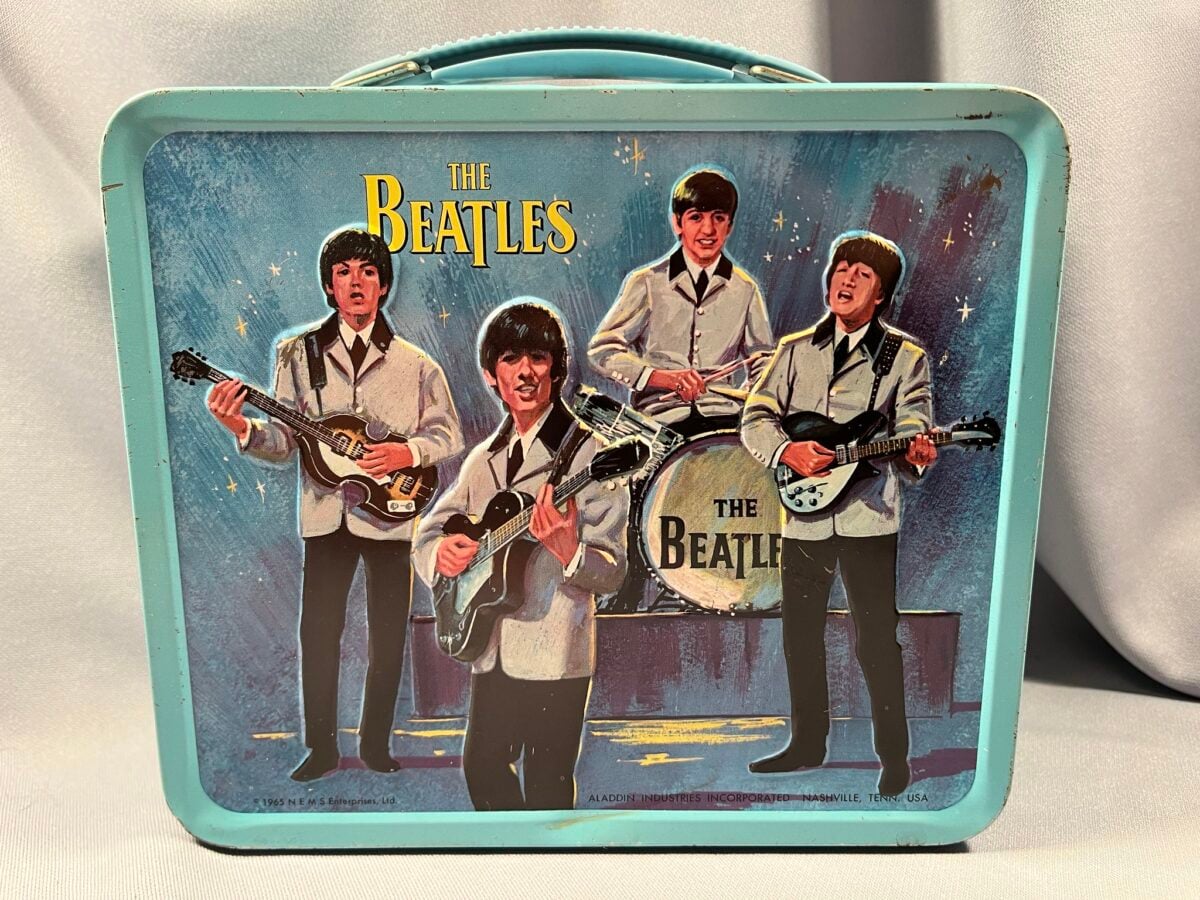
The 1965 Aladdin Beatles lunch box is the intersection of two of the most obsessive collector markets on the planet. Beatles memorabilia collectors and lunch box collectors both want it, which does exactly what you’d expect to the price — a solid example sells for $400 to $800, and pristine examples go considerably higher.
The artwork, featuring the Fab Four in that specific early-era style, has a compositional confidence that most lunch boxes never approached.
Bullwinkle and Rocky
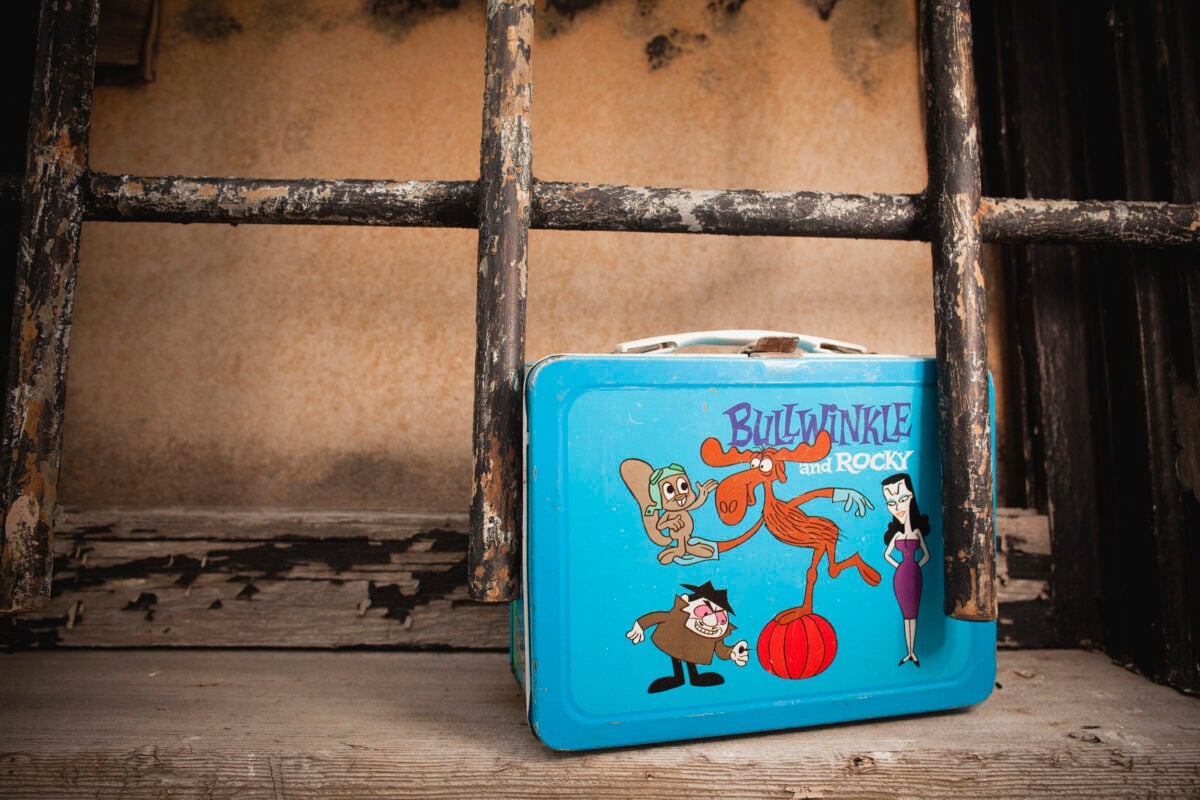
The 1962 Universal Bullwinkle and Rocky lunch box is a genuinely scarce item — Universal didn’t produce it for long, and the lithography on surviving examples tends to show its age. But that scarcity is exactly why collectors care: a clean example regularly sells in the $500–$800 range.
The humor in the artwork still lands, which is more than you can say for most things from 1962.
The Empire Strikes Back
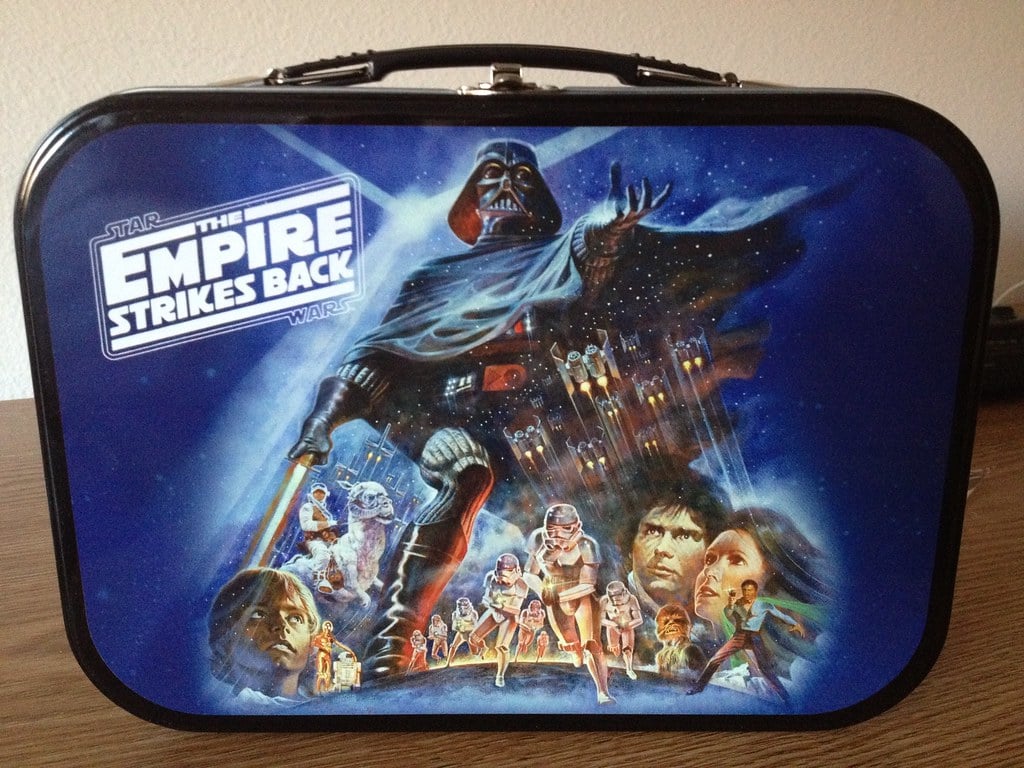
The Empire Strikes Back box from 1980 exists in that sweet spot where it’s old enough to be collectible and popular enough to have survived in numbers that make collecting actually possible. King-Seeley Thermos made it, and the dark, dramatic lithography is a noticeable step up from the first Star Wars box.
Expect to pay $75 to $200 for a solid example, more for one in exceptional shape.
Hee Haw
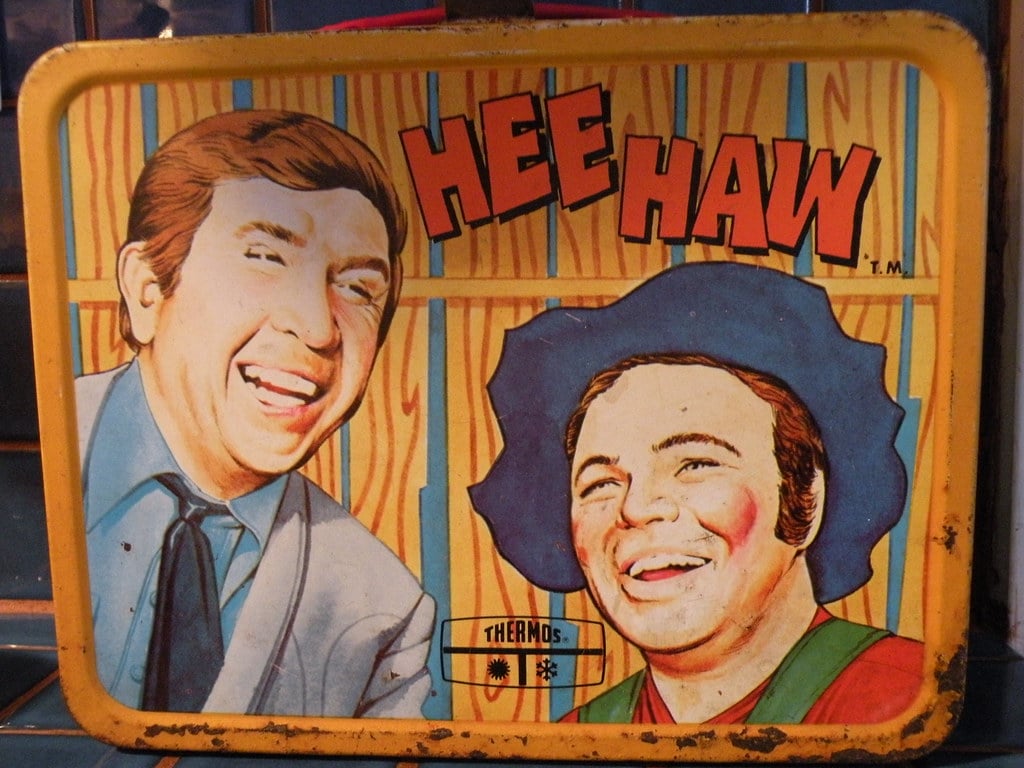
The Hee Haw lunch box from 1971, made by Aladdin, is one of those objects that reminds you how specifically American the lunch box collecting world is — you either grew up knowing what Hee Haw was or this box means nothing to you at all. For those who do know, a clean example sells in the $150–$300 range.
It’s also, it must be said, one of the more visually chaotic lunch box designs ever produced, which is part of the appeal.
Barbie
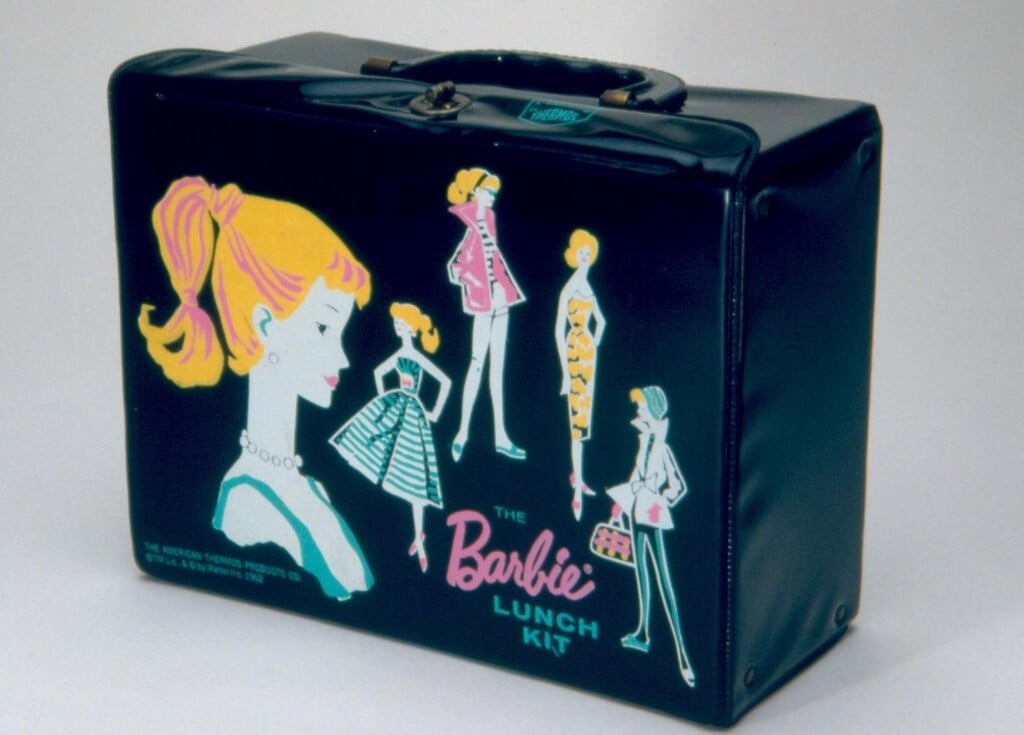
The Barbie lunch boxes from the late 1950s and early 1960s are sharp, clean objects — the lithography mimics fashion illustration more than cartoon art, which gives them a different visual register entirely. A solid early example sells for $100 to $250, and the earliest versions command more.
Barbie pink has a particular intensity that the decades have done nothing to dull.
The Munsters
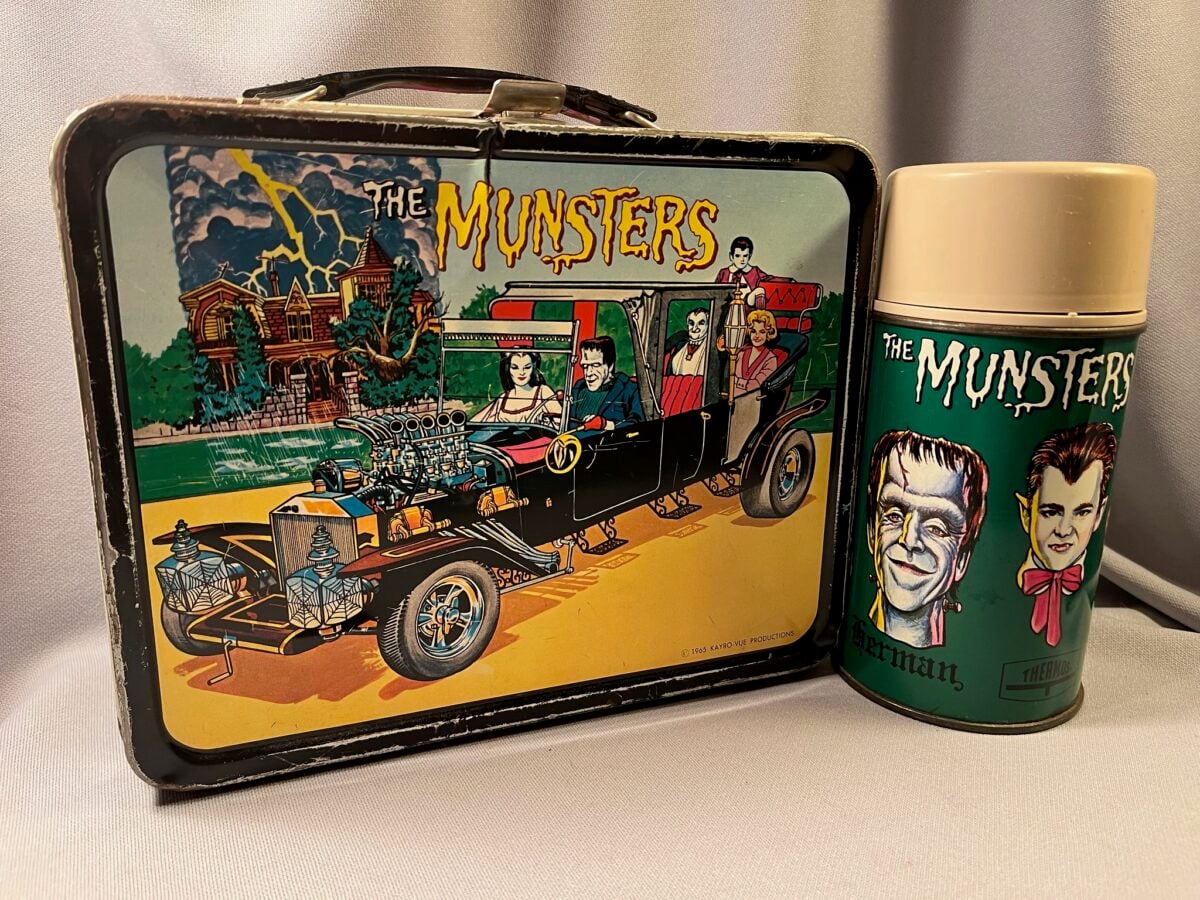
The 1965 Aladdin Munsters lunch box is one of the more coveted items from that decade’s monster-culture moment, sitting alongside The Addams Family box as a high point of weird American TV merchandising. A clean example fetches $300 to $600 without much difficulty.
The lithograph work on this one leans into its spooky subject matter with genuine commitment, which not every box of that era managed.
Hogan’s Heroes
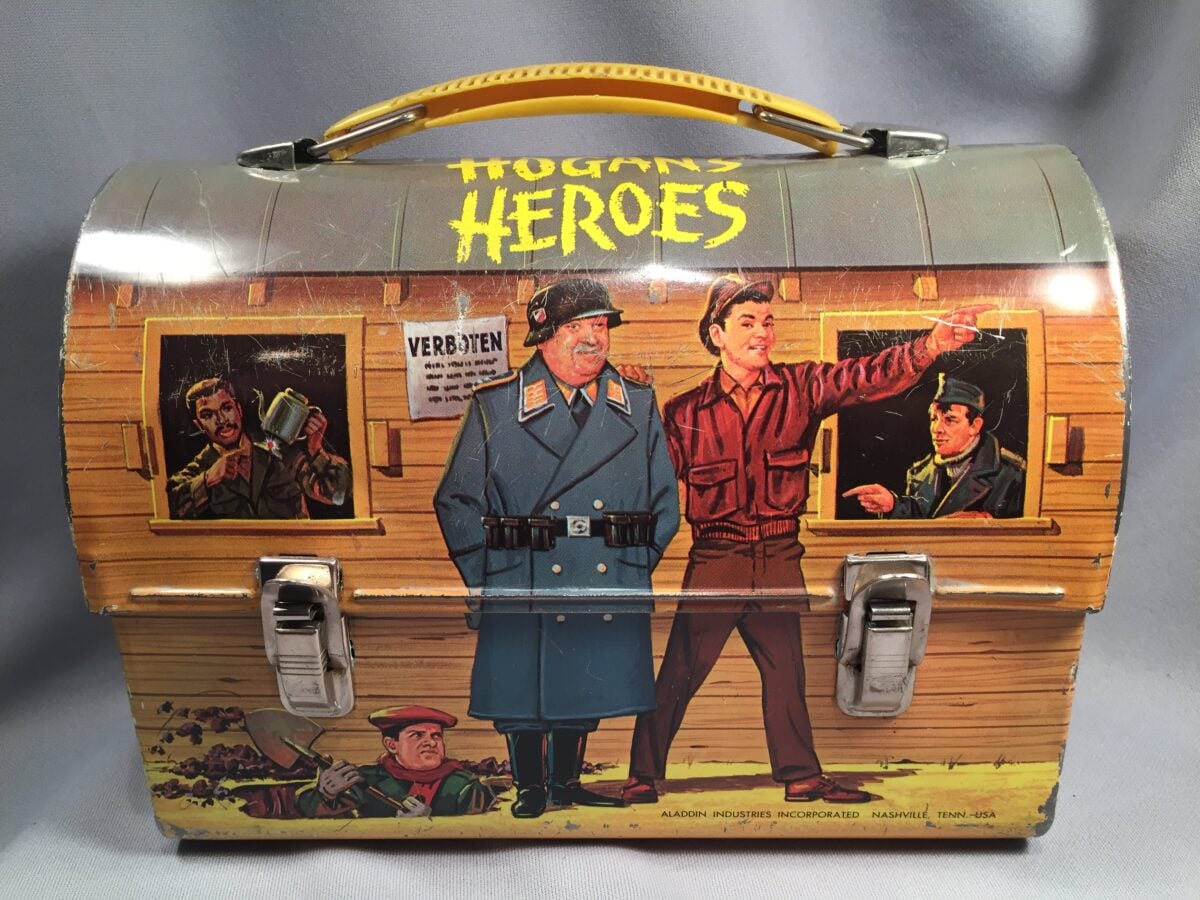
The 1966 Aladdin Hogan’s Heroes lunch box exists in a complicated cultural moment now, but as a collectible, it is firmly established in the $200–$400 range for solid examples. The show ran from 1965 to 1971, and the lunch box appeared right in the middle of peak popularity.
It’s a distinct artifact of a very specific television era.
Planet of the Apes
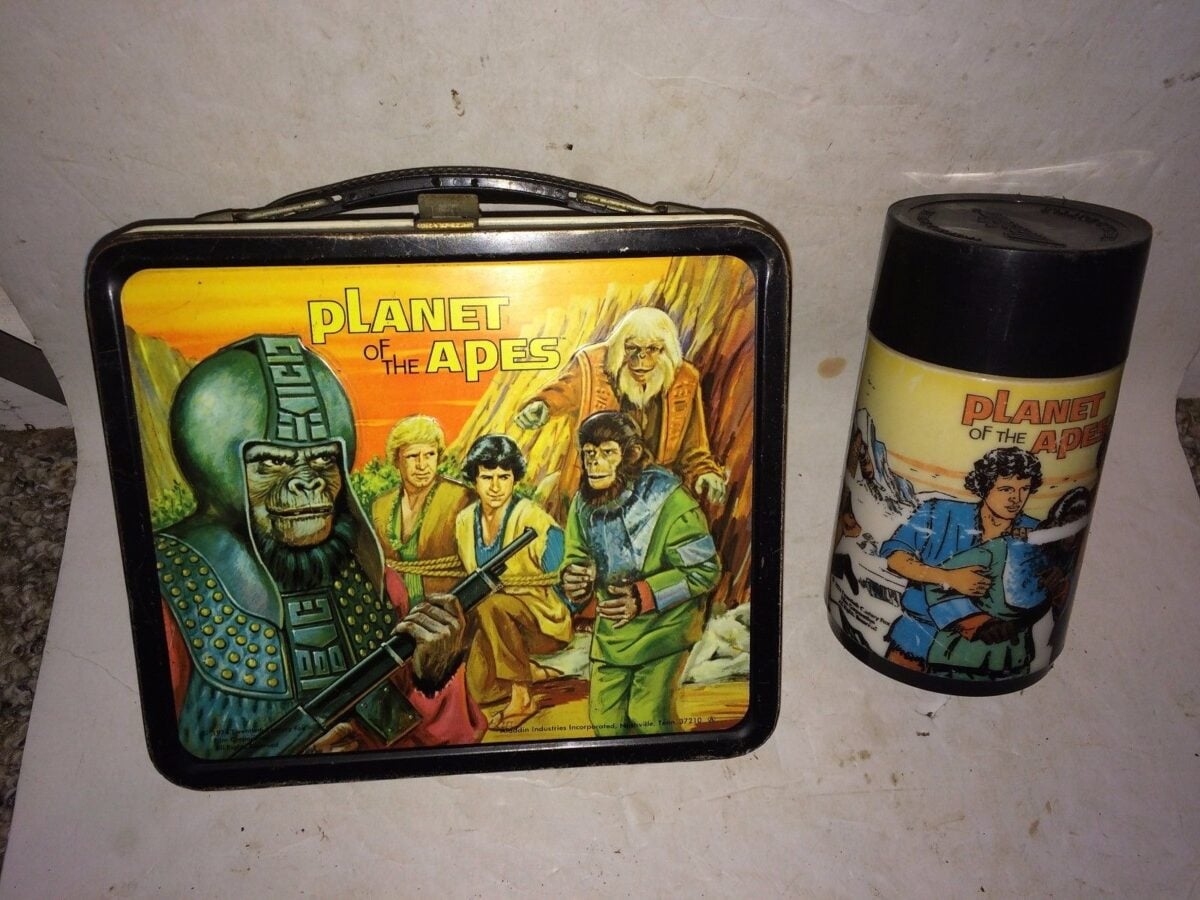
The 1974 Aladdin Planet of the Apes lunch box captures the franchise at peak cultural saturation — there were five films, a TV series, and apparently enough demand for lunch boxes to justify what is now a genuinely desirable collectible. Clean examples sell in the $150–$350 range, and the artwork, all dramatic ape faces and tense human expressions, is some of the most cinematic work applied to sheet metal.
It treats itself as seriously as the films did, which, to be fair, is saying something.
The Green Hornet
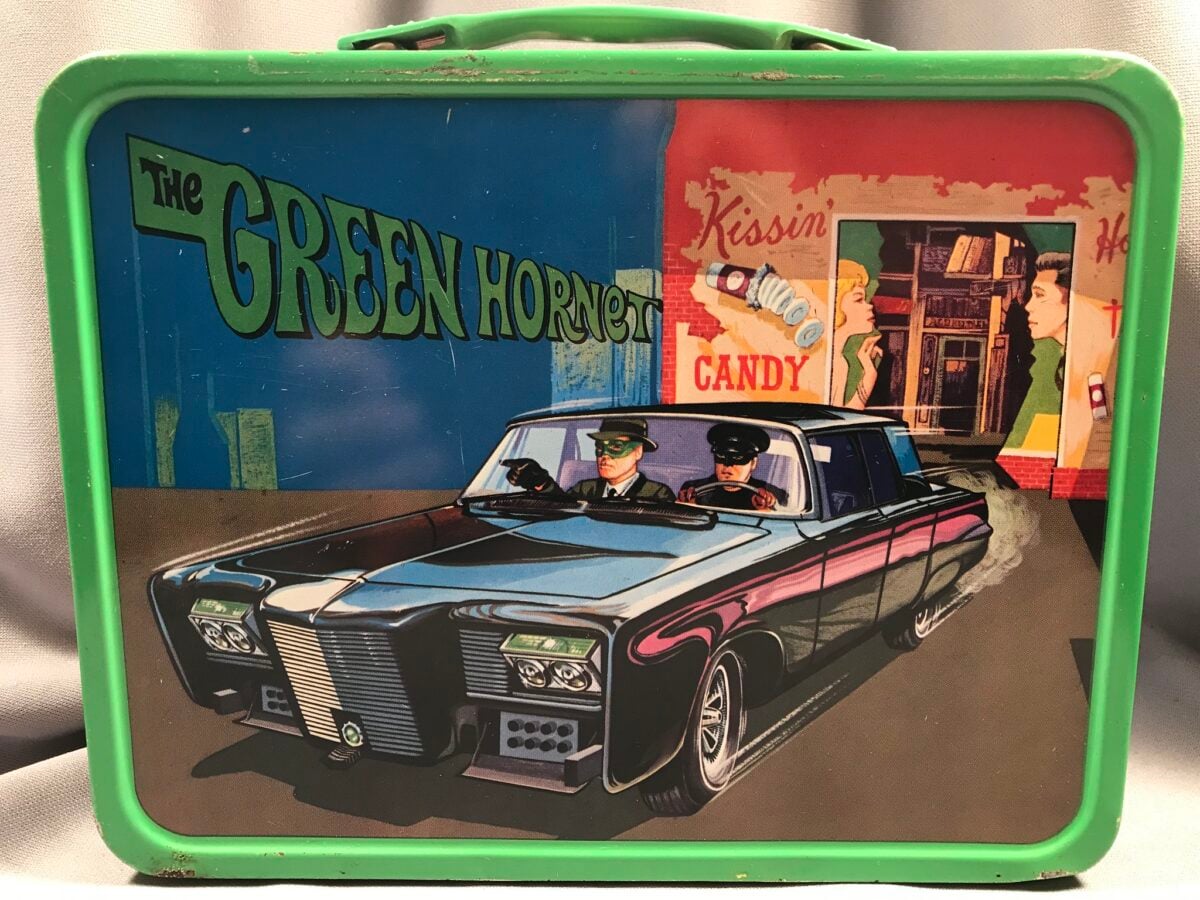
The 1967 King-Seeley Thermos Green Hornet lunch box is the rare object that benefits from being slightly overshadowed — because Batman was the dominant superhero lunch box of that era, the Green Hornet got made in smaller numbers, which means fewer survived, which means collectors pay for it now. A solid example runs $200 to $500.
Bruce Lee is on this box, which tends to help the price.
Kung Fu
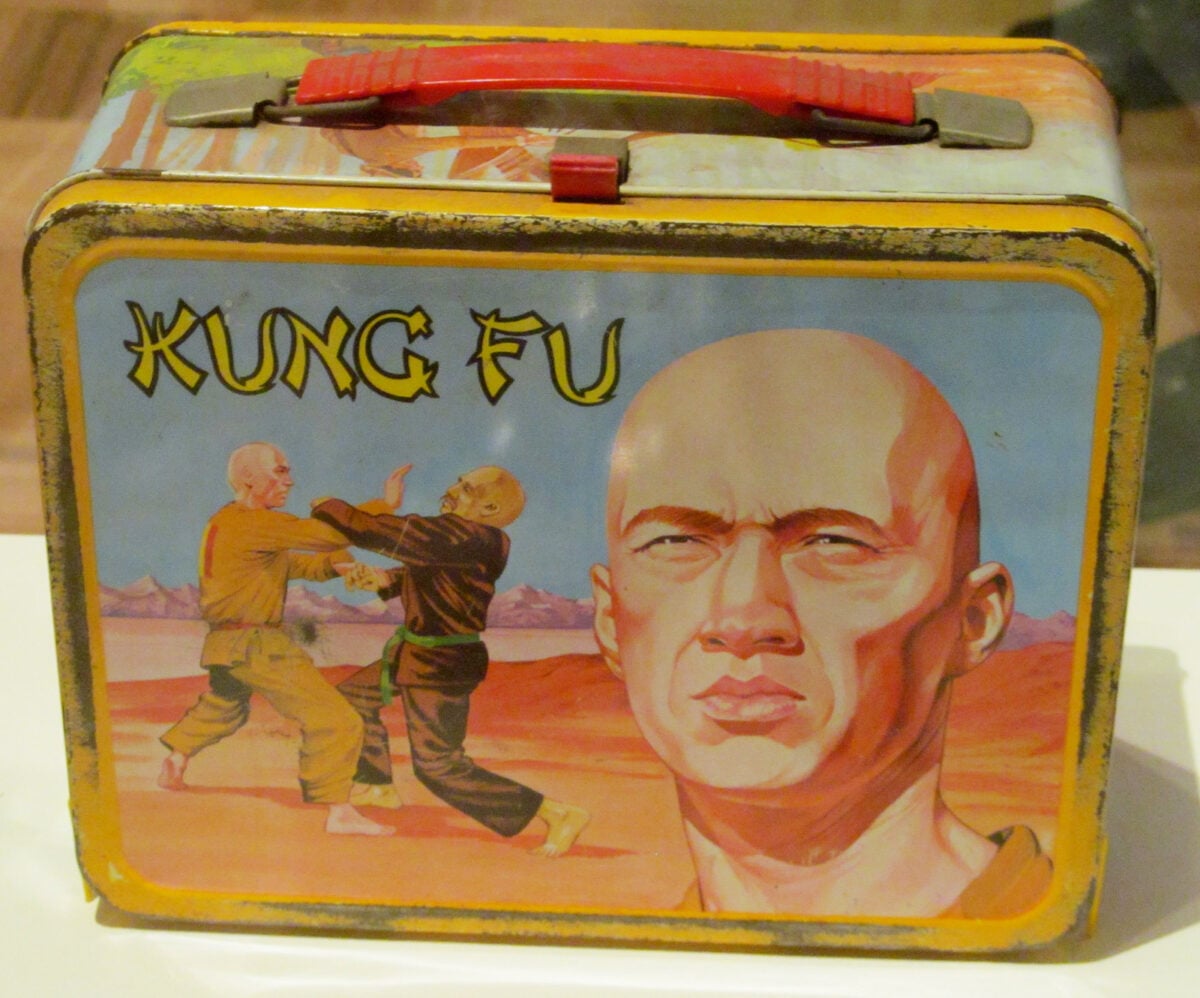
The 1974 King-Seeley Thermos Kung Fu lunch box, based on the David Carradine television series, landed at a moment when martial arts were the single most interesting thing happening in American pop culture. A clean example sells in the $100–$250 range.
The minimalist artwork is actually more restrained than most lunch boxes of the period, which makes it stand out on a shelf in the best possible way.
The Partridge Family
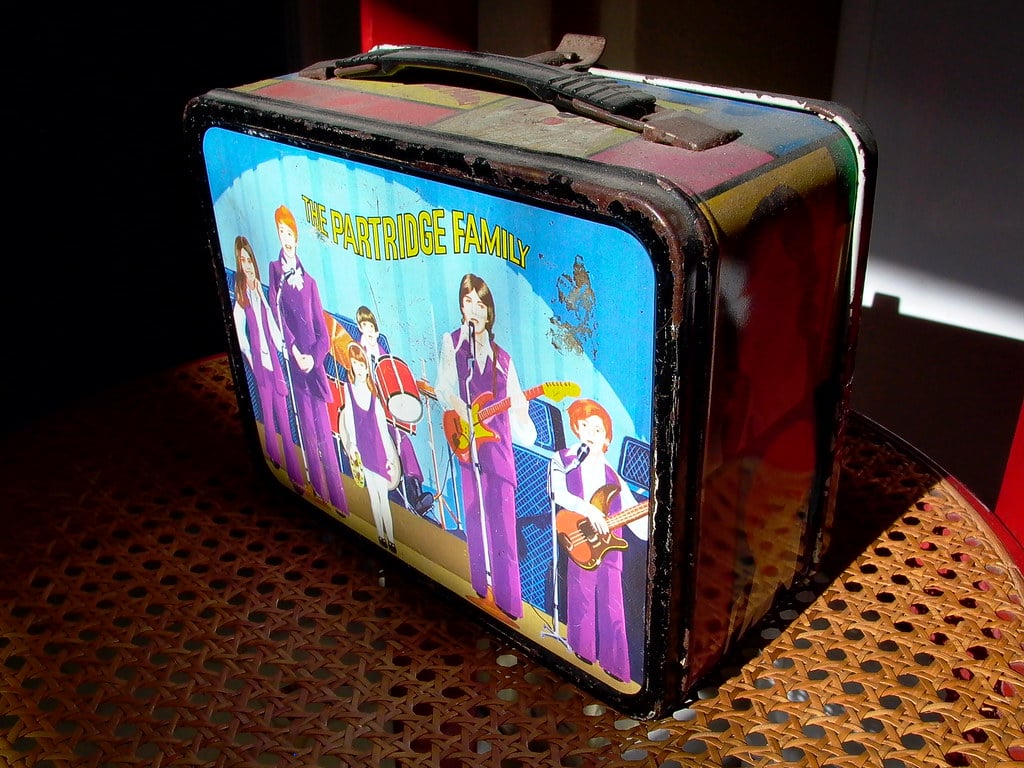
The 1971 King-Seeley Thermos Partridge Family lunch box is a time capsule of a very particular kind of early-1970s optimism — bright colors, clean graphic design, and a band that always looked slightly too cheerful for the situation. A solid example sells in the $75–$200 range, which puts it in reach for most collectors just getting started.
It’s more affordable than its cultural footprint probably deserves.
Disney’s Mickey Mouse
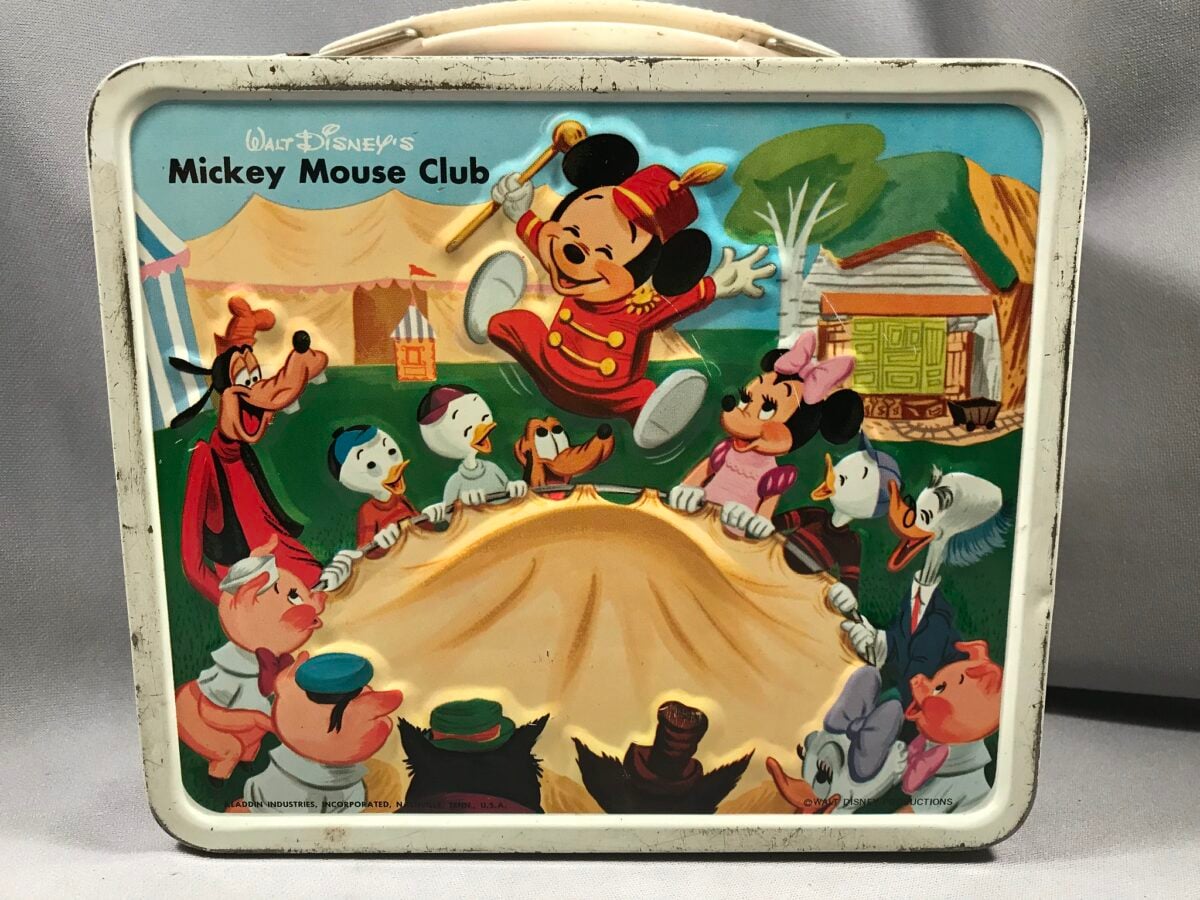
Early Mickey Mouse lunch boxes from the 1930s occupy a tier of their own — these are antiques, not just vintage collectibles, and the price reflects it. The earliest lithographed tin examples sell for $500 to over $2,000 depending on condition and which manufacturer produced them.
Mickey’s face on 1930s tin has a slightly unsettling expressiveness that the sanitized modern version has entirely abandoned.
Lost in Space
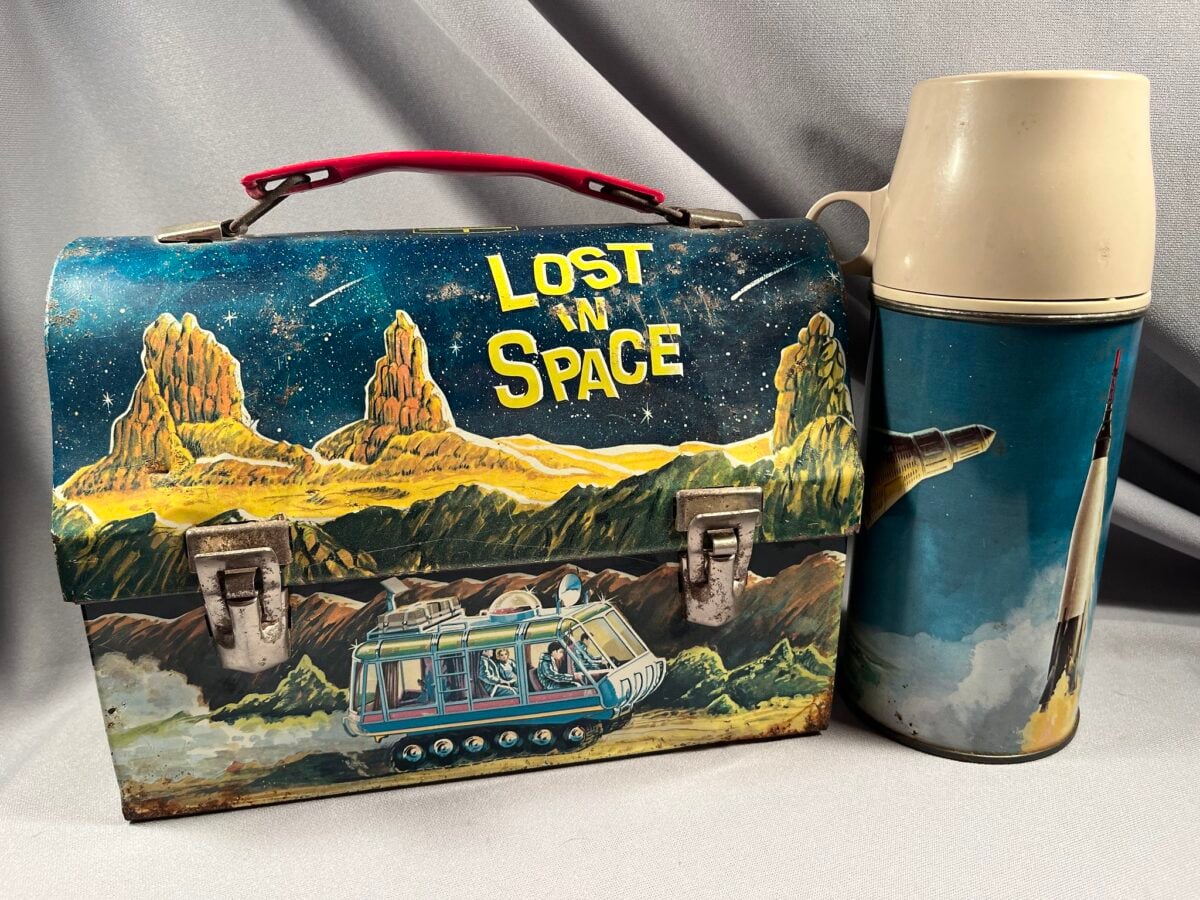
The 1967 King-Seeley Thermos Lost in Space lunch box is one of the more visually ambitious boxes from the late 1960s, with the Robot front and center in a way that treats the character as a genuine star rather than a prop. A clean example sells in the $250–$600 range.
The show lasted three seasons; the lunch box has outlasted the cultural conversation around it by roughly half a century, which is its own kind of legacy.
Bonanza
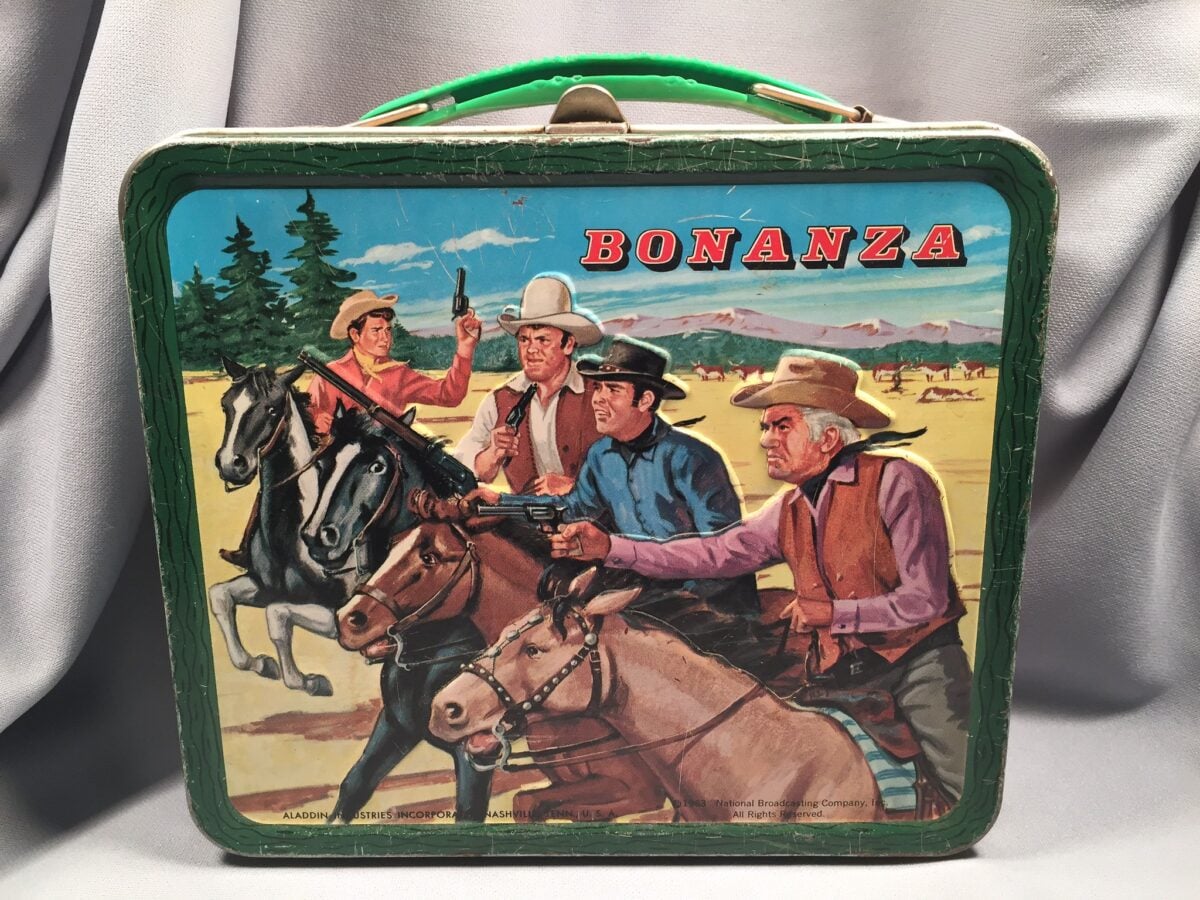
The 1963 Aladdin Bonanza lunch box arrived when the show was one of the most watched programs in the country — top-three ratings, massive audience, inevitable merchandising. A solid example sells for $75 to $200, making it one of the more accessible vintage Western collectibles in this category.
The oval design Aladdin used for this one was unusual for the era and makes it immediately recognizable on any shelf.
The A-Team
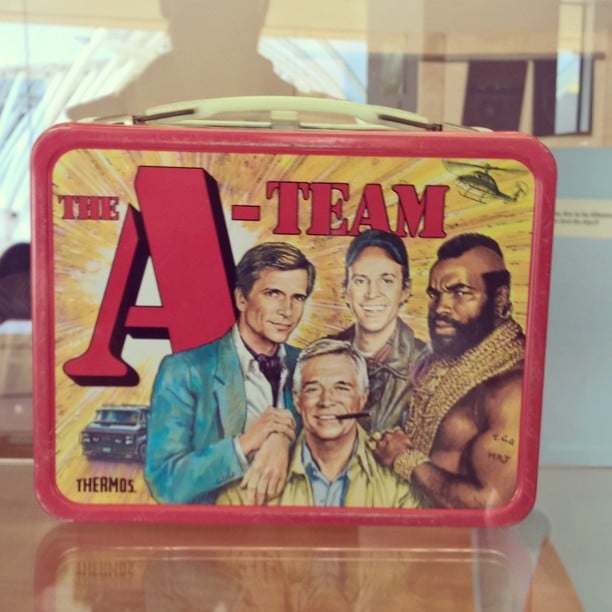
The A-Team lunch box from 1984 is the lunch box of a specific kind of childhood — one where Saturday mornings meant action figures and the certainty that everything would explode without anyone getting seriously hurt. King-Seeley Thermos made it, and a clean example sells in the $50–$150 range.
Pity the fool who threw theirs away.
Dukes of Hazzard
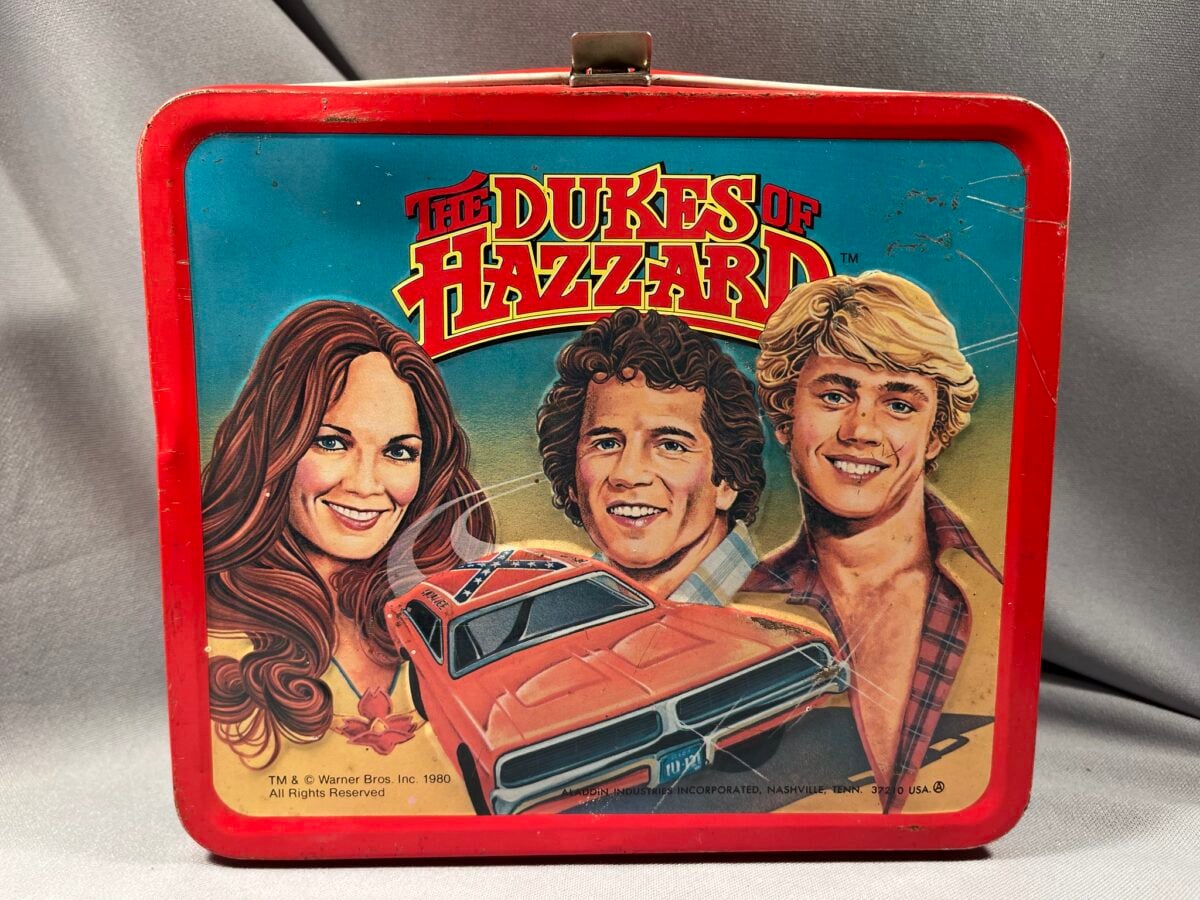
The 1980 Aladdin Dukes of Hazzard lunch box sold in enormous numbers, which is both why so many survive and why condition separates the valuable ones from the common ones. A truly clean example with its thermos can reach $100 to $200.
The General Lee graphic work is genuinely well-executed for a mass-market product — whoever did that lithography understood composition.
Transformers
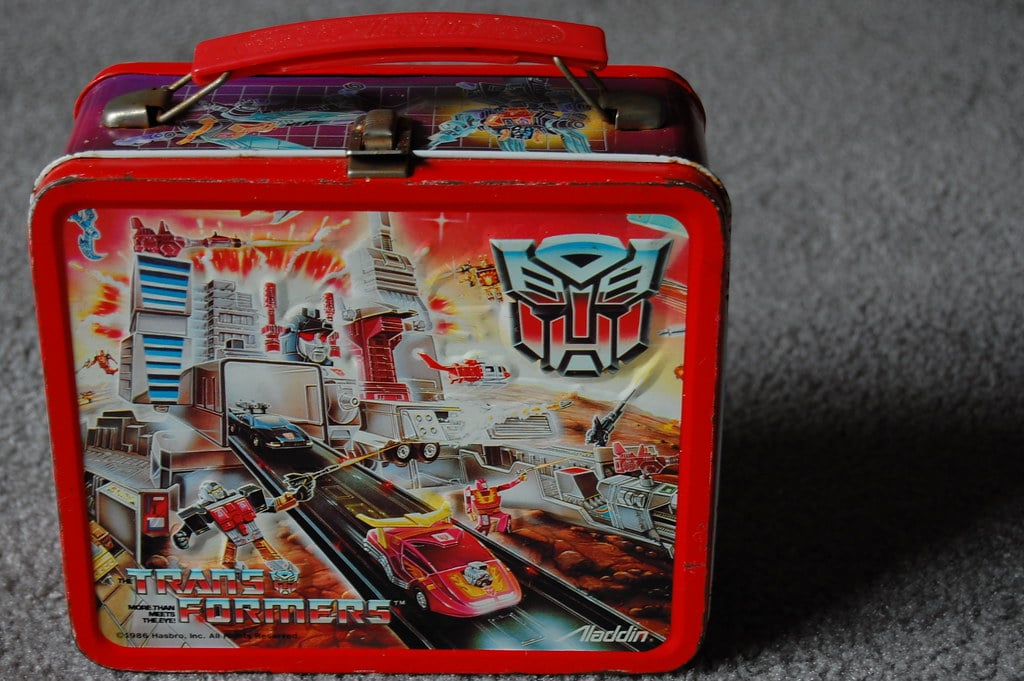
The 1985 Aladdin Transformers lunch box arrived right as the toy line was becoming a cultural phenomenon — the timing was precise, the artwork was dynamic, and the resulting box is a clean document of mid-1980s commercial design. A solid example sells for $50 to $150.
The plastic thermos that came with it tends to crack, so a complete set in good shape is harder to find than the box alone.
E.T. the Extra-Terrestrial
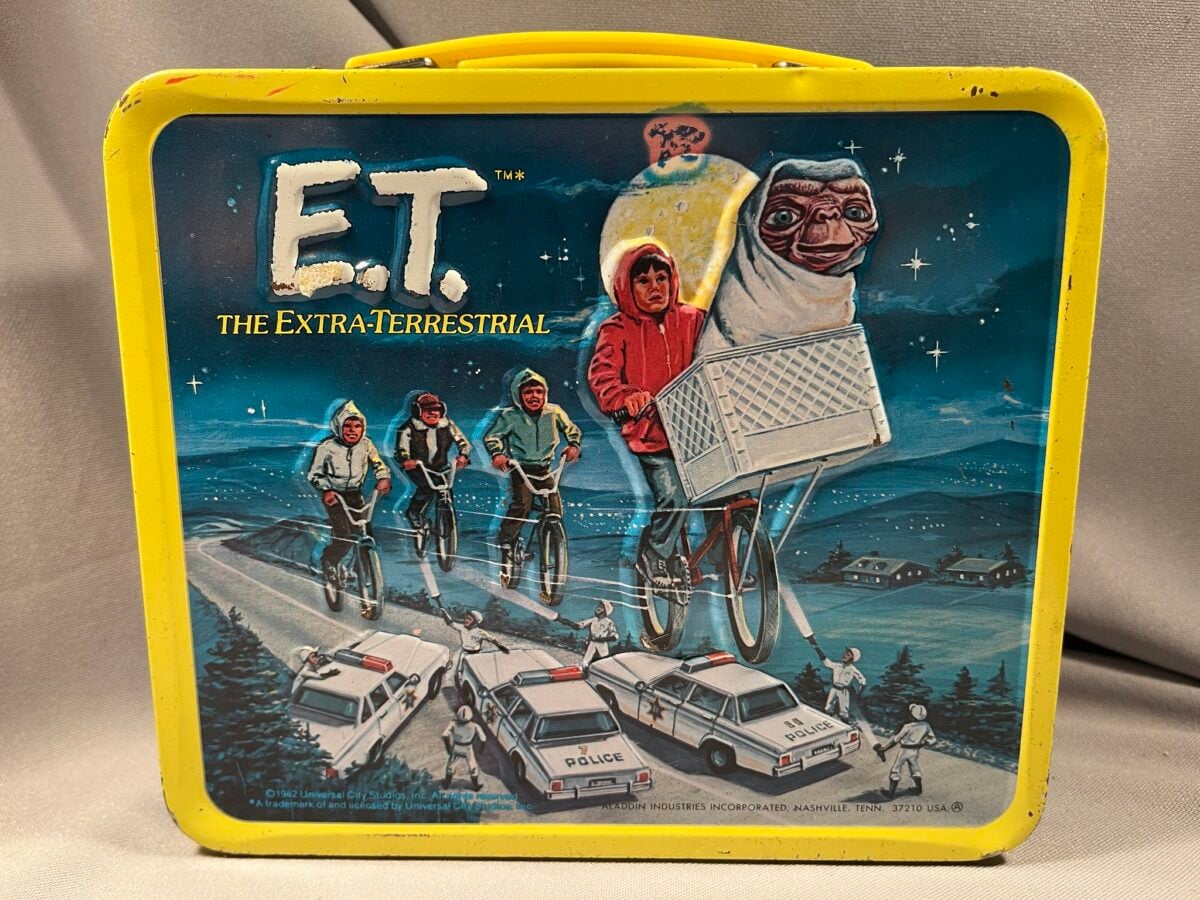
The 1982 Aladdin E.T. lunch box is one of those objects where the film’s emotional weight seems to have transferred somehow into the physical thing — people who collect these often cite a specific protectiveness toward the object that they can’t entirely explain. A solid example sells in the $50–$125 range.
The glowing finger on the artwork, lifted directly from the film’s most famous image, still works as pure design.
Thundercats
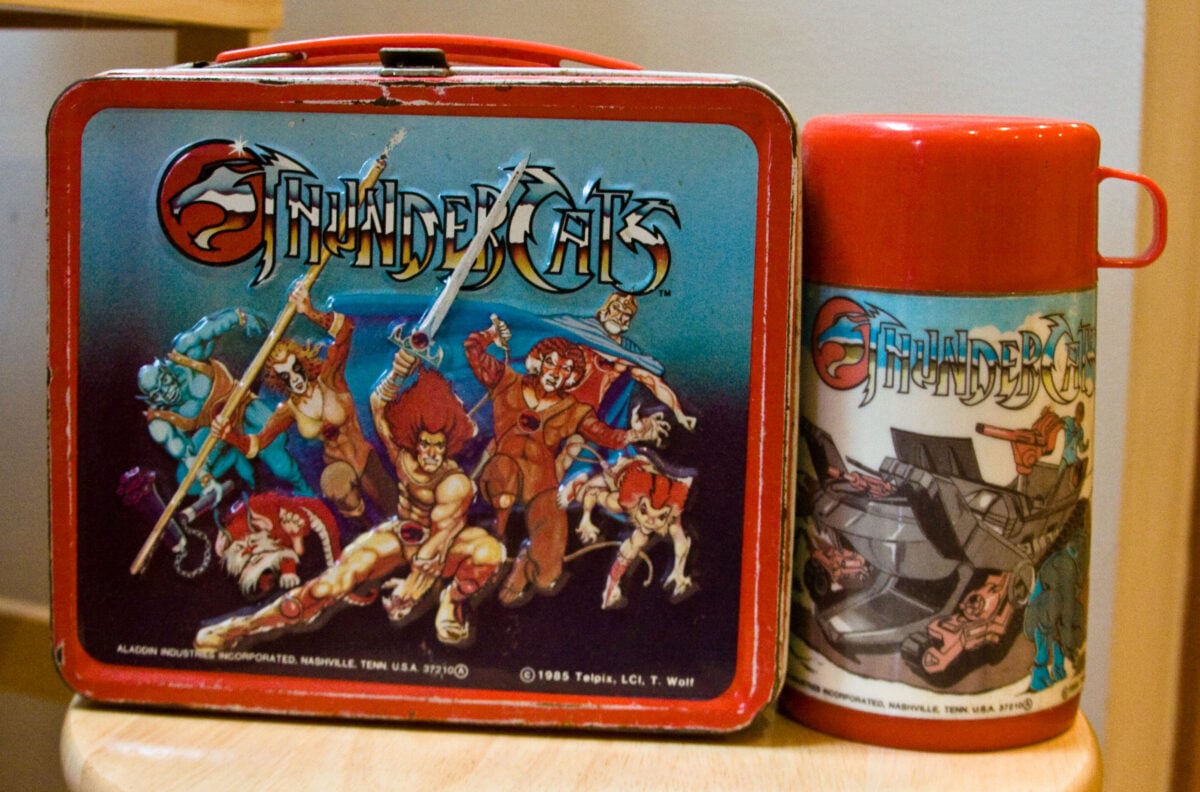
The 1985 Aladdin Thundercats lunch box is bold in the way that only mid-1980s animated property artwork could be bold — primary colors, aggressive poses, a visual confidence that never paused to consider subtlety. A clean example sells for $50 to $150, and finding a matching thermos in undamaged condition pushes the value up noticeably.
The character artwork holds up better than most of its contemporaries.
The Incredible Hulk
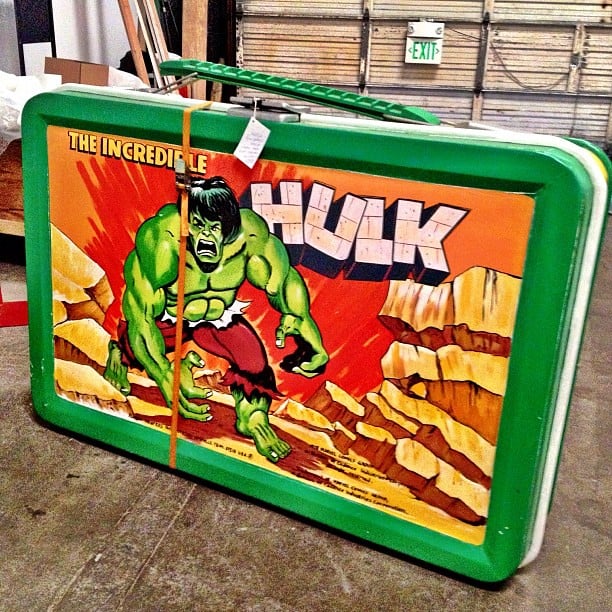
The 1978 Aladdin Incredible Hulk lunch box captures Bill Bixby’s TV version rather than the comic book original, which gives it a slightly melancholy quality — the Hulk on this box looks angry but also tired, which, in retrospect, is actually accurate to the show’s tone.
A clean example sells for $75 to $200. Marvel collectibles from this period carry steady demand that doesn’t fluctuate much with trends.
Snoopy
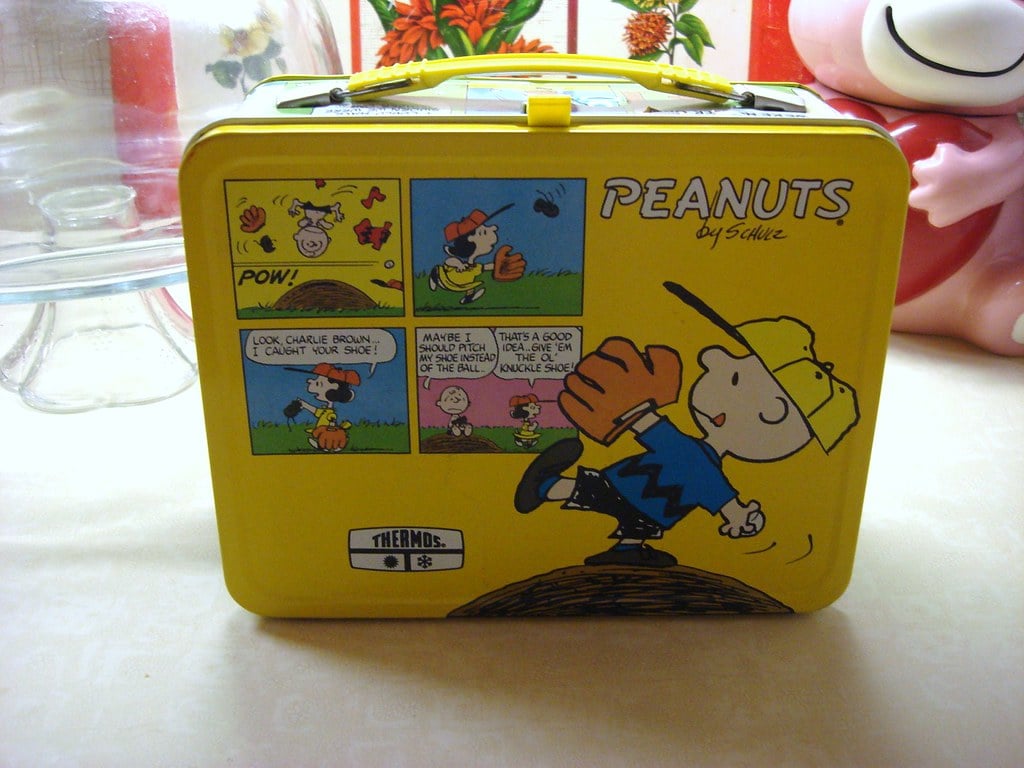
Snoopy lunch boxes span multiple decades and multiple manufacturers, but the 1968 King-Seeley Thermos version is the one collectors care most about.
A clean early example sells in the $100–$300 range, and the simplicity of the Peanuts artwork — Schulz’s line work translated to metal — gives it a graphic cleanliness that more complicated designs can’t match. It’s the kind of object that looks good without trying to.
The Bionic Woman
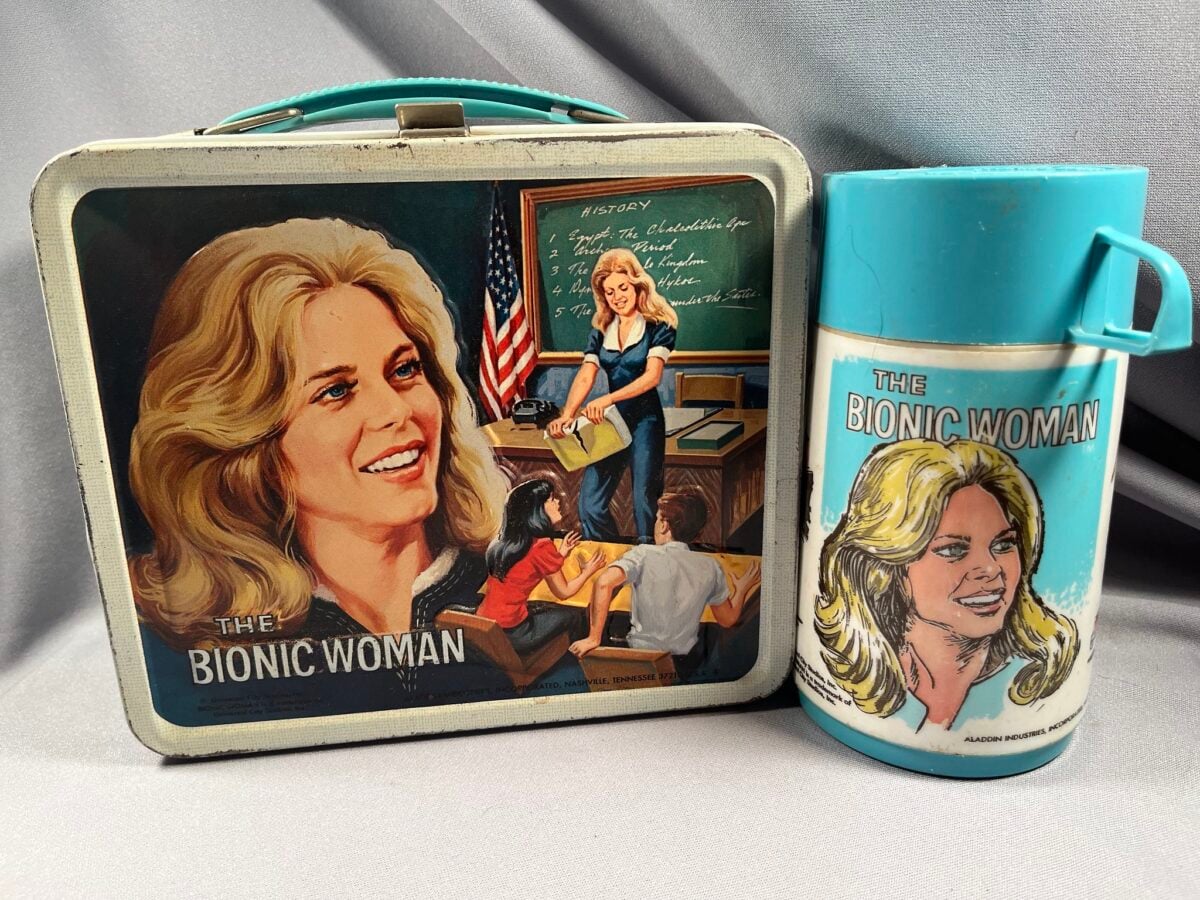
The 1977 Aladdin Bionic Woman lunch box exists in the long shadow cast by The Six Million Dollar Man’s box — both were made in the same period, both were popular, but the Bionic Woman version is found in clean condition slightly less often. A solid example sells for $75 to $175.
Lindsey Wagner’s likeness on the lithograph has a specificity that most celebrity lunch boxes of the era politely avoided.
Scooby-Doo
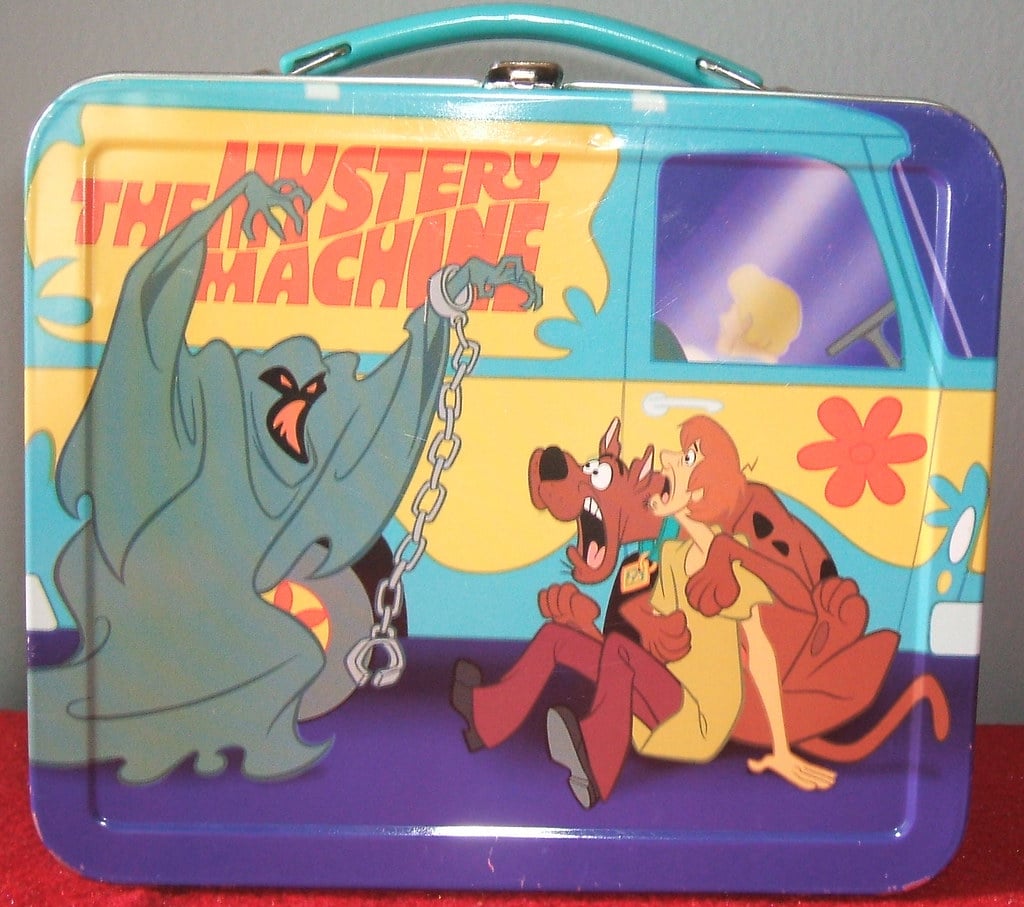
Scooby-Doo lunch boxes appeared in multiple editions across the 1970s, made by King-Seeley Thermos, and the earliest versions — particularly the 1973 edition — are the ones that fetch real money. A clean 1973 example sells in the $100–$250 range.
The Mystery Machine is almost always somewhere on these boxes, which, turns out, is exactly what collectors expect to see and still appreciate finding.
He-Man and the Masters of the Universe
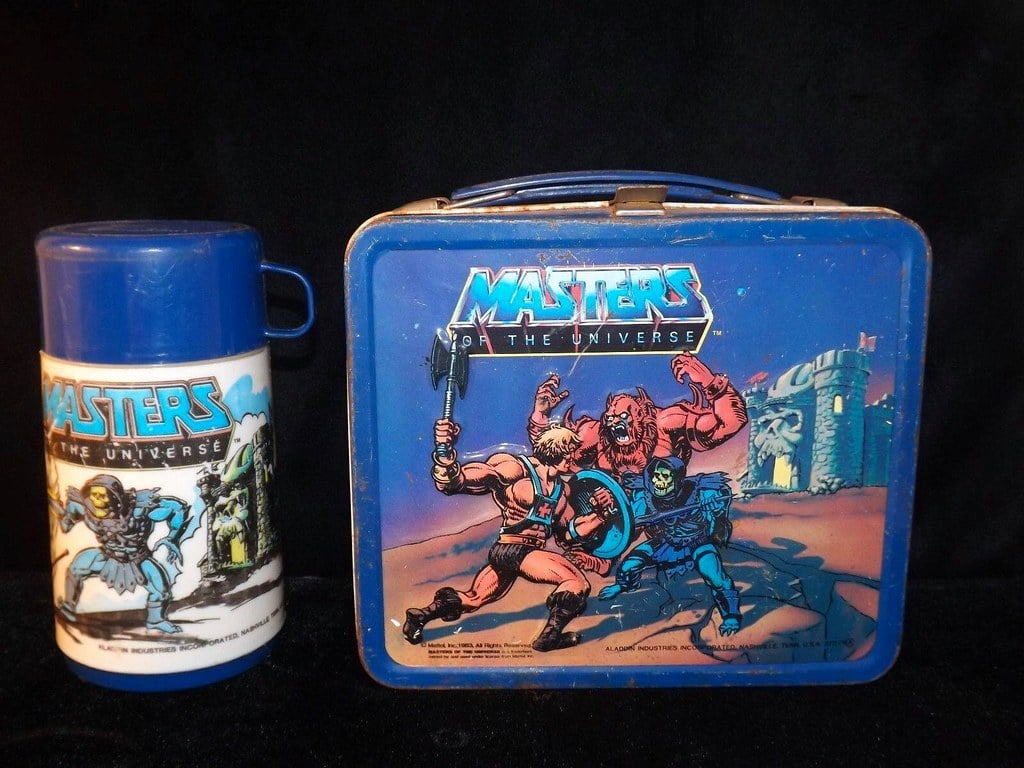
The 1984 Aladdin He-Man lunch box is the lunch box equivalent of a raised fist — it has absolutely no interest in restraint, and the lithography commits to that aesthetic with a seriousness that borders on admirable. A clean example sells in the $50–$125 range.
By-the-Power-of-Grayskull declarations aside, this is a well-designed object that communicates exactly what it intends to communicate.
The Addams Family
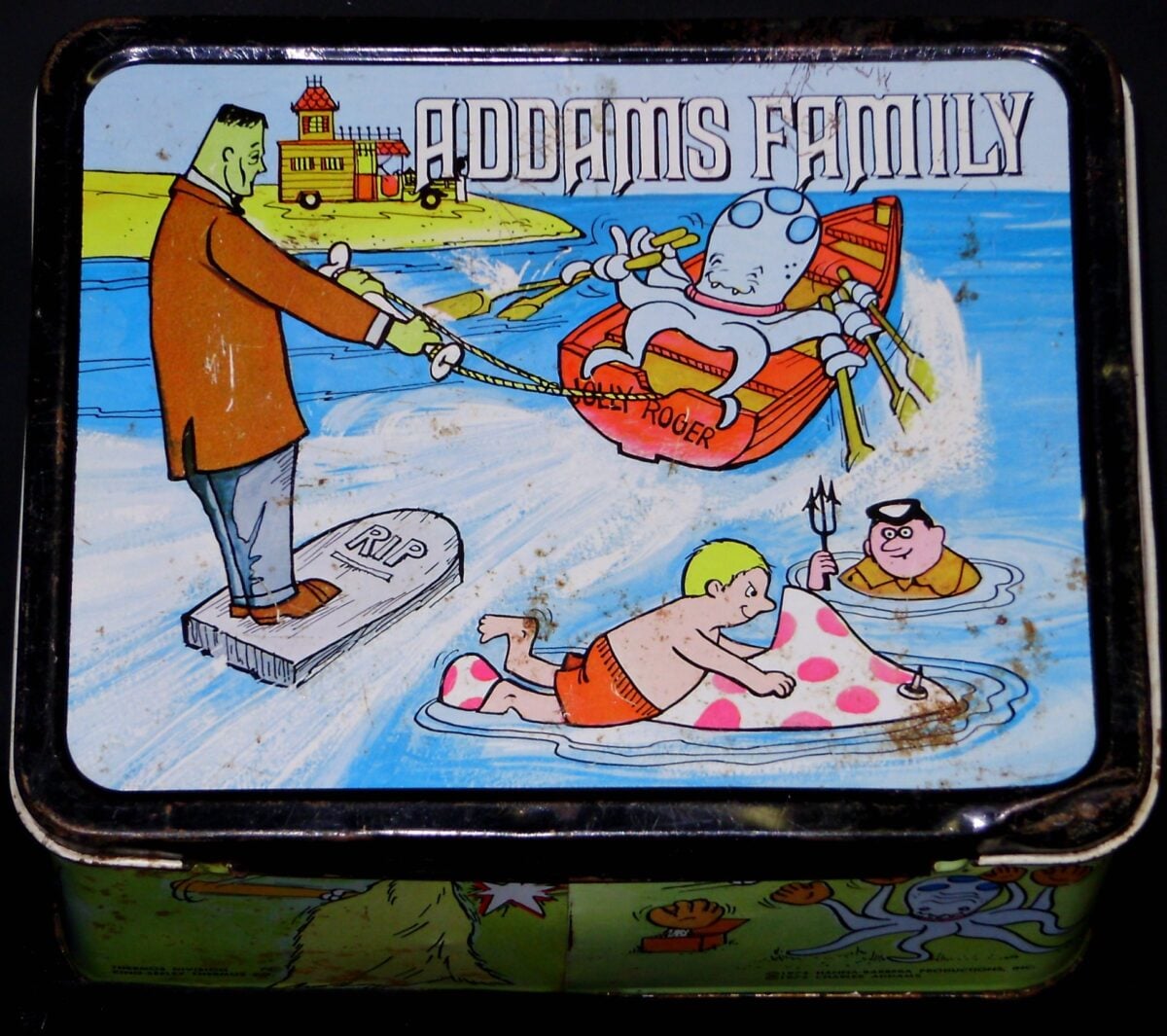
The 1974 King-Seeley Thermos Addams Family lunch box is the one that serious collectors track down after they’ve gotten comfortable with the more common finds. The show had been off the air for eight years by the time this box was made — Filmation’s animated series kept the property alive, which kept the merchandising alive.
A solid example sells in the $200–$500 range, and the artwork has the cheerfully macabre quality the franchise always carried best.
The Box That Outlived the Cafeteria
Somewhere between pop culture artifacts and personal memory, the vintage lunch box occupies a strange and specific place in the collector world. These weren’t made to last — they were made to hold a sandwich, get scratched up on a bus, and eventually disappear.
The fact that any of them survived in collectible condition at all is stubborn persistence dressed up as nostalgia. If you’ve got one sitting in a closet or spotted one at an estate sale, the going price on these things deserves a second look — because the cafeteria is long gone, but the box is apparently just getting started.
More from Go2Tutors!

- The Romanov Crown Jewels and Their Tragic Fate
- 13 Historical Mysteries That Science Still Can’t Solve
- Famous Hoaxes That Fooled the World for Years
- 15 Child Stars with Tragic Adult Lives
- 16 Famous Jewelry Pieces in History
Like Go2Tutors’s content? Follow us on MSN.