31 Old Calculators That Became Collector Pieces
Before the pocket calculator became a throwaway item, computing was done by machines that weighed as much as a toaster oven or a small safe. Gears, relays, and early chips each had their moment.
Collectors now track down these devices for their design, their engineering, and what they say about how people worked with numbers. Some fetch high prices, and others remain surprisingly affordable.
The Curta
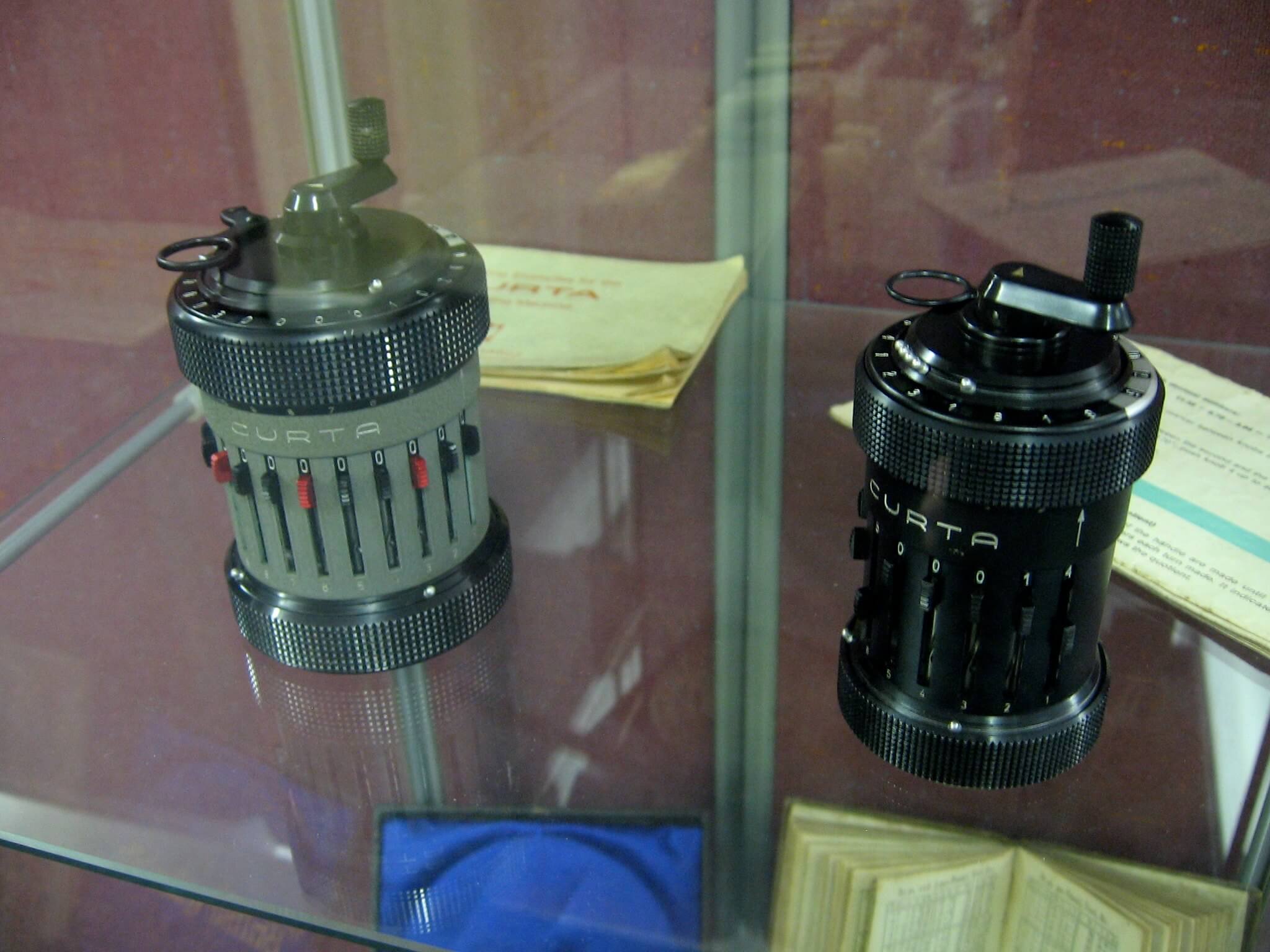
Curt Herzstark designed the Curta, a hand-cranked mechanical calculator small enough to fit in a hand, and the first model went on sale in 1948. Its cylindrical body earned it the nickname pepper grinder.
Collectors prize the precise machining and the story of its inventor, who sketched the design while imprisoned in a concentration camp.
The Odhner Arithmometer
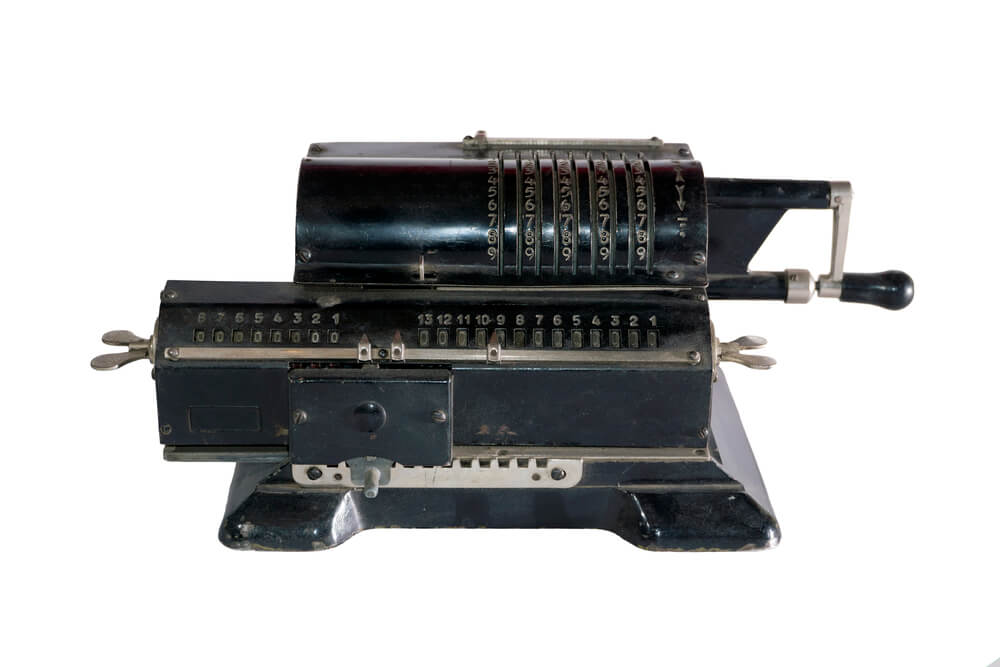
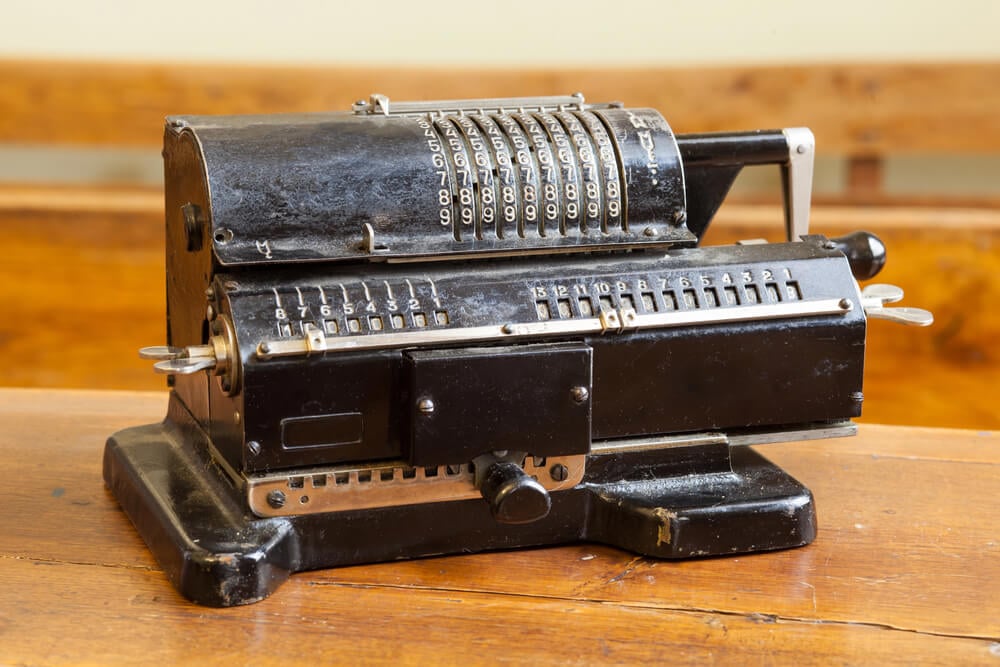
Willgodt Odhner developed a pinwheel calculator in Russia in the 1870s that became the basis for many later designs. German machines sold under the Brunsviga name followed the same principle.
The ornate metal cases and crank handles appeal to mechanical enthusiasts.
The Comptometer
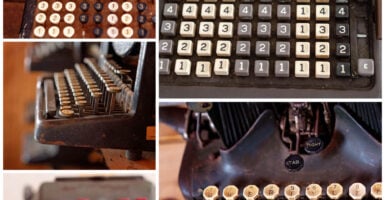
Dorr Felt built the first key-driven Comptometer in the 1880s, and the machine let skilled operators add columns of numbers at remarkable speed. Rows of keys controlled the mechanism with no crank.
Office workers famously mastered it like a musical instrument.
Burroughs Adding Machines
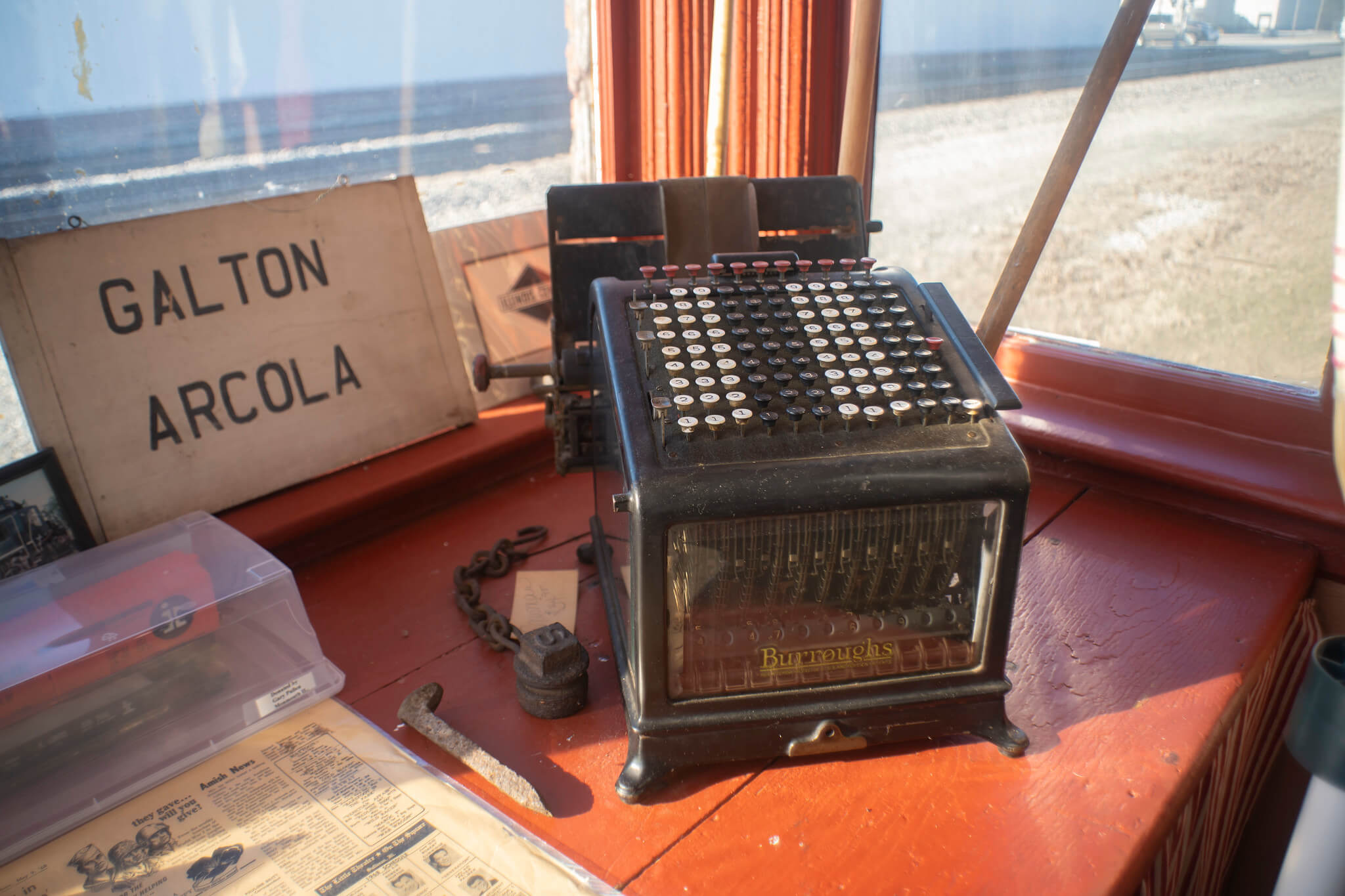
William Seward Burroughs patented an adding machine in the 1880s, and the company that bore his name dominated the field for decades. Cast-iron bodies and long handles made early models imposing.
They remain sought-after pieces of business history.
The Marchant Calculator
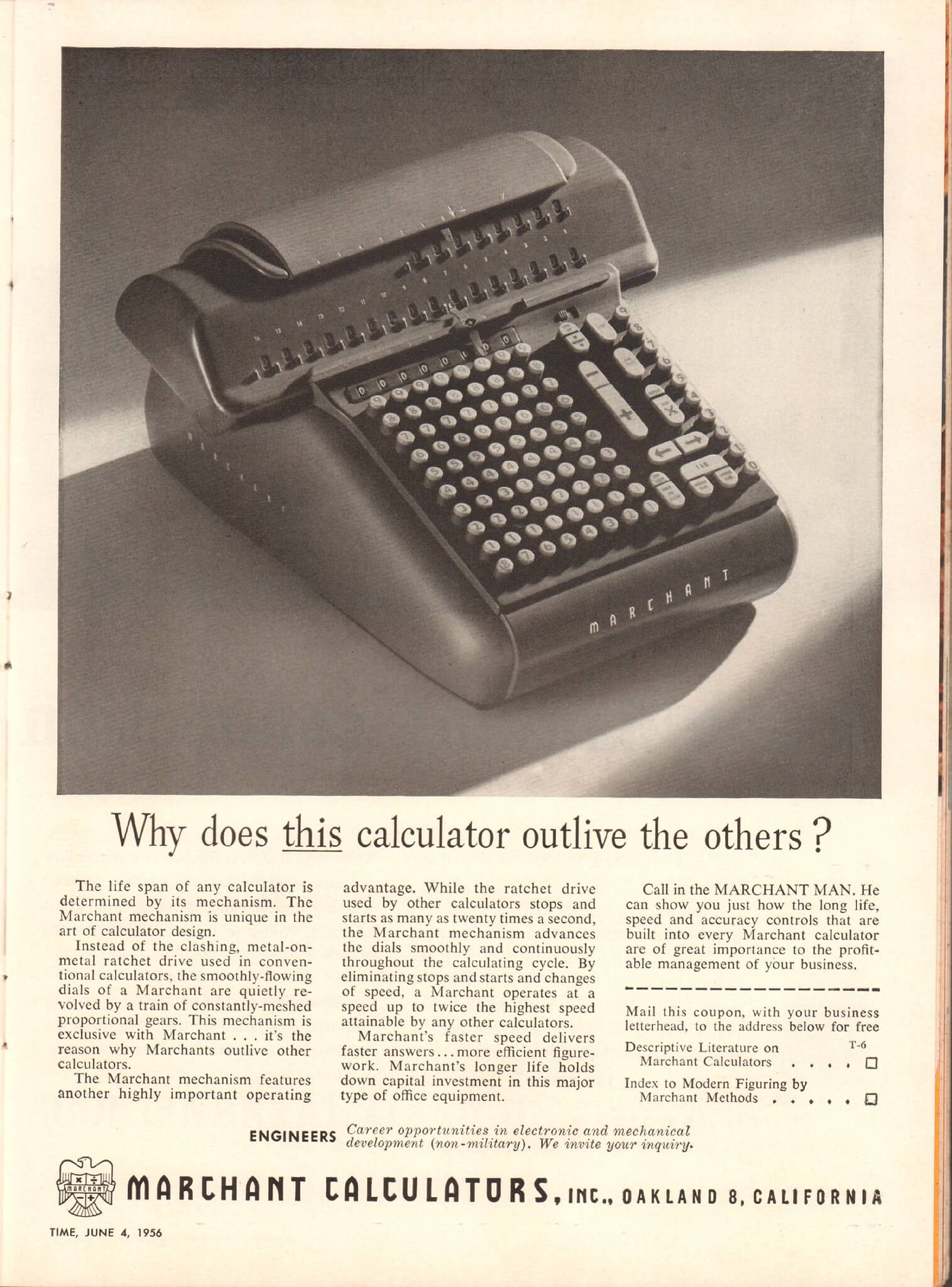
Marchant produced electromechanical calculators that could multiply and divide with a clatter of gears. The machines were big, loud, and beloved by engineers.
A working model has a satisfying rhythm.
The Friden Calculator
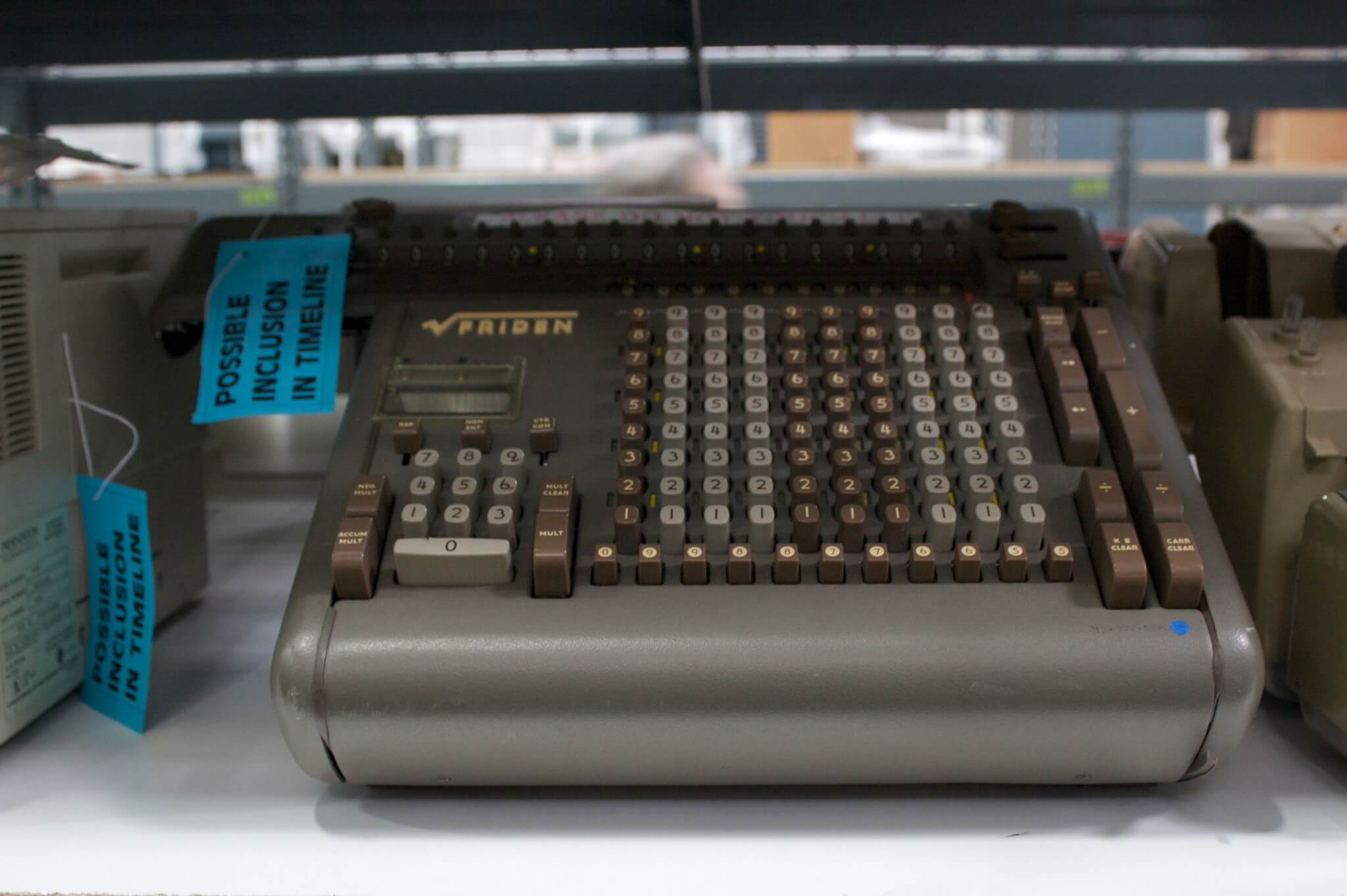
Friden machines were known for high-end features such as automatic division and square roots. The company built them like precision instruments.
Collectors value their heft and their distinctive keyboards.
Monroe Calculators
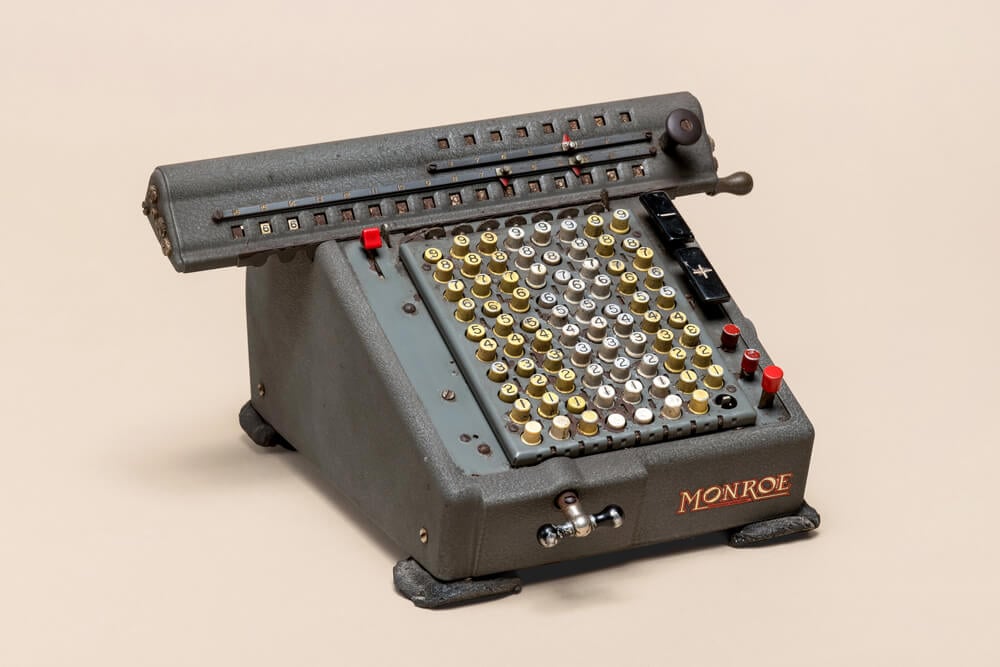
Monroe built calculating machines for offices and laboratories, and the brand became familiar across industries. Large keyboards with many columns of numbers dominated the design.
Surviving machines often need cleaning to run smoothly.
Facit Calculators
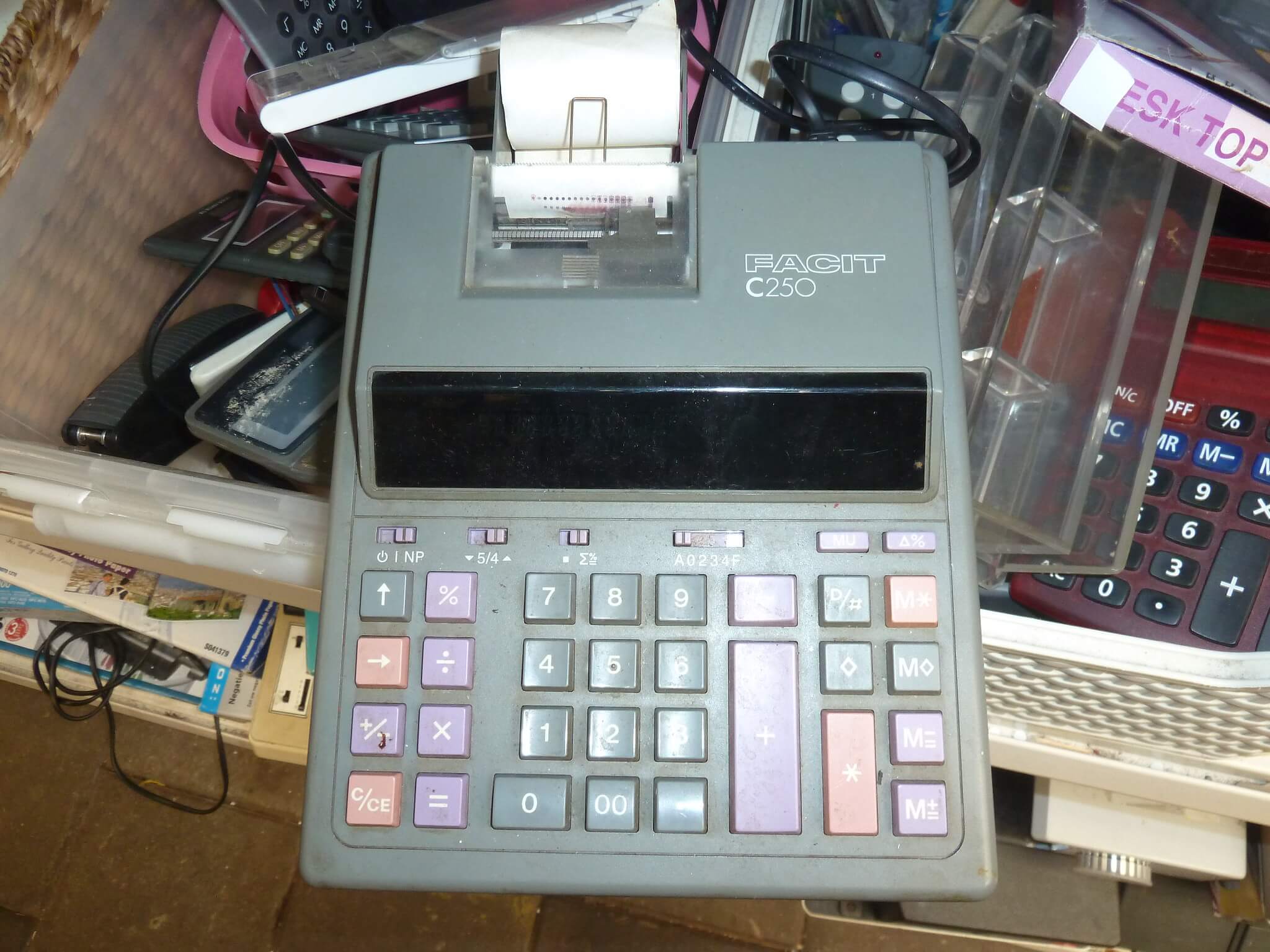
Facit of Sweden made mechanical calculators with a reputation for reliability and clean design. They were popular in European offices.
A well-kept Facit still turns smoothly.
The Addiator
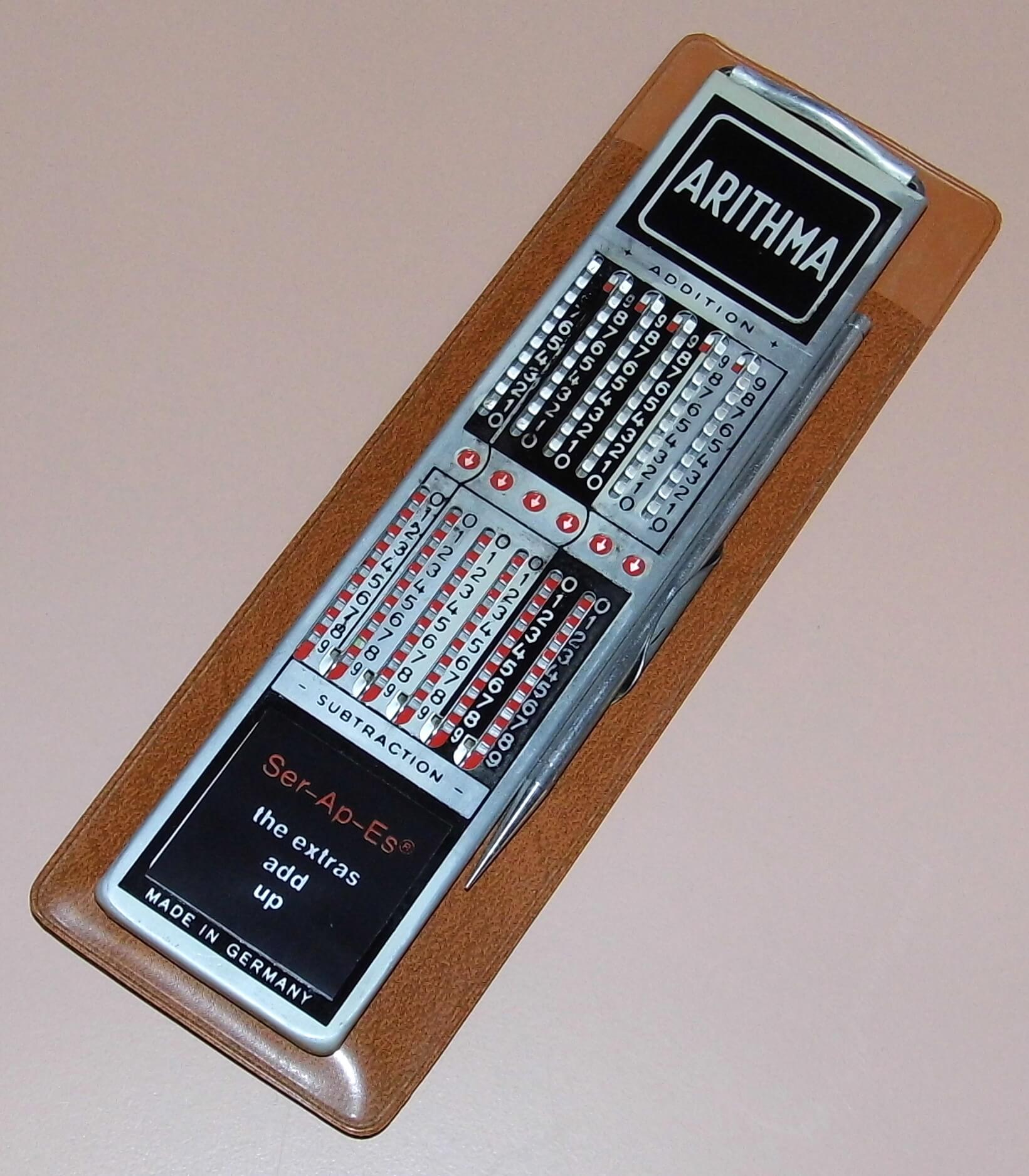
The Addiator was a pocket-size slide calculator that used a stylus to move metal strips and add or subtract numbers. It needed no electricity and fit in a pocket.
Collectors enjoy the many variants made over decades.
The Casio 14-A

Introduced in 1957, the Casio 14-A was among the first compact all-electric calculators, using relays rather than gears. The machine filled a desk and clicked as it worked.
It marked the beginning of the company’s long history in calculation.
The ANITA Mk VII

The ANITA, built by the Bell Punch Company of Britain and introduced in 1961, is often described as the first all-electronic desktop calculator. It used vacuum tubes and cold-cathode tubes for the display.
The machines were large and expensive, and surviving examples are prized.
The Sharp CS-10A

Sharp launched the CS-10A in 1964 as a transistorized desktop calculator. It was large and heavy, but it replaced noisy mechanical parts with electronics.
The model is a landmark of Japan’s calculator industry.
The Olivetti Programma 101
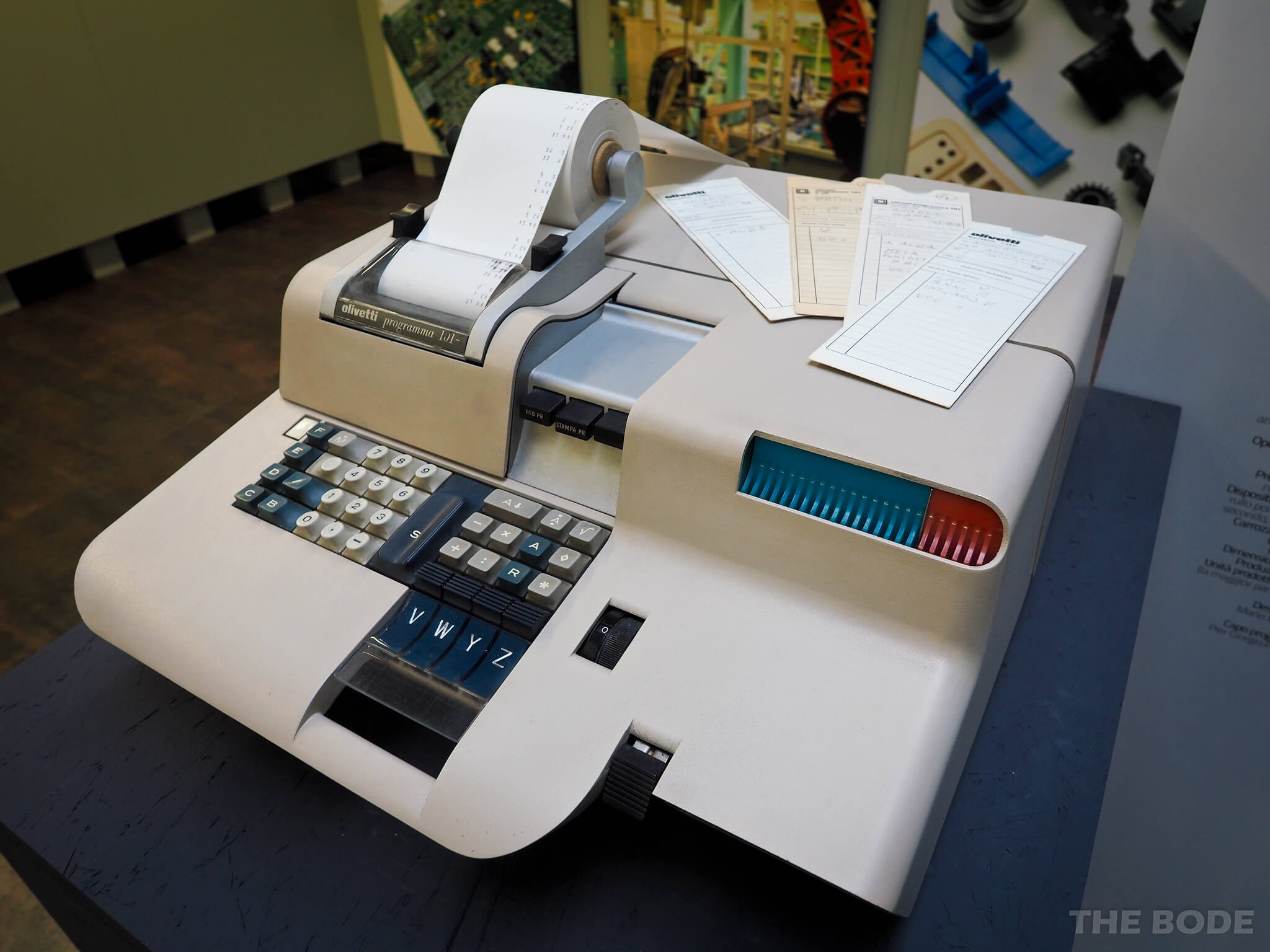
Olivetti released the Programma 101 in 1965, an early programmable desktop machine that could store programs on magnetic cards. NASA is reported to have used some units during the Apollo era.
Its sleek, sculpted case set it apart from other office machines.
The HP 9100A

Hewlett-Packard introduced the 9100A in 1968, a desktop machine that blurred the line between a calculator and a computer. It used a magnetic card reader and a cathode-ray tube display.
The unit weighed about forty pounds.
The Canon Pocketronic
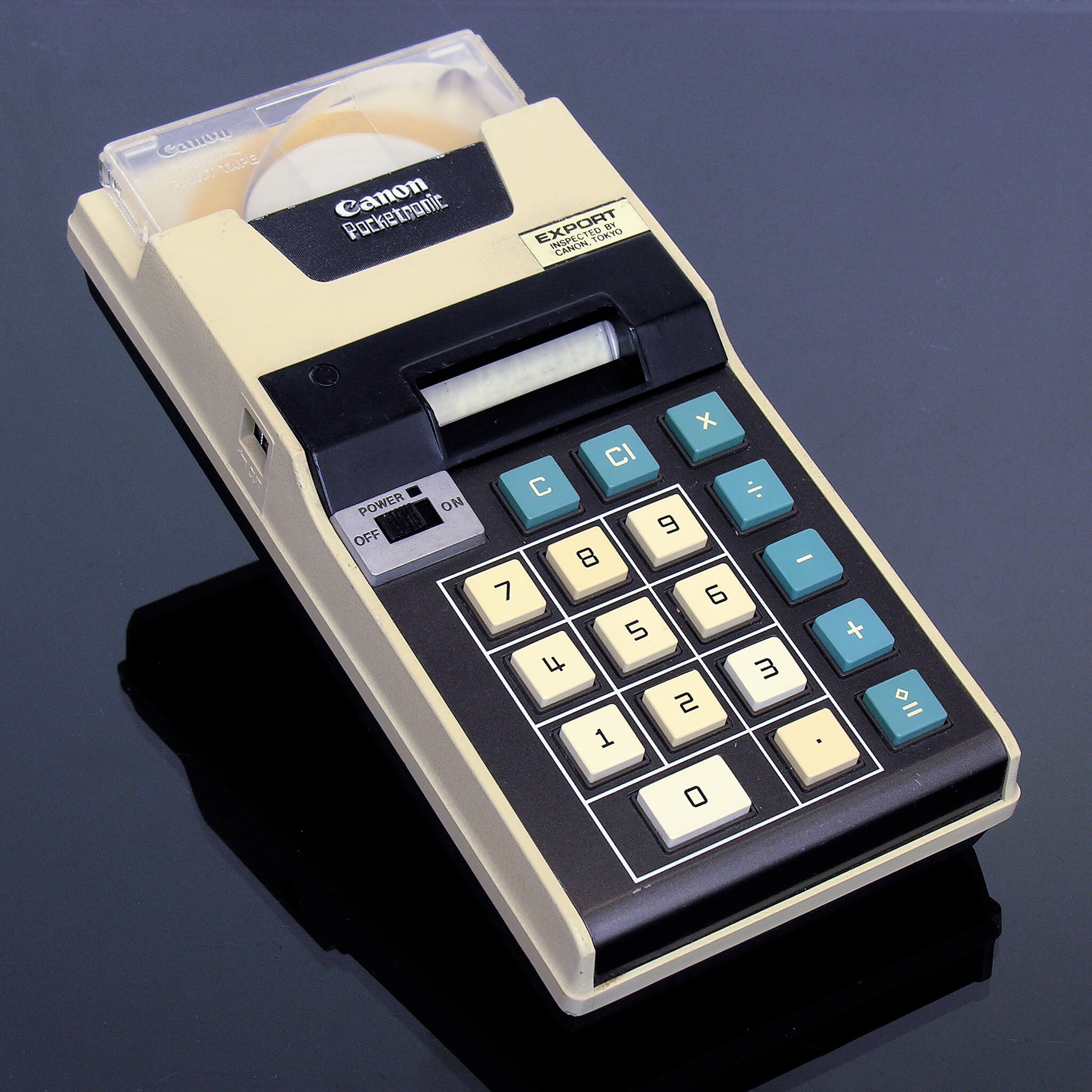
The Canon Pocketronic of 1970 was one of the first handheld electronic calculators and printed results on a thermal paper tape. It ran on rechargeable batteries.
The device was a precursor of the pocket calculators that followed.
The Sharp EL-8
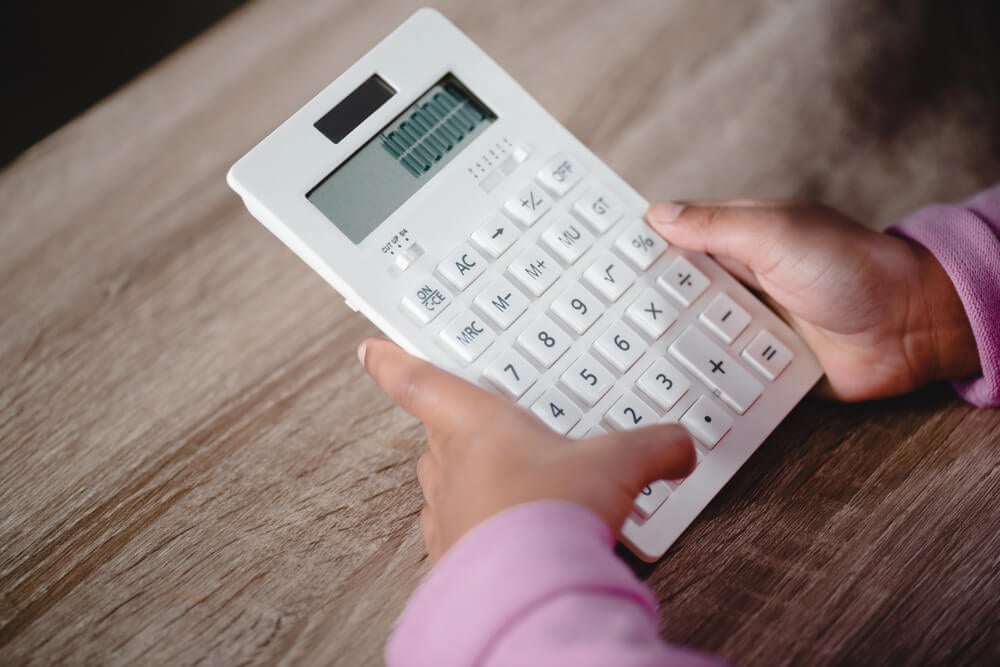
Sharp’s EL-8 from 1969 was an early portable calculator that used integrated circuits. It showed results on a vacuum fluorescent display.
Its compact size set it apart from the desktop models of the era.
The Busicom 141-PF
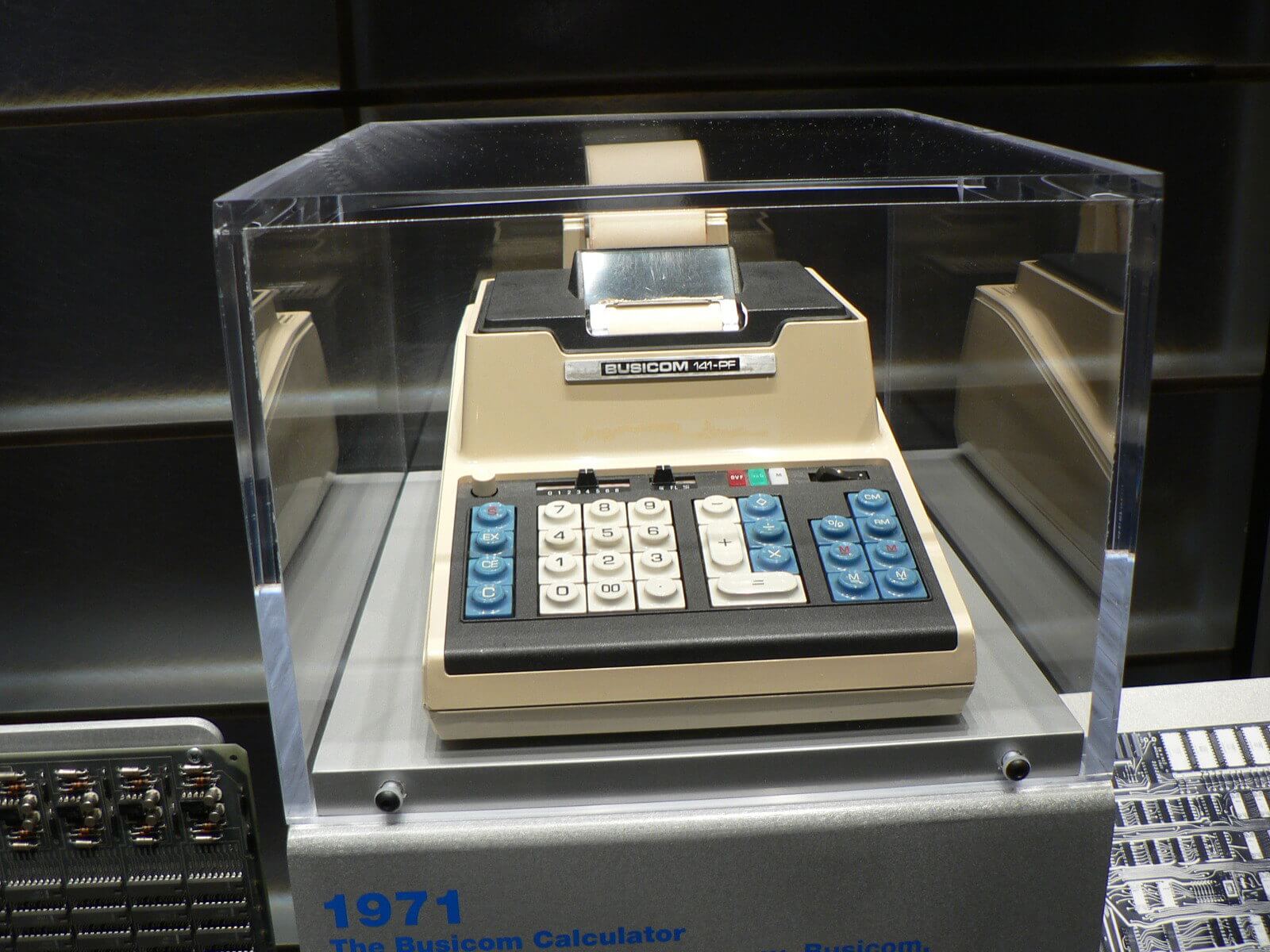
The Busicom 141-PF, a printing desktop calculator from Japan, used the Intel 4004 microprocessor in the early 1970s. That chip was among the first commercial microprocessors.
For collectors, the machine is a piece of computing history.
The Bowmar 901B
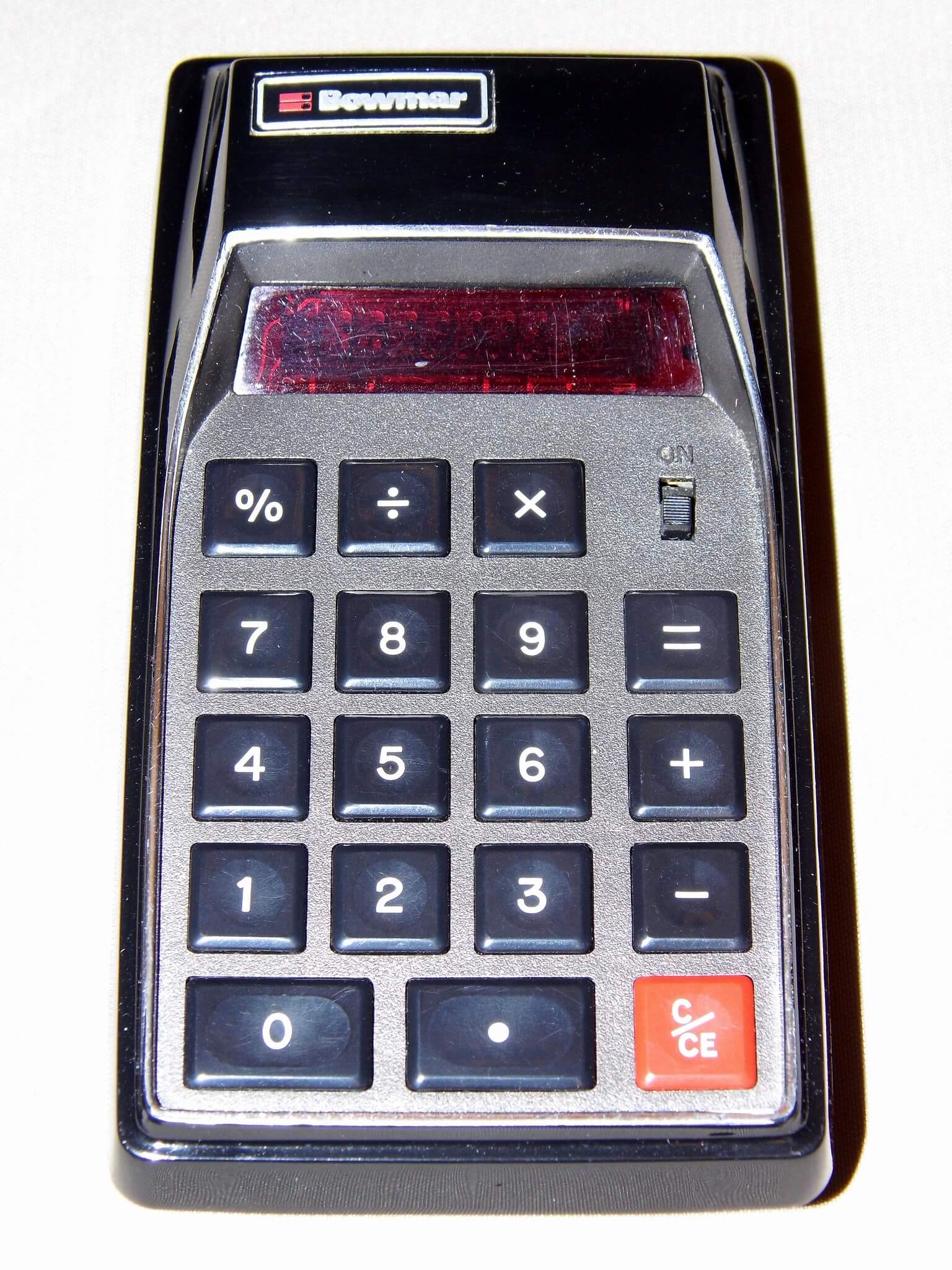
Nicknamed the Bowmar Brain, the 901B arrived in 1971 as one of the first widely sold handheld electronic calculators in the United States. It had a red LED display and a high price tag.
Early buyers paid several hundred dollars.
The HP-35
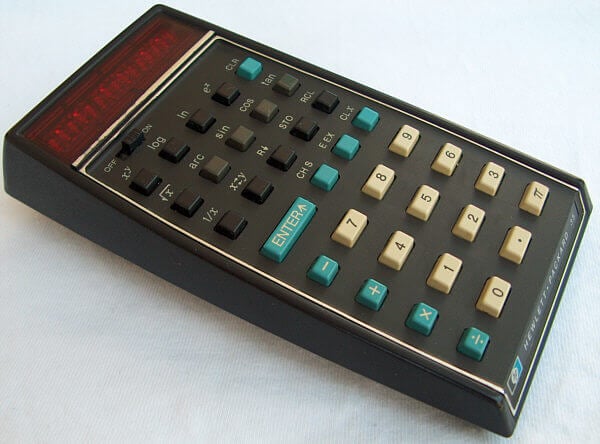
Hewlett-Packard released the HP-35 in 1972, the first handheld scientific calculator, with trigonometric and logarithmic functions. It replaced slide rules for many engineers.
Its shirt-pocket size and reverse Polish notation made it a legend.
The TI SR-10
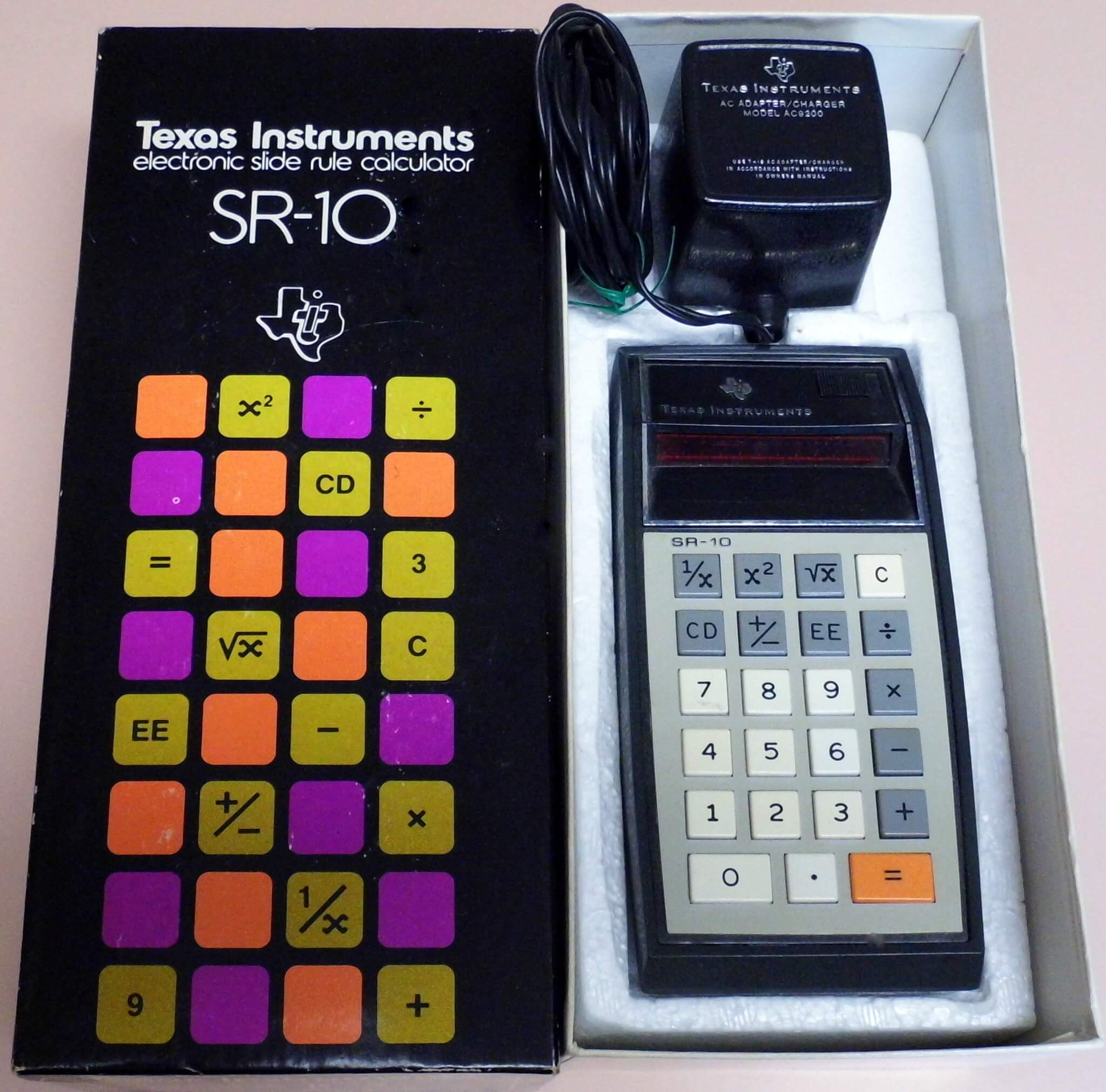
Texas Instruments launched the SR-10 in 1972 as a handheld calculator with square root and reciprocals. It was among the first in a long line of scientific calculators.
Its compact design appealed to students and professionals.
The Sinclair Executive

Clive Sinclair’s Executive of 1972 was among the thinnest calculators of its day, with a brushed metal case. It was expensive but made a style statement.
Collectors prize its sleek, minimalist look.
The Casio Mini
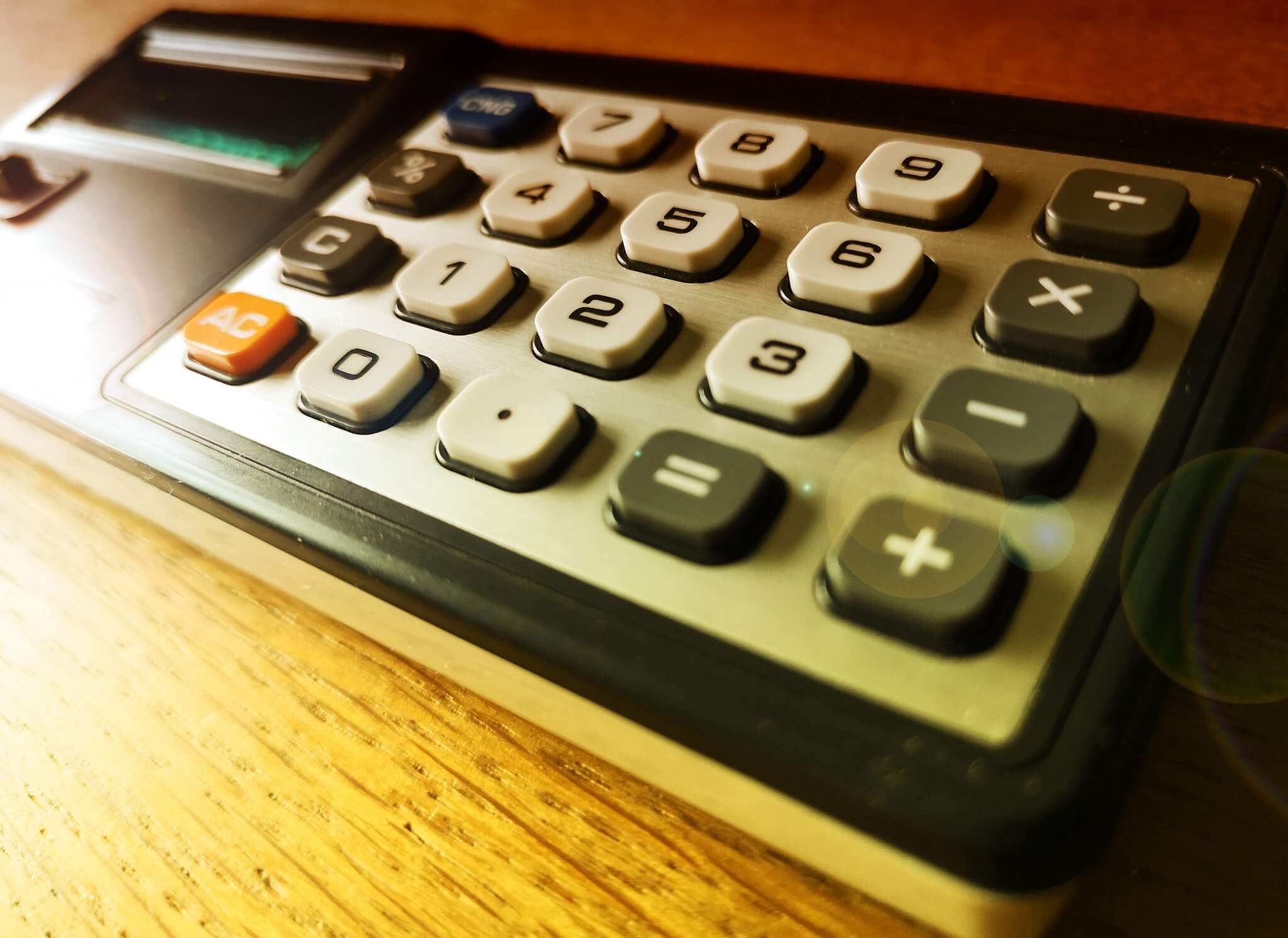
The Casio Mini of 1972 was one of the first calculators priced for consumers and was widely sold in Japan. It was small, light, and cheap.
The price drop helped bring calculators into households.
The HP-65
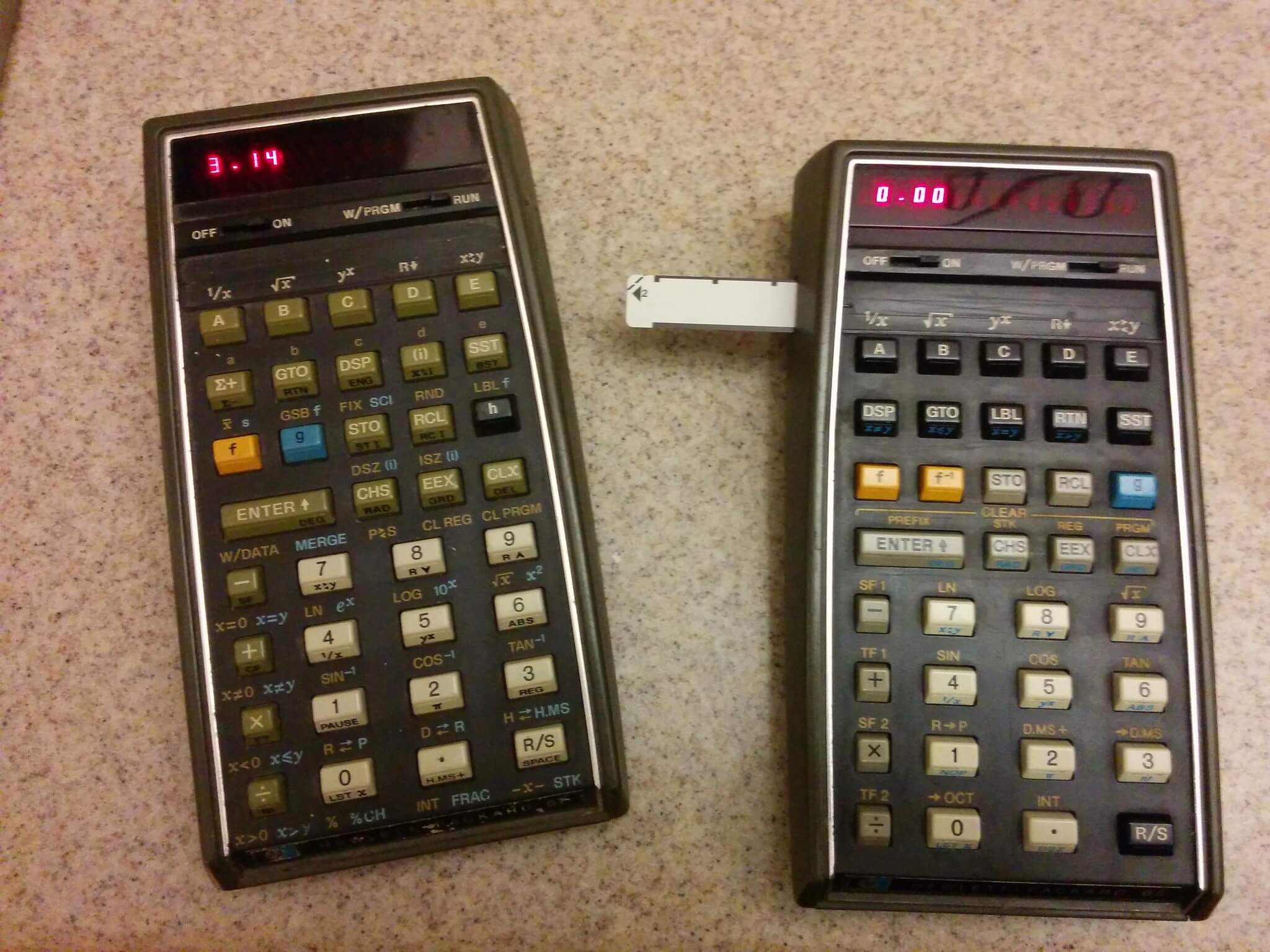
The HP-65 of 1974 was the first handheld calculator that could store programs on magnetic cards. Engineers loved it, and astronauts reportedly carried one aboard the Apollo-Soyuz mission in 1975.
It was a landmark in portable computing.
The TI Datamath
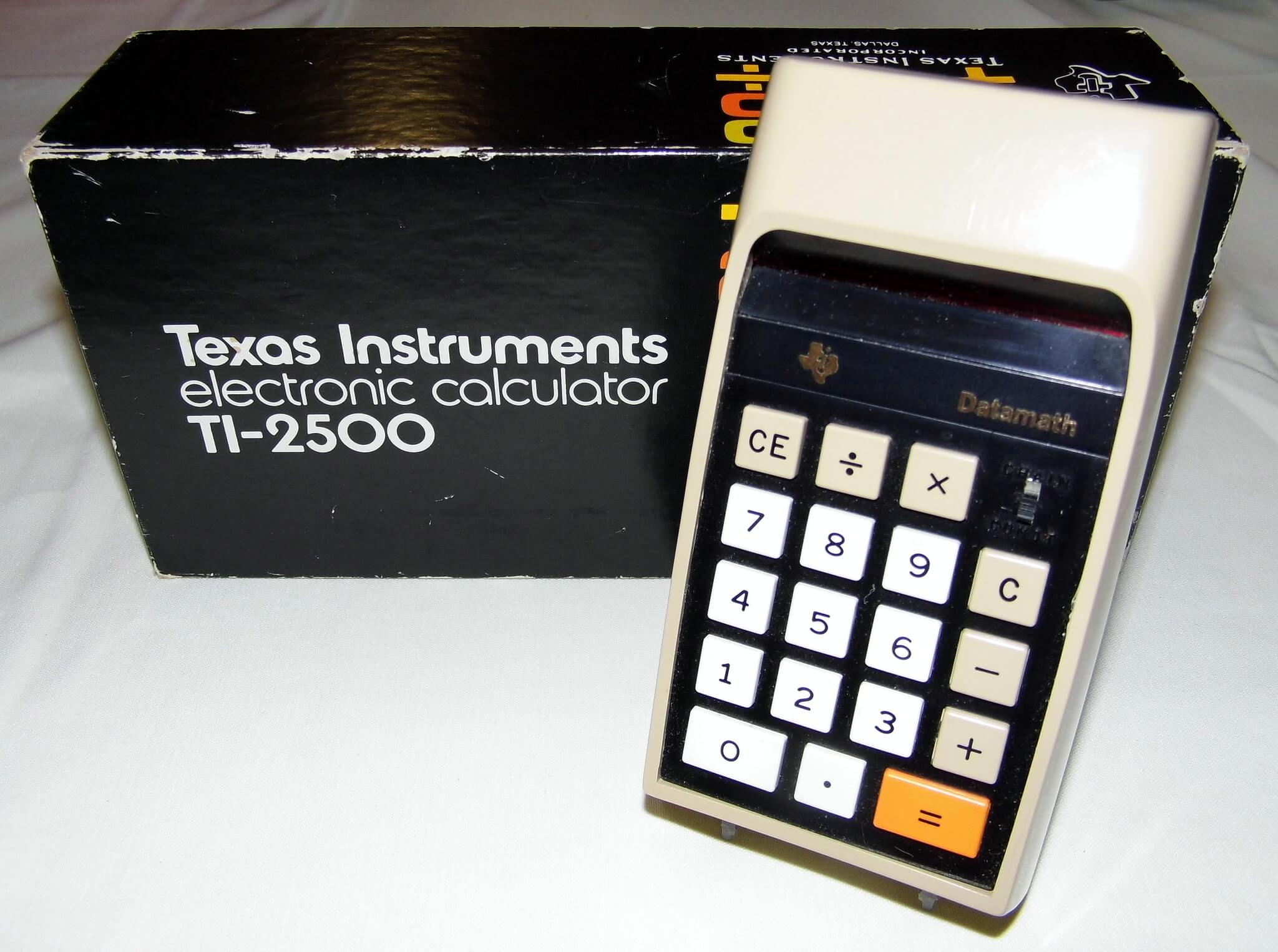
Texas Instruments built the Datamath line, whose early models offered simple arithmetic in a compact case. The red LED display was a signature feature.
The line helped make TI a household name in calculators.
The TI SR-50

The SR-50 gave Texas Instruments a scientific calculator to rival the HP-35. It supported algebraic entry rather than reverse Polish notation, which appealed to many students.
The model still has fans.
The HP-12C
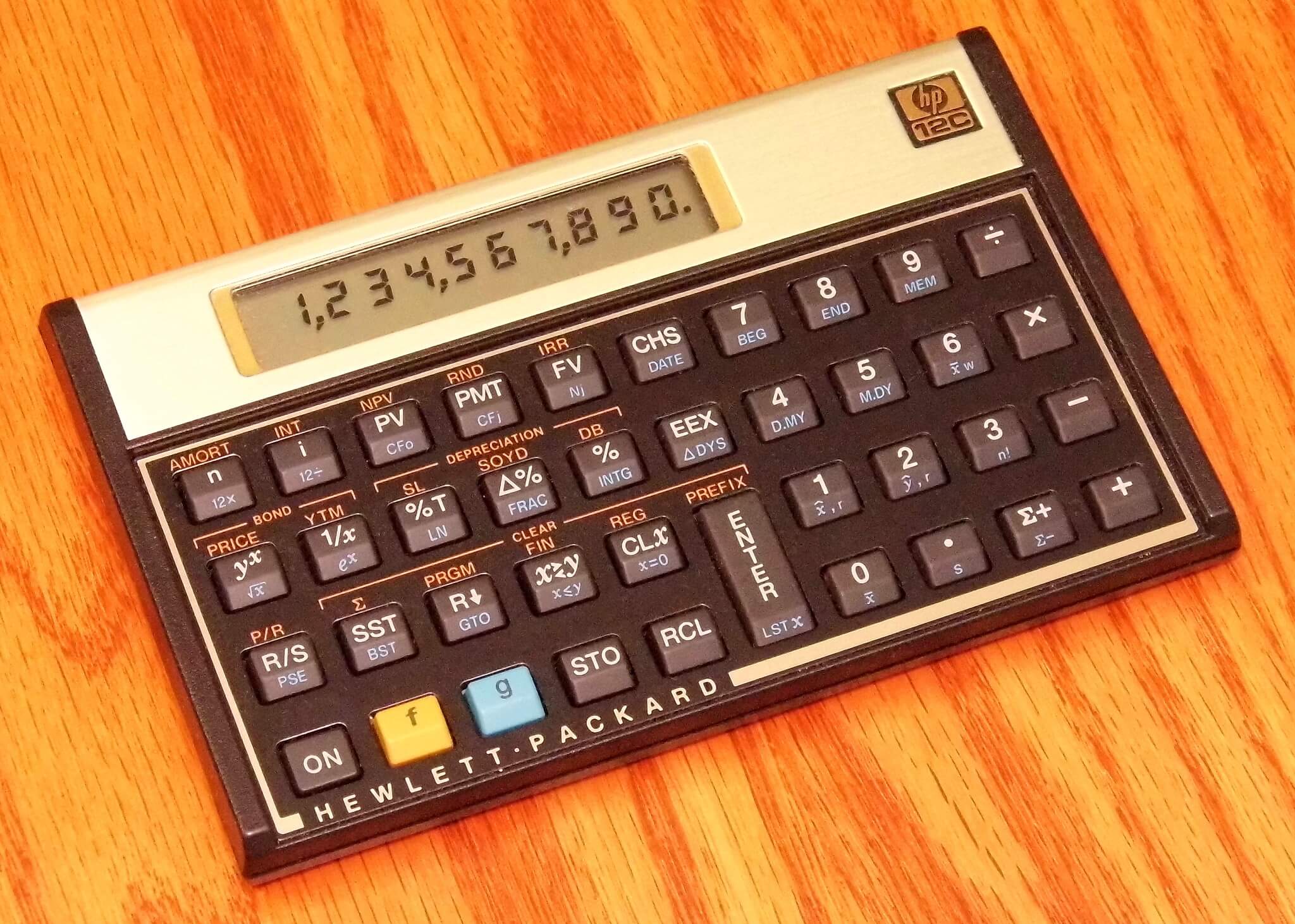
Introduced in 1981, the HP-12C became the standard financial calculator and remained in production for decades. Its landscape layout and reverse Polish notation became hallmarks.
Many professionals still use one.
The Pulsar Calculator Watch
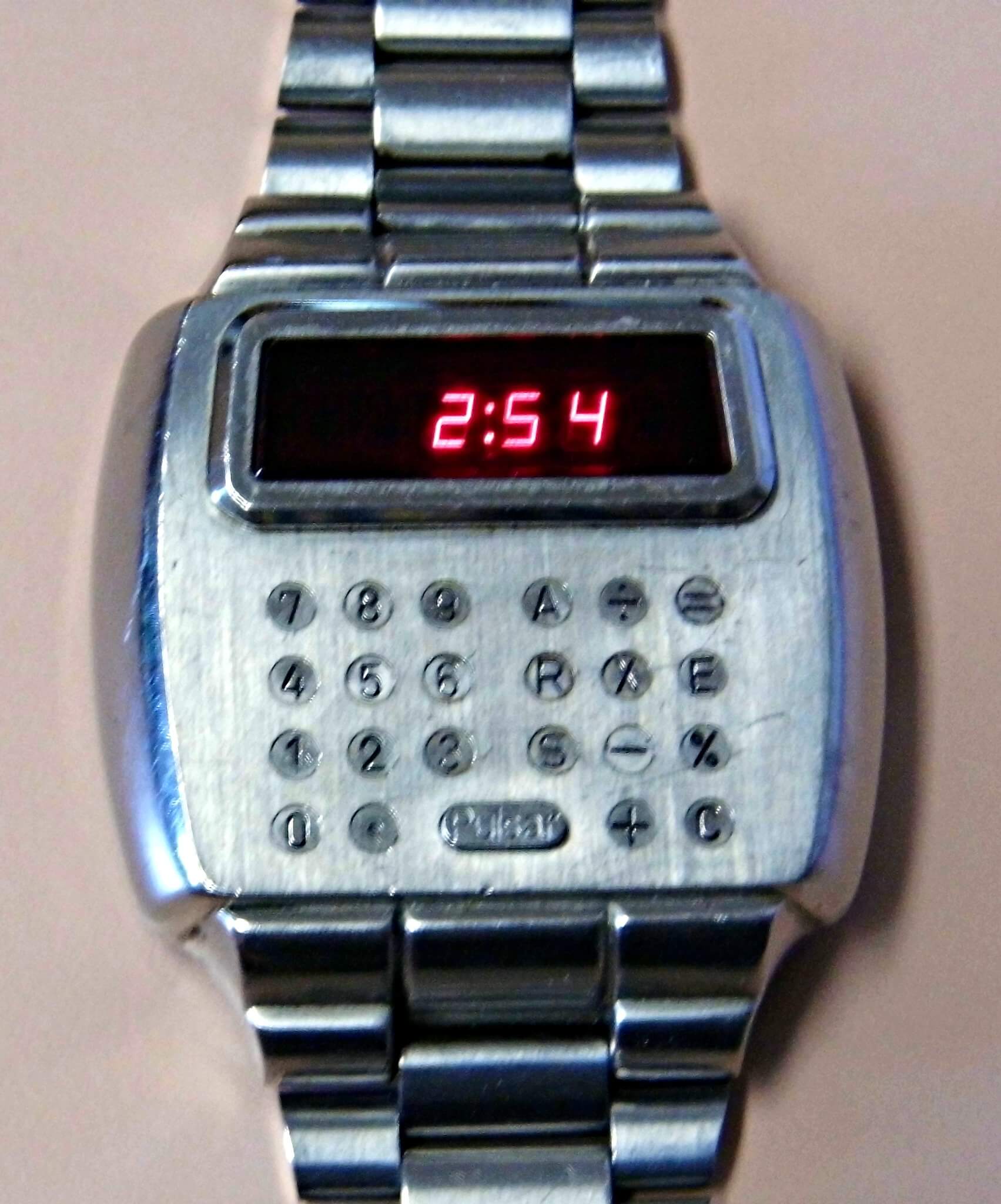
The Pulsar calculator watch of the mid-1970s packed a keypad into a wristwatch, which users pressed with a stylus. The style was futuristic and a little impractical.
It is a favorite among watch and calculator collectors.
The HP-01

Released in 1977, the HP-01 was a wristwatch calculator with a built-in keyboard and stylus. It cost a considerable sum when new.
Few were made, which adds to its collector appeal.
The Elektronika B3-34
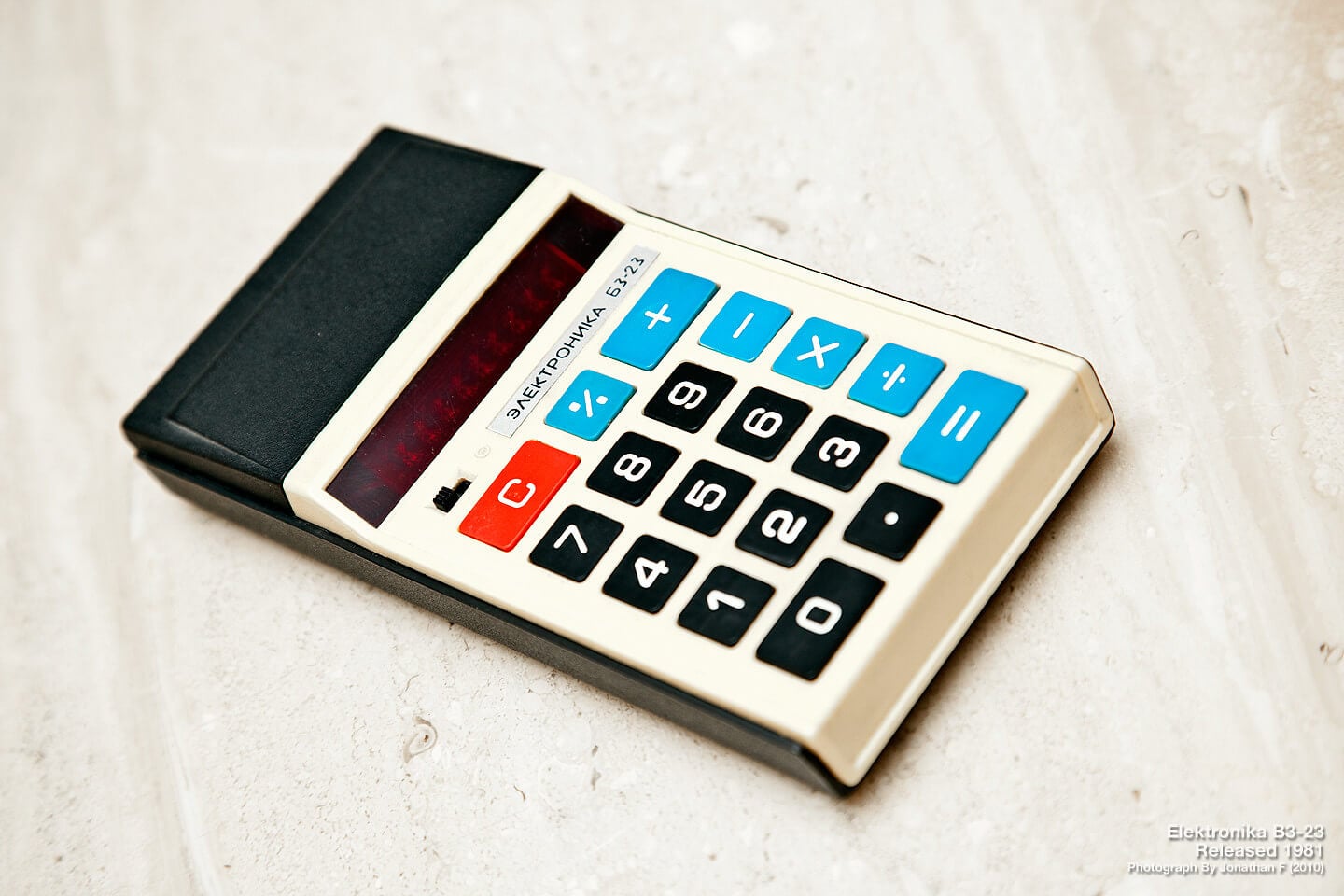
The Soviet Elektronika B3-34 was a programmable calculator from around 1980 that became popular in the Eastern Bloc. It offered advanced features at a modest price.
Collectors seek it as a rare artifact of Soviet engineering.
The Commodore Calculators
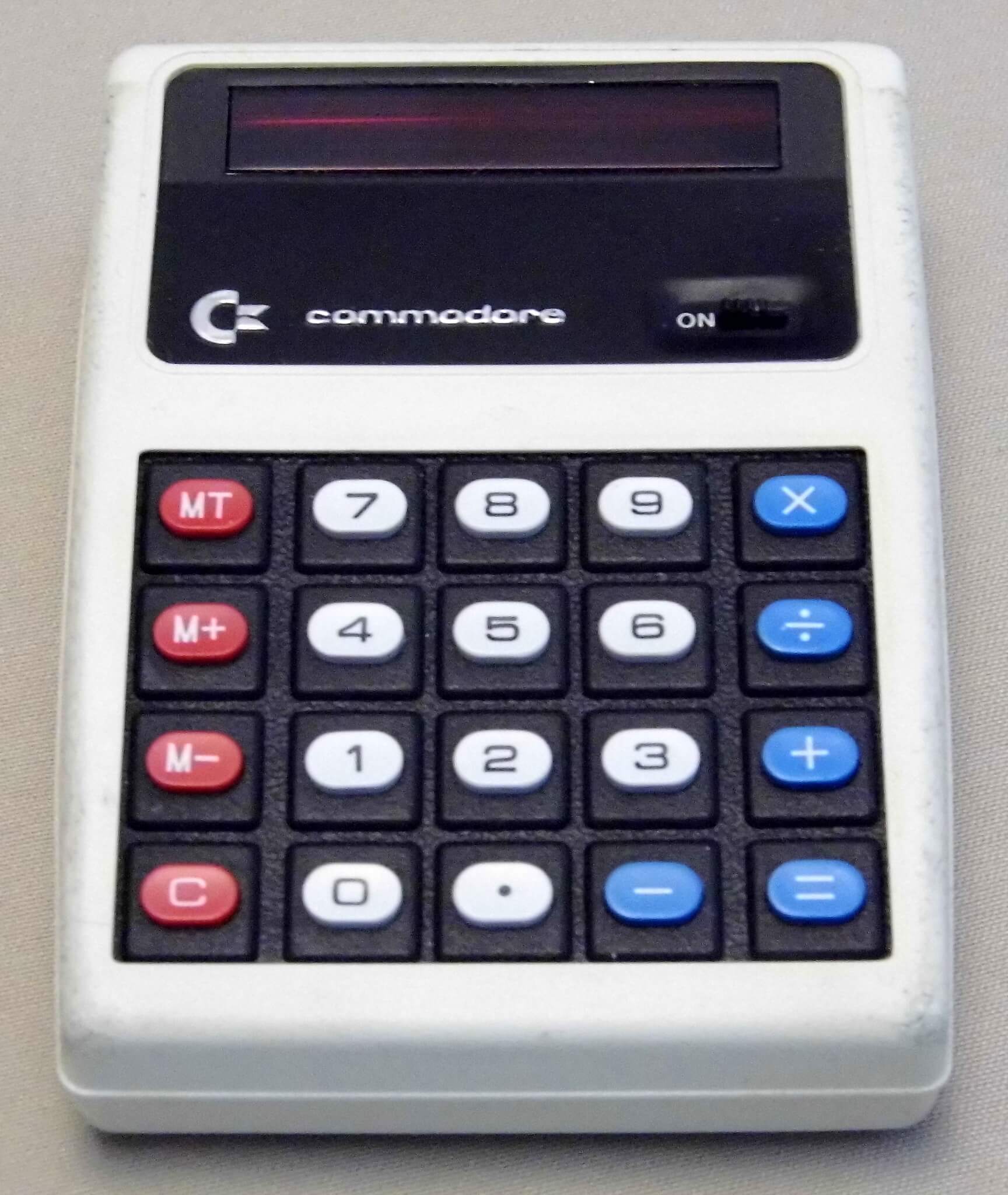
Before it built home computers, Commodore made calculators in the early 1970s. The experience with chips and displays shaped the company’s later direction.
Examples of its calculators are curiosities for collectors.
The Sony SOBAX

Sony’s SOBAX of 1967 was an early compact transistor calculator and an experimental design from a company better known for radios. It is one of the rarer entries in the field.
Few survive today.
What the Keys Remember

Every calculator on this list solved the same problem in a different way, and together they show how quickly the field moved. The earliest machines relied on gears and the skill of the operator, while the later ones put thinking into a chip.
Looking at them side by side is a short course in technological change. Collectors treasure them partly for that reason.
Holding one is a way of touching a moment when arithmetic stopped being a chore and became a push of a button. Even a dead battery cannot dim that.
More from Go2Tutors!

- 27 Silver Dollars and Half Dollars Worth Keeping
- 28 Restaurant Menu Items Nobody Orders Anymore
- 17 Places Built in Seemingly Impossible Spots
- 27 Vintage Rings Worth More Than They Look
- 25 Restricted Sites Tourists Can’t Enter
Like Go2Tutors’s content? Follow us on MSN.